


What Is an About Page and How Do You Write One That Builds Trust?
By Josh Ternyak

March 29, 2026
The About page is often the second most-visited page on any website — yet most businesses treat it as a resume dump or corporate boilerplate. This guide covers what visitors actually want and how to write an About page that converts.
The Page That Transforms Strangers Into Believers
Here's something most businesses don't realize about their About page: it's not really about them. Or rather — it shouldn't be. The About page that visitors want is not a history of the company's founding, a list of executive credentials, or a mission statement crafted by committee. Those things might be in there, but they're not what the visitor came for.
Visitors come to the About page with a specific, unspoken question: "Are these people I can trust with my problem?" They're evaluating the humans behind the business. They want to understand who you are, what you believe, why you do what you do, and whether your values and approach align with what they're looking for. They're making a judgment that goes beyond capabilities — they're deciding whether they like you.
This is why the About page is consistently the second most-visited page on most service business websites (after the homepage), and why it has a disproportionate impact on conversion. It's the intimacy layer that transforms a business from an abstraction into people — and people who resonate with potential clients become the businesses those clients choose.
What Visitors Actually Want from an About Page
Before writing a word, understand what your specific visitors are looking for when they navigate to About. Most visitors arrive with several questions:
"Are these real people I can trust?" The fundamental credibility check. An About page that shows real people — real photos, real names, real roles, real locations — builds this trust. An About page that's anonymous, corporate, or uses stock photography undermines it.
"Do they understand my world?" Industry knowledge, sector experience, or familiarity with the specific challenges of a visitor's business context establishes relevance. A visitor who's running a small service business wants to know you understand the constraints, priorities, and mindset of small service businesses — not just that you've worked with businesses in general.
"Do I like them?" The personality question. Would working with these people feel good? Do they take their work seriously without being stiff? Do they seem human, engaged, and authentic? This is why the best About pages have genuine personality — not forced corporate friendliness, but real human voice.
"Are they credible?" What's the track record? What notable work, clients, or results have they achieved? This is where credentials, experience, and notable achievements belong — in service of the credibility question, not as the primary content of the page.
The Elements of a High-Performing About Page
The Story, Not the History
Most About pages lead with founding year, headquarters location, number of employees, and a description of services — essentially a business overview that tells a visitor nothing about why they should care. This "company history" approach treats the About page as a press release rather than a trust-building exercise.
A story is different. A story has a protagonist (you or your founding team), a challenge or insight (why this business exists, what gap you saw), a transformation (how you built something to address it), and a belief (what you stand for and why it matters). This narrative structure makes the About page human and memorable rather than corporate and forgettable.
The core story elements:
Why does this business exist? Not "we were founded in 2019" — why? What did you see that made you think "someone should be doing this better, and I'm going to be the one to do it"? The origin of genuine conviction is more compelling than any credential.
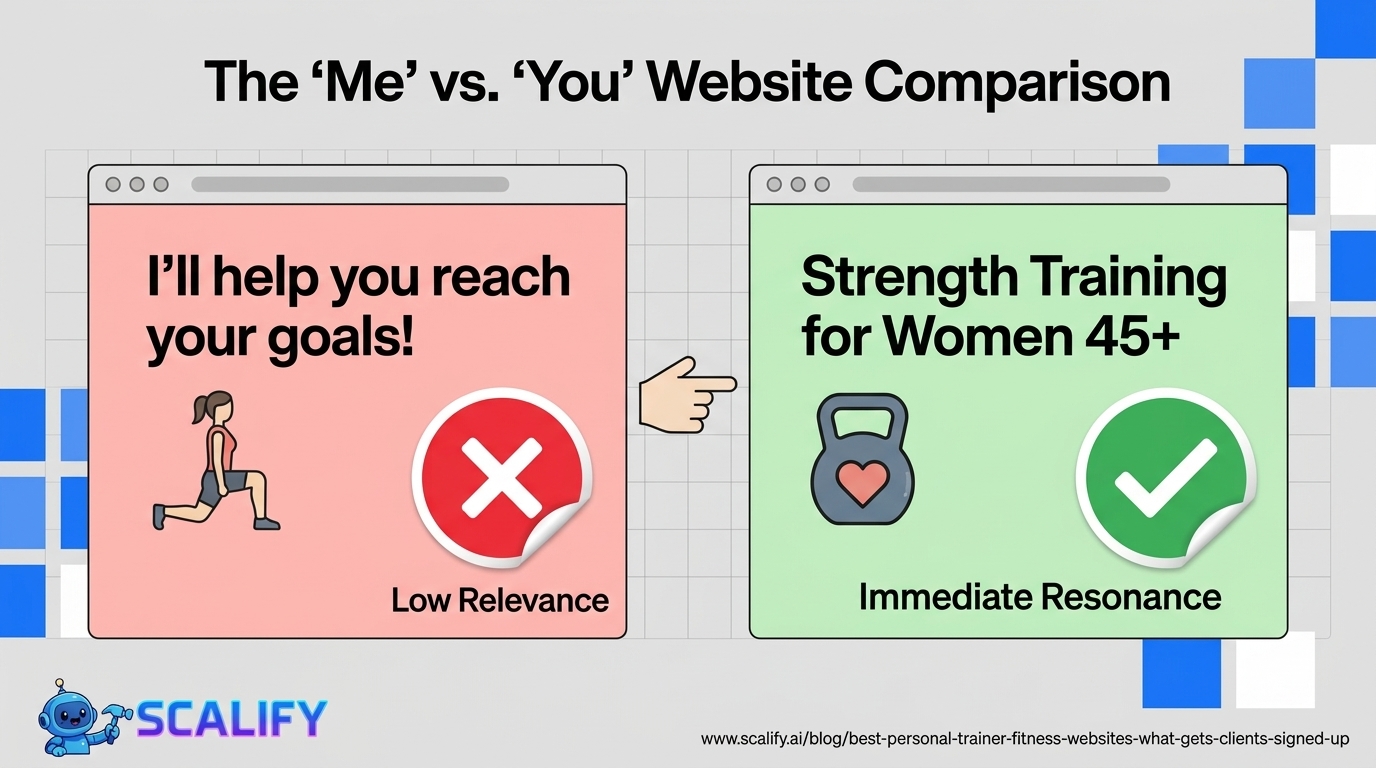
What do you believe about the work? What's your philosophy? What principles drive your decisions? What do you care about in a field where many people don't? Strong beliefs are polarizing — some visitors will find them unappealing, and that's fine. The visitors who share them will feel immediately aligned with you.
What have you learned that shapes how you work? Insight from experience — the understanding you've developed through doing the work — is the most authentic form of expertise demonstration. Not "we have X years of experience" (which means nothing) but "here's what we've learned about building websites that generate leads, and why we approach it differently than most agencies."
Real People, Real Photos
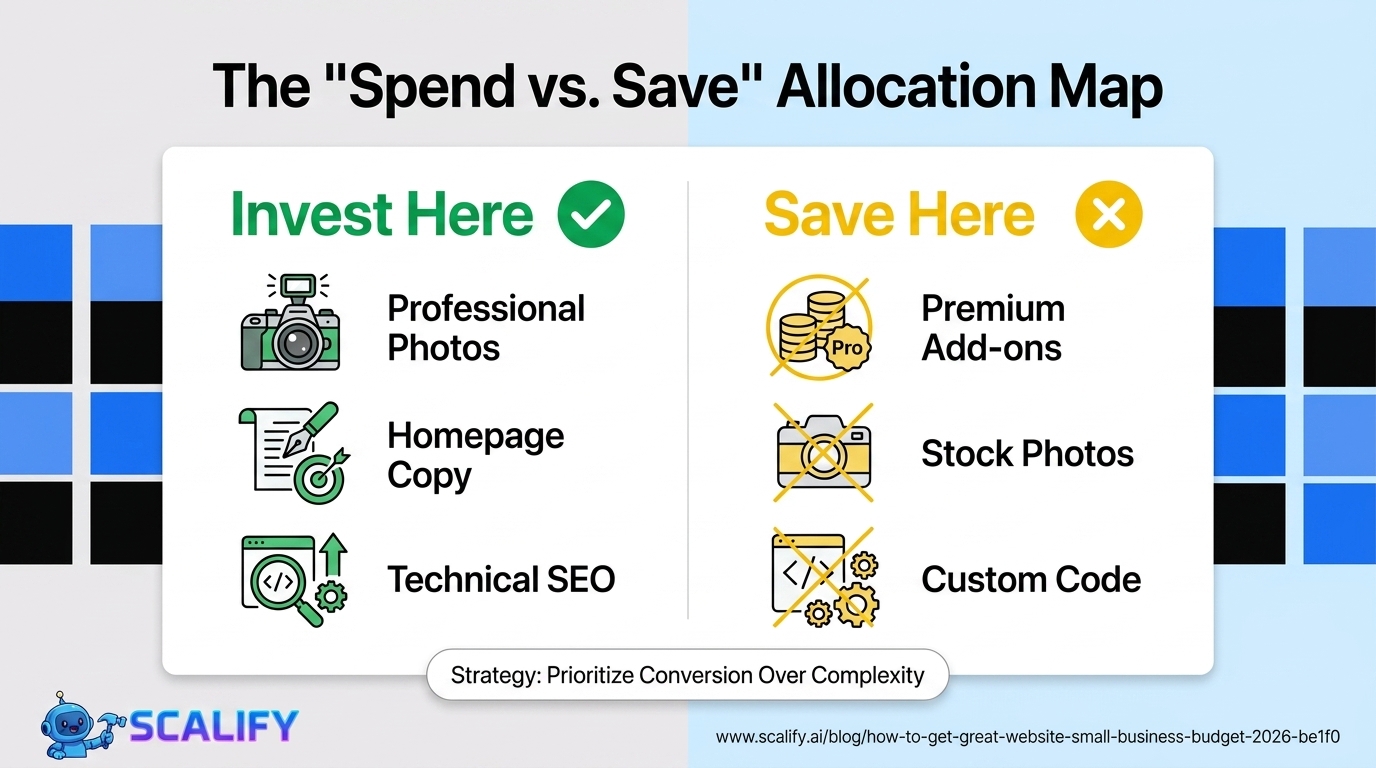
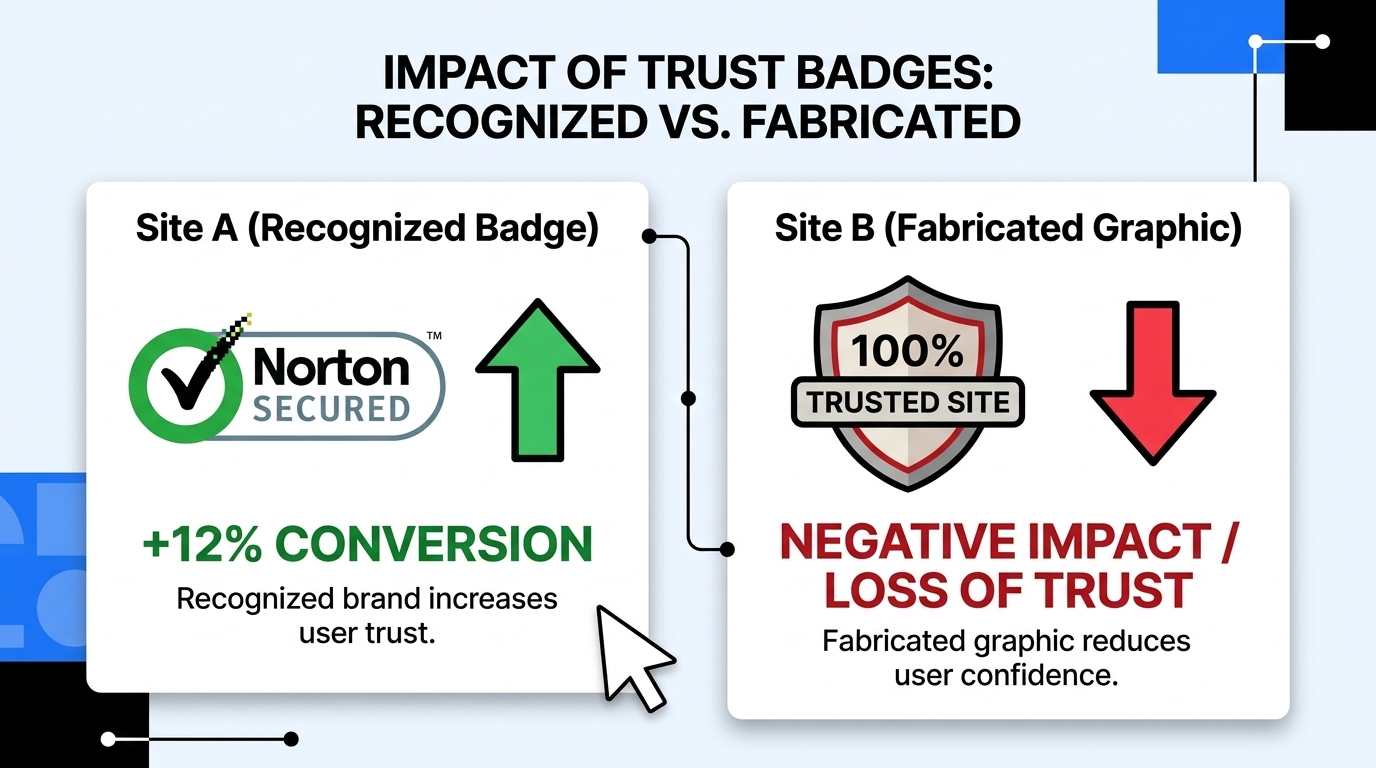
Nothing undermines an About page faster than stock photography of professional-looking people who aren't actually the team, or an impersonal "About Us" page with no photos at all. Visitors know when images are stock. They know when a company is hiding behind corporate anonymity. And both produce the same response: reduced trust.
For solo practitioners and small teams: individual photos of every team member, properly lit, in an environment that reflects the brand. Not necessarily professional headshots — authenticity often matters more than polish. A photo that shows a real person in a real context they actually inhabit is more trustworthy than a perfectly composed headshot that looks like it was taken at a random corporate photo day.
For larger agencies: team photos that convey culture and energy. Photos of people actually working, in conversation, in their environment — not posed rows of people staring at the camera. Show what it looks like to be part of this team.
Photo quality matters: dark, blurry, or poorly composed photos signal low attention to quality — exactly the signal you don't want on the page that's supposed to build confidence in your work.
Team Bios That Reveal People
Team bios are an opportunity that most businesses waste on titles and credentials. "Sarah Chen — Lead Designer. Sarah has 8 years of experience in web design and specializes in user experience." This tells visitors almost nothing about Sarah that helps them decide whether they want to work with her.
A bio that works tells a small story: what drew this person to this work, what they bring to it that's distinctive, and one or two human details that make them feel like a real person rather than a professional profile. "Marcus has been obsessed with how design shapes behavior since he redesigned his college newspaper's website and watched readership triple. He spent five years at agencies working on brand identity before joining Scalify because he wanted to see his work launch in days, not quarters. Outside work, he's either hiking in Colorado or finding new holes in his understanding of typography history."
The professional credentials are still there — experience, specialization, what they're good at. But they're wrapped in a human narrative that makes Marcus feel like a person rather than a resource.
Values and Beliefs (The Differentiator)
The values section is where most About pages have the most opportunity and the most room for improvement. "We believe in quality, integrity, and innovation" is the verbal equivalent of a stock photo — generic, interchangeable, forgettable, and present on roughly 40% of all company About pages.
Meaningful values are specific, opinionated, and potentially controversial. They reflect actual beliefs that drive actual decisions — not platitudes that every business would claim.
The test for a real value: does taking this seriously lead to decisions that some clients wouldn't like? "We believe the most important investment in a website is the copywriting, not the design — and we won't build a site on placeholder text" is a real value. It drives a real process requirement. Some potential clients won't like it. That makes it meaningful.
"We believe in building long-term client relationships based on trust" is not a value — it's a statement that any business could make and that drives no specific decision.
Social Proof on the About Page
The About page is a natural home for certain types of social proof that don't fit elsewhere on the site:
Press mentions and media coverage: "As featured in Forbes, Inc., Entrepreneur" — third-party validation that complements first-person brand claims.
Awards and recognition: Industry awards, community recognition, notable achievements. Not every award belongs here — only those that a target client would recognize and find relevant.
Notable clients or client logos: If you've worked with recognizable brands, the About page is an appropriate place to mention them (with appropriate permission). This provides social proof by association.
Company milestones with specificity: "500 websites delivered" or "Working with clients in 40+ states" are more concrete than vague "years of experience" claims.
Office and Environment
For businesses with physical offices or studios, photos of the workspace add another layer of credibility and personality. The environment where the work happens tells a story about how seriously the work is taken — a well-equipped, thoughtfully designed workspace signals professional pride; a chaotic, generic space signals the opposite.
For remote-first businesses: this element isn't necessary, but photos of the team in their actual working contexts (home offices, coffee shops, coworking spaces they use) can replace it.
What to Avoid on an About Page
Mission statements that could apply to any company: "We are committed to delivering exceptional value to our clients through innovative solutions and dedicated service." There is no company that would describe itself as uncommitted to client value or opposed to dedicated service. Mission statements that are specific enough to distinguish a business from its competitors are valuable. Generic ones are noise.
Credentials without context: "15 years of experience" means nothing without explanation. 15 years of experience doing what, for whom, producing what kinds of results? Specific experience claims — "built e-commerce sites for 300+ small retailers" — are meaningful. Round-number experience claims aren't.
The royal "we" for one-person operations: Consistently using "our team" and "we" when the business is one person produces cognitive dissonance when visitors eventually discover it. Transparency about business size — especially for solo practitioners where personal relationship with the founder is a selling point — is more effective than manufactured scale.
Wall of text with no visual breaks: Long blocks of copy on an About page lose readers. Break up text with photos, pull quotes, values bullets, or other visual elements that give the eye places to land and rest.
No CTA at the bottom: Visitors who read through your entire About page have demonstrated high engagement and likely substantial interest. Don't let them reach the end of the page with nowhere to go. A natural transition CTA — "Ready to talk about your project?" with a link to Contact — captures this high-intent audience at the moment they've completed their trust evaluation.
About Page Length and Format
The right length is however long it takes to tell the essential story without filler. For most small businesses and solo practitioners: 400–800 words is typically the right range — long enough to convey genuine personality and meaningful story, short enough to be read by visitors who aren't yet fully committed to the relationship.
For larger agencies or teams: longer about pages are appropriate because there's more to convey — individual team members, more complex history, broader range of clients and work. But length should be earned by substance, not padded by repetition or generic claims.
Format: sections with clear headings make the page scannable for visitors who want to extract specific information quickly (team photos, client list, founding story) without reading everything linearly. The best About pages work both as a linear read and as a browsable reference.
The Bottom Line
The About page is where visitors decide if they like you enough to reach out. It's not an obligation to be fulfilled or a resume to be recited — it's a trust-building opportunity that converts more visitors into contacts than any other page except the homepage. The businesses that take it seriously — that tell a real story, show real people, and express genuine beliefs — consistently outperform those that treat it as an afterthought.
Write it like a human being talking to the specific people you most want to work with. Put faces to names. Say something you actually believe, even if some visitors won't share the belief. Make it clear what you stand for and what distinguishes your work. Then end with an invitation to take the next step.
At Scalify, the About page is one of the first things we discuss in every project — because who you are, told well, is often the most powerful differentiator you have.


.jpeg)
.jpeg)

78 SW 7th St, Miami, FL 33130