


What Is Mobile-First Design and Why Does It Matter in 2026?
By Josh Ternyak

April 1, 2026
Comprehensive 2026 guide: What Is Mobile-First Design and Why Does It Matter in 2026?
Designing for the Device Most People Use
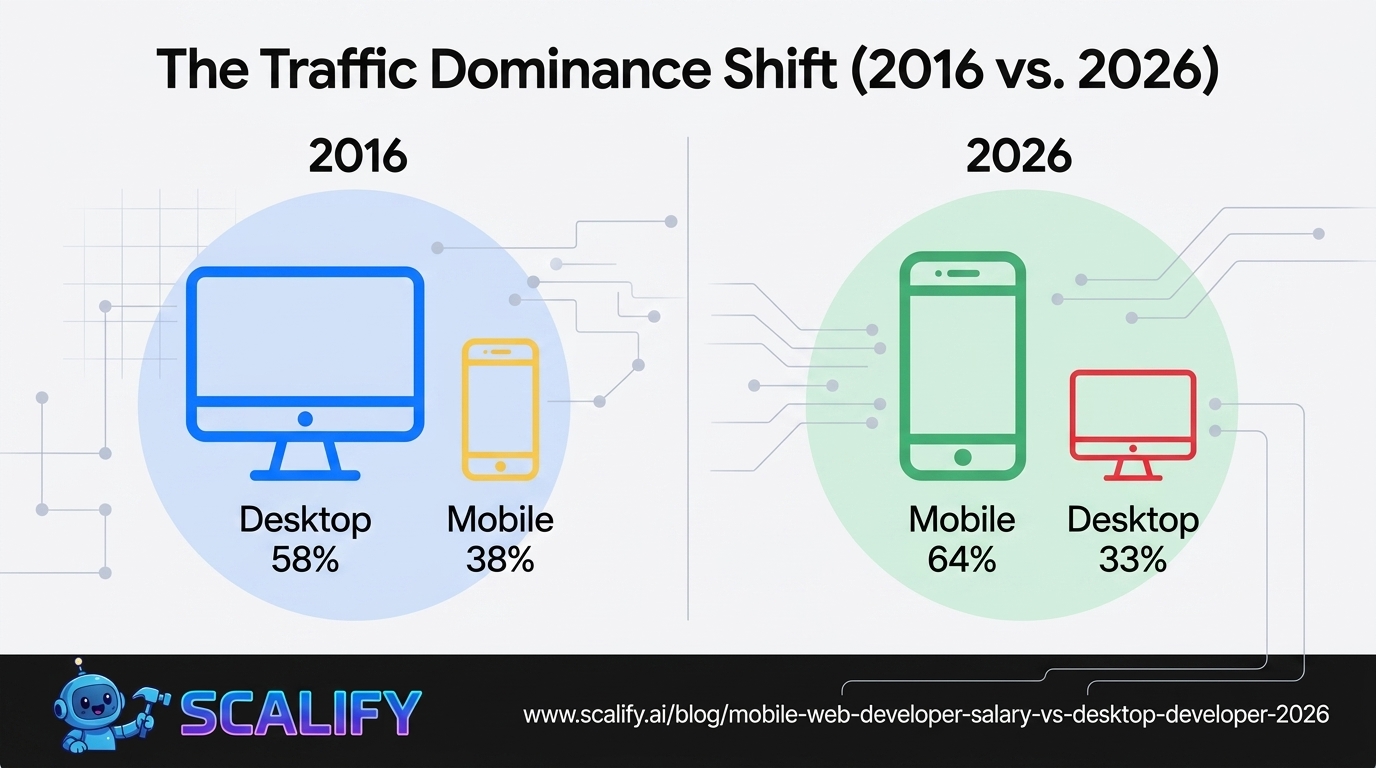
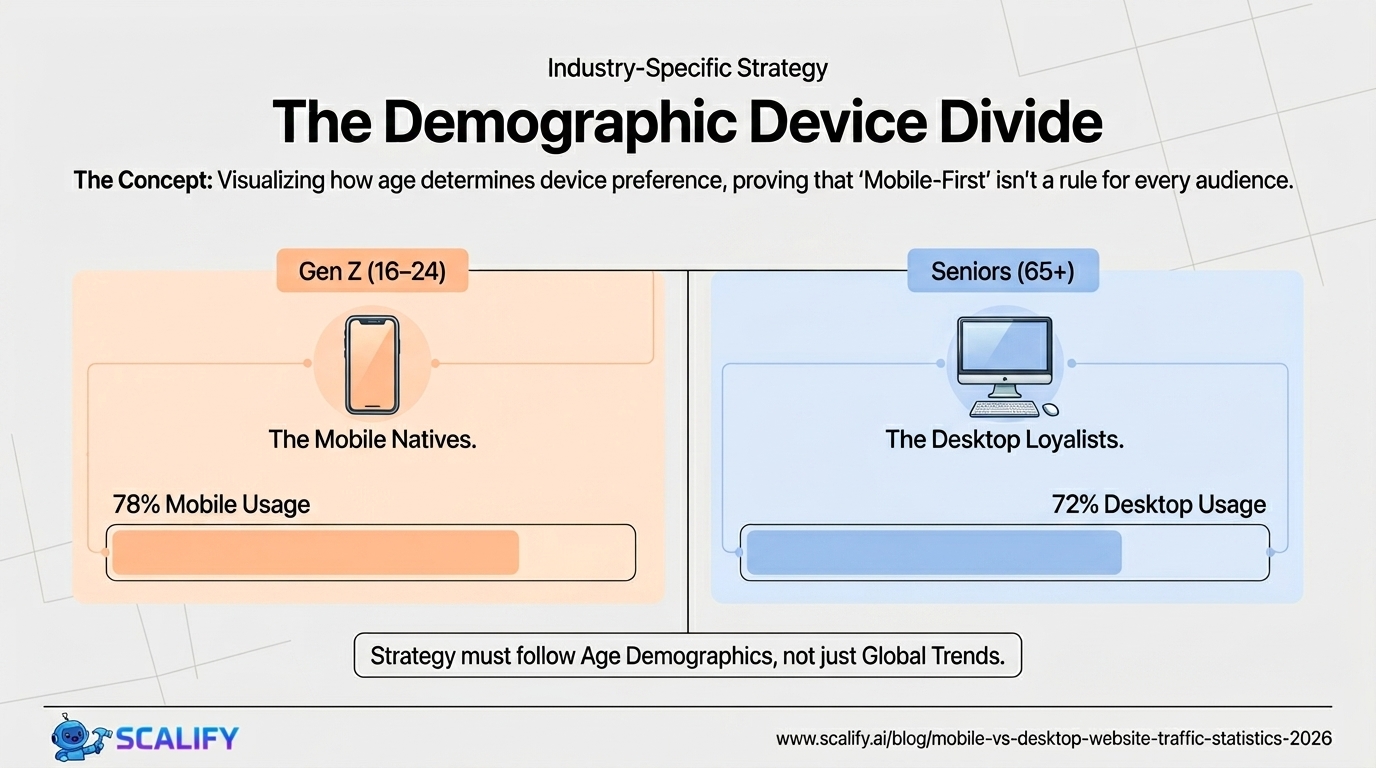
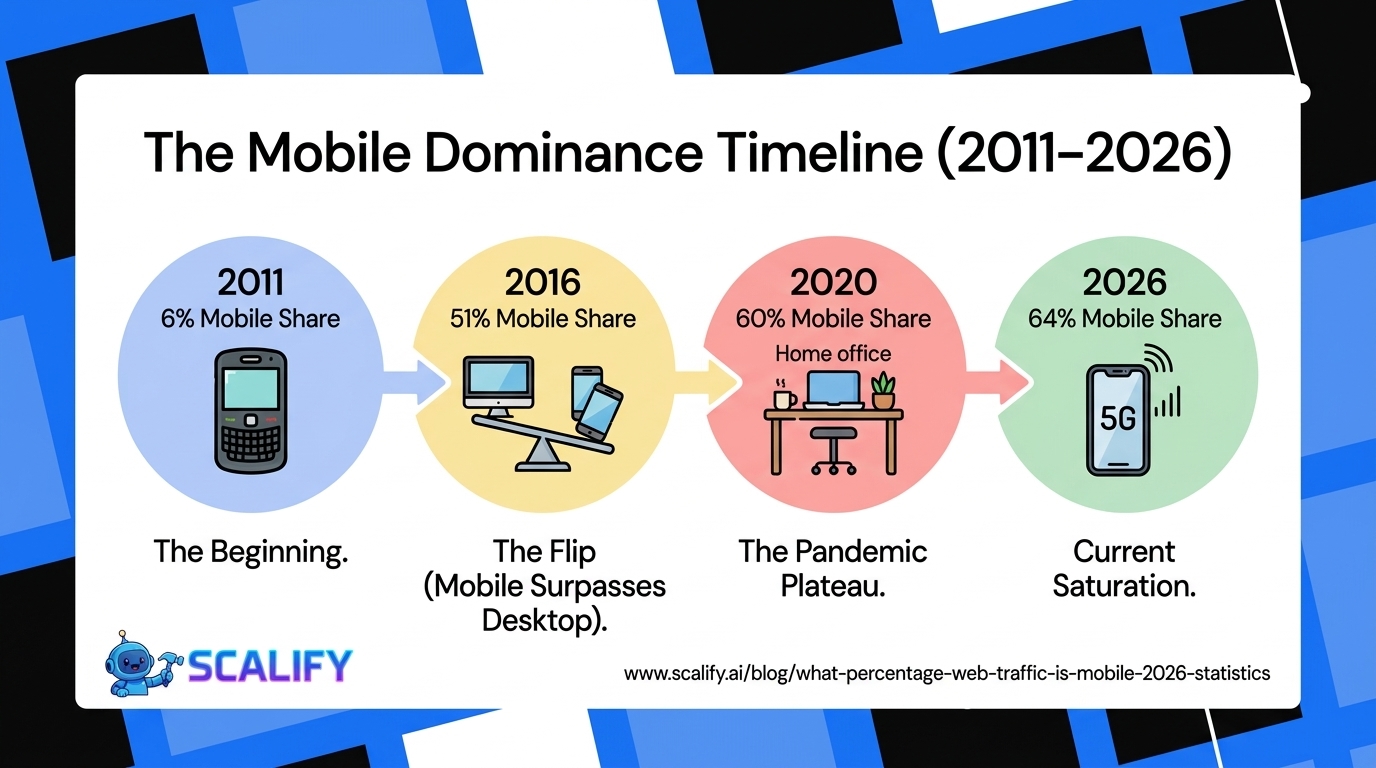
As of 2026, mobile devices account for over 60% of global web traffic. In many regions and industries, that number is closer to 75–80%. The average person reaches for their phone dozens of times per day; reaching for a laptop to browse a website is the exception, not the rule.
And yet many websites are still designed primarily for desktop experiences, with mobile treated as a secondary concern — a version of the site that gets adapted after the "real" design is complete. This approach produces exactly the experience you'd expect: a desktop design compromised to fit a smaller screen, with features that don't quite work, type that's hard to read, and interactions designed for cursor precision rather than thumb imprecision.
Mobile-first design inverts this. It starts with the most constrained context — the small screen, the touch interface, the potentially slow connection — and designs the best possible experience within those constraints. Desktop becomes the expanded version of a mobile-first design, not the opposite. The result is a website that works excellently on mobile because it was designed for mobile, rather than one that merely tolerates mobile because it was designed for desktop.
What Mobile-First Design Is
Mobile-first design is a design methodology that prioritizes the mobile experience as the primary design context. In practice, this means:
Design starts at the smallest viewport: The initial design work happens for a 375px wide screen (common iPhone viewport width) rather than a 1440px wide desktop screen. Every design decision is made within the constraints of mobile first.
Progressive enhancement, not graceful degradation: Traditional desktop-first responsive design starts with the full desktop experience and degrades it for smaller screens (graceful degradation). Mobile-first starts with the essential, functional mobile experience and enhances it for larger screens (progressive enhancement). The mobile version is complete, not a stripped-down compromise.
Touch-first interaction design: Interactive elements are designed for fingers and thumbs — large tap targets, sufficient spacing, interactions that don't depend on hover states that don't exist on touchscreens.
Content prioritization: The limited space of a mobile screen forces decisions about what content is essential. Mobile-first design requires identifying the most important content and ensuring it's immediately visible — which often produces better, more focused design at all screen sizes.
Mobile-First vs. Responsive Design: The Key Distinction
These terms are related but distinct, and the distinction is often confused:
Responsive design describes a technical approach: a website that adapts its layout to different screen sizes using flexible grids, flexible images, and CSS media queries. Responsive design can be implemented mobile-first or desktop-first.
Mobile-first design describes a design philosophy and process: starting design work from the mobile context. Mobile-first design is almost always implemented using responsive design techniques, but responsive design doesn't imply mobile-first philosophy.
The practical difference: a mobile-first responsive site has a mobile layout that was thoughtfully designed from scratch for mobile, with desktop layout as an enhancement. A desktop-first responsive site has a desktop layout that was adapted for mobile — often less successfully, because you're compressing rather than expanding.
In CSS, mobile-first means using min-width media queries (add styles as the screen gets larger) rather than max-width queries (remove styles as the screen gets smaller):
Mobile-first CSS approach:
/* Base styles: mobile */
.container { padding: 16px; }

/* Tablet and up */
@media (min-width: 768px) {
  .container { padding: 24px; }
}

/* Desktop and up */
@media (min-width: 1024px) {
  .container { padding: 48px; }
}
Desktop-first CSS approach (not mobile-first):
/* Base styles: desktop */
.container { padding: 48px; }

/* Tablet */
@media (max-width: 1024px) {
  .container { padding: 24px; }
}

/* Mobile */
@media (max-width: 768px) {
  .container { padding: 16px; }
}
Why Mobile-First Matters Beyond Traffic Share
Google's Mobile-First Indexing
Since 2018, Google uses mobile-first indexing for all websites — meaning Google primarily uses the mobile version of your site for ranking and indexing. Your site is ranked based on how it performs on mobile, not desktop.
If your mobile site is missing content that appears on desktop (a common problem with "mobile versions" that simplified content), Google doesn't see that content for ranking purposes. If your mobile site loads slowly, that's the performance Google evaluates. If your mobile site has poor Core Web Vitals, those are the scores that affect your rankings.
Mobile-first indexing means that your mobile experience is not a secondary concern for SEO — it's the primary experience Google evaluates.
Core Web Vitals Are Measured on Mobile
Google's Core Web Vitals (LCP, CLS, INP) are primarily evaluated on mobile in the context of search ranking signals. A desktop-first site that has excellent performance on desktop but slow, janky performance on mobile will have poor Core Web Vitals scores that affect its search rankings.
Mobile-first design encourages the performance optimizations — compressed images, minimal JavaScript, efficient CSS — that improve mobile performance. These same optimizations typically improve desktop performance too.
Mobile User Behavior Is Different
Mobile users don't behave the same way desktop users do. They:
- Scroll more and click less — vertical swiping is the primary navigation gesture
- Have shorter sessions when browsing, longer when engaged with specific tasks
- Are more likely to call than to fill out a form
- Have less patience for slow loading
- Are often in contexts with divided attention (commuting, waiting, walking)
- Use different parts of their screen — thumb-friendly areas are at the bottom, not the top
Desktop-first design doesn't account for these behavioral differences. Mobile-first design starts by asking: how does a person using their phone accomplish the goal this page serves? The answers often lead to different design decisions than asking the same question about desktop users.
The Principles of Good Mobile-First Design
Typography That Reads Without Zooming
Text smaller than 16px on mobile requires zooming to read. The minimum readable body text size on mobile is 16px — many designers use 17–18px for comfortable reading on small screens. Headlines can be proportionally larger but should be tested at actual mobile size to verify readability.
Line height for body text: 1.4–1.6× the font size. Text that's too tight (low line height) is harder to track when lines are short and there are many of them.
Line length on mobile: content containers should be 100% width on mobile (or very close) with sufficient horizontal padding. Very short line lengths (under 30 characters) create choppy reading rhythm; very long lines require excessive eye movement.
Tap Targets That Can Be Tapped
The average fingertip covers 57mm² of screen area. Tap targets that are too small require precision that most touch interactions don't have. Apple's Human Interface Guidelines specify 44×44 points minimum; Google's Material Design specifies 48×48dp.
In practice, this means: buttons should have sufficient padding to meet minimum height (not just the text itself); links within paragraphs should be clearly distinct and spaced from adjacent links; navigation items should have generous padding; form fields should be full-width or near-full-width on mobile.
Navigation That Works Without Hover
Hover states don't exist on touchscreens. Any navigation pattern that depends on mouse hover — dropdown menus triggered by hovering over a parent item, tooltips that appear on hover, color changes on hover as the only interactive indicator — fails silently on mobile.
Mobile-first navigation: hamburger menu that opens an overlay or drawer, click-triggered dropdowns (not hover), large tap targets for all interactive elements, clear visual feedback on tap (color change, scale animation).
Images Optimized for Mobile Viewports
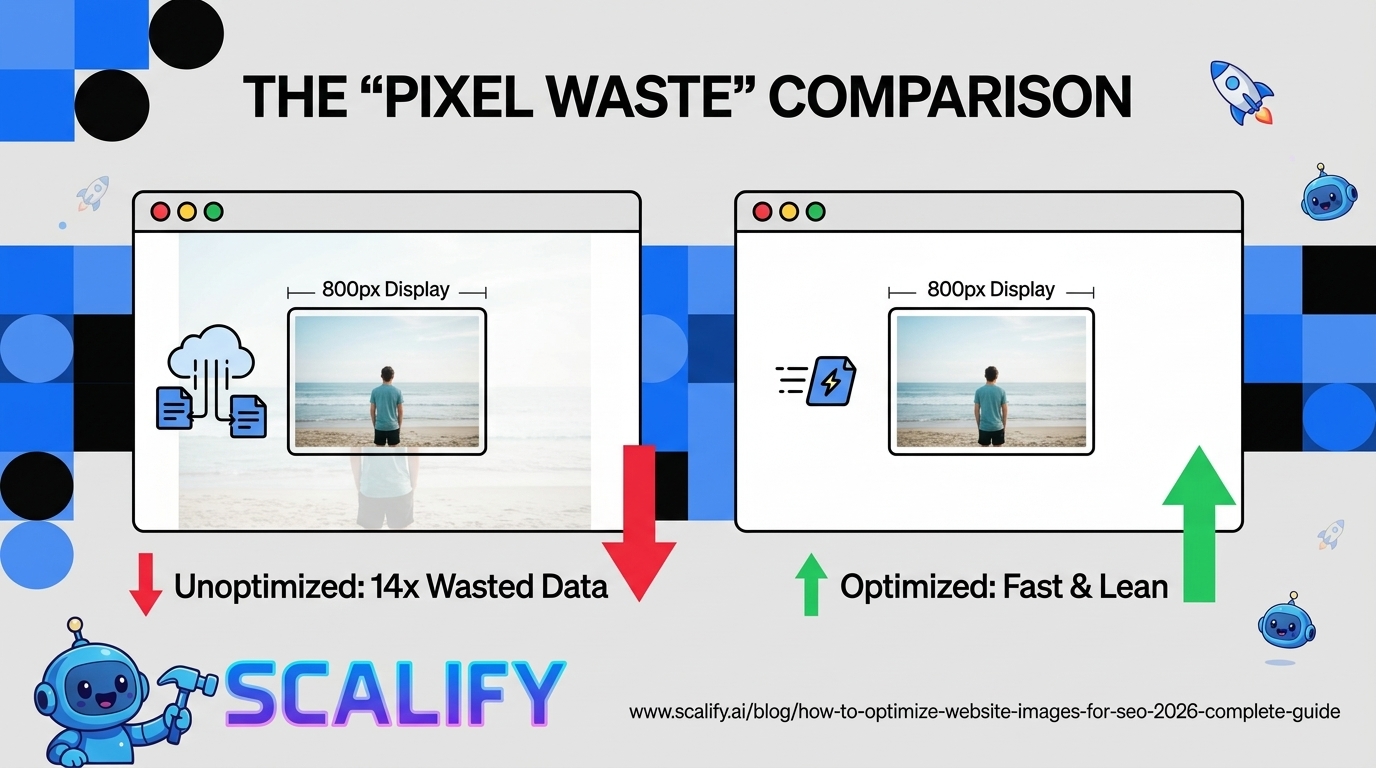
A 3000px wide image displayed in a 375px viewport downloads 80× more data than necessary. Mobile-first design uses responsive image techniques — srcset and sizes attributes — to serve appropriately sized images to appropriately sized screens. Mobile visitors receive smaller files; desktop visitors receive higher-resolution images.
Content Hierarchy Designed for Small Screens
The limited viewport of a mobile screen forces information hierarchy decisions. What's the single most important thing a visitor landing on this page needs to understand? That goes first, above the fold, in the most prominent position. Secondary information follows. Tertiary information is available but not forced on the visitor.
This hierarchy practice almost always produces better design at every screen size — desktop layouts benefit from the focus that mobile constraints impose. Features and information that seemed essential when designing for large desktop screens often turn out to be secondary when designed for mobile first.
Performance as a Design Constraint
Mobile users are disproportionately on slower connections and less powerful devices. Mobile-first design incorporates performance as a design constraint from the beginning — not a technical afterthought.
This means: every hero image decision considers its file size and load time. Every custom font choice considers its download overhead. Every animation or interaction considers its JavaScript cost. Design choices that produce beautiful experiences on fast desktop connections but slow, broken experiences on mobile connections are design failures.
Testing Mobile-First Design
Testing on actual devices is non-negotiable. Chrome DevTools device emulation is useful for quick checks but doesn't fully replicate the rendering, touch behavior, and performance of actual mobile devices.
Essential mobile testing checklist:
- Load the site on an actual iPhone using Safari (iOS Safari has specific CSS behaviors that differ from Chrome)
- Load on an Android device using Chrome
- Test all navigation interactions with thumbs, not cursor
- Fill out all forms on mobile keyboard — verify field labels remain visible during entry
- Check that all tap targets are comfortable to tap without misses
- Verify text is readable without zooming at body text sizes
- Test on a slow 3G connection (Chrome DevTools network throttling) to experience mobile users' performance reality
Common Mobile-First Design Failures
Desktop navigation on mobile: A horizontal nav bar with 7 items, each with dropdown menus, that looks great at 1440px and becomes an unusable mess at 375px. Mobile navigation must be redesigned for mobile — the hamburger menu pattern exists because horizontal desktop nav doesn't scale down.
Hover-only interactions: Buttons that only show their label on hover, dropdowns that open on hover, tooltips that only appear on hover. None of these exist on touchscreens. Every interaction must work with tap/click.
Fixed-width elements: Any element with a fixed pixel width wider than the mobile viewport causes horizontal scrolling — one of the most reliable signals of poor mobile design. All structural elements should use percentage-based or viewport-relative widths.
Auto-playing media: Auto-playing video or audio on mobile is an immediate negative experience — it consumes data the user didn't consent to, disrupts their audio environment, and often loads slowly.
Flash and plugin-dependent content: Essentially extinct at this point, but worth noting: any content requiring Flash or browser plugins doesn't exist on mobile.
The Bottom Line
Mobile-first design is the methodology that produces excellent mobile experiences by design rather than by compromise. With over 60% of web traffic on mobile devices, Google's mobile-first indexing, and mobile-specific Core Web Vitals ranking signals, designing for mobile as the primary context is no longer a preference — it's the baseline expectation for any website that wants to reach and serve its actual audience.
Start every design project at the smallest viewport. Make content hierarchy decisions under the constraint of limited space. Design interactions for thumbs. Optimize for mobile performance. Expand to desktop as an enhancement of a complete mobile design, not as the starting point that mobile needs to accommodate.
At Scalify, every website we build is designed mobile-first — tested on real devices, optimized for mobile performance, and built with mobile users as the primary consideration, because that's who the majority of your visitors are.
Key Takeaways and Next Steps
The principles and data in this guide reflect what actually works in professional web development and digital marketing in 2026 — not theoretical best practices but measured, documented outcomes from implementations at scale. The gap between knowing these principles and benefiting from them is always execution: the businesses that act on what they read, implement changes systematically, and measure the results consistently outperform those who consume information without converting it to action.
For any improvement described in this guide, the implementation sequence that produces the best outcomes: assess your current situation against the benchmarks provided, identify the 2–3 highest-impact improvements specific to your situation, implement them with measurement tracking in place, evaluate results after 30–60 days, and plan the next iteration based on what you learned. This cycle — assess, prioritize, implement, measure, iterate — is the operational foundation of continuous improvement that compounds into significant competitive advantage over the 12–24 month horizon.
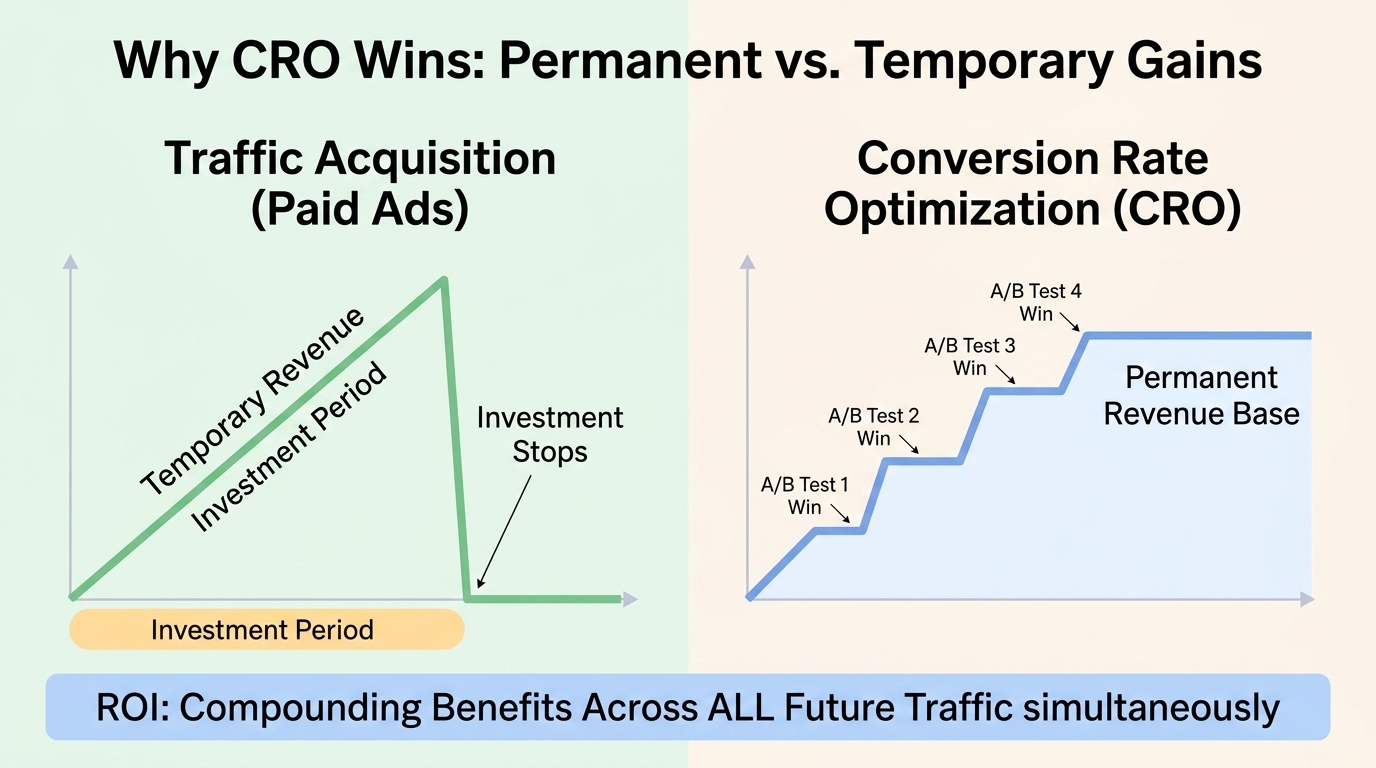
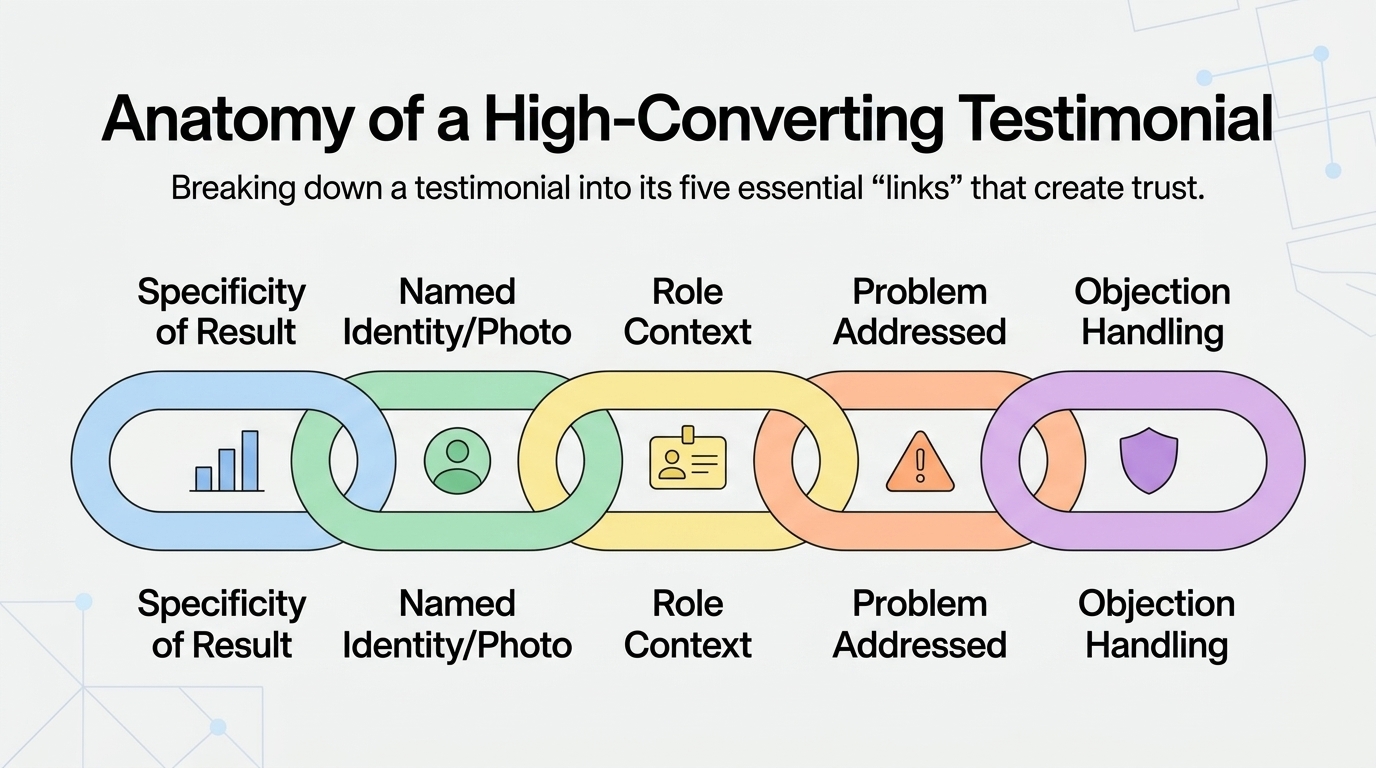
The compounding returns from consistent web presence investment are not linear: a website that improves slightly each month accumulates to dramatic improvements over a year, and those improvements multiply with each other. Faster load times improve both search rankings and conversion rates simultaneously. Better content attracts backlinks that improve rankings that attract more traffic. More testimonials build trust that improves conversion rates that improve revenue that funds more investment. The interconnected nature of website performance means that each improvement amplifies the value of every other improvement — making the decision to invest consistently, across multiple dimensions simultaneously, the highest-ROI approach to digital marketing available to most businesses.
At Scalify, every website we build reflects these principles — technically optimized, conversion-focused, SEO-ready, and designed to compound in value over time as content, backlinks, and organic authority accumulate on the strong foundation we deliver in 10 business days.




















.jpeg)

.jpeg)









78 SW 7th St, Miami, FL 33130