


What Is Email Marketing and How Does It Work with Your Website?
By Josh Ternyak

March 29, 2026
Email marketing remains the highest-ROI digital channel available — and your website is the primary engine for building your list. This guide explains how the two work together and how to build a system that compounds.
The Channel That Outlasts Every Algorithm
Social media reach changes overnight when algorithms shift. Paid advertising costs increase as competition grows. SEO takes months to produce results. Email marketing has been declared dead approximately once per year since 2010 — and keeps producing the highest ROI of any digital marketing channel, year after year after year.
According to the Data & Marketing Association, email marketing delivers an average ROI of $36 for every $1 spent. Campaign Monitor's research puts it at $42. These numbers vary by industry and implementation, but the consistent finding across dozens of studies: email outperforms every other digital marketing channel by a substantial margin when measured by return on investment.
The reason is straightforward: email reaches people who have explicitly opted to hear from you, at a time they choose to check their inbox, in a format that's personal, direct, and doesn't compete with an algorithm. It's the only marketing channel where you own the audience — your list is yours, not a platform's, and it can't be taken from you by a policy change or reach restriction.
This guide explains what email marketing is, how your website feeds and amplifies it, the tactics that build high-quality subscriber lists, and how to structure email campaigns that drive real business outcomes.
What Email Marketing Is
Email marketing is the practice of sending commercial messages to a group of people who have consented to receive them. These messages might be newsletters sharing valuable content, promotional emails announcing offers or new products, transactional emails confirming purchases or appointments, automated welcome sequences introducing new subscribers to your business, or behavioral trigger emails responding to specific subscriber actions.
The key distinction from spam: permission. Legitimate email marketing starts with a subscriber's explicit opt-in — they chose to receive your emails. Unsolicited commercial email isn't email marketing; it's spam, and it's legally regulated in most jurisdictions (CAN-SPAM in the US, GDPR in Europe, CASL in Canada).
The email marketing ecosystem has three primary components:
Your list: The collection of email addresses of people who have opted in to receive your communications. The quality (engagement, relevance, purchase intent) matters more than the size. A list of 500 highly engaged subscribers who match your ideal customer profile produces more revenue than a list of 10,000 unengaged contacts who don't.
Your email service provider (ESP): The software platform you use to create, send, and track emails. Mailchimp, Klaviyo, ConvertKit, ActiveCampaign, HubSpot — these platforms manage your subscriber data, handle deliverability, provide templates, automate sends, and report on performance. Choosing the right ESP for your business size and use case is an important decision.
Your content: The actual emails you send — their messaging, their design, their frequency, their value to subscribers. This is where most email marketing performance differences originate. An engaged list with mediocre content produces mediocre results. A smaller list with consistently excellent, relevant content produces outsized results.
How Your Website Feeds Your Email List
Your website is the primary engine for list growth. Without a systematic, ongoing approach to capturing email addresses from website visitors, your list grows slowly and by accident rather than deliberately and at scale.
The Core Mechanism: Lead Magnets
Most visitors to your website won't subscribe to your email list in exchange for "our newsletter." They have no particular reason to — they don't know you yet, they don't know if your newsletter is valuable, and "newsletter" is a low-value proposition.
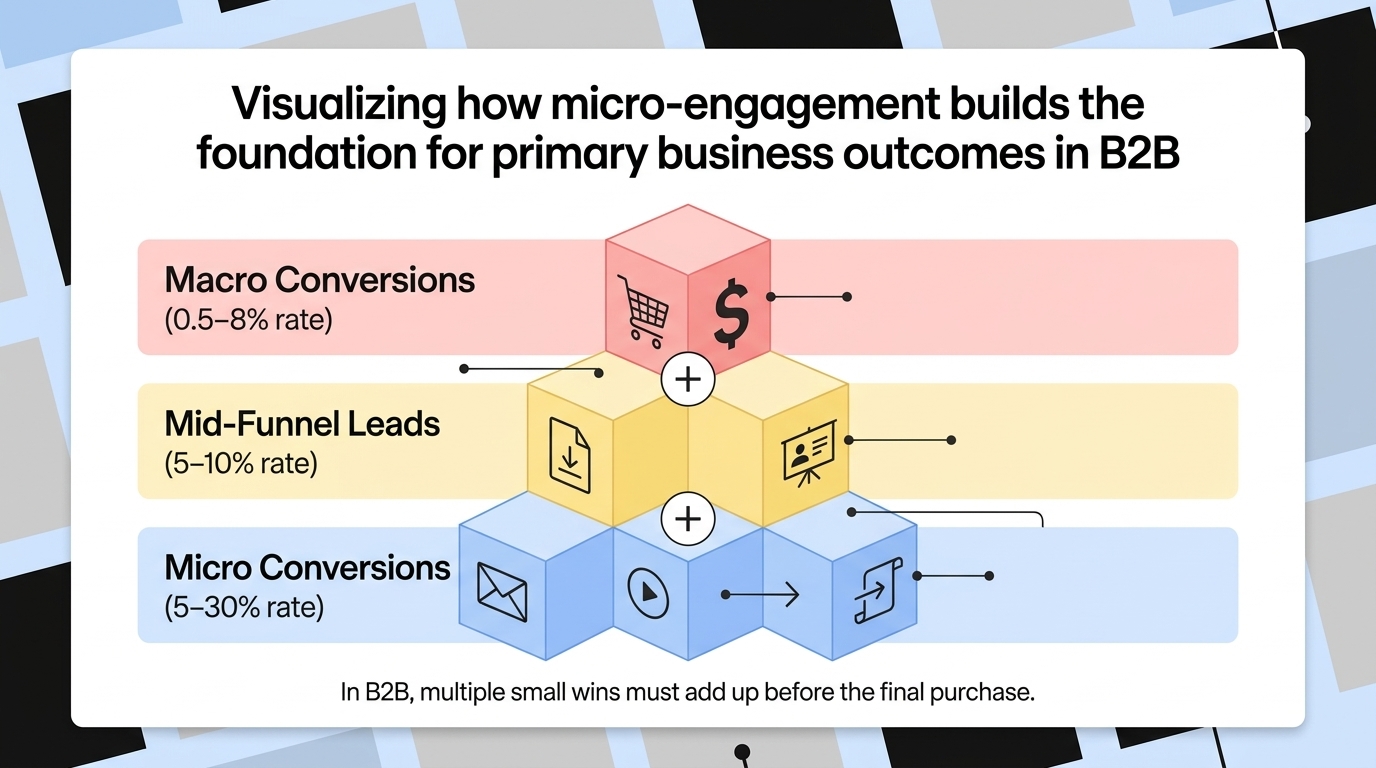
A lead magnet changes this equation: you offer something specific and immediately valuable in exchange for an email address. The visitor receives real value right now; you receive permission to follow up. Done well, lead magnets can convert 5–15% of relevant traffic into subscribers.
Effective lead magnets are:
- Specific: "10 Website Mistakes That Are Costing You Leads (And How to Fix Them)" vs. "Free Resource"
- Immediately valuable: The subscriber gets value right now, before any nurture campaign begins
- Relevant to what you sell: A web design company's lead magnet about website mistakes attracts people interested in website improvement — the exact audience likely to eventually buy web design services
- Easy to consume: A PDF checklist, a short video, a template, a tool — formats that deliver value quickly without requiring significant time investment
Common high-performing lead magnet formats: checklists (quick to consume, immediately actionable), templates (saves the subscriber time they would have spent creating something from scratch), guides or ebooks (comprehensive coverage of a relevant topic), free tools or calculators (tangible utility), webinars or mini-courses (education-focused businesses), and free trials or consultations (for service businesses).
Opt-In Placement on Your Website
Where you place opt-in forms on your website significantly affects how many subscribers you capture. Multiple placements with relevant lead magnets consistently outperform a single newsletter signup form buried in the footer.
Inline blog content: Embed opt-in forms within relevant blog posts, positioned where a reader is most likely to be engaged and receptive. A post about website mistakes could have an inline opt-in halfway through: "Download our complete website audit checklist to find every issue on your site."
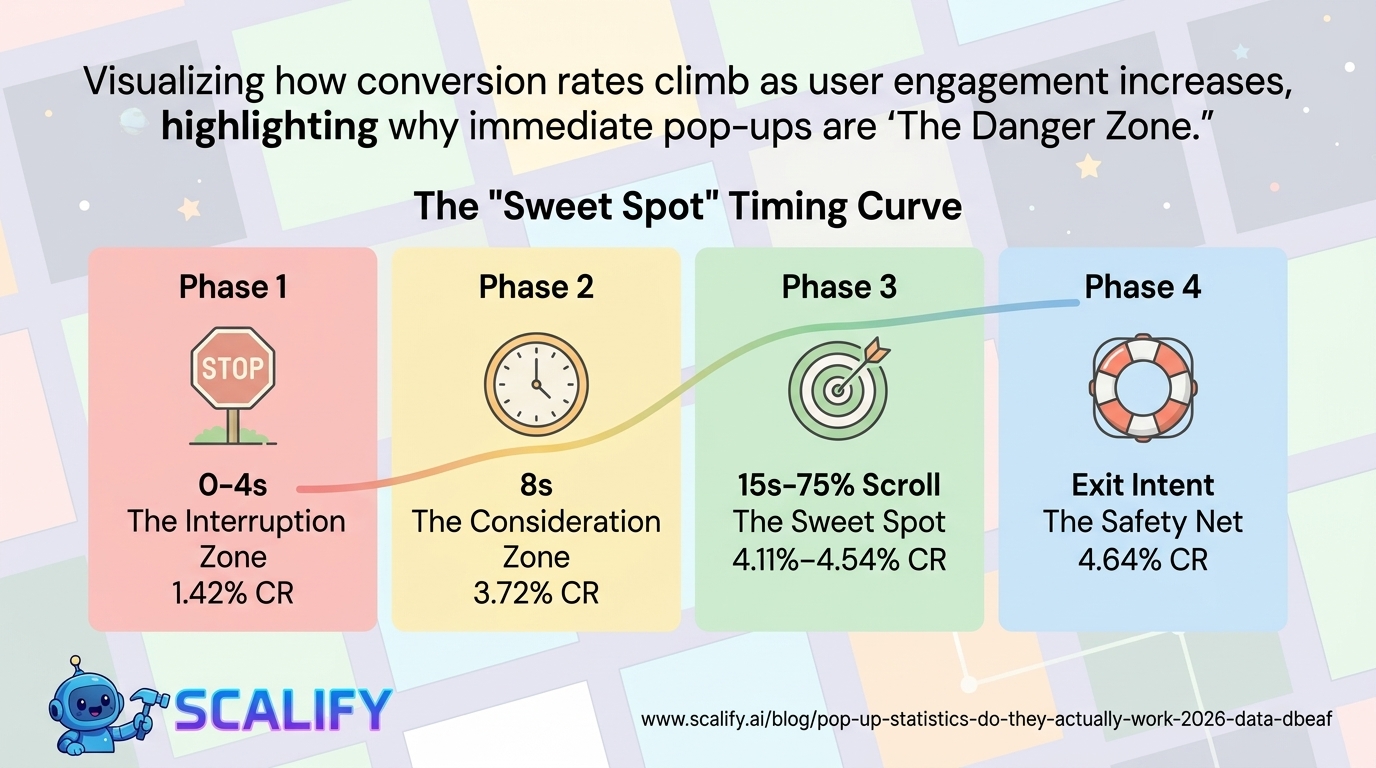
Exit-intent popups: A popup triggered when a visitor shows exit intent (cursor moving toward the browser bar) captures subscribers who were about to leave without subscribing. Exit-intent popups with a relevant lead magnet offer convert at 2–5% of triggered impressions — significant volume given how many visitors trigger them.
Scroll-triggered popups: Popup triggered when a visitor has scrolled 50–70% down a page — indicating genuine engagement with the content before the opt-in ask. Higher quality subscribers than immediate entry popups because they've demonstrated interest.
Dedicated landing pages: A standalone page with no navigation or distracting elements, entirely focused on one opt-in offer. These convert at the highest rates because there's nothing to do except opt in or leave. Drive traffic to them from social media, paid ads, and internal content links.
Footer and sidebar: Lower conversion rates but constantly visible across the site. Worth having for visitors who scroll to the bottom or who aren't yet persuaded by the more prominent opt-ins.
Post-purchase/thank-you pages: Visitors who just converted (contacted you, purchased, downloaded) are highly engaged. A confirmation page that includes an invitation to also subscribe to valuable content captures a segment that's demonstrated interest in your business.
Email List Building Best Practices
Prioritize Quality Over Quantity
A list of 1,000 engaged subscribers who consistently open your emails, click your links, and buy your products is worth significantly more than a list of 10,000 unengaged contacts who rarely open anything. Engagement rate (open rate, click rate) is a critical deliverability signal — ISPs assess sender reputation based on how recipients interact with emails. High engagement signals that you're a trustworthy sender; low engagement signals spam risk.
Tactics that inflate list size without quality: adding everyone who's ever emailed you, importing contact lists from events without explicit opt-in, using very broad lead magnets that attract large volumes of barely-relevant subscribers. These approaches often backfire — large, unengaged lists hurt deliverability and produce poor results despite impressive subscriber counts.
Double Opt-In
Double opt-in requires new subscribers to confirm their email address by clicking a link in a confirmation email before they're added to your list. This extra step:
- Ensures email addresses are valid (no typos)
- Confirms active interest (someone who doesn't bother confirming wasn't that interested)
- Significantly reduces spam complaints
- Provides legally stronger consent documentation under GDPR
The trade-off is a lower raw subscriber count — some people don't complete the confirmation step. But the subscribers who do confirm are more engaged and more valuable than those who wouldn't have completed the confirmation. For businesses prioritizing list quality (which should be all of them), double opt-in is the right default.
Clean Your List Regularly
Over time, email lists accumulate inactive subscribers — people who haven't opened an email in 6–12+ months. These subscribers depress your engagement metrics and hurt deliverability. Regular list cleaning — re-engagement campaigns followed by removal of persistently unengaged subscribers — maintains list health and deliverability.
A simple re-engagement campaign: send a specific email to long-inactive subscribers asking if they want to stay subscribed ("Are you still interested in hearing from us? Click here to confirm."). Those who click stay; those who don't get removed. This reduces list size but significantly improves engagement metrics and deliverability.
Email Automation: Working While You Sleep
Email automation is where email marketing's compounding value really becomes apparent. Automated email sequences — triggered by subscriber actions or schedules — deliver relevant, timely content to subscribers without manual effort for each send.
Welcome Sequence
The welcome sequence is the most important email automation for any list. When someone subscribes, they're at peak interest and engagement — they just voluntarily gave you their email address. A well-designed welcome sequence capitalizes on this moment.
A typical 4–7 email welcome sequence might include:
Email 1 (immediate): Deliver the promised lead magnet. Thank them for subscribing. Set expectations about what they'll receive and how often.
Email 2 (day 2): Introduce your story and your perspective — who you are, why you do what you do, what you stand for. Humanize the relationship before any sales messaging.
Email 3 (day 4): Your most valuable content piece. The blog post, guide, or resource that represents your best thinking on a topic relevant to why they subscribed.
Email 4 (day 6): Address the primary problem your business solves. Identify with their challenge before presenting your solution.
Email 5 (day 8): Social proof. Customer success stories, testimonials, or case studies relevant to the type of result they're looking for.
Email 6 (day 10): A gentle introduction to your core offer. Not a hard sell — an invitation to learn more or take the next step for those who are ready.
Welcome sequences consistently produce much higher open and click rates than regular broadcast emails because they're sent at maximum engagement — and they do the relationship-building and trust work that makes subsequent emails more effective.
Behavioral Trigger Emails
More sophisticated email automation responds to specific subscriber behaviors with relevant content:
Browse abandonment: A subscriber who visited your pricing page but didn't take action receives a follow-up email addressing pricing questions and objections.
Content engagement sequences: A subscriber who clicked a specific article gets a follow-up sequence with related content on that topic.
Cart abandonment: For e-commerce, an automated email (or sequence of emails) sent when someone adds items to cart but doesn't purchase. Cart abandonment emails recover 5–15% of abandoned carts that would otherwise be permanently lost.
Re-engagement: Automated sequence triggered when a subscriber hasn't opened in 90 days, designed to remind them of your value and confirm their continued interest.
Email Content That Gets Opened, Read, and Clicked
Subject Lines
Your subject line determines whether your email gets opened or ignored — in a crowded inbox, it's competing for attention against dozens of other messages. The elements of effective subject lines:
Curiosity gap: Suggests there's something worth knowing without revealing everything. "The one mistake that's halving your conversion rate" is more compelling than "Tips to improve conversion rate."
Specificity: "5 website changes that increased our leads by 40%" is more compelling than "How to get more leads."
Personalization: First-name personalization in subject lines increases open rates modestly. More impactful: segmentation that sends different emails to different subscriber groups — subscribers interested in SEO receive subject lines about SEO topics.
Urgency and scarcity when genuine: "Offer expires Sunday" increases opens when the deadline is real. When it's not real, subscribers learn to ignore it.
Test subject lines through A/B testing in your ESP. Over time, you'll develop a sense for what resonates with your specific audience.
Email Body Content
The best-performing email content delivers genuine value — something the subscriber is glad they received, something they forward to colleagues, something that makes them anticipate the next email.
Format considerations: Plain text emails often outperform heavily designed HTML emails for relationship-building and click-through rates. They feel more personal, more human, more like a message from someone who cares rather than a broadcast. This doesn't mean all emails should be plain text — it depends on your brand and the type of email. Promotional emails benefit from visual design; personal relationship-building emails often perform better in plain text.
Every email should have one primary purpose and one primary CTA. The email that tries to sell a product, share a blog post, announce an event, and tell a story simultaneously does none of them well. Focus each email on a single ask, and make that ask clear and prominent.
Measuring Email Marketing Performance
Track these metrics to understand what's working and what needs improvement:
Open rate: Percentage of subscribers who opened the email. Average varies significantly by industry — 20–30% is generally healthy for businesses with engaged lists. Influenced primarily by subject line quality and sender reputation.
Click-through rate (CTR): Percentage of recipients who clicked at least one link. Average 2–5% for broadcast emails, higher for triggered sequences. Influenced by email content relevance and CTA clarity.
Click-to-open rate (CTOR): Percentage of openers who clicked. This is a purer measure of email content quality than CTR — it measures engagement among those who actually read the email, removing open rate as a variable.
Conversion rate: Percentage of email recipients who took the desired action (purchased, signed up, booked, submitted). The ultimate measure of email marketing effectiveness from a business perspective.
Unsubscribe rate: Percentage who unsubscribed. A small unsubscribe rate (under 0.5% per email) is normal and healthy — people who aren't interested are self-selecting out. High unsubscribe rates signal content relevance problems.
Revenue per email / revenue per subscriber: For e-commerce and businesses with direct revenue tracking, this metric directly connects email marketing to business outcomes.
Legal Requirements: CAN-SPAM, GDPR, and CASL
Email marketing is legally regulated in most major markets. Non-compliance creates legal risk and undermines deliverability. The key requirements across major regulations:
Permission: Recipients must have opted in to receive commercial email. GDPR requires documented, affirmative consent for EU subscribers — pre-checked boxes don't qualify.
Identification: Every commercial email must clearly identify the sender and provide a valid physical address.
Unsubscribe mechanism: Every email must include a clear, functional unsubscribe link. Unsubscribe requests must be honored within 10 business days (CAN-SPAM) or immediately (GDPR best practice).
Honest subject lines: Subject lines cannot be deceptive. "Re: our conversation" as a subject line when there's been no conversation is CAN-SPAM violation territory.
Quality email service providers (Mailchimp, Klaviyo, ConvertKit, etc.) enforce these requirements through their terms of service and provide the technical infrastructure (unsubscribe links, physical address fields) to comply. Following their terms of service generally keeps you compliant.
The Bottom Line
Email marketing is the highest-ROI digital marketing channel available — consistently delivering $36–42 for every dollar invested when done well. Your website is the primary engine for list growth: opt-in forms, lead magnets, and exit-intent capture turn anonymous visitors into subscribers you can engage, nurture, and convert indefinitely.
The businesses that build email marketing right — high-quality list growth, valuable content, intelligent automation, consistent measurement — build a compounding asset that delivers returns for years. Every subscriber added today is a potential customer for every offer you make in the future. That's the compounding power of owning your audience.
Start with a clear lead magnet that provides immediate value to your target audience. Add an opt-in form to your highest-traffic pages. Build a welcome sequence. Send consistently valuable content. Measure, learn, improve. The list you build today will be one of your most valuable marketing assets in three years.
At Scalify, every website we build includes strategic placement of email opt-in opportunities — because the list you build through your website is one of the highest-value outcomes of having a great one.





.jpeg)
.jpeg)

78 SW 7th St, Miami, FL 33130