


What Is a Pillar Page and How Does It Build SEO Authority?
By Josh Ternyak

March 29, 2026
Pillar pages are the cornerstone of a topic cluster SEO strategy — and they're one of the most powerful ways to build topical authority that compounds over time. This guide explains what they are and exactly how to build one.
The SEO Strategy That Signals Expertise to Google
Google's ranking algorithms have evolved from counting keywords to understanding topics. The question isn't just "does this page mention the keyword?" — it's "does this site demonstrate genuine expertise and comprehensive coverage of this topic area?" Sites that cover a topic deeply and broadly rank better for all queries in that topic space than sites that have one or two articles on the subject.
This evolution has made topical authority — the recognition by Google that a site is an authoritative resource in a specific domain — one of the most valuable SEO assets a business can build. And the pillar page is the structural foundation of a topical authority strategy.
A pillar page is the cornerstone resource on a topic — the comprehensive, authoritative reference that serves as the hub of a content cluster. It's the page that establishes your authority on a subject and links outward to the in-depth cluster content that demonstrates the full breadth of your expertise.
What a Pillar Page Is
A pillar page is a comprehensive, in-depth piece of content that covers a broad topic area thoroughly — serving as the central resource for that topic on your website. It's called a "pillar" because it supports a cluster of related content around it, the way structural pillars support a building.
The pillar page is different from a regular blog post in scope, intent, and depth:
Scope: A pillar page covers an entire topic, not one angle of a topic. "The Complete Guide to Web Design" is a pillar page concept. "How to Choose the Right Font for Your Website" is a cluster page concept — one specific aspect of web design covered in depth.
Intent: A pillar page aims to be the most comprehensive resource on a topic on your site, the page that serves as a reference that visitors and internal content link back to. It should answer the most important questions about the topic, provide the foundational knowledge, and point to deeper resources for each subtopic.
Depth: Pillar pages are typically long — 2,500–10,000+ words — because comprehensive coverage of a broad topic requires substantial content. But length for its own sake defeats the purpose; every section should genuinely add value.
The Pillar-Cluster Model Explained
The pillar-cluster (also called hub-spoke or topic cluster) content model organizes your content around topic areas rather than individual keywords:
The pillar page targets a broad, competitive head keyword ("web design," "SEO," "email marketing"). It covers the topic comprehensively at a high level, providing context and foundation for each major subtopic.
Cluster pages are individual in-depth articles covering specific subtopics within the pillar's domain. For a "web design" pillar, cluster pages might include: "what is responsive web design," "how to choose a web design agency," "website color palette guide," "typography best practices for websites." Each cluster page covers its specific angle thoroughly.
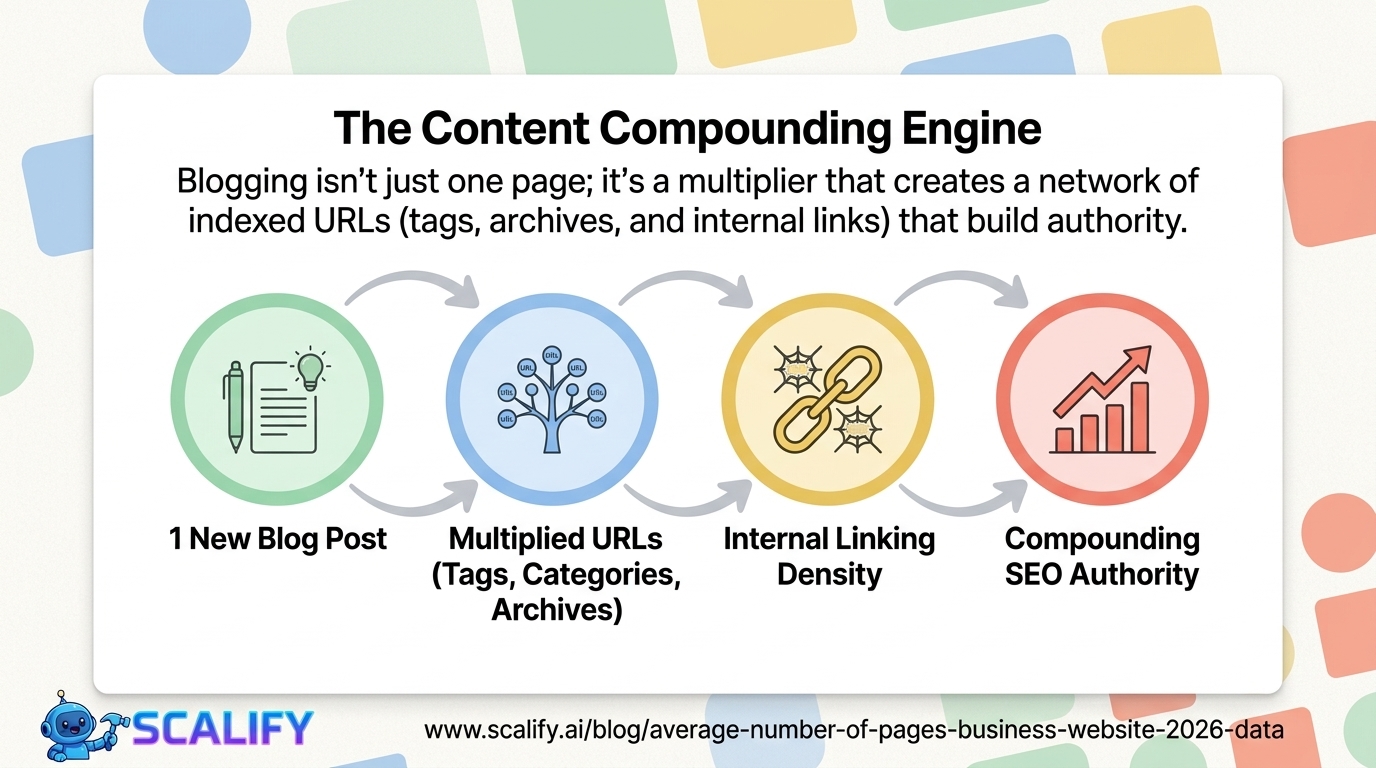
Internal linking structure: The pillar page links to each cluster page. Each cluster page links back to the pillar page. Related cluster pages may cross-link to each other. This creates a network of mutually reinforcing content that signals comprehensive topical coverage.
The SEO benefit of this structure:
Google understands the relationship: The internal link network signals to Google that these pages are thematically related and that your site covers this topic area broadly. This topical relationship helps all pages in the cluster rank better than they would in isolation.
Link equity flows beneficially: The pillar page receives internal links from every cluster page, accumulating internal PageRank that reinforces its authority position. The pillar page then distributes some of that equity outward to cluster pages through its outbound internal links.
Long-tail coverage supports head term rankings: The cluster pages rank for specific long-tail queries. As the pillar page accumulates authority from being comprehensively covered in the cluster, it becomes more competitive for the broad head keyword it targets.
What Makes a Pillar Page Effective
Comprehensive Coverage of the Topic
The defining characteristic of a pillar page is comprehensive coverage. Every significant subtopic within the broad topic should receive at least some treatment. A visitor landing on your "Complete Guide to Web Design" pillar page should find: what web design is, why it matters, the components of web design (visual design, UX, responsive design, performance), how to evaluate web design quality, what the web design process looks like, how to hire a web designer or agency, and what the typical costs are.
They should also find links to deeper resources — your cluster pages — for any subtopic where they want more depth.
The test of comprehensive coverage: would a visitor who reads this page have sufficient foundational knowledge about this topic to make informed decisions? Would they know what questions to ask a specialist? Would they be able to navigate the topic intelligently even if they're a complete beginner?
Targeting the Right Keyword
Pillar pages target competitive, high-volume head keywords that you might not be able to rank for with a single blog post but could compete for with a comprehensive resource backed by a full content cluster.
Characteristics of good pillar page keywords:
- High search volume (typically 1,000–50,000+ monthly searches)
- Broad enough to support multiple subtopics
- Informational or commercial investigation intent (not transactional — "buy web design" is not a pillar keyword)
- Relevance to your core business area
- Competition level that's achievable given your domain authority and content quality with a full cluster supporting it
Strong Internal Linking Architecture
A pillar page without cluster content and internal links is just a long article. The internal linking structure is what activates the pillar-cluster model's SEO benefits.
For each major section of the pillar page that corresponds to a cluster article: include a brief treatment of that subtopic and a clear link to the dedicated cluster article. "For a deep dive into responsive design specifically, read our complete guide to responsive web design →." This serves readers (giving them a clear path to more depth) and search engines (signaling the relationship between the pillar and cluster pages).
Clear Organization and Navigation
Long-form content on a single page benefits from navigation structure that helps readers find the sections most relevant to them:
- A table of contents with anchor links at the top (helps readers navigate directly to relevant sections)
- Clear H2 headings for each major section
- H3 and H4 subheadings for subsections within major sections
- A logical progression from foundational concepts to advanced topics
The table of contents serves SEO purposes as well: it creates a clear page structure that Google's crawlers can use to understand the page's scope and provide sitelinks or expanded results in search.
Evergreen Content Designed for Long-Term Value
Pillar pages should be designed as long-term reference resources, not time-sensitive posts. They're worth the investment of significant creation effort because they continue generating organic traffic and ranking authority for years — but only if the content is maintained.
Build annual or biannual content reviews into your process for pillar pages: update statistics, add new subtopics that have emerged, revise sections that have become outdated, and ensure all internal links to cluster pages are current. An outdated pillar page signals declining maintenance that can hurt rankings for the entire cluster.
Building a Pillar Page: The Process
Step 1: Select the Topic
Choose a topic that:
- Is central to your business expertise — you can write about it authoritatively
- Has sufficient scope to support 8–15 cluster articles
- Has competitive head keywords worth targeting
- Aligns with what your target audience researches before buying from businesses like yours
For a web design agency: "Web Design," "Website Design for Small Businesses," or "SEO for Websites" might all be strong pillar page topic candidates.
Step 2: Map the Cluster
Before writing the pillar page, map the full cluster. What specific subtopics does this broad topic contain? What questions would someone learning about this topic need answered? What long-tail keywords do those subtopics represent?
This cluster mapping serves two purposes: it outlines the pillar page (each subtopic gets a section) and it creates the backlog of cluster articles to produce over coming months.
Step 3: Research What Currently Ranks
Search your pillar keyword and analyze the top-ranking pages. What do they cover? What depth do they reach? What's missing that you could add? Your pillar page needs to be more comprehensive and more useful than what currently ranks — that's how it earns its position.
Step 4: Write the Pillar Page
With your topic, cluster map, and competitor research in hand:
Write an introduction that establishes what the page covers and who it's for. Structure major sections around the cluster subtopics. Cover each subtopic at the right depth for a pillar page — enough to provide genuine value and context, not enough to replace the dedicated cluster article. Link to cluster articles as they exist (or plan for links once the cluster articles are published). End with a clear CTA relevant to the topic.
Step 5: Publish and Build the Cluster
Publish the pillar page first — it serves as the organizational anchor for the cluster. Then publish cluster articles one by one, each linking back to the pillar page and receiving a link from the pillar page when added.
Building a complete cluster with 8–15 articles takes months at a typical content production pace. The pillar page's authority builds progressively as each cluster article is published and the internal link network grows.
Pillar Pages vs. Long-Form Blog Posts
There's genuine confusion about the difference between a pillar page and a very long blog post. The distinctions:
Purpose: A pillar page's primary purpose is to be the authoritative hub resource on a topic, supporting a cluster. A long blog post's primary purpose is to comprehensively cover one specific angle of a topic.
Target keyword: Pillar pages target broad head keywords. Long blog posts target specific long-tail keywords. Both are important; they serve different roles in the content hierarchy.
Update intent: Pillar pages are designed to be maintained indefinitely as evergreen references. Blog posts may become dated and be archived or updated less systematically.
Internal linking role: Pillar pages are hub pages that other content links to. Blog posts are typically cluster content that points back to pillar pages.
These aren't absolute distinctions — a very long, comprehensive blog post can function as a pillar page even without the explicit label. What matters is the content's role in the site's topical architecture, not the label applied to it.
Real-World Pillar Page Examples
Examples of pillar page approaches across different business types:
Web design agency: "The Complete Guide to Website Design for Small Businesses" — covers what web design is, why it matters, design principles, platform choices, cost expectations, process, and how to evaluate quality. Cluster articles: individual guides to responsive design, color palettes, typography, CMS platforms, website cost, web design agencies, portfolio best practices, etc.
Digital marketing agency: "The Complete Guide to SEO for Business Owners" — covers what SEO is, how search engines work, keyword research, content strategy, technical SEO, link building, local SEO, measuring results. Cluster articles: individual deep dives into each subtopic.
Law firm: "Everything Small Business Owners Need to Know About Employment Law" — covers hiring, discrimination law, wage requirements, non-compete agreements, termination procedures. Cluster articles: specific guides to each area.
The Bottom Line
Pillar pages are the architectural foundation of a topical authority SEO strategy. By creating a comprehensive resource on a broad topic and connecting it to a cluster of in-depth articles through intentional internal linking, you signal to Google that your site is a genuinely authoritative resource in your domain — not just a site with a few articles on related topics.
The investment is substantial: a quality pillar page requires significant research and writing effort, and building a full cluster takes months of content production. The return is also substantial: pillar pages and their clusters can drive significant, compounding organic traffic for years and establish the kind of topical authority that makes ranking new content in the topic area progressively easier.
At Scalify, we've built this blog as a topical authority hub — hundreds of articles covering every dimension of web design, SEO, and digital marketing, all interconnected in a cluster architecture designed to compound in search authority over time.




.jpeg)
.jpeg)


78 SW 7th St, Miami, FL 33130