


What Is a Website FAQ Page and How Do You Optimize It for SEO?
By Josh Ternyak

April 1, 2026
Comprehensive 2026 guide: What Is a Website FAQ Page and How Do You Optimize It for SEO?
The Most Underrated Page on Your Website
Most businesses treat their FAQ page as an afterthought — a place to dump common support questions, created once, never updated, visited mainly by confused existing customers. It sits in the footer navigation, ignored by the marketing team, earning occasional visits but generating no leads and producing no SEO value.
This is a significant missed opportunity. A well-designed FAQ page is simultaneously one of your most powerful conversion tools and one of your best SEO assets:
As a conversion tool: FAQ content directly addresses the questions and objections that prevent interested visitors from becoming clients. When someone is hesitating before reaching out — wondering about process, pricing, timeline, or whether you're right for their situation — a comprehensive FAQ answers those questions before they have to ask. You're handling objections at scale, 24 hours a day.
As an SEO tool: question-based search queries are among the most common and most specific search patterns in Google. "How long does it take to build a website?" "How much does a custom website cost?" "What is included in web design?" These are real queries with real search volume that your FAQ page can rank for — capturing searchers at the exact moment they're researching the purchase decision you want them to make.
What Makes a Great FAQ Page
Answer the Questions Your Prospects Actually Have
The most common FAQ page failure: questions written by the marketing team, answered in marketing language, addressing concerns the company wants to address rather than questions prospects are actually asking.
Real prospect questions come from real sources. Talk to your sales team — what do prospects ask in every first call? Review your email inbox — what questions show up repeatedly from people considering hiring you? Check your chat transcripts — what does live chat traffic ask about? Search your query data in Google Search Console — what questions are people searching that lead them to your site?
These are your FAQ questions. The stuff about "what is your company's founding philosophy" is not.
The questions worth answering in your FAQ:
- Process and timeline: How does it work? How long does it take? What happens after I contact you?
- Pricing and value: How much does it cost? What's included? What's not included?
- Risk and guarantees: What if I'm not happy? How many revisions do I get? What's your refund policy?
- Fit and eligibility: Do you work with [my type of business]? What size businesses do you serve? Do you work in my industry?
- Technical specifics: What platform do you build on? Will I be able to update my own site? What about hosting?
- After the project: What happens after launch? Do you offer maintenance? Who owns the site?
Write Substantive Answers
FAQ answers deserve depth. The common mistake: writing one or two sentences that acknowledge the question without actually answering it. "Our pricing varies depending on the project scope" is a non-answer. A substantive answer tells visitors what they actually need to know: "Our custom websites start at $X. Most small business sites fall in the $X–$X range depending on page count, custom functionality, and whether content creation is included. We provide a detailed quote after a brief discovery call where we understand your specific requirements."
The test for a good FAQ answer: would a visitor who reads this answer be able to make a more informed decision, or would they still need to ask the same question to someone? If they'd still need to ask, the answer is insufficient.
Substantive answers serve dual purposes: they're more useful to visitors (which improves conversion), and they're more likely to rank in Google (which drives more qualified organic traffic). Thin FAQ answers rarely earn rich results in search; comprehensive answers frequently do.
Organize Questions into Categories
For FAQ pages with more than 8–10 questions, organize into logical categories that visitors can navigate. Common categories for a service business FAQ:
- Working With Us (process, onboarding, communication)
- Pricing and Value (costs, what's included, payment terms)
- The Project (timeline, deliverables, revisions)
- After Launch (maintenance, updates, support)
- Technical Questions (platform, hosting, integrations)
Category organization reduces the effort required to find specific answers and improves the page's usability for visitors with specific questions in mind.
Use Accordion/Expandable Format
Long FAQ pages where every answer is visible simultaneously are overwhelming to scan. An accordion format — where each question is shown as a header and the answer expands when clicked — keeps the page visually manageable while making all questions immediately visible.
This format also works well with FAQPage schema markup (structured data that enables Google to show FAQ dropdowns directly in search results). Accordion-formatted FAQs with proper schema can earn SERP real estate that shows questions and answers without requiring a click to the page — significant visibility benefit.
FAQ Pages and SEO: The Full Opportunity
Question Keywords and Featured Snippets
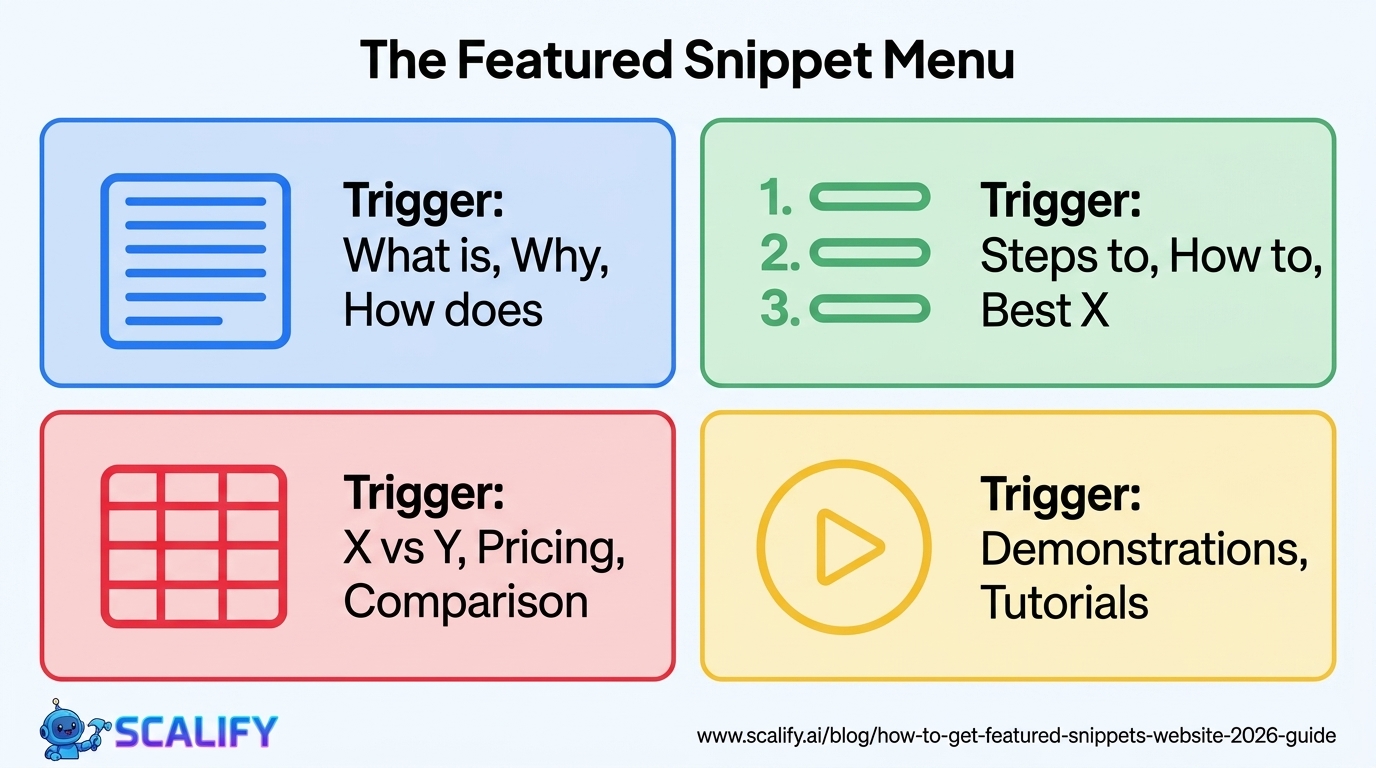
Google's featured snippet — the box at the top of search results that shows a direct answer to a query — frequently displays FAQ-style content. A well-written answer to a specific question can earn a featured snippet position that appears above all organic results, dramatically increasing visibility for that query.
Featured snippets are earned by: targeting a specific question people are searching for, providing a direct, complete answer early in the response (ideally in the first paragraph), keeping the answer concise but substantive (40–60 words is often the sweet spot for snippet-eligible answers), and using the question itself as a heading (H2 or H3) that clearly identifies what the section answers.
To find featured snippet opportunities: search your target FAQ questions in Google and note which results have featured snippets. If a competitor has one, their answer can be improved upon. If no featured snippet exists, there may be an opportunity to earn one with a well-structured answer.
FAQPage Schema for Rich Results
FAQPage structured data markup tells Google that your page contains FAQ content, enabling it to show your questions and answers as expandable rich results directly in the SERP. When a user searches a question and your FAQ page is deemed relevant, Google may display your page with the top 2–3 questions and answers visible without requiring a click.
Implementation: add JSON-LD markup in the page's <head> identifying each question-answer pair:
<script type="application/ld+json">
{
  "@context": "https://schema.org",
  "@type": "FAQPage",
  "mainEntity": [
    {
      "@type": "Question",
      "name": "How long does it take to build a website?",
      "acceptedAnswer": {
        "@type": "Answer",
        "text": "Our custom websites are delivered in 10 business days from project kickoff..."
      }
    }
  ]
}
</script>
This markup enables Google to display your FAQ as expanded rich results — significantly more SERP real estate than a standard result and higher click-through rates.
Important: only mark up FAQ content that is actually present and visible on the page. Marking up questions and answers that aren't on the page violates Google's structured data guidelines.
Long-Tail Keyword Targeting
Each FAQ question is an opportunity to target a specific long-tail keyword. "How long does it take to build a custom website?" has specific search volume. "What platform do you build websites on?" has specific search volume. "Do you work with restaurant businesses?" may have local or niche search volume.
By writing FAQ questions to match how people actually search (rather than how you'd phrase them internally), each question becomes a targeted keyword opportunity. A comprehensive FAQ page can rank for dozens or hundreds of long-tail queries that individually may have modest volume but collectively represent significant qualified traffic.
People Also Ask (PAA) Boxes
Google's "People Also Ask" boxes in search results show related questions that other searchers have asked. FAQ content structured to address these questions can appear in PAA boxes — additional SERP visibility that drives branded visibility even without a click.
Research PAA boxes for your target topics to find additional FAQ questions worth adding. Each PAA question Google shows for a query represents a real user question with enough frequency to surface in search patterns.
Placing FAQs Throughout the Site (Not Just a Dedicated Page)
A standalone FAQ page is valuable, but FAQ content is even more valuable when deployed contextually throughout the site:
Services pages: A mini-FAQ section at the bottom of each service page, specific to that service. "FAQ about Custom Website Design" with questions like "How many pages are included?" "Can I update the site myself?" "What platform will my site be built on?" This handles objections at the exact point of evaluation for that specific service.
Pricing pages: A FAQ section immediately following pricing tiers, addressing the most common pricing and value objections. This is where the most conversion-critical FAQ content lives — the questions prospects are asking at the moment they're deciding whether to buy.
Product pages (e-commerce): Product-specific FAQ addressing "Will this fit me?" "What size should I get?" "How is this different from [similar product]?" Product FAQs with schema markup can produce rich results directly in Google Shopping results.
Landing pages: Campaign-specific FAQ addressing objections specific to that campaign's audience and offer. A landing page for a free consultation offer might have FAQ addressing "What happens during the consultation?" "Is there any obligation?" "How long is the call?"
Maintaining and Updating Your FAQ Page
An FAQ page created once and never revisited quickly becomes outdated — prices change, processes evolve, new questions emerge, old questions become irrelevant. A quarterly review of your FAQ page should be part of your content maintenance routine:
Add new questions: What new questions has your sales team been hearing? What new objections are showing up in chat? What queries in Search Console indicate unanswered questions?
Update existing answers: Have prices, processes, or policies changed? Are there better answers to questions based on what you've learned since they were written?
Remove outdated questions: Are there questions that no longer reflect your offering? Outdated FAQ content creates confusion and credibility issues.
Track performance: Which FAQ pages and questions are generating organic traffic? Which are being viewed most? Which FAQPage schema rich results are generating clicks in Search Console? This data informs which questions deserve deeper answers and which topics are worth expanding into dedicated content pieces.
The Bottom Line
Your FAQ page is simultaneously a conversion tool (objection handling at scale), an SEO asset (question-keyword targeting, featured snippet eligibility, FAQPage schema rich results), and a user experience investment (answering questions visitors would otherwise have to contact you about). When built with real prospect questions, substantive answers, proper schema markup, and strategic deployment throughout the site, it becomes one of the highest-performing pages on your website.
Write real answers to real questions. Mark up the content with FAQPage schema. Deploy contextually on services and pricing pages, not just on a standalone FAQ page. Update quarterly as your business evolves.
At Scalify, every website we build includes the FAQ content and schema implementation that helps both visitors and Google understand exactly what you offer and what working with you looks like.
Key Takeaways and Next Steps
The principles and data in this guide reflect what actually works in professional web development and digital marketing in 2026 — not theoretical best practices but measured, documented outcomes from implementations at scale. The gap between knowing these principles and benefiting from them is always execution: the businesses that act on what they read, implement changes systematically, and measure the results consistently outperform those who consume information without converting it to action.
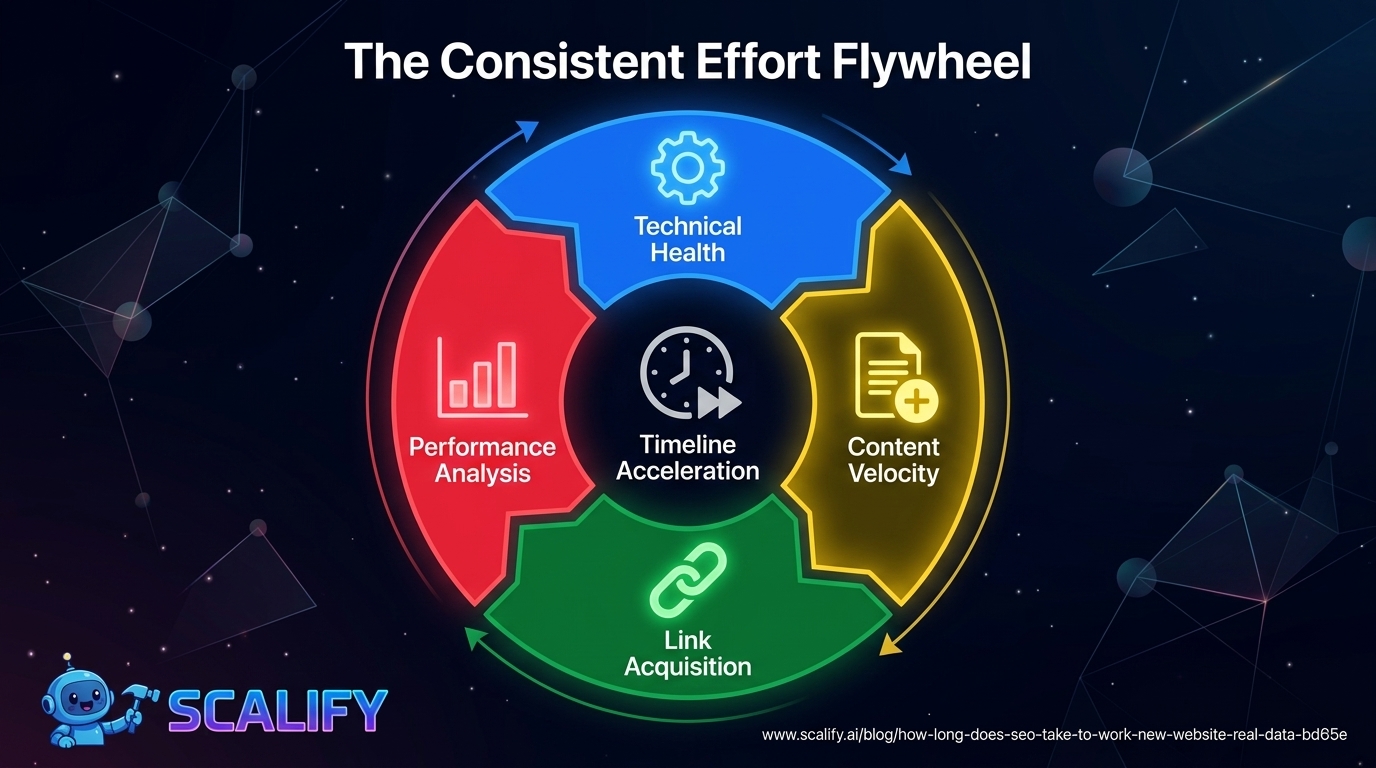
For any improvement described in this guide, the implementation sequence that produces the best outcomes: assess your current situation against the benchmarks provided, identify the 2–3 highest-impact improvements specific to your situation, implement them with measurement tracking in place, evaluate results after 30–60 days, and plan the next iteration based on what you learned. This cycle — assess, prioritize, implement, measure, iterate — is the operational foundation of continuous improvement that compounds into significant competitive advantage over the 12–24 month horizon.
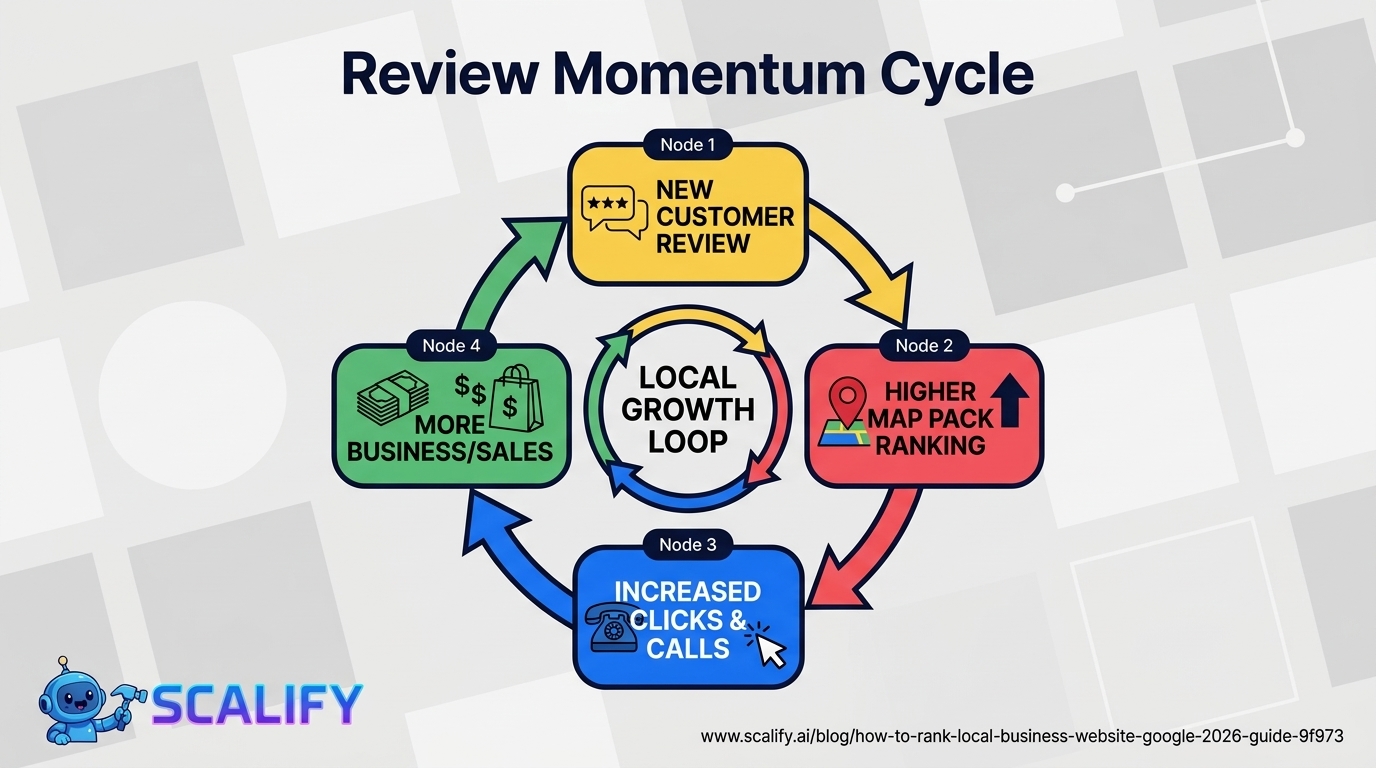
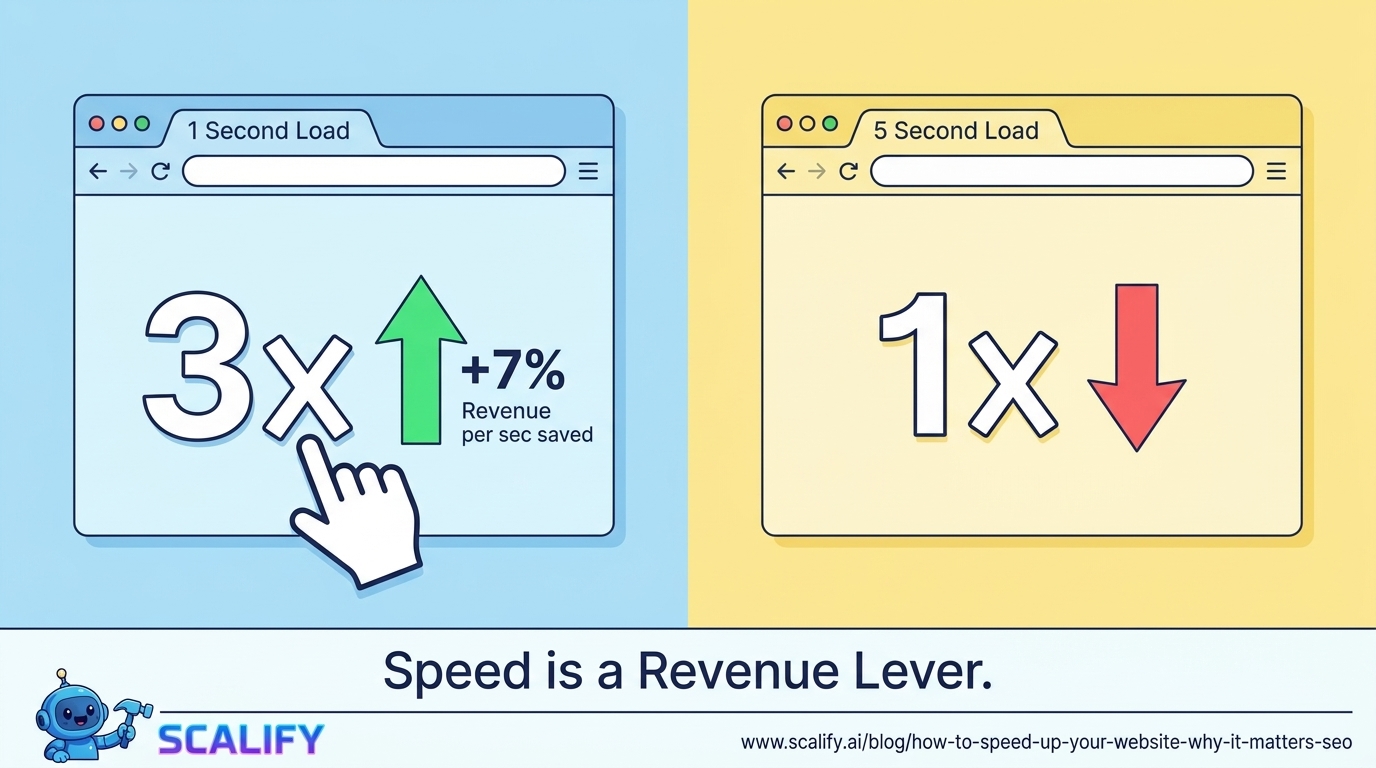
The compounding returns from consistent web presence investment are not linear: a website that improves slightly each month accumulates to dramatic improvements over a year, and those improvements multiply with each other. Faster load times improve both search rankings and conversion rates simultaneously. Better content attracts backlinks that improve rankings that attract more traffic. More testimonials build trust that improves conversion rates that improve revenue that funds more investment. The interconnected nature of website performance means that each improvement amplifies the value of every other improvement — making the decision to invest consistently, across multiple dimensions simultaneously, the highest-ROI approach to digital marketing available to most businesses.
At Scalify, every website we build reflects these principles — technically optimized, conversion-focused, SEO-ready, and designed to compound in value over time as content, backlinks, and organic authority accumulate on the strong foundation we deliver in 10 business days.


.jpeg)
.jpeg)

78 SW 7th St, Miami, FL 33130