


What Is UX Design and How Does It Affect Your Website's Performance?
By Josh Ternyak

March 29, 2026
UX design is the difference between a website that confuses visitors and one that converts them. This guide explains what UX design is, the principles behind it, and how good UX directly improves your business results.
The Science and Art of Not Frustrating Your Visitors
You've experienced bad UX. The checkout that requires creating an account before you can buy. The form that clears all your inputs when you make an error in one field. The mobile menu that opens but can't be closed. The error message that says "Invalid input" without explaining what's invalid. The page that takes so long to load you've refreshed it twice before anything appears.
Each of these is a UX failure — a moment where the system didn't serve the person trying to use it. And each one extracts a cost: a lost purchase, an abandoned form, a frustrated visitor who becomes a former visitor.
Good UX design is what prevents these failures. It's the discipline of designing digital experiences that work the way people expect, behave consistently, communicate clearly, and accomplish users' goals with minimum friction. It's not magic — it's the result of understanding how people actually use interfaces and systematically designing to serve that understanding.
What UX Design Is
UX (User Experience) design is the process of creating products and experiences that are useful, usable, and enjoyable for the people who interact with them. In web design, UX encompasses every aspect of a visitor's interaction with a website: how they find content, how they navigate, how they fill out forms, how they understand what they're seeing, and whether they accomplish their goals.
UX design is distinct from visual design (how something looks) and from development (how something works technically). A website can look beautiful and function perfectly in code while still being difficult to use — because UX is about the experience from the user's perspective, not the designer's or developer's perspective.
The discipline draws on multiple fields:
- Psychology (how people think, perceive, and make decisions)
- Information architecture (how information is organized and accessed)
- Interaction design (how interfaces respond to user actions)
- Research methods (observing and measuring how people actually use systems)
- Accessibility (ensuring experiences work for all users)
- Writing and content strategy (how words serve users)
The Core Principles of Good UX Design
Clarity Over Cleverness
The most consistent principle in UX: clarity beats cleverness. A clever interface that requires learning to use is worse than a simple, obvious interface that anyone can use immediately. The Nest thermostat's rotary dial is clever; the simple up/down button on a standard thermostat is clearer.
For websites: the navigation label "Discover Our Offerings" is clever. "Services" is clear. The hero headline "Your Success Journey Starts Here" is clever. "Custom websites built in 10 days" is clear.
When designers make something clever, they've optimized for the designer's own pleasure in the cleverness. When they make something clear, they've optimized for the user's ability to accomplish their goal. These are different priorities, and users always benefit more from clarity.
Progressive Disclosure
Not all information needs to be visible at once. Progressive disclosure is the practice of showing information when it's needed rather than all at once. This reduces cognitive load and helps users focus on what's relevant to them at each stage of their journey.
Examples: FAQ sections that show only question titles by default, expanding on click. Checkout flows that show only the current step's fields, not the entire form at once. Product descriptions that show a summary by default, with a "Read more" expansion for users who want detail.
The opposite — showing everything at once — produces visually overwhelming interfaces that users find difficult to navigate. What to show at what time is an important UX judgment call.
Consistency
Consistent experiences are learnable experiences. When a website uses the same visual language and interaction patterns throughout — buttons that always look the same, navigation that always works the same way, error messages that always appear in the same location — users quickly develop accurate mental models of how the system works.
Inconsistency breaks this learning. A blue button that means "primary action" on one page and "secondary action" on another forces users to re-evaluate each element they encounter rather than building on previous learning. An "X" that closes a modal on one page but submits a form on another is genuinely confusing.
Consistency applies within a site and across conventional patterns. Users arrive at websites with expectations built from every other website they've used. The navigation is at the top. The logo links home. Forms submit with a button at the bottom. The shopping cart is in the top right. Violating these conventions isn't creative — it's friction.
Feedback and Response
Every user action should produce feedback that tells the user what happened. A button click that does nothing — producing no visual response, no loading indicator, no confirmation — leaves the user wondering whether anything happened. Did it work? Should I click again? Is it broken?
Good feedback design: buttons change state when clicked (color change, loading animation). Forms confirm successful submission. Error states explain what went wrong and what to do. Loading states communicate that work is happening. Success states confirm completion.
The principle: visible system status. Users should always know what the system is doing in response to their actions.
Error Prevention and Recovery
The best error handling prevents errors from occurring. The second best helps users recover from errors quickly when they do occur.
Error prevention: inline form validation that catches errors before submission (rather than returning a full page of errors after the user tries to submit). Confirmation dialogs before irreversible actions. Input formatting that accepts multiple formats (phone numbers with or without dashes).
Error recovery: error messages that specifically explain what went wrong ("Please enter a valid email address" is more helpful than "Invalid input"). Preserving user's entered data when an error occurs, rather than clearing the form. Providing a path to resolution ("Call us at [phone] if this continues").
The combination of prevention and recovery dramatically reduces user frustration with forms — the highest-friction element on most websites.
Cognitive Load Reduction
Cognitive load is the mental effort required to use an interface. Every decision a user must make, every piece of information they must hold in working memory, every confusing element they must decipher — all increase cognitive load. High cognitive load produces fatigue, errors, abandonment.
UX design reduces cognitive load through: clear visual hierarchy (the most important thing is most prominent, so users don't have to figure out what matters), recognition rather than recall (showing users their options rather than requiring them to remember them), chunking complex processes into steps, and removing unnecessary elements that don't serve a purpose.
Accessibility as Baseline
Good UX design includes all users, not most users. Accessibility — designing for users with visual, motor, auditory, and cognitive differences — is not an add-on to UX but a dimension of it. An interface that excludes 16% of potential users through inaccessible design has failed those users' experience by definition.
The UX Research Methods That Inform Good Design
UX design is not intuition — it's informed by research into how actual users interact with actual interfaces. The primary methods:
User interviews: Structured conversations with target users about their goals, needs, frustrations, and mental models. Produces qualitative insight about the "why" behind behavior.
Usability testing: Watching real users attempt to complete specific tasks on your website (or a prototype). The primary method for identifying usability problems. Nothing reveals UX failures as efficiently as watching someone try to use the thing you designed.
Card sorting: Participants sort topics into groups that make sense to them, then name those groups. Informs information architecture and navigation structure — what mental categories do users expect?
Heatmaps and session recordings: Visualizations of where users click, how far they scroll, and how they actually navigate. Reveals behavior patterns that contradict designer assumptions.
Analytics analysis: Quantitative data on what users do — which pages they visit, where they drop off, how long they stay. Identifies symptoms of UX problems but not their causes.
A/B testing: Comparing two versions of a design to see which performs better on a specific metric. Validates design changes with behavioral evidence.
The combination of qualitative (why) and quantitative (what) research produces the most complete picture. Analytics tells you users are abandoning the checkout at step 3; usability testing tells you why.
UX Design and Business Outcomes: The Research
The business case for UX investment is strong and well-documented:
Conversion rate: UX improvements consistently produce conversion rate increases. The specific magnitude depends on how bad the starting UX is — a checkout that's been optimized through multiple research iterations improves less from additional investment than a checkout that's never been user-tested.
Support cost reduction: Confusing interfaces generate support inquiries. Users who can't figure out how to use something call or email for help. Better UX reduces the volume of "how do I..." support tickets by making those questions unnecessary.
Development efficiency: Finding and fixing UX problems during design costs approximately 10× less than finding them after development and 100× less than finding them after launch. Investing in UX research during design reduces the total cost of producing usable software.
Customer satisfaction and retention: Users who find a product easy and pleasant to use continue using it. Users who find it frustrating switch to alternatives. For SaaS and subscription businesses, UX quality directly affects churn rate.
Common UX Design Mistakes on Business Websites
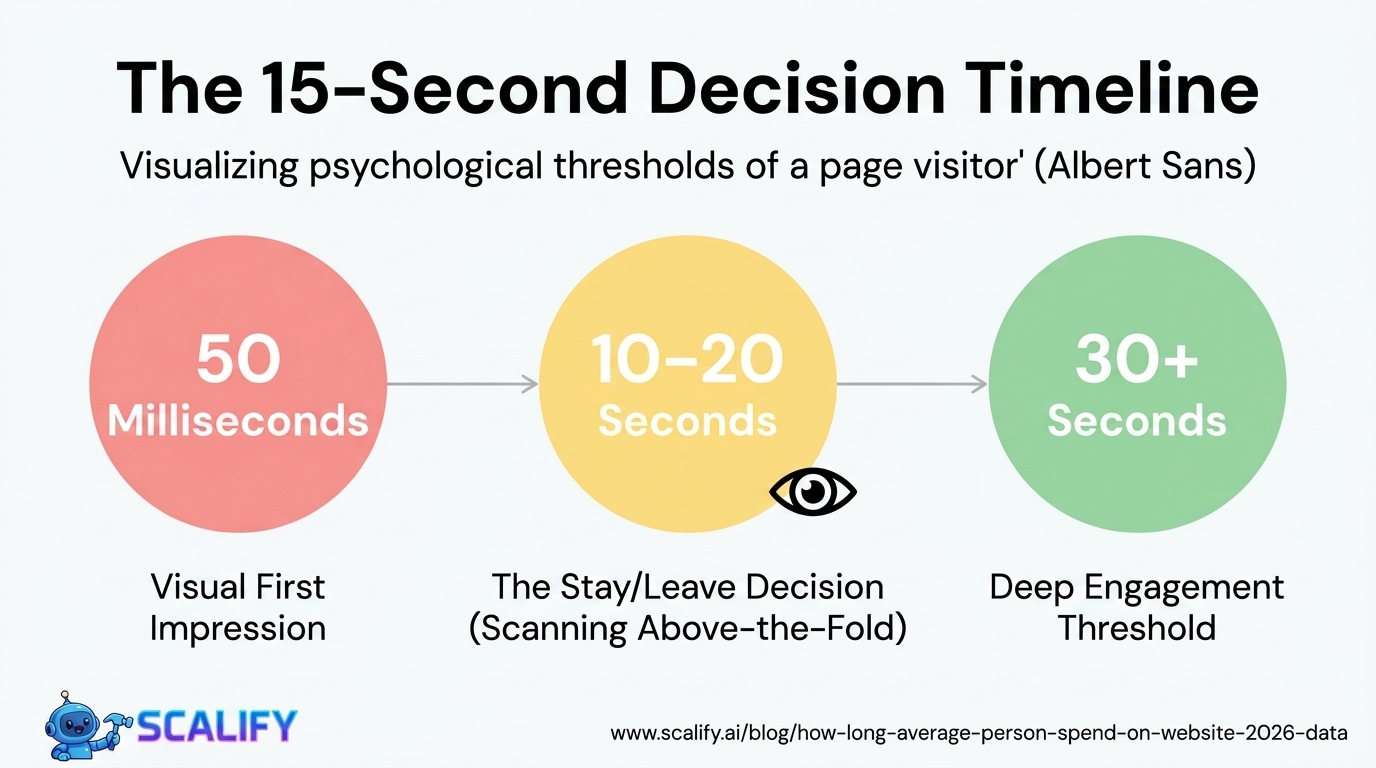
No clear value proposition above the fold: Visitors arrive and can't determine in 5 seconds what the site offers or why they should care. This is the most common UX failure on homepages — the design prioritizes aesthetics over clarity.
Navigation designed for the organization, not the user: Navigation labels that use internal company vocabulary rather than user vocabulary ("Solutions Center" instead of "Services"). Navigation organized around company departments rather than user needs.
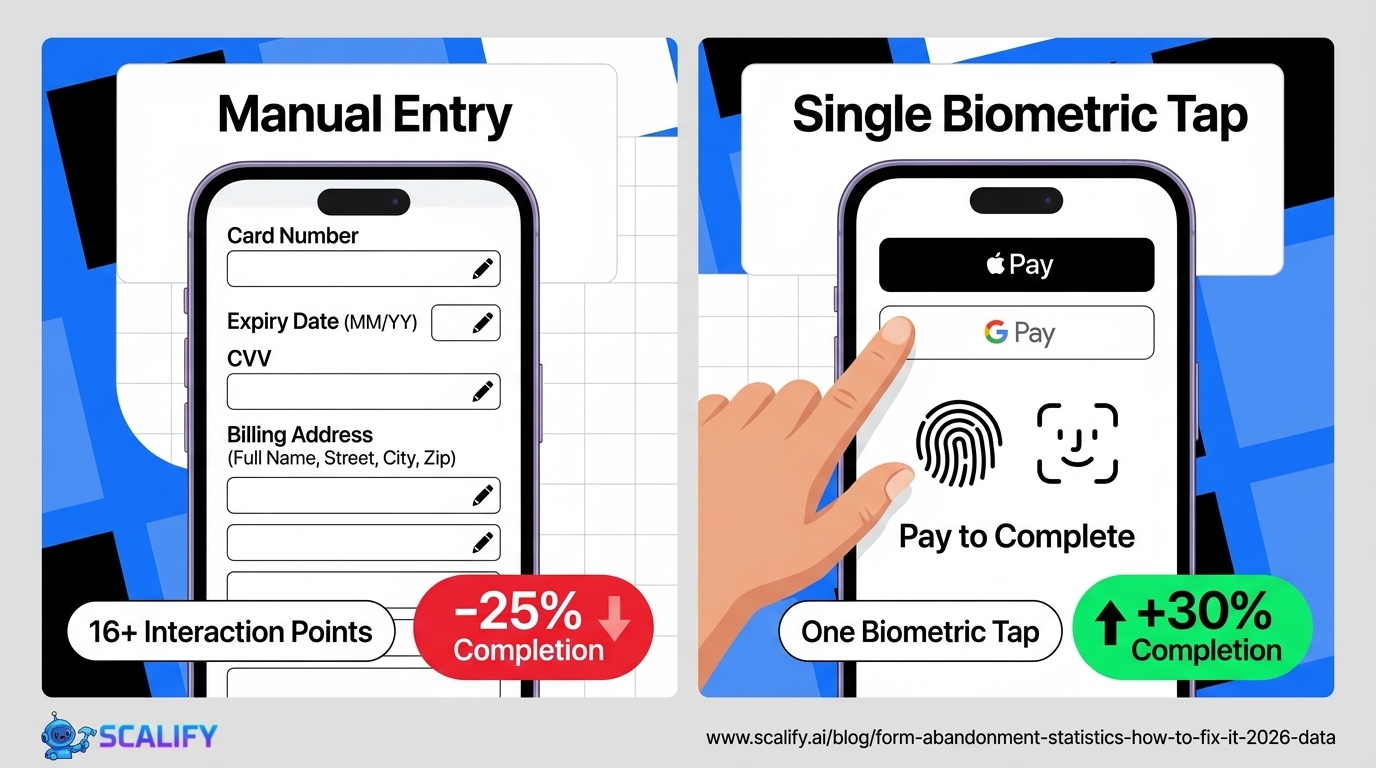
Contact forms asking for too much: 10+ required fields on a contact form before the business has earned the visitor's trust or established value. Every additional required field reduces completion rate.
Mobile breakpoints that don't actually work: Technically "responsive" designs where the mobile layout is a grudging accommodation rather than a thoughtfully designed mobile experience. Test on actual devices, not just Chrome DevTools.
No feedback on form submission: Forms that submit and then... nothing. Or a vague "Your message has been sent" with no indication of when to expect a response or what happens next.
Generic stock photography instead of real people and work: Stock photos of generic business people don't communicate anything about the actual business. They're visual placeholder that undermines trust signals. Real photos of real people and real work build credibility.
The Relationship Between UX Design and Visual Design
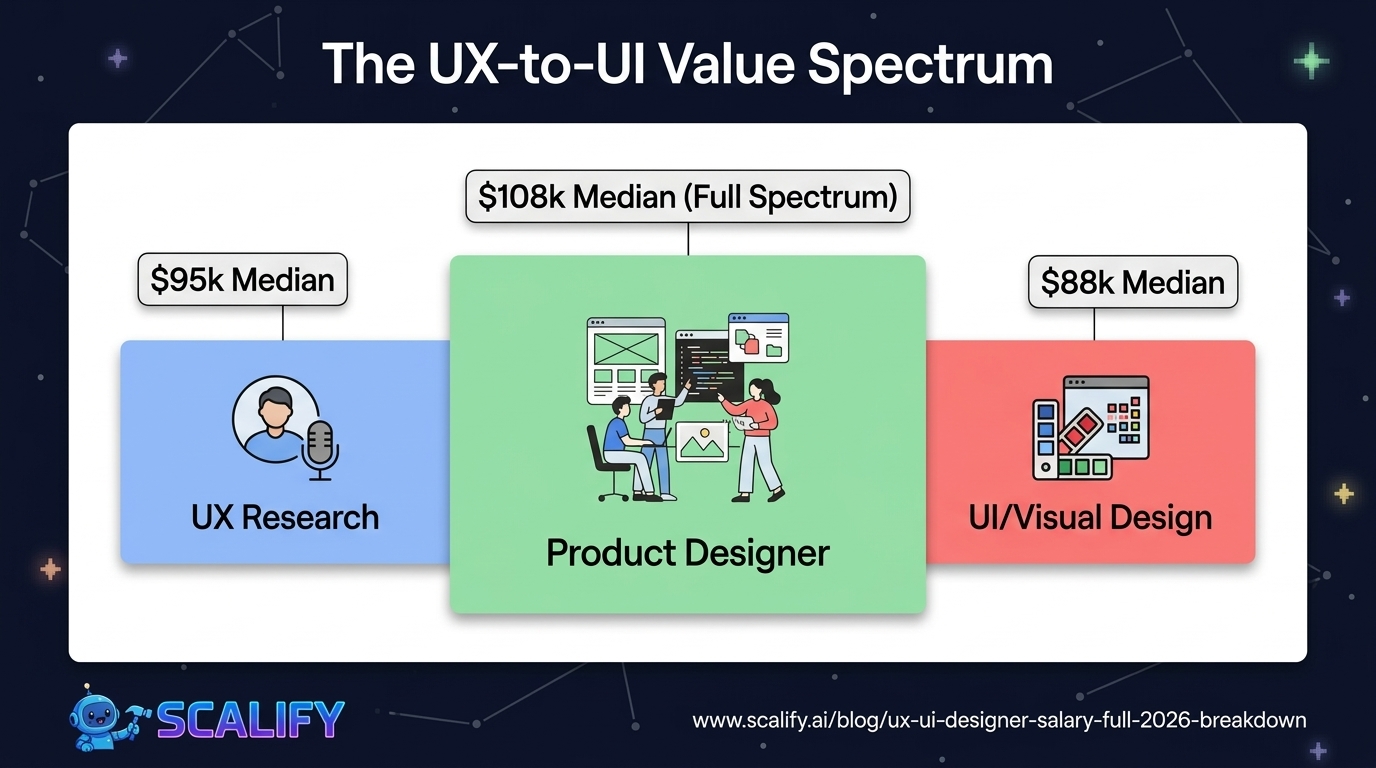
UX design and visual design (often called UI — User Interface — design) are distinct disciplines with significant overlap. The distinction matters for understanding what each does:
UX design focuses on the experience and functionality: how information is organized, what the user journey looks like, whether the interface enables users to accomplish their goals. It often produces wireframes — low-fidelity structural representations of pages that show layout and content hierarchy without visual styling.
Visual/UI design focuses on how the interface looks: color, typography, spacing, imagery, visual hierarchy, and the aesthetic system that communicates brand personality.
In practice, these disciplines are deeply intertwined — good visual design serves UX goals (visual hierarchy guides attention, color communicates status, typography determines readability). And good UX considers visual design constraints from the beginning. Many designers work across both disciplines; many organizations separate them on larger teams.
The mistake is treating them as the same thing — investing heavily in visual aesthetics while ignoring whether the beautiful design actually works for users.
The Bottom Line
UX design is the discipline that makes websites work for the people who use them — not just technically function, but genuinely serve users' goals with minimum friction and maximum clarity. Good UX produces measurably better business outcomes: higher conversion rates, lower support costs, better customer satisfaction, and reduced development waste from building things that don't work as intended.
The principles — clarity over cleverness, consistency, appropriate feedback, error prevention, cognitive load reduction — are not arbitrary rules but distillations of how people actually interact with interfaces. Following them produces experiences that users find intuitive because they align with how human cognition and perception work.
At Scalify, UX is a core part of how we design websites — because a beautiful website that confuses visitors is a failed website, and the business outcomes we aim to produce require experiences that actually work for the people using them.







.jpeg)
.jpeg)




78 SW 7th St, Miami, FL 33130