


What Is a Website Case Study and How Do You Write One That Wins Business?
By Josh Ternyak

March 29, 2026
Case studies are the most persuasive content type for winning high-value clients — but most businesses write them wrong. This guide shows you exactly how to structure, write, and deploy case studies that close deals.
The Proof That Does More Selling Than Any Pitch
You can tell a prospect anything about your work. You're professional, you deliver on time, you produce results, your clients are happy. They've heard all of this from every other service provider they've considered. You sound exactly like the competition.
Then you show them a case study. A real client with a real problem. The specific challenge, the exact approach, the measurable outcome. "This restaurateur had a website that was costing them customers — visitors couldn't find their menu or book a reservation on mobile. We rebuilt it in 9 days. Within 30 days of launch, online reservations were up 40% and they'd received 6 new private dining inquiries they're confident came from the website."
Now you're not telling them about your work. You're showing them evidence of your work. And evidence is infinitely more persuasive than claims.
Case studies are the highest-converting content type for service businesses — more persuasive than testimonials (which are brief), more actionable than blog posts (which are educational rather than decision-support), and more credible than any self-promotional copy you could write. This guide covers what makes a case study work, how to structure one, and how to deploy them across your website for maximum conversion impact.
What a Website Case Study Is
A case study is a documented account of a specific client engagement — the situation before, the work done, and the outcomes achieved. It's the full story of a transformation: where was the client, what was the problem, what did you do about it, and what changed as a result?
Case studies are distinct from testimonials (a client quote), portfolio pieces (a visual showcase), or project summaries (what was built). A genuine case study includes all these elements but goes deeper — it tells a narrative that lets potential clients see themselves in the story and understand the specific value your work produces.
The business case for investing in case studies: buyers of high-value services are making significant financial decisions with meaningful risk. They want evidence that you can do what you say you can do, for clients like them, with results worth the investment. Case studies provide that evidence in a format that's immediately accessible and emotionally resonant.
The Anatomy of a Powerful Case Study
The Client and Context
Start by establishing who the client is and what their world looks like. Not a dry company description — a brief, human portrait that helps your ideal prospects identify: "That's like me."
The context sets the scene: what kind of business, what stage, what market, what they were experiencing before the engagement. Be specific enough to be relatable without being so specific that only identical businesses see themselves in it.
"Apex Coaching is a 5-person executive coaching firm in Austin, Texas. Founded by Sarah Chen in 2019, they'd built a strong reputation through referrals and were ready to grow — but their website was holding them back. It hadn't been updated since the business launched, the design didn't reflect the premium positioning they'd earned, and it wasn't generating any of its own leads."
This setup accomplishes several things: establishes the client type (small professional service firm), the stage (growing, established but limited), and the specific problem (website not reflecting current quality or generating leads). Readers who match this profile immediately recognize themselves.
The Challenge: The Specific Problem
Articulate the challenge with enough specificity that readers understand both the problem and why it mattered to the client. Vague challenges ("they needed a better website") produce forgettable case studies. Specific challenges ("their mobile conversion rate was effectively zero because the contact form was broken on iOS and 68% of their traffic was mobile") produce memorable ones.
The challenge section builds the tension in the story — why was this situation untenable? What was it costing the business? What had they tried? Why hadn't it worked?
Draw on the actual language the client used when they first reached out, if possible. Verbatim language from clients about their problems is more authentic and more relatable than polished paraphrase.
The Approach: What You Did and Why
Describe your approach — not as a feature list of deliverables, but as a reasoning narrative: what did you decide to do, and why did that approach make sense given the specific situation?
This section demonstrates thinking, not just execution. Any competent service provider can execute. Demonstrating that you diagnosed the situation, formed a considered approach, and made deliberate decisions shows a level of expertise that clients pay a premium for.
Include: the key insights from your discovery or analysis phase, the strategic decisions that shaped the approach, any interesting problems you solved and how, and the rationale for the specific choices you made. This is where design rationale, technical decisions, and strategic thinking live.
Keep it accessible — this isn't a technical documentation, it's a narrative for a business audience. Explain your reasoning in plain language.
The Result: What Changed and by How Much
This is the most important section and the one most businesses shortchange. The result section needs to be specific, quantified, and directly connected to the client's business goals stated in the challenge section.
The hierarchy of result types, from most to least persuasive:
Revenue/direct business impact: "Generated $47,000 in new project revenue in the first 60 days from website leads." This is the gold standard — directly connecting your work to business outcomes.
Qualified leads and conversion metrics: "Contact form submissions increased from 3/month to 18/month. Close rate from website leads is 40%, generating approximately $28,000/month in new business pipeline."
Traffic and visibility: "Organic search traffic increased 340% in 90 days. Now ranking on page one for [specific keywords]."
Performance metrics: "Page load time reduced from 4.2 seconds to 0.9 seconds. Mobile Core Web Vitals moved from Poor to Good across all metrics."
Qualitative outcomes: "The client's sales team reports that prospects now comment positively on the website during sales conversations, where previously it was a source of friction." Qualitative outcomes are weaker than quantitative but still meaningful when metrics aren't available.
If the client hasn't shared specific metrics, ask. Most clients are willing to share outcome data when asked directly in the context of a case study. "The website helped us significantly grow our practice" is less useful for your case study than "we've added 4 new clients in the first month who mentioned finding us online."
The Client Quote
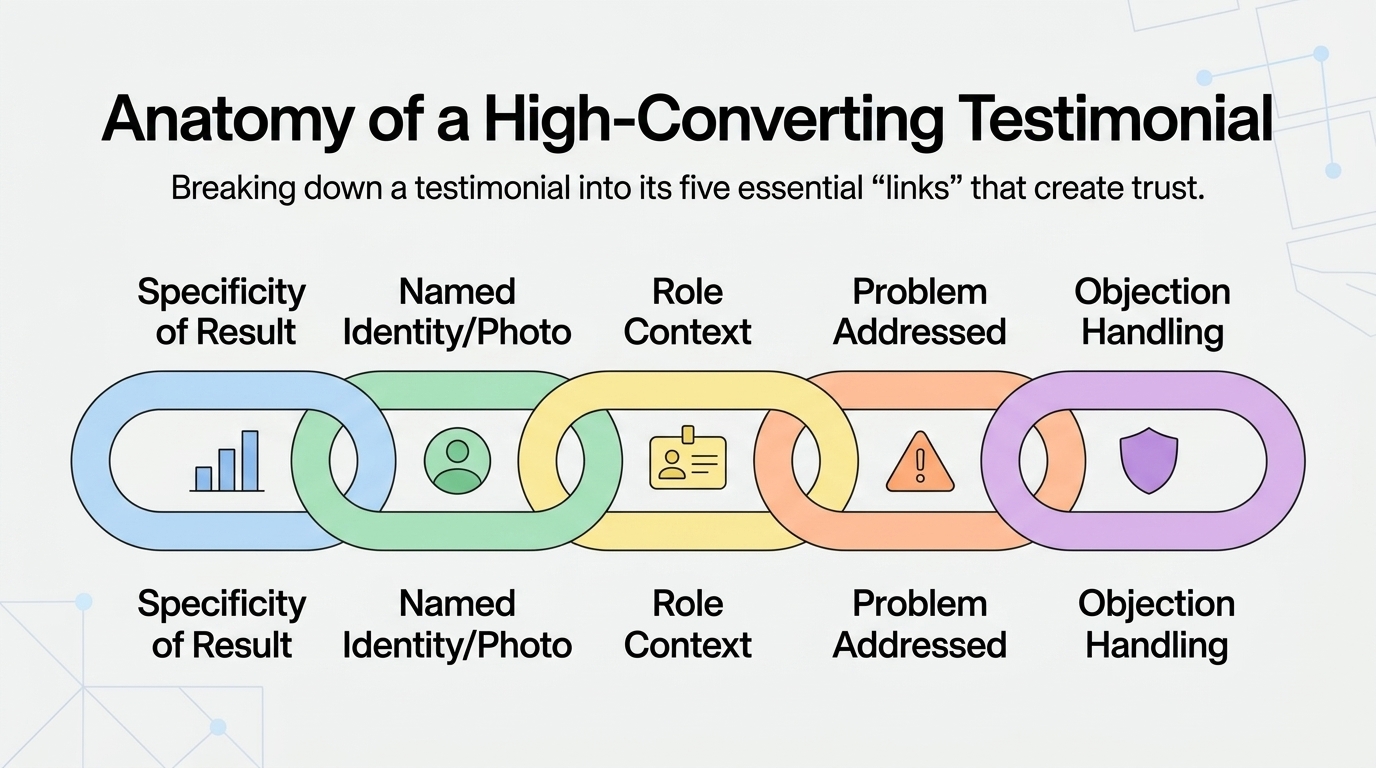
Every case study should include a direct client quote. Not because it adds new information — the case study already told the story — but because the client's voice, in their own words, adds authenticity that your narration cannot.
The best case study quotes: confirm the outcome in the client's specific language, address a common prospect concern or objection, and convey genuine enthusiasm rather than corporate politeness. "I was skeptical about the 10-day timeline but they delivered exactly what they promised — and the site has already paid for itself twice over" is more compelling than "The team was professional and delivered a quality product on time."
Visual Documentation
Show the work. The case study isn't complete without visual evidence of what was built:
- Before and after screenshots (if applicable) — one of the most compelling visual elements in any website case study
- Multiple views of the final product — desktop, mobile, interior pages
- Detail shots that highlight specific design decisions mentioned in the narrative
- Performance screenshots (Google Analytics showing traffic increase, PageSpeed Insights showing Core Web Vitals improvement)
High-quality imagery matters — the quality of your case study documentation communicates the quality of your work. Low-resolution screenshots or poorly cropped images undermine the professionalism of otherwise excellent work.
How to Gather Case Study Material
Most service businesses have excellent case study material sitting in their previous work — they just haven't systematically gathered it. The collection process:
Ask at the Right Moment
The ideal moment to request case study participation: immediately after a successful project completion, while the client's enthusiasm is highest and the outcomes are fresh. "We're really proud of what we built together and I'd love to document it as a case study on our site — would you be open to a 20-minute call to capture your perspective?"
Most happy clients say yes when asked at this moment. Waiting weeks or months reduces success rates as the project fades from memory and enthusiasm cools.
The Case Study Interview
A short structured interview produces better case study material than asking clients to write anything themselves. Questions that produce usable material:
- "What was the situation with your website before we started working together?"
- "What specific problems was it causing for your business?"
- "What made you decide to work with us specifically?"
- "What surprised you most about the process?"
- "What has changed since the site launched — what metrics, what feedback, what business outcomes?"
- "What would you tell someone who was considering working with us?"
Record the call (with permission). The verbatim language clients use when answering these questions is the raw material for both the case study narrative and the client quote.
Collect the Data
Before or after the interview: ask the client to share specific metrics. Google Analytics access, conversion data, lead counts, revenue impact, performance metrics. The more data you have, the more compelling the case study. Even if the client can't share everything, even one specific number makes the case study dramatically more persuasive than qualitative description alone.
Where to Deploy Case Studies on Your Website
Case studies shouldn't live only on a dedicated case studies page that visitors actively navigate to. They should be deployed strategically throughout the conversion path:
Portfolio/Work section: Case study previews (client name, brief outcome summary, thumbnail image) that link to full case study pages. Gives visitors a quick scan of the variety and quality of work before clicking into depth.
Services pages: A case study snippet directly relevant to the specific service — a web design for restaurants case study on the restaurant web design service page. The relevance increases persuasive impact dramatically.
Homepage: A rotating or featured case study preview with a compelling outcome stat. "We helped Apex Coaching increase online leads 6x in 30 days." Links to the full case study.
Pricing page: A case study that specifically demonstrates ROI — evidence that the investment pays back. Addresses the "is it worth it?" objection at exactly the right moment.
Email sequences: Case studies as email content in nurture sequences for prospects who've expressed interest but haven't converted. "I wanted to share what happened when [similar business] worked with us..."
Sales proposals: The most directly relevant case study, included in every proposal, showing what you did for the most similar client to the prospect you're pitching.
Case Study Length and Format
Full case study pages: 600–1,500 words is typically sufficient for most service business case studies. Enough depth to tell the complete story without requiring more time than prospects are willing to invest. Structure with clear headings (The Challenge, Our Approach, The Results, What the Client Said) so scanners can extract the key information without reading every word.
Case study summary cards (for portfolio pages, homepage features, service pages): 50–100 words maximum. Client name, one-sentence challenge, key outcome metric, link to full case study.
Video case studies: increasingly effective, particularly for clients who are natural communicators on camera. The client telling their own story in their own words on video is the most compelling format when the content is available.
The Bottom Line
Case studies are the most persuasive content type for service businesses because they provide specific, credible evidence of real outcomes rather than self-promotional claims. A well-written case study answers all the buying questions: who did you help, with what problem, using what approach, producing what results? The prospect sees themselves in the story and extends the client's experience to their own anticipated outcome.
Build a system for gathering case study material after every successful project. Write the stories with specificity, client voice, and quantified outcomes. Deploy them throughout your conversion path — not just on a case studies page, but wherever buyers are evaluating whether to hire you.
At Scalify, case studies are how we show — not just tell — what a 10-day custom website actually looks like in practice and what it does for real businesses. Because seeing is believing.











.jpeg)
.jpeg)



78 SW 7th St, Miami, FL 33130