


What Is a Website Homepage and How Do You Design One That Converts?
By Josh Ternyak

March 29, 2026
Your homepage has three seconds to earn a visitor's attention — or lose it forever. This guide covers exactly what a high-performing homepage needs, how each section works, and what separates the 2% converters from the 10% converters.
The Page That Either Earns the Relationship or Loses It
Every visitor who arrives at your homepage is making a rapid, mostly subconscious evaluation: Is this for me? Does this company seem credible? Do I understand what they do? Is there a reason to stay?
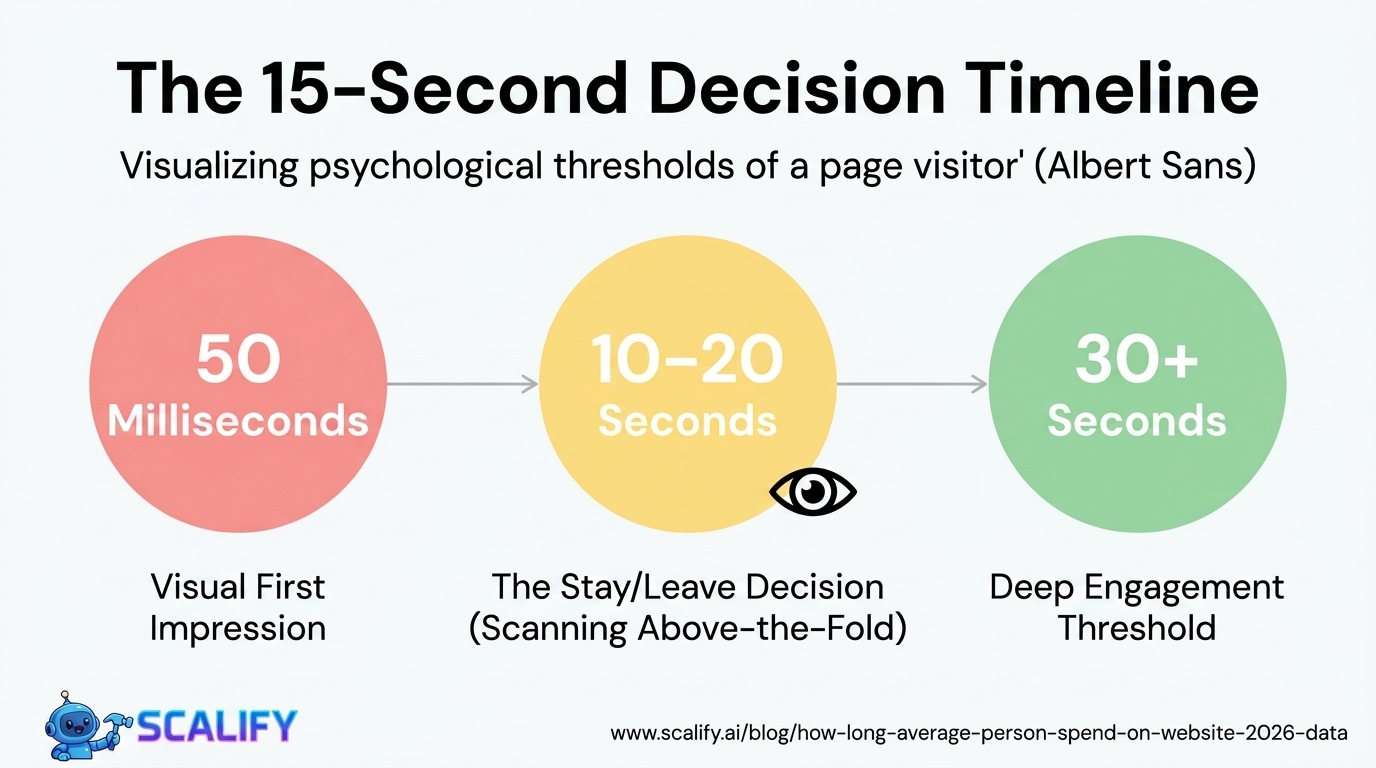
They're making this evaluation in about 3 seconds. In that time, your homepage communicates through visual impression, headline clarity, and layout hierarchy. If those three seconds produce a "yes, I'm in the right place" feeling, the visitor stays and begins engaging. If they produce confusion, irrelevance, or generic sameness, the visitor leaves.
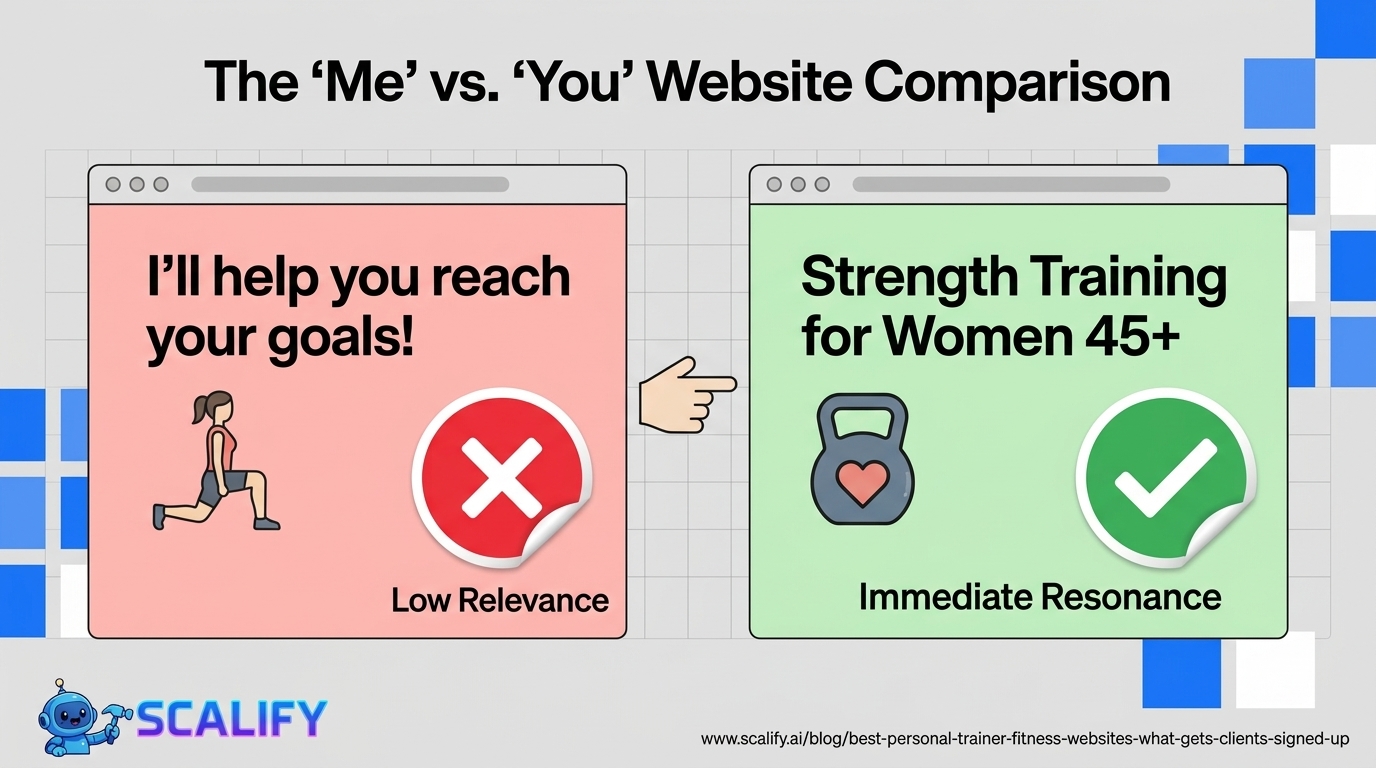
Most homepages fail this test. They lead with company history, vague mission statements, or stock photography of handshakes. They use headlines that describe what the company does without explaining why that matters to the visitor. They design for the website owner's ego rather than the visitor's needs.
The best homepages are different. They're designed around a fundamental insight: every visitor arrives with a question. The homepage's job is to answer that question fast, build enough confidence to continue, and provide a clear path to action.
What a Homepage Is Actually Supposed to Do
Most people treat the homepage as the front page of a magazine — a branded introduction to everything the site contains. That mental model produces the wrong decisions.
A better mental model: the homepage is a conversion page whose goal is to move the right visitors to the next step in their journey. Not to tell your whole story. Not to impress with design. To orient visitors, build trust, and guide them toward whatever action serves them and your business simultaneously.
The three jobs of a well-designed homepage:
1. Pass the immediate clarity test: A visitor who has never heard of your business should understand within five seconds what you do, who you serve, and why it matters to them. If they can't pass this test, the headline isn't working.
2. Build enough trust to earn continued attention: First-time visitors have zero trust in a brand they've never encountered. The homepage needs to provide credibility signals — evidence of legitimacy, quality, and reliability — quickly enough to keep skeptical visitors engaged.
3. Guide the right visitors to the right next step: Different visitors want different things. Some are ready to buy. Some are in research mode. Some want to understand what you offer before deciding whether it's relevant. A good homepage has clear paths for each of these visitor types rather than a single conversion pressure point.
The Anatomy of a High-Converting Homepage
Section 1: The Hero
The hero is the above-the-fold section — everything visible on screen before scrolling. It's the most critical real estate on any website because it determines in the first three seconds whether a visitor stays or leaves.
What every hero needs:
A headline that passes the clarity test: The headline must communicate what you do and why it matters — specifically enough that the target visitor immediately recognizes themselves and their need. Not "Empowering Businesses Through Digital Innovation." Yes: "Custom Websites That Generate Leads, Built and Launched in 10 Business Days."
The framework that consistently works: [Primary outcome] for [Specific audience] by/through/via [Your distinctive mechanism]. The visitor should finish reading the headline and think "yes, that's exactly what I need."
A subheadline that expands: The subheadline has one job: take the 10-word headline and add the essential supporting context. Usually 1–2 sentences that clarify who exactly this serves, what the process looks like, or what makes this different from alternatives. Not more marketing language — actual information.
A primary CTA: One prominent call to action that tells the visitor who is ready to act exactly what to do next. "Get a Free Quote." "Start Your Project." "Book a 15-Minute Call." Specific, benefit-oriented, visually prominent.
A secondary CTA: For visitors who aren't ready to act but are interested. "See Our Work." "How It Works." "View Pricing." This captures the interested-but-not-ready visitors who would otherwise leave because the only option was "buy now."
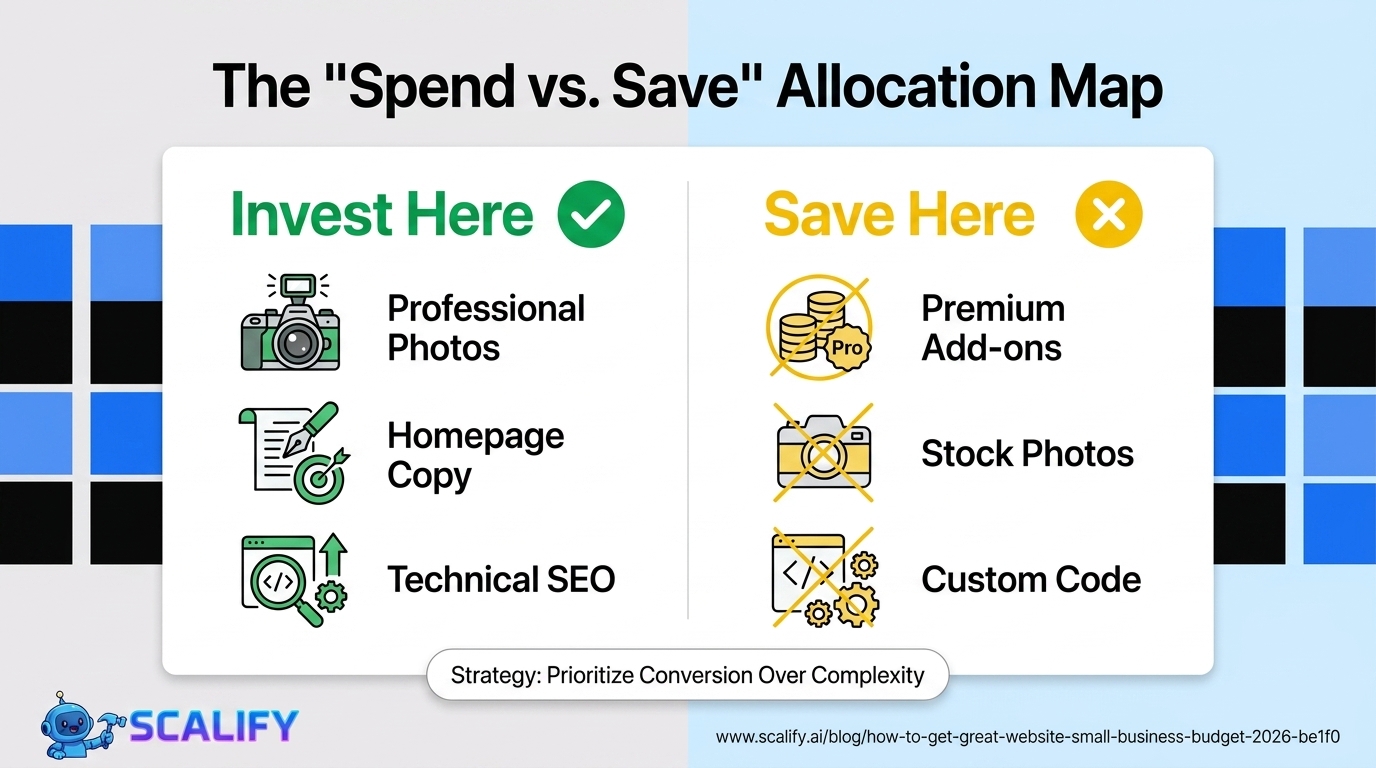
A visual that does work: Not just decoration. The hero visual should either demonstrate the product/service in context, communicate the quality level of the work, or establish the emotional feel of the brand. Stock photography of generic business people adds nothing and signals low design investment. Real product screenshots, real project work, or real people from the actual business build credibility that stock can't.
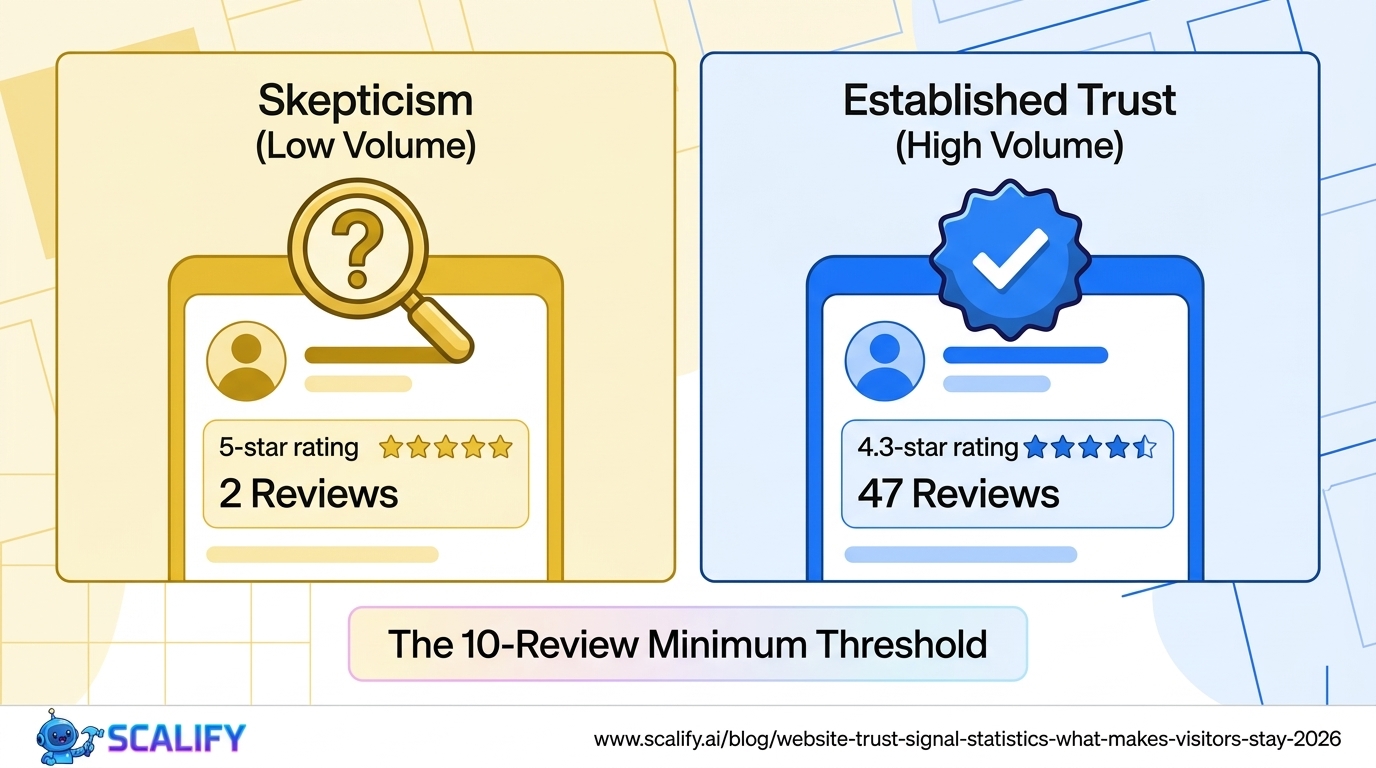
Social proof: Even a single sentence — "Trusted by 500+ small businesses" or "★★★★★ rated by 200+ clients" — in the hero dramatically improves conversion rates by establishing credibility before skepticism can harden into departure.
Section 2: The Value Proposition Detail
The hero communicated what you do. The next section explains the why — why this approach, what specifically visitors get, what makes this different from alternatives they may have considered.
Common formats:
Three-column features/benefits: Three core value propositions presented in parallel — icon, short headline, brief explanation. Each addresses a specific desire or removes a specific fear that the target audience has. Not "We offer fast turnaround" (feature) — "Your website is live and generating leads in 10 days, not 3 months" (benefit with specificity).
Problem/solution narrative: Explicitly name the problem your visitors are experiencing, validate it with specificity that signals genuine understanding, then present your solution. "Most businesses are stuck with websites built 5 years ago that don't reflect their current quality or attract clients at the level they deserve. Scalify builds what your business has grown into."
Process overview: For businesses where the process itself is reassuring (complex services, high-consideration purchases), showing the steps helps visitors understand what they're signing up for and reduces the anxiety of the unknown. "Discovery → Design → Build → Launch" with brief descriptions of each stage.
Section 3: Social Proof
By section three, the visitor has been introduced to the offering and has some interest. Now they need the evidence that others have trusted you and gotten results. This is where testimonials, case studies, and client logos live.
What works in homepage social proof:
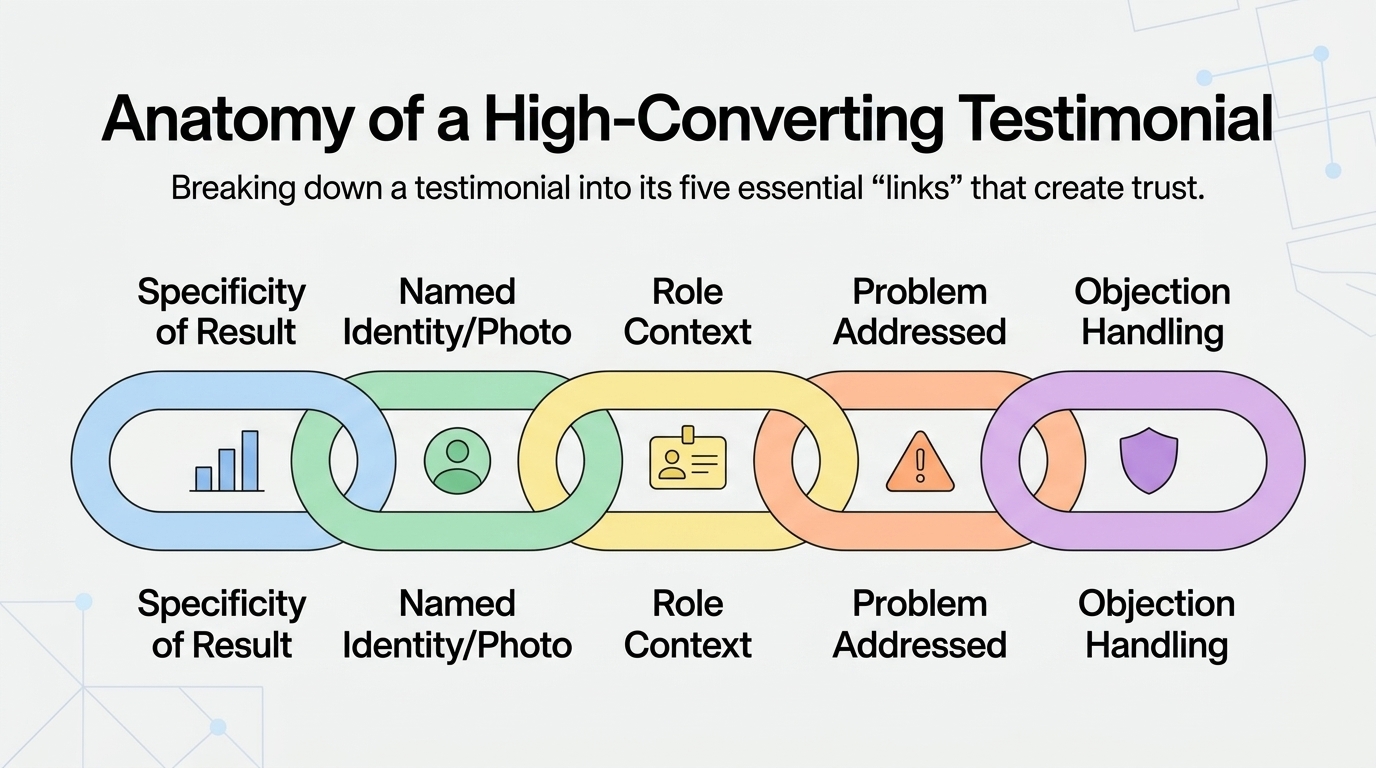
Specific, outcome-focused testimonials: Not "Great company!" but "Our new website launched in 8 days and we booked 3 clients in the first month." Attribution with full name, company, and photo. Real people, real results.
Client logos: If you've worked with recognizable companies, their logos provide instant credibility by association. A visitor who recognizes companies that have trusted you extends their trust in those companies to you.
Quantified social proof: Numbers are more credible than superlatives. "500 websites delivered" is more persuasive than "hundreds of websites." "98% client satisfaction" is more persuasive than "clients love working with us."
Section 4: Services or Work Showcase
For service businesses: a brief overview of core services with clear CTAs to dedicated service pages. Not a comprehensive list — the 3–4 primary service categories that cover the majority of what you sell, presented clearly enough that visitors can identify which is relevant to them and click through for more detail.
For design and creative businesses: a curated portfolio preview — 3–6 of your best projects with brief context. The preview shows visual quality immediately; the link to the full portfolio invites deeper exploration.
Section 5: About (Brief)
A brief humanizing section — who you are, what drives you, what you believe about the work. Not a comprehensive about page transplanted to the homepage, but enough to make the business feel human rather than anonymous.
This section matters because many visitors are evaluating whether they want to work with you as a person/team, not just whether your service matches their needs. A brief, authentic about section with a real photo (not stock) builds the personal connection that often tips hesitant prospects toward reaching out.
Section 6: Final CTA
The page should end with a clear, direct call to action — not a repeat of the hero CTA exactly, but a natural conclusion to the page narrative. "Ready to get your website built? Let's talk." with a prominent contact/booking form or button.
Visitors who have scrolled to the bottom of your homepage have shown high engagement — they've read significantly more than the average visitor. They deserve a clear next step at the point where they've consumed the most information and are most likely to be ready to act.
What to Leave Off the Homepage
The most common homepage problem is too much — too many messages, too many sections, too many competing CTAs, too many attempts to be comprehensive. Every element added to a homepage dilutes the impact of every other element.
Things that typically don't belong on the homepage:
Your company history and founding story: This belongs on the About page. Most visitors don't need this on first encounter.
A blog feed with recent posts: Unless content marketing is central to your business (media company, knowledge-heavy SaaS), a blog feed on the homepage adds distraction without meaningful conversion benefit. Internal links to valuable content throughout the site work better than a homepage blog feed.
Every service you offer: Pick the most important ones. The full list belongs on the services page.
Long-form copy that belongs on a landing page: The homepage is the gateway, not the destination. Deep explanation of specific offerings belongs on dedicated pages that visitors navigate to when they want that depth.
Social media feeds: External feeds import all the design inconsistency of social platforms, load slowly, and most importantly — send visitors away from your site to a platform you don't own. Almost never worth including.
Common Homepage Mistakes
The vague headline: Any headline that could apply to any company in any industry has failed. "We Help Businesses Grow." "Innovation Meets Strategy." "Your Success Is Our Mission." These communicate nothing specific and fail the three-second clarity test.
Too many competing CTAs: When five different buttons each want the visitor's attention, the visitor's attention goes to none of them. A primary CTA (the main action you want) and one secondary CTA (the alternative for less-ready visitors) is the right maximum for most homepages.
Hero section with no headline visible above fold: If visitors have to scroll to see the headline — if an enormous hero image takes up the full viewport and the explanatory text is below — many will leave before they understand what the site is.
Social proof buried or missing: Testimonials in a small sidebar, reviews on a separate testimonials page, client logos hidden below the fold — these positions minimize the impact of your most persuasive content. Bring social proof up.
Stock photography that signals "generic": The business person in a suit shaking hands. The smiling diverse team in a conference room. The laptop on a generic desk. These images communicate "we didn't invest in our visual identity" to visitors who have seen them on a thousand other websites.
Testing and Optimizing Your Homepage
The best homepage is the one you've tested. A/B testing on homepage elements — particularly the headline and primary CTA — consistently produces improvements of 10–30% in conversion rate without any changes to the underlying service or offer.
Priority elements to test: headline (different value propositions, different formats), hero visual (what types of imagery produce better conversion), primary CTA (different action verbs, different offer framings), social proof placement (above vs. below the hero), and lead form vs. phone number as primary conversion mechanism.
Even without formal A/B testing, installing Hotjar or Microsoft Clarity and watching 20 session recordings of homepage visitors reveals specific usability issues — where visitors scroll to, what they click, what confuses them — that are more actionable than any benchmark data.
The Bottom Line
Your homepage has one job: take the right visitors from "I just arrived" to "I understand what this is and I'm interested in learning more or taking action." It accomplishes this through a clear headline that passes the three-second test, a value proposition section that explains the why, social proof that builds trust, a services or work overview that demonstrates capability, and a clear conversion path at every stage for visitors at different levels of readiness.
Less is almost always more. The homepage that communicates one thing clearly outperforms the homepage that communicates everything vaguely. Ruthless editing of what belongs on the homepage — removing anything that dilutes the clarity of the core message — is the highest-ROI homepage improvement available to most businesses.
At Scalify, homepage design is treated as a conversion architecture problem, not just an aesthetic one. Every section earns its place by contributing to the visitor's journey from arrival to action.


.jpeg)
.jpeg)

78 SW 7th St, Miami, FL 33130