


Website Speed Optimization: The Complete Guide to a Faster Site
By Josh Ternyak

March 29, 2026
A slow website loses visitors, rankings, and revenue simultaneously. This complete guide covers every meaningful optimization — from images to hosting to code — so you know exactly what to fix and in what order.
The Performance Tax Every Slow Website Pays
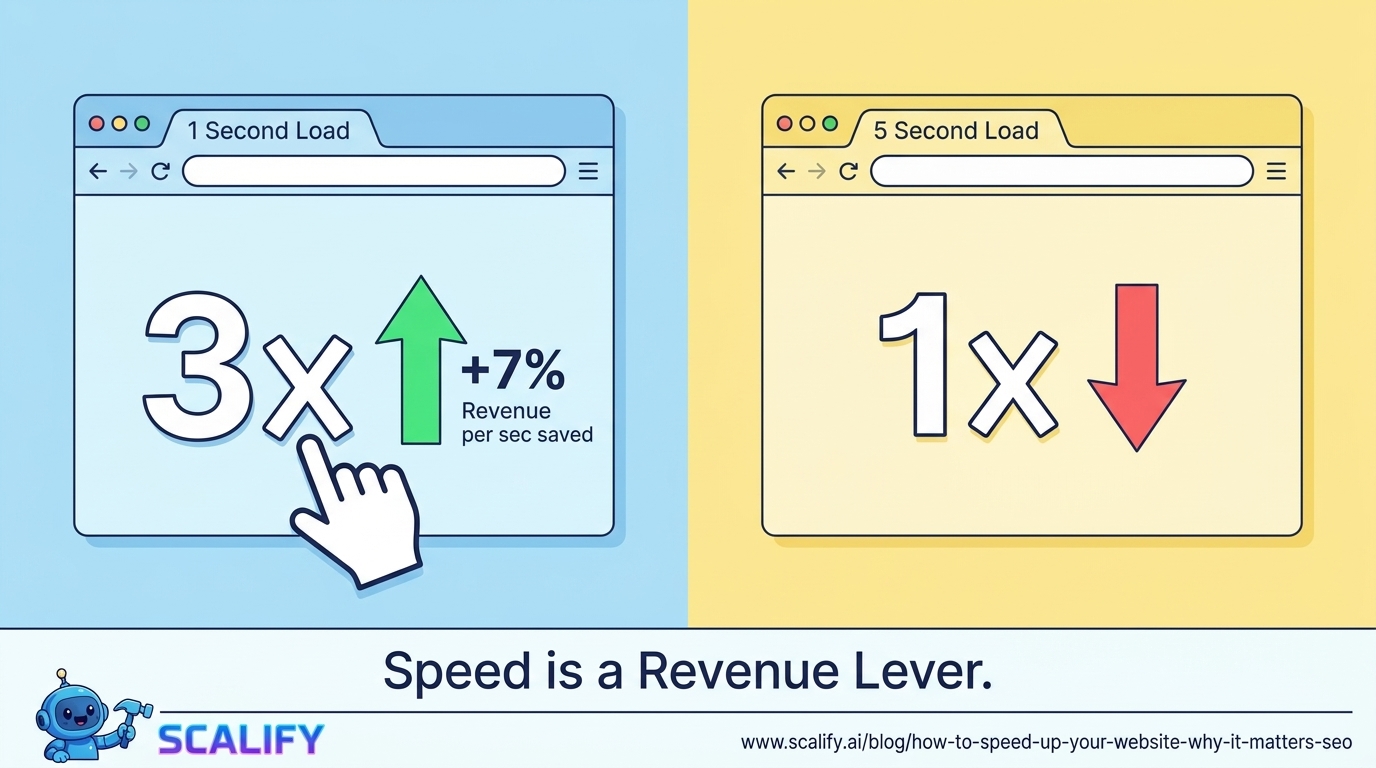
Every extra second your website takes to load costs you measurably. Not theoretically — measurably, specifically, in ways that show up directly in your analytics and your revenue.
Google's research found that as page load time increases from 1 second to 3 seconds, bounce rate increases by 32%. From 1 second to 5 seconds: 90% increase in bounce rate. From 1 second to 10 seconds: 123%. Walmart found that every 1 second improvement in page load time increased conversions by 2%. Pinterest found that shaving 40% off load time grew search engine traffic and sign-ups by 15%.
These aren't edge cases or theoretical projections. They're documented outcomes from businesses that measured what happened when they made their sites faster. The relationship between page speed and business results is one of the most consistently validated findings in web analytics.
And yet, most websites are significantly slower than they should be. The average web page in 2026 takes 3.4 seconds to load on mobile — well above the threshold where most visitors will wait. Most of those slowdowns are fixable with known techniques that don't require rebuilding the site from scratch.
This guide covers every meaningful optimization available to make your website faster — organized by impact, explained clearly, with practical guidance for each.
Measuring Performance First: What to Fix and What to Ignore
Before optimizing, you need to know where your time is actually going. Optimizing the wrong things wastes effort; optimizing the right things produces meaningful improvements.
Three tools are essential:
Google PageSpeed Insights (pagespeed.web.dev): The most important tool for most website owners. It measures Core Web Vitals (Google's performance metrics that directly affect search rankings) and provides specific, prioritized recommendations. Run it for both mobile and desktop — the mobile report is more important for SEO purposes. The "Opportunities" section tells you what to fix and estimates the improvement from each fix.
WebPageTest.org: More detailed technical information than PageSpeed Insights. Shows a waterfall chart of every resource that loads, revealing exactly which resources are slow, which block rendering, and which load in which order. Essential for diagnosing complex performance issues.
Google Search Console's Core Web Vitals report: Shows real-world performance data for your actual visitors — not just synthetic tests run from a testing server. This is field data: what your users actually experience. Field data from Search Console and Lab data from PageSpeed Insights are both important and sometimes differ significantly.
Run all three on your key pages — at minimum your homepage, your most important service or product page, and your highest-traffic blog post. The results will prioritize your optimization work better than any generic advice.
Core Web Vitals: The Metrics That Matter for SEO
Google's Core Web Vitals are the specific performance metrics Google uses as ranking signals. Understanding what each measures helps you interpret optimization recommendations:
Largest Contentful Paint (LCP): How long until the largest visible content element in the viewport loads. Usually the hero image or the main heading text. Target: under 2.5 seconds. This is the metric most directly affected by image optimization and server response time.
Cumulative Layout Shift (CLS): How much the page layout shifts during loading — elements that appear and then move as other elements load around them. Target: under 0.1. Caused primarily by images and embeds without declared dimensions, and by fonts that swap after loading.
Interaction to Next Paint (INP): How quickly the page responds to user interactions — clicks, taps, keyboard input. Target: under 200ms. Caused primarily by JavaScript that blocks the main thread and prevents timely response to user input.
Image Optimization: The Highest-Impact Improvement for Most Sites
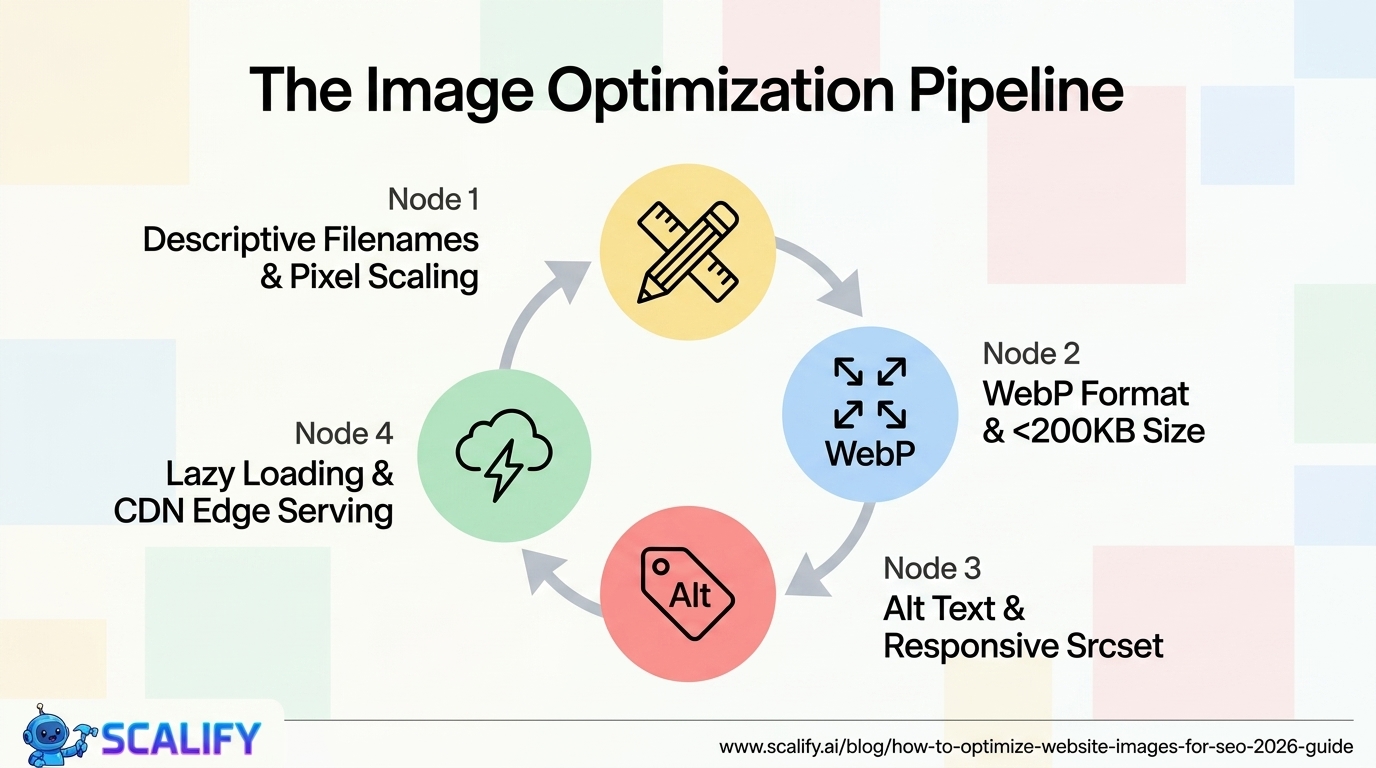
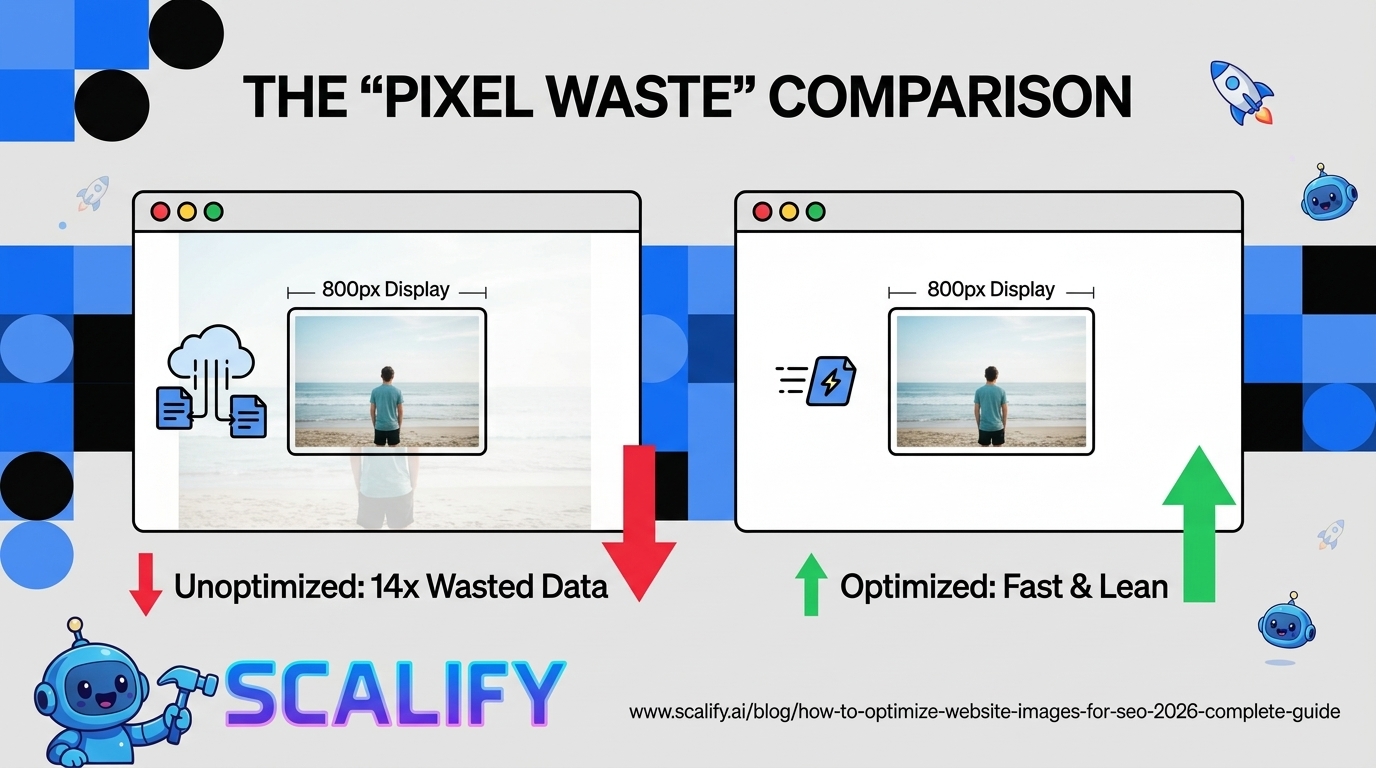
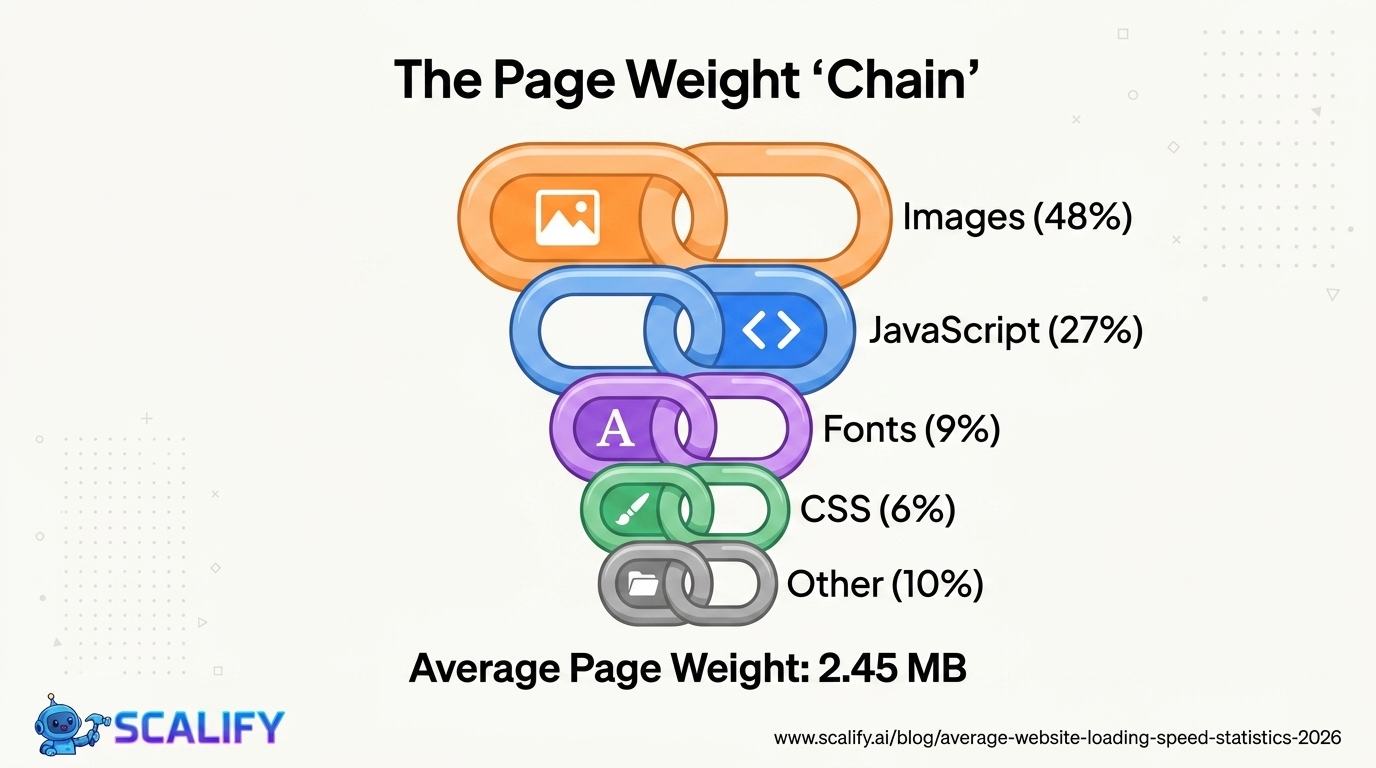
Images are responsible for the majority of page weight on most websites and represent the single largest optimization opportunity for most sites. Unoptimized images are heavy, slow to download, and cause LCP and CLS issues simultaneously.
Compress Images Without Visible Quality Loss
Most images can be compressed significantly before visible quality degradation occurs. A JPEG at 80% quality is often indistinguishable from the same file at 100% quality but 40–60% smaller. Tools for compression:
Squoosh.app — Google's free, excellent browser-based image optimizer. Upload an image, see a side-by-side quality comparison as you adjust compression, download the optimized file. Supports WebP conversion.
TinyPNG/TinyJPEG — Batch processing for JPEG and PNG compression. Drag and drop up to 20 images, download compressed versions. Free tier handles most needs.
ImageOptim (Mac) — Desktop application for batch lossless and lossy compression. Install once, drag images in regularly.
Use Modern Image Formats (WebP and AVIF)
WebP is a modern image format developed by Google that provides 25–35% smaller file sizes than JPEG at equivalent visual quality, and significantly smaller than PNG for images with transparency. AVIF is newer and provides even better compression than WebP (30–50% smaller than JPEG) but with somewhat less browser support.
Both formats are supported by all modern browsers. Implementation: serve WebP or AVIF with JPEG/PNG as a fallback using the <picture> element:
<picture>
  <source type="image/avif" srcset="image.avif">
  <source type="image/webp" srcset="image.webp">
  <img src="image.jpg" alt="Description">
</picture>
Most modern image optimization plugins and CDNs handle this conversion and serving automatically. On Cloudflare: enable Polish (automatic WebP conversion) in the Speed settings. On Webflow: WebP is served automatically. On WordPress: WP Rocket and EWWW Image Optimizer handle WebP conversion and serving.
Serve Responsive Images
Serving a 2400px wide desktop image to a 390px iPhone wastes 95% of the download. Responsive images use the srcset attribute to serve size-appropriate images for different viewport widths and pixel densities:
<img
  src="image-800.jpg"
  srcset="image-400.jpg 400w, image-800.jpg 800w, image-1200.jpg 1200w"
  sizes="(max-width: 600px) 400px, (max-width: 1000px) 800px, 1200px"
  alt="Description"
>
The browser selects the most appropriate image based on the current viewport width and device pixel density. Mobile users download mobile-appropriate images; desktop users download desktop-appropriate images. The implementation looks complex but most CMS platforms and image CDNs handle it automatically.
Specify Image Dimensions
Every <img> element should have explicit width and height attributes matching the image's natural dimensions (or the size it will render at). Without these, the browser allocates no space for the image before it loads — when the image loads, everything below it shifts down. This is Cumulative Layout Shift, and it directly harms CLS scores and user experience.
Lazy Load Below-Fold Images
Add loading="lazy" to any image that's not visible in the initial viewport. One attribute, immediate improvement in initial page load time. Don't lazy load above-fold images (including the LCP image) — they should load immediately with maximum priority.
Server and Hosting Optimization
The server's response time — Time to First Byte (TTFB) — is the foundation everything else builds on. A slow server adds a floor to your load time that no front-end optimization can overcome.
Upgrade Hosting If Necessary
Overloaded shared hosting with slow TTFB is a hard ceiling on page speed. If your TTFB regularly exceeds 600ms (PageSpeed Insights flags this as a problem), better hosting is likely the highest-impact change available. Managed WordPress hosts (Kinsta, WP Engine) consistently outperform generic shared hosting by 3–5x for WordPress sites. Cloud hosting (Vercel, Netlify, Cloudflare Pages) for static and JAMstack sites provides fast, globally distributed delivery.
Enable Server-Side Caching
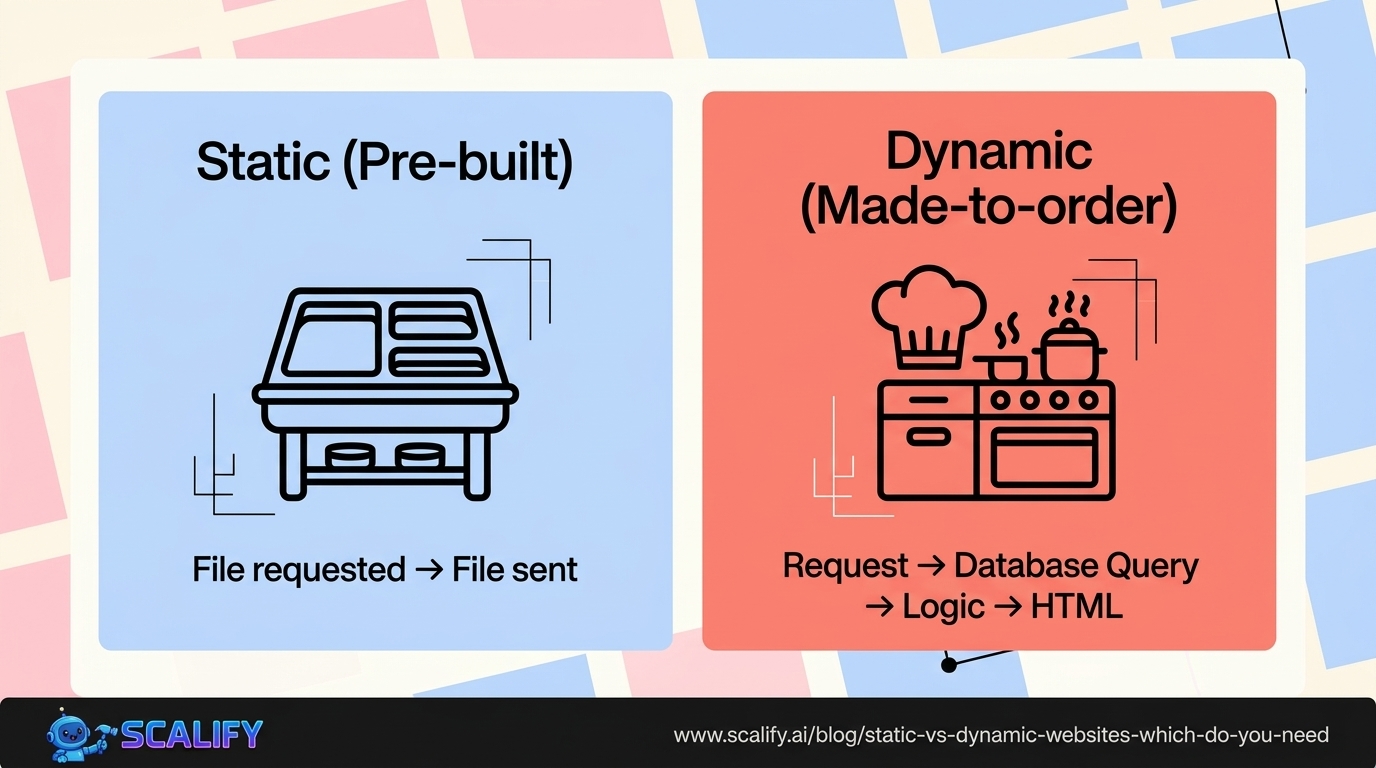
Dynamic sites that regenerate pages for every request are inherently slower than sites that serve pre-generated pages from cache. Page caching reduces server response time from 500–2000ms to 50–200ms for cached pages. On WordPress: WP Rocket, LiteSpeed Cache, or W3 Total Cache. On other platforms: most managed hosting services include caching by default.
Enable Compression
HTTP compression (Gzip or Brotli) reduces the size of text-based resources — HTML, CSS, JavaScript — before they're transmitted to the browser. Brotli provides ~20% better compression than Gzip and is supported by all modern browsers. Most web servers and hosting platforms enable this automatically or with simple configuration. PageSpeed Insights will flag if compression isn't enabled.
CDN: Serving Assets from Everywhere
A Content Delivery Network distributes your assets across a global network of servers. When a visitor in Singapore loads your site hosted in Virginia, static assets (images, CSS, JavaScript) load from a nearby Singapore CDN edge node rather than from Virginia — reducing latency from 200+ms to under 10ms for those assets.
Cloudflare is the most accessible CDN for most businesses — free at the basic tier, requires only a nameserver change to activate, and provides CDN, security, and performance improvements simultaneously. More advanced CDN configurations (Cloudflare Workers for edge computing, Cloudflare Images for automatic responsive images) require paid plans but provide significant additional performance.
Most managed platforms (Webflow, Shopify, Squarespace) include CDN delivery automatically. If you're on custom hosting without a CDN, adding Cloudflare is typically the quickest significant performance improvement available.
JavaScript Optimization
JavaScript is frequently the largest contributor to poor Interaction to Next Paint (INP) and Total Blocking Time (TBT) — metrics that reflect how responsive your page is to user interaction.
Audit and Remove Unnecessary Scripts
Every third-party script (analytics, chat widgets, advertising, heatmaps, social widgets) adds JavaScript weight and potentially blocks the main thread. Run your site through WebPageTest and look at the waterfall — which third-party scripts are loading? Do they need to load on every page? Can any be removed entirely?
Common candidates for removal: old analytics implementations running alongside new ones, disabled features that still have their scripts in the code, social sharing buttons (most sites get negligible social sharing traffic), and tools that were evaluated but never fully implemented.
Load Scripts Asynchronously
Scripts added with no attributes block HTML parsing while they download and execute. Scripts with async download in parallel with HTML parsing and execute as soon as they're downloaded. Scripts with defer download in parallel and execute after HTML parsing completes. For most non-critical scripts, defer is the right attribute — it keeps scripts from blocking rendering without changing their execution order.
Minimize and Bundle
Minification removes whitespace, comments, and shortens variable names from JavaScript files, reducing their size by 15–30% without changing functionality. Most build systems (Webpack, Vite, Rollup) minify automatically in production builds. Content management systems typically handle this through optimization plugins.
CSS Optimization
Remove unused CSS: Many sites load entire CSS frameworks or theme stylesheets that contain rules for components and styles not used on any page. Tools like PurgeCSS or UnCSS analyze your HTML and remove CSS rules that don't apply to any element, often reducing CSS file size by 60–90% for sites using large frameworks like Bootstrap. Tailwind CSS does this automatically with its JIT compiler.
Inline critical CSS: The CSS needed to render above-fold content can be inlined in the HTML document's <head>, allowing it to render immediately without waiting for a CSS file to download. This is an advanced optimization that requires identifying and extracting the "critical path" CSS — tools like critical.js automate this. The result can shave hundreds of milliseconds from perceived load time by enabling the first paint before the full stylesheet loads.
Font Optimization
Custom web fonts are a common source of layout shift (CLS) and render-blocking. Optimizations:
Preconnect to font hosts: Add preconnect hints for Google Fonts or other font CDNs to establish the connection early: <link rel="preconnect" href="https://fonts.gstatic.com" crossorigin>
Use font-display: swap: The CSS font-display: swap property makes the browser show text in a fallback font immediately, then swap to the custom font when it loads. This prevents invisible text during font loading (FOIT) and ensures text is readable even before the custom font arrives.
Self-host fonts: Downloading fonts from Google Fonts requires a separate DNS lookup and connection. Self-hosting the font files eliminates this round trip. Fonts.google.com provides download links for all fonts. Font Squirrel's Web Font Generator converts fonts to web-optimized formats.
Subset fonts: Most font files contain glyphs for hundreds of languages and special characters. If your site only uses English (Latin characters), you need a tiny fraction of those glyphs. Font subsetting removes unused glyphs, reducing font file size by 50–90%.
Building a Performance Culture
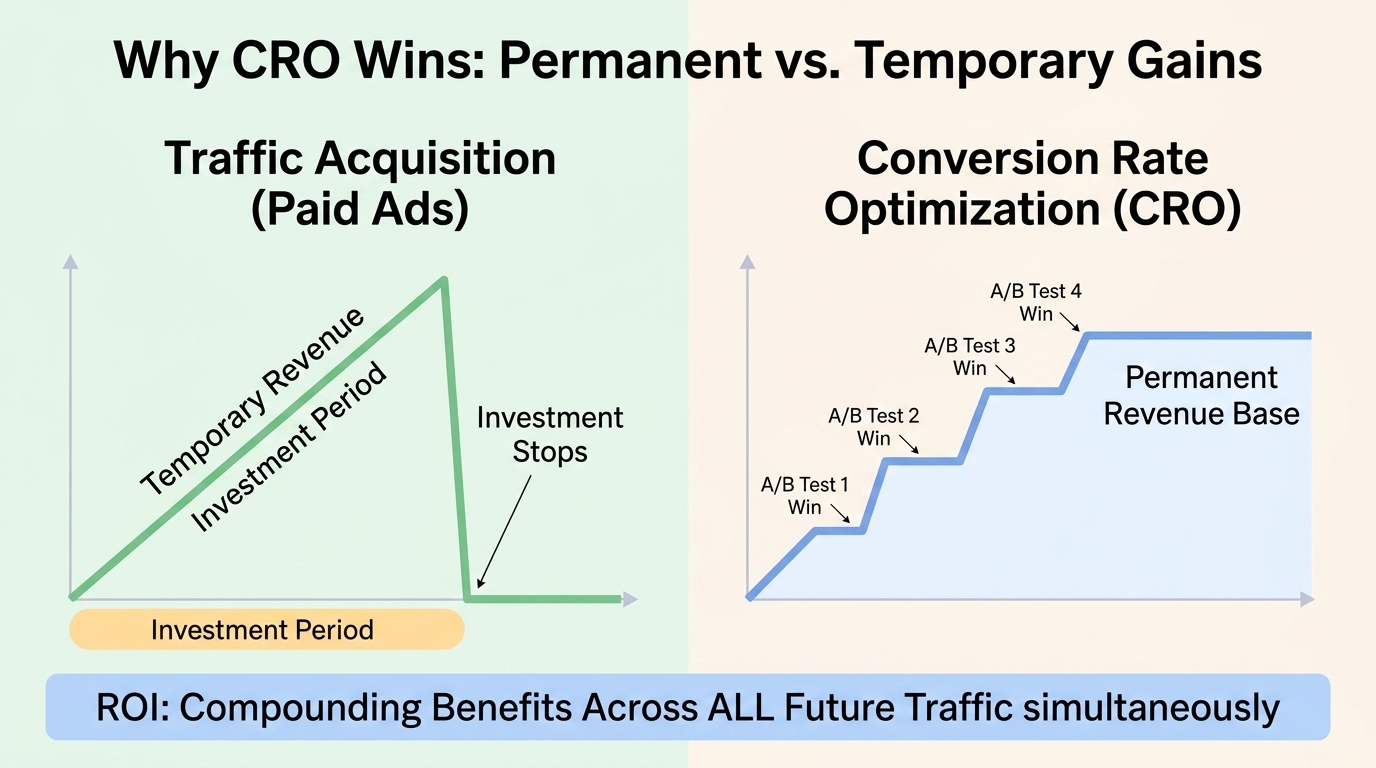
One-time optimization produces temporary results. Every new plugin, every new image, every new script added to a site can erode performance gains. Sustainable performance requires treating page speed as an ongoing metric, not a one-time project:
Set performance budgets — maximum file sizes and Core Web Vitals thresholds — and flag violations when they occur. Review PageSpeed Insights scores monthly and address regressions when they appear. Evaluate any new third-party tool's performance impact before adding it. Include performance testing in the QA process before launching any significant site change.
The Bottom Line
Website speed optimization is a hierarchy of improvements: fix the big things first (images, server, CDN, caching), then the smaller things (JavaScript, CSS, fonts). The biggest gains come from image compression, format modernization, lazy loading, and server-side caching — changes that are accessible without deep technical expertise and produce immediate, measurable improvements.
The investment is worth it at every level: faster sites rank better, convert better, retain visitors longer, and cost less to serve. Performance is not a technical vanity — it's a business outcome driver.
Every website built by Scalify is performance-optimized from day one — images compressed, assets optimized, hosting appropriate, caching configured. Speed built in, not retrofitted.











.jpeg)
.jpeg)





78 SW 7th St, Miami, FL 33130