


What Is a Brand Identity and How Do You Build One for Your Website?
By Josh Ternyak

March 29, 2026
Brand identity is the visual and verbal system that makes your business instantly recognizable and memorable. This guide explains what it actually includes, why it matters for your website, and how to build one that works.
The System That Makes Everything Your Company Does Instantly Recognizable
When you see those golden arches, you don't need to read a word. When you see that bitten apple, you know immediately what it represents. When you see a particular shade of red on a can, you think of a specific beverage. These instant recognitions aren't accidents — they're the result of consistent, deliberate brand identity systems applied over years across thousands of touchpoints.
For established global brands, brand identity is the result of decades and billions of dollars in marketing. For your business, building a clear, consistent brand identity is significantly more accessible than that — but the principles are the same, and the returns are similarly powerful at whatever scale you operate.
This guide covers what brand identity actually is (most people confuse it with logo design), why it matters specifically for your website, the components of a complete brand identity system, and how to build one that makes your business instantly recognizable and credibly professional.
What Brand Identity Is — and What It Isn't
Brand identity is the collection of all visual and verbal elements that represent your brand — your logo, color palette, typography, imagery style, tone of voice, messaging architecture, and the set of rules governing how these elements are used consistently across all contexts.
Brand identity is not:
Your brand: A brand is the sum total of perceptions, associations, and emotions that people have when they encounter your business. It's how people feel and think about you. Brand identity is the visual and verbal system through which your brand is expressed — the medium, not the message.
Just your logo: This is the most common misconception. A logo is one element of a brand identity — the most iconic element, but just one piece of a larger system. A logo without a supporting color palette, typography, and usage guidelines is a mark, not a brand identity.
Just visual design: Brand identity includes verbal elements — tone of voice, messaging style, taglines, key messages — that are as important as visual elements in creating a consistent impression across touchpoints.
A complete brand identity system enables anyone who creates content for your business — a designer making a brochure, a copywriter writing a blog post, a developer building a landing page — to produce work that's immediately recognizable as yours, without requiring your direct involvement in every decision.
Why Brand Identity Matters for Your Website
Your website is where most visitors encounter your brand in its most complete form. Every other touchpoint — a social media post, a business card, an email — is a fragment. Your website is where the full brand identity is expressed: the visual design, the photography, the typography, the copy style, the overall feeling.
The website experience is particularly critical for brand identity for several reasons:
First impressions are formed here: For most businesses, the website is the first substantial encounter potential customers have with the brand. The impression formed in those first seconds is the brand impression that all subsequent interactions either reinforce or contradict.
It's where brand consistency is most tested: A website has many pages, many designers' work, many pieces of content, many functional elements — all of which need to feel like they belong to the same brand. Weak brand identity produces websites that feel fragmented and amateur; strong brand identity produces websites that feel cohesive and professional regardless of how much content they contain.
It determines perceived quality and price positioning: The visual quality of a website signals the quality of the business behind it. A premium brand with a generic, template-looking website creates a credibility gap. A modest business with a thoughtfully branded, well-designed website can position itself above its apparent size. Brand identity sets expectations that affect willingness to pay.
The Components of a Complete Brand Identity System
Logo and Logo Variations
A logo is the primary mark that represents your brand — the symbol or wordmark that appears on your website, business cards, social profiles, signage, and everywhere else the brand is present.
Professional logos come in a system of variations, not a single version:
Primary logo: The full, primary version — typically a combination of a symbol and a wordmark, or just a wordmark, designed for most standard applications.
Secondary/alternate versions: Variations for specific contexts — a stacked version for square applications, a horizontal version for wide contexts, a symbol-only version for small sizes (app icons, favicons) where the full wordmark wouldn't be legible.
Light and dark versions: A version designed for use on light backgrounds (typically dark or full-color logo) and a version for dark backgrounds (typically white or light-colored logo). Many contexts — a dark website hero, a light email header — require one or the other.
Monochrome version: A single-color version that works in black or white, for contexts where color isn't available or appropriate (embroidery, black-and-white printing, some signage applications).
A logo delivered as only one version in one format is incomplete. A professional logo system provides all variations in vector formats (.ai, .eps, .svg) and raster formats (.png with transparent background) at multiple sizes.
Color Palette
Your brand color palette defines the specific colors used to represent your brand — not just generally ("blue and white") but specifically, with exact color codes in multiple formats:
- HEX codes for digital/web use (e.g., #0055DD)
- RGB values for digital/screen use (e.g., RGB 0, 85, 221)
- CMYK values for print use (e.g., CMYK 100, 62, 0, 13)
- Pantone (PMS) codes for precise print color matching (e.g., PMS 286 C)
A complete brand palette typically includes:
Primary colors: The 1–2 colors most associated with the brand. Used most frequently in brand communications.
Secondary colors: Supporting colors that complement the primaries. Used for variety and depth without overusing the primaries.
Neutral colors: Blacks, whites, grays used for typography, backgrounds, and to balance the primary and secondary colors.
Accent colors: High-contrast colors used sparingly for emphasis, CTAs, and visual highlights.
Defined color usage rules prevent the palette from expanding uncontrollably and ensure the brand feels consistent. "The primary CTA button is always Primary Blue" eliminates debates about button colors. "The background is always either White or Light Gray" ensures pages have a consistent foundation.
Typography
Brand typography defines which typefaces your business uses and how they're applied — heading fonts, body fonts, accent fonts, and the rules governing their use (weights, sizes, line heights, letter spacing).
Most professional brand identities use 2–3 typefaces:
Display/heading font: Used for headlines, prominent text, and the brand's primary typographic personality. This font does the most brand expression work — it can be distinctive, personality-driven, or even custom-designed.
Body/text font: Used for paragraph text, descriptions, and supporting content. Prioritizes readability over personality — the goal is clarity, not visual statement.
Accent font (optional): A third font used sparingly for specific applications — pull quotes, captions, labels — that need visual differentiation from the heading and body fonts.
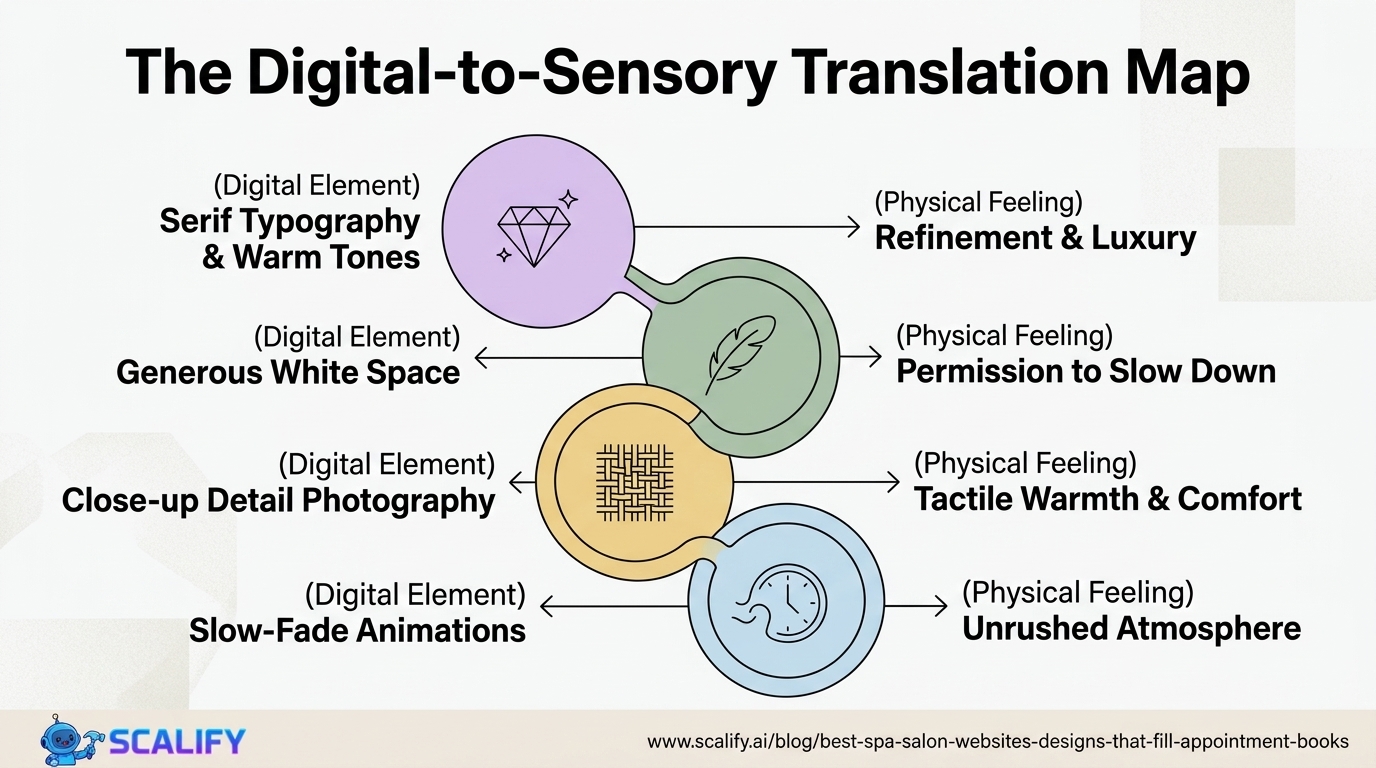
Typography decisions significantly affect the perceived quality and personality of a brand. The same content set in a slab serif feels completely different from the same content set in a geometric sans-serif. These associations are real and influence how visitors perceive the brand behind the type.
Imagery Style and Photography Guidelines
Consistent imagery style is one of the most powerful tools for brand recognition, and one of the most commonly neglected. Brands that use whatever stock photo seems vaguely relevant to any given piece of content create visual inconsistency that undermines the cohesion of their brand identity.
Photography and imagery guidelines define:
Subject matter: What types of images appear in brand communications? People, places, products, abstract? What situations, contexts, and environments?
Style and treatment: Bright and airy or moody and dark? Candid documentary style or posed and polished? Colorful or desaturated? These stylistic choices create a consistent visual personality across all imagery.
Color consistency: Are images edited to have consistent color tones that align with the brand palette? Images with warm orange tones feel different from images with cool blue tones — and mixing both randomly creates visual incoherence.
What to avoid: Explicit guidance on imagery that doesn't fit the brand. "We never use: images with generic handshake stock photo feel, overly saturated unrealistic color grading, people pointing at laptops." This negative guidance is often as useful as the positive guidance.
Tone of Voice and Writing Style
Brand identity includes how the brand sounds in written communication — not just how it looks. Tone of voice defines:
Personality attributes: 3–5 adjectives describing the brand's written voice. "Professional but approachable." "Expert but accessible." "Direct and confident without being arrogant." These become the reference point for all copy decisions.
Vocabulary preferences: Words the brand typically uses and words it avoids. Technical jargon vs. plain language. Formal vocabulary vs. conversational vocabulary. Industry-specific terms vs. general audience terms.
Grammatical style: Does the brand use Oxford commas? Does it capitalize job titles? Does it use contractions in formal contexts? Does it write out numbers or use numerals? These small, consistent choices accumulate into a recognizable written voice.
Examples of on-brand and off-brand writing: The most useful tone of voice documentation shows the same content written in the brand voice versus not in the brand voice, making the distinction concrete rather than theoretical.
How to Build a Brand Identity for Your Business
Clarify Brand Strategy First
Brand identity expresses brand strategy. Before designing anything, clarify:
- What does your brand stand for? What's the core belief or value that drives everything you do?
- Who is your target audience? What do they value and what resonates with them?
- What is your brand's personality? If your brand were a person, how would they dress, speak, and behave?
- What is your positioning? How do you want to be perceived relative to competitors?
The visual and verbal choices in your brand identity should express the answers to these questions. A luxury brand's identity looks and sounds different from an approachable startup's identity — not because of aesthetic preference but because the identity expresses genuinely different strategic positioning.
Get a Professional Logo (But a Good One)
A logo is worth investing in professionally. It's the most-used element of your brand identity, it needs to work across many contexts and sizes, and amateur logo design tends to look amateur — which affects how your business is perceived.
Professional logo design ranges from $500–5,000+ for an identity that includes a complete logo system with variations, color codes, and usage guidelines. This investment is appropriate for any business with long-term branding ambitions.
Sources for professional logos: experienced freelance identity designers (find them on Dribbble, Behance, or Working Not Working), brand identity agencies (full-service brand identity with strategy, at higher cost), and specialist logo design services. What to avoid: crowdsourced logo contests (produce generic work from designers who don't invest time in understanding your business) and very cheap logo services (you get what you pay for in logo design).
Choose Your Palette and Typography Thoughtfully
Color and typography decisions deserve real consideration, not just default choices. Research the visual conventions in your industry — and decide whether to align with them (benefiting from existing associations) or differentiate from them (standing out against category norms).
Test color accessibility. Your brand palette should include combinations that meet WCAG contrast ratio requirements for text readability — typically 4.5:1 for normal text and 3:1 for large text. Brand colors that don't meet contrast requirements create accessibility problems in every piece of marketing you produce.
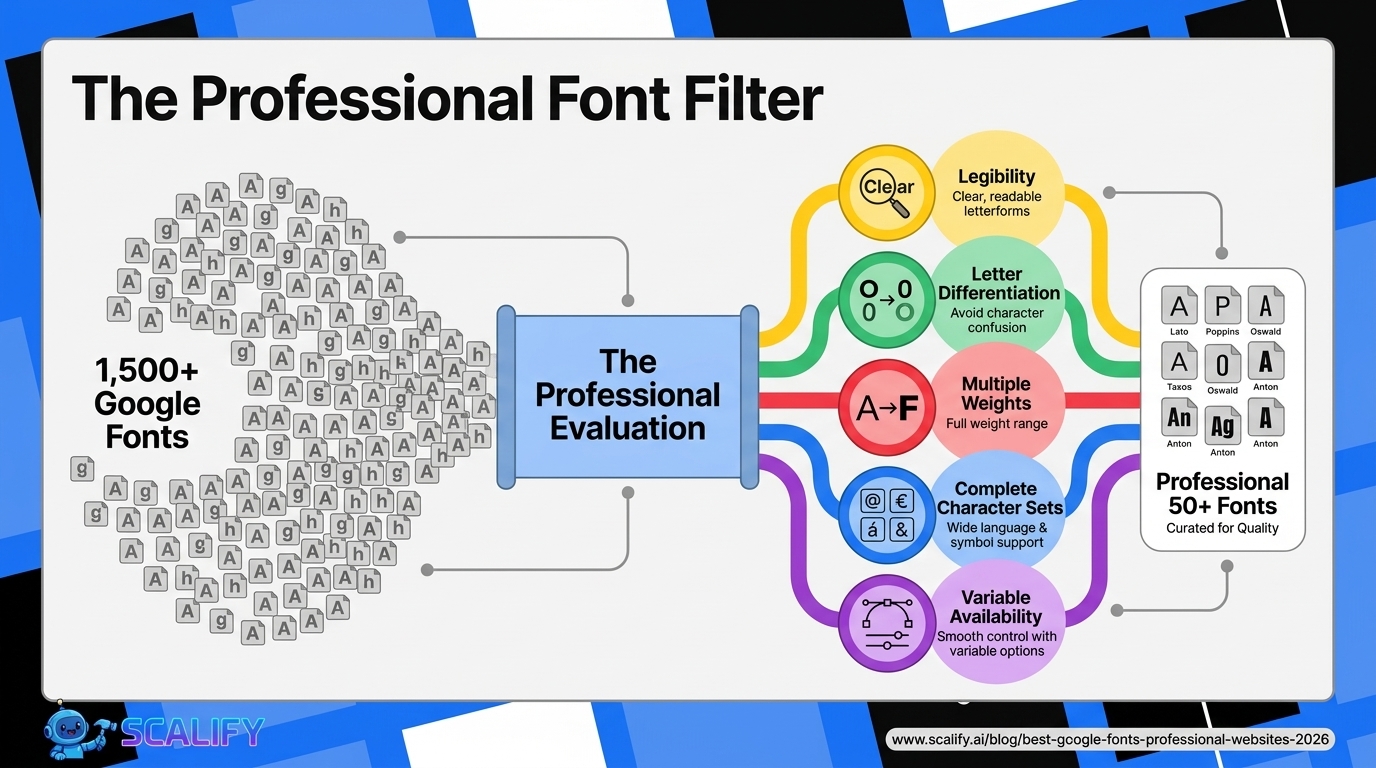
Choose web fonts that are freely available (Google Fonts has thousands of quality options) or budget for premium font licenses (Fonts.com, MyFonts, or directly from type foundries). Custom fonts that aren't licensed for web use are both legally risky and technically problematic.
Document Everything in Brand Guidelines
Brand guidelines (also called a style guide or brand book) are the documentation that makes your brand identity usable by anyone. A complete brand guidelines document includes: logo usage rules (clear space, minimum sizes, incorrect uses), color palette with codes, typography specifications (fonts, sizes, weights, hierarchy), imagery guidelines, and tone of voice principles.
The brand guidelines live with the logo files and should be shared with every designer, developer, photographer, or copywriter who creates content for your business. Without documentation, brand consistency depends entirely on the judgment of each individual creator — which produces inconsistency at scale.
Apply Consistently Across All Touchpoints
Brand identity creates value through consistent application across all contexts — website, social media, email templates, business cards, proposal documents, packaging, signage. Each consistent application reinforces the brand impression. Each inconsistency dilutes it.
Consistency doesn't mean visual monotony — creative campaigns, seasonal content, and different content formats all have room for variety within a coherent system. It means the underlying visual language (colors, fonts, photography style, voice) remains recognizably "yours" regardless of the specific application.
The Bottom Line
Brand identity is the system that makes your business instantly recognizable and credibly professional across all touchpoints. It's not just a logo — it's a complete visual and verbal framework encompassing color, typography, imagery, and voice that governs how everything your business produces looks and sounds.
Investing in brand identity early pays dividends across every marketing channel and customer interaction. A business with a clear, consistent, professionally executed brand identity commands more trust, charges higher prices, and builds recognition faster than one with an incoherent or generic visual presence.
At Scalify, we apply brand identity principles to every website we build — ensuring the site expresses your brand accurately and consistently, with every visual and copy decision aligned to who you are and who you're serving.
























.jpeg)
.jpeg)





78 SW 7th St, Miami, FL 33130