


Custom Website vs Template: Pros and Cons Compared
By Josh Ternyak

March 29, 2026
Template or custom — it's one of the most consequential decisions in any website project. This honest comparison breaks down the real trade-offs so you can choose what's actually right for your situation.
The Decision Nobody Makes Cleanly
Every business that needs a website faces this question at some point: do we go custom or use a template? It sounds like a simple trade-off — custom is expensive and unique, templates are cheap and generic. But the reality is considerably more nuanced, and making the wrong call either way has real costs.
Go template when you needed custom and you end up with a site that looks like every competitor's site, fights your brand identity, and can't do what you actually need it to do. Go custom when a great template would have served you fine and you've spent three times the budget for marginal differentiation that most visitors won't notice.
This guide gives you an honest, detailed breakdown of both options — what each actually delivers, what each actually costs, and a clear framework for making the right choice for your specific situation.
What "Custom" and "Template" Actually Mean
The terms need defining because they're used loosely in ways that create confusion.
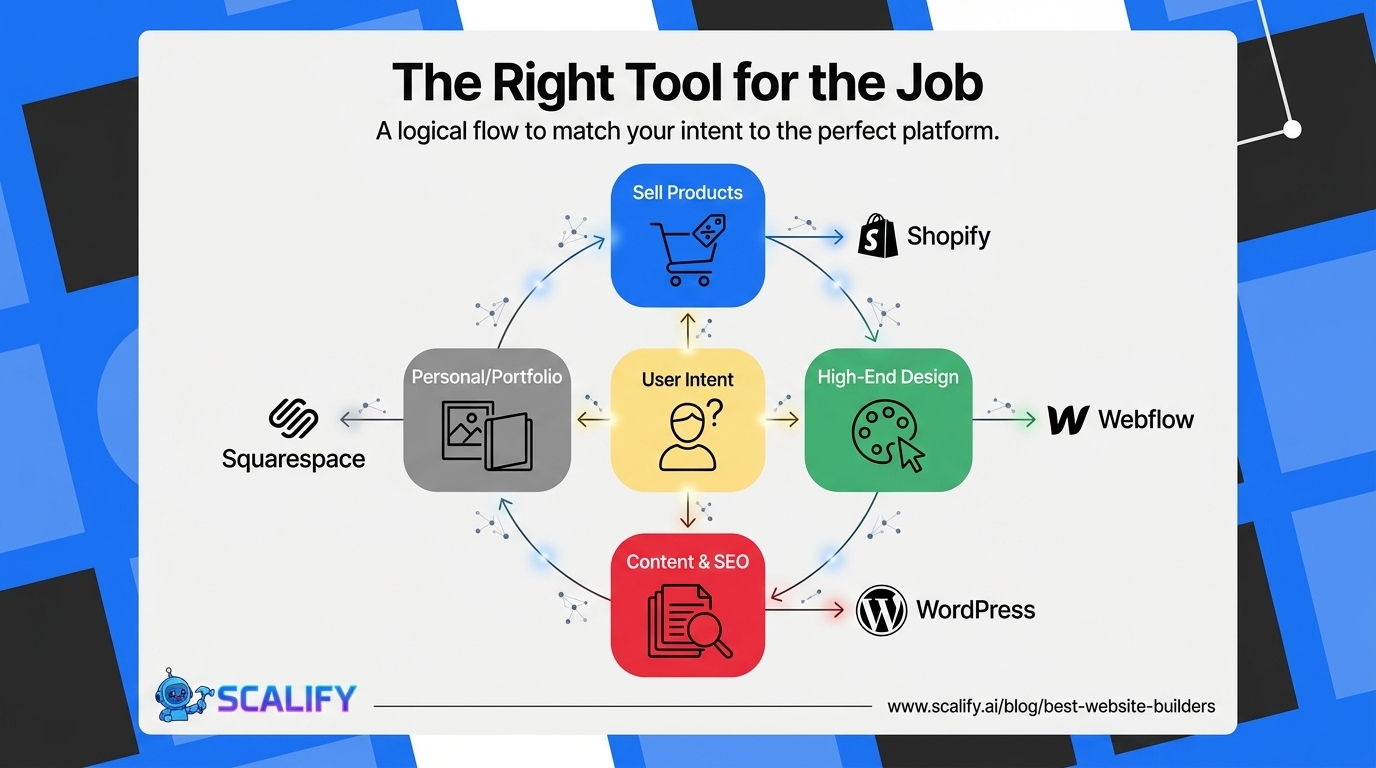
A template is a pre-built website design — a complete visual and structural framework that you populate with your own content. Templates come with predetermined layouts, components, color schemes, and typography that you customize within the boundaries the template allows. They range from free generic designs (WordPress themes you'd never want to use) to premium, carefully designed systems (Webflow templates, Squarespace templates) that look genuinely professional with minimal customization.
A custom website is designed and built specifically for your brand — every layout decision, visual choice, component design, and interaction is created for your project from scratch. There's no template to work within; the starting point is a blank canvas and the brief.
The distinction is blurrier in practice: most "custom" websites use some templates or components. Most "template" websites have been customized significantly. What matters for comparison is the degree of design specificity and the constraints it creates — which affects quality, cost, differentiation, flexibility, and maintainability.
The Case for Templates
Cost
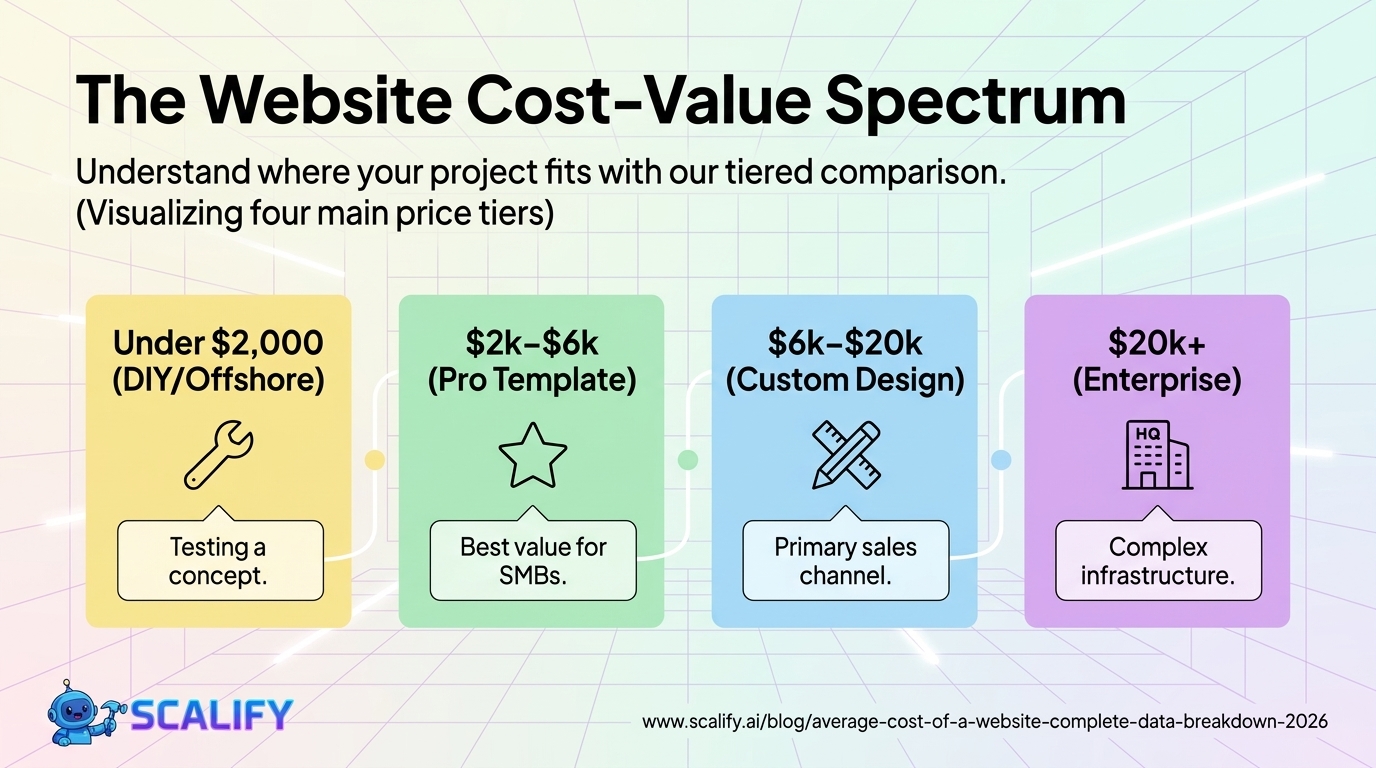
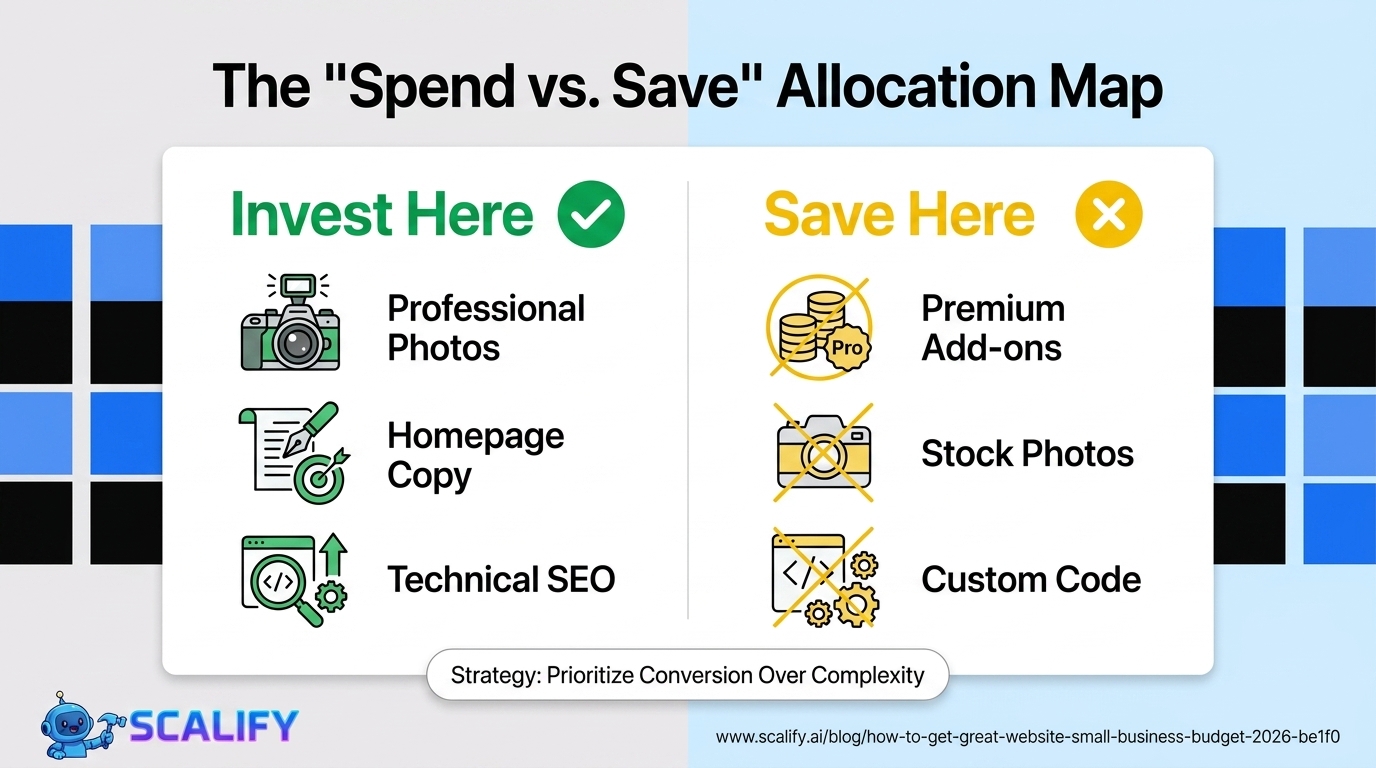
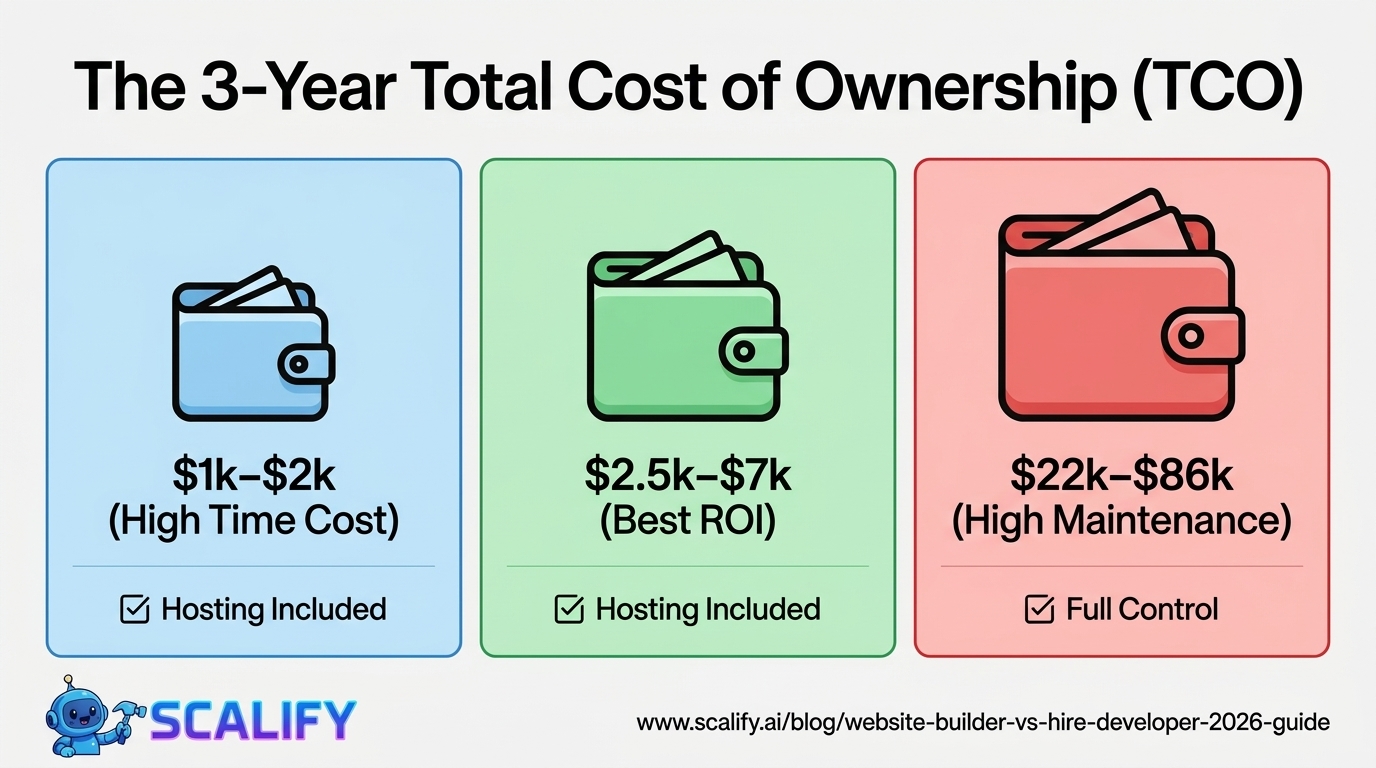
The most obvious advantage. A premium Webflow template costs $50–150. A quality Squarespace or WordPress theme costs $50–200. The development work to implement a template with your content, branding, and configurations runs $500–3,000 for a professional freelancer, significantly less for a capable DIY builder.
A comparable custom website — genuinely designed from scratch, not a template with a logo swap — typically costs $5,000–25,000 for a small business site and significantly more for complex builds. The gap is 5–20x for professional implementation, even more for enterprise-quality work.
For businesses with limited budgets, templates make professional-quality web presence achievable. A well-chosen, well-implemented premium template looks significantly better than a poorly executed custom design at five times the price.
Speed
A template website can launch in days to weeks. The design work is done. The component library is built. The responsive behavior is handled. You're filling in content, customizing colors and typography, and adding your brand's images — not designing from scratch.
A custom website designed and built properly takes 4–12+ weeks for most business sites. Discovery, design iterations, development, QA, and refinement all take time. If speed to market matters — for a launch, a pivot, a campaign — templates can get you there months faster.
Proven Design
Premium templates are designed by professionals who have designed many websites. The layout structures, component patterns, and visual hierarchy in a quality template have typically been tested and refined. You're not guessing at what works — you're starting from a foundation that has been validated by professional judgment.
This doesn't mean templates are always better designed than custom work, but it does mean a quality premium template is baseline competent in a way that an inexperienced designer's custom work might not be. The floor for template quality (at the premium end) is reasonably high.
Maintained Ecosystem
Template providers update their templates for browser compatibility, new CSS features, accessibility improvements, and platform updates. When Webflow releases new features or WordPress updates its editor, template developers update their templates to work with the changes. You benefit from ongoing maintenance without paying for it separately.
Lower Technical Risk
Custom websites carry execution risk — a mediocre implementation of a great design concept produces a mediocre website. Templates reduce this risk: you can see exactly what you're getting before you buy, try it with your content before committing fully, and know the baseline quality of what you'll receive.
The Limitations of Templates
Design Constraints
Every template has a design language — a visual vocabulary it was built around. Fonts it was designed with, a component style it established, a color system it assumes. Working within that language produces a coherent result. Working against it — forcing your brand's very different visual identity onto a template designed for something else — produces tension and compromise.
Some businesses have brands that are compatible with template aesthetics. Many don't. A luxury brand trying to use a template designed for modern tech startups will find that every color, font, and component choice fights against the brand they're trying to communicate.
Differentiation Limits
Templates are sold to hundreds or thousands of buyers. Even with customization, websites built on the same template share an unmistakable visual kinship — the spacing system, the component library, the interaction patterns. Visitors who spend time on the web recognize the template aesthetic even without consciously identifying the template itself.
For most businesses, this is acceptable. For businesses where visual differentiation is a strategic asset — creative agencies, luxury brands, design-forward companies competing on aesthetic — looking like everyone else using the same template is a real cost.
Functionality Limits
Templates are built for common use cases. The moment your business needs something the template wasn't designed for — a custom configurator, a complex pricing calculator, an unusual content type, a specific interaction pattern — you're either adapting the template in ways it doesn't naturally support (expensive and often messy), or accepting that the feature won't work the way you envisioned.
Complex functionality requirements almost always point toward custom development.
Long-term Flexibility
As your business evolves, your website needs to evolve. Templates constrain how the site can grow — adding pages that don't fit the template's structure, creating content types the CMS wasn't designed for, adding interactions the template doesn't accommodate.
Custom sites can evolve more freely because they're built around your specific needs rather than a pre-built structure. This flexibility has diminishing value for simple sites that change incrementally but significant value for businesses whose digital needs evolve substantially over time.
The Case for Custom Websites
Brand Expression Without Compromise
A custom website is designed for your brand specifically. Every visual decision — the proportion of whitespace to content, the weight and size of typography, the way colors interact, the motion and interaction design, the photography style — is made in the context of what communicates your brand's specific identity to your specific audience.
This matters most for brands where the visual experience is itself a significant part of the value proposition: design agencies, luxury goods, high-end services, companies whose positioning is built substantially on aesthetic differentiation.
Designed for Your Specific User Journey
Custom design allows you to optimize the user journey for your specific conversion goals. A template has a generic conversion architecture — hero section, features section, testimonials, CTA. Your business may have a completely different optimal structure: a specific trust-building sequence, a unique way of presenting pricing, a content organization that matches how your particular audience makes decisions.
Custom design can implement the specific page architecture, content hierarchy, and conversion flow that your audience and business model actually require.
Unique Interaction Design
The interactions that make a site feel considered and premium — scroll animations that reveal content meaningfully, hover states that provide useful feedback, page transitions that maintain context, loading states that feel intentional rather than generic — are possible in templates but difficult to implement distinctively. Custom design can incorporate interaction design as a core part of the brand experience rather than as a capability offered by a template's existing library.
No Template Debt
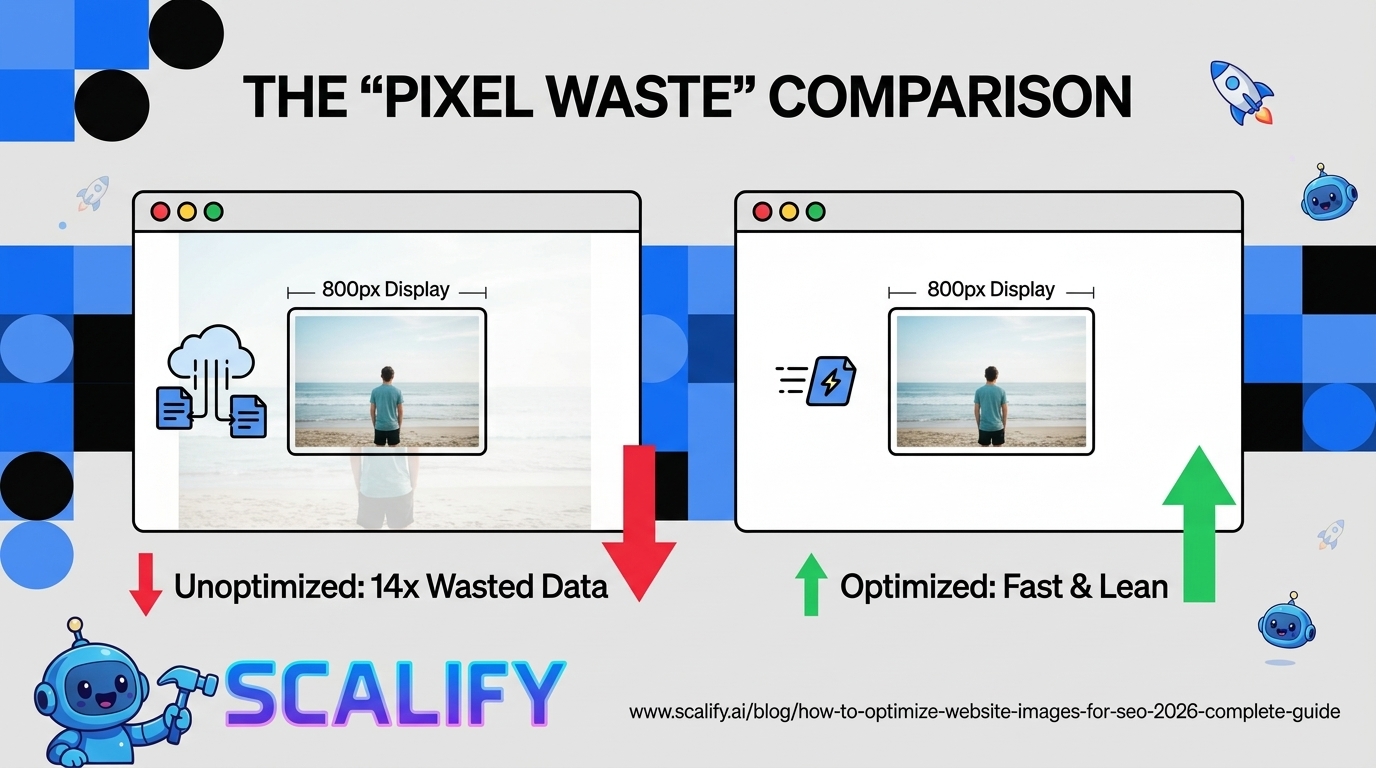
Templates accumulate "template debt" — unused code for features you don't need, styling for components you'll never use, JavaScript for interactions that don't apply to your site. This bloat affects performance (larger page loads, more unused CSS and JavaScript) and maintainability (navigating code you didn't write and don't fully understand). Custom sites have only what they need.
The Limitations of Custom Websites
Cost
Good custom websites are expensive. $5,000 is the entry point for a professional-quality custom brochure site from a competent freelancer. $15,000–50,000+ for agency work on a medium-complexity business site. Enterprise-grade custom builds run six figures or more. The cost reflects real work: design research, concept development, iterations, professional development, testing.
The cost is justified when the differentiation, functionality, or brand expression requires it. It's not justified when a great template would serve the same purposes at a fraction of the price.
Timeline
Custom websites take longer. A focused build with clear requirements, a single decision-maker, and efficient processes can produce a quality custom site in 4–6 weeks. More realistically, professional custom sites take 8–16 weeks from kick-off to launch. Longer for complex builds, teams with multiple approvers, or businesses that discover requirements mid-project.
Execution Risk
Custom design requires good designers and developers. The range of quality in custom website production is enormous. An expensive agency doesn't guarantee a good result. A beautiful mockup doesn't guarantee a well-built site. Custom work can fail in ways that template work rarely does — a poorly implemented design concept can look worse than a good template well-customized.
Maintenance Responsibility
Custom code is your responsibility. Unlike template providers who update their templates, custom code needs to be updated when browsers change, when security vulnerabilities emerge, when dependencies become outdated. This ongoing maintenance cost is real and often underestimated in the initial investment calculation.
The Hybrid Reality: Custom on a Platform
The most practically relevant option for many businesses isn't strictly either category — it's a professionally customized platform-based site that takes a template as a starting point and genuinely customizes it to the brand.
A skilled Webflow designer who takes a template and genuinely reworks the typography, spacing, color system, photography approach, and component styling can produce a site that looks meaningfully different from the template source while benefiting from the template's structural foundation. This is not "a template with a logo swap" — it's using a template as scaffolding while building a distinctive house.
The distinction matters because this approach can deliver substantially more visual differentiation than naive template customization at substantially less cost than fully custom design. Many professional web projects that describe themselves as "custom" are actually this hybrid approach — and it's often the right call.
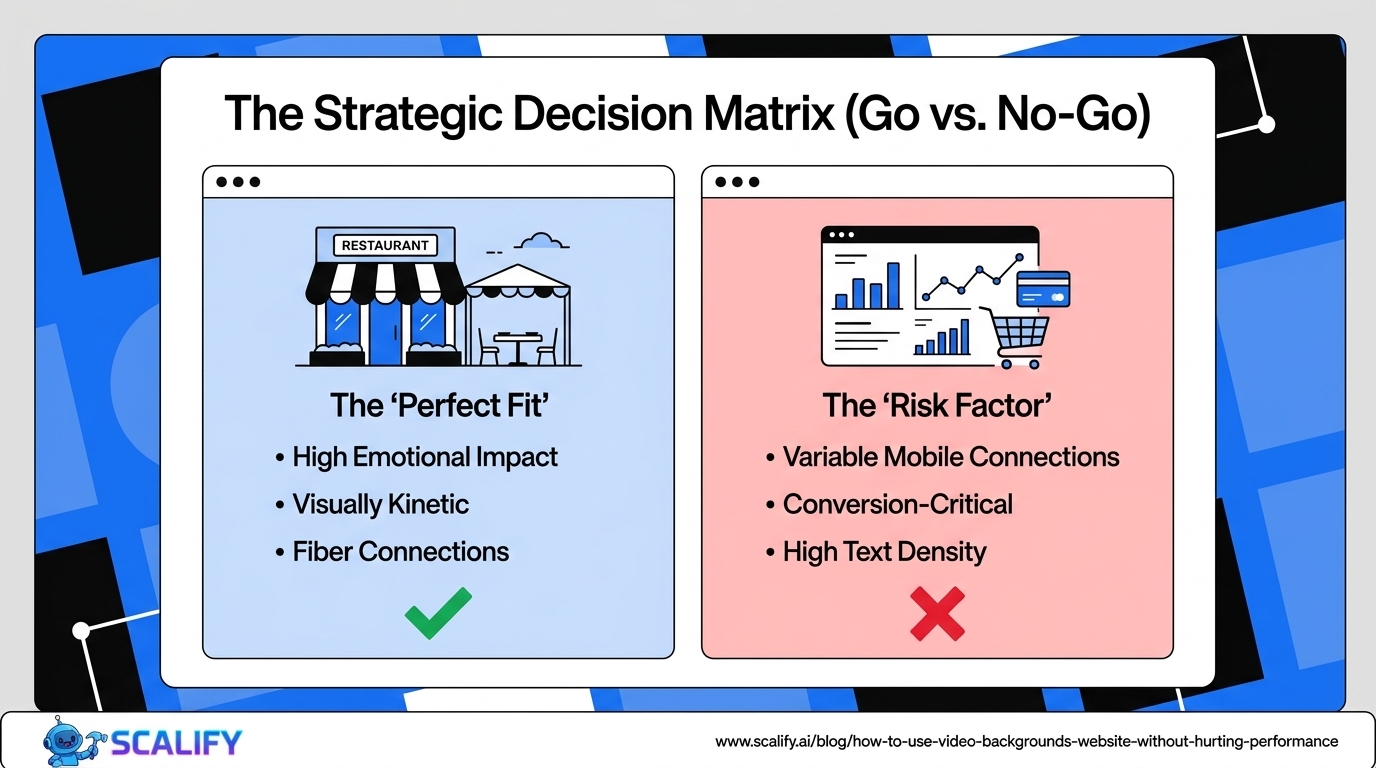
How to Choose
Work through these questions in order:
Is visual differentiation a core part of your competitive strategy? If your brand is built on aesthetic superiority, if you're a creative business, if your positioning depends on being visually distinctive — custom is probably right. If your competitive advantage is price, speed, expertise, or something else entirely — a great template may serve you equally well.
Do you have complex, specific functionality requirements? Things that templates can't accommodate or accommodate poorly — custom configurators, complex pricing logic, unusual content types, specific workflow requirements. If yes: custom is almost certainly necessary.
What's your budget? If your realistic budget is under $5,000 and you need a professional result, custom is off the table. A quality premium template well-implemented is your best option. If budget is substantial and the differentiation is worth it, custom is achievable.
What's your timeline? Need to launch in three weeks? Template. Building something for a launch six months from now? Timeline isn't the constraint.
What's the maturity of your brand and requirements? Early-stage businesses often don't yet have fully defined brand identity or stable feature requirements. Building custom on uncertain foundations leads to expensive rebuilds when things change. Templates are lower-stakes to rebuild than custom sites. Later-stage businesses with stable brands and proven requirements are better candidates for custom investment.
The Bottom Line
Templates are the right choice for most small businesses, early-stage companies, and any situation where budget, speed, or simplicity are priorities and visual differentiation is not a strategic imperative. A great premium template, professionally customized, produces genuinely excellent results for a fraction of full-custom cost.
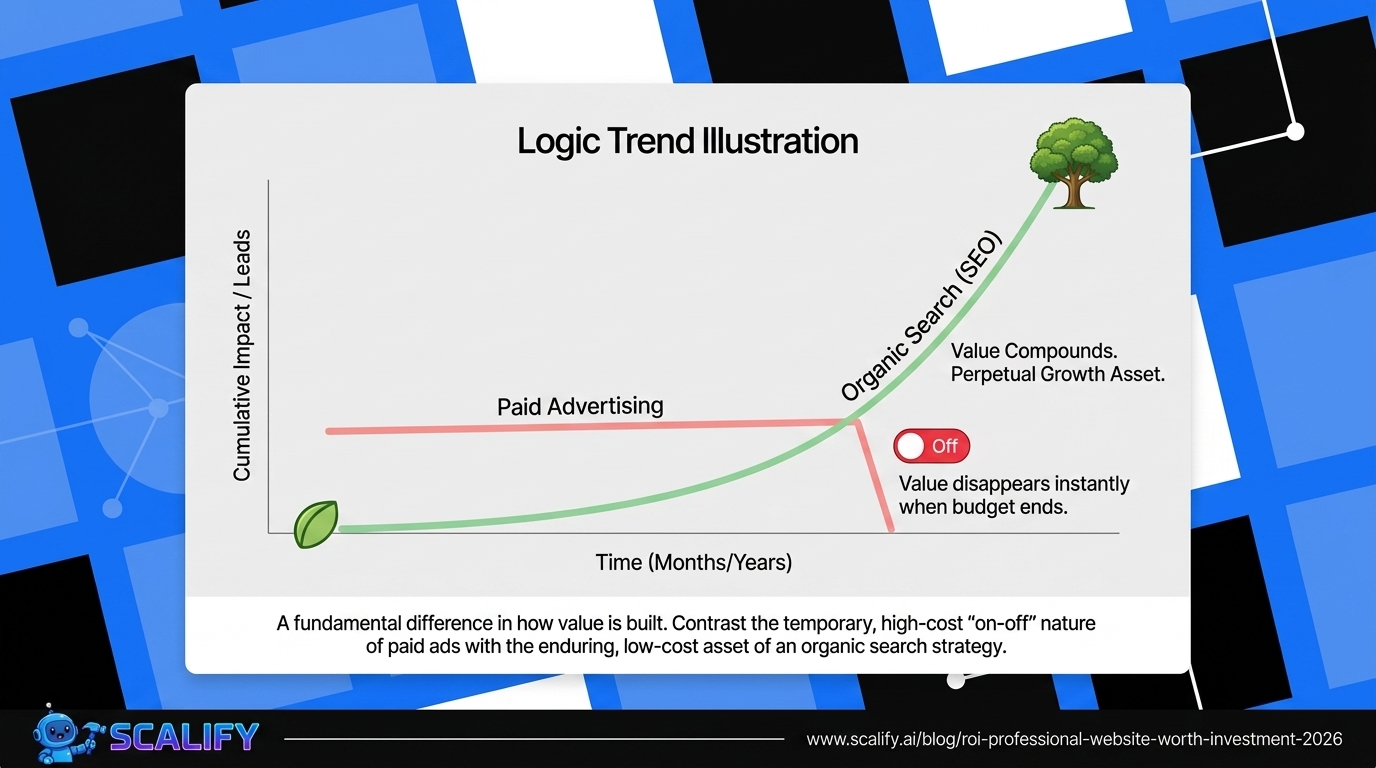
Custom is the right choice when visual differentiation is strategically necessary, when functionality requirements exceed what templates can accommodate, when the business has both the budget and the design leadership to execute it well, and when the investment has a clear ROI case.
At Scalify, we deliver custom professional websites without the typical custom website price tag or timeline — combining the quality of custom design with the speed and efficiency of a purpose-built delivery system.


.jpeg)
.jpeg)



78 SW 7th St, Miami, FL 33130