


What Is a CDN and Does Your Website Need One?
By Josh Ternyak

April 1, 2026
Comprehensive guide: What Is a CDN and Does Your Website Need One?
The Infrastructure That Closes the Distance Between Your Server and Your Visitors
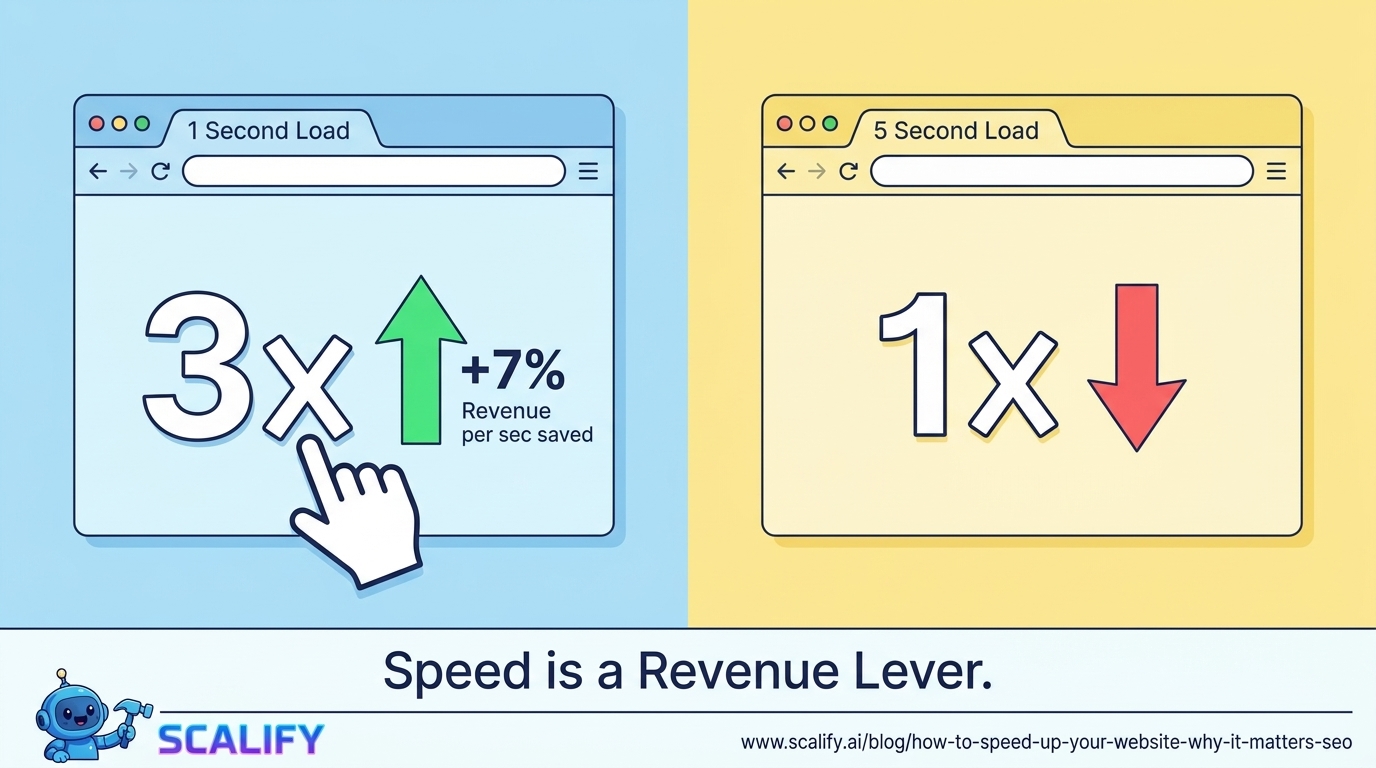
Physics is merciless in the world of web performance. Data can travel at roughly two-thirds the speed of light through fiber optic cables — and that speed sounds impossibly fast until you do the math for a visitor on the other side of the world from your server. A visitor in Singapore loading your website hosted in Virginia has approximately 9,000 miles of network infrastructure between their browser and your server. The absolute minimum round-trip time for a single network request is roughly 100 milliseconds — and in practice, with routing overhead, it's often 200–400ms for each request.
Multiply that latency by the dozens of requests a typical web page makes — HTML, CSS, JavaScript files, images, fonts — and you've built a performance problem that no amount of server-side optimization can fully solve. The server can respond instantly, but the data still has to travel the distance.
A Content Delivery Network solves this problem by moving copies of your content closer to your visitors. Instead of every visitor loading content from your origin server in Virginia, a visitor in Singapore loads cached content from a CDN server in Singapore — 100 miles away instead of 9,000. The latency problem shrinks from hundreds of milliseconds to single-digit milliseconds.
What a CDN Is
A Content Delivery Network (CDN) is a globally distributed network of servers (called edge servers or points of presence) that cache and deliver web content to visitors from locations geographically close to them. When a visitor requests content from a CDN-enabled website, the CDN routes the request to the nearest edge server. If that server has the content cached, it delivers it directly. If not, it fetches it from the origin server, caches a copy, and delivers it to the visitor.
The result: visitors around the world receive content from nearby servers rather than your single origin server, dramatically reducing the distance data must travel and the latency each request incurs.
CDNs have evolved beyond simple static asset caching. Modern CDNs provide: edge caching for static and dynamic content, DDoS protection, web application firewall (WAF), image optimization and format conversion, HTTP/2 and HTTP/3 support, SSL/TLS termination at the edge, edge compute capabilities (running code at edge nodes), and real-time performance analytics.
How CDN Caching Works
The core mechanism: a visitor requests a resource (an image, a CSS file, a JavaScript bundle). The CDN receives the request at its nearest edge node. If the edge node has a cached copy of that resource (a cache hit), it delivers it immediately — no origin server involved, no cross-continental round trip. If the edge node doesn't have the resource cached (a cache miss), it requests it from the origin server, caches a copy, and delivers it to the visitor.
Subsequent requests for the same resource from anywhere in that edge node's geographic region are served from cache. The cache expires according to the Cache-Control headers set on the response — resources with long cache times (like versioned JavaScript bundles that rarely change) stay cached for days or weeks; resources with short cache times (like HTML pages that change frequently) expire sooner or require explicit purging when updated.
Cache hit ratios matter: a CDN that serves 90% of requests from cache is providing 10x the latency improvement compared to one that serves only 10% from cache. The cache hit ratio for static assets (images, CSS, JS) is typically very high; for dynamic HTML that changes per user or per request, caching requires more configuration or may not be appropriate.
What a CDN Actually Caches
Standard CDN caching is well-suited for static assets:
- Images (JPEG, PNG, WebP, AVIF, SVG)
- CSS stylesheets
- JavaScript files
- Web fonts
- PDF and downloadable files
- Video files (streaming through CDN)
These assets change infrequently and are identical for every visitor — perfect for global caching.
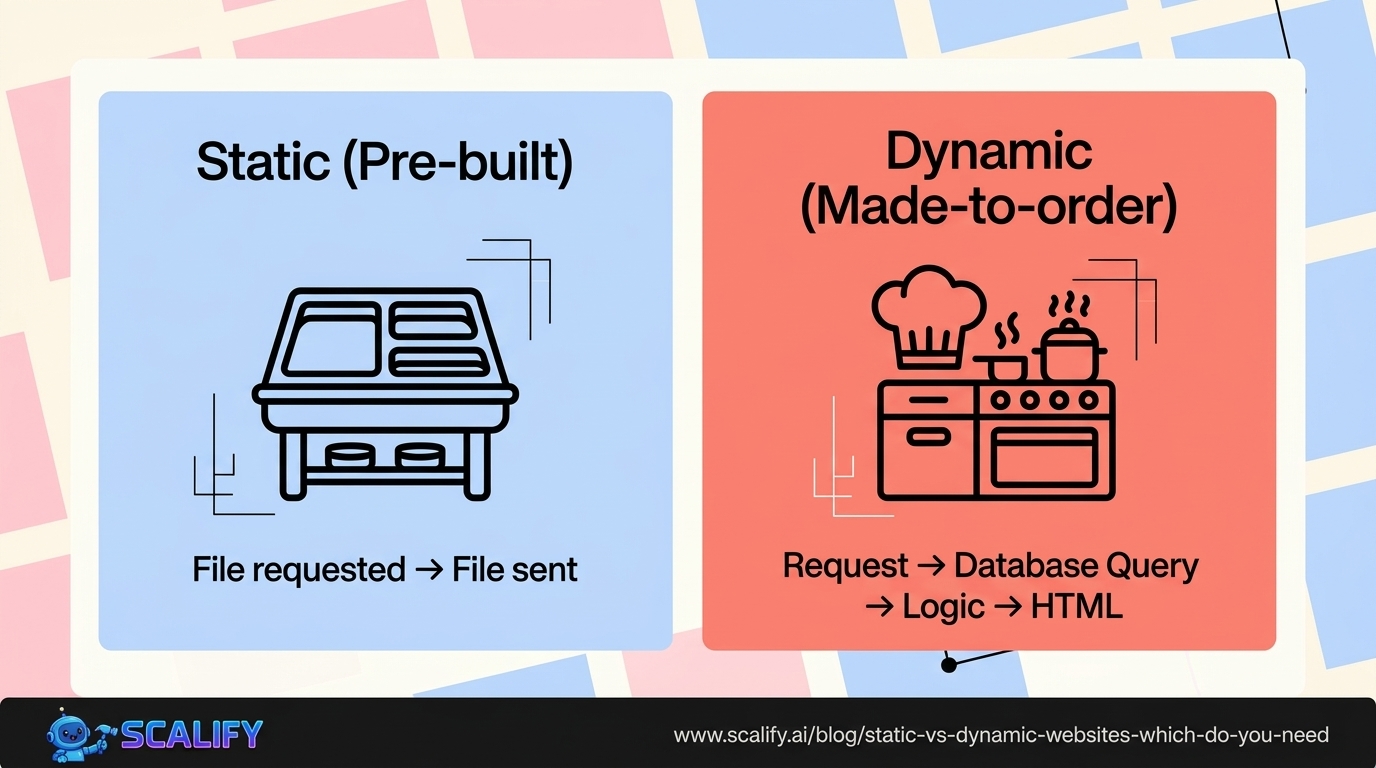
HTML pages are more complex: the homepage of a brochure site is the same for every visitor and can be cached aggressively. But a user dashboard, a cart page, or any page with personalized content can't be cached globally without serving the wrong content to the wrong user. Modern CDNs handle this through cache key customization (caching different versions based on cookies or headers) and edge-side includes (assembling pages from cached components), but the configuration is more complex.
The Major CDN Providers
Cloudflare (Free–$200+/month)
The most widely used CDN for small and mid-size websites. Cloudflare operates a global network of 250+ data centers and provides CDN, DDoS protection, web application firewall, DNS hosting, and performance optimization through a single service. The free tier is genuinely capable — it provides CDN caching, DDoS mitigation, Brotli compression, and basic WAF features at zero cost.
What makes Cloudflare distinctive: it operates as a DNS-level proxy. You point your domain's nameservers to Cloudflare. All traffic to your domain routes through Cloudflare's network before reaching your origin server. This architecture enables Cloudflare to cache content, filter malicious traffic, and apply edge rules at the DNS level — before requests even reach your hosting.
Cloudflare is appropriate for: businesses using shared hosting, VPS, or managed hosting that want to add CDN, security, and performance optimization without changing their hosting infrastructure. It's the simplest path to CDN for most small business websites.
AWS CloudFront
Amazon's CDN, tightly integrated with AWS services. More configuration-intensive than Cloudflare but extremely powerful and scalable. Appropriate for: websites and applications already hosted on AWS infrastructure, businesses that need granular control over caching rules and edge behavior, and high-traffic sites that benefit from CloudFront's deep integration with other AWS services (S3, Lambda@Edge, API Gateway).
Fastly
Enterprise-grade CDN with emphasis on real-time configuration changes and edge compute capabilities. Webflow, GitHub, Twitter, and other high-traffic platforms use Fastly. Appropriate for: large-scale applications, businesses that need instantaneous cache purging, and developers building edge compute applications.
Akamai
The oldest and largest CDN network, serving some of the world's highest-traffic properties. Enterprise pricing, enterprise feature set, enterprise complexity. Appropriate for: large enterprises with global traffic distributions and complex caching requirements where price is not the primary concern.
Bunny.net
A newer, competitively priced CDN ($0.01–0.03/GB for delivery, with a small monthly minimum) that offers excellent performance at significantly lower cost than AWS CloudFront or Akamai at comparable traffic volumes. Straightforward configuration, good geographic coverage, and transparent bandwidth pricing make it appealing for cost-conscious businesses with significant media delivery needs.
CDN Built Into Platforms
Many website platforms include CDN delivery as part of their subscription — no separate CDN setup required:
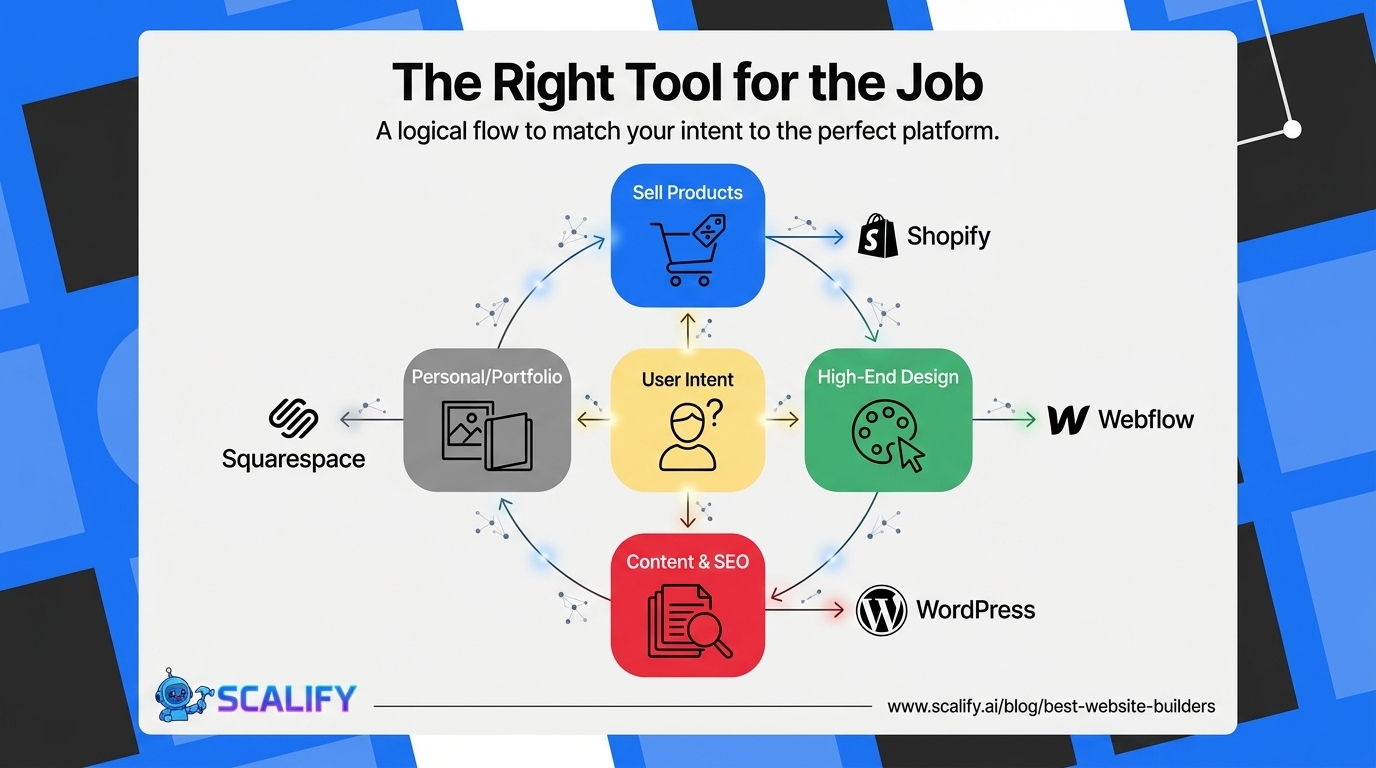
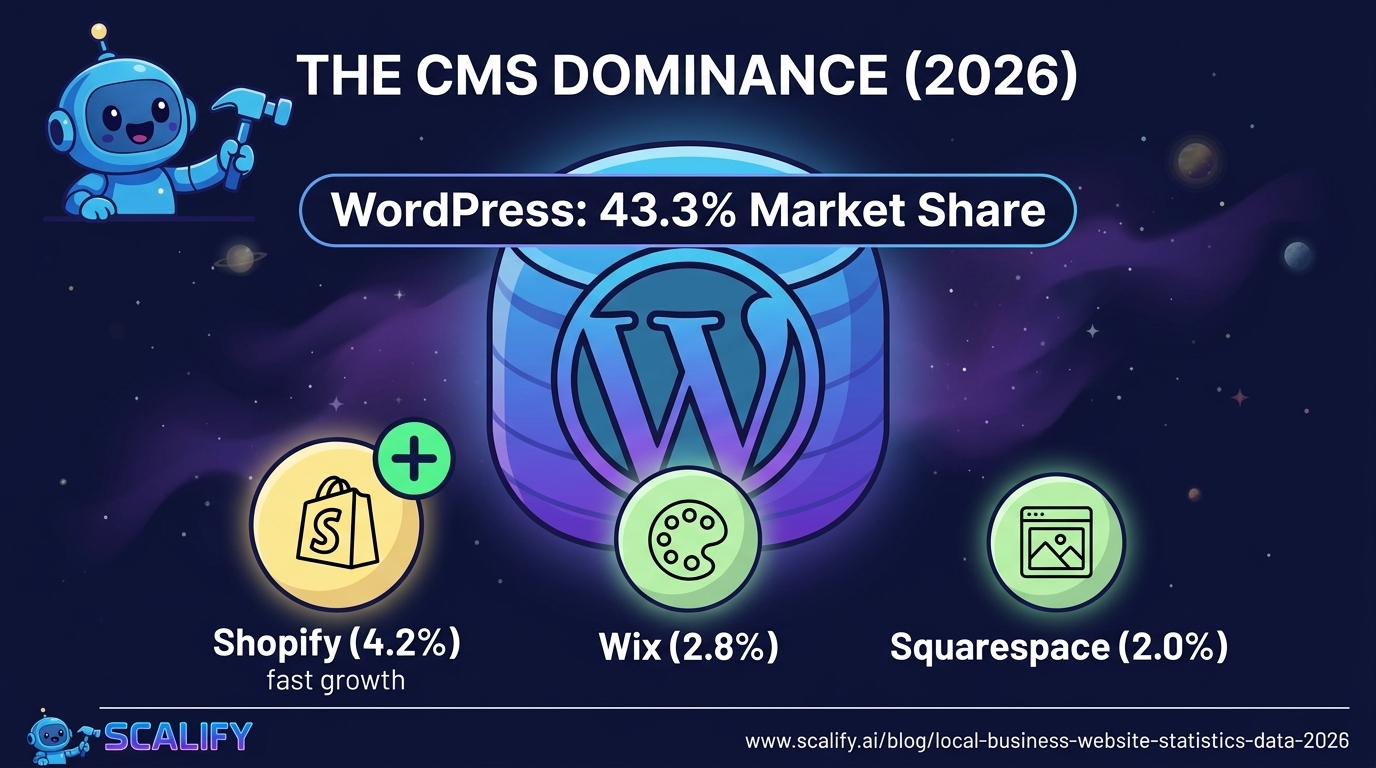
Webflow: All sites are served through Fastly's enterprise CDN with automatic global distribution. This is one of Webflow's performance advantages over self-hosted WordPress — enterprise-grade CDN is included in every plan.
Shopify: Uses a combination of CDN providers for global asset delivery. Product images and storefront assets are automatically CDN-delivered.
Squarespace: Delivers content through CDN automatically.
Netlify and Vercel: Static site hosts that serve all content from global CDN-like edge networks. Every site deployed on these platforms is inherently globally distributed.
For websites on these platforms: CDN is already in use. No additional CDN service is needed unless there's a specific requirement not covered by the platform's delivery network.
Does Your Website Need a CDN?
The honest answer is nuanced:
You probably need a CDN if:
- Your website serves significant traffic from multiple geographic regions
- You're on shared or VPS hosting without built-in CDN and your pages load slowly from locations distant from your server
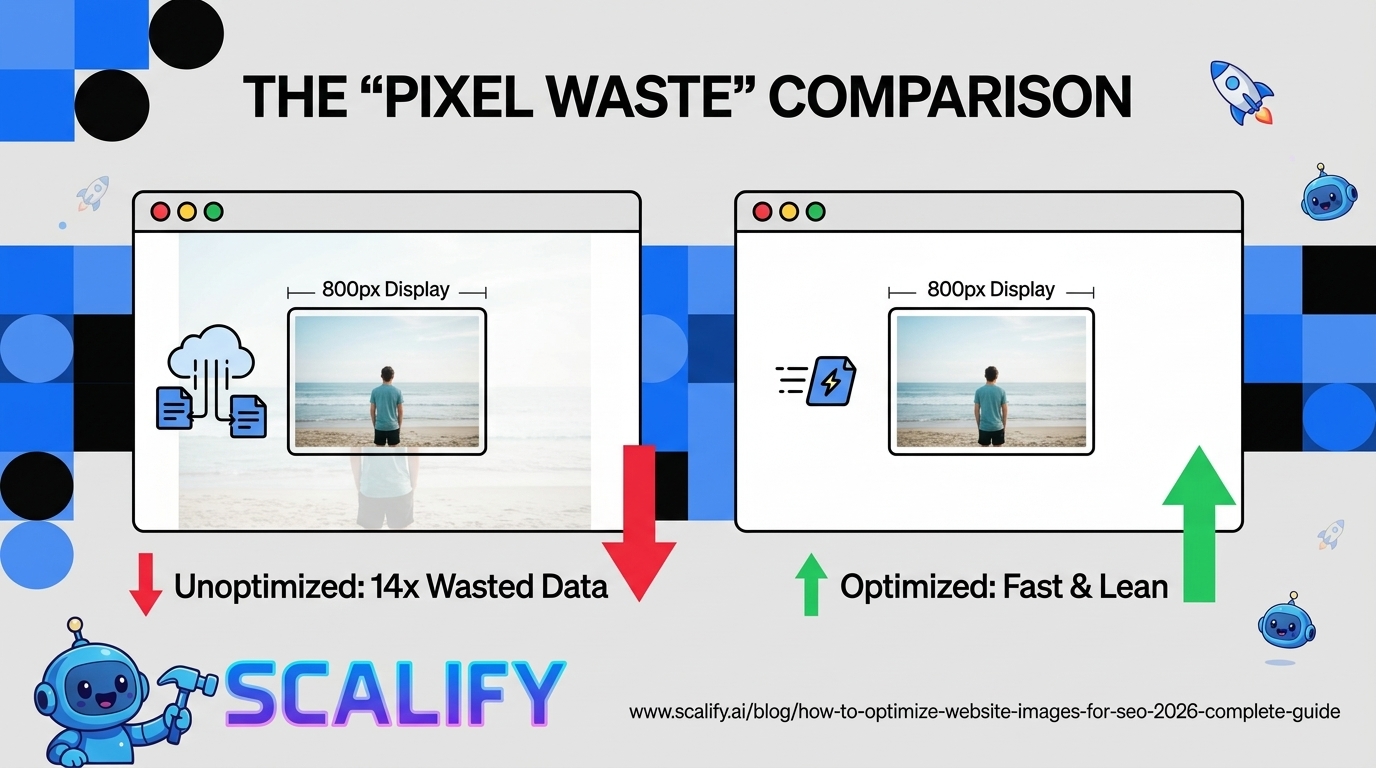
- Your pages contain many large images that could be served from cache
- You're concerned about DDoS attacks or security (Cloudflare's free tier provides meaningful protection)
- Your site has experienced traffic spikes that strained your origin server
A CDN provides limited benefit if:
- Virtually all your traffic comes from visitors in the same geographic region as your server (a local Miami business whose customers are all in South Florida benefits less from geographic CDN distribution than a nationally-serving business)
- You're already on a platform with CDN built in (Webflow, Shopify, Netlify)
- Your site has minimal static assets (text-heavy sites with few images gain less from CDN)
- You have an extremely simple, fast server with low traffic — the CDN overhead may not be justified
Setting Up Cloudflare: The Practical Guide
For most small and mid-size websites, Cloudflare's free tier is the appropriate CDN choice. Setup:
1. Create an account at cloudflare.com
2. Add your website (enter your domain)
3. Cloudflare scans your existing DNS records and imports them
4. Review the imported DNS records for accuracy
5. Cloudflare provides two nameserver addresses (e.g., alice.ns.cloudflare.com and bob.ns.cloudflare.com)
6. Log into your domain registrar and replace your current nameservers with the Cloudflare nameservers
7. DNS propagation typically takes 5 minutes to 48 hours
8. Once active, Cloudflare begins proxying (indicated by orange cloud icons next to DNS records) and caching your content
After activation:
- Enable "Auto Minify" for HTML, CSS, and JavaScript
- Enable Brotli compression
- Enable "Always Use HTTPS" and "Automatic HTTPS Rewrites"
- Consider enabling "Rocket Loader" (asynchronous JavaScript loading — test on your site, as it occasionally causes JavaScript conflicts)
- Set a page rule or Cache Rule for high-traffic static pages to cache HTML
Cache Purging: Keeping Cached Content Fresh
One practical challenge with CDN caching: when you update your website, cached copies of the old version continue to be served until the cache expires or is explicitly purged. If you update your homepage and the CDN has it cached with a 4-hour TTL, visitors who hit cached edge nodes will see the old version for up to 4 hours.
Solutions:
Short TTL for HTML: Set cache lifetimes for HTML pages to 1–2 hours or less. Static assets (CSS, JS, images) can have much longer TTLs (24 hours, 1 week) because they change less frequently.
Manual cache purge on update: Most CDNs provide a "Purge Cache" function (Cloudflare has a button in the dashboard and an API). After publishing significant updates, manually purge the affected URLs so fresh content is immediately served.
Asset versioning: For JavaScript and CSS files, include a version string or content hash in the filename (app.v2.1.4.js or app.a3f2c1.js). When the file changes, the filename changes, which is a new URL — browsers and CDNs serve the new file immediately without any cache invalidation required. This is the cleanest solution for static assets.
The Bottom Line
A CDN distributes your content globally so visitors receive it from nearby edge servers rather than your single origin server, dramatically improving load times for visitors outside your server's geographic region. Cloudflare's free tier provides CDN, security, and performance optimization for most small business websites at zero cost. Platform-based sites (Webflow, Shopify, Netlify) include CDN automatically.
The performance impact is most significant for: sites with global traffic, sites serving many large static assets, and sites on hosting without built-in CDN delivery. For a local business serving a geographically concentrated customer base on a fast managed hosting platform, a CDN's marginal benefit is smaller but still positive.
At Scalify, every site we build is deployed with CDN delivery — through Webflow's Fastly-powered infrastructure or configured with Cloudflare — ensuring fast load times globally from the moment of launch.
Putting It All Together: The Strategic Perspective
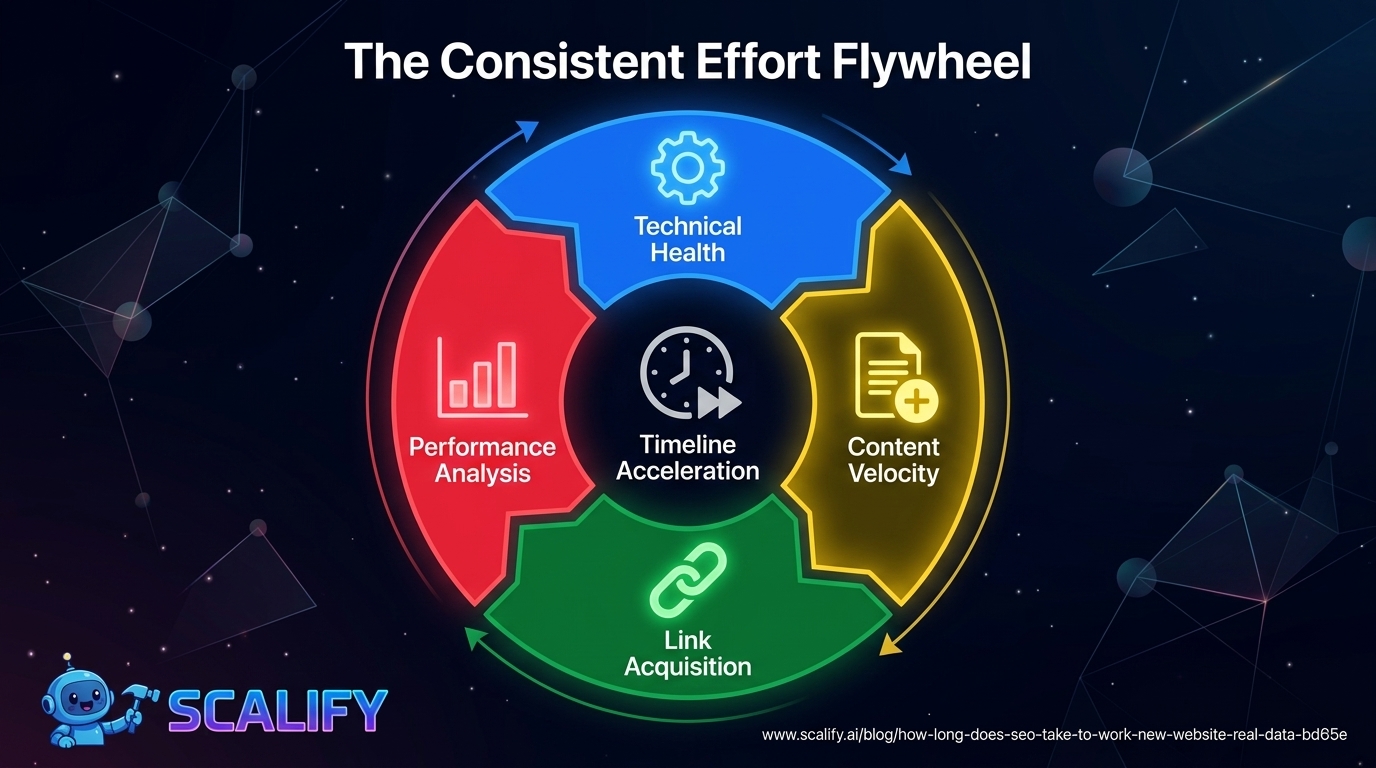
The most important takeaway from any technical or strategic guide is that individual tactics only produce results when they're embedded in a coherent strategy and executed consistently. A single well-optimized page, a single great testimonial, or a single speed improvement produces modest impact. The same investments compounded over 12–24 months — more optimized pages, more testimonials placed strategically, systematic performance maintenance — produce the compounding returns that separate high-performing websites from average ones in the same competitive landscape.
Every improvement documented in this guide is most valuable when it's implemented as part of a systematic, data-driven approach: measure current performance, identify the highest-impact opportunity, implement the improvement, measure again, and iterate. The businesses that achieve exceptional digital marketing results are almost never those who found a single breakthrough tactic — they're those who executed fundamentals consistently, measured what worked, and allocated their resources toward the highest-ROI improvements available at each stage of the

























.jpeg)
.jpeg)





78 SW 7th St, Miami, FL 33130