


What Is Schema Markup and How Does It Help Your Website Rank?
By Josh Ternyak

April 1, 2026
Comprehensive 2026 guide: What Is Schema Markup and How Does It Help Your Website Rank?
The Code That Makes Google Show More Than Just Your Title
Most search results look the same: a blue headline, a gray URL, a brief description. Standard. Predictable. Blending into the noise of a dozen other results on the same page.
Then there are the results that stand out. The result with five yellow stars and "4.8 (127 reviews)" beneath the headline. The result with a dropdown FAQ section showing three questions and answers directly in the search results page. The result showing "From $299" directly in the snippet. The result with breadcrumbs showing the content hierarchy. The recipe result showing cook time, rating, and calorie count before anyone clicks.
These enhanced search results — called rich results or rich snippets — are enabled by schema markup: structured data embedded in your page's HTML that explicitly tells Google what your content is about and how to display it. Schema markup is the technical layer that transforms a standard search result into an enhanced one — and those enhanced results consistently get higher click-through rates than their plain counterparts.
What Schema Markup Is
Schema markup is structured data code added to your website's HTML that provides explicit, machine-readable information about your content to search engines. It uses a standardized vocabulary from schema.org — a collaborative project created by Google, Bing, Yahoo, and Yandex — to describe the properties and relationships of different types of content.
Rather than requiring Google to infer what your content is from its natural language (smart as Google has become at this), schema markup explicitly states: "This page is about a Product. The product's name is X. Its price is Y. Its rating is 4.8 from 127 reviews." Google reads these explicit declarations and uses them to produce richer search result displays and better content understanding.
Schema markup is added in a format called JSON-LD (JavaScript Object Notation for Linked Data) — a JavaScript block in the <head> or <body> of your HTML that contains structured data in a defined format. JSON-LD is Google's recommended format because it's self-contained (not mixed into the HTML), easy to read and validate, and can be added or modified without changing visible page content.
A simple example: an Organization schema for a web design company:
<script type="application/ld+json">
{
  "@context": "https://schema.org",
  "@type": "Organization",
  "name": "Scalify",
  "url": "https://scalify.ai",
  "logo": "https://scalify.ai/logo.png",
  "contactPoint": {
    "@type": "ContactPoint",
    "telephone": "+1-XXX-XXX-XXXX",
    "contactType": "customer service"
  }
}
</script>
This code adds no visible content to the page — it's invisible to visitors. But it provides Google with explicit information about the organization that helps with Knowledge Panel displays and brand understanding.
The Rich Results Schema Markup Enables
Not all schema markup produces visible enhancements in search results — some is purely for Google's content understanding. But several schema types reliably produce rich results that enhance SERP presence and improve click-through rates:
FAQ Rich Results
FAQPage schema markup on pages with FAQ sections can produce expanded FAQ results in Google search — showing questions and answers directly in the SERP, without requiring a click. A result with three questions and answers visible in search takes up significantly more SERP real estate than a standard result and provides immediate value to searchers.
Implementation: mark up FAQ sections with FAQPage schema, with each question as an accepted answer element. Google may show up to 3 Q&A pairs in the SERP.
This is one of the highest-value schema implementations for content sites and service businesses — FAQs are common, the schema is simple to implement, and the rich result significantly expands SERP presence.
Product Rich Results
Product schema on e-commerce product pages can produce rich results showing price, availability, and rating directly in search results. A product result showing "From $49 — In Stock — ★★★★★" gets dramatically higher click-through rates than a standard result showing only the product name and description.
Product schema with review/rating aggregation requires actual customer reviews on the page. Google validates that the ratings you declare in schema are actually present in readable format on the page — you can't just declare a 5-star rating without reviewable evidence.
Review and Rating Rich Results
AggregateRating and Review schema on product, service, or content pages can produce star ratings in search results. This applies to product reviews, software reviews, local business reviews, and some types of editorial reviews.
Note: Google has specific eligibility criteria for review rich results and has become stricter about which pages qualify. First-party self-reviews (reviewing your own products on your own site) qualify for products and software. Reviews from aggregated third-party platforms require different implementation.
Article/BlogPosting Rich Results
Article and BlogPosting schema helps Google identify editorial content and can influence how articles appear in Google Discover, Google News, and some enhanced article displays. It also helps Google understand authorship, publication date, and editorial context.
For content-heavy sites, proper Article schema contributes to content freshness signals (updated dates) and may improve eligibility for Top Stories carousels.
Event Rich Results
Event schema on event pages shows event date, time, location, and sometimes ticket availability directly in search results. For event organizers, this enhanced display captures attention and provides critical information to searchers evaluating whether to click.
Recipe Rich Results
Recipe schema produces some of the richest enhancements in Google search — recipe results can show cook time, serving size, rating, calorie information, and an image in a visually distinct format. For food content sites, Recipe schema is essentially mandatory for competing with similar content that uses it.
Local Business Rich Results
LocalBusiness schema provides explicit, machine-readable information about a local business's location, hours, contact information, and category. While this doesn't typically produce a specific "rich result" type, it contributes to Knowledge Panel accuracy, local search signals, and the entity understanding that affects how Google displays business information across search features.
Breadcrumb Rich Results
BreadcrumbList schema produces breadcrumb trails in search results instead of the default URL display — "Home > Web Design > Custom Websites" instead of "scalify.ai/web-design/custom-websites". This provides visual context about where the page sits in the site hierarchy and can improve click-through rates by making the content structure immediately clear.
How-To Rich Results
HowTo schema on step-by-step instructional content can produce rich results showing individual steps directly in the SERP — particularly on mobile, where step-by-step accordion displays appear for how-to content. Useful for instructional content that walks through processes.
Sitelinks Searchbox
WebSite schema with a search action property on the homepage enables a sitelinks searchbox in branded search results — a search field appearing directly in Google results for your brand that lets users search your site without first navigating to it. Only appears for well-established websites that Google has already chosen to show sitelinks for.
How to Implement Schema Markup
Method 1: Manual JSON-LD (Recommended for Developers)
Write the JSON-LD markup directly and add it to the relevant pages. For static or custom-built sites, this is typically done in the HTML template. For WordPress, it can be added through a child theme's functions.php or through header/footer plugin injection.
Google's Rich Results Test (search.google.com/test/rich-results) validates your implementation — paste your page URL or the JSON-LD code and it shows what rich results your markup would produce and any errors.
Method 2: SEO Plugin (WordPress)
Yoast SEO and Rank Math both generate schema markup automatically for common content types (Articles, WebPage, Organization, LocalBusiness) and provide user interfaces for adding FAQ and How-To schema to specific posts. For WordPress sites, a quality SEO plugin handles the baseline schema needs without manual code writing.
Method 3: Google Tag Manager
Schema markup can be injected through Google Tag Manager, which is useful for adding schema to pages without access to modify the HTML template directly. GTM can inject a Custom HTML tag containing JSON-LD markup on specified pages or page types.
Method 4: Webflow and Platform-Specific Tools
Webflow has built-in schema support for certain content types and allows custom code injection in page settings for additional schema. Shopify has schema for products built-in; product review apps typically add AggregateRating schema automatically. Platform-based sites should check their native schema support before writing custom implementations.
Schema Markup Best Practices
Only mark up visible content: Schema markup should describe content that is actually present and visible on the page. Marking up content that doesn't exist, isn't visible to users, or is factually inaccurate violates Google's structured data guidelines and can result in manual action penalties.
Match schema type to actual content: Use Product schema for product pages. Use Article schema for articles. Using a schema type that doesn't accurately describe the page's content is misleading and may be flagged as spam.
Validate all implementations: Always validate schema markup with Google's Rich Results Test before publishing. Syntax errors in JSON-LD are easy to make and silently prevent rich results from appearing.
Keep markup updated: Product prices, event dates, business hours, and other dynamic information in schema markup should be updated when the underlying information changes. Stale schema markup (showing old prices, past events) produces poor user experiences when Google displays it in search results.
Don't expect immediate rich results: Google needs to recrawl and reprocess pages after schema is added. Rich results typically appear within a few weeks of correct implementation, not immediately.
What Schema Markup Does NOT Do
Common misconceptions worth clarifying:
Schema markup is not a ranking factor directly: Adding schema markup doesn't improve your position in search results by itself. It enables rich result formats that can improve click-through rate — and improved CTR may have indirect ranking benefits — but schema is primarily about SERP display enhancement, not ranking improvement.
Rich results are not guaranteed: Even with correct schema implementation, Google decides whether to display rich results based on its own quality assessments. A page with correct Review schema but low-quality content may never get star ratings in results. Google's algorithm determines eligibility, not just schema presence.
Schema is for machines, not people: Schema markup produces no visible change on the page itself. It's information for Google's crawlers, not a content enhancement for visitors.
Priority Schema for Different Website Types
All websites: Organization (brand identity, contact), WebSite (enables sitelinks searchbox), BreadcrumbList (clean SERP URL display)
Service businesses: LocalBusiness (address, hours, phone), Service (service descriptions), FAQPage (expanded FAQ results), Review/AggregateRating (star ratings if reviews exist)
E-commerce: Product (price, availability, SKU), AggregateRating (product ratings), Offer (pricing and availability details), BreadcrumbList (product category hierarchy)
Content/blog sites: Article or BlogPosting (editorial content identification), FAQPage (FAQ sections), HowTo (step-by-step instructional content), BreadcrumbList
Restaurants and local hospitality: Restaurant (LocalBusiness subtype), Menu, OpeningHoursSpecification, Review
The Bottom Line
Schema markup is structured data that explicitly communicates your content's properties to Google, enabling enhanced rich results in search that stand out visually and earn higher click-through rates. It's not a ranking factor but a click-through rate enhancer that indirectly benefits organic performance by making your results more visually prominent and informationally rich.
Priority implementations by impact: FAQPage schema for content with FAQ sections (easy, high SERP impact), Product schema for e-commerce (high click impact), LocalBusiness schema for local businesses (important for local search), and Article schema for editorial content (content freshness and discovery signals).
Validate every implementation. Keep dynamic data current. Don't markup what isn't visible on the page. Done correctly, schema is one of the lowest-effort, highest-visibility SEO investments available.
Every website built by Scalify includes appropriate schema markup implementation as part of the launch — not as an afterthought, but as a standard component of proper SEO foundation work.
Key Takeaways and Next Steps
The principles and data in this guide reflect what actually works in professional web development and digital marketing in 2026 — not theoretical best practices but measured, documented outcomes from implementations at scale. The gap between knowing these principles and benefiting from them is always execution: the businesses that act on what they read, implement changes systematically, and measure the results consistently outperform those who consume information without converting it to action.
For any improvement described in this guide, the implementation sequence that produces the best outcomes: assess your current situation against the benchmarks provided, identify the 2–3 highest-impact improvements specific to your situation, implement them with measurement tracking in place, evaluate results after 30–60 days, and plan the next iteration based on what you learned. This cycle — assess, prioritize, implement, measure, iterate — is the operational foundation of continuous improvement that compounds into significant competitive advantage over the 12–24 month horizon.
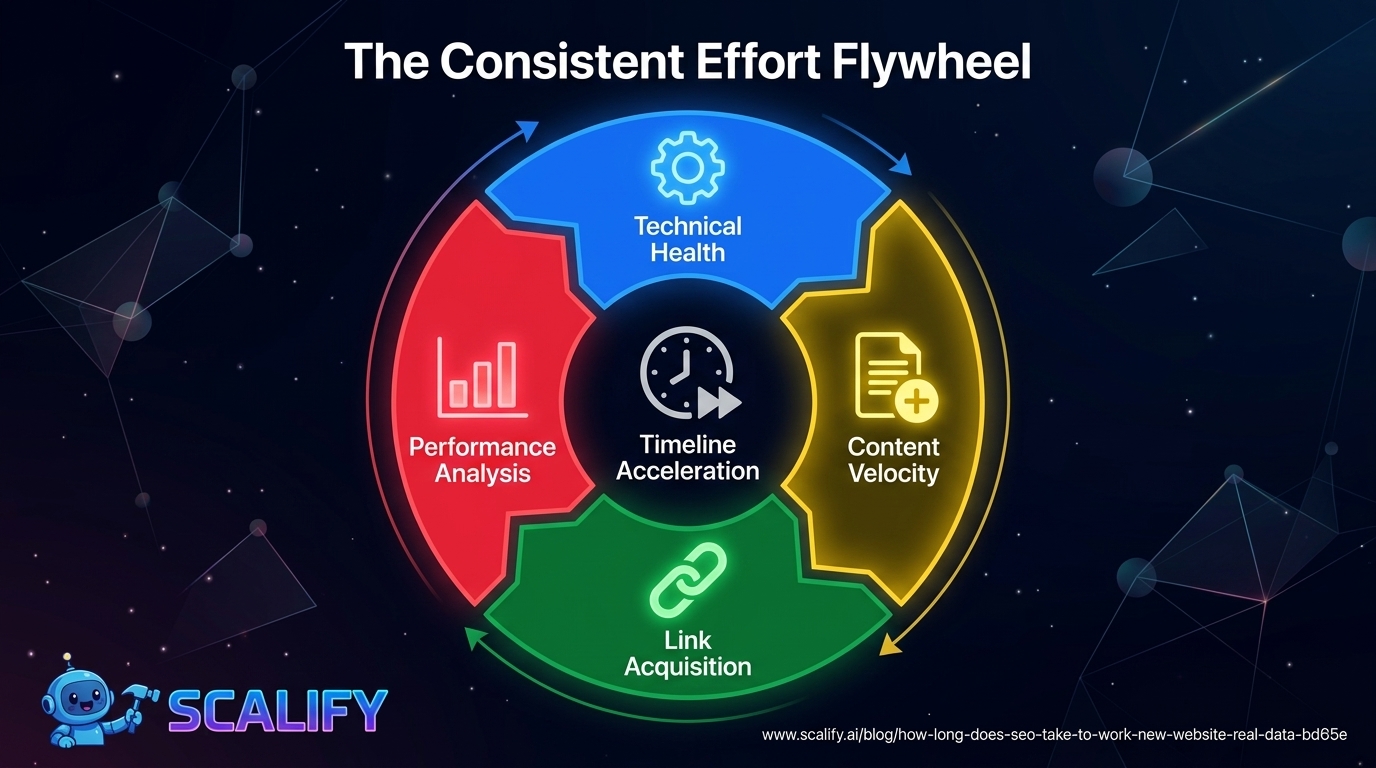
The compounding returns from consistent web presence investment are not linear: a website that improves slightly each month accumulates to dramatic improvements over a year, and those improvements multiply with each other. Faster load times improve both search rankings and conversion rates simultaneously. Better content attracts backlinks that improve rankings that attract more traffic. More testimonials build trust that improves conversion rates that improve revenue that funds more investment. The interconnected nature of website performance means that each improvement amplifies the value of every other improvement — making the decision to invest consistently, across multiple dimensions simultaneously, the highest-ROI approach to digital marketing available to most businesses.
At Scalify, every website we build reflects these principles — technically optimized, conversion-focused, SEO-ready, and designed to compound in value over time as content, backlinks, and organic authority accumulate on the strong foundation we deliver in 10 business days.








.jpeg)
.jpeg)



78 SW 7th St, Miami, FL 33130