


What Is Page Speed and How Does It Affect Your Business?
By Josh Ternyak

April 1, 2026
Comprehensive guide: What Is Page Speed and How Does It Affect Your Business?
The Invisible Tax Every Slow Website Pays
Every extra second your website takes to load is a tax. Visitors leave before seeing your content. Conversion rates drop. Google suppresses your rankings. Mobile users — the majority of your traffic — bounce at higher rates on slow pages than desktop users do. The cumulative effect of a slow website is a steady drain on every outcome your website is supposed to produce.
What makes this particularly frustrating: the people who most need to understand page speed are often the ones least likely to notice it themselves. Business owners who view their website on high-end devices connected to fast office internet rarely experience the 4-second load times their customers on 4G networks and mid-range phones encounter daily. The slow site problem is invisible to the people responsible for fixing it.
This guide makes the invisible visible: what page speed is, how it's measured, what the research says about its business impact, and why understanding it is essential for anyone who cares about what their website actually produces.
What Page Speed Is
Page speed is the measure of how quickly a web page loads and becomes interactive for a visitor. It's not a single metric — it's a collection of measurements that capture different aspects of the loading experience:
Time to First Byte (TTFB): How long the browser waits before receiving the first byte of data from the server. This is the server response time — the foundation everything else builds on. A slow TTFB (over 600ms) means the page starts loading late regardless of how well everything else is optimized.
First Contentful Paint (FCP): When the first piece of content — any text or image — appears on screen. Tells the visitor the page is loading rather than being blank. Important for user perception of responsiveness.
Largest Contentful Paint (LCP): When the largest visible content element (typically the hero image or main heading) loads. Google's Core Web Vitals defines "good" LCP as under 2.5 seconds. This is the primary indicator of perceived loading speed — when the main content appears, users feel the page has loaded.
Total Blocking Time (TBT): The total amount of time when the main thread was blocked long enough to prevent input response during the loading phase. Heavy JavaScript execution that blocks the main thread produces high TBT, making the page feel unresponsive.
Time to Interactive (TTI): When the page is fully interactive — all main content has loaded and the page reliably responds to user input. A page can look loaded (LCP is good) while still being unresponsive (TTI is poor) if JavaScript is still executing.
Cumulative Layout Shift (CLS): Visual stability — how much the page layout shifts during loading as elements appear and push existing content around. Google's Core Web Vitals defines "good" CLS as under 0.1.
These metrics together paint the full picture of a visitor's loading experience. A page can have a fast LCP but high CLS (content appears quickly but jumps around annoyingly). A page can have decent FCP but terrible TTI (something shows up fast but the page can't be used for several more seconds). Understanding which metric is poor helps diagnose the specific problem to fix.
How Google Measures and Uses Page Speed
Google uses two types of data for page speed assessment:
Lab data: Synthetic measurements taken from a controlled test environment — a specific device, specific connection speed, specific server location. Tools like Google PageSpeed Insights and Lighthouse produce lab data. These are repeatable, consistent tests useful for diagnosing specific problems. Lab scores can be improved by fixing specific technical issues.
Field data (Real User Monitoring): Actual performance measurements collected from real Chrome users visiting real pages, aggregated through the Chrome User Experience Report (CrUX). Field data reflects what your actual visitors experience on their actual devices and connections. Google uses field data — not lab data — for its Core Web Vitals ranking signals.
This distinction matters: a page can test well in lab conditions (fast server, simulated fast connection) but perform poorly in field data (many real users on slow mobile connections far from the server). Google's ranking signals care about the field data experience, not the lab test score. Both are valuable — lab data for diagnosis, field data for understanding real impact.
Google confirmed page speed as a ranking factor for desktop searches in 2010 and mobile searches in 2018. In 2021, Core Web Vitals (LCP, CLS, and INP) became official ranking signals as part of the Page Experience update. Pages with "Good" Core Web Vitals scores have a ranking advantage over equivalent-content pages with "Poor" scores — especially in competitive searches where content quality is comparable across the top results.
The Business Impact: What the Research Shows
The correlation between page speed and business outcomes has been studied extensively by Google, Deloitte, Walmart, Amazon, and many others. The findings are remarkably consistent:
Conversion rate impact:
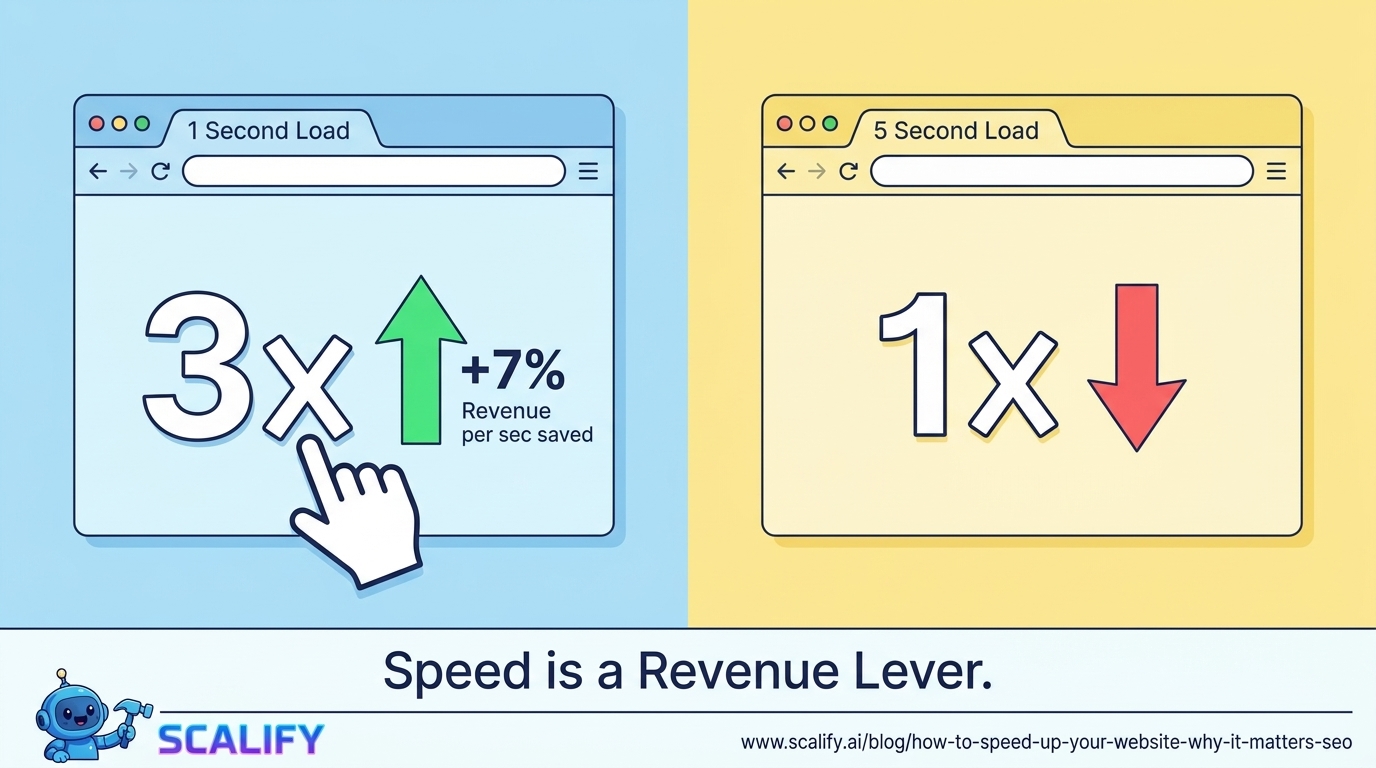
- Walmart found that every 1-second improvement in page load time increased conversions by 2%
- Deloitte's research across 37 retail and travel brands found that a 0.1-second improvement in mobile site speed increased conversion rates by 8.4% for retail and 10.1% for travel
- Mozilla achieved 15.4% more downloads by making their pages 2.2 seconds faster
- AutoAnything increased sales by 12–13% after cutting page load time in half
Bounce rate impact:
- Google found that as page load time increases from 1 to 3 seconds, the probability of bounce increases by 32%
- At 1 to 5 seconds: 90% probability increase in bounce
- At 1 to 10 seconds: 123% probability increase in bounce
Revenue impact:
- Amazon estimated that every 100ms of page load delay cost 1% in revenue
- Google found that a 0.5-second slowdown in search results led to a 20% drop in traffic
- Shopify merchants with faster storefronts consistently see higher conversion rates
The pattern across all research: every additional second of load time costs you visitors, conversions, and revenue. The relationship isn't linear — the biggest gains come from improving extremely slow sites. But meaningful improvements exist at every speed level.
Why Mobile Page Speed Is More Critical Than Desktop
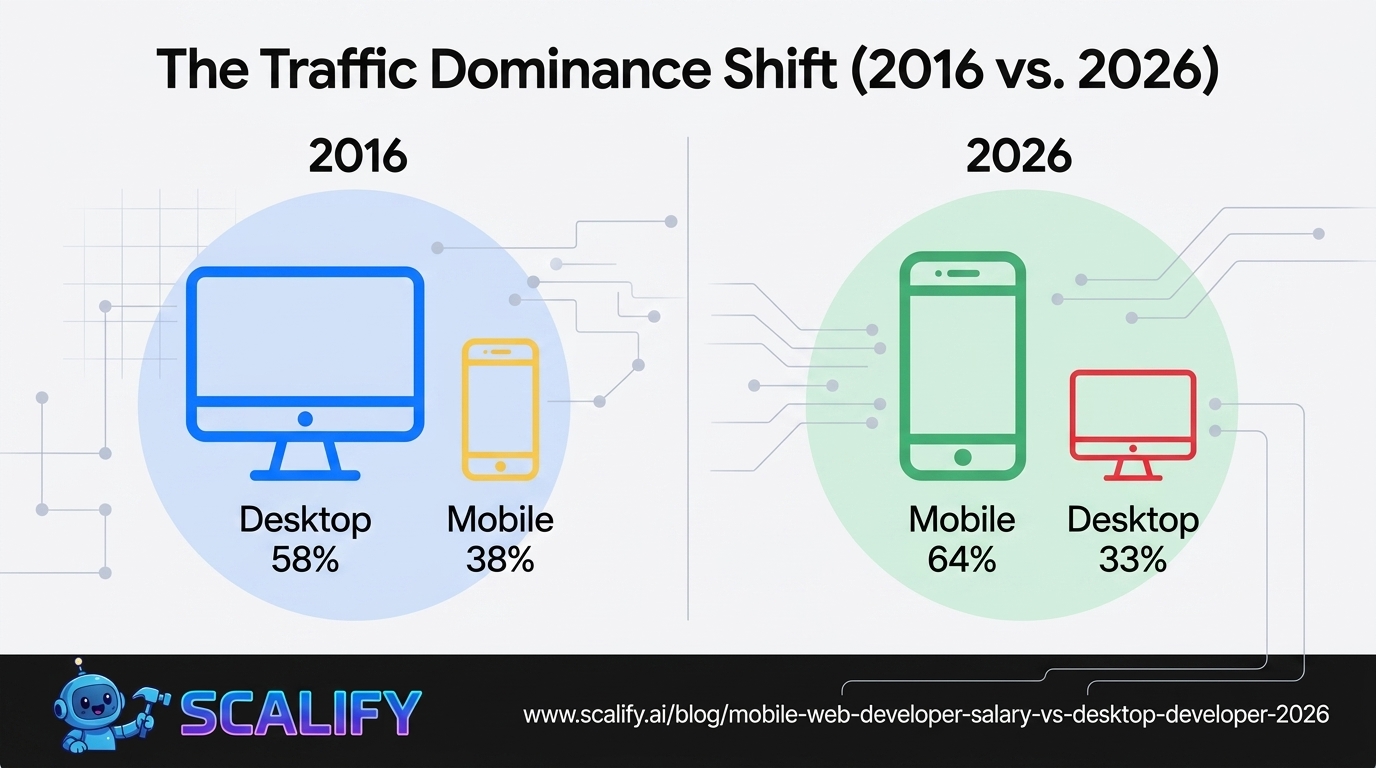
Mobile users are less patient than desktop users with slow pages — for good reason. They're often on less reliable connections (4G rather than broadband, variable signal quality), using devices with less processing power than desktop computers, and frequently browsing in contexts with divided attention.
Google's mobile speed research found that 53% of mobile visitors abandon a site that takes longer than 3 seconds to load. For most desktop connections, 3 seconds seems fast; for mobile users on average connections, 3 seconds is the tolerance threshold.
This is compounded by the device reality: the "average" mobile device your visitors use is significantly slower than the device you use for testing. Developers test on recent flagships or desktop Chrome with CPU throttling that simulates — but underestimates — the experience on a 3-year-old mid-range Android device on an average 4G connection in a crowded area.
Google's Page Speed Insights tests against a simulated mid-range mobile device. PageSpeed Insights' mobile score is the one that most accurately reflects your median visitor's experience — and it's the score that matters most for rankings, given Google's mobile-first indexing.
Measuring Your Site's Page Speed
Google PageSpeed Insights (pagespeed.web.dev)
The primary tool. Enter any URL and receive both field data (CrUX, if available) and lab data (Lighthouse). The mobile tab is the most important. The "Opportunities" section provides specific, actionable fixes with estimated improvement potential for each.
Run PageSpeed Insights on:
- Your homepage (most-visited, most important for first impressions)
- Your primary service or product page (most conversion-critical)
- Your highest-traffic blog post (often the most resource-heavy)
Google Search Console Core Web Vitals Report
The field data view in Search Console shows aggregated real user performance across all your pages. The "Poor URLs" list is your highest-priority fix list — these are pages where real users are having genuinely poor experiences. This data is what Google uses for ranking signals.
WebPageTest.org
More detailed than PageSpeed Insights. The waterfall view shows every resource loaded, the time each took, and the dependencies between them. Essential for understanding WHY a page is slow when PageSpeed Insights identifies that it is slow but the specific cause isn't obvious.
The Most Common Causes of Slow Pages
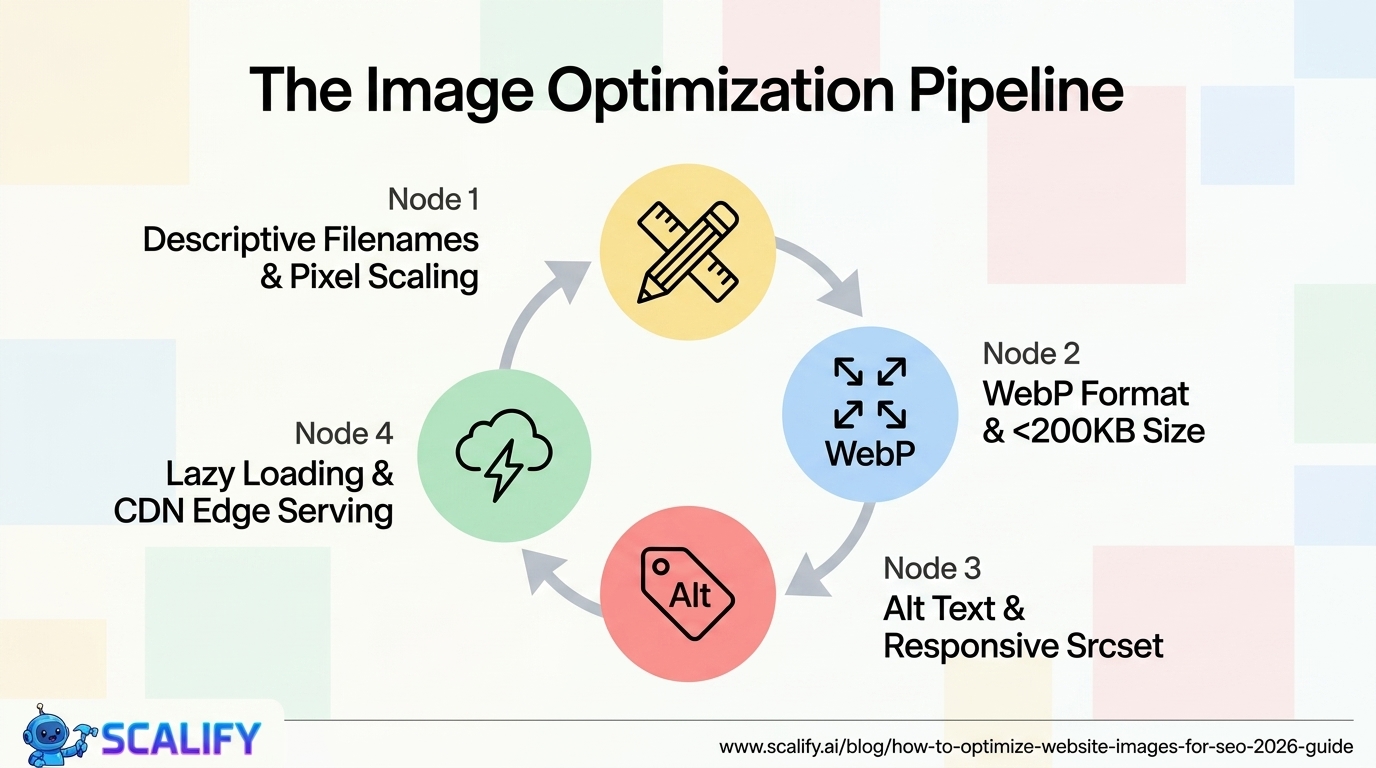
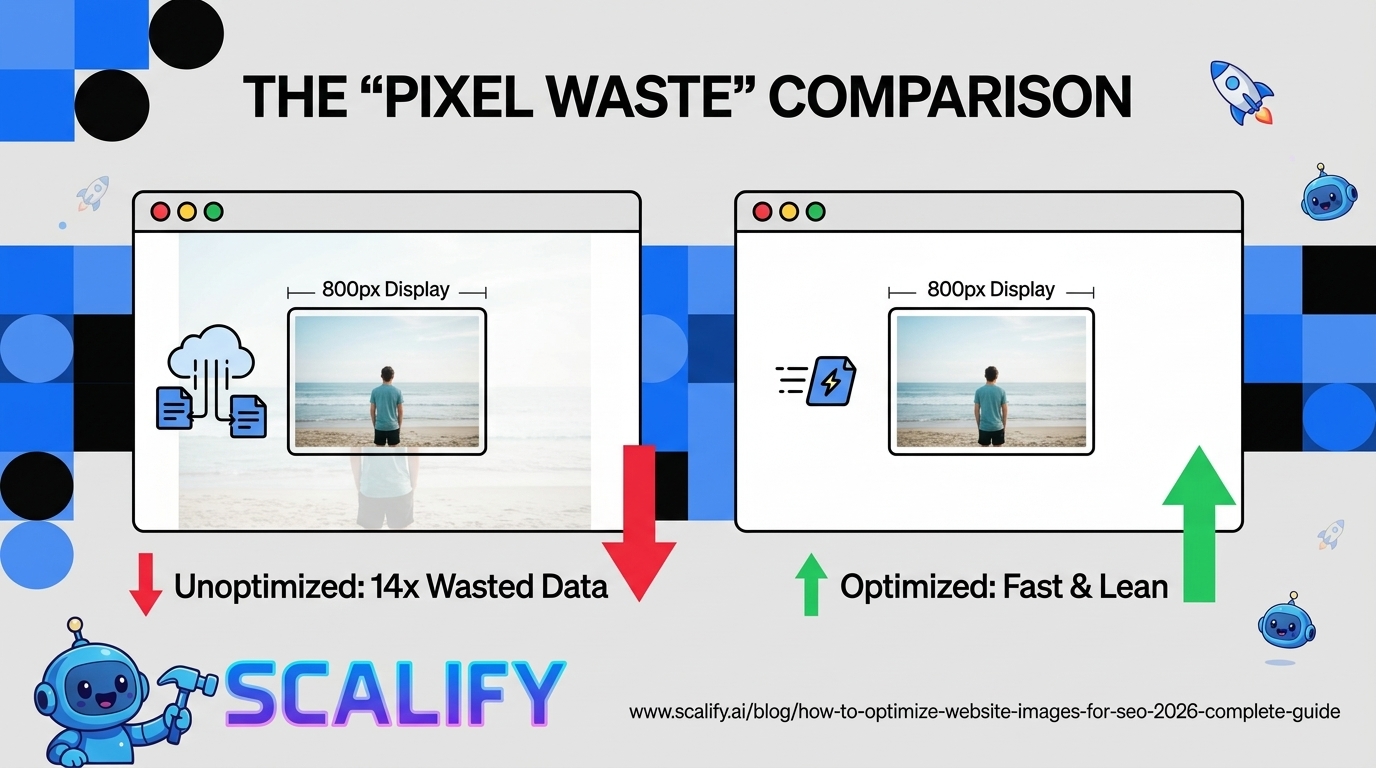
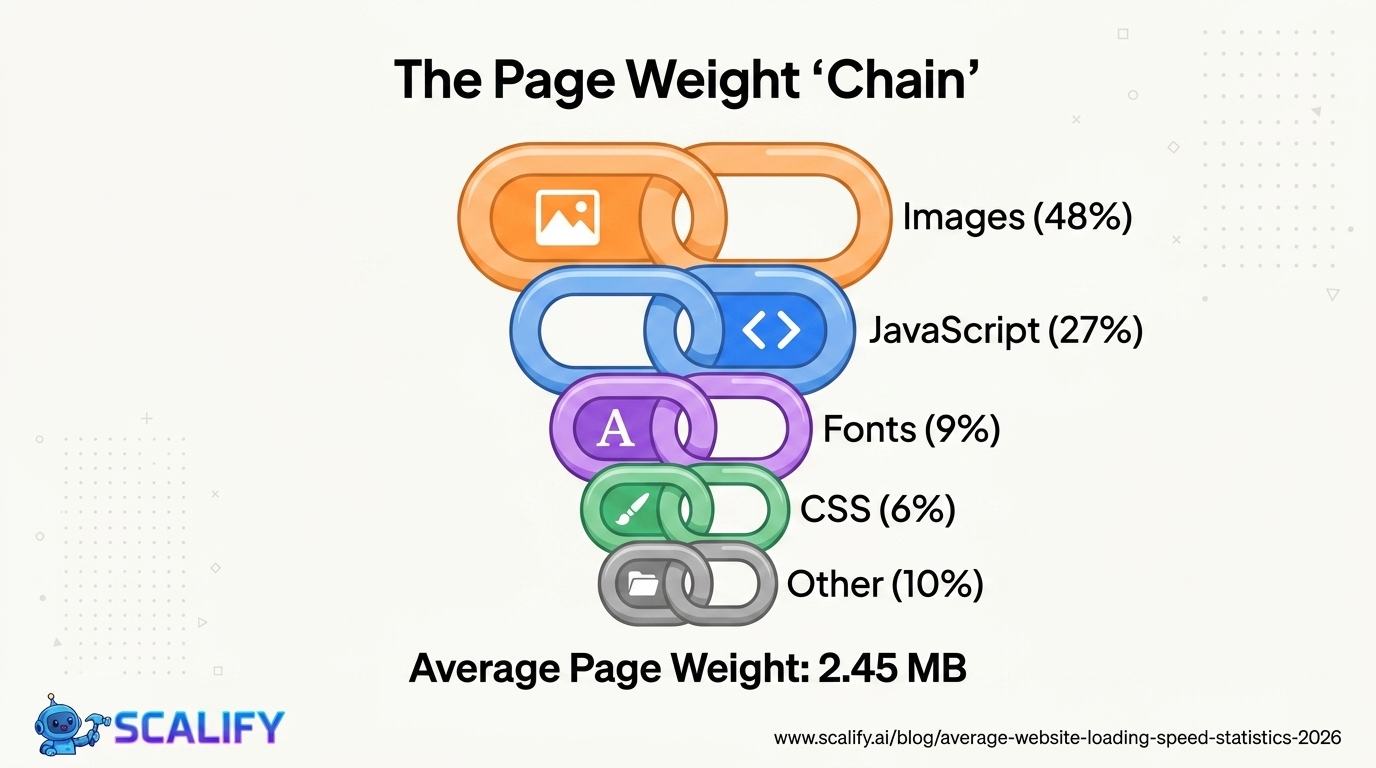
Unoptimized images: The most common cause of slow pages on most websites. An uncompressed 3MB hero image produces terrible LCP regardless of how well everything else is optimized. Solution: compress images, use modern formats (WebP/AVIF), serve appropriately-sized images for each viewport.
Slow server response (TTFB): Overloaded shared hosting, no server-side caching on dynamic sites, slow database queries. Solution: upgrade hosting quality, implement page caching on WordPress, use a CDN.
Render-blocking JavaScript and CSS: Scripts and stylesheets in the document head that must load and execute before the browser can render any content. Solution: defer non-critical JavaScript, inline critical CSS, remove unused CSS.
Too many HTTP requests: Each resource the page loads requires an HTTP request. A page loading 80 separate resources has 80 round trips. Solution: combine files where possible, use HTTP/2 which handles multiple requests more efficiently, eliminate unnecessary resources.
Third-party scripts: Analytics, chat widgets, advertising, heatmap tools, social buttons — each external script loads from an external server with its own latency and potential for blocking. Solution: audit all third-party scripts, remove unnecessary ones, load non-critical ones asynchronously.
No CDN: Static assets loading from a single origin server far from many visitors. Solution: implement a CDN (Cloudflare is free for basic use) to serve assets from edge nodes near visitors.
Page Speed and User Perception
An important nuance: perceived speed and measured speed don't always align perfectly. Users perceive a page as "fast" or "slow" based on:
Time to seeing something: A blank screen feels slower than a screen with something happening. FCP — when content first appears — affects perceived speed more than total load time.
Visual stability: A page that loads content without things jumping around (good CLS) feels more polished and faster than a page with the same load time but visible layout shifts.
Progressive loading: A page that loads content from top to bottom, making above-fold content available quickly while below-fold content loads in the background, is perceived as faster than a page that shows nothing until everything has loaded.
This is why Core Web Vitals focus on user-centric metrics (what does the user see and when can they use it?) rather than technical metrics (when was the last byte received?). Optimizing for the user-visible experience produces better business outcomes than optimizing for raw technical benchmarks.
The Bottom Line
Page speed is a direct, measurable driver of conversion rate, bounce rate, and organic search ranking. Slow pages cost you visitors, conversions, revenue, and rankings simultaneously. The research across dozens of companies and billions of data points is unambiguous: faster sites perform better on every business metric.
Measure your speed using PageSpeed Insights and Search Console. Fix the biggest issues first: images, server performance, CDN, render-blocking resources. Treat page speed as an ongoing operational metric, not a one-time optimization project.
At Scalify, performance is built into every site we deliver — optimized images, fast hosting, CDN deployment, and Core Web Vitals compliance from launch rather than as a remediation project afterward.
Putting It All Together: The Strategic Perspective
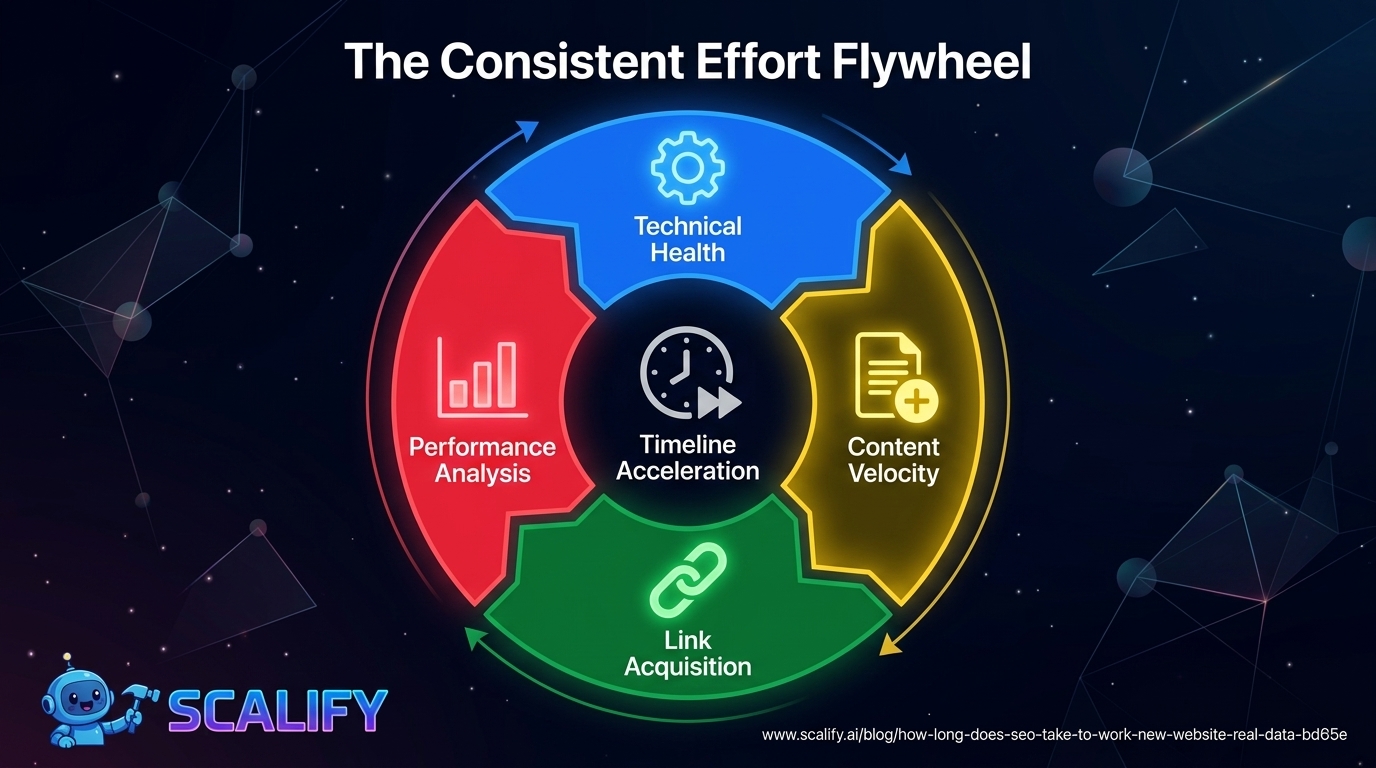
The most important takeaway from any technical or strategic guide is that individual tactics only produce results when they're embedded in a coherent strategy and executed consistently. A single well-optimized page, a single great testimonial, or a single speed improvement produces modest impact. The same investments compounded over 12–24 months — more optimized pages, more testimonials placed strategically, systematic performance maintenance — produce the compounding returns that separate high-performing websites from average ones in the same competitive landscape.
Every improvement documented in this guide is most valuable when it's implemented as part of a systematic, data-driven approach: measure current performance, identify the highest-impact opportunity, implement the improvement, measure again, and iterate. The businesses that achieve exceptional digital marketing results are almost never those who found a single breakthrough tactic — they're those who executed fundamentals consistently, measured what worked, and allocated their resources toward the highest-ROI improvements available at each stage of the




.jpeg)
.jpeg)





78 SW 7th St, Miami, FL 33130