


What Is Conversion Rate Optimization (CRO) and How Does It Work?
By Josh Ternyak

March 29, 2026
CRO is the discipline of getting more value from the traffic you already have. This guide explains what it is, how it works, and the specific techniques that consistently move conversion rates up.
The Marketing Discipline That Multiplies the Value of Everything Else
Here's a math problem that changes how you think about your website: if your site gets 10,000 visitors per month and converts at 2%, you get 200 conversions. If you double your traffic through SEO and ads to 20,000 visitors without changing anything else, you get 400 conversions. Good. But if instead you kept traffic at 10,000 and improved your conversion rate to 4%, you also get 400 conversions — at a fraction of the cost and effort of doubling traffic.
Double the conversion rate. Same traffic. Same result as doubling your marketing budget.
This is the fundamental case for Conversion Rate Optimization. Most digital marketing investment focuses on driving more traffic — SEO, paid ads, social media, content marketing. CRO focuses on getting more value from traffic that's already arriving. And because it compounds with every traffic source simultaneously, CRO improvements are often the highest-ROI work available to a website that's generating meaningful traffic.
This guide explains what CRO is, how the optimization process works, the techniques that consistently move conversion rates, and how to prioritize your efforts for maximum impact.
What Conversion Rate Optimization Is
Conversion Rate Optimization is the systematic process of increasing the percentage of website visitors who take a desired action — converting from a visitor into a lead, customer, subscriber, or whatever your primary conversion goal is.
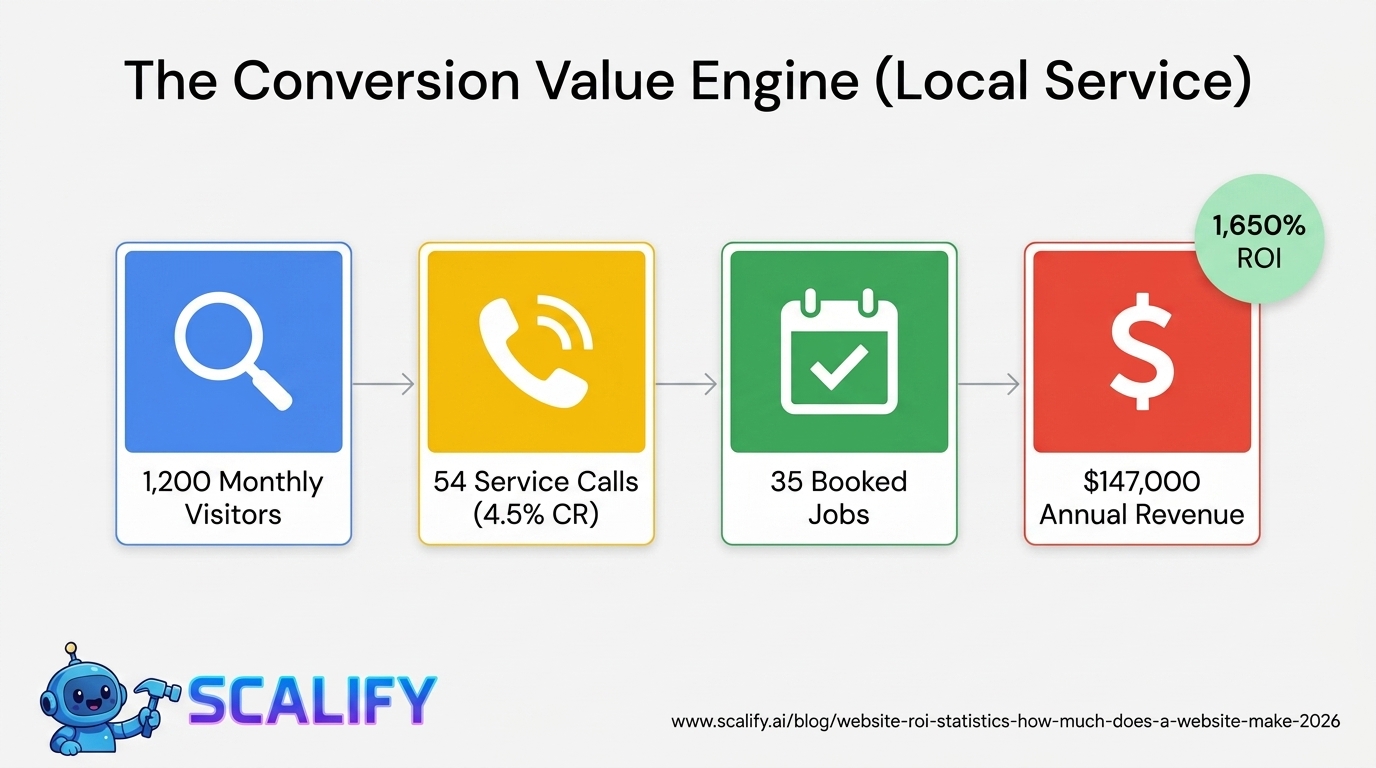
The conversion rate formula is simple: Conversions ÷ Total Visitors × 100 = Conversion Rate.
If 1,000 people visit your website and 30 submit a contact form, your contact form conversion rate is 3%.
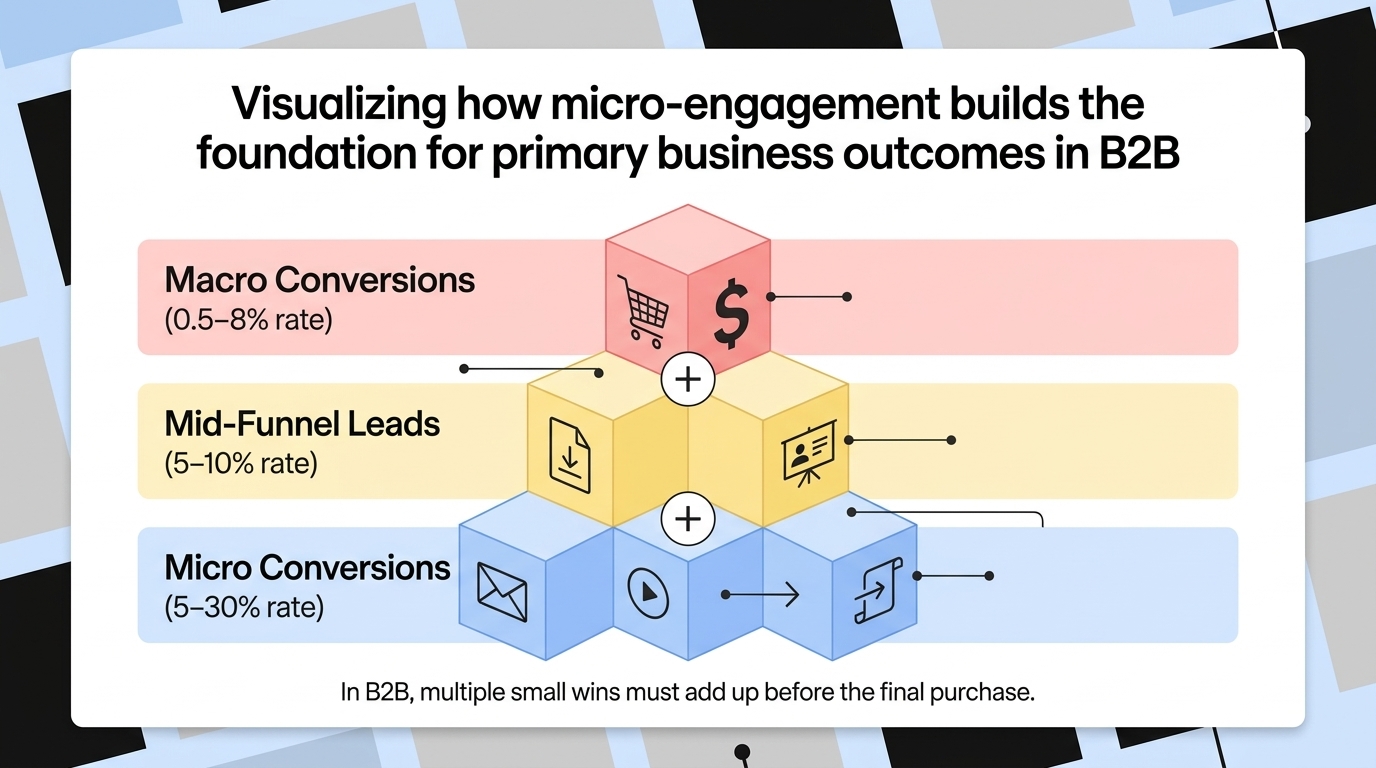
A "conversion" is any goal action you've defined as valuable: contact form submission, product purchase, phone call, email subscription, demo booking, free trial activation, download, chat initiation. Different pages have different conversion goals — your homepage might optimize for visitors clicking to a service page, your service page optimizes for form submissions.
CRO is not just about quick wins or surface-level design tweaks. It's a continuous process of understanding why visitors aren't converting, forming hypotheses about what would help, testing those hypotheses, learning from results, and iterating. Done systematically, it produces compound improvements over time — each optimization building on the last.
Why Most Websites Underperform on Conversion
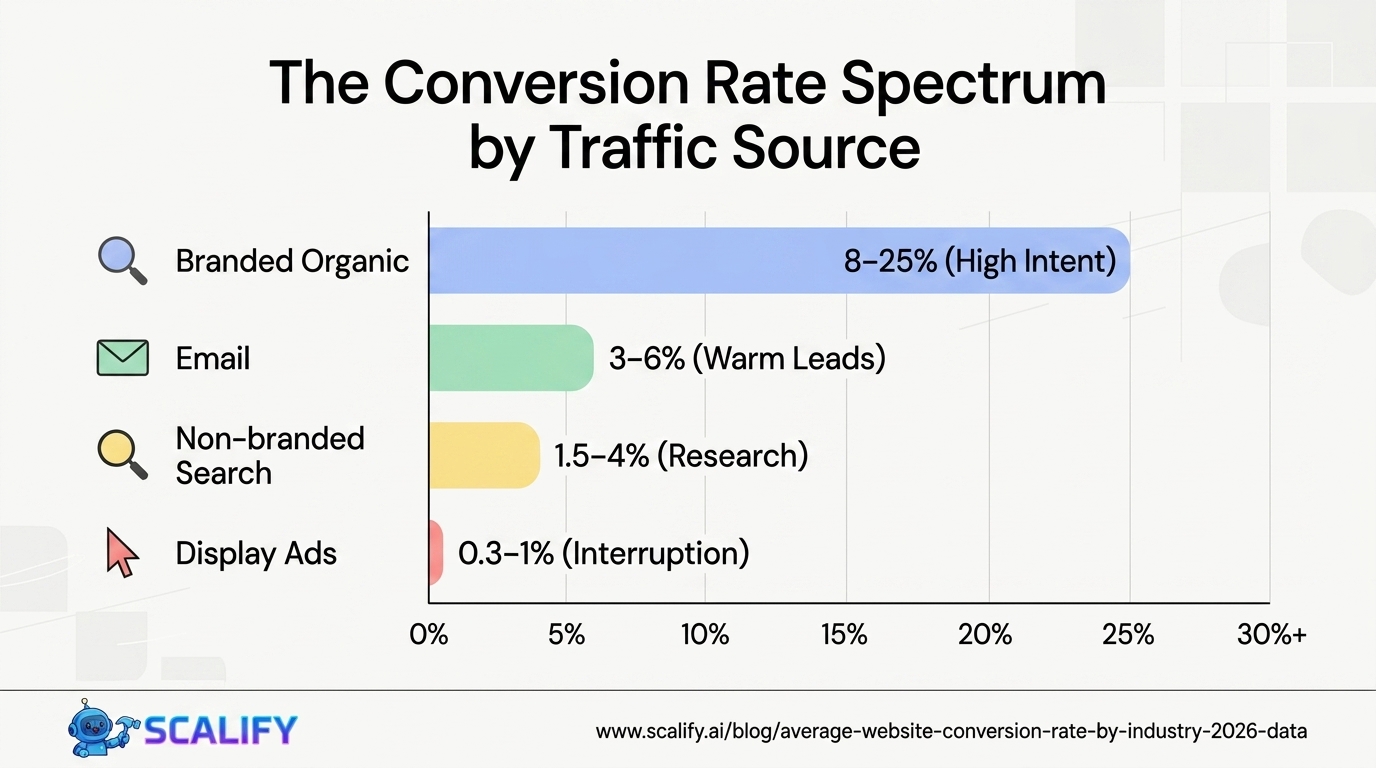
The average website conversion rate is around 2–3% across industries. The top performers in most categories convert at 5–10%+. The gap between average and top-performing isn't explained by better traffic (though quality traffic helps). It's explained by deliberate, systematic attention to the factors that determine whether visitors act or leave.
The most common reasons websites underperform on conversion:
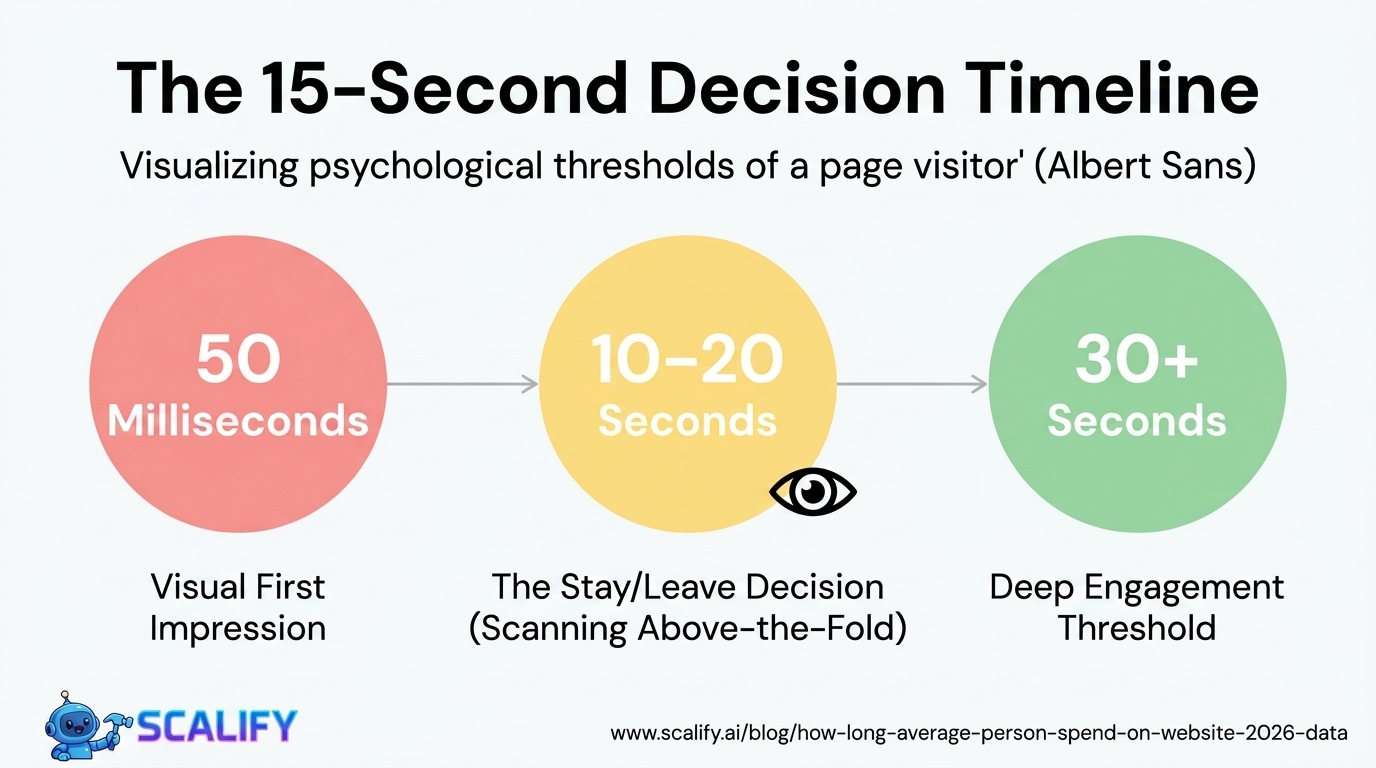
Unclear value proposition: Visitors don't immediately understand what the business does, who it's for, or why they should care. If you can't answer "what do I get, why should I want it, and why should I get it from you" within the first five seconds of landing on a page, visitors make that calculation themselves — usually in favor of leaving.
Mismatched expectations: When the page a visitor lands on doesn't match what they expected based on the ad, search result, or link that brought them there, they bounce. Message match — aligning landing page content with the source that sent traffic there — is one of the most consistently impactful CRO levers.
Friction in the conversion path: Every unnecessary step, every confusing element, every field that didn't need to be in the form, every page the visitor has to navigate through before getting to the conversion action is friction. Friction reduces conversion rates. Removing friction — streamlining the path from interest to action — is a core CRO discipline.
Insufficient trust: A visitor who doesn't trust the business won't convert. They've been burned before. They've seen websites that looked legitimate and weren't. They're skeptical. Trust signals — testimonials, reviews, case studies, certifications, social proof, guarantee language — are the evidence that overcomes this skepticism.
Vague or weak CTAs: Calls to action that are generic ("Submit," "Click Here"), invisible (low contrast, poor placement), or surrounded by competing options produce low click rates even from visitors who were interested. Strong, specific, prominent CTAs convert significantly better.
The CRO Process: How Optimization Actually Works
CRO is not guessing at what might work and changing things randomly. The businesses with the highest conversion rates got there through a systematic process that generates and validates improvements through data and testing.
Phase 1: Research — Understand What's Happening and Why
Before changing anything, understand what's currently happening on your site. This research phase generates the insights that make subsequent optimization specific and effective rather than generic.
Quantitative research (the "what"):
Google Analytics funnel analysis: Set up conversion funnels for your key conversion paths. Which step has the biggest drop-off? If 70% of visitors who start your checkout process abandon it at the payment page, that's where you optimize.
Heatmaps: Where do visitors click? Where do their eyes go? What elements are they engaging with that you didn't expect? What obvious elements are they ignoring? Hotjar, Microsoft Clarity (free), and similar tools generate click maps, scroll maps, and move maps that reveal visitor behavior visually.
Session recordings: Watch real visitors navigate your site. See exactly where they hesitate, what they try to click, where they get confused, what causes them to leave. Watching 20 recordings of visitors abandoning your checkout page often reveals a single consistent issue — a confusing field, a missing payment option, an unexpected shipping cost — that's costing you significant conversion.
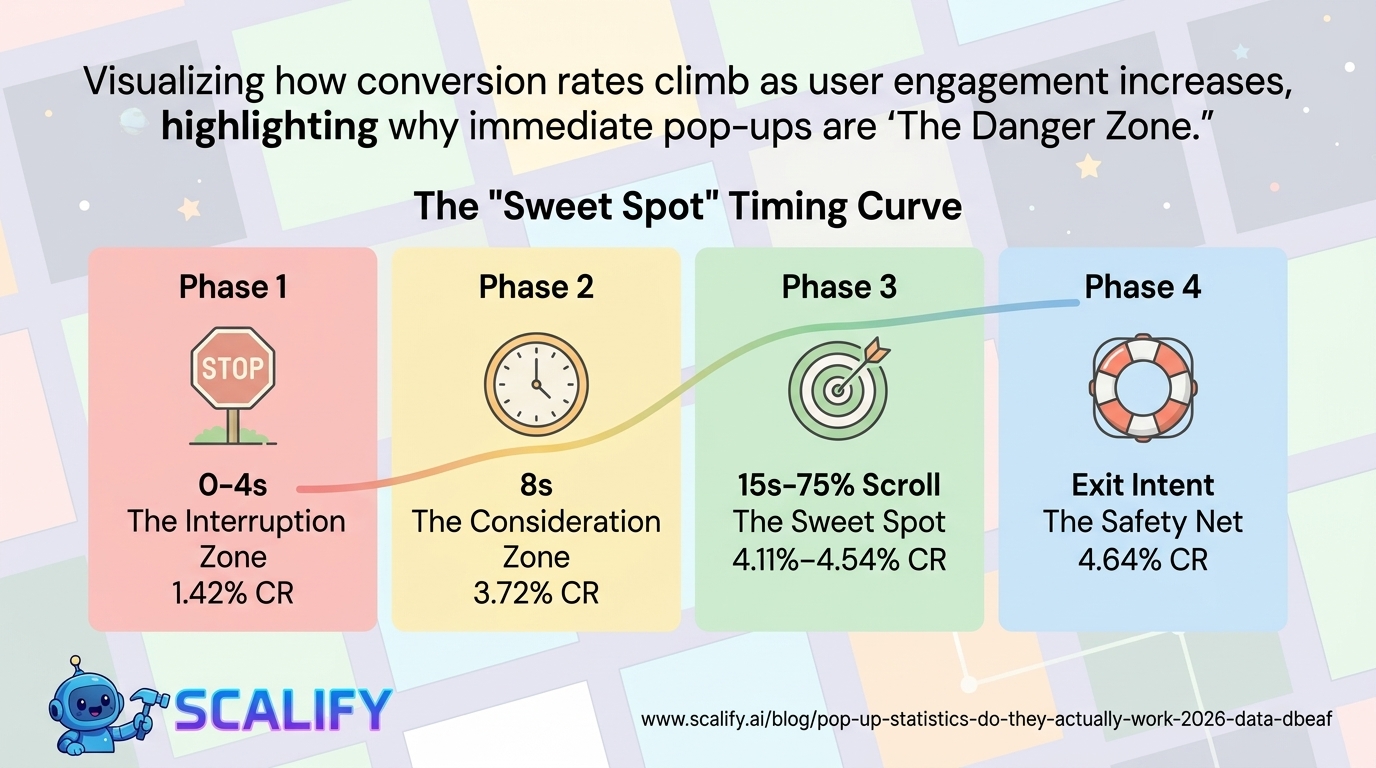
Exit surveys: Short survey prompts that ask departing visitors why they're leaving. Tools like Hotjar can trigger a one-question survey when visitors show exit intent. Even a 5% survey response rate from high-exit pages generates valuable qualitative data about why visitors aren't converting.
Qualitative research (the "why"):
User testing: Recruit 5–8 people who represent your target audience and ask them to complete specific tasks on your site while thinking aloud. Watch them. You'll discover usability issues that your familiarity with the site prevents you from seeing. Jakob Nielsen's research established that 5 users uncover about 85% of a site's significant usability issues — you don't need a large sample to find the most impactful problems.
Customer interviews: Talk to recent customers about their purchase experience. What was confusing? What almost stopped them from buying? What information were they looking for that was hard to find? What would have made the decision easier? Customers who've already converted know exactly what friction they overcame — and that friction is what's stopping others.
Sales call review: If your business uses a sales team, listen to recordings of sales calls (with permission). The objections prospects raise on calls are the objections they have when visiting your site. The questions they ask are the questions they want your website to answer. These insights directly translate to copy improvements and content additions.
Phase 2: Analysis — Identify Opportunities and Form Hypotheses
Synthesize your research into specific, prioritized opportunities. The best opportunities combine high impact (a page or step where significant conversion is being lost), strong evidence (research that explains why conversion is failing), and feasible solutions (changes that could plausibly fix the identified problem).
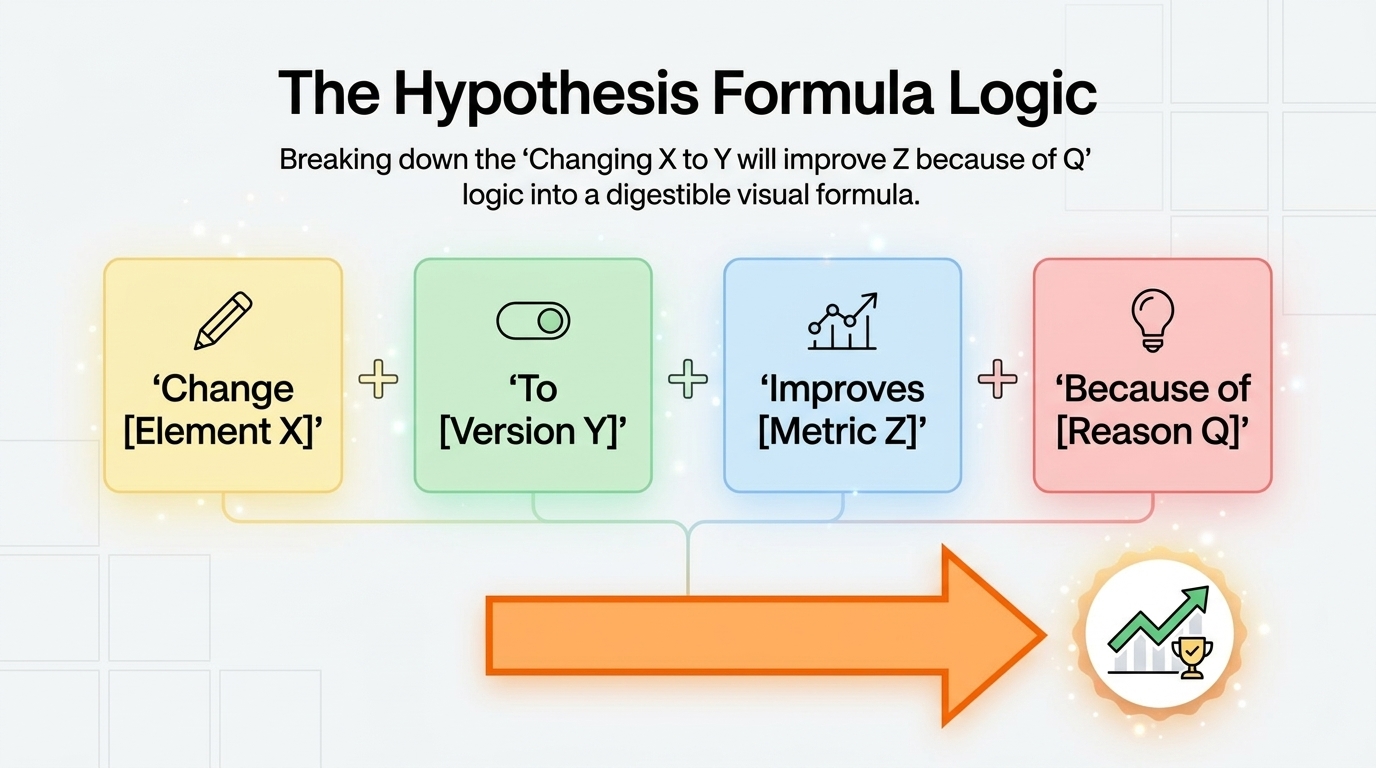
For each opportunity, form a specific hypothesis: "We believe that [changing X] will [produce outcome Y] because [evidence Z]." For example: "We believe that adding a money-back guarantee badge near the checkout CTA will increase checkout completion rate because our exit surveys show price anxiety is the primary reason for cart abandonment."
Specific hypotheses lead to specific tests with clear success criteria, which lead to clear learning regardless of outcome. Vague changes ("let's make the homepage more engaging") produce vague results that are hard to learn from.
Phase 3: Testing — Validate Changes Before Committing
The gold standard for CRO validation is A/B testing (also called split testing): showing two versions of a page to visitors randomly and measuring which version produces more conversions. Version A is your current page (control); Version B is your modified page (variant). The test runs until you have enough data to determine with statistical confidence which version performs better.
A/B testing tools: Google Optimize (deprecated — use as a free temporary tool), VWO, Optimizely, AB Tasty, and ConvertKit all provide A/B testing capabilities with varying sophistication and price points.
What makes a valid A/B test:
Test one significant change at a time. If you change the headline, CTA text, and layout simultaneously, you can't determine which change produced the result. Testing one meaningful change produces actionable learning; testing many small changes simultaneously produces ambiguous results.
Run the test long enough for statistical significance. Most CRO platforms calculate statistical significance automatically. A result that's not statistically significant (typically 95%+ confidence) is noise, not signal — the apparent winner may be winning by random chance. Never declare a winner before reaching significance.
Ensure a meaningful sample size before drawing conclusions. A page with 20 conversions per week needs to run a test for weeks to reach significance. A page with 500 conversions per week reaches significance much faster. Low-traffic pages require longer testing periods or more dramatic changes to reach significance.
What to test:
High-impact elements first: headlines, primary CTAs, hero sections, and checkout flows move the needle more than font color changes or minor layout tweaks. The value of a test is proportional to how many conversions the tested element influences and how much change the test creates in that element's behavior.
Phase 4: Implementation and Iteration
When a variant wins a statistically significant test, implement the winning change as the new baseline. Archive the test results and learnings. Now the winning variant becomes the new control, and you form the next hypothesis to test.
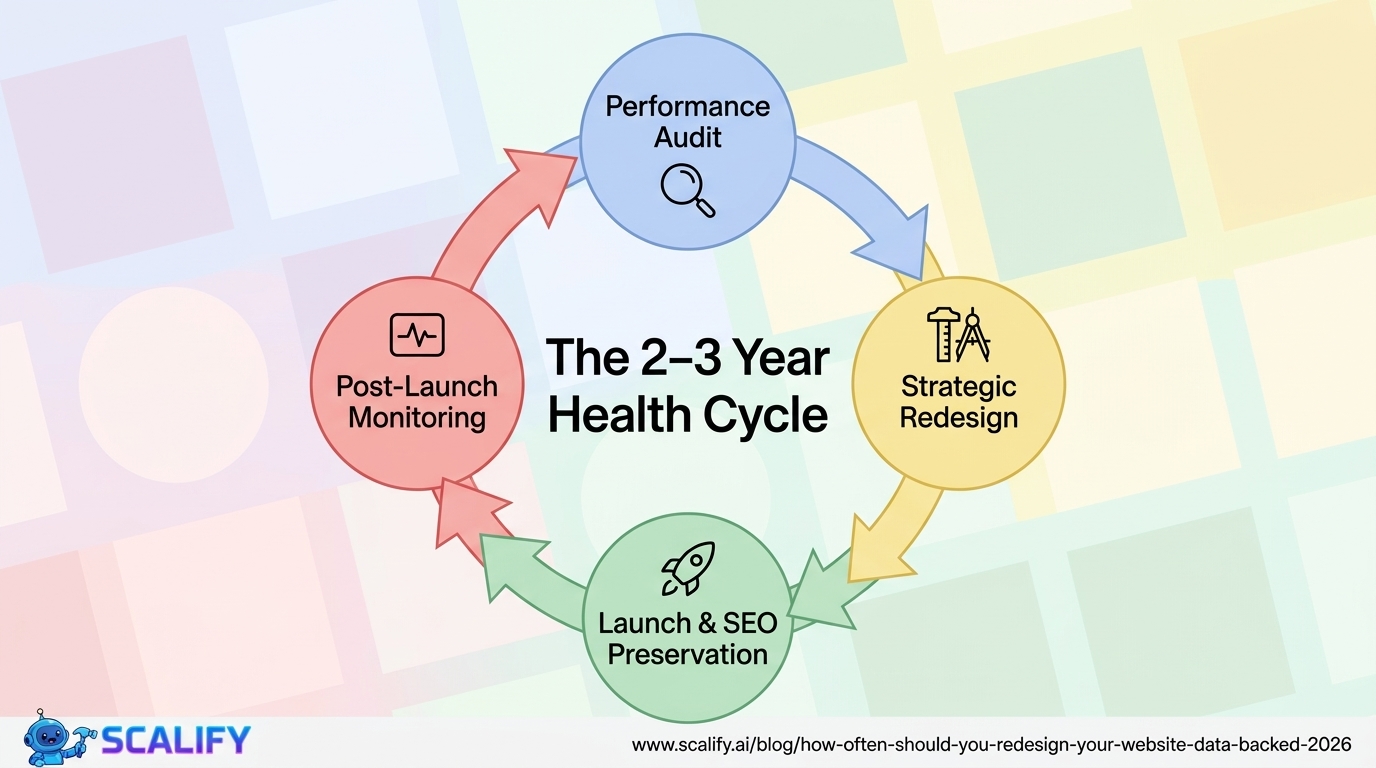
This continuous cycle — research → hypothesis → test → learn → implement → new hypothesis — is how top-performing websites build their conversion advantage over time. No single test produces dramatic improvements. Dozens of tests, each producing a 5–15% improvement, compound into conversion rates that are 2–3x the industry average.
High-Impact CRO Techniques
Message Match and Campaign-Specific Landing Pages
When a visitor clicks an ad or a specific search result, they arrive with a specific expectation. If your landing page doesn't immediately confirm "yes, you're in the right place, this is exactly what you clicked for" — the visitor leaves.
Create dedicated landing pages for major traffic sources rather than sending all traffic to the homepage. A Google Ad about "custom website design for restaurants" should land on a page about custom website design for restaurants — with that language prominently in the headline, matching the specific promise made in the ad. The closer the match, the higher the conversion rate.
Social Proof Placement and Specificity
Social proof — testimonials, reviews, case studies, client counts — is one of the most consistently impactful conversion elements. But placement and specificity matter enormously.
Place social proof near conversion points — immediately before or after a CTA, on pricing pages near "buy" buttons, in checkout flows near "complete order." Social proof at these moments of hesitation addresses exactly the doubt visitors feel as they approach the commitment point.
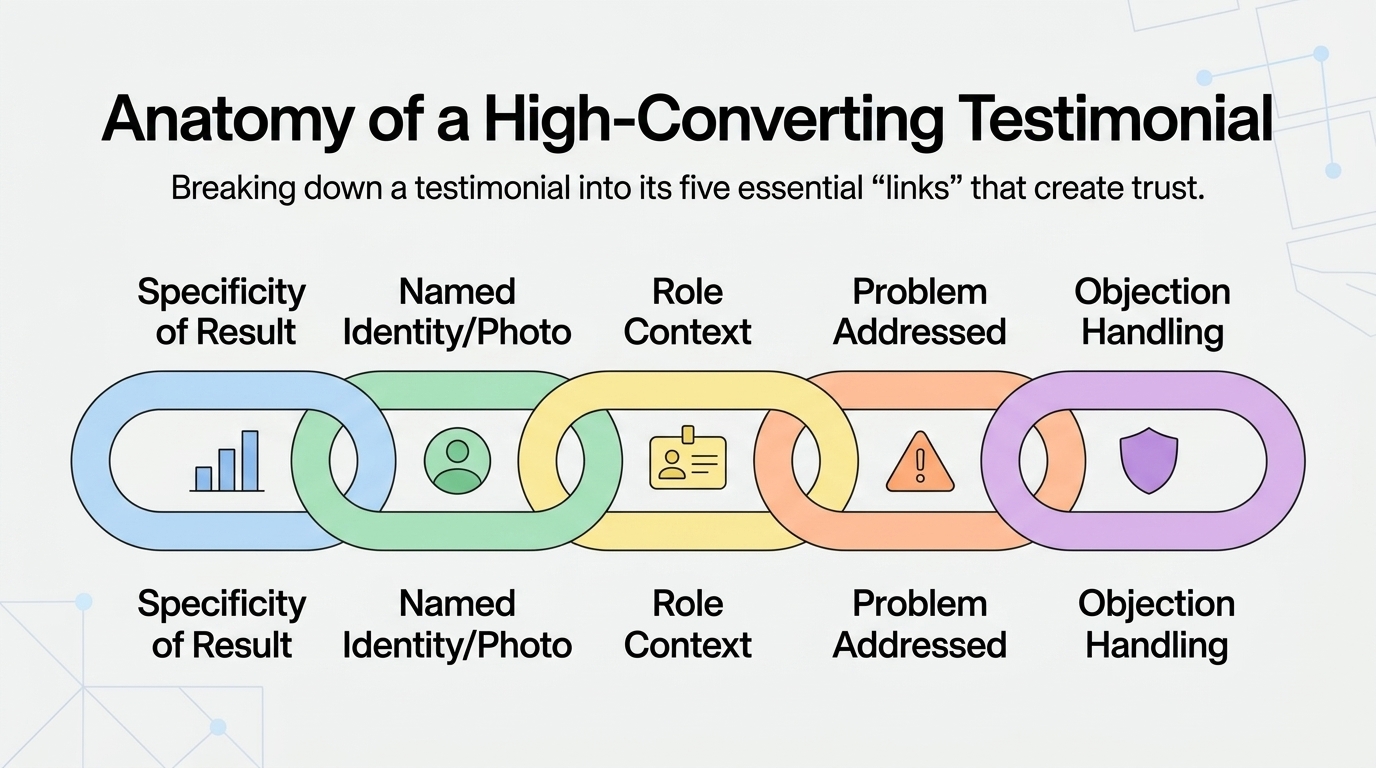
Specific social proof outperforms generic: "This is a great company!" is almost useless. "Our website launched in 9 days and we got 4 leads in the first week" — from Sarah Chen, owner of Apex Coaching — is highly persuasive. Numbers, specifics, outcome-oriented language, and real identity all increase testimonial effectiveness.
CTA Optimization
The CTA button is the most tested element in CRO because it's directly connected to conversion and even small improvements in click rate compound significantly at volume.
The variables worth testing: button text (specific outcome language vs. generic action language), button color (high contrast vs. brand-consistent), button size, button position (above the fold vs. multiple placements), and surrounding copy (what appears immediately before and after the CTA that contextualizes the ask).
The most reliable improvement in CTA testing: specificity. "Get Your Free Website Quote" consistently outperforms "Contact Us." "Start My 14-Day Free Trial" consistently outperforms "Sign Up." The pattern is consistent — tell the visitor exactly what they're getting, not just what action they're taking.
Form Optimization
Forms are conversion bottlenecks on almost every website that uses them. The research is consistent: every additional form field reduces completion rates. The optimization priority is always: ask for less.
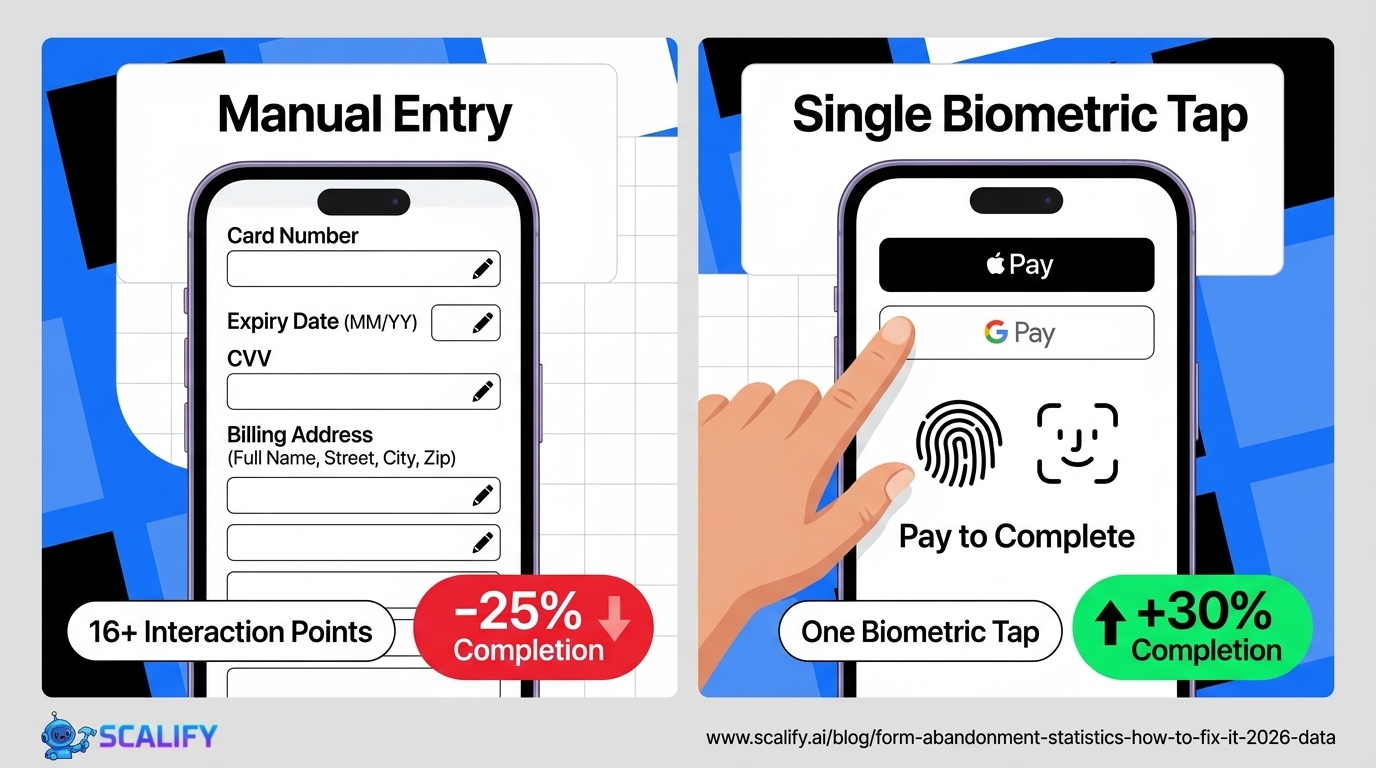
Audit your forms. For each field: do you actually need this information before the first interaction? Could you ask for it later in the relationship? Could you derive it from other information? Every field removed that you don't strictly need at this stage increases form completion rates.
Beyond field reduction: clear field labels (not just placeholder text that disappears when typing begins), specific error messages that tell users exactly what's wrong and how to fix it, progress indicators for multi-step forms, and confirmation messaging that sets expectations for what happens next all improve form conversion.
Page Speed as a Conversion Factor
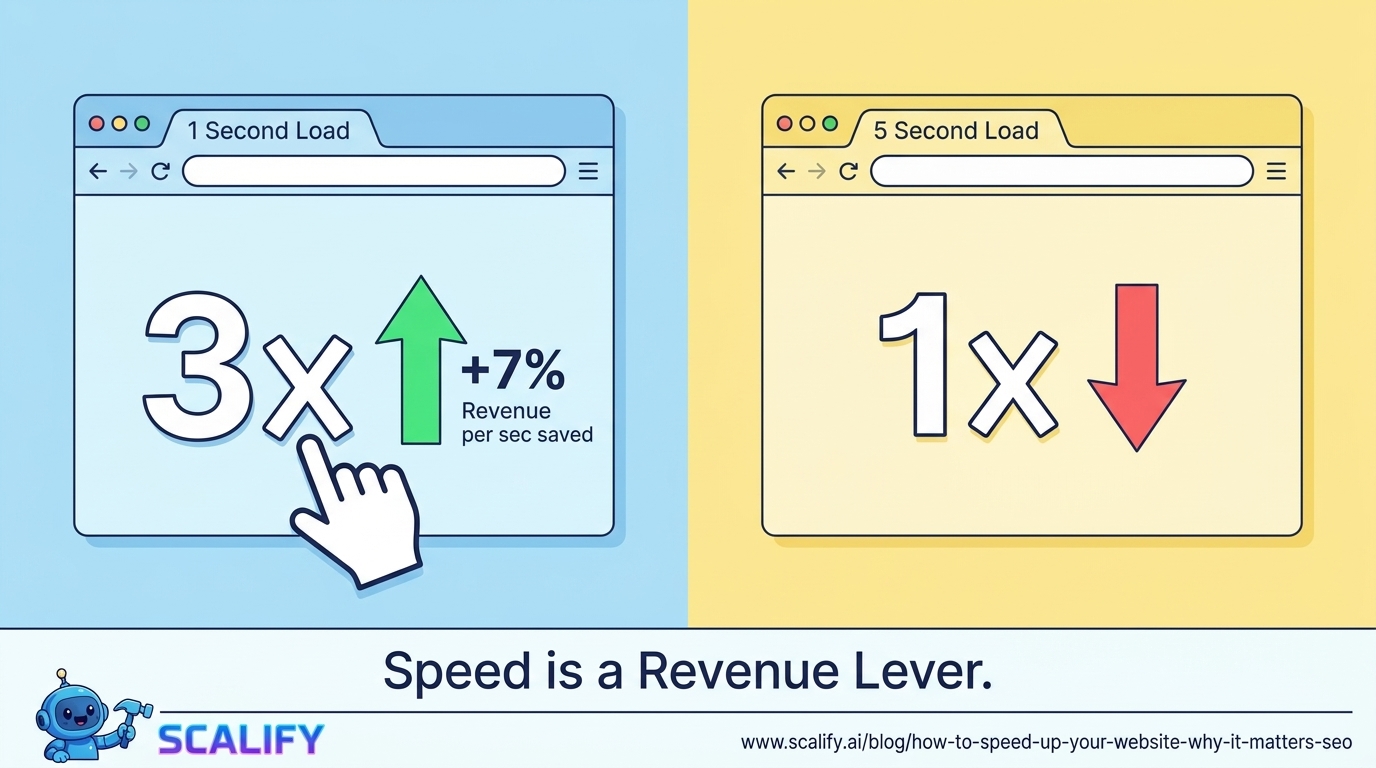
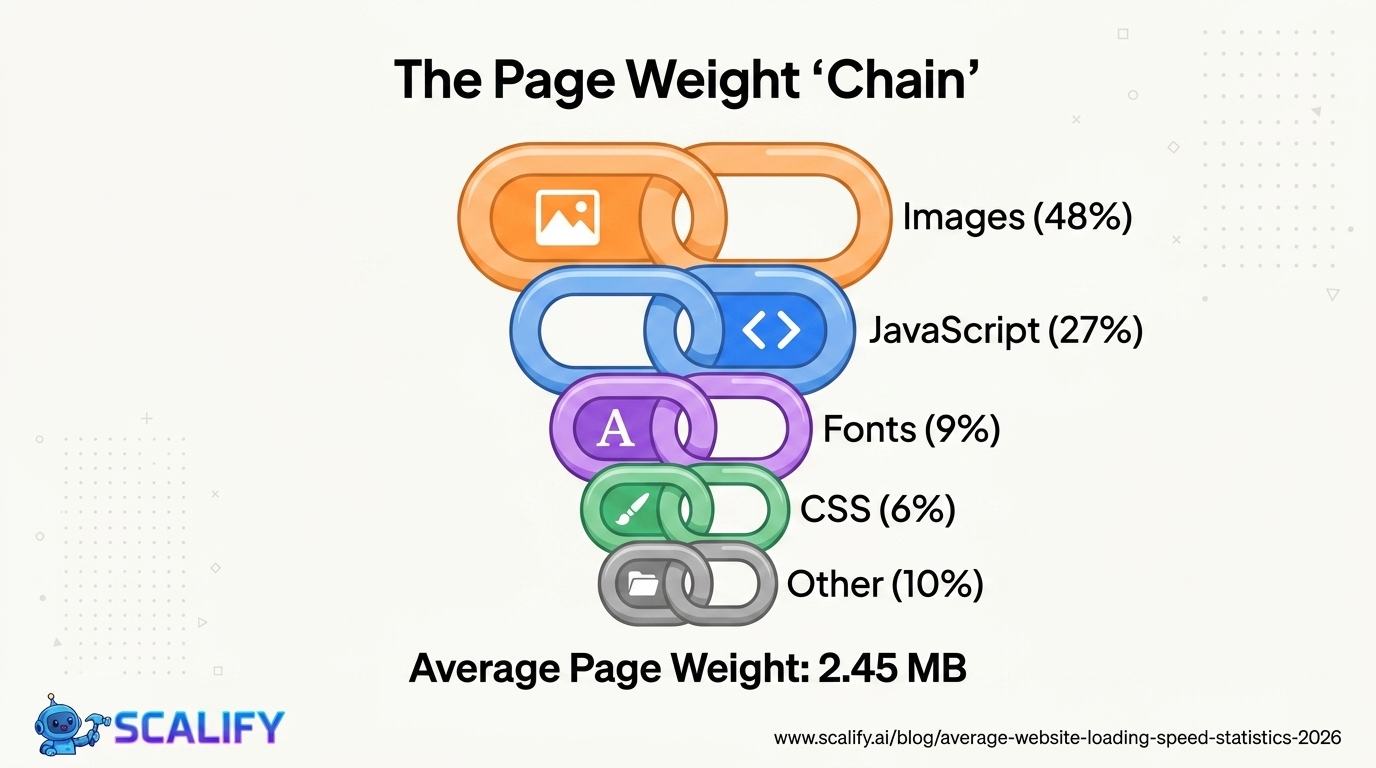
Page speed affects conversion rates directly, not just through SEO. Every 100ms of additional load time reduces conversion rates in a measurable way — the research across multiple large-scale studies is consistent. A page that loads in under a second converts at a meaningfully higher rate than the same page loading in 3–4 seconds.
Speed optimization and CRO are the same effort applied at different layers. Improving LCP helps your ranking; the same improvement also reduces abandonment from visitors who don't wait for slow pages to load.
Trust Building Elements
For any business where visitors arrive without prior brand familiarity (which is most organic and paid traffic), trust is a conversion prerequisite. Visitors don't convert with businesses they don't trust, regardless of how good the offer is.
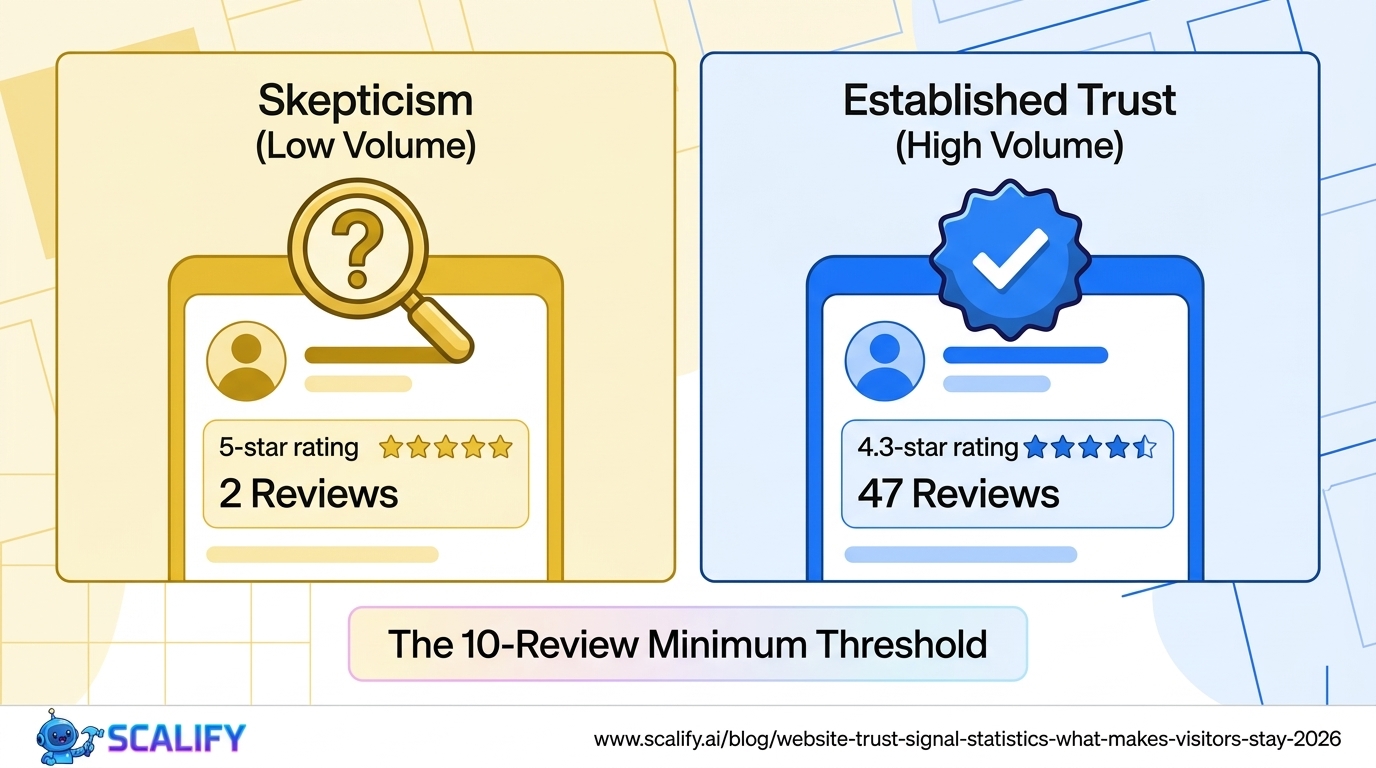
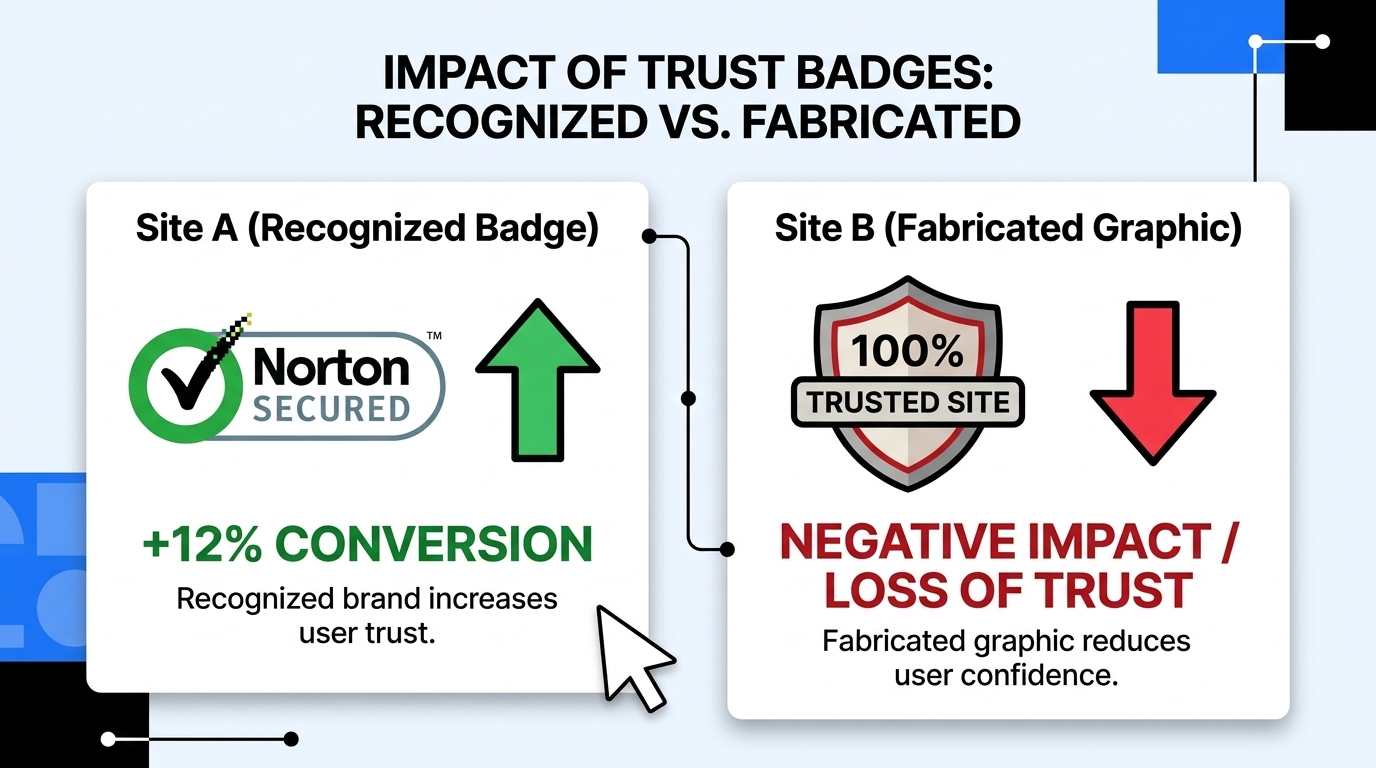
Trust signals that consistently improve conversion: specific testimonials with real names and photos (not initials), review platform aggregate ratings with links to verify, recognizable client logos, case studies with specific results, money-back guarantees with clear terms, security badges for e-commerce, team photos and bios (real people make businesses feel more human), and clear contact information (a business with a physical address and phone number seems more legitimate than one with only a contact form).
CRO for Specific Page Types
Homepage: Optimize for clarity and direction. The homepage's conversion goal is usually to get the visitor to the right section of the site for their intent. Headline clarity, navigation design, and directed CTAs toward key user journeys are the primary optimization levers.
Service or product pages: Optimize for decision-making. These pages need to answer all the questions a prospect has before committing: what is it exactly, who is it for, what results can I expect, what does it cost, what happens if I'm not satisfied, what do other customers say about it. Any unanswered question is a conversion barrier.
Pricing pages: Optimize for commitment. Reduce anxiety (what's actually included, what isn't), make the comparison between plans obvious, highlight the recommended plan visually, reduce the number of plan options if conversion is low (paradox of choice), and provide a lower-friction alternative CTA for visitors not ready to purchase (free trial, demo, consultation).
Checkout / Contact forms: Optimize for completion. Remove every unnecessary step and field. Show clear progress through multi-step flows. Provide reassurance at the commitment point (security badges, guarantee language, privacy assurance). Make error handling clear and non-frustrating.
The Bottom Line
Conversion rate optimization is the discipline of systematically improving the percentage of visitors who take your desired actions. It works through a research-driven process: understand why visitors aren't converting, form specific hypotheses about what would help, test those hypotheses rigorously, implement what works, and iterate continuously.
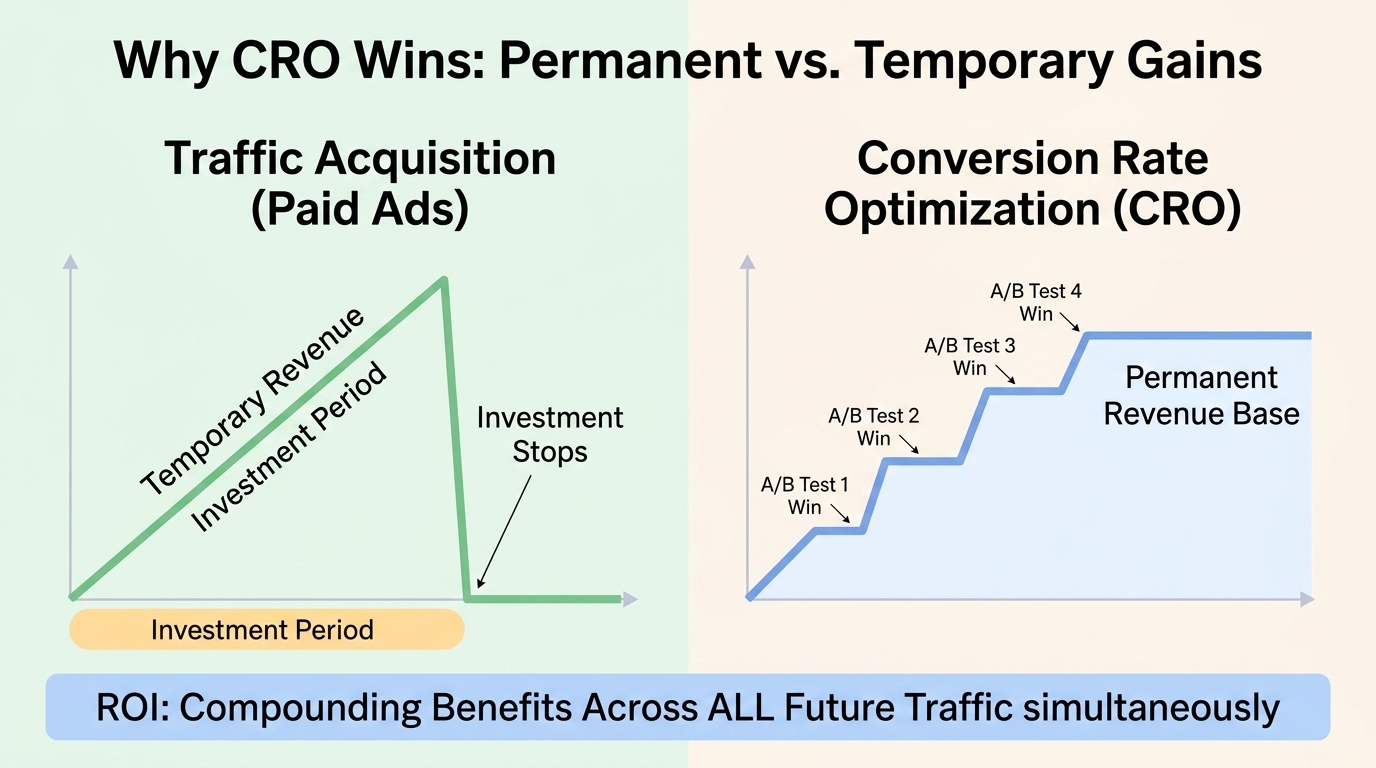
The compound effect of systematic CRO is significant. Businesses that take it seriously often double or triple their conversion rates over 12–18 months of consistent testing — turning the same traffic investment into dramatically more business outcomes. And unlike traffic growth, which requires ongoing investment to maintain, conversion rate improvements are structural — the better site continues outperforming the worse one without additional cost.
Start with research before optimization. Understand what's happening and why before changing anything. Form specific hypotheses. Test when possible. The businesses that invest in this process build sustainable advantages over competitors who simply guess at what might work.
At Scalify, conversion is a core consideration in every website we build — not an afterthought. CTAs, trust signals, page structure, and user journey design are built with conversion in mind from the first wireframe.


.jpeg)
.jpeg)

78 SW 7th St, Miami, FL 33130