


What Is a Meta Description and How Do You Write One That Gets Clicks?
By Josh Ternyak

April 1, 2026
Comprehensive 2026 guide: What Is a Meta Description and How Do You Write One That Gets Clicks?
The 160-Character Ad for Your Web Page
When your page appears in Google search results, two things determine whether a searcher clicks: your title tag and your meta description. The title does the headline work — communicating what the page is about. The meta description does the ad copy work — making the case for why this specific result is worth clicking over the nine other results on the page.
Most websites write meta descriptions as summaries: "This page covers what a meta description is and provides guidance on writing them." Technically accurate. Completely uninspiring. Why would someone click this result over a competitor's that says: "Learn the exact formula for meta descriptions that consistently earn 15–25% higher click-through rates — with copy templates you can use immediately"?
The same page content. The same ranking position. The same keyword. But completely different click-through rates — because the meta description is doing marketing work, not just summarization work.
What a Meta Description Is
A meta description is an HTML element in the <head> section of a web page that provides a brief summary of the page's content. It appears in search engine results pages (SERPs) as the descriptive text below the blue clickable title and above the URL.
The HTML syntax:
<meta name="description" content="Your meta description text here — up to 160 characters.">Meta descriptions are not a direct ranking factor. Google has confirmed they don't use meta description content to rank pages. However, they significantly influence click-through rate (CTR) — the percentage of searchers who click your result when it appears. And CTR at scale can influence rankings indirectly: pages that earn high CTR for their ranking position may see ranking improvements as Google interprets the click behavior as a user satisfaction signal.
The practical importance of meta descriptions: a page ranking #5 with an excellent meta description may receive more clicks than a page ranking #3 with a poor one. Your ranking position is given; your meta description copy is controllable. Optimizing descriptions is one of the fastest, cheapest ways to increase traffic from existing rankings.
When Google Uses Your Meta Description vs. Rewrites It
Important: Google doesn't always use your written meta description. Google may rewrite or replace your meta description with other page content if it determines a different snippet would better match a specific searcher's query or would be more useful to the searcher.
Google rewrites meta descriptions approximately 50–70% of the time according to various studies, replacing them with text extracted from the page body that more closely matches the user's specific query. This doesn't mean writing good meta descriptions is pointless — Google appears more likely to use your written description when:
- The description closely matches the search query intent
- The description provides a compelling, accurate summary of the page
- The page is targeted at a specific, defined primary keyword
Even when Google rewrites your description, your written description still appears for some queries (particularly branded searches and queries closely matching your description text), so well-written descriptions still provide value.
Meta Description Length: What You Need to Know
Google displays meta descriptions up to approximately 155–160 characters on desktop and slightly shorter on mobile (around 120 characters). Text beyond these limits is truncated with "..." — potentially cutting off the most important part of your message if you front-load less important content.
The length isn't a hard technical limit that breaks anything — Google will display what fits in the snippet space it allocates, which varies slightly based on the device, the query, and how Google chooses to format the result.
Best practice: write meta descriptions of 140–155 characters that front-load the most important information. The primary keyword and value proposition should appear in the first 100 characters to ensure they're visible in both desktop and mobile snippet lengths.
What Makes a Meta Description Actually Click-Worthy
Match the Search Intent Precisely
The searcher's intent — what they're actually trying to accomplish — should be directly addressed in the description. If someone searches "how to write a meta description," they want instructions or a guide. A description starting with "This comprehensive guide walks you through exactly how to write meta descriptions that earn more clicks — including copy formulas and real examples" directly addresses their intent.
If someone searches "meta description best practices," they want a list or checklist. A description starting with "The 6 meta description practices that consistently produce higher click-through rates, plus examples of weak vs. strong descriptions" matches the checklist-intent implied by "best practices."
The description's tone, format hint (guide, checklist, list, explanation), and content promise should match what the specific query implies the searcher is looking for.
Include the Primary Keyword
Google bolds keywords in search snippets that match or closely relate to the query the searcher used. Bold text is more visually prominent and draws the eye. Including the primary keyword (and its close variations) in your meta description makes your result visually stand out against competing results that don't include the keyword.
Don't force it awkwardly — the keyword should appear naturally as part of a well-written sentence. "This guide explains what meta descriptions are and how to write ones that earn more clicks" naturally includes "meta descriptions" without it feeling forced.
State the Specific Value or Outcome
The meta description should answer the implicit question: "What's in it for me if I click this result?" The answer is the value proposition — what specific benefit, information, or outcome will the visitor receive?
Vague value: "Learn about meta descriptions and SEO."
Specific value: "Includes 5 meta description templates proven to increase click-through rate — copy, customize, and apply to any page in under 5 minutes."
Specificity makes the value tangible and credible. Numbers (5 templates, under 5 minutes) are more persuasive than generalities.
Include an Implicit or Explicit Call to Action
Meta descriptions don't require hard CTAs ("Click here!") but subtle action-oriented language increases click behavior. "Discover why..." "Find out how..." "Learn exactly..." "Get the complete guide..." — these phrases prime the reader for action and make the description feel more active than a passive summary.
Create Urgency or Specificity Where Appropriate
For commercial intent queries (product searches, service evaluations, pricing research): specificity about what makes this result uniquely worth clicking can be a differentiator. "Updated March 2026," "includes 2026 pricing data," "covers recent Google algorithm updates" — temporal specificity signals freshness that passive descriptions don't.
For competitive commercial queries: a distinguishing claim in the description can tip the click decision. "The only guide that covers both enterprise and small business pricing scenarios" differentiates from the generic alternatives on the same page.
Meta Description Formulas That Work
Several reliable formulas produce high-performing meta descriptions for different content types:
For How-To/Guide content:
"[Specific outcome] in [timeframe/steps]. This [guide/tutorial] covers [specific content elements] so you can [achieve specific result] — [unique aspect or angle]."
Example: "Write meta descriptions that earn 20%+ higher CTR in under 10 minutes. This guide covers the psychology of click behavior, 5 proven formulas, and real before/after examples across 8 different page types."
For Comparison/Evaluation content:
"[Option A] vs. [Option B]: The honest comparison covering [key comparison dimensions]. We break down [specific aspects] so you can choose the right [thing] for your [situation]."
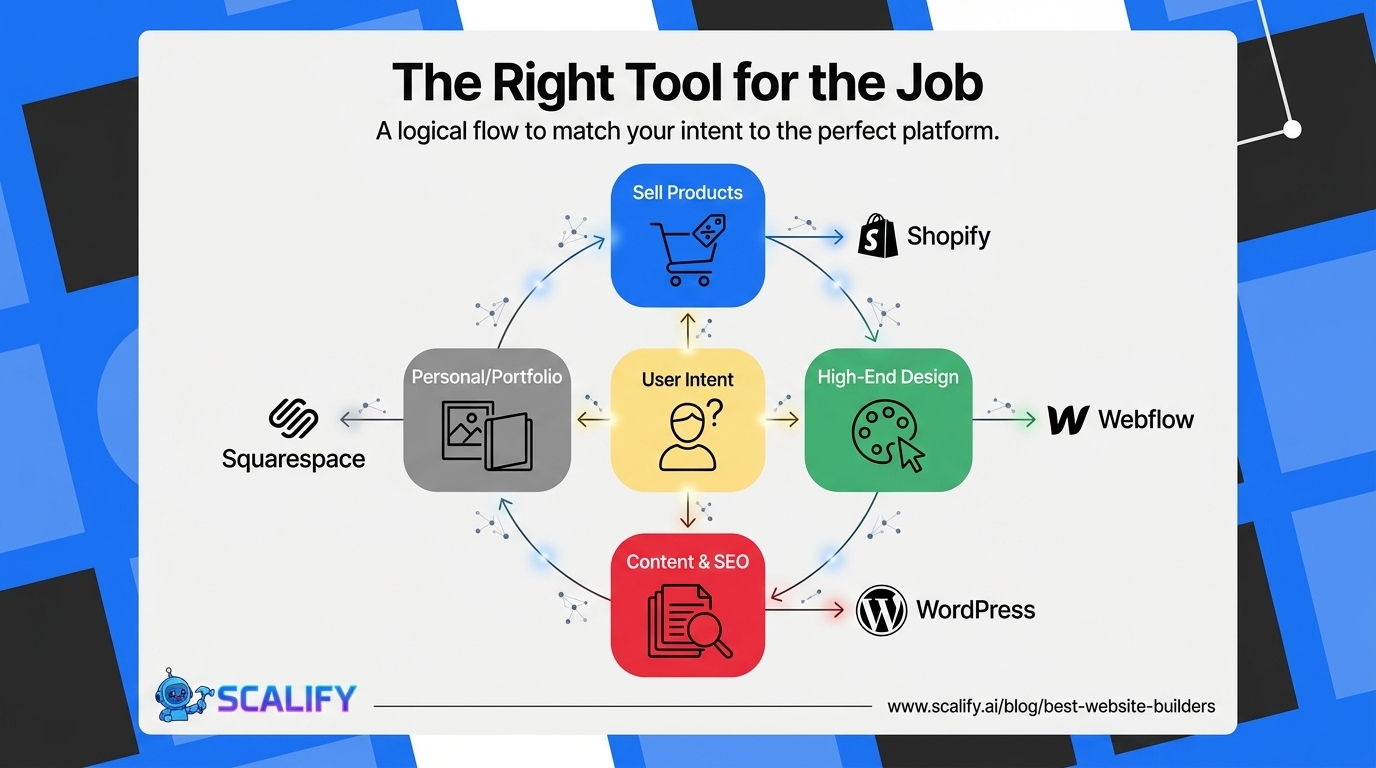
Example: "Webflow vs. WordPress: honest comparison covering pricing, design flexibility, SEO performance, and maintenance overhead. We break down both platforms for every use case from small business to enterprise."
For List/Roundup content:
"[Number] [things] for [audience/situation], ranked by [criteria]. Each includes [what's provided] so you can [outcome]."
Example: "12 website speed optimization techniques ranked by impact-to-effort ratio. Each includes step-by-step implementation instructions so you can apply them regardless of technical experience."
For service/product pages:
"[Primary benefit] for [specific audience]. [How it works briefly]. [Key differentiator or social proof]. [Risk reduction or CTA]."
Example: "Custom websites that generate leads, built in 10 business days. Professional design, SEO-ready, mobile-optimized. Trusted by 500+ businesses. Get a free quote today."
Meta Description Mistakes That Cost Clicks
Duplicate meta descriptions: Using the same description for multiple pages confuses both Google and searchers. Each page should have a unique description specific to that page's content and primary keyword.
Descriptions that are just title tag rewrites: If your title tag says "What Is a Meta Description? Complete Guide" and your meta description says "A complete guide to what a meta description is," you've wasted 160 characters adding no additional information. The description should complement the title, not repeat it.
Passive voice and abstract language: "Information about meta descriptions can be found on this page" is passive, abstract, and provides no reason to click. Use active voice, concrete language, and specific value statements.
Keyword stuffing: "Meta description meta descriptions SEO meta tag description HTML" reads as spam, looks unprofessional in SERPs, and doesn't persuade anyone to click. Natural keyword inclusion once or twice is sufficient.
Making claims you don't fulfill on the page: A description that promises "the complete guide to X" better deliver a genuinely comprehensive guide. A description that promises specific data points better include those data points. Misleading descriptions increase click-through rates temporarily but also increase bounce rates as visitors discover the page doesn't deliver what the description promised — hurting long-term ranking signals.
Missing meta descriptions entirely: Google will generate a snippet from page content, which may be a less compelling representation of the page than a well-written description. Always write descriptions for important pages.
Using AI for Meta Descriptions
AI writing tools can generate meta description drafts quickly. The appropriate use: generate multiple variations, edit for specificity and persuasiveness, and then verify the description accurately represents the page content and matches search intent for the target keyword.
The inappropriate use: accepting the first AI-generated output without editing. AI-generated descriptions are often technically correct but generically worded — "This informative article covers the important topic of meta descriptions and provides helpful advice for SEO" is accurate but unconvincing. Use AI as a starting point, not a final output.
Measuring Meta Description Performance
Google Search Console's Performance report shows click-through rate by page and by query. Use it to:
Identify low-CTR pages: Pages with high impressions (appearing frequently in search) but low CTR have descriptions that aren't converting visibility into clicks. These are the highest-priority pages for description optimization.
Before/after CTR tracking: After updating a meta description, compare CTR in the weeks following the update versus the weeks before. Search Console's comparison date range feature makes this straightforward.
Benchmark against position: Expected CTR varies by position — position 1 should get much higher CTR than position 7. A page at position 3 with lower CTR than average for that position has a description underperforming its potential.
The Bottom Line
Meta descriptions don't affect rankings directly, but they're the primary determinant of whether searchers click your results when they appear. Well-written descriptions — specific, value-focused, intent-matched, with the primary keyword appearing naturally — consistently earn higher click-through rates from the same ranking positions.
Write unique descriptions for every important page. Front-load the value proposition in the first 100 characters. Include the primary keyword naturally. Use specific numbers and outcomes over vague generalities. Test and iterate using Search Console CTR data. The investment is minimal; the traffic compounding is significant.
At Scalify, every website we launch includes thoughtfully written title tags and meta descriptions for core pages — the on-page SEO fundamentals that help your content rank and earn clicks from day one.
Key Takeaways and Next Steps
The principles and data in this guide reflect what actually works in professional web development and digital marketing in 2026 — not theoretical best practices but measured, documented outcomes from implementations at scale. The gap between knowing these principles and benefiting from them is always execution: the businesses that act on what they read, implement changes systematically, and measure the results consistently outperform those who consume information without converting it to action.
For any improvement described in this guide, the implementation sequence that produces the best outcomes: assess your current situation against the benchmarks provided, identify the 2–3 highest-impact improvements specific to your situation, implement them with measurement tracking in place, evaluate results after 30–60 days, and plan the next iteration based on what you learned. This cycle — assess, prioritize, implement, measure, iterate — is the operational foundation of continuous improvement that compounds into significant competitive advantage over the 12–24 month horizon.
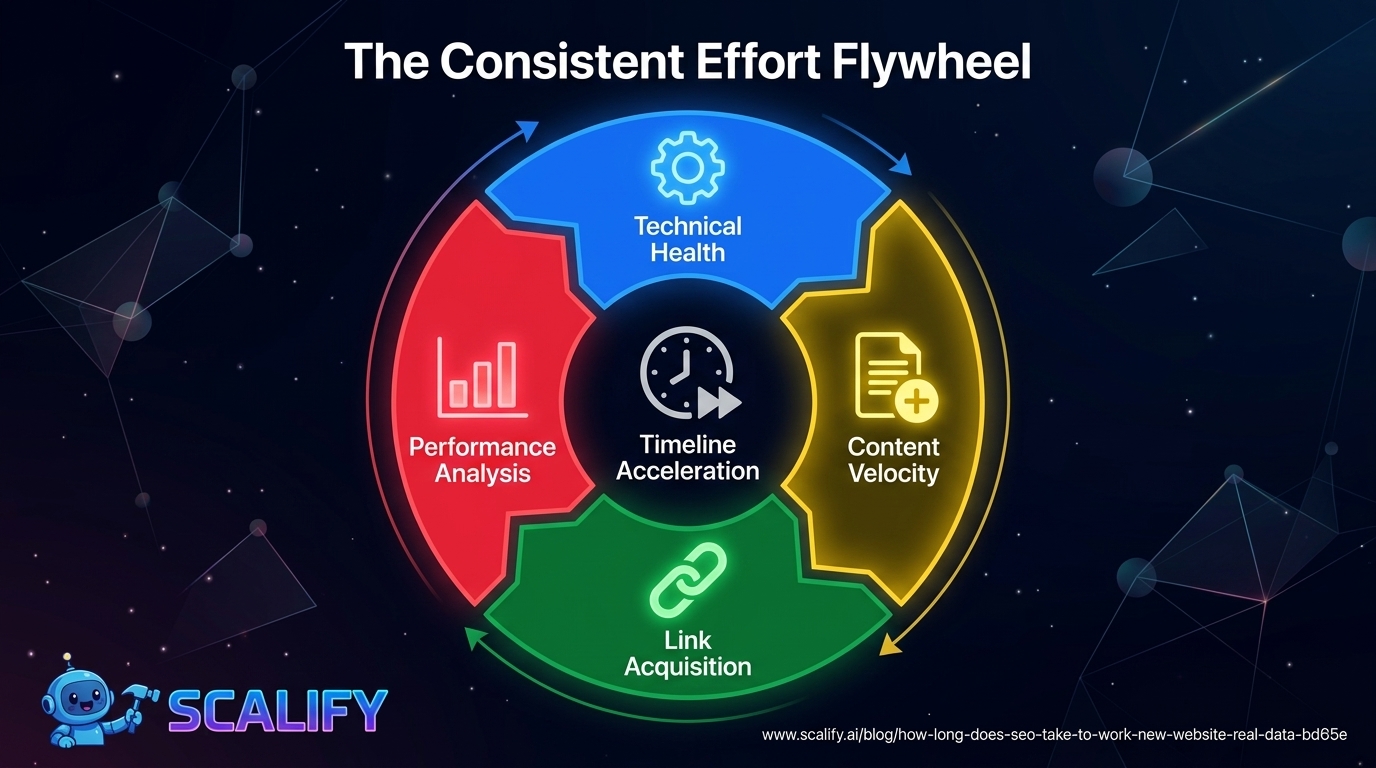
The compounding returns from consistent web presence investment are not linear: a website that improves slightly each month accumulates to dramatic improvements over a year, and those improvements multiply with each other. Faster load times improve both search rankings and conversion rates simultaneously. Better content attracts backlinks that improve rankings that attract more traffic. More testimonials build trust that improves conversion rates that improve revenue that funds more investment. The interconnected nature of website performance means that each improvement amplifies the value of every other improvement — making the decision to invest consistently, across multiple dimensions simultaneously, the highest-ROI approach to digital marketing available to most businesses.
At Scalify, every website we build reflects these principles — technically optimized, conversion-focused, SEO-ready, and designed to compound in value over time as content, backlinks, and organic authority accumulate on the strong foundation we deliver in 10 business days.


.jpeg)
.jpeg)

78 SW 7th St, Miami, FL 33130