


What Is a Bounce Rate and How Do You Reduce It?
By Josh Ternyak

March 29, 2026
A high bounce rate means visitors are leaving your site without engaging — and it's usually telling you something specific is wrong. This guide explains what bounce rate means, why it matters, and the fixes that actually work.
The Metric That Tells You Something Is Broken — If You Know How to Read It
You check your Google Analytics. The bounce rate on your homepage is 78%. Is that bad? Should you be alarmed? Should you drop everything and fix it?
The answer, frustratingly, is: it depends. Bounce rate is one of the most misunderstood metrics in web analytics. It's commonly treated as a simple quality indicator — lower is better, higher is worse. But that interpretation misses critical context, leads to wrong diagnoses, and produces changes that occasionally make things worse.
This guide explains what bounce rate actually measures, the contexts where it signals a real problem versus where it's meaningless, the root causes of genuinely problematic bounce rates, and the specific interventions that reduce bounce rates in ways that actually improve business outcomes.
What Bounce Rate Actually Measures
In Google Analytics 4, a session is considered "engaged" if it lasted more than 10 seconds, resulted in a conversion event, or included 2 or more page views. The engagement rate is the percentage of sessions that were engaged. The bounce rate (now called "unengaged sessions" in GA4) is effectively the inverse — the percentage of sessions that did not meet the engagement threshold.
In older Universal Analytics, the definition was simpler and more literal: a bounce was any session where the visitor viewed only one page before leaving. Single-page sessions were bounces regardless of duration.
GA4's approach is meaningfully different and more nuanced. A visitor who reads your 3,000-word article for 8 minutes is engaged by any reasonable definition — but under the old UA definition, that session was a "bounce" if they didn't navigate to a second page. GA4's 10-second threshold reclassifies many previously-bounced sessions as engaged.
The practical takeaway: if you're comparing GA4 bounce rates to historical UA bounce rates, the numbers aren't directly comparable. GA4 engagement rates will typically be higher (fewer "bounces") than the same site's UA bounce rates because GA4 better accounts for engaged single-page sessions.
Why Context Makes All the Difference
Here's why simple bounce rate benchmarking is often misleading:
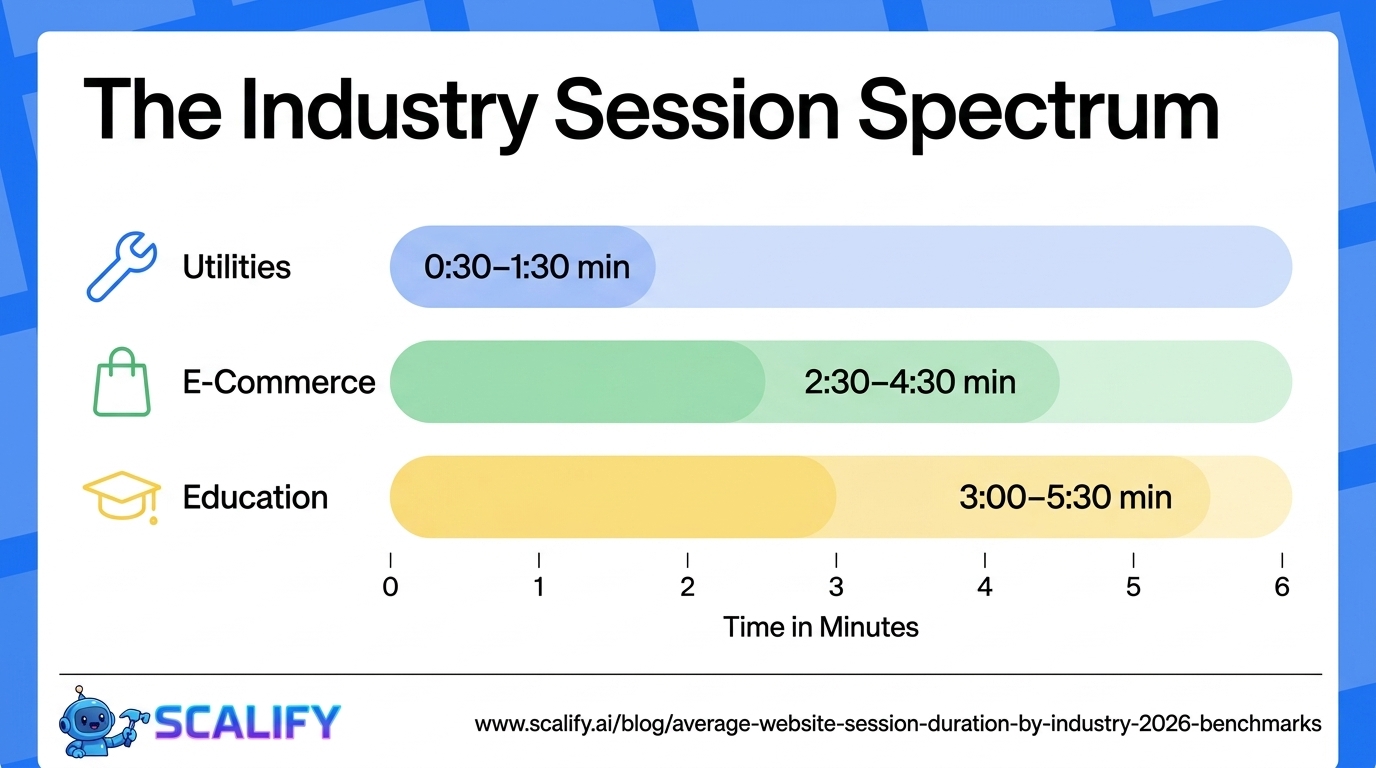
Blog posts have high bounce rates by design. Someone who found your article through Google, read the entire post, and left to apply what they learned is a completely successful session — even though it's a "bounce." The session fulfilled its purpose. If your blog is generating thousands of monthly organic visits that build brand awareness and establish expertise, a 70% bounce rate is probably fine.
Single-page applications appear to have 100% bounce rate. A web application where all navigation happens on a single HTML page without full page loads technically produces 100% bounce rate in older analytics implementations because users never load a second "page." This is a measurement artifact, not a UX failure.
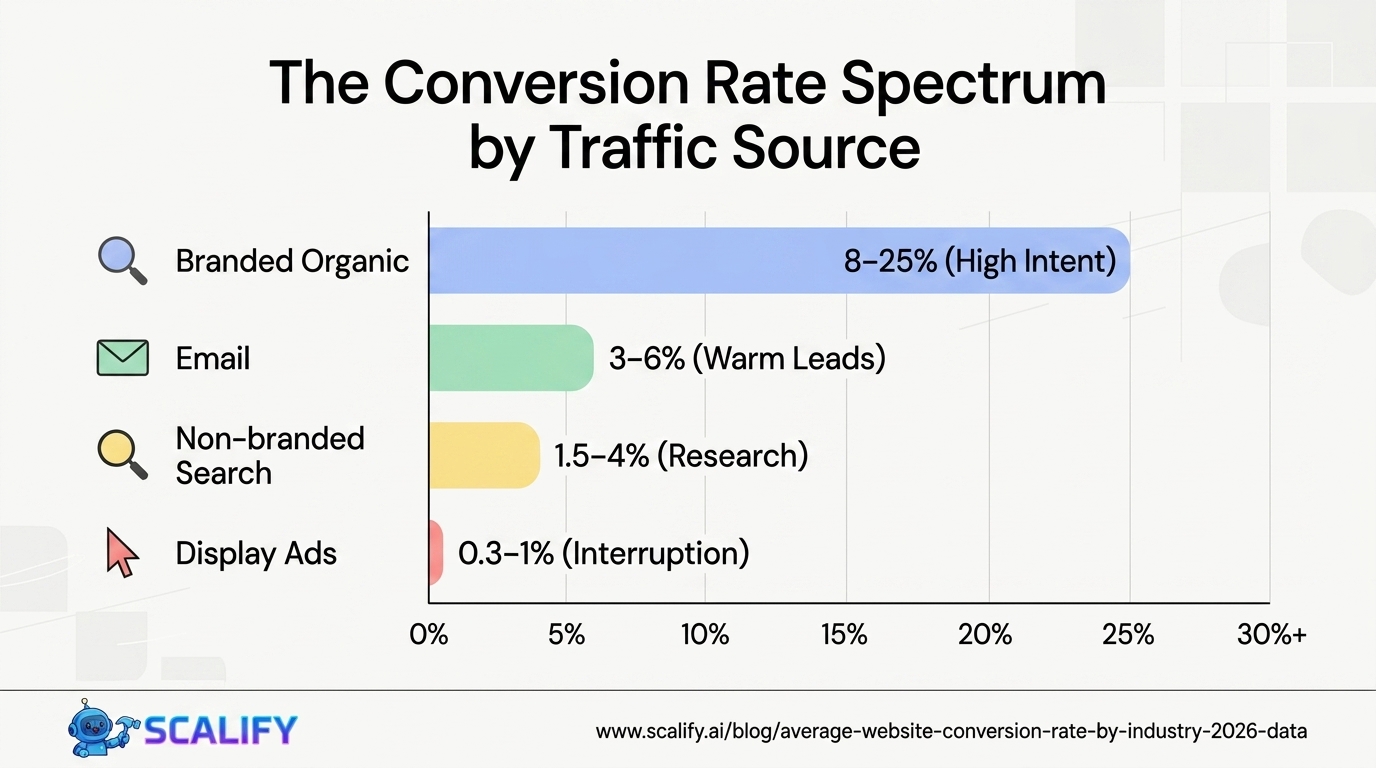
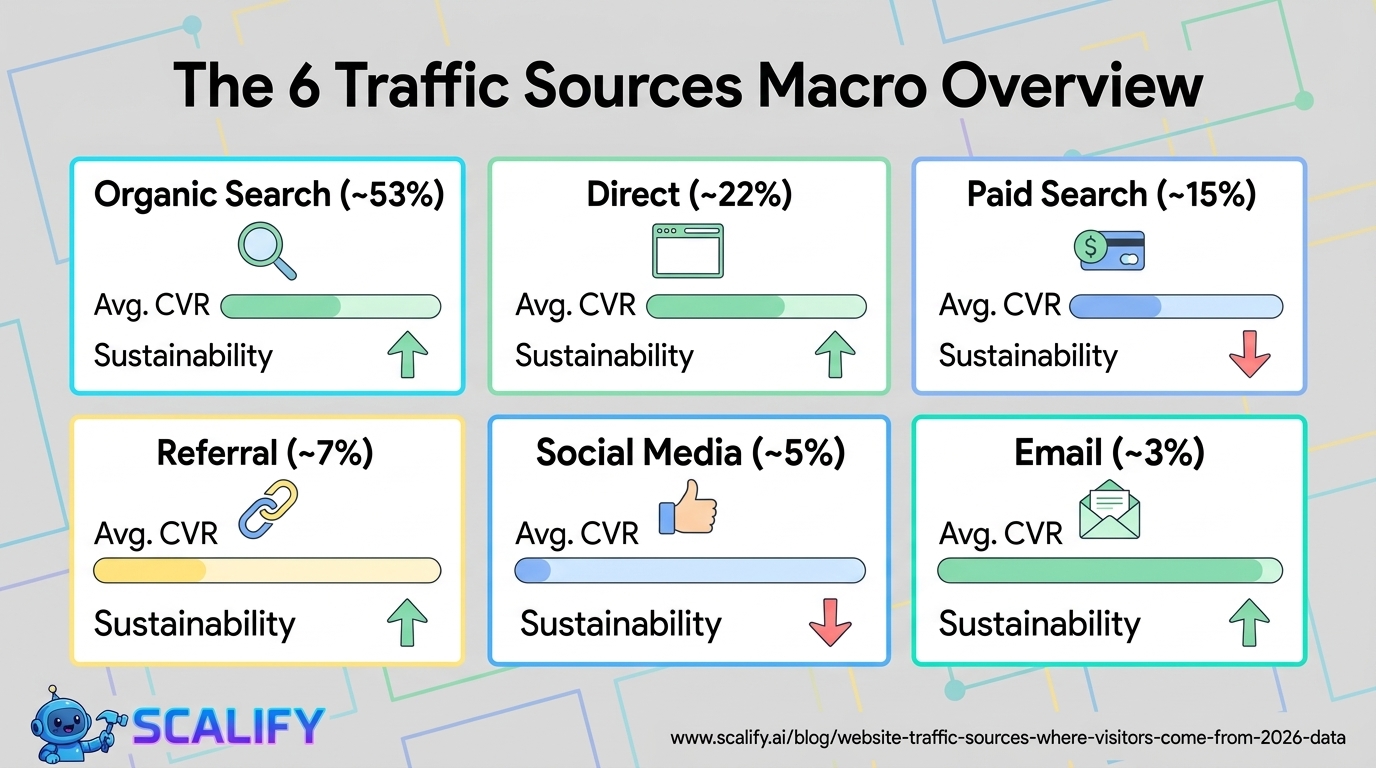
Different traffic sources have systematically different bounce rates. Social media traffic bounces at higher rates than email traffic because social visitors were passively scrolling when they clicked — their intent is weaker. Email subscribers who clicked a link are more engaged by definition. Comparing overall bounce rate without segmenting by source produces a misleading average.
Conversion intent varies by page type. A contact page that loads, presents the phone number, and the visitor calls you has technically "bounced" — but it did its job perfectly. A homepage with a 75% bounce rate where the 25% who didn't bounce immediately submitted a contact form might be performing well despite the high aggregate bounce metric.
The right question isn't "what is my bounce rate?" but rather "are visitors who arrive at this specific page from this specific source accomplishing what I need them to accomplish?" High bounce rates on pages where engagement and continuation matter are problems. High bounce rates on pages that successfully answer a question and have no natural next step are not.
When a High Bounce Rate Is a Real Problem
With that context established, there are genuinely problematic high-bounce-rate situations:
High bounce rate on a homepage or key service page from commercial intent traffic. If visitors arriving at your homepage from branded search or your services page from "web design services" queries are leaving at an 85% rate, something is preventing them from engaging further. These are visitors with intent to learn more or potentially buy — losing them is a real business problem.
High bounce rate on a landing page receiving paid traffic. If you're paying for every click and visitors are leaving immediately, your cost per acquisition is being driven up by a combination of click cost and poor landing page conversion. This directly affects campaign profitability.
Sudden spike in bounce rate across the site. A bounce rate that was 45% last month and is 70% this month likely indicates something broke — a technical issue, a bad page update, a traffic source change bringing lower-quality visitors, or a site speed degradation. Sudden changes require investigation.
High bounce rate correlated with high exit rate at a critical funnel step. If a specific page in your conversion funnel (pricing page, checkout step, product page) has a high bounce rate, visitors are dropping out of the conversion path at that point. This directly affects conversion rate and revenue.
The Root Causes of High Bounce Rates
When a high bounce rate is genuinely problematic, it traces to one or more specific root causes:
Expectation Mismatch
The most common cause. The visitor expected to see X based on the link they clicked (search result, ad, social post) and found Y on the page. The mismatch is immediately disorienting and the visitor leaves to find what they were actually looking for.
This can be caused by: misleading meta titles or descriptions that promise content not delivered on the page, ads that make specific claims not reflected in the landing page, low-quality organic rankings for queries the page doesn't actually address, or external sites linking to your page with anchor text that describes something different from what the page contains.
The fix: align the page content precisely with the promise that brought visitors there. Audit your top traffic sources and the queries/links driving traffic to high-bounce pages. Does the page actually serve what those sources are promising?
Slow Page Load Time
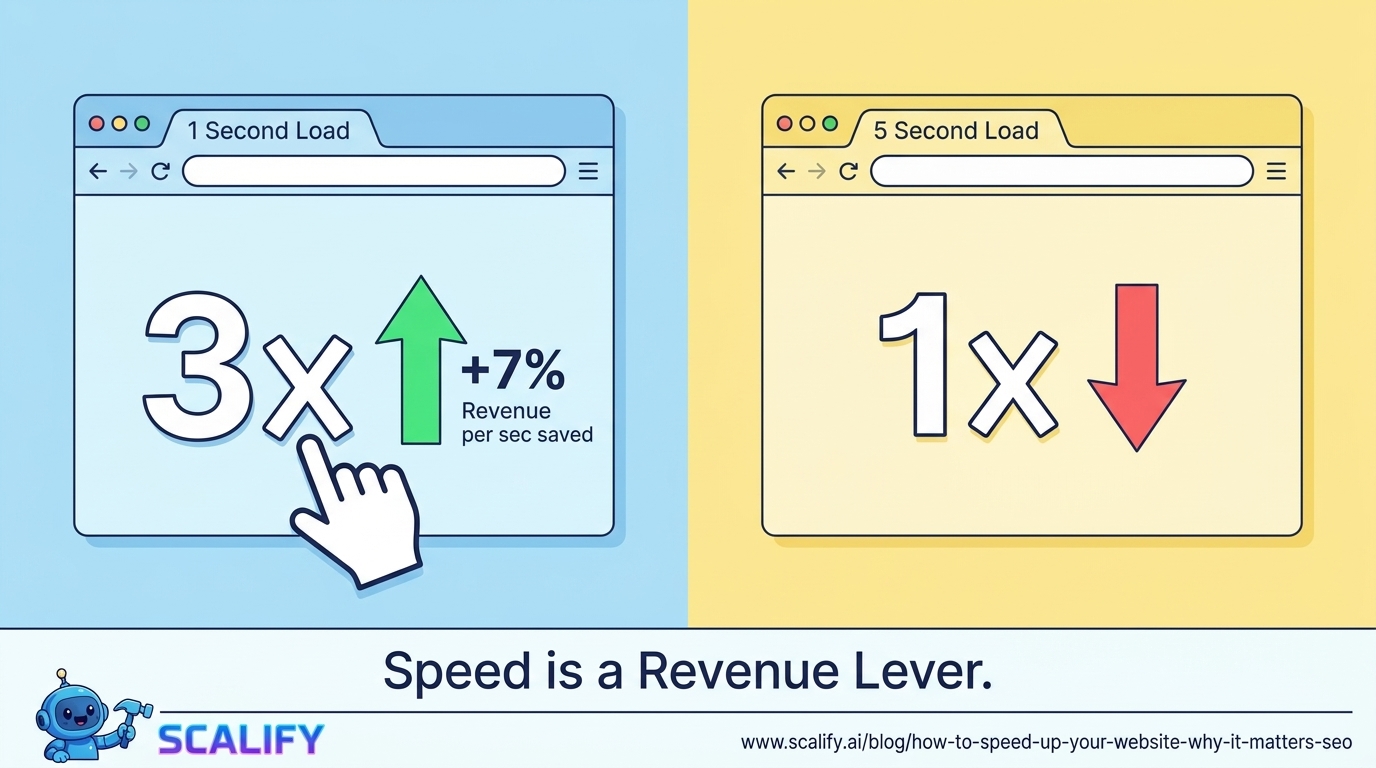
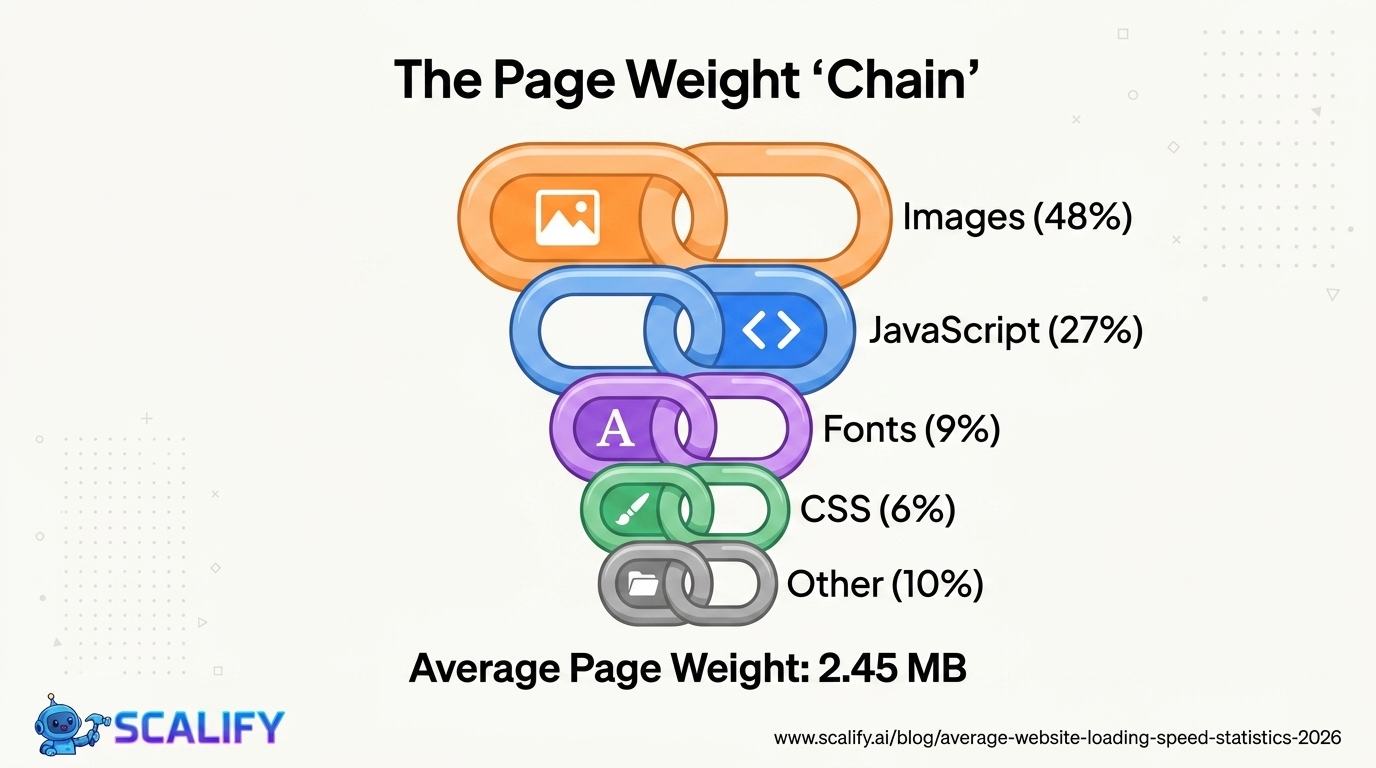
If a page takes more than 2–3 seconds to load on mobile, a significant percentage of visitors leave before seeing any content. These technical bounces register in analytics as disengaged sessions but represent a performance problem, not a content problem.
Diagnose: segment your high-bounce-rate pages by device. If mobile bounce rate is dramatically higher than desktop bounce rate on the same page, mobile performance is likely the issue. Run the page through Google PageSpeed Insights on mobile and address the issues flagged.
Poor User Experience on Mobile
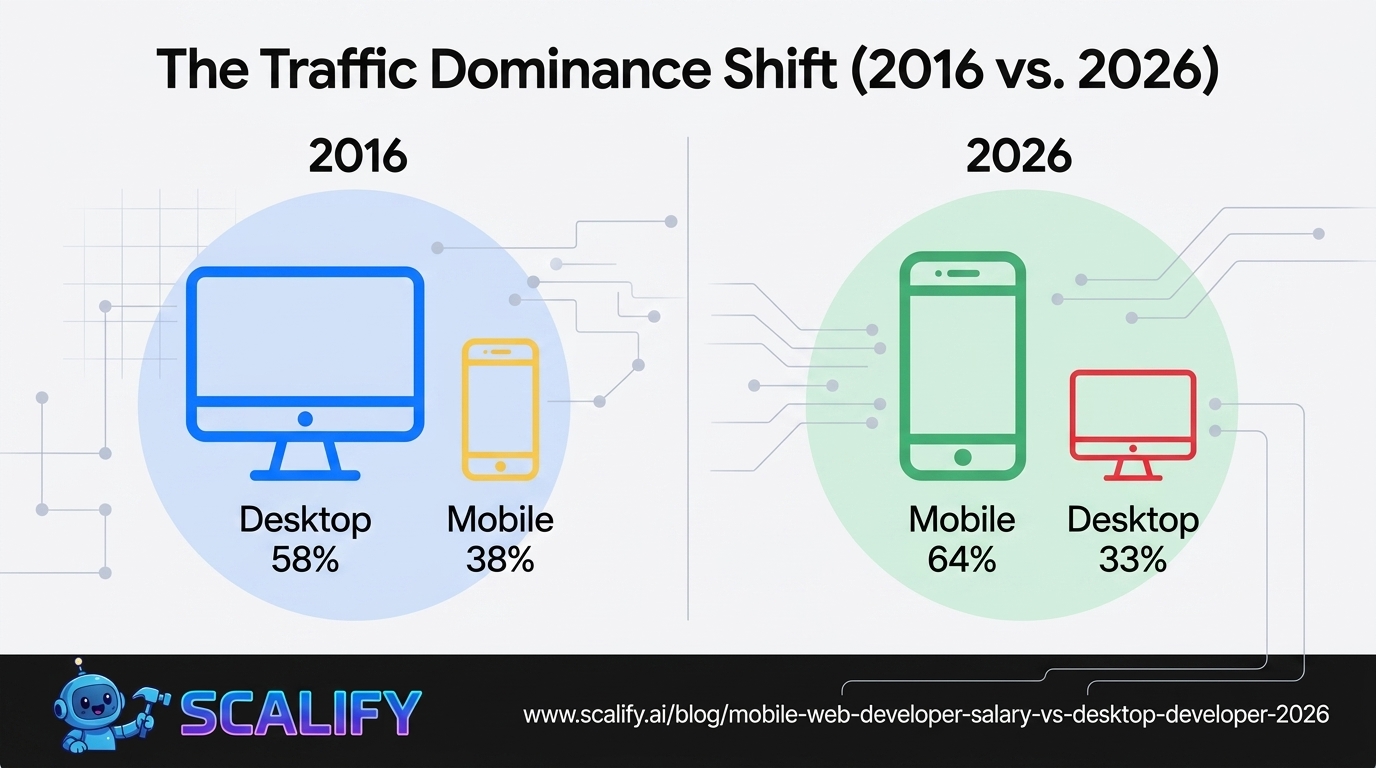
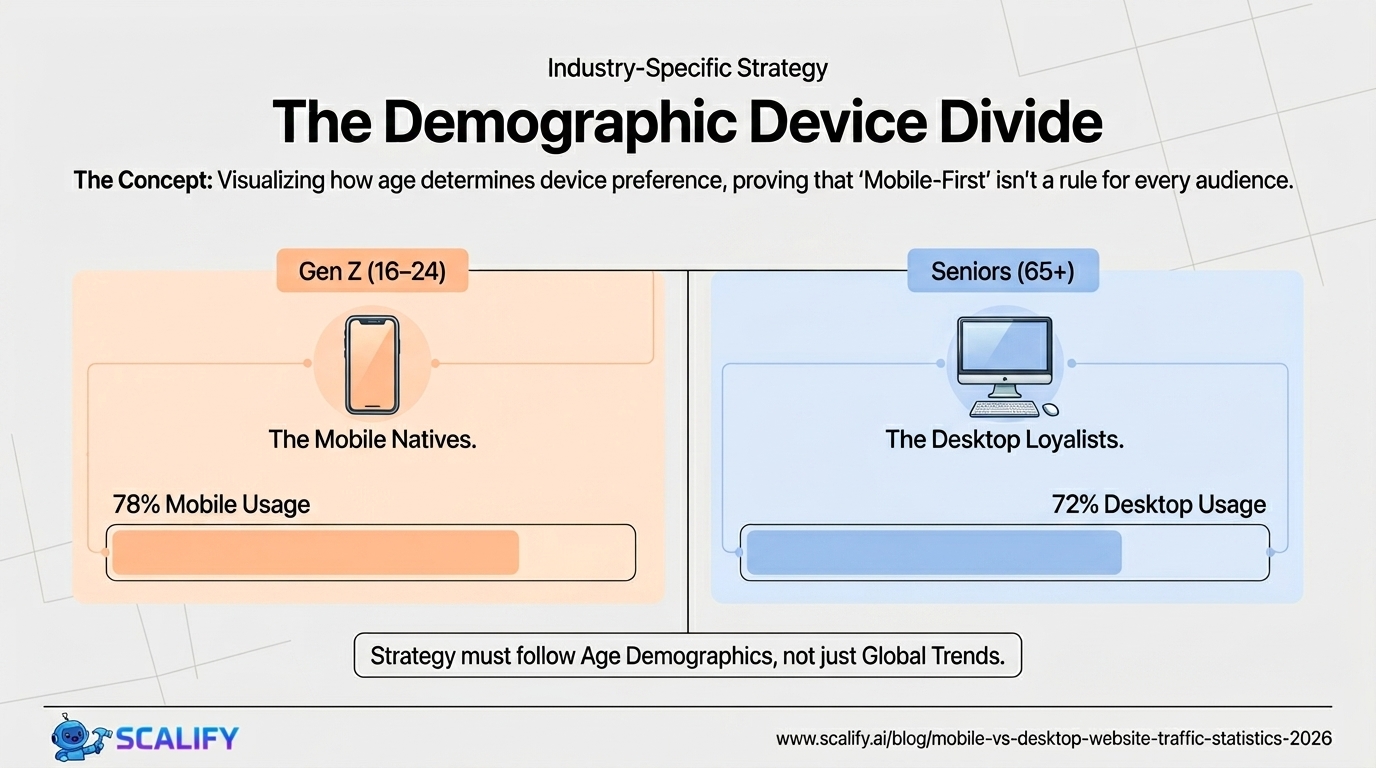
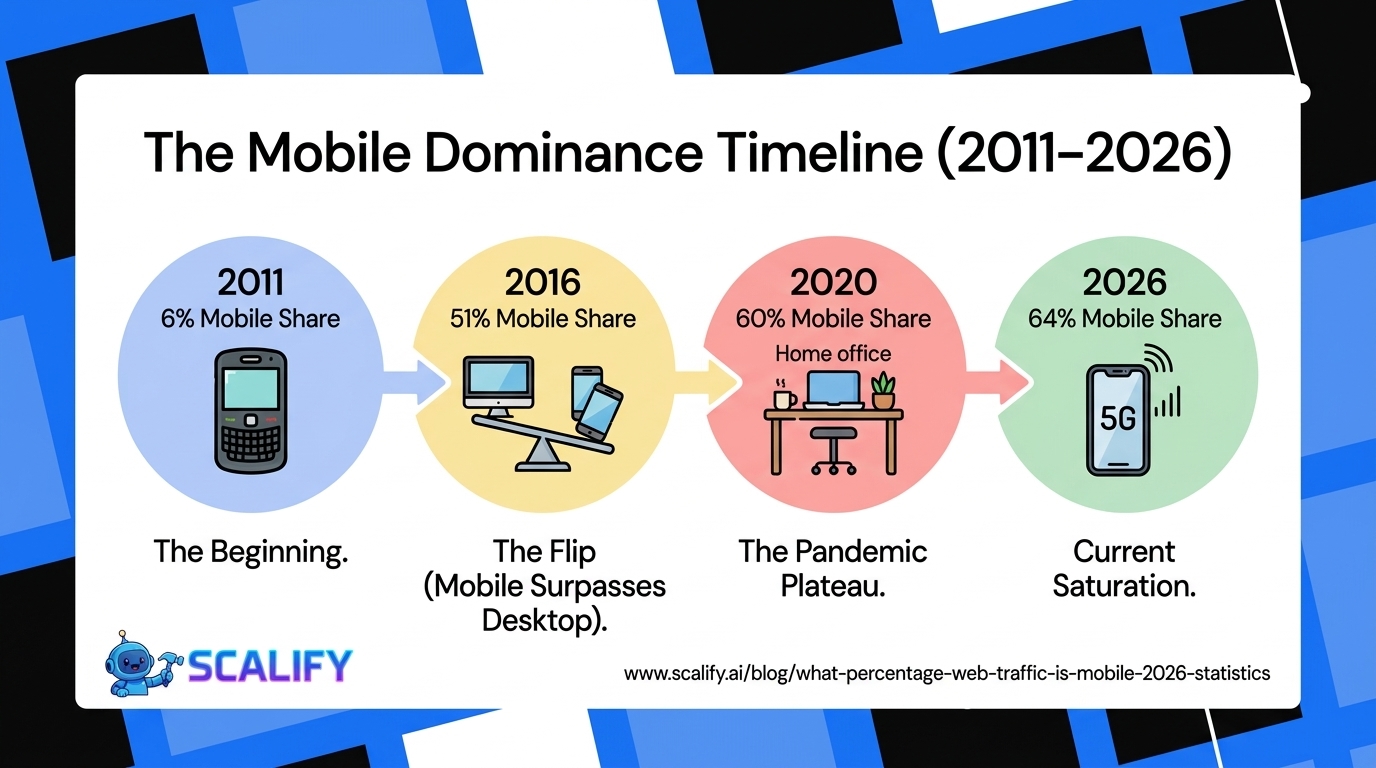
A page that renders incorrectly on mobile — text too small, layout broken, buttons too small to tap, horizontal overflow — produces immediate abandonment from mobile visitors. With over 60% of web traffic on mobile, mobile UX failures produce significant bounce rate increases even when desktop experience is fine.
Diagnose: load the page on your actual phone. Does text require pinching to zoom? Does the layout make sense on a narrow screen? Can you find and tap the navigation easily?
Irrelevant Content
The page content genuinely doesn't address what the visitor was looking for. Either the page is optimized for and ranking for keywords that don't match its actual content, or the content lacks depth and specificity to satisfy visitors who arrived with real research intent.
This is the most common cause of high bounce rates on organic search traffic from informational queries. A page that promises a comprehensive guide in its title but delivers thin, generic content sends visitors back to Google to find a better answer.
Intrusive Pop-Ups and Interstitials
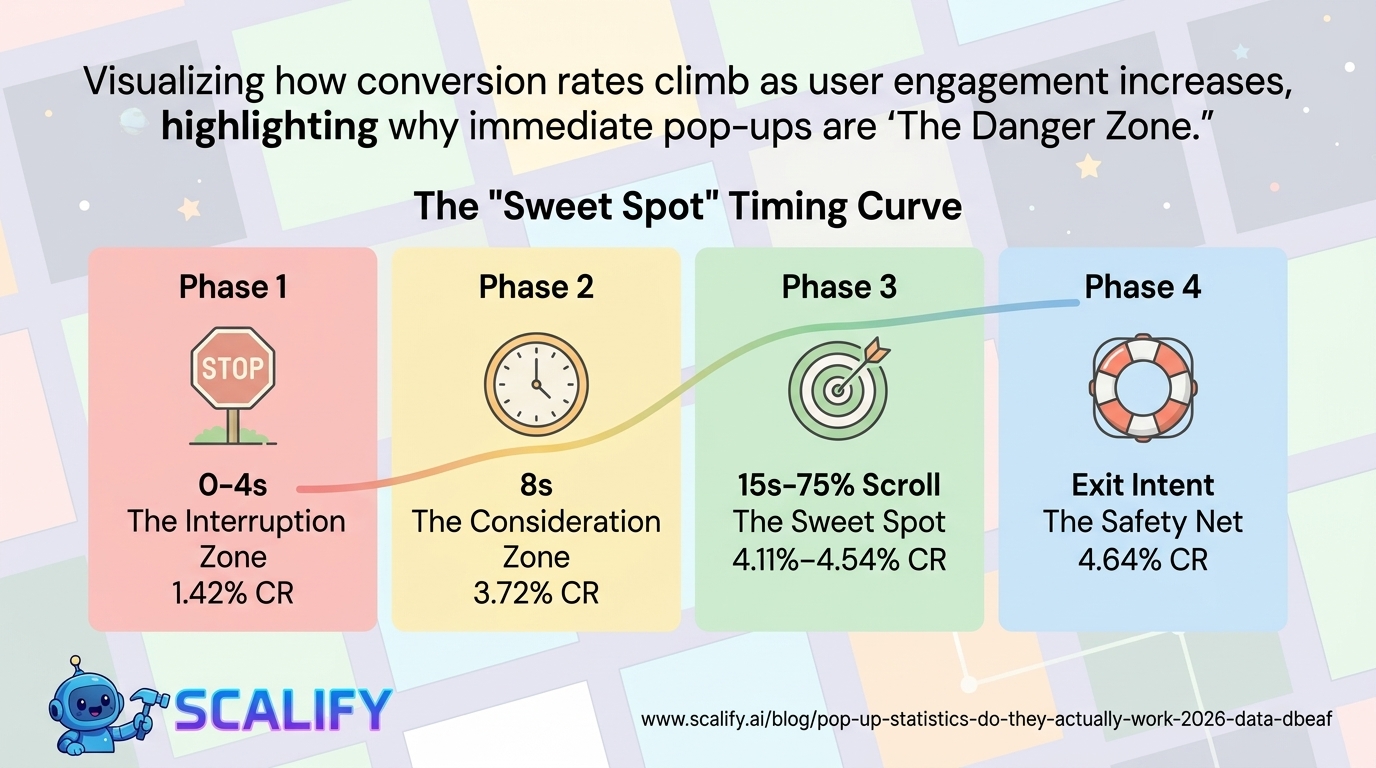
A large pop-up that triggers immediately after arrival, before the visitor has seen any content, is one of the most reliable ways to increase bounce rate. Visitors who came for content and immediately encounter a barrier to accessing it often leave rather than engage with the barrier.
Google also specifically penalizes sites in mobile rankings for "intrusive interstitials" — pop-ups that cover the main content on mobile devices when arriving from a Google search result. Beyond the ranking effect, they directly cause bounces.
No Clear Next Step
On pages where engagement and continuation are the goal, visitors who read the page but find no clear, relevant next step to take will leave rather than hunting for one. A blog post that ends without any CTA, related content suggestion, or invitation to continue doesn't give engaged visitors anywhere to go.
Even a simple "Related Articles" section at the bottom of blog posts, or a contextual CTA ("If you found this useful, here's how we can help with [related service]"), gives engaged visitors a path forward that reduces bounce.
How to Actually Reduce Bounce Rate
Improve Page Speed on Mobile
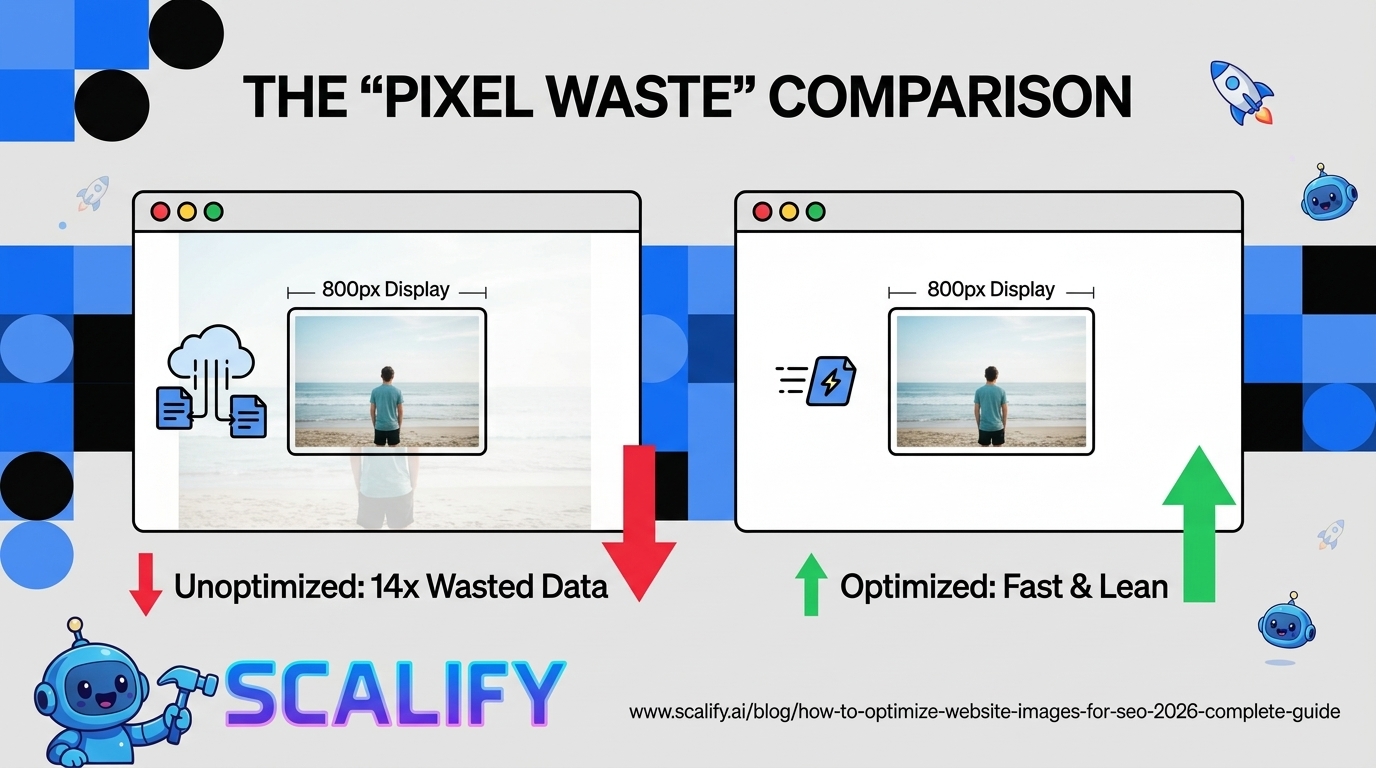
Run every high-bounce page through Google PageSpeed Insights and implement the Priority recommendations. Compress and optimize images. Remove unused JavaScript. Enable caching. Use a CDN. For WordPress, a performance plugin like WP Rocket handles most of these automatically.
The impact of speed improvements on bounce rate is consistent and measurable. Pages that load in under 1 second have substantially lower bounce rates than pages that load in 3–4 seconds, all else being equal.
Align Content with Search Intent
For every high-bounce organic traffic page, verify that the page content matches what searchers are looking for when they use the queries driving that traffic. Go to Google Search Console, find the queries sending traffic to that page, then manually search those queries and look at what's currently ranking on page 1. Does your page look like the other results? Is it the type of content searchers expect?
If your page is getting traffic for an informational query but delivering a sales page, the mismatch will produce high bounce rates. Matching the content type and depth to the actual search intent is the fix.
Strengthen the Above-Fold Experience
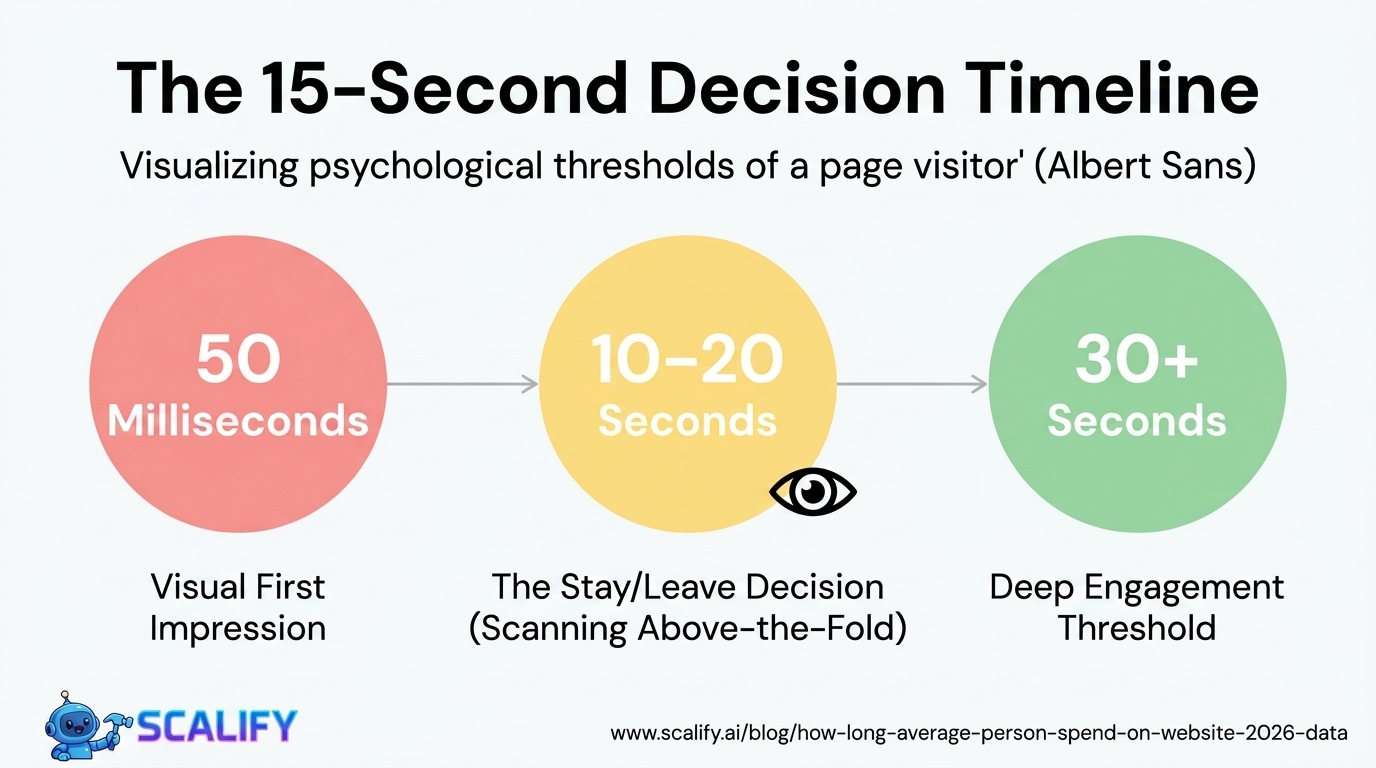
The decision to stay or leave is made within the first few seconds, based primarily on what's visible without scrolling. Is the headline immediately clear about what the page offers? Is there visual evidence of quality and credibility (design, imagery)? Does the visitor immediately understand they're in the right place for what they were looking for?
A/B test different headlines and above-fold layouts on high-bounce pages. Even small improvements in the first-impression experience consistently produce measurable bounce rate reductions.
Improve Internal Linking
Visitors who read your content and find relevant next steps are less likely to bounce than visitors who reach the end of a page and have nowhere to go. Add contextual internal links within blog content (linking to related articles when relevant topics are mentioned), add "Related Articles" or "You Might Also Like" sections at the end of posts, and add contextual CTAs that guide visitors toward the next logical step in their journey.
Delay or Improve Pop-Up Triggers
If you're using pop-ups, trigger them based on scroll depth (50–70% scroll) or time on page (30+ seconds) rather than immediately on arrival. Immediate pop-ups interrupt visitors before they've received any value; delayed pop-ups target visitors who have demonstrated engagement and are more receptive to a value exchange.
Improve Page Relevance for Traffic Sources
For paid traffic, ensure landing pages are specifically designed for the audience and message of each campaign. For organic traffic, improve the match between page content and the queries driving traffic. For social traffic, create content that's designed for the specific platform and audience context that's sending visitors.
What Not to Do: Bounce Rate Manipulation
A word of caution: there are ways to reduce bounce rate that don't actually improve user experience or business outcomes:
Forcing page navigation: Adding a full-screen overlay that requires visitors to click somewhere (choose a language, acknowledge a notice, etc.) makes every session technically not a bounce — because clicking the overlay counts as engagement. But this reduces bounce rate while actively worsening user experience. Metrics improve while business outcomes degrade.
Adding irrelevant auto-play media: An auto-playing video that triggers immediately extends session duration and technically reduces bounce rate. A visitor who immediately scrolls past an unwanted video and then leaves isn't engaging in any meaningful way, but the metric improves.
Arbitrary pagination: Breaking a single article into multiple pages forces additional page views and technically reduces bounce rate. Visitors who prefer one-page reading are forced into extra clicks. The metric improves; the experience worsens.
The goal is not to improve the metric. The goal is to improve the business outcomes the metric is supposed to indicate. Manipulating the metric without improving the underlying experience produces numbers that look better while the actual business performance doesn't change.
The Bottom Line
Bounce rate is a useful signal when interpreted in context — a consistently high bounce rate on pages where engagement matters is worth investigating and fixing. But it's not a universal quality score, and optimizing for it without understanding why it's high leads to wrong interventions and sometimes actively worse outcomes.
Diagnose before fixing. Segment by traffic source, device, and page type. Identify whether high bounce rates are correlated with conversion drops or just with single-page content consumption. Find the root cause — slow speed, expectation mismatch, poor UX, irrelevant content — and address that specifically.
Every website built by Scalify is designed with the elements that keep engaged visitors engaged — fast load times, clear value propositions, logical navigation, and relevant CTAs that guide visitors toward meaningful next steps.




.jpeg)
.jpeg)


78 SW 7th St, Miami, FL 33130