


What Is a Services Page and How Do You Design One That Gets Clients?
By Josh Ternyak

March 29, 2026
Your services page is where visitors decide whether to hire you — but most service pages are collections of features, not reasons to buy. This guide shows you exactly how to write and design a services page that converts.
The Page Where Most Deals Are Won or Lost
Think about the last time you evaluated a service business online. You probably did the same thing most people do: checked the homepage to understand what they do, then immediately went to the services page to figure out whether it was relevant to your specific situation. If the services page answered your questions and made you feel confident, you probably continued to pricing or contact. If it left you confused, underwhelmed, or uncertain, you probably left.
That moment — a visitor reading your services page and deciding whether to continue toward contact — is where more service business deals are won or lost than anywhere else in the funnel. Not on the homepage (which creates initial interest), not on the contact page (which handles mechanics), but on the services page where the substantive evaluation happens.
Most services pages fail this moment. They list features instead of explaining benefits. They describe what the service is rather than what it does for the client. They use the same language for every service rather than speaking to the specific needs of visitors considering each one. They end without a clear next step. And they wonder why visitors who seemed interested don't convert.
What a Services Page Is Supposed to Do
A services page isn't a menu. It's not a brochure insert. It's a persuasive document that answers the fundamental buying questions your target clients have when they're evaluating whether to hire you:
"Is this what I actually need?" — Relevance. Does this service address my specific situation?
"Can they actually do this well?" — Capability. Is there evidence of real expertise and results?
"What exactly am I getting?" — Clarity. What does the engagement look like, what do I receive?
"Is this worth it?" — Value. Will the outcome justify the investment?
"Is this safe to do?" — Risk. What if it doesn't work out?
A services page that answers all five questions with specificity and conviction will convert at much higher rates than one that merely describes the service category.
The Architecture of an Effective Services Page
The Headline: Outcome-First, Not Service-Name-First
Most services pages are titled exactly what the service is: "Web Design," "SEO Services," "Marketing Consulting." These titles are adequate for navigation but do zero persuasive work. They're labels, not arguments.
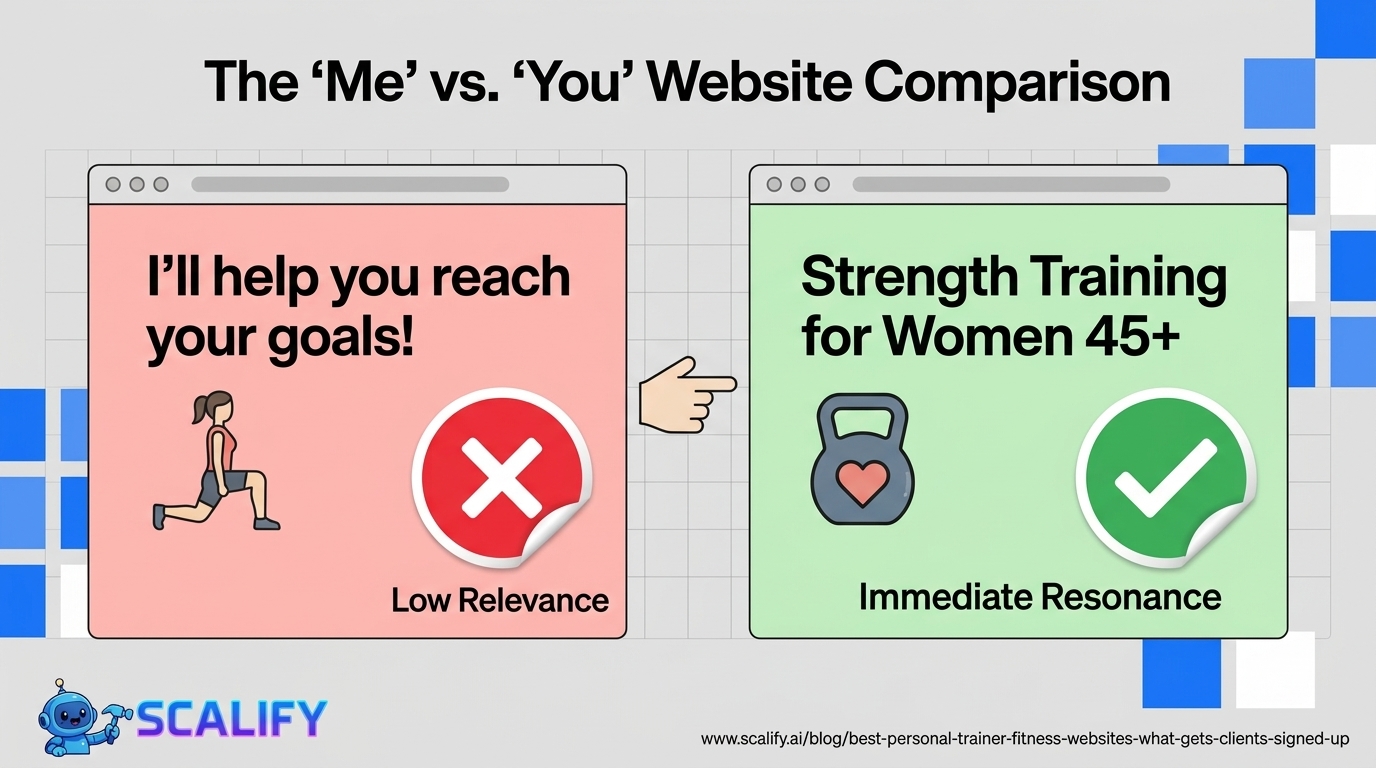
An outcome-oriented headline transforms the same information into a value proposition: "Custom Websites That Generate Leads and Launch in 10 Days." "SEO That Builds Organic Traffic You Own, Not Traffic You Rent." "Marketing Strategy That Turns Your Website Into Your Best Sales Rep."
The difference: the service-name headline tells visitors what you sell. The outcome headline tells visitors what they get. Visitors buy outcomes, not services. Lead with the outcome.
The Problem Statement: Validate Their Current Situation
Before describing your service, describe the situation your clients are in before they hire you. This does two things: it signals that you deeply understand their world (not just the service category), and it makes visitors feel seen — they read your description of their problem and think "yes, that's exactly where I am."
A strong problem statement is specific and honest:
"Most small businesses have websites that were built 3–5 years ago, when the business was different and the market was different. These sites look dated, rank poorly, and don't communicate the quality of the business they represent. Every month that site is live, prospects who find it are forming impressions that don't match the reality of what working with the business is actually like."
This isn't negative framing — it's accurate description of a real situation that clients know they're in. Hearing it articulated clearly by a potential service provider creates the "they understand me" response that's the beginning of trust.
The Solution Description: What You Actually Do
After establishing the problem, describe what you do to solve it — but from the client's perspective, not yours. The distinction matters:
From your perspective (feature-focused): "We conduct a discovery session, create wireframes, design high-fidelity mockups, develop in Webflow, implement CMS, conduct QA testing, and launch."
From the client's perspective (outcome-focused): "You end up with a professionally designed, fast-loading website that reflects your actual brand quality, can be updated by your team without a developer, and is set up to rank in search from day one. You never wonder what's happening — we keep you in the loop at every stage and move quickly so you're live in 10 business days, not 3 months."
Both descriptions convey the same activities. The first is a project plan. The second is a value proposition. Write service descriptions that answer "what does the client experience and receive?" not just "what do we do?"
The Process Section: How It Works
The process section reduces the anxiety of the unknown — the fear of committing to something where you don't know what you're signing up for. A clear, step-by-step description of how the engagement unfolds makes the service feel concrete and manageable rather than abstract and potentially overwhelming.
Keep process descriptions brief (3–6 steps for most services) and client-experience-focused. Not just what happens, but what the client's experience of each stage is:
"Step 1: Discovery Call (1 hour) — We learn about your business, goals, audience, and timeline. You walk away with a clear plan and know exactly what's coming. Step 2: Design (Days 1–5) — We create the full design, you review and provide feedback. No surprises — you see everything before it's built. Step 3: Build (Days 6–9) — Development and quality assurance. Step 4: Launch (Day 10) — Your site goes live, we handle all technical setup."
This process description answers the anxiety questions: what happens when, what's required from the client, when do they see things, when are they live.
What's Included: The Deliverables Section
Be specific about what clients receive. Vagueness about deliverables creates uncertainty that stalls buying decisions — clients want to know they're comparing apples to apples when evaluating your service against alternatives.
A clear deliverables section might include:
- Number of designed pages
- Mobile optimization included
- CMS setup for content updates
- SEO setup (title tags, meta descriptions, sitemap)
- Contact form with email notifications
- Google Analytics setup
- Two rounds of revisions included
- 30-day post-launch support
Being specific about what's included also implicitly communicates what's not included — which prevents scope misunderstandings that damage client relationships after engagement begins.
Evidence: Proof You Can Deliver
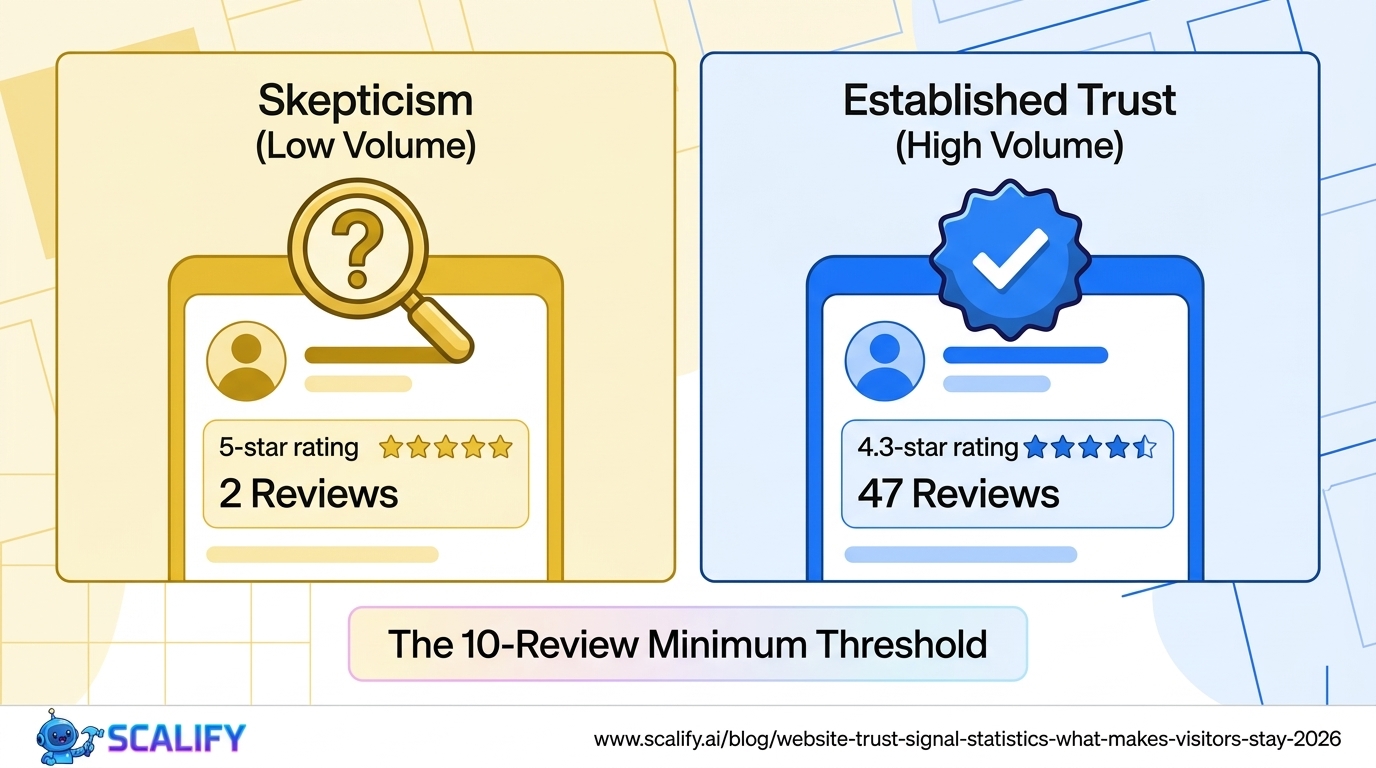
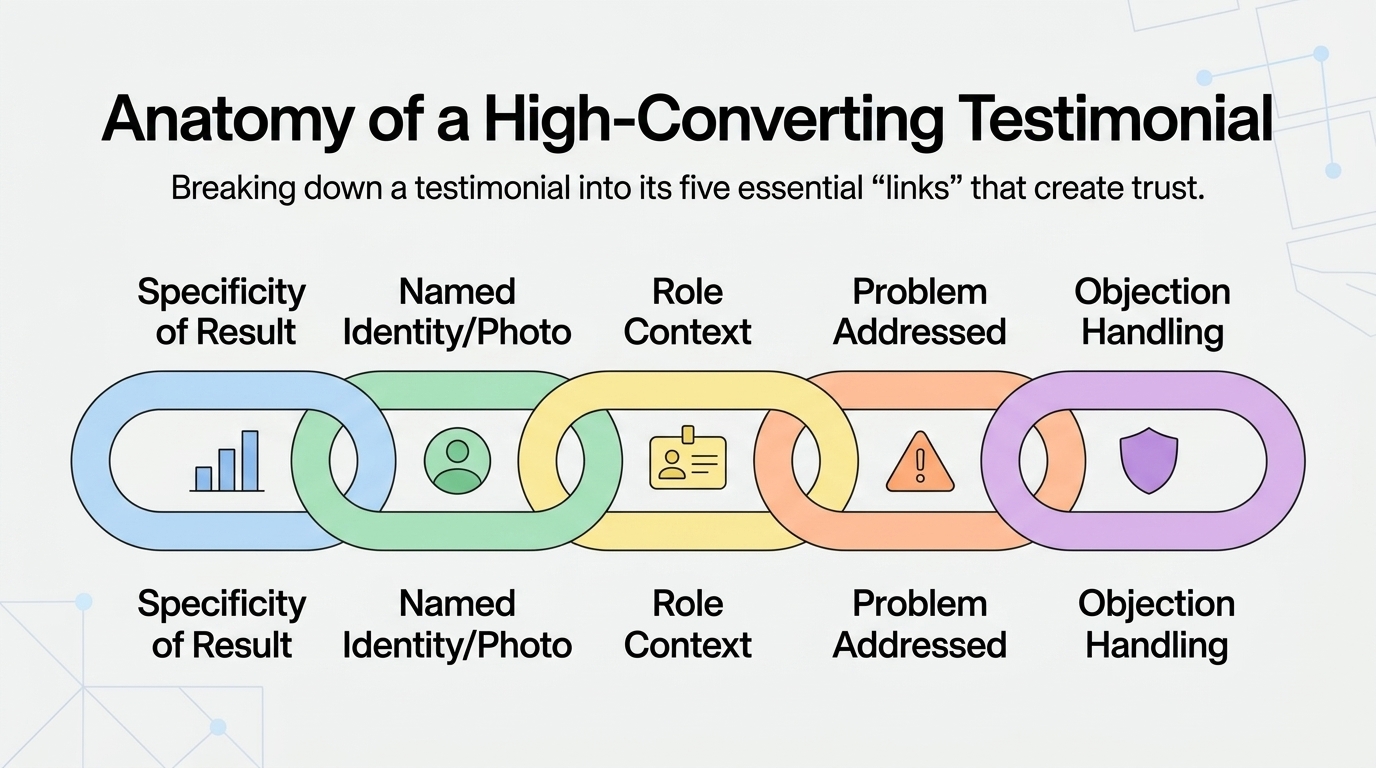
The services page is where relevant social proof lives — not generic testimonials from the homepage, but evidence specifically related to the outcomes you described in this service description.
If you've described a service that generates leads and launches in 10 days, the social proof should show exactly that: "Our website was live in 9 days and we had 4 inquiries in the first week — Sarah Chen, Apex Coaching" is directly relevant evidence for that specific claim.
Case study snippets — brief summaries with links to full case studies — are particularly powerful on services pages because they show the full transformation: here was the situation before, here's what we did, here's what changed after. This narrative format helps prospects see themselves in the story and mentally rehearse the outcome they'd receive.
The Objection-Handling Section
Every service has predictable objections that prevent otherwise-interested prospects from taking action. Addressing them directly on the services page neutralizes them before they can silently kill a conversion.
Common service business objections:
Price/value: "Is this worth the investment?" — Address by quantifying the value of the outcome. "A website that generates 5 additional leads per month at your average close rate and deal value returns the investment in [timeframe]." Or show case study evidence of ROI.
Timeline: "Is this really as fast as you say?" — Address with specific examples and the mechanics that make it possible.
Risk: "What if I'm not happy with the result?" — Guarantees, revision policies, and cancellation terms address this directly. "If you're not satisfied with the design after two rounds of revisions, we'll refund your deposit."
Relevance: "Does this work for my type of business?" — List the specific types of clients you serve best and the situations where this service is most appropriate.
Pricing (or Honest Pricing Context)
The pricing debate in service businesses: show it or don't? Arguments for showing pricing: it filters unqualified prospects before they contact you, it builds trust through transparency, it prevents price shock on sales calls, and visitors who are serious about buying want to see it before investing time in a conversation.
Arguments against: service pricing is highly variable based on scope, and showing a range might either anchor expectations too high (losing clients who'd be appropriate at a lower scope) or too low (attracting clients who'd want more than your floor price).
The middle ground that works for most service businesses: show starting prices or price ranges with clear context about what affects the range. "Custom websites from $5,000 — final pricing depends on page count, custom functionality, and content requirements. Most projects fall in the $6,000–$12,000 range." This is transparent without locking into a single number, and it anchors prospects in a realistic range before they contact you.
The CTA: One Clear Next Step
The services page CTA should be specific to the service and the stage the visitor is likely in after reading a detailed service description. They've been through your problem statement, solution, process, deliverables, evidence, and objection handling. They're as informed as they're going to get from a page. What should they do now?
Options by service type:
- Service businesses: "Get a Free Quote" or "Book a Discovery Call"
- Project-based work: "Start Your Project" or "Request a Proposal"
- Consultative services: "Schedule a Free Consultation"
- High-ticket services: "Book a Strategy Session" (acknowledging the investment level)
The CTA should be prominent — at minimum at the end of the page, ideally also mid-page for visitors who are ready before they finish reading everything. Don't make a visitor who's already decided to reach out scroll back to the top to find the contact button.
One Services Page vs. Individual Service Pages
The decision of whether to have one services overview page or individual pages for each service depends on the number and diversity of services offered and the SEO strategy:
Single services page: Appropriate for businesses with one primary service or a tightly related set of services that serve the same audience. Simpler site architecture, all service equity on one URL.
Individual service pages: Appropriate for businesses with multiple distinct services that might serve different audiences or require different decision-making. Each page can be optimized for specific keywords (e.g., "custom web design services" and "website maintenance services" as separate pages with separate keyword targets). The depth of content possible on individual pages allows better targeting of specific search intent.
SEO argument for individual pages: a dedicated page for "e-commerce website design" can target that specific keyword with full content depth — something that's difficult when e-commerce design is one of five services on a single services page. For any business investing in content marketing and SEO, individual service pages are almost always the better choice.
Common Services Page Mistakes
Feature lists without benefits: "Includes responsive design, CMS integration, SEO setup, Google Analytics, and 2 revision rounds" — these features mean something to people who already know what they are. For visitors who don't know what "responsive design" or "CMS integration" means, translate: "works perfectly on phones and tablets," "you can update your own content without hiring a developer."
No evidence: Claims without proof are just claims. Testimonials, case studies, and specific results on the services page transform assertions into credible arguments.
Writing about the service instead of the client: "We use a rigorous discovery process to understand client needs" is self-referential. "You'll leave the discovery session with a clear plan and confidence about exactly what you're getting and when" is client-centered. Write from the visitor's perspective whenever possible.
Burying the CTA: A services page with a contact link only in the footer forces interested visitors to hunt for the next step. Include clear CTAs mid-page and end-of-page at minimum.
The Bottom Line
Your services page is where the substantive buying decision happens — where visitors move from "this might be relevant" to "this is what I need and I trust them to do it." A services page that answers the full set of buying questions — relevance, capability, clarity, value, risk — with specificity, evidence, and human voice converts at dramatically higher rates than one that merely describes a service category.
Lead with outcomes, not service names. Describe the client experience, not just the agency process. Include specific evidence. Address objections directly. Make the next step obvious and frictionless.
At Scalify, services page design is one of our specialties — we know that the gap between "nice website" and "website that generates clients" is often found right here, in how the services are presented and how the decision to reach out is made easy.


.jpeg)
.jpeg)

78 SW 7th St, Miami, FL 33130