


What Is a Website Tagline and How Do You Write One That Sticks?
By Josh Ternyak

April 1, 2026
Comprehensive 2026 guide: What Is a Website Tagline and How Do You Write One That Sticks?
The One Sentence That Does More Work Than Everything Else
Apple has "Think Different." Nike has "Just Do It." FedEx had "When it absolutely, positively has to be there overnight." These taglines aren't just slogans — they're compressed value propositions, brand promises, and personality statements simultaneously. They communicate everything about what these companies stand for and why they're different in three to seven words.
Your business probably doesn't need a tagline with the cultural weight of "Just Do It." But it does need a concise articulation of what you do, who you serve, and what makes you different — a phrase that a visitor can read on your website in two seconds and understand exactly why they're in the right place.
For small and medium businesses, the website tagline is the most important single sentence on the homepage. It appears beneath your logo, in your hero section, in your email signature, in your social media bio, and everywhere your brand is briefly summarized. Getting it right produces a compounding benefit across every touchpoint where it appears. Getting it wrong produces a bland, forgettable non-statement that prospective clients ignore.
What a Website Tagline Is
A tagline is a brief phrase or sentence that captures the essence of a brand's value proposition, positioning, or personality. For websites, it most often appears:
- Adjacent to or beneath the logo in the header
- As the subheadline beneath the hero headline on the homepage
- In the homepage's meta description or title tag
- In social media profiles and bio sections
- In email signatures
- In advertising headlines
The tagline differs from the homepage headline in that it's typically more evergreen (doesn't change with campaigns or promotions), more brand-defining (communicates personality and positioning, not just current offers), and more compressed (typically under 10 words, often 5–7).
Some businesses blur the line between tagline and homepage headline — their primary website headline IS their tagline. Others use a distinct tagline separate from the campaign-specific homepage headline. Either approach can work; what matters is that somewhere in the visitor's first impression, there's a concise, compelling statement that communicates the brand's core value.
What Makes a Tagline Work
Specificity Over Generality
The taglines that work are specific. The taglines that fail are generic.
Generic: "Excellence in Web Design" — could be applied to any web design company.
Specific: "Custom Websites. 10 Days. No Agency Drama." — immediately communicates what's different.
Generic: "Your Partner in Digital Success" — says nothing, is forgotten in seconds.
Specific: "The Restaurant Website Agency" — immediately identifies the niche, highly memorable for the right audience.
Specificity creates memorability and differentiation simultaneously. A generic claim is indistinguishable from competitors making the same generic claim. A specific claim is yours.
Communicating Difference, Not Just Description
The best taglines don't just say what you do — they say what makes you different from everyone else who does what you do. The positioning element.
"We build websites" is descriptive. "Custom websites launched in 10 business days" is descriptive AND differentiating — the 10-day timeline is a specific, meaningful differentiator from the standard 3-month agency timeline.
The question every tagline should answer: what is the single most compelling reason a prospect should choose us over alternatives? The answer to that question is your tagline.
Speaking to the Audience's Want, Not Your Capability
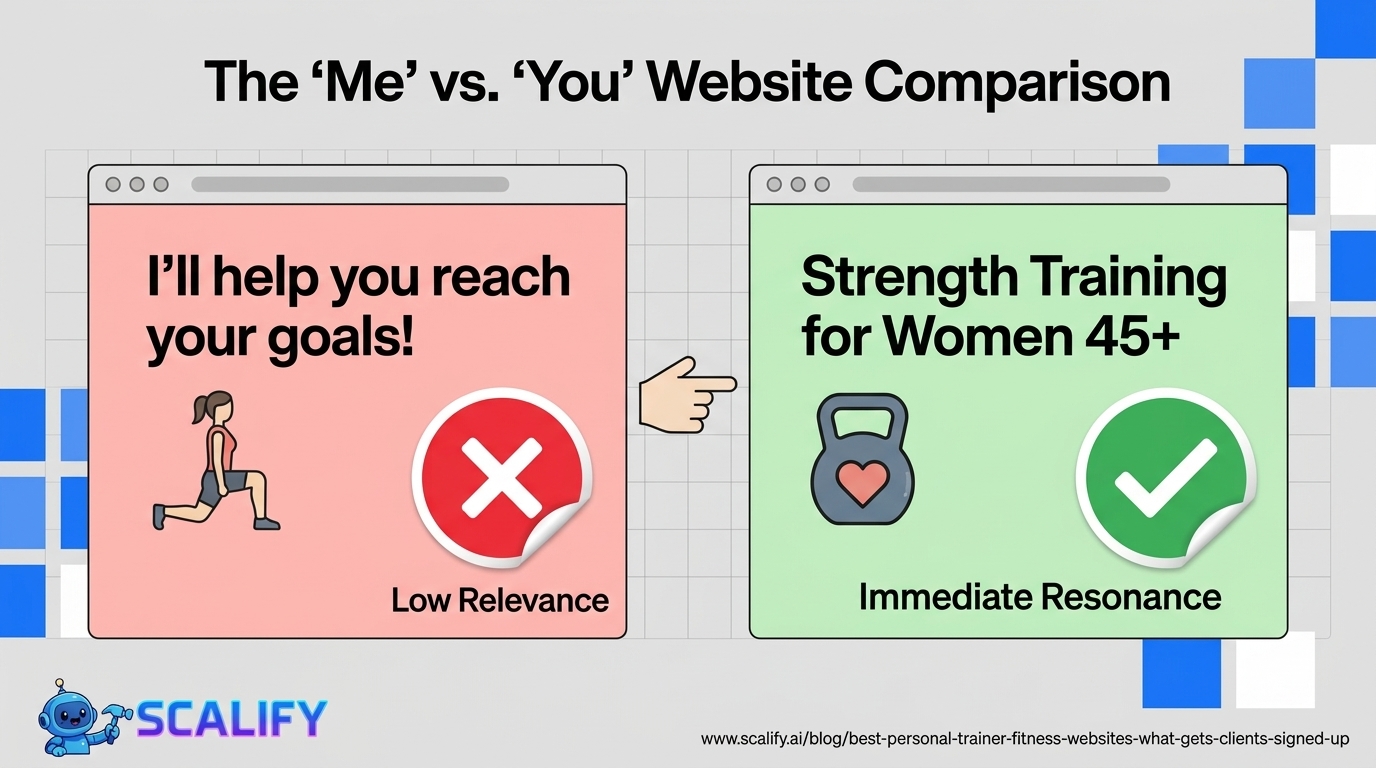
Amateur taglines focus on the company. Expert taglines focus on the customer's desired outcome.
Company-focused: "Award-Winning Web Design Professionals" — says something about you.
Customer-focused: "Websites That Win You More Clients" — says something about what the customer gets.
The visitor reading your tagline is asking "what's in it for me?" A tagline that answers that question directly outperforms one that describes your credentials.
Memorable Through Rhythm, Alliteration, or Concise Impact
Memorable taglines have some quality that makes them stick — they're not just logically correct, they're sonically or rhythmically satisfying. This can come from:
Alliteration: Words starting with the same letter or sound. "Faster. Fitter. Fearless." sticks better than "Quicker. Better. Braver."
Rhyme or rhythm: "Built right. Built fast." has a rhythmic quality that "Properly constructed and efficiently delivered" doesn't.
Parallel structure: "Simple pricing. Complex results." uses contrast and parallel structure to create tension and memorability.
Brevity: The shorter, the more memorable. Every unnecessary word makes a tagline less sticky.
Tagline Formulas That Work for Web Businesses
The Outcome + Mechanism Formula
Structure: [Outcome you provide] + [How or who or when]
Examples:
- "Custom Websites That Generate Leads, Launched in 10 Days"
- "More Clients From Your Website, Guaranteed"
- "Professional Websites for Service Businesses"
The Differentiator Formula
Structure: [What everyone does] + [What you do differently]
Examples:
- "Web Design Without the Wait" (others take months; we're fast)
- "Agency Quality, Freelancer Speed" (combines two usually-separate benefits)
- "Your Website Done. In 10 Days. For Real." (addresses skepticism directly)
The Audience-Specific Formula
Structure: [Audience descriptor] + [Outcome]
Examples:
- "The Web Design Agency for Service Businesses"
- "Restaurant Websites That Fill Tables"
- "For Small Businesses That Outgrow Their Website"
The Problem-Solution Formula
Structure: [Problem addressed] → [Solution delivered]
Examples:
- "Stop Losing Clients to Your Competitor's Website"
- "From Embarrassing to Excellent. In 10 Days."
- "Your Business Has Grown. Your Website Should Too."
The Three-Word Power Formula
Structure: Three parallel words or phrases, often with tension or contrast
Examples:
- "Fast. Professional. Profitable."
- "Custom. Fast. Yours."
- "Built. Launched. Growing."
The Tagline Writing Process
Step 1: Define the Single Most Compelling Truth
What is the one thing about your business that, if a prospect genuinely believed it, would make them choose you over everyone else? This is your competitive advantage distilled to its core. For Scalify: "custom professional websites in 10 business days" — the speed-to-quality ratio is the compelling truth.
Write this truth as a simple declarative sentence, not a marketing phrase. "We build custom websites in 10 days" is the truth. The tagline is how you make that truth memorable and emotionally resonant.
Step 2: Write 20+ Variations
Generate a large volume of options before evaluating any of them. Constraints (word count, alliteration, rhythm) produce creativity. Set a timer for 30 minutes and write every version you can think of — bad ones, obvious ones, experimental ones. The goal is volume; you'll filter later.
Try each formula type above. Try the same core idea expressed in different words. Try extremely long versions and extremely short ones. Try ones that lead with the outcome, ones that lead with the differentiator, ones that lead with the audience.
Step 3: Filter for the Best 5
Apply the quality criteria: Is it specific? Does it communicate a differentiator? Is it customer-focused (outcome) vs. company-focused (credential)? Is it short enough to remember? Does it pass the "could my competitor say this too?" test — if yes, it's too generic.
Filter to 5 finalists.
Step 4: Test with Real People
Share the top 5 options with people who represent your target audience. Ask: "Which of these best communicates why you'd choose this company over alternatives? Which is most memorable? Which makes the most sense?"
A five-second test is particularly useful: show each tagline for five seconds, then ask what the person remembers and what they understood. The tagline that's most accurately recalled and understood after five seconds wins.
Step 5: Test in Context
The winner on paper doesn't always win in context. Place each tagline finalist in your actual website header design and homepage hero. Some taglines look great in isolation and feel wrong on the page. Some that seemed ordinary in a list look excellent in context. Visual testing on the actual page resolves this.
Common Tagline Mistakes
"We are committed to excellence": A complete non-statement. Every company that has ever existed claims commitment to excellence. This communicates zero differentiation.
Industry jargon that clients don't use: "Driving digital transformation through omnichannel web experiences" sounds impressive to people who already understand these terms and confusing to everyone else. Write in the language your clients use, not the language your industry uses.
Feature rather than benefit focus: "Responsive design, SEO-optimized, custom development" describes features. "Websites that work on every device and get found on Google" describes benefits. Same features, completely different customer focus.
Too long: A tagline that needs to be read twice isn't memorable. If you can't say it naturally in a single breath, it's too long. Aim for 7 words or fewer.
Trying to say everything: A tagline that covers your speed AND your quality AND your process AND your price AND your guarantee is saying nothing clearly. Pick the single most compelling thing.
When to Update Your Tagline
A tagline isn't permanent. Consider updating when:
- Your positioning has shifted significantly (new target audience, new service focus)
- Your differentiator has changed (you've added or lost what made you unique)
- Market conditions have changed (your old differentiator is now table stakes)
- Testing reveals consistently low recognition or resonance with target audience
- The business has significantly matured or grown beyond what the original tagline represents
Don't update a tagline that's working just for novelty. But don't preserve a tagline that no longer accurately represents your competitive position out of familiarity. Taglines serve the business; the business doesn't serve the tagline.
The Bottom Line
A great tagline is specific, differentiating, outcome-focused, and memorable. It communicates your core value proposition in the time it takes to scan a logo. It answers "why you?" before the visitor has read a paragraph of copy. For service businesses competing in crowded markets, a distinctive, memorable tagline is one of the highest-leverage branding investments available — it works across every touchpoint, compounding in recognition value every time a prospect encounters it.
Write 20+ options, filter to the best 5, test with real people, place in context. Iterate until you have something that's specific, memorable, and true to what actually makes your business the right choice for the clients you want.
At Scalify, brand positioning and tagline work is part of how we approach every website project — the words matter as much as the design, and the tagline is where the words do the most concentrated work.
Building a Sustainable Digital Marketing System
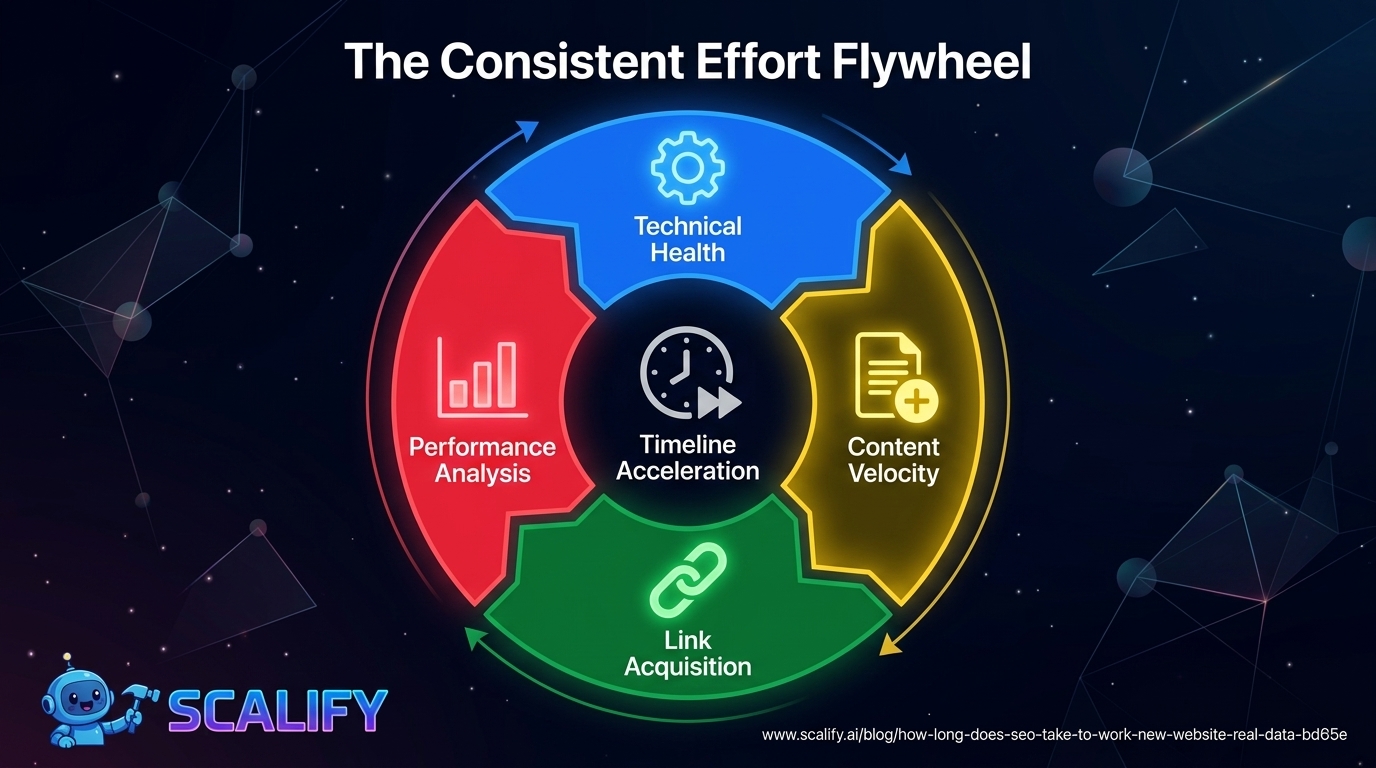
The most effective websites are not built once and left static — they're living systems that improve continuously as the business learns what resonates with its audience, what converts visitors, and what generates organic traffic. Building this improvement discipline requires three things: measurement infrastructure that makes performance visible (Google Analytics 4, Search Console, Core Web Vitals monitoring), a regular cadence of improvement work (monthly or quarterly audits and optimization cycles), and the willingness to make changes based on what the data shows rather than aesthetic preferences or past decisions.
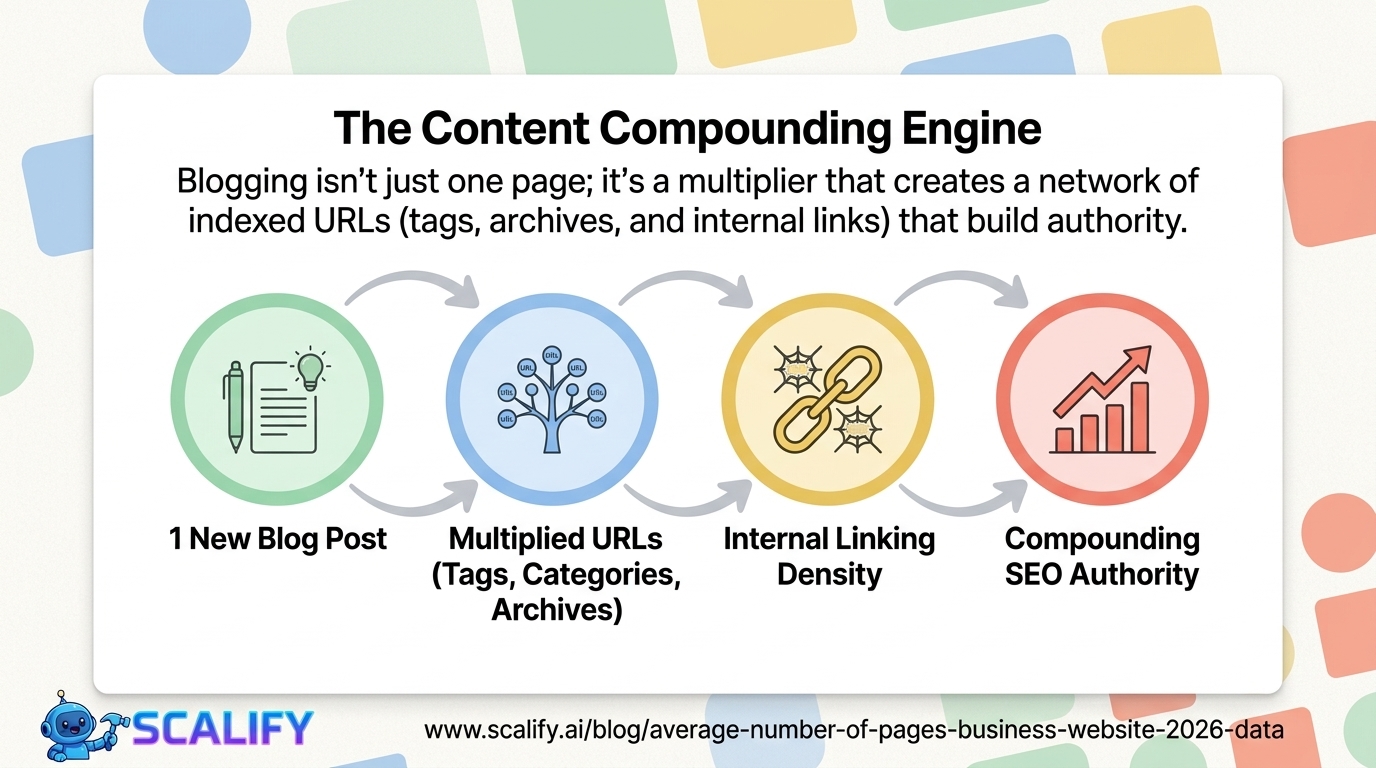
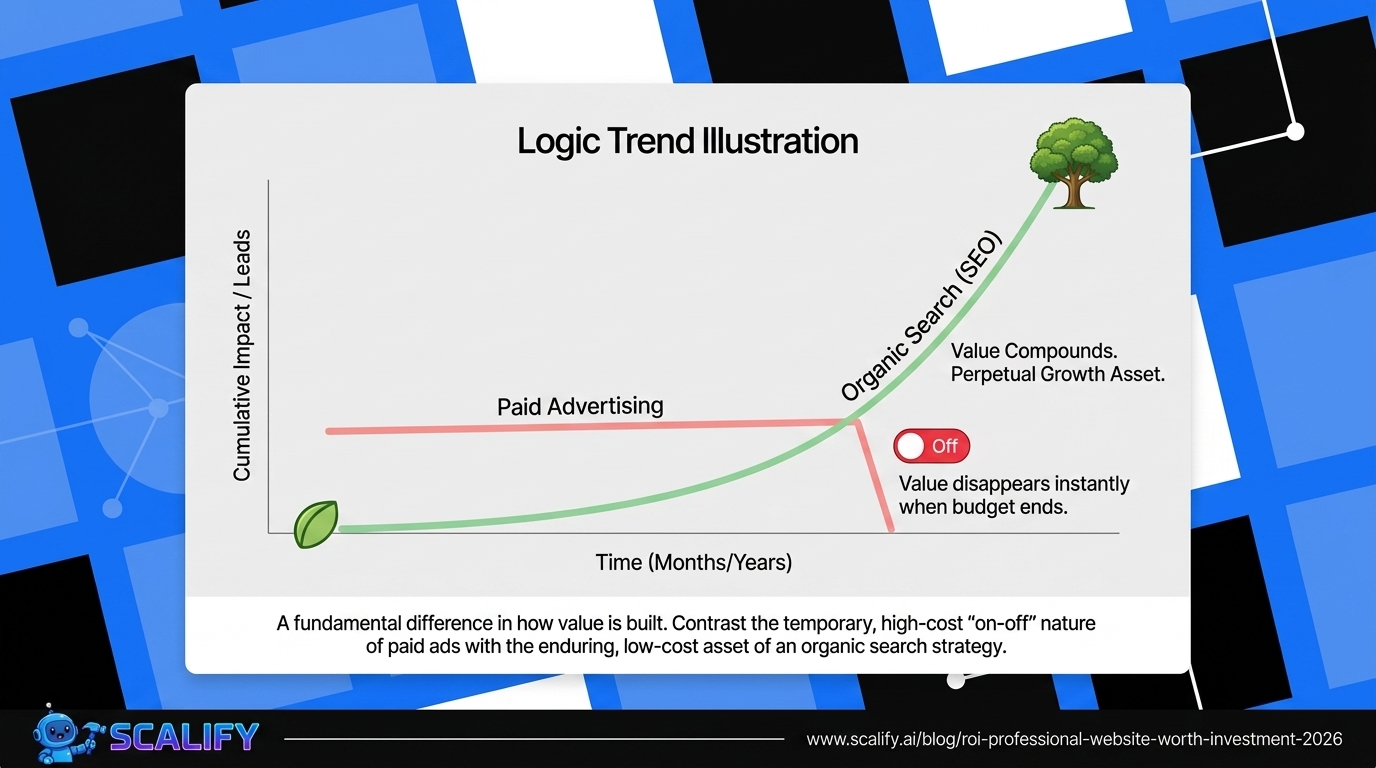
The businesses that achieve the strongest digital marketing outcomes over 3–5 years are consistently those that treat their website as a compounding investment — not a cost that was incurred and is now sunk. Each improvement builds on previous ones: content that ranks brings organic traffic that generates leads that fund more content investment. Backlinks earned improve rankings for future content. Performance improvements make every marketing dollar more efficient by converting more of the traffic those campaigns generate. This compounding structure means the businesses that start investing systematically earliest build the most durable competitive advantages — and those that defer the investment face increasingly expensive catch-up costs as competitors accumulate authority that takes time to replicate.
The practical starting point for any business that hasn't yet built this system: set up Google Analytics 4 and Search Console if not already in place, establish baseline metrics for organic traffic, conversion rate, and Core Web Vitals, and identify the single highest-impact improvement available based on those metrics. Implement that improvement, measure the result after 30 days, and plan the next improvement. This iterative discipline, maintained consistently, produces the compounding returns that transform a business's digital marketing from a cost center into one of its most valuable revenue-generating assets.
At Scalify, our websites are built with analytics, performance optimization, and SEO foundations that give every business the starting point for this compounding improvement discipline — delivered professionally in 10 business days.


.jpeg)
.jpeg)

78 SW 7th St, Miami, FL 33130