

What Is a Framework in Web Development?
By Josh Ternyak

April 1, 2026
Frameworks provide pre-built foundations that make developers 2-3x more productive. This comprehensive guide covers front-end, back-end, and full-stack framework types, the most popular frameworks in 2026 (React, Next.js, Vue, Angular, Django, FastAPI), frameworks vs libraries distinction, framework selection by project type, productivity benefits, framework versioning challenges, the complete React ecosystem table, and a month-by-month learning path for new developers.
What Is a Framework in Web Development?
A framework in web development is a pre-built collection of code, conventions, and tools that provides a structured foundation for building web applications. Rather than writing every piece of functionality from scratch — routing, authentication, database connections, form handling, testing infrastructure — a framework provides these as pre-built components with established patterns for how they should work together. Developers using a framework start with a working structure and build their specific application logic within it, rather than building the structure itself. The productivity gain is enormous: frameworks eliminate months of foundational work on every project and let developers focus on what's unique about the application they're building.
Key Framework Statistics
- React is used by 40.6% of professional web developers — the most widely used JavaScript framework (Stack Overflow 2024)
- Next.js is used by 17.9% of developers and is the most wanted framework for the fifth consecutive year
- Developers using frameworks are 2–3x more productive than those writing equivalent functionality without frameworks
- The top 5 most-used frameworks account for over 75% of professional web development work
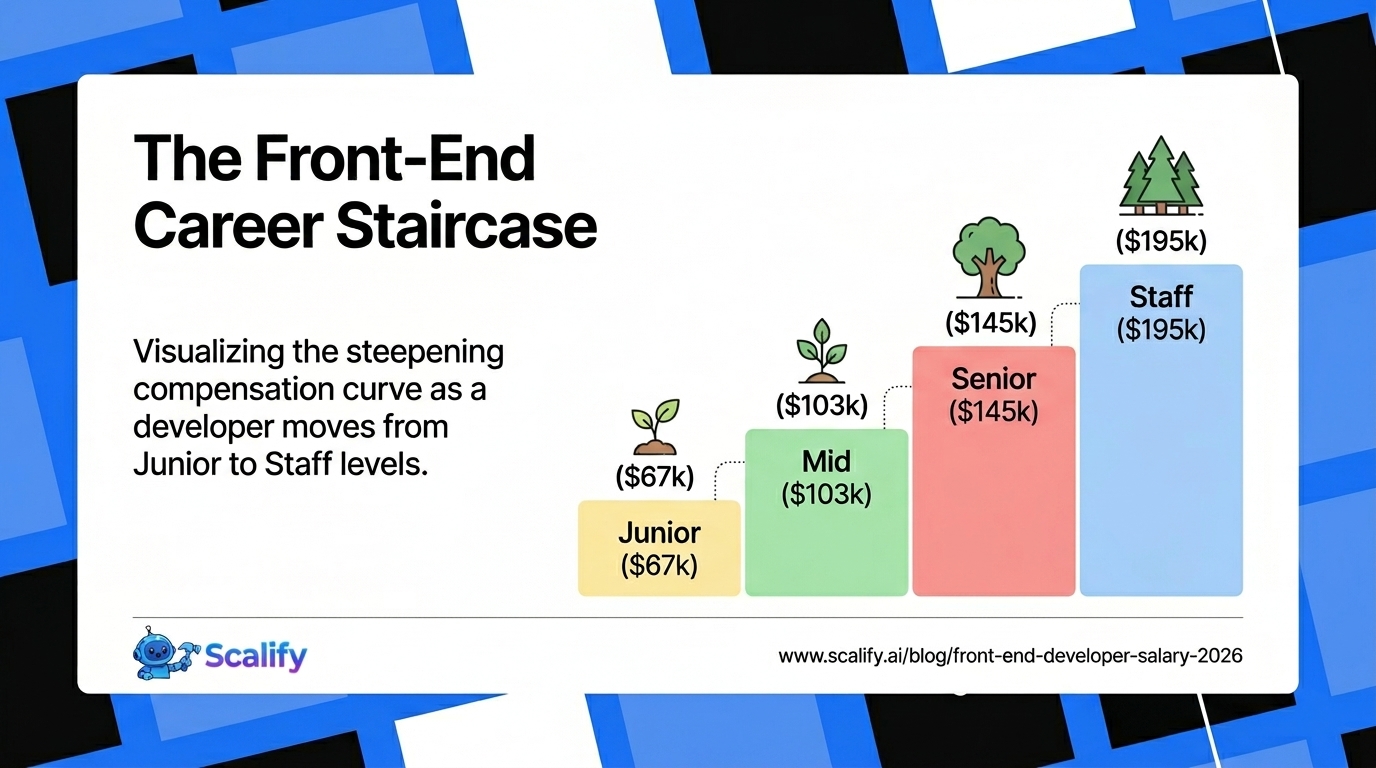
- React developers earn a median of $145,000 — the highest of any JavaScript framework
- Vue.js is the most loved framework by developers who use it, despite lower market share than React
- Angular is dominant in enterprise environments — particularly financial services and large corporations
- The rise of meta-frameworks (Next.js, Nuxt, SvelteKit) reflects the industry shift toward server-side rendering as default
Front-End vs. Back-End vs. Full-Stack Frameworks
| Framework Type | What It Handles | Examples | Language |
|---|---|---|---|
| Front-End (UI) | What users see and interact with — DOM, components, state | React, Vue, Angular, Svelte | JavaScript/TypeScript |
| Back-End (Server) | Business logic, database operations, API endpoints, authentication | Express, Django, FastAPI, Rails, Laravel | JS/Python/Ruby/PHP |
| Full-Stack / Meta-Framework | Both client and server rendering; routing; data fetching; deployment | Next.js, Nuxt, SvelteKit, Remix | JavaScript/TypeScript |
| CSS Framework | Visual styling, layout, design system utilities | Tailwind CSS, Bootstrap, Bulma | CSS |
| Testing Framework | Unit testing, integration testing, end-to-end testing | Jest, Vitest, Playwright, Cypress | JavaScript/TypeScript |
The Most Popular Frameworks in 2026
React
React (created by Meta/Facebook) is the dominant front-end library for building user interfaces. It's technically a library rather than a full framework — providing the component model and state management but requiring additional tools for routing, data fetching, and server rendering. React's component-based architecture allows building complex UIs from isolated, reusable pieces. Its virtual DOM and reconciliation algorithm make efficient updates to large, complex interfaces. The ecosystem around React — Next.js for full-stack, Zustand/Redux for state, TanStack Query for data fetching — creates a comprehensive development environment when combined.
Next.js
Next.js (built on React, created by Vercel) is a full-stack meta-framework that adds server-side rendering, static site generation, API routes, and image/font optimization to React. It's become the default choice for production React applications because it solves the major limitations of client-only React: SEO, performance, and the need for a separate back-end service. The App Router (introduced in Next.js 13) uses React Server Components to render on the server by default — dramatically improving performance and SEO without sacrificing interactivity.
Vue.js and Nuxt
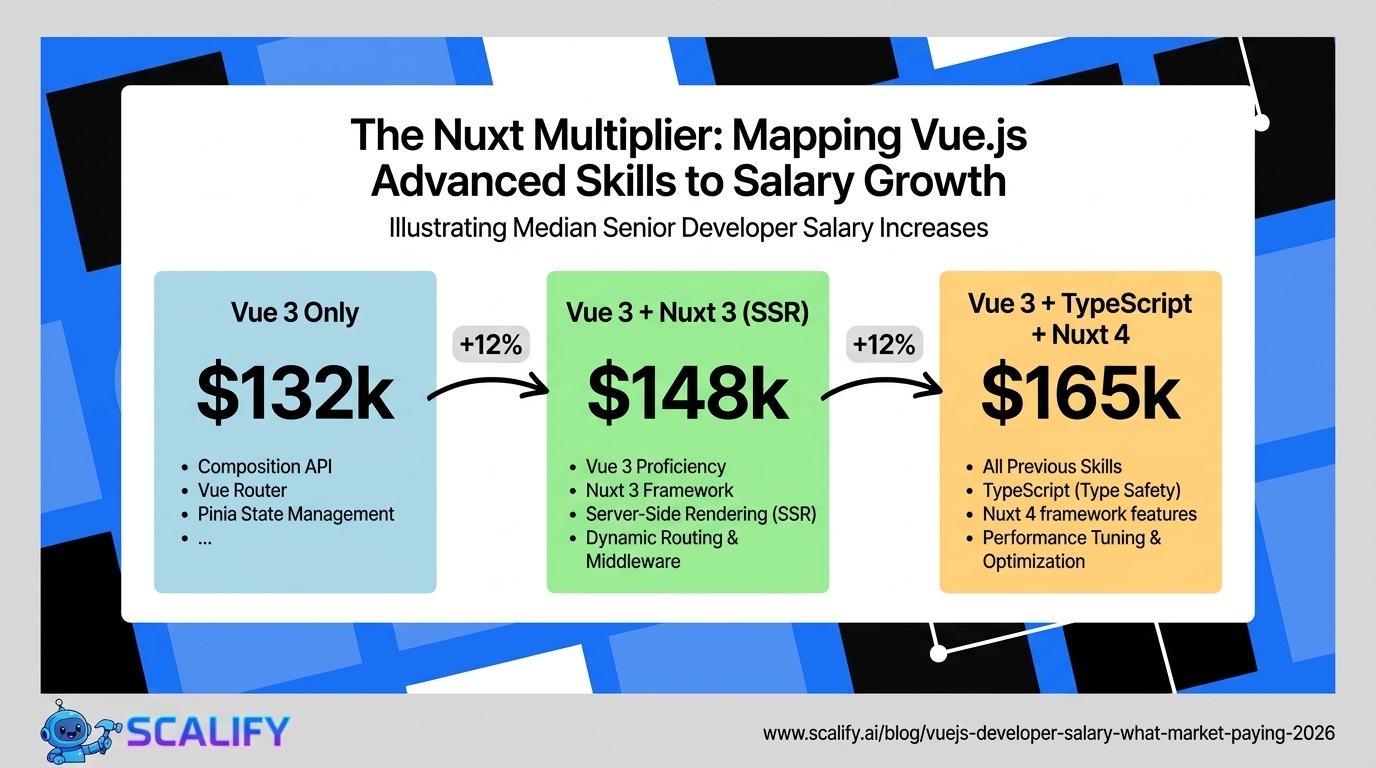
Vue.js is a progressive front-end framework known for its gentle learning curve and excellent documentation. Vue's Options API (the original Vue syntax) and Composition API (modern Vue 3 approach) provide flexibility in how components are structured. Nuxt.js is Vue's equivalent of Next.js — a full-stack meta-framework that adds server rendering, file-based routing, and auto-imports to Vue applications. Vue is particularly popular in Asia and in smaller teams building applications where the lower complexity ceiling compared to React is an advantage.
Angular
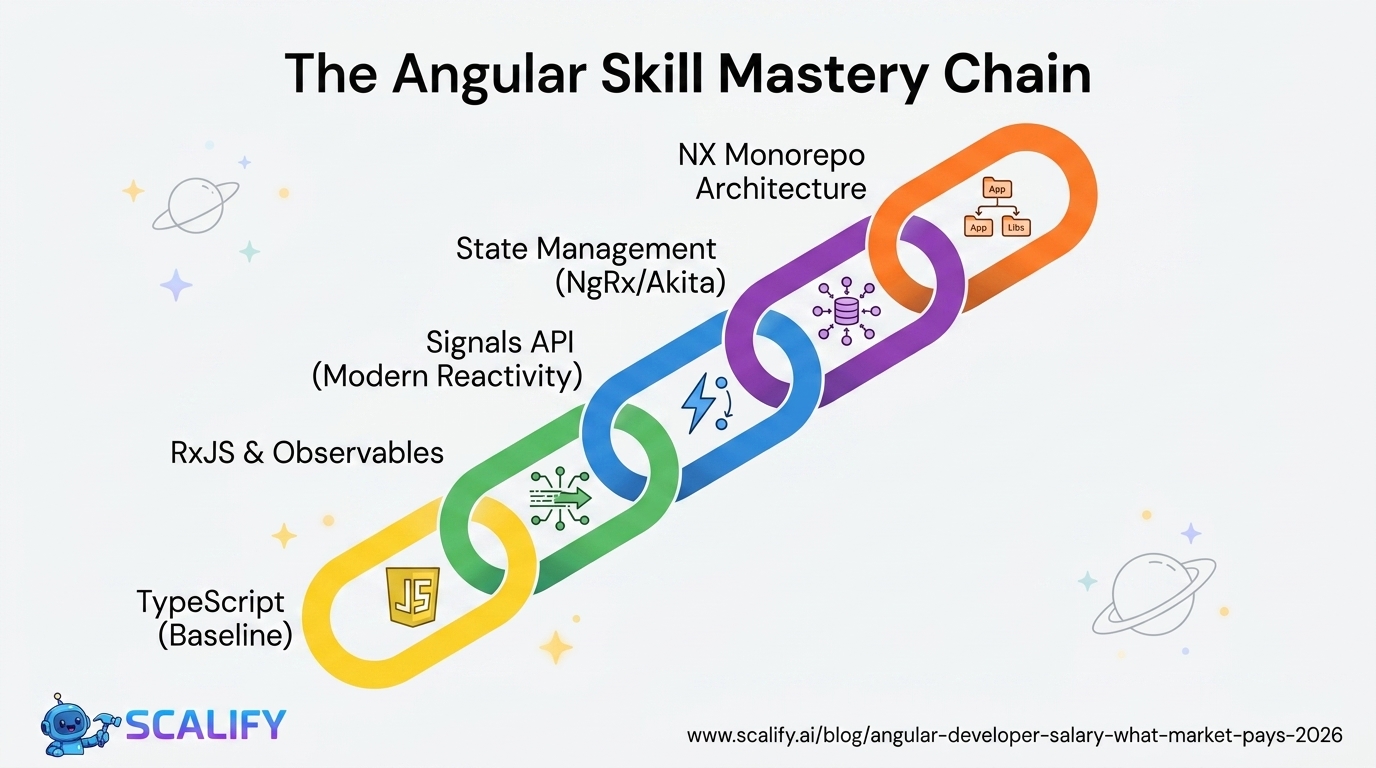
Angular (created by Google) is a complete, opinionated framework for building enterprise-grade web applications. Unlike React (library) or Vue (progressive framework), Angular is a full framework that prescribes how every layer of an application should be structured — including TypeScript (required, not optional), dependency injection, form handling, HTTP client, and testing. Angular's strong conventions and built-in everything approach makes it the framework of choice for large teams building complex enterprise applications, even though it has more complexity than React or Vue for simpler use cases.
Django and FastAPI (Python Back-End)
Django is Python's most comprehensive back-end framework — a "batteries included" approach that provides everything needed for a web application out of the box: ORM (database abstraction), authentication, admin interface, form handling, and URL routing. FastAPI is the modern alternative — a high-performance Python framework for building APIs that uses Python type hints for automatic data validation and documentation generation. FastAPI has become the default for AI integration back-ends because Python's ML ecosystem (NumPy, PyTorch, LangChain) integrates naturally with FastAPI for serving AI-powered endpoints.
Frameworks vs. Libraries: The Key Distinction
The terms "framework" and "library" are often used interchangeably but have an important technical distinction: with a library, your code calls the library; with a framework, the framework calls your code. This is the "Hollywood Principle" — "don't call us, we'll call you." In a framework, you fill in the specific business logic within the structure the framework provides; the framework orchestrates when and how your code runs. React is technically a library (you compose components and React handles rendering); Angular is a framework (Angular's framework calls your code at defined lifecycle moments). In practice, "framework" is used loosely to describe both.
Choosing the Right Framework
| Project Type | Recommended Stack | Reason |
|---|---|---|
| Content / marketing website | Next.js or Webflow | SEO critical; static generation; CMS integration |
| E-commerce store | Next.js + Shopify or React + custom back-end | Performance + SEO + payment processing |
| SaaS web application | React/Next.js (front) + Node.js or Python (back) | Full-stack with complex UI and API needs |
| API-only service | FastAPI (Python) or Express/Hono (Node.js) | High performance; minimal overhead |
| Enterprise application | Angular + Java/C# or Next.js + Node.js | Strong conventions; team scalability |
| Simple prototype | Vue.js or vanilla React | Lower complexity; faster initial build |
Why Frameworks Matter for Developer Productivity
The productivity difference between building with and without a framework is most visible in the features that every application needs but that are not unique to any application: authentication, database connections, form validation, file uploads, email sending, and deployment configuration. Without a framework, each developer solves these problems from scratch on each project — reinventing, debugging, and maintaining code that has already been written, debugged, and maintained by framework authors and communities for years. With a framework, these problems are solved once and inherited by every project that uses the framework.
The trade-off is the "framework tax" — time spent learning the framework's conventions, working within its constraints, and updating the framework when breaking changes are introduced. This tax is almost always worth paying for any non-trivial application: the productivity of building within established patterns dramatically outweighs the learning investment for developers who will work on multiple projects in that framework over time.
The Bottom Line
Frameworks are the foundational tools of professional web development — providing structure, conventions, and pre-built solutions that eliminate the need to solve common problems from scratch on every project. React and Next.js dominate the modern JavaScript front-end; Django and FastAPI lead Python back-ends; Angular serves enterprise environments. The right framework depends on your project type, team experience, and specific requirements — there's no universal "best framework," only frameworks that are better or worse fits for specific use cases. For most new web projects in 2026, the React ecosystem (React + Next.js + TypeScript + Tailwind) is the default starting point — used by the largest developer community, with the richest ecosystem of compatible tools and libraries.
At Scalify, we build websites on proven frameworks — Webflow for visual excellence and Next.js for complex applications — delivering technically excellent results in 10 business days.
Top 5 Sources
- Stack Overflow Developer Survey — Framework adoption rates and developer preferences
- State of JavaScript Survey — Annual framework usage and satisfaction data
- React Official Documentation
- Next.js Official Documentation
- MDN Web Docs — JavaScript Frameworks Guide
Framework Versioning and Updates: Managing the Long Term
One of the most underestimated challenges of framework-based development is keeping frameworks updated over time. Major frameworks release significant version updates that introduce new patterns, deprecate old ones, and occasionally require significant refactoring of existing code. React 18 introduced concurrent features that changed how rendering works. Next.js 13 introduced the App Router that changed how pages and layouts are structured. Vue 3 introduced the Composition API that's a significant shift from Options API. Angular's major versions have historically required significant code changes.
The decision to update frameworks involves balancing: security patches (always update promptly), new feature access (update on your timeline), and migration cost (proportional to how much the breaking change affects your codebase). Projects that stay on significantly outdated framework versions accumulate technical debt — losing access to security patches, ecosystem tooling that requires newer versions, and the developer productivity improvements in newer releases. The sustainable approach: stay within 1–2 major versions of the current release, schedule framework upgrades as planned work rather than emergency scrambles, and treat the migration cost as part of the total cost of ownership when choosing frameworks with aggressive major version release cadences.
The Framework Ecosystem: What's Connected
Professional-grade framework usage rarely involves the framework alone — it involves an ecosystem of tools that work together. The React ecosystem as an example of what a complete framework toolchain looks like:
| Layer | Purpose | Common Choice |
|---|---|---|
| Meta-framework | Server rendering, routing, deployment | Next.js |
| Language | Type safety, developer experience | TypeScript |
| Styling | CSS utilities and design system | Tailwind CSS |
| Component library | Pre-built accessible components | Shadcn/ui or Radix UI |
| Data fetching | Server state, caching, synchronization | TanStack Query |
| Client state | UI state management | Zustand or Jotai |
| Forms | Form state and validation | React Hook Form + Zod |
| Database ORM | Type-safe database queries | Prisma or Drizzle |
| Authentication | User sessions and OAuth | Auth.js (NextAuth) |
| Testing | Unit and integration tests | Vitest + Testing Library |
| E2E testing | User flow testing | Playwright |
| Deployment | Hosting and CI/CD | Vercel or Railway |
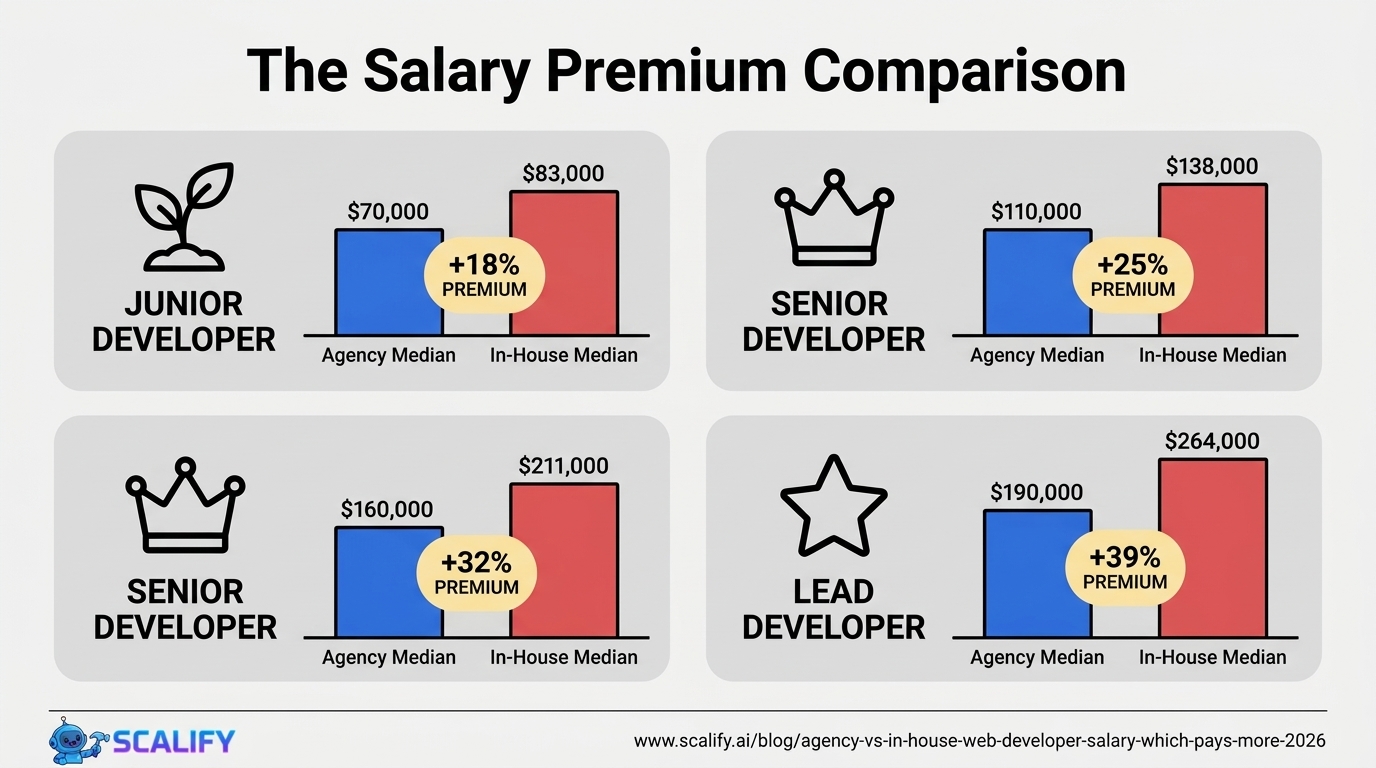
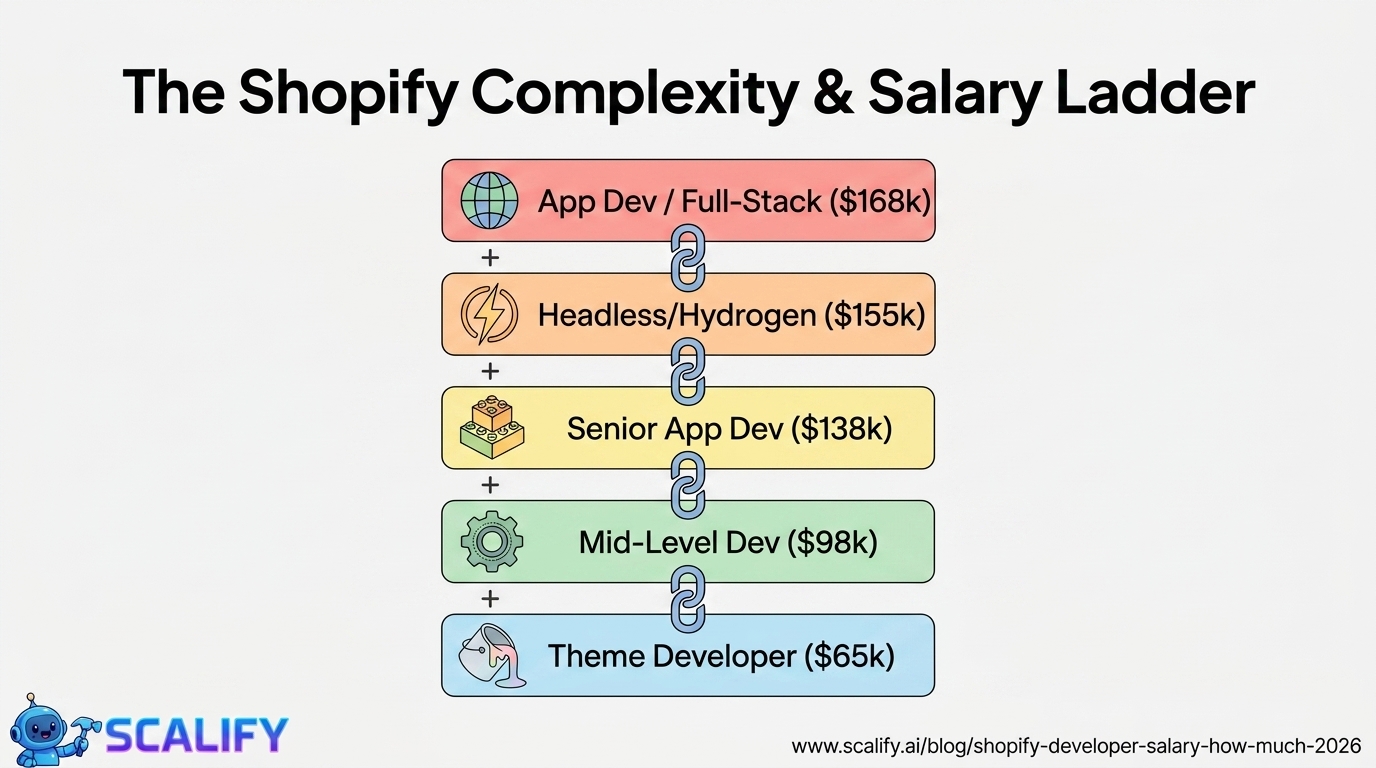
This ecosystem integration is why framework expertise is more than just knowing the core library — it's knowing which tools integrate well, how they compose, and how the combined system should be configured for production reliability. The developer who knows React deeply but has never integrated Prisma, Auth.js, and TanStack Query is at a different proficiency level than one who has built production applications with the full stack. This depth of ecosystem knowledge is what differentiates developers who command senior salaries from those who are still developing mid-level proficiency.
Framework Learning Path for New Developers
The most efficient learning path for developers new to web frameworks:
Month 1–2: JavaScript fundamentals. Before any framework, deep JavaScript knowledge is essential — closures, async/await, promises, the event loop, DOM APIs, and ES2022+ syntax. Frameworks abstract these but don't eliminate the need to understand them when debugging or optimizing.
Month 3–4: React basics. Components, props, state, hooks (useState, useEffect, useContext), and the component lifecycle. Build 3–5 small applications using the official React docs and tutorial. Learn to think in components before adding complexity.
Month 5–6: TypeScript + React. Add TypeScript to React projects. Learn prop types, generic components, and event handler typing. This step is no longer optional for professional-grade React development.
Month 7–8: Next.js. Build a full-stack application with Next.js App Router — pages, API routes, Server Components, data fetching, and deployment to Vercel. This is the stack that accounts for most professional React development in 2026.
Ongoing: Ecosystem tools. Add Tailwind CSS, Prisma or Drizzle for database access, Auth.js for authentication, and TanStack Query for data management as each becomes needed in your projects. Learn tools by needing them, not by studying them preemptively.
The framework landscape continues evolving — Svelte and SolidJS represent newer approaches to reactive UI with compilation-time optimization that may challenge React's dominance in certain performance-critical niches. Bun as a Node.js runtime alternative, and Hono as a minimal edge-native web framework, represent the ongoing innovation at the infrastructure layer. Developers who understand framework concepts deeply — not just the syntax of a specific framework — are positioned to adapt as the ecosystem continues evolving, carrying their expertise from one framework to the next as the JavaScript ecosystem's inevitable churning produces new and better tools over time.


.jpeg)
.jpeg)

78 SW 7th St, Miami, FL 33130