


What Is the Difference Between Front-End and Back-End Development?
By Josh Ternyak

April 1, 2026
Comprehensive 2026 guide: What Is the Difference Between Front-End and Back-End Development?
The Two Halves of Web Development Most People Conflate
When someone says they're a "web developer," what does that actually mean? Are they building the visual interface you click on? The database that stores your data? The server logic that processes your orders? All three?
The web development industry distinguishes between two primary specializations — front-end and back-end — and a third role that covers both: full-stack. These aren't just job titles; they describe genuinely different skill sets, different technologies, and different problems that need to be solved in building a complete web product.
Understanding this distinction helps you hire the right people for the right problems, communicate more effectively with technical teams, and set appropriate expectations for what different types of developers can do.
The Simple Explanation
The internet has two sides to every interaction. There's the part you see and interact with in your browser: buttons, text, images, forms, animations. And there's the part you don't see: the servers processing your requests, the databases storing your data, the business logic determining what you're allowed to do.
Front-end development is the discipline of building what you see and interact with. The visual interface. The experience. The part of a website or web application that exists in the user's browser.
Back-end development is the discipline of building what happens behind the scenes. The server logic, the databases, the APIs, the processing that occurs after you click a button but before the result appears on your screen.
Full-stack development is doing both — having sufficient proficiency on both sides to build a complete application, though most full-stack developers have stronger skills on one side than the other.
Front-End Development: The User-Facing Layer
Front-end development encompasses everything that runs in a user's browser. Its primary concerns are: presenting information clearly, creating intuitive user interfaces, handling user interactions, and ensuring consistent experiences across different browsers and devices.
The Core Technologies
HTML — the structure. Front-end developers write semantic HTML that conveys meaning and structure to both browsers and search engines. Proper use of heading levels, semantic elements (article, nav, main, aside), accessibility attributes (ARIA roles, alt text) — these are the HTML concerns that front-end developers handle.
CSS — the presentation. Every visual aspect of a web interface is CSS: layout (typically using Flexbox and Grid), typography, colors, animations, responsive behavior. Front-end developers are CSS specialists who understand the cascade, specificity, browser compatibility issues, and performance implications of CSS architecture choices.
JavaScript — the interactivity. Client-side JavaScript handles dynamic behavior: responding to user events, making API calls, managing application state, updating the DOM in response to data changes. Modern front-end development is heavily JavaScript-focused.
Modern Front-End Frameworks
Most modern front-end work is done within a framework rather than raw HTML/CSS/JS. React is dominant — it organizes UI into components with their own state and lifecycle, making complex interactive UIs more manageable. Vue.js and Angular are alternatives. These frameworks come with their own ecosystems of patterns, tools, and libraries.
Front-end developers who work primarily in frameworks need to understand both the framework itself and the underlying web technologies it builds on. A React developer who doesn't understand the DOM or CSS fundamentals will struggle with debugging and optimization.
What Front-End Developers Worry About
Cross-browser compatibility: The same CSS or JavaScript can behave differently in different browsers. Testing and handling these differences is a constant front-end concern. Safari on iOS is particularly notorious for implementing web standards differently from Chrome and Firefox.
Responsive design: Interfaces must work correctly across screen sizes from 320px mobile to 3440px ultrawide. Front-end developers implement responsive layouts using CSS media queries, flexible units, and tested component designs.
Performance: JavaScript bundle size, render-blocking resources, layout shifts, image optimization — front-end performance directly affects user experience and Core Web Vitals scores. Front-end developers are responsible for this layer of performance.
Accessibility: Ensuring interfaces are usable by people with disabilities — screen readers, keyboard navigation, sufficient color contrast, focus management. Accessibility is primarily a front-end concern.
UI/UX fidelity: Translating a design (from Figma, Sketch, or similar) into a pixel-accurate, interactive implementation. The quality of this translation is a core front-end skill.
Back-End Development: The Server-Side Layer
Back-end development encompasses everything that runs on servers — the infrastructure that processes requests, stores and retrieves data, enforces business rules, and returns responses to the front-end (or directly to clients through APIs).
The Core Technologies
Back-end developers work with server-side programming languages: Python (with frameworks like Django or FastAPI), JavaScript/TypeScript (Node.js with Express or NestJS), Ruby (Rails), PHP (Laravel), Java (Spring Boot), Go, Rust. The language choice depends on the team's expertise, the project's requirements, and the ecosystem.
Database management is central to back-end work. Relational databases (PostgreSQL, MySQL) organize data in tables with relationships; structured queries retrieve exactly the data needed. NoSQL databases (MongoDB, Redis, Cassandra) provide different data models suited for specific use cases. Back-end developers design schemas, write queries, manage migrations, and optimize database performance.
What Back-End Developers Actually Build
APIs (Application Programming Interfaces): The interface between front-end and back-end. When you log in, the front-end sends your credentials to an API endpoint; the back-end validates them against the database and returns an authentication token. When you submit an order, the front-end sends order details to an API; the back-end processes payment, updates inventory, creates the order record, and sends confirmation emails.
Authentication and authorization systems: Who are you (authentication) and what are you allowed to do (authorization)? Back-end developers implement login systems, session management, password security (hashing, salting), OAuth integrations (login with Google/Facebook), role-based access control, and API authentication.
Business logic: The rules that govern how the application behaves. Pricing calculations, eligibility rules, workflow states, validation logic, complex conditional behavior. This is often the most complex part of back-end work because it's unique to each business's requirements.
Data processing and integrations: Background jobs that process data asynchronously, integrations with third-party services (payment processors, email services, shipping APIs, CRMs), data transformation pipelines, and file processing (handling uploads, generating reports, resizing images).
Infrastructure and deployment: Many back-end developers also handle DevOps concerns: deploying to cloud platforms (AWS, Google Cloud, DigitalOcean), containerization (Docker), CI/CD pipelines, monitoring, logging, and scaling infrastructure to handle load.
What Back-End Developers Worry About
Security: SQL injection, cross-site request forgery, authentication bypass, data exposure, API abuse — security vulnerabilities in the back-end can be catastrophic. Back-end developers are responsible for hardening applications against attacks.
Performance and scalability: Database query optimization, caching strategies, handling concurrent requests, scaling horizontally under load. Back-end performance issues manifest as slow API responses, timeouts, and database bottlenecks.
Data integrity: Ensuring data remains consistent and correct despite concurrent access, network failures, partial transactions, and edge cases. Database transactions, constraints, and careful error handling protect data integrity.
Reliability: Services failing, dependencies being unavailable, unexpected input — back-end systems need to handle these gracefully rather than crashing or corrupting data.
Where Front-End and Back-End Meet: The API Layer
In modern web architecture, the front-end and back-end communicate through APIs — typically RESTful APIs or GraphQL endpoints that define what data can be requested, what operations can be performed, and what format responses take.
The API contract is where front-end and back-end collaboration is most critical and most fraught. Front-end developers need the API to return exactly the data they need, in a format that's easy to render. Back-end developers need the API to be efficient, secure, and consistent. Miscommunication at the API layer — about field names, data types, error formats, authentication requirements — creates bugs that can be time-consuming to track down.
Good teams define the API specification (often using OpenAPI/Swagger) before either side starts building, so front-end and back-end can develop in parallel against a shared contract. Teams that skip this step often find themselves blocked waiting for the other side or building against assumptions that turn out to be incorrect.
Full-Stack Development: The Practical Reality
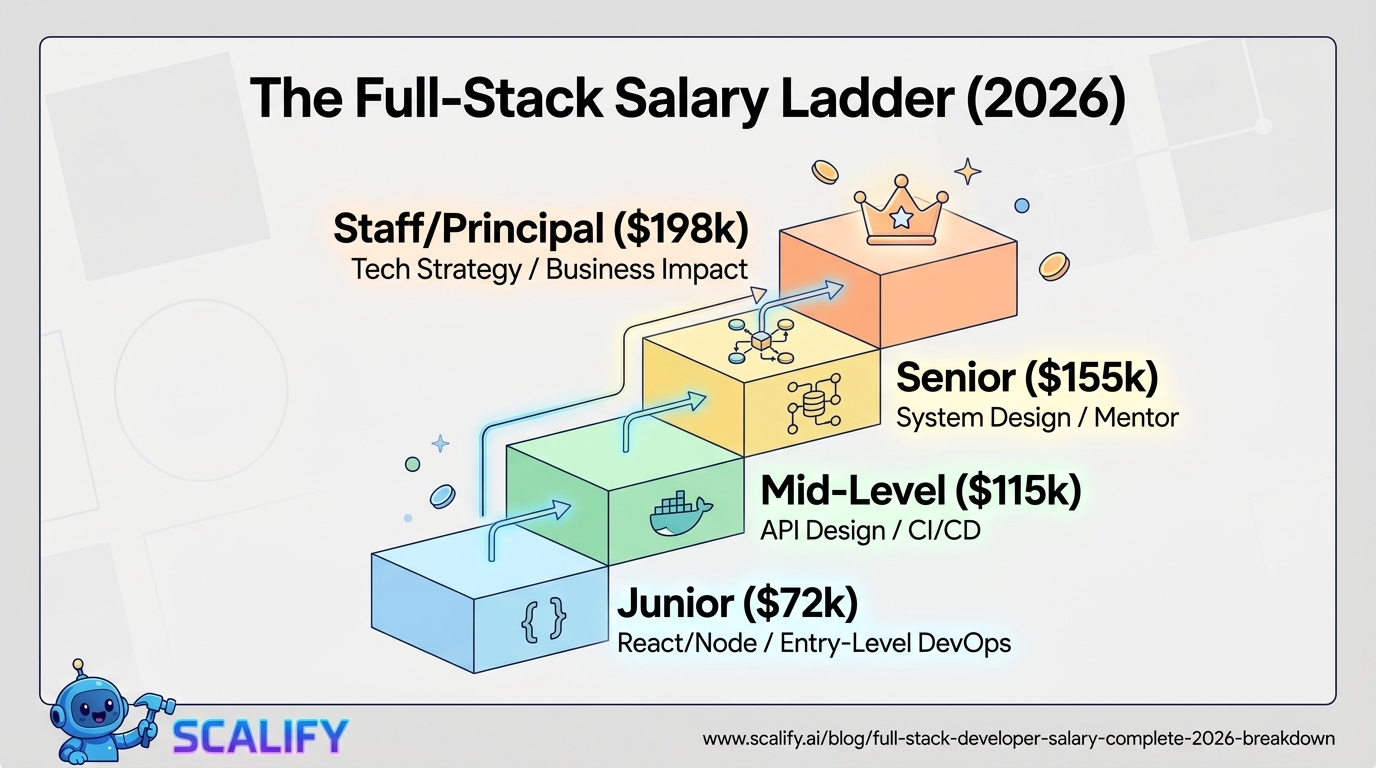
Full-stack developers can build both front-end and back-end, making them valuable for small teams and startup environments where one person needs to own an entire feature end-to-end without handoffs.
The reality of "full-stack" in practice: most full-stack developers have a primary strength on one side and functional competence on the other. A "full-stack developer" who has been building React UIs for five years and used Node.js occasionally for simple APIs is a front-end developer with some back-end capability — not an equally skilled practitioner of both.
This isn't a criticism — it's the natural result of how skills develop through use. Two sides of web development are genuinely broad; achieving deep expertise on both simultaneously requires either exceptional natural ability or many years of deliberate practice across both domains.
The practical implication: when hiring full-stack developers, be specific about where the workload will primarily live. A project that's 70% front-end and 30% back-end needs someone with stronger front-end skills who can handle back-end tasks. A project that's 80% back-end with a minimal UI needs the opposite. "Full-stack" doesn't automatically mean equal capability at both.
What This Means for Hiring
When your project needs development work, knowing whether you need front-end, back-end, or full-stack expertise focuses your search:
Visual redesign or new UI components: Front-end developer or a full-stack developer with strong front-end skills.
New features that require server logic, database work, or API development: Back-end developer or full-stack developer with back-end strength.
Building a new web application from scratch: Full-stack developer (for a small team) or separate front-end and back-end specialists (for a larger one).
Performance optimization: Depends on whether the performance problems are front-end (rendering, JavaScript bundle size, layout) or back-end (slow API responses, database queries).
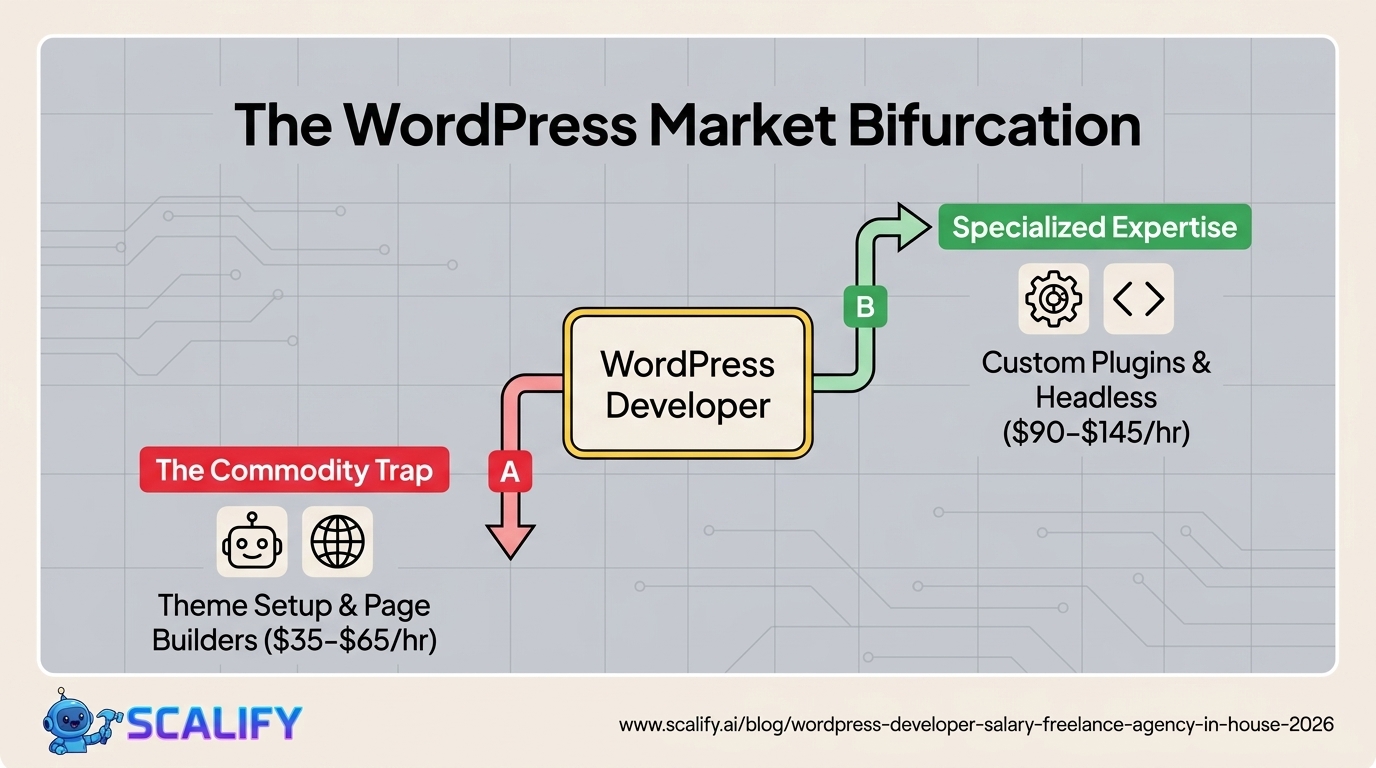
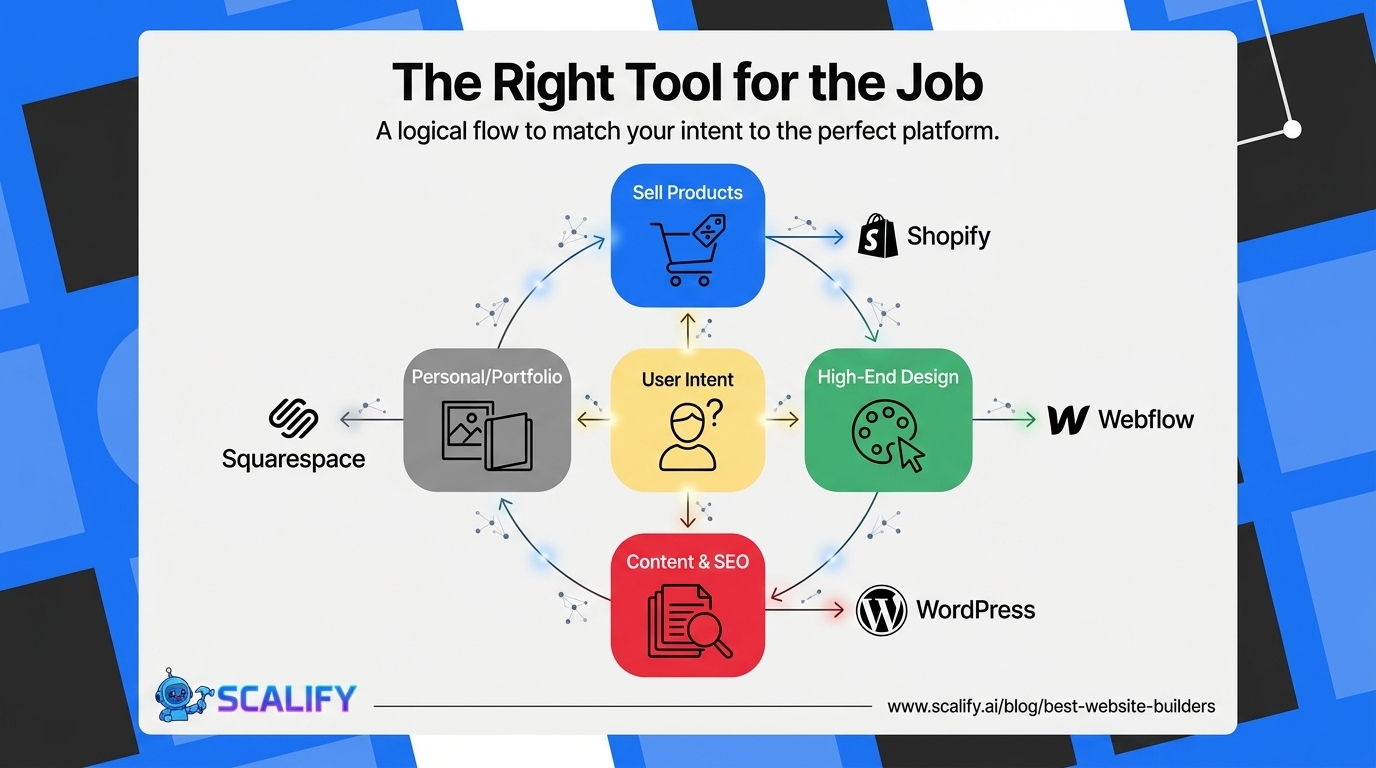
Platform-based websites (WordPress, Webflow, Shopify): Often not "front-end" or "back-end" in the traditional sense — platform-specific developers who know the platform well are usually more valuable than generalist front-end or back-end developers who have to learn the platform on your project.
The Bottom Line
Front-end development is the discipline of building what users see and interact with in browsers. Back-end development is the discipline of building the server-side logic, databases, and APIs that make applications function. Full-stack covers both, though most practitioners are stronger on one side. Understanding the distinction helps you hire the right expertise for the right problems and communicate more precisely with technical teams.
At Scalify, our team includes expertise across both layers — so when we build your website, every part of the stack is handled by someone who knows it well, not approximated by someone learning on your project.
Key Takeaways and Next Steps
The principles and data in this guide reflect what actually works in professional web development and digital marketing in 2026 — not theoretical best practices but measured, documented outcomes from implementations at scale. The gap between knowing these principles and benefiting from them is always execution: the businesses that act on what they read, implement changes systematically, and measure the results consistently outperform those who consume information without converting it to action.
For any improvement described in this guide, the implementation sequence that produces the best outcomes: assess your current situation against the benchmarks provided, identify the 2–3 highest-impact improvements specific to your situation, implement them with measurement tracking in place, evaluate results after 30–60 days, and plan the next iteration based on what you learned. This cycle — assess, prioritize, implement, measure, iterate — is the operational foundation of continuous improvement that compounds into significant competitive advantage over the 12–24 month horizon.
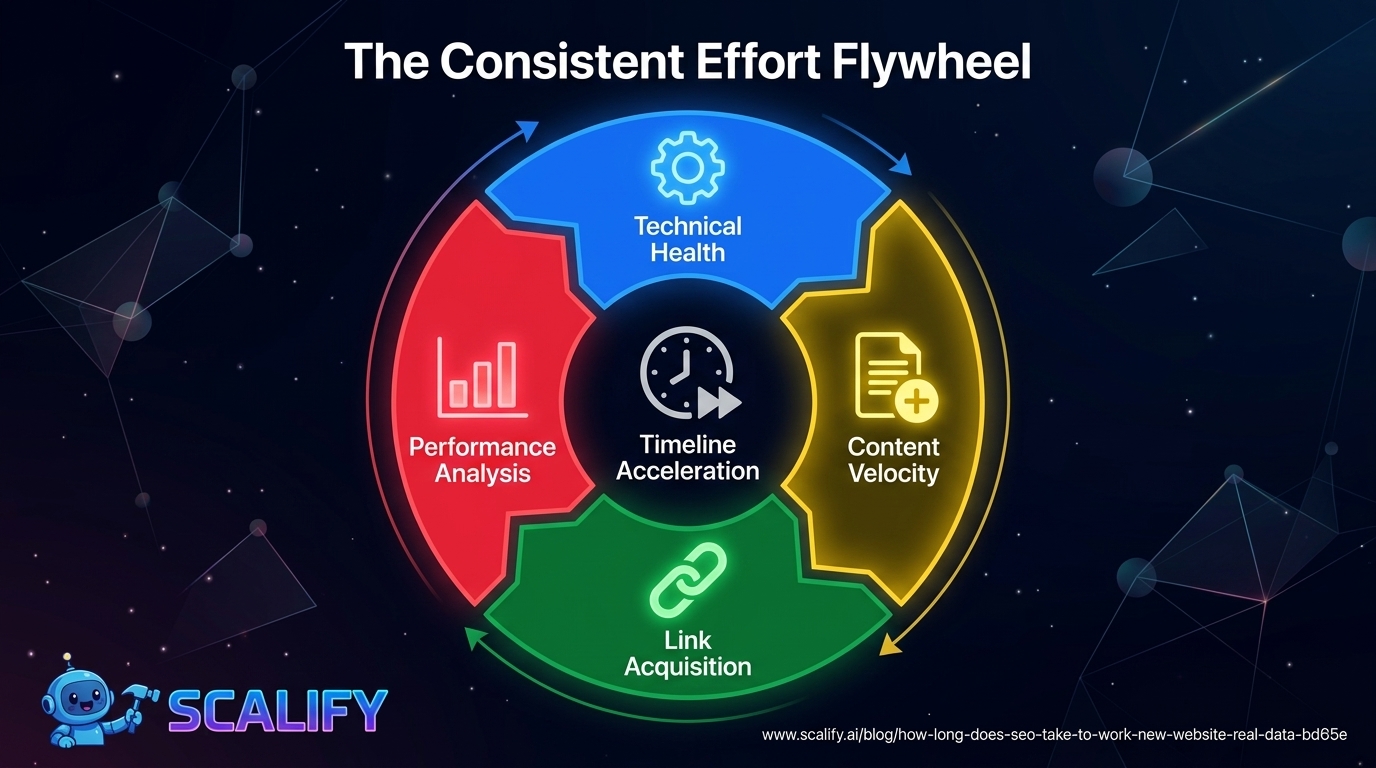
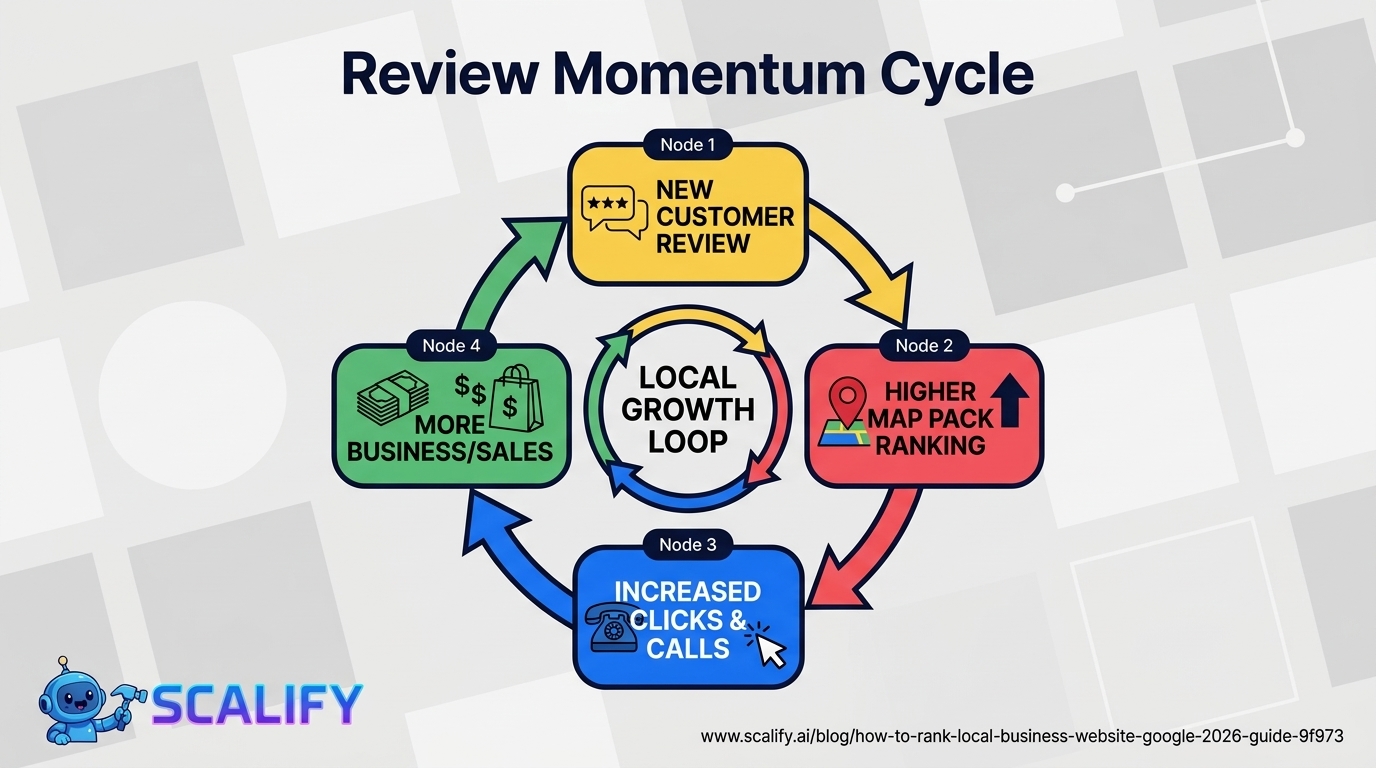
The compounding returns from consistent web presence investment are not linear: a website that improves slightly each month accumulates to dramatic improvements over a year, and those improvements multiply with each other. Faster load times improve both search rankings and conversion rates simultaneously. Better content attracts backlinks that improve rankings that attract more traffic. More testimonials build trust that improves conversion rates that improve revenue that funds more investment. The interconnected nature of website performance means that each improvement amplifies the value of every other improvement — making the decision to invest consistently, across multiple dimensions simultaneously, the highest-ROI approach to digital marketing available to most businesses.
At Scalify, every website we build reflects these principles — technically optimized, conversion-focused, SEO-ready, and designed to compound in value over time as content, backlinks, and organic authority accumulate on the strong foundation we deliver in 10 business days.




.jpeg)

.jpeg)

78 SW 7th St, Miami, FL 33130