


What Is an API and Why Does It Matter for Your Website?
By Josh Ternyak

April 1, 2026
Comprehensive 2026 guide: What Is an API and Why Does It Matter for Your Website?
The Technology That Makes Modern Websites Actually Work
Think about the last time you checked out on an e-commerce site. You entered your card number, clicked Pay, and within seconds received an order confirmation. What happened in those seconds? Your website didn't build a payment processing system from scratch. It talked to Stripe, or PayPal, or Braintree — sending your payment information to their systems and receiving back a success or failure response. That conversation happened through an API.
Think about booking a hotel on a travel site. The site showed you real-time availability from hundreds of hotels simultaneously. No travel site employs staff to call each hotel and check availability. Each hotel's booking system exposes its data through APIs; the travel site queries all of them simultaneously and presents the results. APIs.
Think about logging into a site with your Google account. The site doesn't have your Google password. Google's authentication API tells the site "yes, this person is who they claim to be." APIs.
APIs are the invisible connective tissue of the modern web. Understanding what they are — not how to build them, but conceptually what they do and why they matter — changes how you think about website capabilities, third-party integrations, and what's possible when building digital products.
What API Stands For and What It Means
API stands for Application Programming Interface. Let's unpack each word:
Application — a piece of software. Could be a mobile app, a web service, a database, any software system.
Programming — this interface is for programs to use, not humans. An API is how software talks to other software, as opposed to a user interface (which is how humans interact with software).
Interface — a defined point of interaction. A way to communicate with something from the outside without needing to know how it works on the inside.
Combined: an API is a defined way for software applications to communicate with each other.
The clearest analogy for non-developers: a restaurant menu. When you go to a restaurant, you don't walk into the kitchen and cook your own food. You interact with the menu — a defined list of what you can request, how to request it, and what you'll receive. The kitchen (the internal implementation) can be complex or simple; you don't need to know. You just need to understand the menu.
An API is the menu. Your software places an order (makes a request). The other software's kitchen (back-end) processes it. The waiter (the API) brings back the result.
How APIs Work: The Request-Response Cycle
Most web APIs follow the same basic pattern: a client (your website) makes a request to the API; the API processes it and sends back a response.
A typical API interaction:
1. Your code sends an HTTP request to an API endpoint. An endpoint is a specific URL that represents a specific resource or operation. "https://api.stripe.com/v1/charges" is an endpoint for creating charges in Stripe's API. "https://api.openweathermap.org/data/2.5/weather?city=Miami" is an endpoint for getting Miami's weather data.
The request specifies a method that indicates what operation is being requested: GET (retrieve data), POST (create or submit data), PUT or PATCH (update data), DELETE (remove data). A GET request to a weather API endpoint asks "give me the current weather." A POST request to a payment API endpoint says "process this payment."
2. The request includes any required data and credentials. Authentication credentials (an API key or token) tell the API server who is making the request and whether they're authorized. The API key is like a restaurant membership card — it identifies you and grants access. Some requests also include data in the request body (payment amounts, customer information, configuration parameters).
3. The API server processes the request. Behind the API endpoint is code that executes: validating credentials, processing the request, querying databases, calling other services, applying business logic.
4. The API returns a response. The response includes a status code (200 OK, 201 Created, 400 Bad Request, 401 Unauthorized, 404 Not Found, 500 Server Error) and usually data in JSON format — a structured text format that software can parse efficiently.
A successful response from a weather API might look like:
{
  "city": "Miami",
  "temperature": 82,
  "condition": "Sunny",
  "humidity": 67
}
Your code reads this JSON and can display "Miami: 82°F, Sunny" on your page.
Types of APIs You'll Encounter on the Web
REST APIs
REST (Representational State Transfer) is the dominant architectural style for web APIs. REST APIs use standard HTTP methods (GET, POST, PUT, DELETE) and URLs that represent resources (/users/123, /products/456, /orders/789). They're stateless — each request contains all the information needed to process it, with no memory of previous requests. Most web APIs you'll integrate are RESTful.
GraphQL APIs
A newer alternative to REST, created by Facebook in 2012 and open-sourced in 2015. Instead of multiple endpoints for different resources, GraphQL provides a single endpoint where clients can request exactly the data they need in a single request. Instead of calling /users, then /users/123/orders, then /users/123/address separately, a single GraphQL query can request all three simultaneously, getting back only the specific fields needed. This reduces over-fetching (getting more data than needed) and under-fetching (needing multiple requests to get all the data required).
Webhooks
Not exactly an API in the request-response sense, but related and commonly encountered: webhooks are a way for one service to proactively notify your system when something happens, rather than requiring your system to repeatedly ask "did anything happen yet?"
When a payment succeeds in Stripe, Stripe sends a webhook to a URL you specify — essentially calling you with the news. When someone subscribes to your email list in Mailchimp, Mailchimp can fire a webhook to notify your system. When an order ships and tracking updates in a fulfillment partner's system, they can webhook your system with the update.
Webhooks enable real-time event-driven integrations rather than polling (repeatedly checking whether something happened), which is more efficient and more timely.
APIs Your Website Is Probably Already Using
Most modern websites use multiple APIs, often without the business owner explicitly thinking of them as such:
Payment processing: Stripe, PayPal, Square, Braintree — your checkout page sends payment data to these services' APIs, which handle the complexity of card networks, fraud detection, and bank communication. Your site never stores card numbers; that all lives in the payment processor's system.
Authentication: "Login with Google," "Login with Facebook," "Login with Apple" — OAuth-based authentication APIs that let users authenticate through their existing accounts without creating a new password. Your site receives a confirmation from Google that this person is who they say they are.
Email delivery: SendGrid, Mailchimp, Postmark, ConvertKit — transactional and marketing emails sent from your website go through these APIs. Your site calls the email API with the recipient, subject, and content; the service handles delivery, tracking, and inbox placement optimization.
Maps: Google Maps, Mapbox — embedding an interactive map on your contact page is calling the Maps API, which returns a map interface for the specified location.
Analytics: Google Analytics, Mixpanel, Segment — tracking visitor behavior involves sending event data to analytics APIs whenever a visitor takes a tracked action.
Customer support/chat: Intercom, Zendesk, Drift — live chat and support systems integrate through APIs that let your site communicate with the support platform.
Social sharing: Embedding Twitter feeds, Facebook like buttons, Instagram posts — all calling social media APIs to retrieve and display content from those platforms.
Search: Algolia, Elasticsearch — advanced site search functionality is often powered by search APIs that index your content and return highly relevant results much faster than database text searches.
CRM integration: HubSpot, Salesforce — when someone fills out a contact form and the submission automatically appears in your CRM, that's an API integration passing the form data to the CRM system.
API Keys: Your Access Credentials
To use most APIs, you need an API key — a unique identifier that authenticates your application when making requests. Think of it as a password for your software: it proves to the API server that the request is coming from an authorized application.
API keys are sensitive credentials. They should:
- Never be exposed in public-facing JavaScript code (anyone can view your page source)
- Be stored in environment variables on your server, not hardcoded in your codebase
- Never be committed to public code repositories (GitHub security scans catch this, but developers still do it accidentally)
- Have minimal permissions — only access to what's necessary for the integration
- Be rotated if exposed or compromised
Exposed API keys with billing or data access permissions are a significant security risk. Stripe API keys exposed in client-side code have resulted in fraudulent charges. AWS credentials in GitHub repositories have resulted in massive surprise cloud computing bills.
Rate Limits: The Throttle on API Access
Most APIs impose rate limits — restrictions on how many requests can be made in a given time period. 100 requests per minute. 1,000 requests per hour. 10,000 per day. Rate limits protect the API provider's infrastructure from being overwhelmed and ensure fair access across all API users.
Rate limits matter for planning integrations at scale. An API that allows 1,000 requests per day might be fine for a small business with modest volume and a problem for a large one making 10,000 requests. Premium API tiers typically offer higher rate limits at higher cost.
When an API rate limit is exceeded, the API returns a 429 (Too Many Requests) status code. Applications need to handle this gracefully — typically by implementing exponential backoff (waiting progressively longer between retries) rather than hammering the API and staying rate limited.
What APIs Enable for Your Business
Thinking about your website as a hub that can connect to APIs opens up possibilities:
CRM sync: Every lead from your website automatically flows to your sales team's CRM. Sales reps see the lead immediately without manual data entry.
Marketing automation: New subscribers trigger automated email sequences. Customers who made a purchase get added to specific segments. Behavioral data from your site updates contact profiles in real time.
Inventory sync: Product inventory on your website reflects real-time stock levels from your warehouse management system. An order on your website immediately reduces inventory.
Accounting integration: Completed orders automatically create invoices in your accounting software. Revenue flows into your financial reporting without manual entry.
Fulfillment: Orders placed on your website automatically trigger fulfillment with your 3PL or fulfillment partner, who sends tracking updates back through webhooks.
Each of these scenarios is a workflow that, without APIs, requires manual data entry, human coordination, and introduces error and delay. With APIs, data flows automatically between systems the moment events occur.
The Bottom Line
APIs are the interfaces through which software systems communicate. They're how your website takes payments, sends emails, authenticates users, shows maps, syncs with CRMs, and connects to the hundred other services that make modern digital business work. Every significant third-party capability on your website is an API integration.
You don't need to know how to build APIs to benefit from understanding them. The insight is this: the web's power comes from the interconnected ecosystem of services that expose APIs, and any software system you choose should be evaluated in part by the quality of its API — because that API is what connects it to everything else.
At Scalify, we build websites with the integrations your business actually needs — properly implemented, securely configured, and connected to the tools your team already uses.
Key Takeaways and Next Steps
The principles and data in this guide reflect what actually works in professional web development and digital marketing in 2026 — not theoretical best practices but measured, documented outcomes from implementations at scale. The gap between knowing these principles and benefiting from them is always execution: the businesses that act on what they read, implement changes systematically, and measure the results consistently outperform those who consume information without converting it to action.
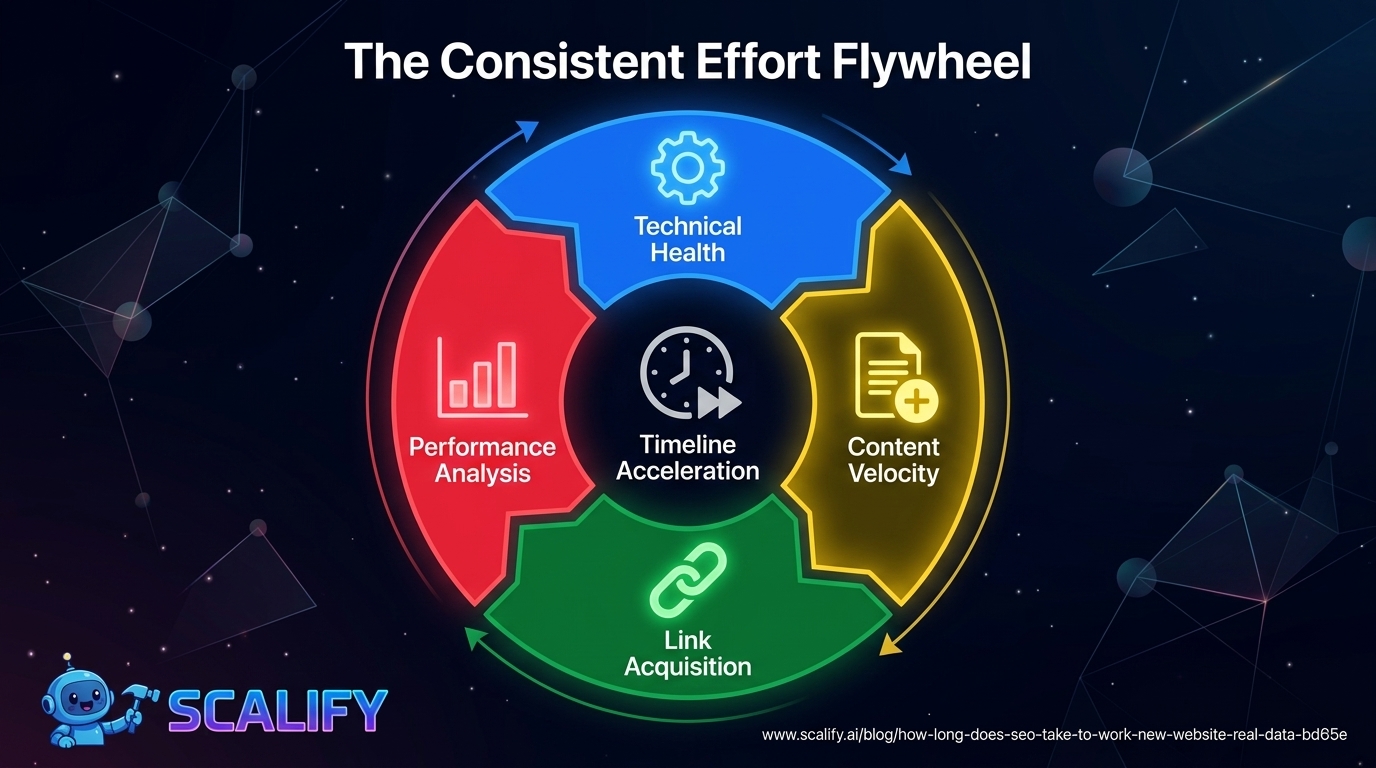
For any improvement described in this guide, the implementation sequence that produces the best outcomes: assess your current situation against the benchmarks provided, identify the 2–3 highest-impact improvements specific to your situation, implement them with measurement tracking in place, evaluate results after 30–60 days, and plan the next iteration based on what you learned. This cycle — assess, prioritize, implement, measure, iterate — is the operational foundation of continuous improvement that compounds into significant competitive advantage over the 12–24 month horizon.
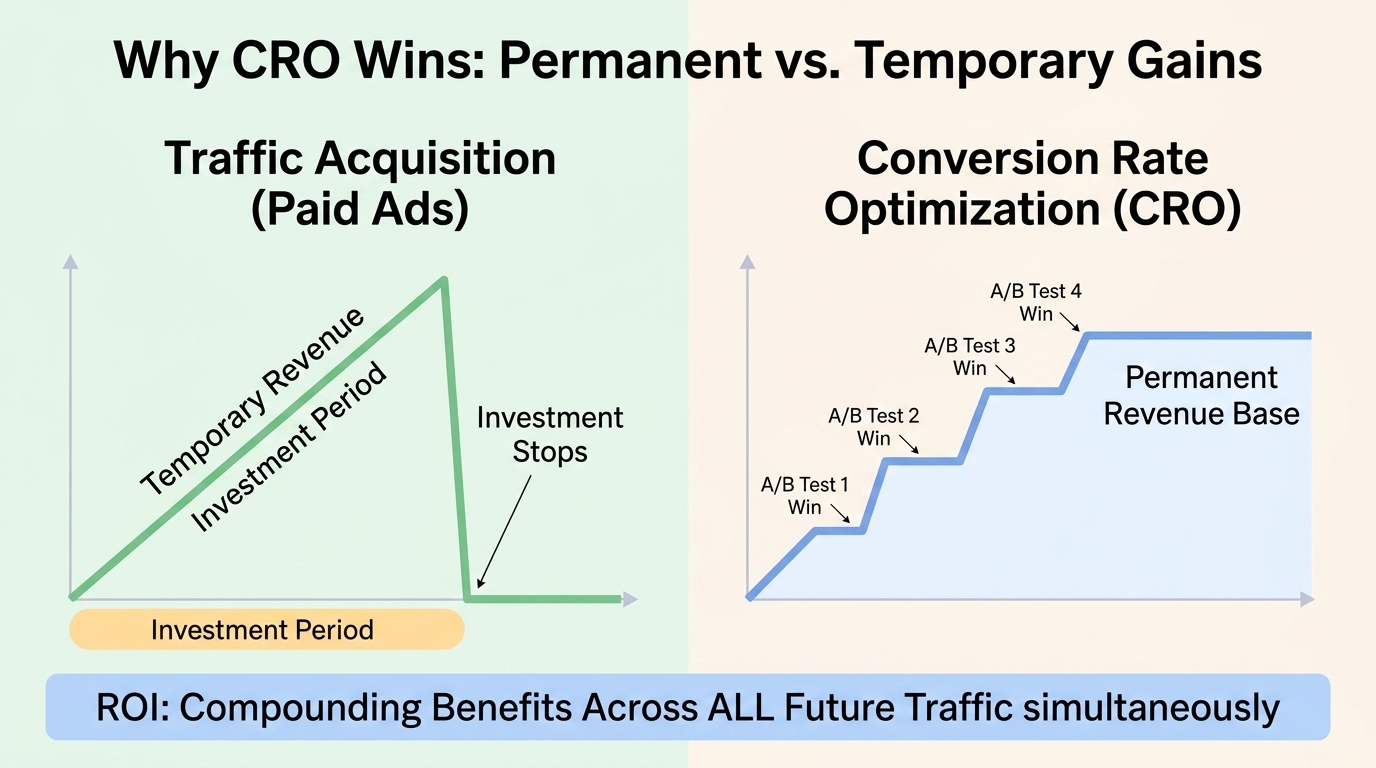
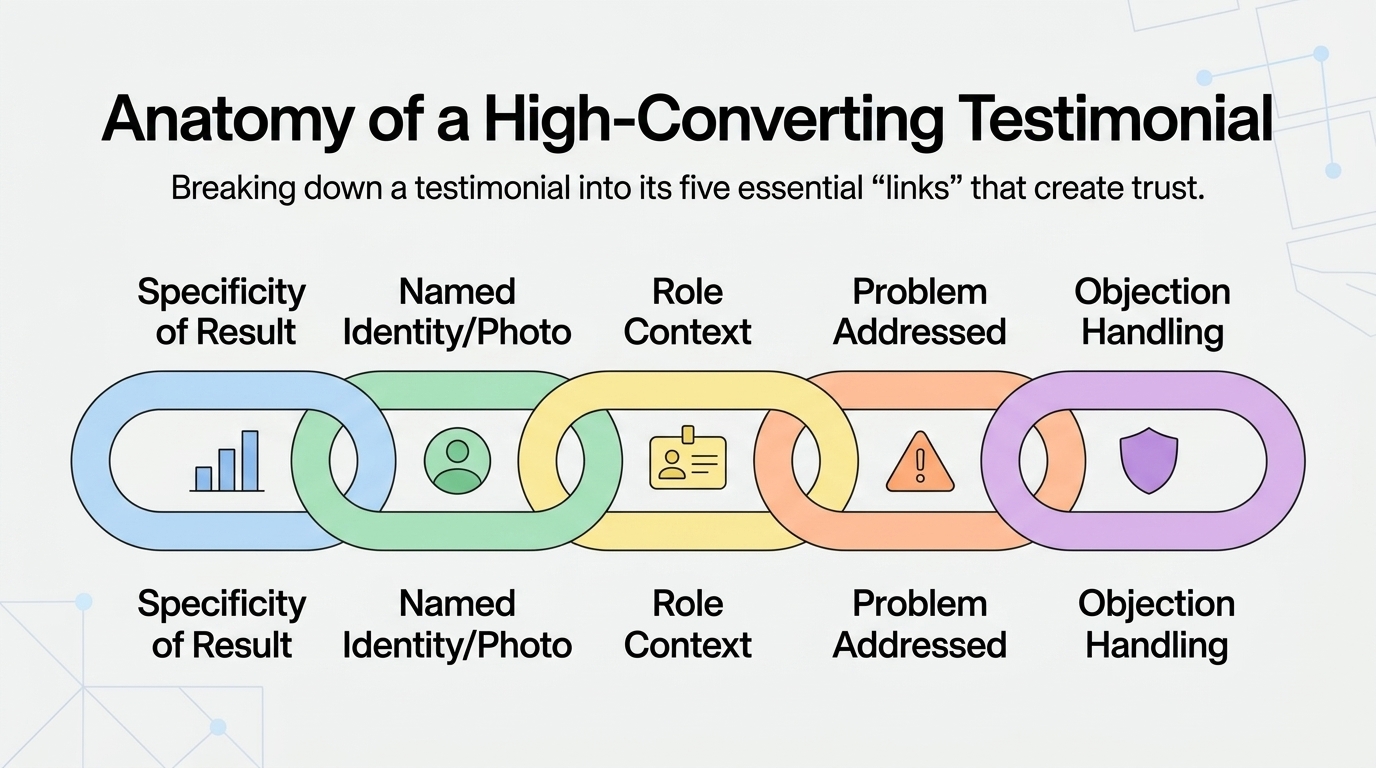
The compounding returns from consistent web presence investment are not linear: a website that improves slightly each month accumulates to dramatic improvements over a year, and those improvements multiply with each other. Faster load times improve both search rankings and conversion rates simultaneously. Better content attracts backlinks that improve rankings that attract more traffic. More testimonials build trust that improves conversion rates that improve revenue that funds more investment. The interconnected nature of website performance means that each improvement amplifies the value of every other improvement — making the decision to invest consistently, across multiple dimensions simultaneously, the highest-ROI approach to digital marketing available to most businesses.
At Scalify, every website we build reflects these principles — technically optimized, conversion-focused, SEO-ready, and designed to compound in value over time as content, backlinks, and organic authority accumulate on the strong foundation we deliver in 10 business days.


















.jpeg)

.jpeg)



78 SW 7th St, Miami, FL 33130