


What Is a Landing Page and How Is It Different From a Website?
By Josh Ternyak

March 29, 2026
Landing pages and websites serve completely different purposes — and confusing them is costing businesses conversions. This guide explains what a landing page is, when to use one, and how to build one that converts.
The Page Designed to Do One Thing Exceptionally Well
Most web pages try to serve multiple purposes. The homepage introduces the brand, highlights services, features testimonials, links to the blog, and points to the contact page. A services page describes offerings and links to related content. Even focused pages usually have navigation that allows visitors to wander anywhere on the site.
A landing page is different by design. It has one goal, one message, and one conversion action. Navigation is typically removed or stripped down. The entire page exists to convert visitors from a specific traffic source — an ad, an email campaign, a social post — on a specific offer.
The distinction matters because the page type that converts best for advertising and campaigns is rarely a standard website page. A homepage is designed for orientation and exploration. A landing page is designed for conversion. Sending paid traffic to a homepage and expecting campaign-level conversion rates is like setting up a sales meeting in a lobby — technically possible, fundamentally the wrong environment.
What a Landing Page Is
A landing page is a standalone web page created specifically for a marketing or advertising campaign. Visitors "land" on it after clicking a link from an ad, email, social media post, or other source. Unlike a homepage or standard web page, a landing page is focused on a single objective and typically designed to eliminate distractions that might prevent a visitor from completing the desired action.
The defining characteristics of a landing page:
Single purpose: Every element on the page serves the conversion goal. Nothing on the page doesn't contribute to that goal.
Message match: The headline and content directly match what was promised in the ad or link that brought the visitor there. A visitor who clicked an ad promising "Free Website Audit" lands on a page offering exactly that — not a general homepage that mentions audits somewhere in the navigation.
No or minimal navigation: Standard website navigation is usually removed or simplified. Every additional click path is an escape route from the conversion goal. Removing navigation typically increases landing page conversion rates.
Single CTA: One action for the visitor to take. Not three different buttons offering different options — one clear, prominent CTA that defines success for this page.
Designed for a specific audience segment: A landing page speaks to the specific audience who would click this particular ad or link, not to the general audience the website serves.
Landing Page vs. Homepage vs. Website
These three terms are frequently confused, and the confusion produces poor decisions about where to send traffic.
Website: The entire collection of pages representing a brand online. Includes homepage, about, services, blog, contact, and all other pages. Designed for breadth — helping all types of visitors with all types of needs find relevant information.
Homepage: The front page of a website — the default destination when someone types a domain name. Designed for orientation — helping visitors understand what the site offers and directing them toward relevant sections. Appropriate for branded searches and direct traffic. Generally not the right destination for paid advertising.
Landing page: A specific page designed for a specific campaign and audience. Designed for conversion — driving visitors from one specific starting intent to one specific action. The appropriate destination for paid advertising, email campaigns, and most marketing-driven traffic.
The decision rule: where should this traffic go? If it's coming from an ad about a specific offer → landing page. If it's coming from a branded search → homepage. If it's coming from a blog link about a specific topic → that specific blog post, not the homepage.
Types of Landing Pages
Lead Generation (Lead Capture) Landing Pages
The most common type for service businesses. The page offers something of value — a free consultation, a guide, a checklist, a quote — in exchange for the visitor's contact information. The conversion action is form submission.
Typical elements: a specific value proposition in the headline, a clear description of what the visitor receives, a brief form (name, email, sometimes phone or one qualifying question), and trust signals. Content is focused on answering "why should I give my information for this?"
Examples: "Get a Free Website Audit," "Download Our Complete SEO Guide," "Book a 15-Minute Strategy Call."
Click-Through Landing Pages
Pages that warm up visitors before sending them to a purchase or sign-up page. The conversion action is clicking through to the next step, not completing a form on the page itself.
Common for e-commerce campaigns: an ad drives traffic to a click-through page that describes the product and its benefits in detail, then the visitor clicks through to the product purchase page. The click-through page does the persuasion work; the purchase page handles the transaction.
Also common for SaaS free trials: ad → landing page that explains the value → "Start Free Trial" click → actual sign-up form.
Sales Landing Pages (Long-Form Sales Pages)
Extended pages designed to handle the complete persuasion process for a direct purchase, typically for higher-ticket or information products. Long-form sales pages can be 3,000–10,000+ words because they need to address every objection and build complete conviction without a human sales conversation.
These pages address: the problem in depth, the solution with specificity, social proof in detail, objections directly, pricing with context, and risk reduction. They're the written equivalent of a complete sales conversation.
Event Registration Landing Pages
Pages focused on registering for a webinar, event, or workshop. The page needs to sell the event's value — what the attendee will learn, why the host is qualified to teach it, who else is attending — and make registration as frictionless as possible.
Product Launch Landing Pages
Pre-launch pages that build anticipation and capture early interest (email or waitlist signups) before a product is available. Used for product launches, software launches, and early-access programs.
The Anatomy of a High-Converting Landing Page
Headline: The Only Sentence That Must Be Perfect
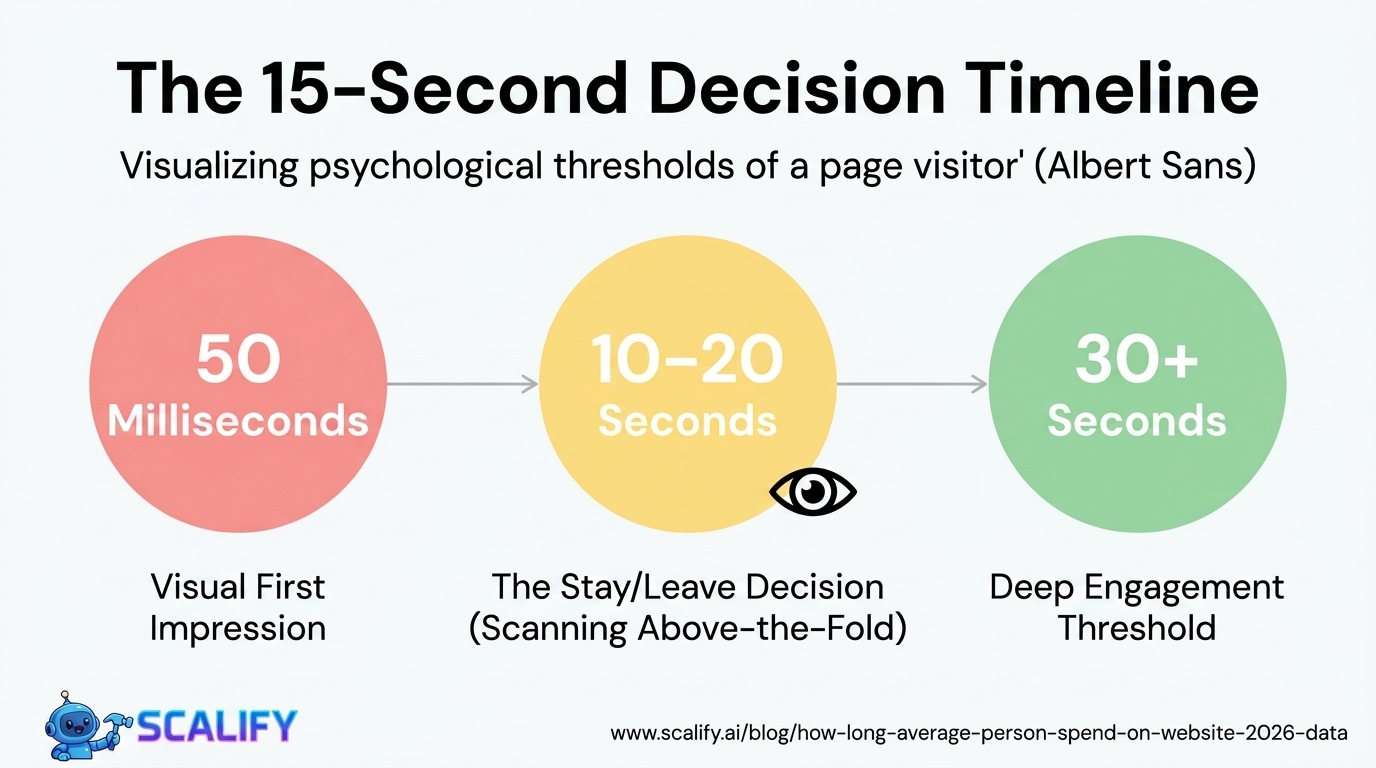
The headline is read by every visitor. Everything else is read only by visitors who stayed after the headline. A landing page with an unclear or weak headline fails regardless of the quality of everything below it.
A strong landing page headline: is specific about what's being offered, communicates the primary benefit or outcome, and creates immediate clarity about relevance for the target audience. "Get a Free 30-Minute Website Strategy Session" is stronger than "Let's Talk" and infinitely stronger than "Welcome."
Message match is critical: the headline must directly mirror the promise that brought the visitor. If the ad said "Free Website Audit," the headline must prominently reference the free website audit — not a general "Let's improve your business" statement that requires the visitor to make the connection themselves.
Subheadline: Expand and Reinforce
The subheadline does the second job the headline can't fit into its compressed space: expanding on the value proposition, adding important context, or addressing the "so what?" question the headline raises. "We'll identify the specific changes that would generate more leads from your existing traffic — no cost, no obligation."
Hero Visual
For service businesses: a professional photo of the team, the deliverable being offered, or a screenshot of the tool/product. For e-commerce: product imagery. For information products: a mockup of the guide or resource.
The visual should reinforce the headline message and provide immediate evidence of quality. A landing page for a web design company that has poor design in its landing page is self-defeating. The landing page is an audition for your capabilities.
Value Proposition / Benefits List
Below the hero, expand on what the visitor receives. Not features — benefits. Not "includes 45-minute call" but "leave the call with a specific list of the three changes that would most improve your website's conversion rate." The visitor should read this section and think "yes, I want exactly that."
Format: bullet points work well here for scannable benefit communication. Each bullet should communicate a specific, tangible benefit — not generic marketing language.
Social Proof
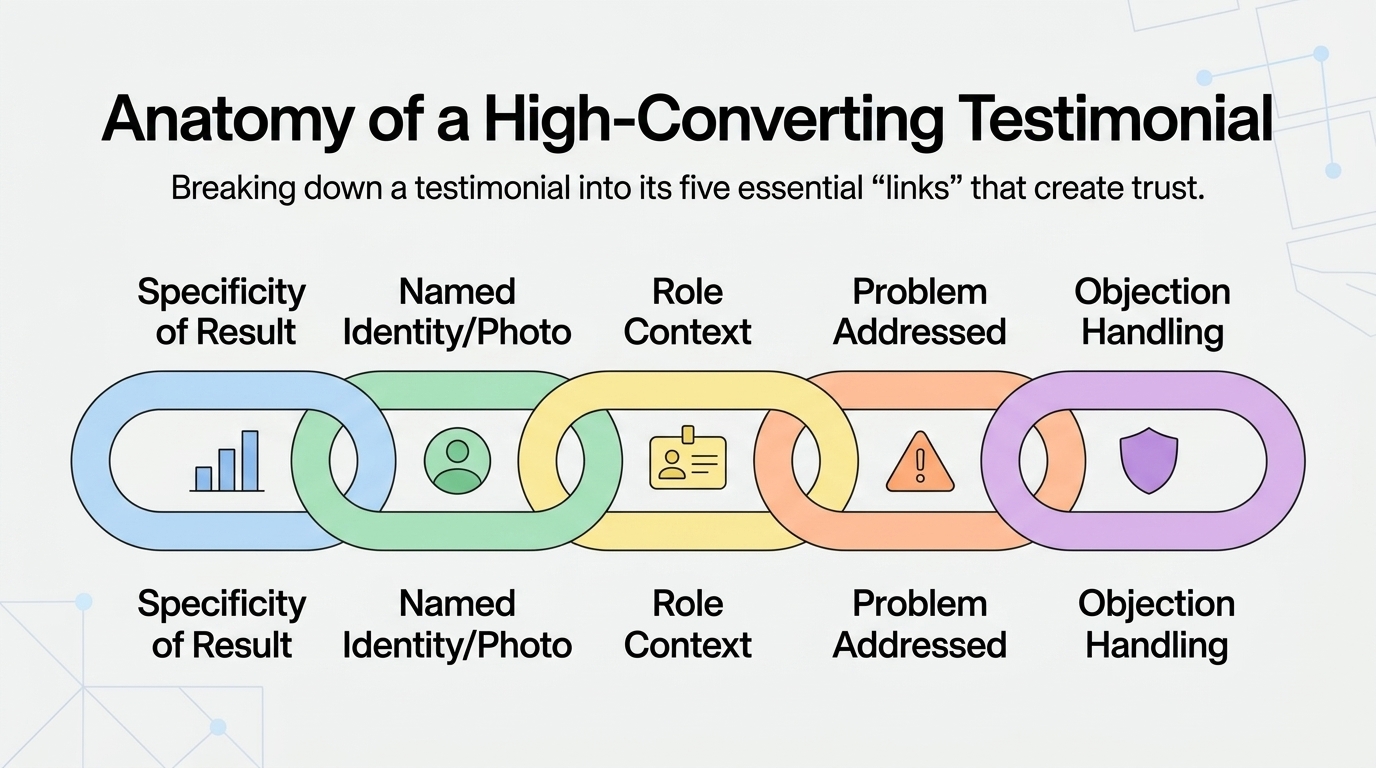
Testimonials, client logos, reviews, statistics, and case study results that answer "has this worked for people like me?" The most persuasive social proof is specific, includes attribution (real name, company, photo), and directly addresses the offer being made — not just general satisfaction with the business.
For a free audit offer: a testimonial specifically about what the audit revealed and what changed as a result is more valuable than a general "they're great to work with" testimonial.
The Form: The Minimum Required
Every additional field reduces form completion rates. On most lead generation landing pages: name, email, and at most one qualifying question. Phone number is optional unless calls are how you follow up. Budget, company size, and other qualification fields are often better gathered in the first conversation rather than as friction before the first contact.
Form placement: above the fold is ideal for simple, low-friction forms. Long-form sales pages may have the form at the bottom after the full persuasion sequence. The right placement depends on how much persuasion work is needed before the visitor is ready to submit.
CTA Button
The button text is disproportionately important for conversion. "Submit" is the worst option — it tells the visitor nothing about what happens. Specific, outcome-oriented button copy performs significantly better: "Get My Free Audit," "Book My Strategy Call," "Send Me the Guide," "Start My Free Trial."
First-person framing ("My" instead of "Your") consistently outperforms second-person in A/B tests. The button should be visually prominent — high contrast to the background, large enough to be tapped on mobile, clear visual affordance.
Trust Signals
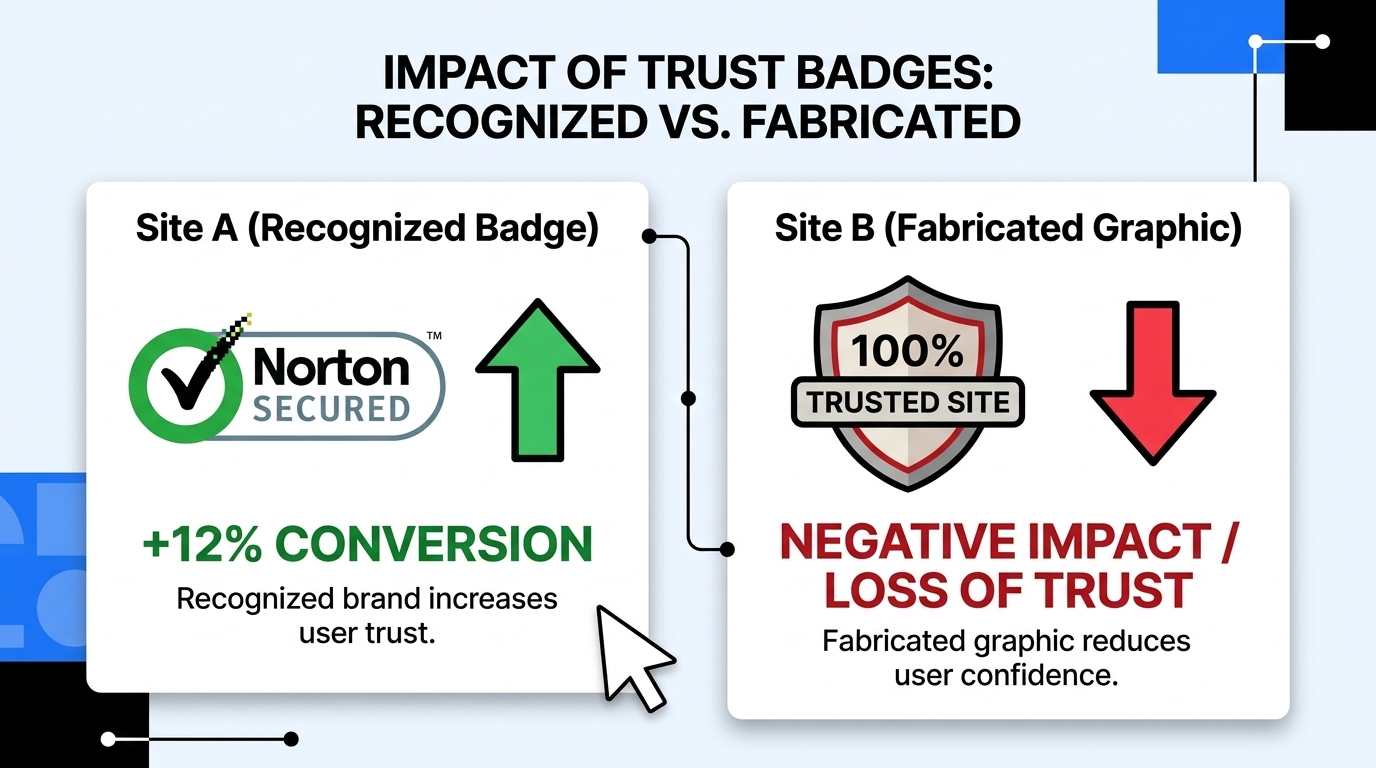
Elements that reduce the perceived risk of converting: privacy statements ("we'll never share your information"), guarantees, security badges for purchase-involved pages, "no credit card required" for free trials, testimonials adjacent to the form. These address the last-moment hesitation that prevents visitors who were persuaded by the content from taking the final action.
What to Remove From Landing Pages
Navigation menu: Every navigation link is an invitation to leave the conversion path. Removing navigation from landing pages consistently increases conversion rates. The visitor has one path: convert or leave. Navigation creates a third option — wandering.
Multiple CTAs: "Book a Call OR Subscribe to Our Newsletter OR Download This Guide" splits visitor attention and reduces conversion rate on any single action. One CTA, one conversion goal.
Footer with site links: Same issue as navigation — escape routes. Landing page footers, if present at all, should contain only legal links (Privacy Policy, Terms) and perhaps minimal contact information.
Social media links: Sending visitors to social media platforms from a landing page is almost never a good idea. They leave your controlled conversion environment and enter platforms designed to capture their attention indefinitely.
Irrelevant content: Anything that doesn't serve the conversion goal. Not the company history. Not the blog. Not the team bios. Every element must earn its place by contributing to the conversion.
Landing Page Platforms
Unbounce ($74–$240+/month): The leading dedicated landing page platform. Drag-and-drop builder, A/B testing, dynamic text replacement (matching page content to ad keywords), smart traffic AI routing. Best for businesses running significant paid traffic that need sophisticated testing capabilities.
Leadpages ($37–$99+/month): More accessible pricing than Unbounce with similar core features. Good template library, solid A/B testing. Suitable for small to mid-size businesses with moderate traffic volumes.
Instapage ($199+/month): Enterprise-focused with advanced collaboration, analytics, and personalization features. Appropriate for agencies and large marketing teams.
HubSpot Landing Pages (included in HubSpot Marketing Hub): Best for teams already using HubSpot CRM — landing pages integrate directly with contact records and email automation workflows.
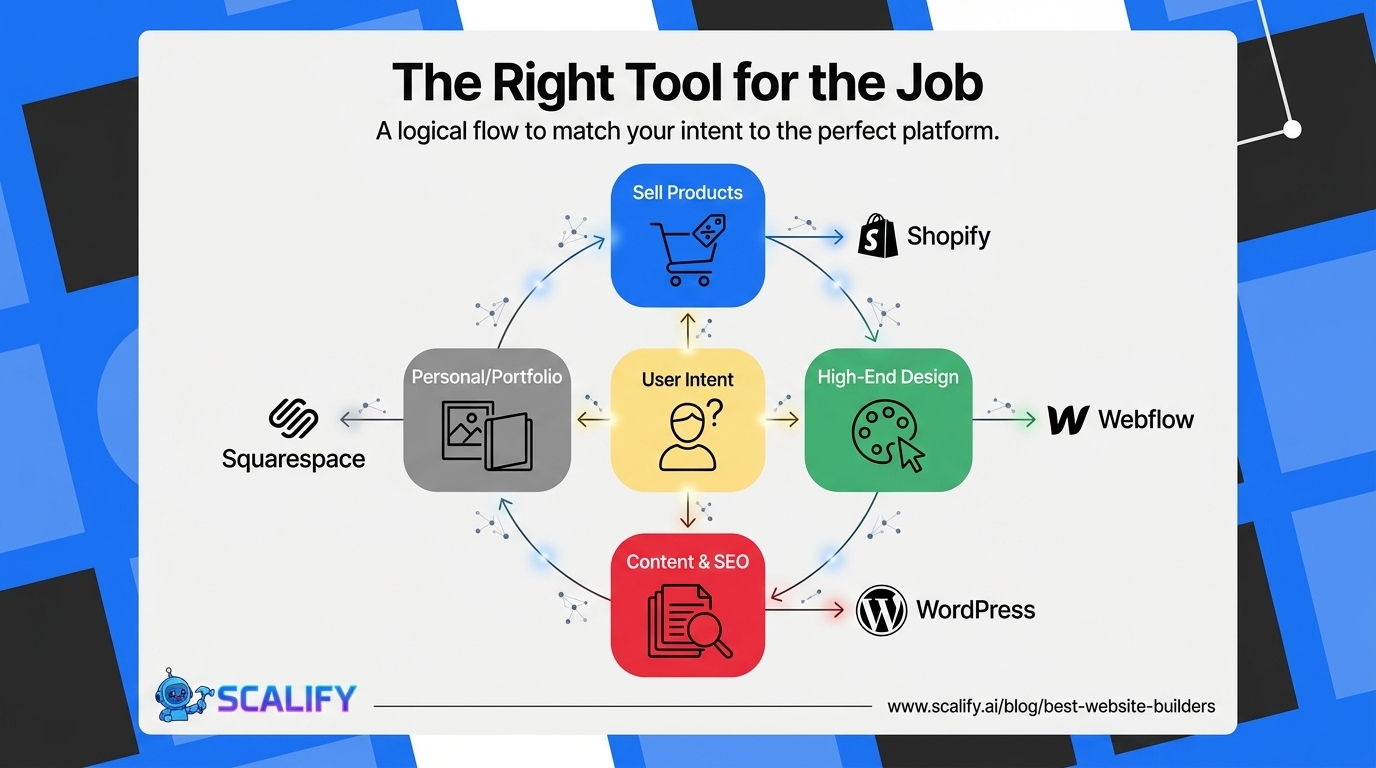
Webflow, WordPress, or custom: For teams comfortable with their existing CMS, landing pages can be built on your existing platform. The advantage: complete design control and no additional platform cost. The limitation: A/B testing requires additional tools (VWO, Optimizely), and building pages is slower than drag-and-drop builders.
Landing Page Performance Benchmarks
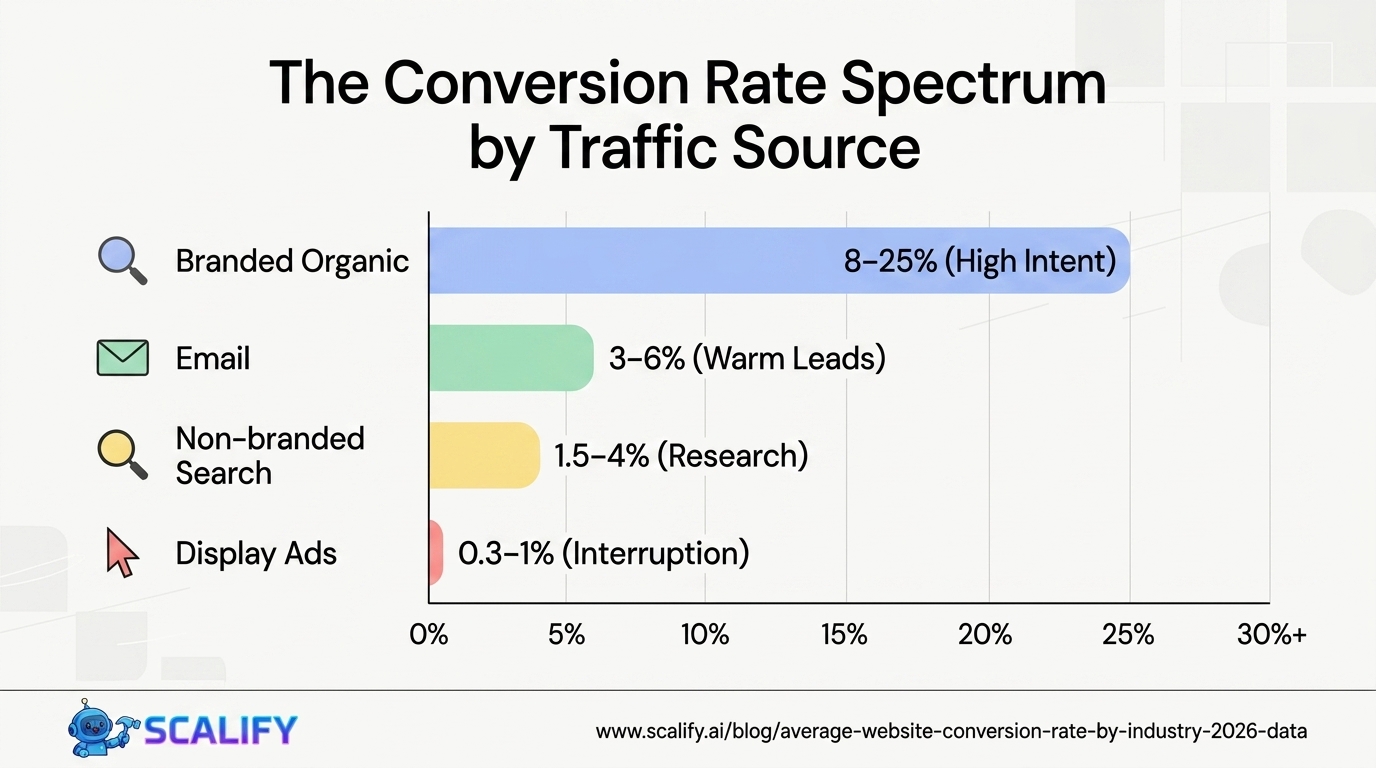
Conversion rates vary widely by industry, offer, traffic quality, and traffic temperature. General benchmarks:
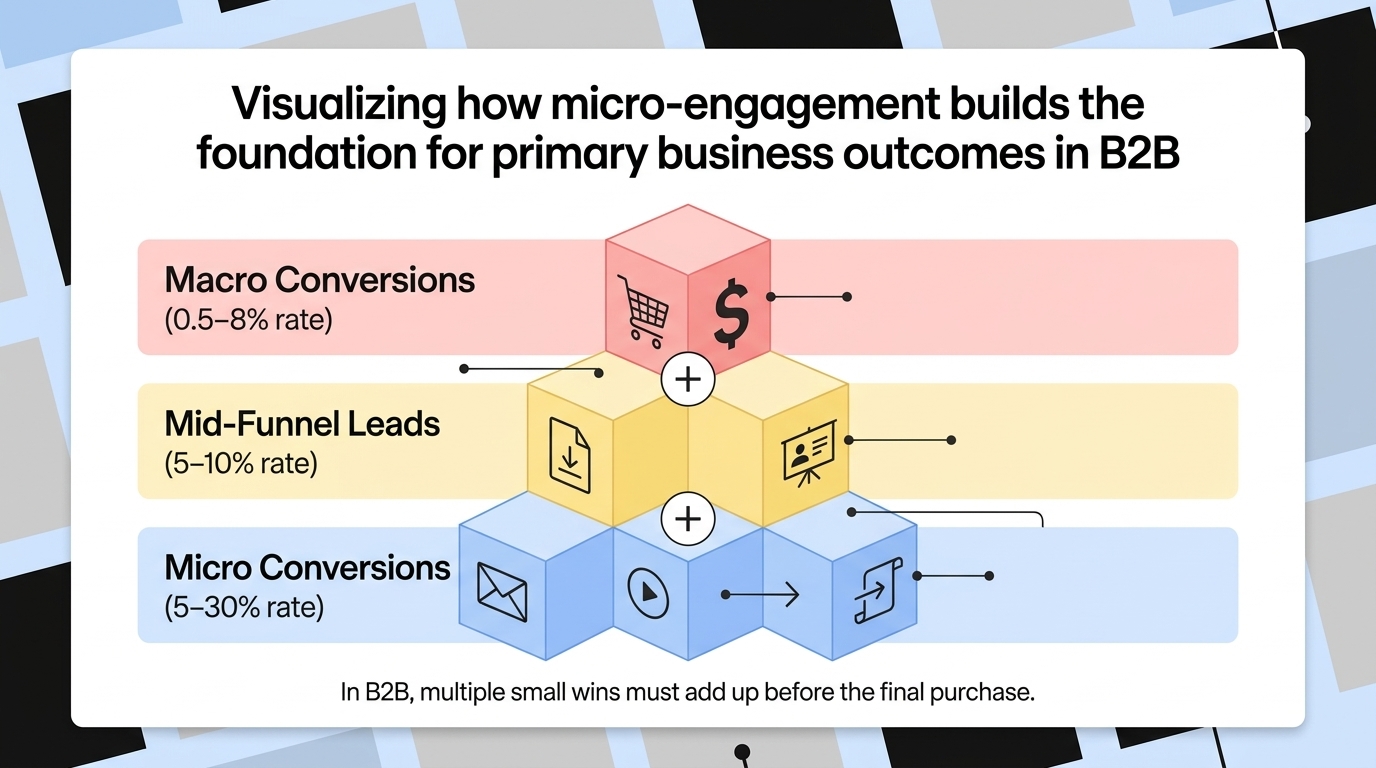
- Lead generation pages: 2–5% average; 10%+ excellent
- Free trial sign-ups: 5–15% average for warmer traffic
- Webinar registrations: 20–30% for relevant audience from email
- E-commerce click-throughs: 3–8% average from paid traffic
These benchmarks have wide ranges because traffic source, offer specificity, and page quality all dramatically affect outcomes. A landing page for a highly relevant offer sent to a warm email list can convert at 30–40%; the same page receiving cold paid traffic might convert at 2%.
The Bottom Line
A landing page is a conversion-optimized page designed for specific traffic, with a single goal, stripped of navigation distractions, and focused entirely on moving a specific visitor to a specific action. It exists separately from your main website because the job it needs to do — convert campaign traffic efficiently — requires different design decisions than the job your website does.
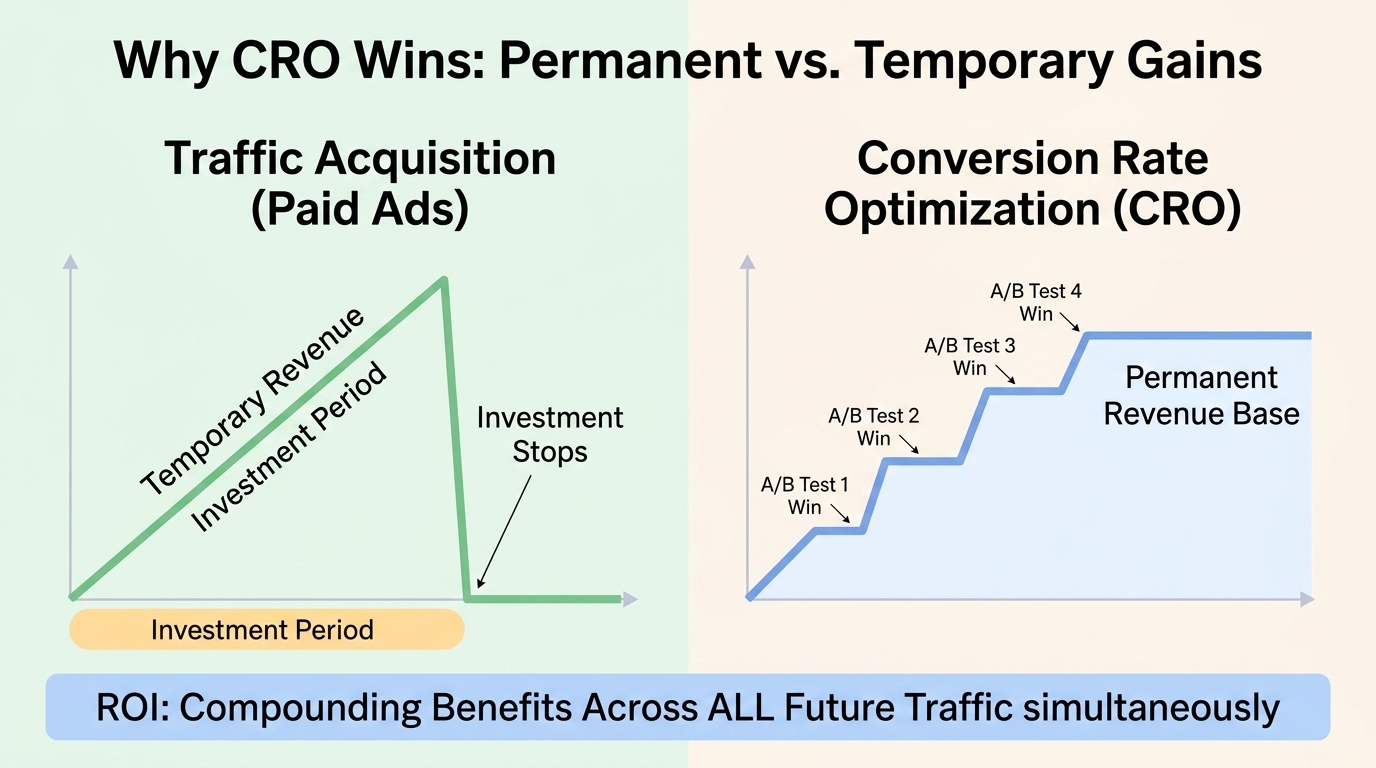
Use landing pages for: paid advertising, email campaigns, social media promotions, webinar registrations, product launches, and any situation where you're driving a specific audience to a specific offer. Measure conversion rates, run A/B tests, continuously improve. The compounding improvement from systematic landing page optimization is one of the highest-ROI marketing investments available.
At Scalify, landing pages are part of the conversion architecture conversation for every website project — designed as dedicated, conversion-focused environments for campaigns rather than as slightly modified versions of standard pages.


.jpeg)
.jpeg)

78 SW 7th St, Miami, FL 33130