


What Is a Title Tag and How Do You Optimize It for SEO?
By Josh Ternyak

April 1, 2026
Comprehensive 2026 guide: What Is a Title Tag and How Do You Optimize It for SEO?
The Most Important Line of Code on Any Web Page
If you could only optimize one SEO element on every page of your website, it should be the title tag. No other single HTML element has as much influence on both how a page ranks in Google and whether searchers click on it when it appears in results.
The title tag is what Google displays as the blue clickable headline in search results. It's what appears in the browser tab when someone has your page open. It's what gets copied into WhatsApp messages and social shares. It's the first — and often only — piece of content a potential visitor reads when deciding whether your page is worth clicking.
And yet most title tags are written carelessly. Generated automatically from page headings. Duplicated across multiple pages. Written to describe what a page contains rather than to earn the click of someone who needs what the page offers.
This guide covers title tags comprehensively: what they are, how they work, the specific optimization principles that produce better rankings and higher click-through rates, and the tools and process for auditing and improving your site's title tags systematically.
What a Title Tag Is
The title tag is an HTML element in the <head> section of a web page that specifies the page's title. It's defined with the <title> element:
<head>
  <title>What Is a Title Tag and How to Optimize It for SEO | Scalify Blog</title>
</head>
The title tag appears in three places:
Google search results: As the blue clickable headline above the URL and meta description. This is its most important role for both SEO (ranking signal) and marketing (determines click-through rate).
Browser tabs: When a visitor has your page open, the title tag appears in the browser tab — useful for identifying tabs and for bookmarks.
Social media: When a page is shared on social media platforms, the title tag is typically pulled as the default link title (unless overridden by Open Graph tags).
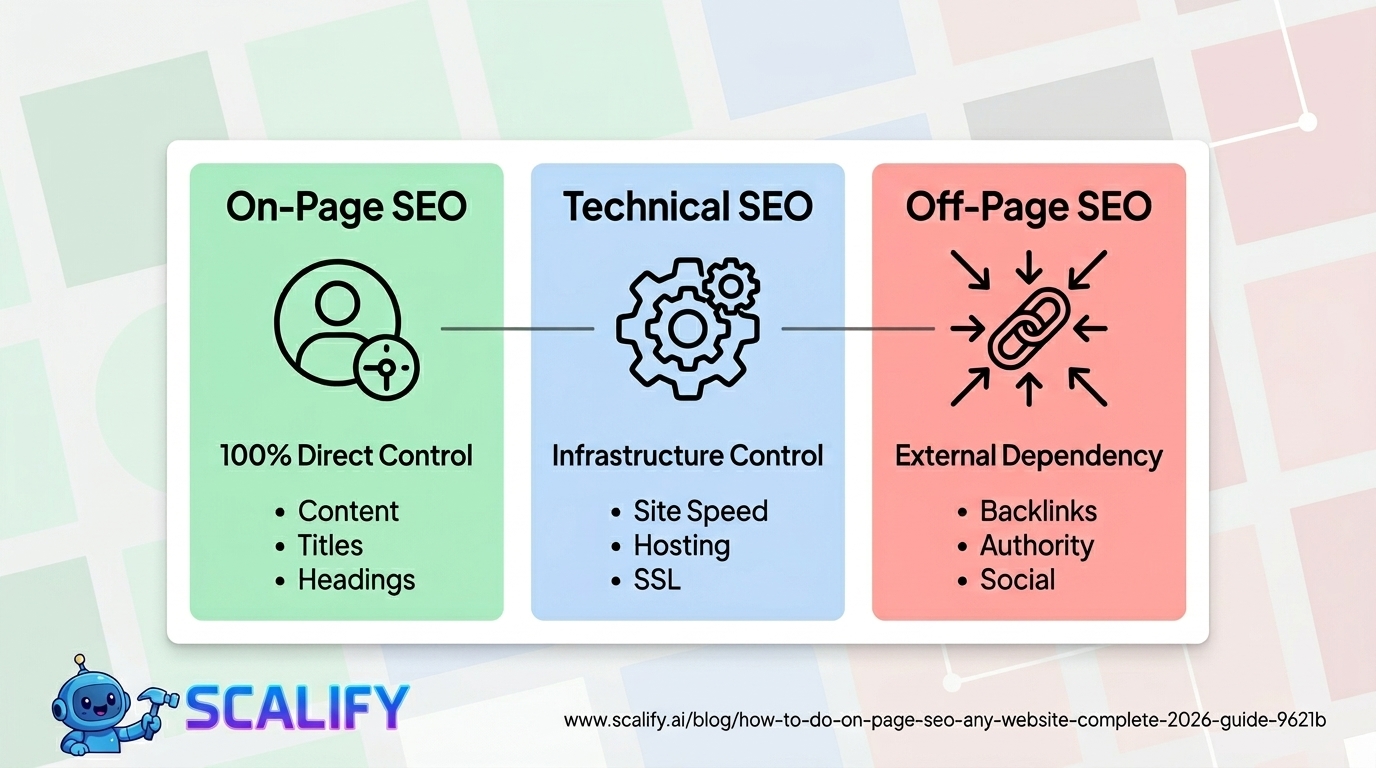
Why Title Tags Are the Most Important On-Page SEO Element
Google's ranking algorithms consider hundreds of signals. Among on-page signals specifically — those within your control on the page itself — the title tag carries more weight than any other single element. It's one of the primary ways Google determines what a page is about and which queries it's relevant to.
When Googlebot crawls a page, it reads the title tag as an explicit declaration of the page's primary topic. Unlike inferring relevance from body content (which requires reading and understanding), the title tag is a direct, intentional signal: "This page is about X."
The practical implication: including your target keyword in the title tag is not optional for ranking for that keyword. A page titled "Welcome to Our Business" is not going to rank for "custom web design Miami" no matter how many times that phrase appears in the body content. A page titled "Custom Web Design Services in Miami | Scalify" is sending the right ranking signal.
Beyond ranking, title tags directly affect click-through rate. A compelling title that includes the keyword and offers a reason to click earns more clicks than a dull one at the same ranking position. Higher CTR may indirectly improve rankings through user satisfaction signals, and directly improves traffic independent of ranking changes.
Title Tag Length: The Rules and Why They Exist
Google doesn't enforce a character limit for title tags — you can write a title as long as you want. What Google does is truncate displayed titles at approximately 50–60 characters (about 580 pixels wide on desktop). Titles that exceed this display limit appear with "..." in search results, potentially cutting off important information.
The practical rule: keep title tags under 60 characters to prevent truncation. More specifically, keep the most important information — primary keyword and core value proposition — in the first 50 characters, so it's visible even if slight variations in display space cause earlier truncation.
Very short title tags (under 30 characters) miss opportunities to include secondary keywords, brand name, or value-adding context. Very long title tags risk having the important parts truncated. The sweet spot: 50–60 characters, with the keyword early and the brand name at the end (if included).
Title length measurement tools: the SERP Simulator in Ahrefs or Semrush lets you preview how your title will appear in search results before publishing. The free Yoast snippet preview in WordPress does the same. Use these to verify length before publishing.
Where to Put the Keyword in the Title Tag
The research consensus: including the primary keyword earlier in the title tag produces stronger ranking signals than including it later. Google weights words earlier in the title more heavily in its relevance assessment.
Strong: "Custom Web Design Miami: Professional Websites in 10 Days"
Weaker: "Professional Websites Built in 10 Days: Custom Web Design Miami"
Both include "custom web design Miami." The first places it at the start; the second puts it at the end. For competitive keywords, this positioning difference can influence ranking results.
The exception: when front-loading the keyword creates an unnatural or awkward title. A title that sounds like it was written for an algorithm rather than a human will earn fewer clicks even if it ranks better. Balance keyword positioning with natural language and click appeal.
Including Your Brand Name in Title Tags
Many SEOs recommend including your brand name in title tags, typically at the end: "Title | Brand Name" or "Title — Brand Name." Arguments for brand inclusion:
- Increases branded recognition in search results as your site appears repeatedly
- Improves click-through rates for users who recognize your brand
- Google sometimes rewrites titles to include the brand name anyway — you may as well include it explicitly
Arguments against brand inclusion (or for selective inclusion):
- The brand name takes up character space that could be used for keywords or value-adding copy
- For new or unrecognized brands, including the brand name adds characters without click benefit
- Some pages benefit from the full character allowance for keyword and value content
The balanced approach: include the brand name in title tags for high-importance pages (homepage, primary service pages) where brand recognition benefits clicks. For blog posts and secondary pages where every character counts for keyword relevance and value signaling, consider omitting the brand name or using a shortened version.
Title Tag Formulas for Different Page Types
Homepage
The homepage typically targets your primary brand keyword and main value proposition. The title should communicate who you are, what you do, and ideally for whom:
Formula: [Primary Service] for [Target Audience] | [Brand Name]
Example: Custom Websites for Small Businesses | Scalify
Or, if you have a strong differentiator:
Formula: [Brand Name] — [Primary Value Proposition]
Example: Scalify — Custom Websites Launched in 10 Business Days
Service Pages
Target the specific service keyword with location if local:
Formula: [Specific Service] in [Location] | [Brand Name]
Example: Web Design Services in Miami, FL | Scalify
Or outcome-focused:
Formula: [Service] That [Outcome] | [Brand Name]
Example: Web Design That Generates Leads | Scalify
Blog Posts / Informational Pages
Match the query intent — usually a question or "what is" / "how to" format:
Formula: [Primary Keyword]: [Specific Value/Angle] | [Brand Name]
Example: Title Tag Optimization: The Complete 2026 SEO Guide | Scalify
Or for how-to content:
Formula: How to [Accomplish Goal]: [Specific Angle/Qualifier]
Example: How to Write Title Tags That Rank AND Get Clicked
Category/Hub Pages
Formula: [Topic] Guide: [Breadth or Depth Indicator] | [Brand]
Example: Complete Guide to Web Design: Every Topic Explained | Scalify
Comparison Pages
Formula: [Option A] vs. [Option B]: [Differentiating Angle]
Example: Webflow vs. WordPress: Honest 2026 Comparison for Small Businesses
Power Words That Increase Click-Through Rate
Certain words and phrases in title tags consistently improve click-through rates by creating specific emotional responses:
Completeness/Comprehensiveness: Complete, Comprehensive, Ultimate, Full, Everything You Need
Speed/Simplicity: Easy, Simple, Quick, Fast, In Minutes, Step-by-Step
Recency: 2026, New, Updated, Latest — these signal current information for queries where freshness matters
Specificity: Exactly, Specifically, Precisely — signal that the content addresses the exact query rather than the general topic
Authority/Expert: Guide, Blueprint, Framework, Checklist — signal structured, reliable information
Numbers: 7 Ways, 12 Tools, 5 Mistakes — numbered lists are consistently among the most-clicked formats in search results
Use these strategically — not every title benefits from power words, and overuse produces titles that feel like clickbait rather than credible resources.
Common Title Tag Mistakes
Duplicate title tags: Multiple pages with the same title tag confuse Google about which page to rank for a given query and dilute the ranking signal across both pages. Every page should have a unique title reflecting its specific content.
Missing title tags: Pages without a title tag force Google to generate one from page content — usually not well-optimized. Check for missing titles in Screaming Frog or Google Search Console.
Title tags too similar to page headings: Your H1 and title tag can differ. The title tag is for search results (keyword-optimized, click-optimized, length-constrained). The H1 is for the page itself (can be more conversational or descriptive). Use each for what it's designed for.
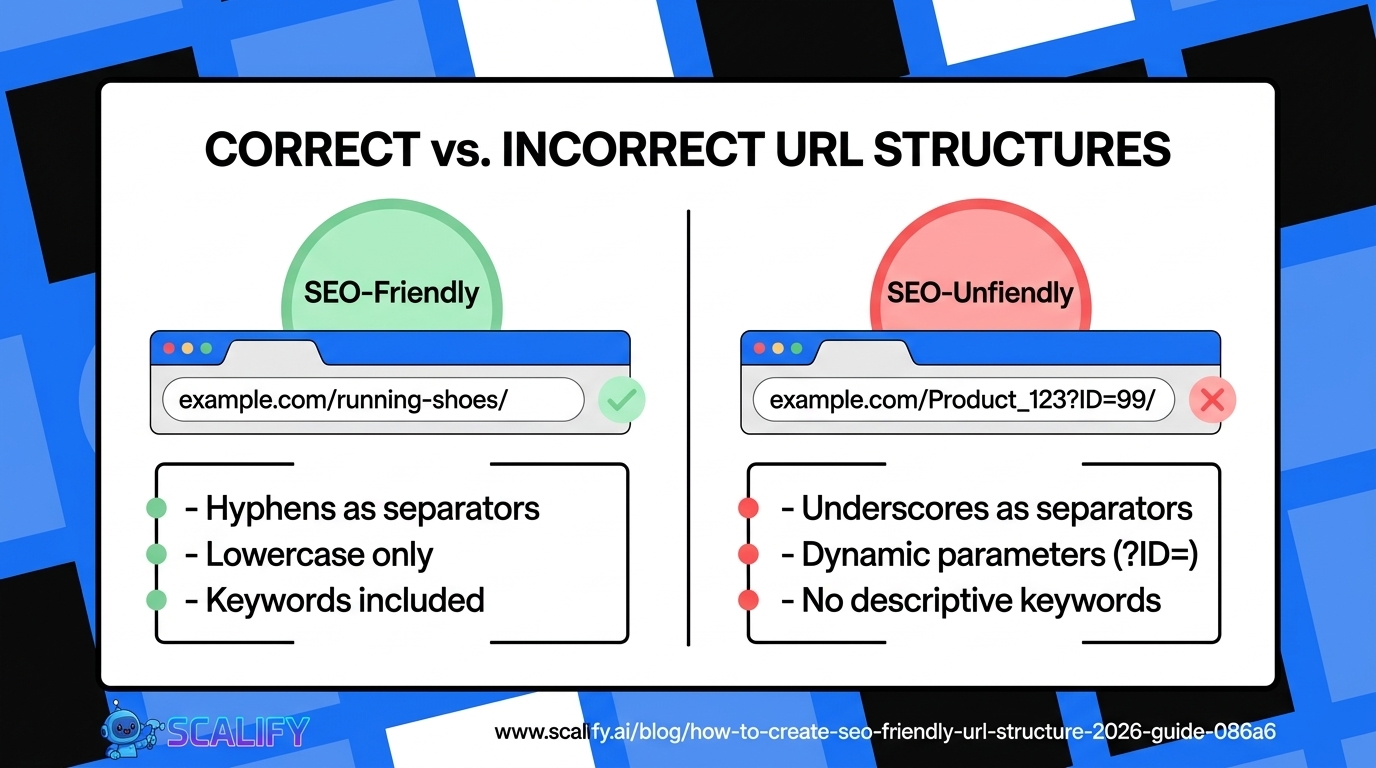
Keyword stuffing: "Web Design Miami Web Designer Miami FL Custom Web Design Services" — repeating keywords without natural language signals spam to Google and looks unprofessional in search results. One primary keyword, naturally written, is sufficient.
Optimizing for robots, not humans: "Web Design Services Miami FL SEO-Optimized Fast Websites" is optimized for a keyword checklist but reads robotically. A human reading this in search results is not motivated to click. Write titles that would make a human want to visit the page.
Not updating after Google rewrites: Google rewrites title tags it considers poorly matched to the page content or search queries. If your title is being rewritten frequently (visible in Search Console when the displayed title differs from your meta title), your written title isn't serving the page well. Investigate why Google is rewriting it and improve the original.
Auditing Your Site's Title Tags
A comprehensive title tag audit using Screaming Frog:
1. Crawl your site with Screaming Frog
2. Export the "Page Titles" tab
3. Filter for: missing title tags, duplicate title tags, title tags over 60 characters, title tags under 30 characters
4. Review each flagged title and rewrite as needed
In Google Search Console's Performance report, filter by pages and look for pages with high impressions but low CTR — these pages are ranking but not earning clicks, often because the title tag (and meta description) aren't compelling enough. These are your highest-priority title rewrite candidates: improving them can increase traffic from existing rankings without any change in position.
The Bottom Line
The title tag is the most important on-page SEO element and one of the most important marketing elements on any web page. It directly influences how Google ranks your pages and how many searchers click your results when they appear. Getting it right requires both technical SEO knowledge (keyword placement, length, unique per page) and copywriting skill (compelling, specific, click-worthy).
Write title tags for humans who are deciding whether to click, using keywords that signal relevance to both the searcher and Google. Front-load the primary keyword. Keep it under 60 characters. Make it unique for every page. Use power words and specificity where appropriate. Test and iterate using CTR data from Search Console.
At Scalify, every website we build includes carefully written title tags for all core pages — the on-page SEO foundation that helps your site rank and earn traffic from day one.
Key Takeaways and Next Steps
The principles and data in this guide reflect what actually works in professional web development and digital marketing in 2026 — not theoretical best practices but measured, documented outcomes from implementations at scale. The gap between knowing these principles and benefiting from them is always execution: the businesses that act on what they read, implement changes systematically, and measure the results consistently outperform those who consume information without converting it to action.
For any improvement described in this guide, the implementation sequence that produces the best outcomes: assess your current situation against the benchmarks provided, identify the 2–3 highest-impact improvements specific to your situation, implement them with measurement tracking in place, evaluate results after 30–60 days, and plan the next iteration based on what you learned. This cycle — assess, prioritize, implement, measure, iterate — is the operational foundation of continuous improvement that compounds into significant competitive advantage over the 12–24 month horizon.
The compounding returns from consistent web presence investment are not linear: a website that improves slightly each month accumulates to dramatic improvements over a year, and those improvements multiply with each other. Faster load times improve both search rankings and conversion rates simultaneously. Better content attracts backlinks that improve rankings that attract more traffic. More testimonials build trust that improves conversion rates that improve revenue that funds more investment. The interconnected nature of website performance means that each improvement amplifies the value of every other improvement — making the decision to invest consistently, across multiple dimensions simultaneously, the highest-ROI approach to digital marketing available to most businesses.
At Scalify, every website we build reflects these principles — technically optimized, conversion-focused, SEO-ready, and designed to compound in value over time as content, backlinks, and organic authority accumulate on the strong foundation we deliver in 10 business days.


.jpeg)
.jpeg)

78 SW 7th St, Miami, FL 33130