


What Is Link Building and Why Does It Matter for SEO?
By Josh Ternyak

March 29, 2026
Link building is one of the most powerful and most misunderstood parts of SEO. This guide explains what it is, why Google cares about it, which tactics work in 2026, and which ones will get you penalized.
The Single Most Powerful SEO Lever — and the Most Abused
If you've spent any time reading about SEO, you've seen the claim: "backlinks are the most important ranking factor." It's been repeated so often it's become nearly cliché. And yet it's remained consistently true for over two decades, through dozens of major algorithm updates, through the rise of machine learning, through the transformation of content quality signals — the correlation between high-quality inbound links and high search rankings remains one of the most durable findings in all of SEO research.
It's also one of the most abused dimensions of SEO. The recognition that links matter has spawned an entire industry of dubious practices: buying links, link farms, private blog networks, automated link generation, and "link exchanges" that Google explicitly prohibits and actively penalizes.
This guide covers what link building is, why Google cares about links, what actually works in 2026, what will get you penalized, and how to build a link acquisition strategy that drives ranking improvements without risk.
What Link Building Is
Link building is the practice of acquiring hyperlinks from other websites to your own. In SEO terminology, these incoming links are called backlinks or inbound links.
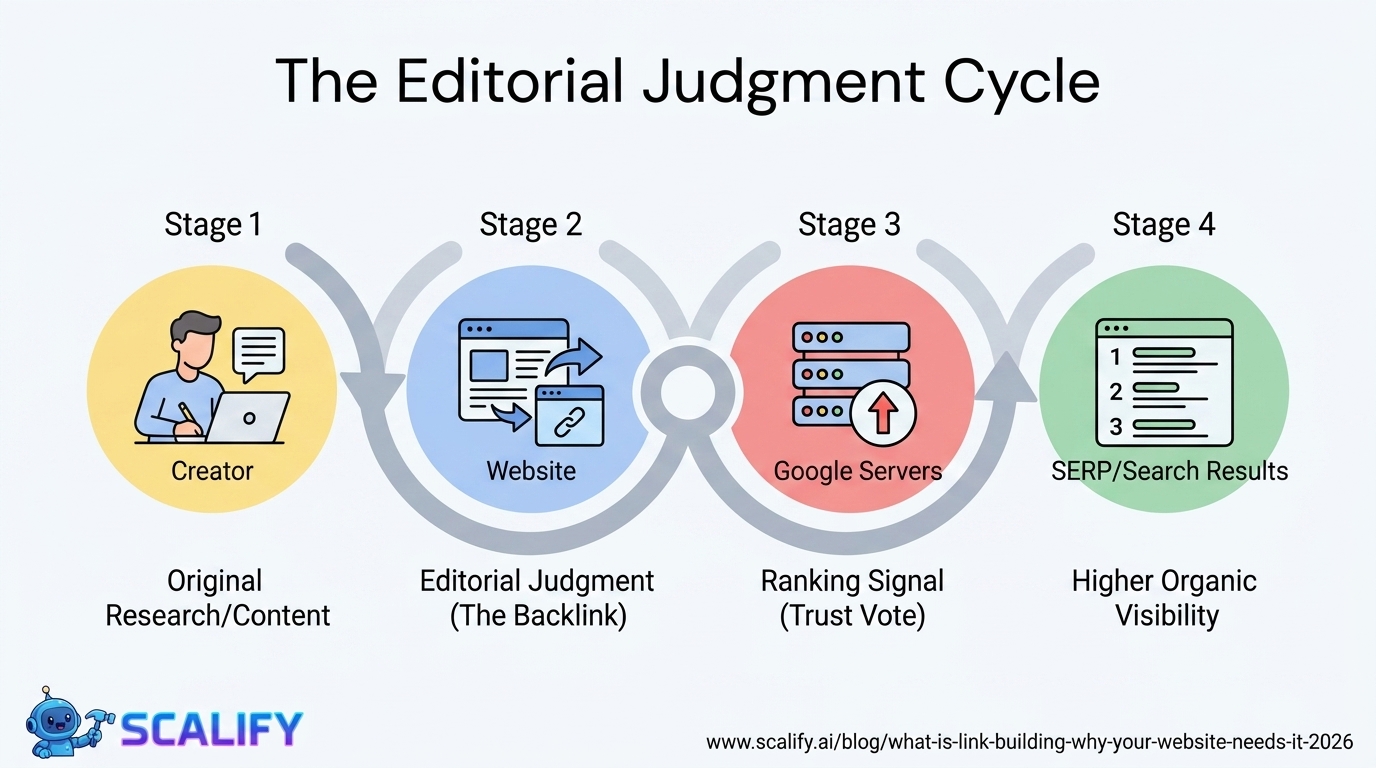
When another website links to your page, that link passes a signal to Google: another site on the internet found this content valuable enough to reference. Google interprets this as a vote of confidence — evidence that your page is a credible, relevant resource worth surfacing in search results.
The concept originates with PageRank — the algorithm developed by Larry Page and Sergey Brin (Google's founders) during their Stanford research that became the foundation of Google Search. PageRank modeled the web as a system of interconnected documents and ranked pages based on the quantity and quality of links pointing to them. The insight: pages that many other pages link to are likely to be more valuable than pages that few pages link to. A link is essentially a citation, and pages with more citations from credible sources are likely more authoritative.
25+ years later, the core logic holds. The algorithm has become incomprehensibly more sophisticated, but links remain a fundamental trust and authority signal that correlates more consistently with rankings than almost any other factor.
Why Not All Links Are Equal
Understanding that link quality matters dramatically — more than quantity — is the single most important concept in link building.
A link from the New York Times to your website is worth vastly more than a link from a freshly created blog with no traffic and no authority. A link from an industry-specific trade publication in your exact sector is worth more than a link from an unrelated site in a different industry, even if both have similar traffic. A link naturally earned because another writer found your content genuinely useful is worth more than a link you paid for or exchanged.
Google evaluates links along several dimensions:
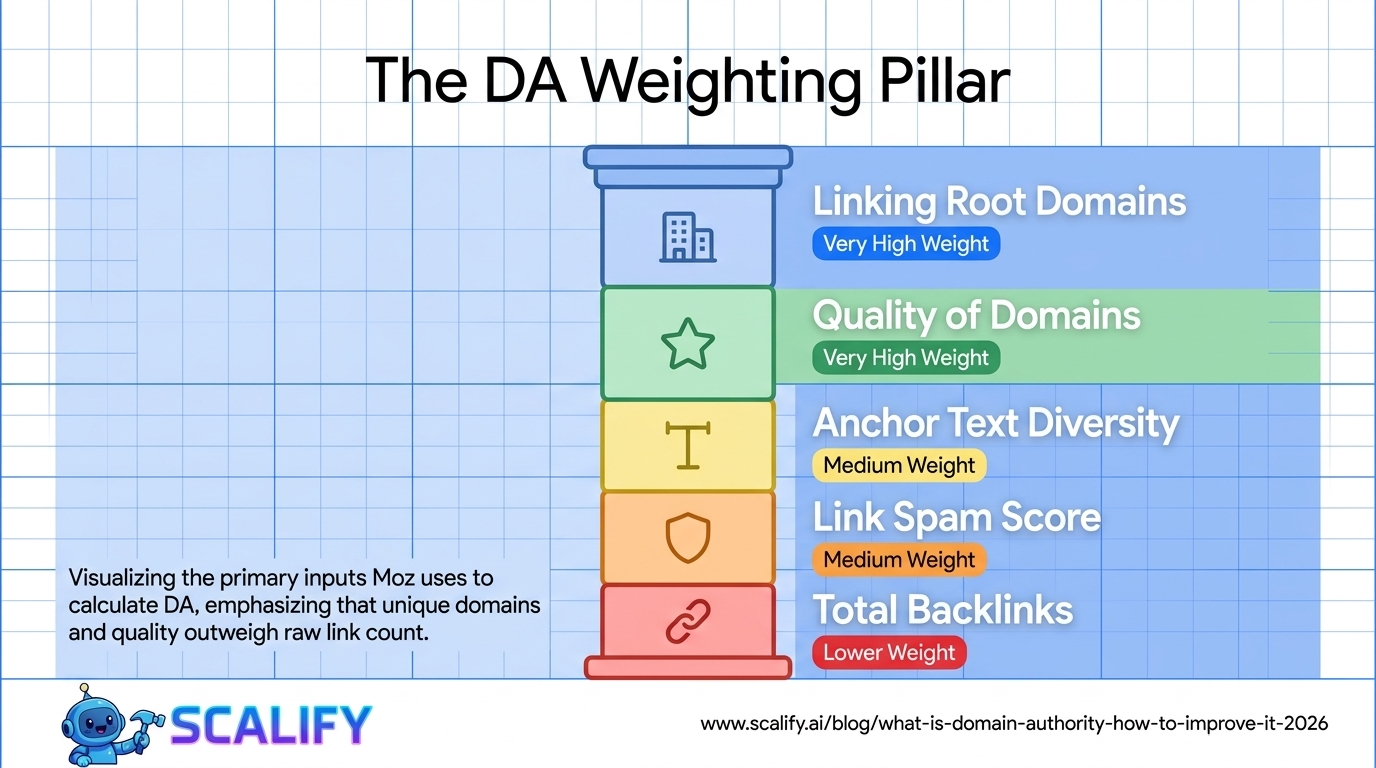
Domain Authority: How authoritative is the site linking to you? A link from a highly authoritative domain (major news publications, established educational institutions, government sites, well-known industry publications) passes more value than a link from a low-authority site. Tools like Ahrefs (Domain Rating) and Moz (Domain Authority) provide scores that approximate this — though these are proxy metrics, not actual Google signals.
Relevance: How topically relevant is the linking site to the linked page? A web design company getting a link from a design blog is more relevant than the same company getting a link from a food blog. Google increasingly understands topical relationships and weights relevance in how link authority is interpreted.
Placement and context: A link in the body of an article (editorial link) is worth more than a link in a footer, sidebar, or directory listing. A link surrounded by related content that provides context for the link carries more signal than a link dropped into unrelated content.
Anchor text: The clickable text of a link provides context about the linked page. "Web design services Miami" as anchor text signals to Google that the linked page is about web design in Miami. This is why manipulating anchor text at scale (building many links with exact-match commercial anchor text) is a major penalty risk — it looks unnatural.
Dofollow vs. nofollow: Links can carry the rel="nofollow" attribute, originally designed to prevent comment spam from passing PageRank. Nofollow links don't pass authority in the traditional sense (though Google treats them as "hints" and may give them some weight in certain contexts). Editorial links without nofollow (dofollow links) are the primary currency of link building for SEO purposes.
What Works for Link Building in 2026
Create Link-Worthy Content
The most sustainable link building strategy is producing content that people naturally want to link to. This sounds circular ("just make good content and links will come") but is more specific in practice.
Content that naturally earns links tends to be:
Original research and data: Studies, surveys, and data analyses that produce insights nobody else has published. If you survey 500 web design clients about their biggest pain points and publish the results, every article that discusses the topic you researched has reason to link to your data. Original data is one of the most reliably link-attractive content types across every industry.
Comprehensive resource guides: In-depth guides that cover a topic more thoroughly than anything else available become reference resources that other writers link to repeatedly. This guide you're reading is an example — it's designed to be the most comprehensive explanation of link building available for its audience.
Free tools and calculators: A genuinely useful free tool — a pricing calculator, an ROI estimator, a readability checker, a technical SEO audit tool — attracts links from every writer who recommends it. Tool links tend to be editorially motivated and stable.
Visual content and infographics: Well-designed infographics that visualize complex data attract links from writers who embed them in their articles. Less powerful than it was five years ago (Google now reads images better, reducing the information advantage of visual-only content) but still effective for right topics.
Opinion pieces and hot takes: Genuinely controversial or counterintuitive positions on industry topics attract links from writers who agree (citing your reasoning) and writers who disagree (refuting your argument). Both types of links count.
Digital PR and Media Outreach
Getting coverage in media publications — industry blogs, news sites, trade publications — is one of the highest-quality link acquisition strategies available. Editorial links from major publications carry enormous authority and are nearly impossible to replicate through other means.
Tactics that earn media coverage and links:
HARO (Help a Reporter Out) and Qwoted: Platforms where journalists post requests for expert sources. Responding to relevant requests with genuine expertise earns you quotes in articles that typically include links to your website. Consistent HARO responses can earn 2–10+ high-authority editorial links per month for active participants.
Original research distribution: Publishing original data and proactively pitching it to relevant journalists and bloggers. "We surveyed 500 small business owners about their website experiences — here are the findings" is a genuinely newsworthy data angle for a web design company to pitch to relevant publications.
Expert commentary and thought leadership: Positioning yourself or team members as accessible expert sources for journalists covering your industry. Over time, this leads to regular citations and links as reporters return to reliable sources.
Guest Blogging (Done Right)
Writing articles for other websites in your industry or adjacent topics — with a link back to your site in the author bio or within the content — is a legitimate link acquisition tactic when done with genuine value.
The key distinction: guest blogging for authority publications where the article provides genuine value to their readers is acceptable and effective. Guest blogging primarily for the link, with content that exists solely to carry a link and provides minimal value to the hosting site's audience, is manipulative and increasingly flagged by Google.
Guest blogging strategy that works: target relevant, genuine publications in your industry. Pitch topics that align with their audience's interests and that you have genuine expertise to write about. Create the best article they've published on that topic. The link is incidental to delivering real value — but it follows naturally from delivering real value.
Resource Page Link Building
Many websites maintain curated "resources" pages that link to useful tools, guides, and reference material in their topic area. These pages exist specifically to provide value to their readers through curation — which means the site is actively looking for quality resources to add.
Find resource pages by searching: "[topic] + resources," "[topic] + useful links," "[topic] + recommended reading." If your content would genuinely belong on their list, reach out and let them know it exists. The pitch is simple and honest: "You have a resource page about [topic]. I recently published [content] that I think would be a useful addition for your readers."
This tactic works because you're aligning with what the page owner is already trying to do — curate value for their readers — rather than asking for a favor.
Broken Link Building
Find pages on other websites that link to content that has since been removed (404 pages). Contact the site owner to let them know the link is broken, and suggest your content as a replacement. You're doing them a favor (fixing their broken link) while acquiring a link.
Tools like Ahrefs can find broken links at scale. The limitation is that this tactic is time-intensive and requires content that's actually a relevant replacement for what was there originally.
Unlinked Brand Mentions
Find places where your brand or content is mentioned online without a link. These are warm prospects — the person already knows you exist and found you worth referencing. A simple outreach asking if they'd add a link to the mention is often successful.
Ahrefs Alerts or Google Alerts can notify you of new brand mentions. Review each one: is it a genuine mention without a link? Is it from a site worth pursuing? If yes, reach out.
What Doesn't Work and What Will Get You Penalized
Google has spent 25 years fighting link manipulation, and its ability to detect manipulated link profiles has improved dramatically. Tactics that worked in 2010 reliably produce penalties in 2026.
Buying links: Paying money directly for backlinks violates Google's Webmaster Guidelines explicitly. Google has algorithmic and manual action penalties for sites with paid link patterns. Paid links are identifiable by patterns (anchor text uniformity, link velocity, low-quality source sites) and by tips from competitors who report suspicious link schemes.
Private Blog Networks (PBNs): Networks of sites created specifically to link to client sites. Google actively identifies and devalues PBN links. The domains used in PBNs often show up in penalty audits.
Link exchanges ("I'll link to you if you link to me"): Reciprocal linking at scale is a manipulative tactic explicitly listed in Google's guidelines as a link scheme. Occasional natural reciprocal links aren't a problem; systematic exchanges are.
Low-quality directory submissions: Mass-submitting to every web directory available produces low-quality, spammy-looking link profiles. A handful of legitimate, well-maintained directories in your industry are fine; hundreds of spam directories are not.
Comment spam: Posting comments on blogs with keyword-rich anchor text links. Nofollowed on virtually every platform anyway, and even if somehow followed, low-quality and easily detectable.
Article spinning: Submitting the same article to hundreds of low-quality article directories with slight variations. Recognizable by Google as manipulation.
How to Audit Your Backlink Profile
Understanding what links you currently have is the starting point for any link strategy. Tools for backlink auditing:
Google Search Console: Shows a sample of the sites linking to you under Links → External Links. Not comprehensive, but free and from Google directly.
Ahrefs Site Explorer: The most comprehensive backlink data available. Enter your domain and see every discovered backlink, the linking page, the anchor text, the Domain Rating of the linking site, and whether the link is dofollow or nofollow.
Semrush Backlink Analytics: Similar to Ahrefs, with its own link database. Using both tools gives the most complete picture as each has links the other misses.
When auditing, look for: toxic or spammy-looking links (low-quality sites, irrelevant anchor text, sites with no content), link patterns that look manipulated (sudden spikes, very uniform anchor text), and high-value link opportunities — links from sites you didn't know about that suggest content angles worth doubling down on.
Link Disavowal: When to Use It
If your site has a significant number of toxic or spammy backlinks — either from past bad practice or from negative SEO attacks — Google's disavow tool allows you to tell Google to ignore specific links when evaluating your site.
Disavowal should be used carefully and as a last resort. Google has become significantly better at ignoring low-quality links without disavowal — most spam links are simply discounted rather than hurting you. Disavowal is most appropriate for sites that have received a manual action penalty for unnatural links, or sites with clear patterns of manipulative link building from their past that they want to clean up.
Setting Realistic Expectations
Link building is slow, expensive in time or money, and the results aren't instantaneous. New links take weeks to months to be discovered and evaluated by Google. Ranking improvements from link acquisition typically lag the link by 1–3 months.
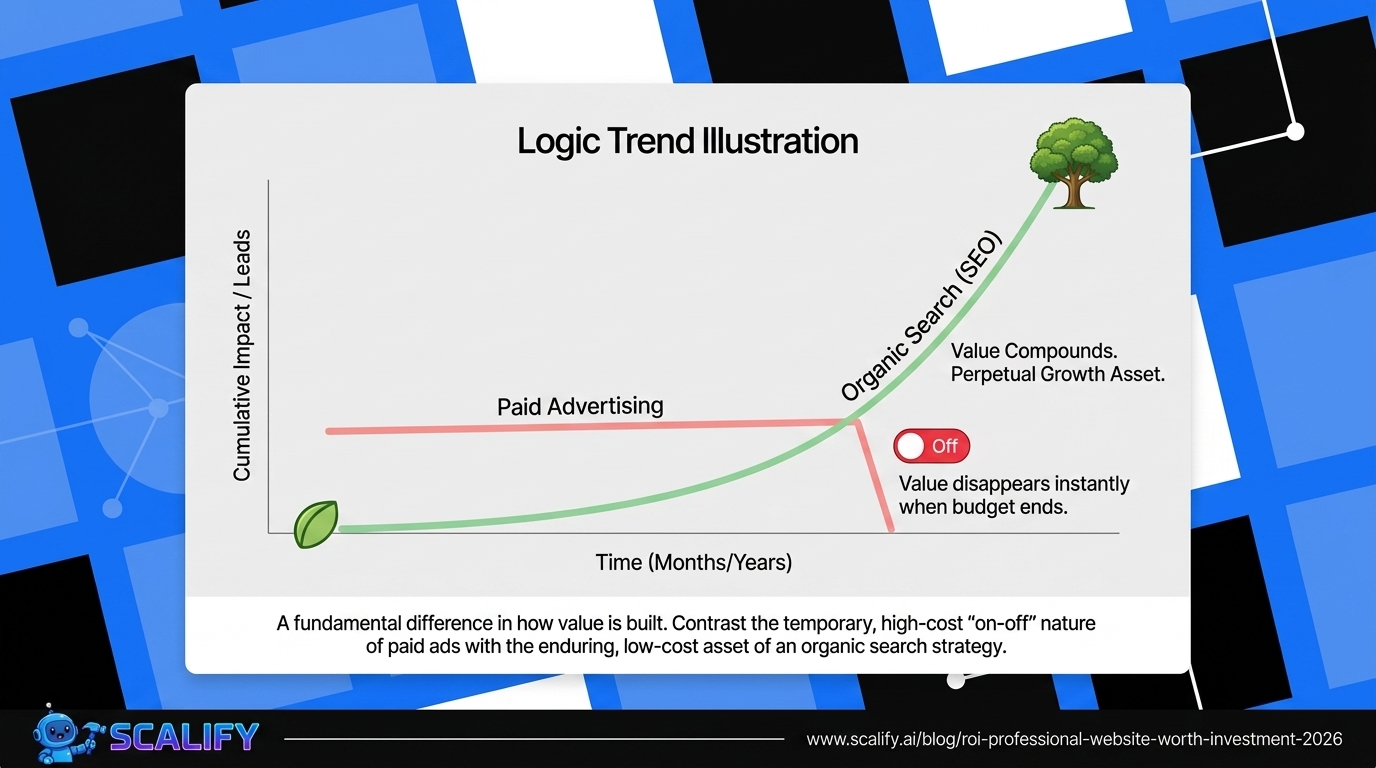
The compounding nature of link building: a strong backlink profile built over years is a durable competitive moat. Sites that have earned authority from thousands of high-quality links over a decade are very difficult to displace, even with better content. Starting link building early and consistently — even at modest scale — produces compounding returns over time.
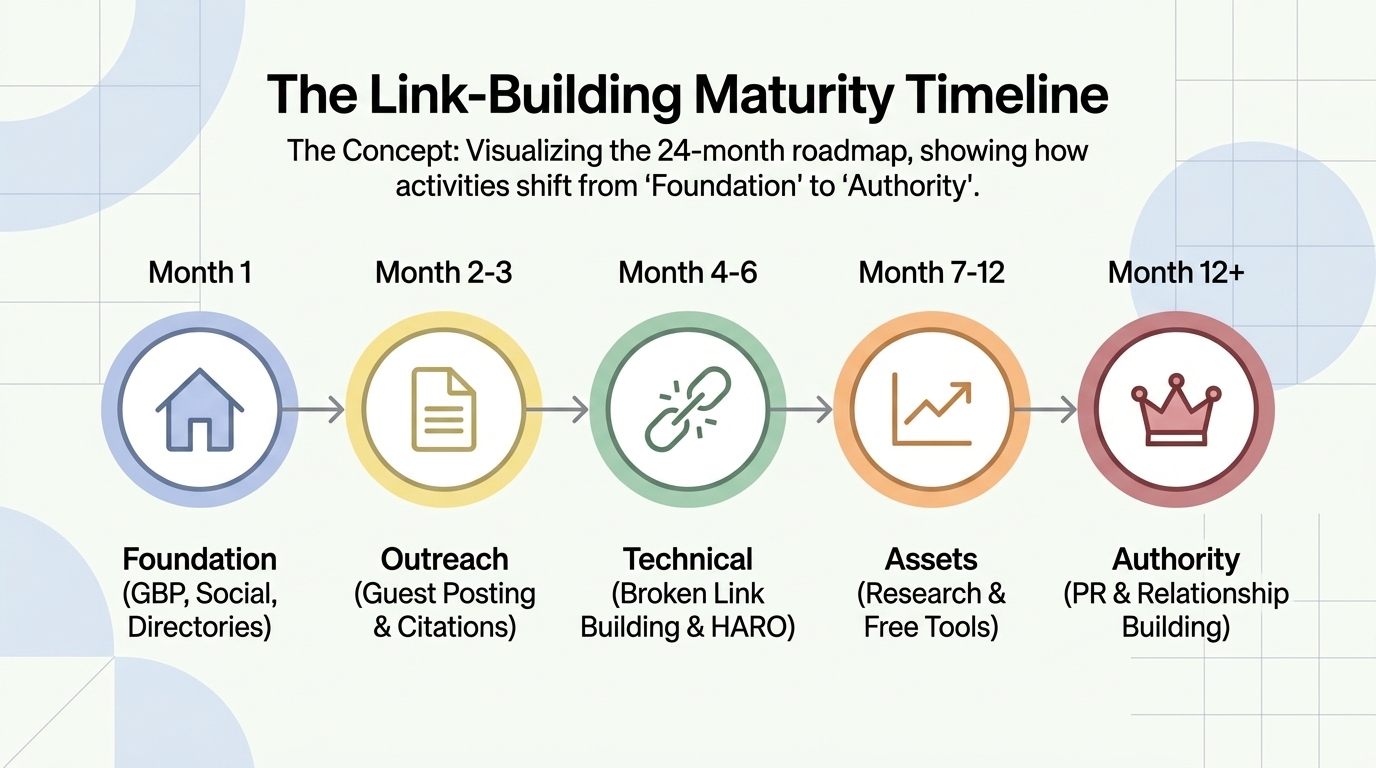
Realistic expectations for a consistent link building program: 3–6 months to see initial ranking improvements, 12–18 months to build a meaningful authority advantage in competitive niches, 2–3+ years to become a genuinely authoritative resource in an established market.
The Bottom Line
Link building is the practice of earning links from other websites — signals that tell Google your content is valuable and trustworthy enough to be referenced. The most effective strategies in 2026 are earned: create genuinely link-worthy content, pursue digital PR, write high-value guest posts for real publications, and build relationships in your industry. Avoid any tactic that involves paying for links, manipulating anchor text at scale, or building links through networks created solely for that purpose.
The sites that rank first for valuable commercial keywords have almost always invested significantly in link building. It's the factor that separates sites with great content that ranks from sites with great content that doesn't. Build it consistently, focus on quality over quantity, and the compounding returns will show up in your organic traffic and rankings over time.
At Scalify, we build every website with the technical foundation that makes link-building efforts maximally effective — fast, crawlable, properly structured sites where every earned link actually passes its full value.


.jpeg)
.jpeg)

78 SW 7th St, Miami, FL 33130