

What Is a Website Navigation and How Do You Design It Right?
By Josh Ternyak

March 29, 2026
Navigation is how visitors find what they're looking for — and bad navigation loses customers before they ever see your best content. This guide explains the principles and patterns of navigation design that actually works.
The System That Determines Whether Visitors Find What They Need
Here's an uncomfortable truth about navigation design: nobody thinks about navigation when it works. Visitors navigate without friction, find what they need, accomplish their goal. The navigation was invisible in the best possible way.
When navigation fails, it becomes very visible. Visitors hunt through menus for content they know exists. They misread labels and land on the wrong page. They can't figure out how to get back to where they started. They leave — and you never know why, because "I couldn't find what I was looking for" rarely shows up in exit surveys. It just shows up in your bounce rate.
Navigation design is one of the highest-impact decisions in any website project because it determines the accessibility of everything else. Excellent content buried behind confusing navigation is invisible content. Mediocre content with clear, intuitive navigation is accessible content. And accessible content converts; inaccessible content doesn't.
What Website Navigation Is
Website navigation is the system of interface elements that allow visitors to move through a website — to discover what's available, to locate specific content, and to orient themselves within the larger structure of the site. It includes the primary menu, secondary navigation, footer links, breadcrumbs, search functionality, and any other wayfinding elements.
Effective navigation serves three user needs simultaneously:
Wayfinding: Where am I right now? What's the relationship between this page and the rest of the site?
Discovery: What else is available that I might want? What sections exist that I haven't explored yet?
Access: How do I get to the specific thing I'm looking for?
Navigation design fails when it serves the organization's internal structure rather than users' mental models. A company that organizes its website navigation according to its departments ("Marketing," "Sales," "Operations") produces navigation that makes sense to employees and is confusing to customers. Customers think in terms of their goals and needs — navigation organized around those goals and needs serves them better than navigation organized around internal organizational charts.
The Anatomy of Website Navigation
Primary Navigation (Main Menu)
The primary navigation is the main menu — typically in the header — that provides access to the top-level sections of the site. It's the first navigation system visitors encounter and the one they rely on most for initial orientation and primary discovery.
The primary navigation should include only the most important destinations on the site — the sections that matter most to the majority of visitors. Listing every page in the primary navigation produces overwhelming menus with no clear hierarchy. The discipline is in what to leave out.
How many items? Research from information architecture practice and usability testing consistently supports 5–7 items as the effective range for primary navigation. Fewer than 5 may mean important sections aren't represented; more than 7 creates cognitive load that slows navigation decisions and reduces the prominence of individual items.
Dropdown Menus
Dropdown menus allow top-level navigation items to expand and reveal sub-pages or sub-sections. They're useful for sites with significant content depth — where having just 5 items in the primary nav would leave important sections invisible.
The design challenges with dropdowns:
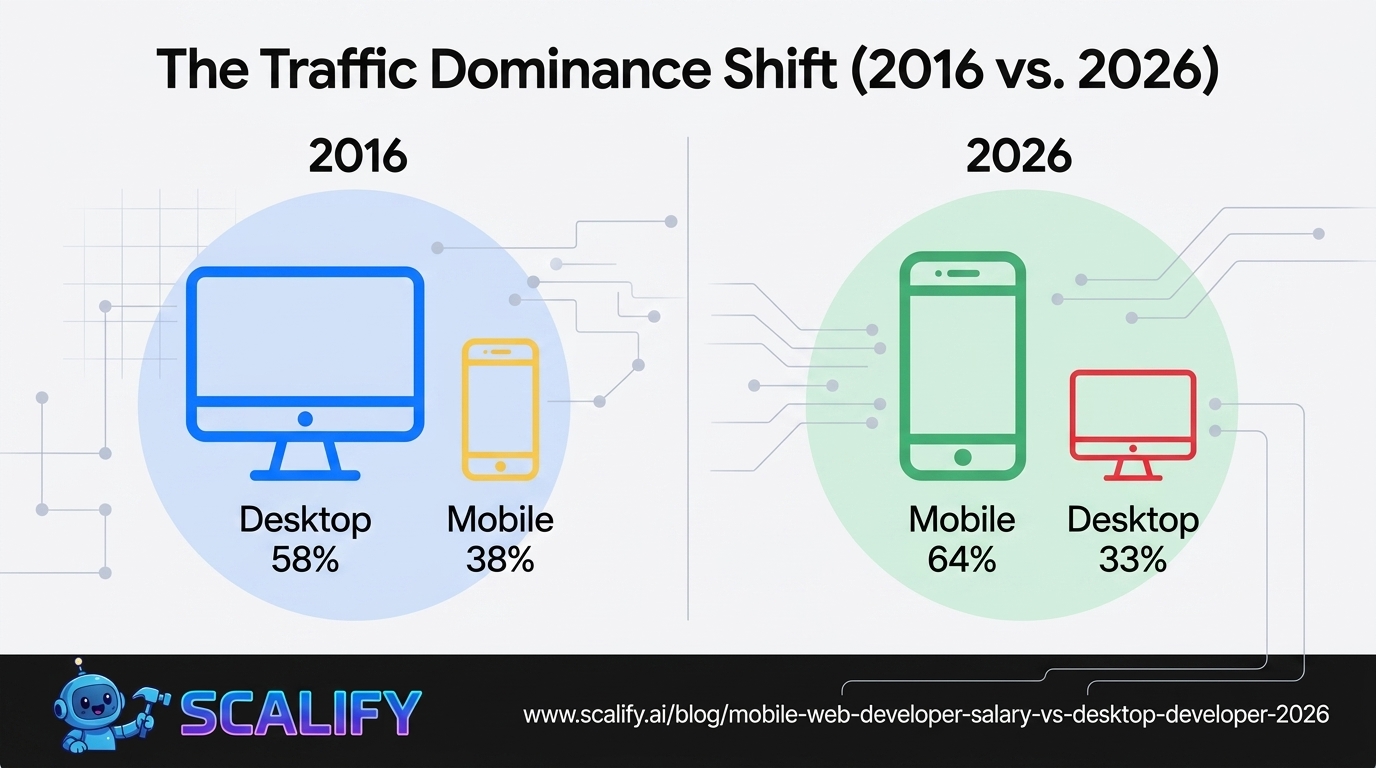
Hover vs. click triggers: Hover-triggered dropdowns work well on desktop but don't work on touchscreens (where there's no hover event). Any site with meaningful mobile traffic needs click-triggered dropdowns or mobile-specific navigation patterns. Hover as primary trigger + click as fallback is a common compromise.
Mega menus: For sites with extensive content (large e-commerce, large content libraries), standard dropdowns with 5–8 items are insufficient. Mega menus expand into multi-column panels that can expose dozens of destinations simultaneously — organized by category, with visual hierarchy, sometimes with featured content or imagery. Used by major retailers (showing product categories visually), large SaaS products (showing product modules and features), and enterprise sites with complex information architectures.
Mobile behavior: Dropdown behavior needs to be completely reimagined for mobile. Most solutions use an off-canvas menu (slides in from the side) or a full-screen overlay that replaces the main content when the hamburger menu is tapped.
Mobile Navigation (Hamburger Menu)
The hamburger icon (☰ — three horizontal lines) has become the universal signal for "tap here to open navigation" on mobile. When tapped, it reveals the navigation that doesn't fit the narrow mobile viewport.
The debate about hamburger menus in design circles has been extensive: hiding navigation behind an icon reduces its discoverability, which can reduce exploration. But the alternatives — a compressed horizontal navigation that's too small to tap, or a menu that takes up too much vertical space — are consistently worse for mobile users.
Best practices for mobile navigation: make the hamburger icon clearly tappable (minimum 44×44px touch target), provide clear visual state when the menu is open (close icon replaces hamburger), ensure the open menu state is obviously dismissible (X icon, tap outside to close), use appropriate font sizes in the mobile menu (minimum 16px for menu items), and include important CTAs within the mobile menu alongside navigation links.
Breadcrumbs
Breadcrumbs show the hierarchical path from the homepage to the current page: Home > Services > Web Design > Custom Websites. They serve two purposes: helping visitors understand where they are in the site's structure, and providing easy access to parent-level pages without using the back button.
Breadcrumbs are most valuable on deep hierarchical sites — e-commerce category structures, documentation systems, large content libraries. On simple 5–10 page sites with flat architecture, breadcrumbs add complexity without value.
From an SEO perspective, breadcrumbs implemented with BreadcrumbList schema markup can produce breadcrumb trails in Google search results — replacing the URL display with a more descriptive path indicator that can improve click-through rates.
Sidebar Navigation
Common in documentation, blog archives, and content-heavy sites. Sidebar navigation provides persistent secondary navigation — article categories, related content, or section-specific navigation — without taking up header space. Most effective on desktop (wide screens accommodate both sidebar and main content); on mobile, sidebars typically collapse or appear below the main content.
Footer Navigation
The website footer provides navigation access to important pages that don't fit the primary nav without cluttering it: legal pages (Privacy Policy, Terms of Service), secondary service pages, about and team pages, social links, and contact information. Footer navigation serves visitors who've scrolled to the bottom and are still looking for something specific — they've demonstrated high engagement and deserve good access to additional content.
Search
Site search is navigation for visitors who know what they want and prefer to type a query over browsing menus. Essential for sites with large content libraries (e-commerce, documentation, large blogs). For smaller sites, site search may be unnecessary overhead — visitors can find things through standard navigation on a 20-page site.
Search placement: top-right of the header is the conventional location. For content-heavy sites, a prominently featured search box (not just a small icon) increases search usage and helps visitors find content efficiently.
Navigation Design Principles
Use Language Visitors Recognize
Navigation labels should use language that matches how visitors describe their needs — not how the organization describes its offerings internally. The most common navigation label mistake: using internal jargon.
"Solutions" means something to the company's marketing team. Visitors searching for software to solve their problem are thinking "CRM software" or "email marketing platform" — not "solutions." "Services" is better than "what we do." "Pricing" is clearer than "investment" or "plans." "Contact" is clearer than "get in touch" or "connect."
Test navigation labels with real users. Ask people in your target audience what they'd expect to find under each menu label. Their answers often reveal mismatches between what you called a section and what they expected it to contain.
Reflect User Goals, Not Organizational Structure
Organize navigation around what visitors are trying to do, not around how the organization is structured internally. A hospital organized its navigation by department (Cardiology, Orthopedics, Neurology) — which made sense to staff but was unhelpful to patients who were thinking "I have chest pain" or "my knee hurts," not "I need cardiology." Reorganizing around symptoms and conditions instead of departments dramatically improved findability.
For a web design company: "Services" (organized by what clients need), "Work" (portfolio), "About," "Pricing," and "Contact" — organized around what visitors are looking for. Not "Design Team," "Development Team," "Client Projects," "About Our Agency," "Let's Chat" — organized around internal company structure.
Indicate the Current Location
Users need to know where they are within the navigation structure. Active state styling — a different color, weight, or underline on the currently active navigation item — provides this orientation. Without visual indication of the current section, visitors lose context about where they are in the site structure.
Current page indication should be visually unambiguous — not just slightly darker than inactive items, but clearly differentiated. Both the active top-level item and any active sub-items should be indicated.
Don't Rely on Navigation Alone
Visitors don't always start at the homepage and navigate to their destination. They often arrive deep in the site — from search, from social media, from a specific link someone shared. These visitors need in-page orientation (what is this page about, how does it relate to what I'm looking for) and contextual navigation (what's the next logical step from here) that doesn't depend on the main nav.
Every page should be designed as a potential entry point: clear indication of what the page is and why a visitor would want it, links to related content and logical next steps, and access to the main navigation for visitors who want to explore further.
Keep It Consistent
Navigation should look and behave identically on every page of the site. Inconsistencies — a nav item that appears on most pages but not all, a dropdown that works differently on interior pages than the homepage, a mobile menu with different items than the desktop menu — create disorientation and undermine the implicit spatial model visitors build of the site's structure.
One exception: landing pages intentionally strip navigation to reduce distraction from a single conversion goal. This is appropriate for campaign landing pages; not for regular site pages.
Navigation and SEO
Navigation has significant SEO implications beyond user experience:
Internal linking equity distribution: Every item in your navigation creates internal links to those pages from every page of the site. Pages in the main navigation receive internal links from every other page — significantly boosting their crawl priority and internal PageRank. This is why important pages (your core service pages, key product pages) deserve navigation placement: the link equity from site-wide navigation is substantial.
Crawl discovery: Googlebot follows internal links to discover and crawl pages. Pages accessible through clear navigation paths are discovered and crawled more reliably than pages buried deep in the site structure with few internal links.
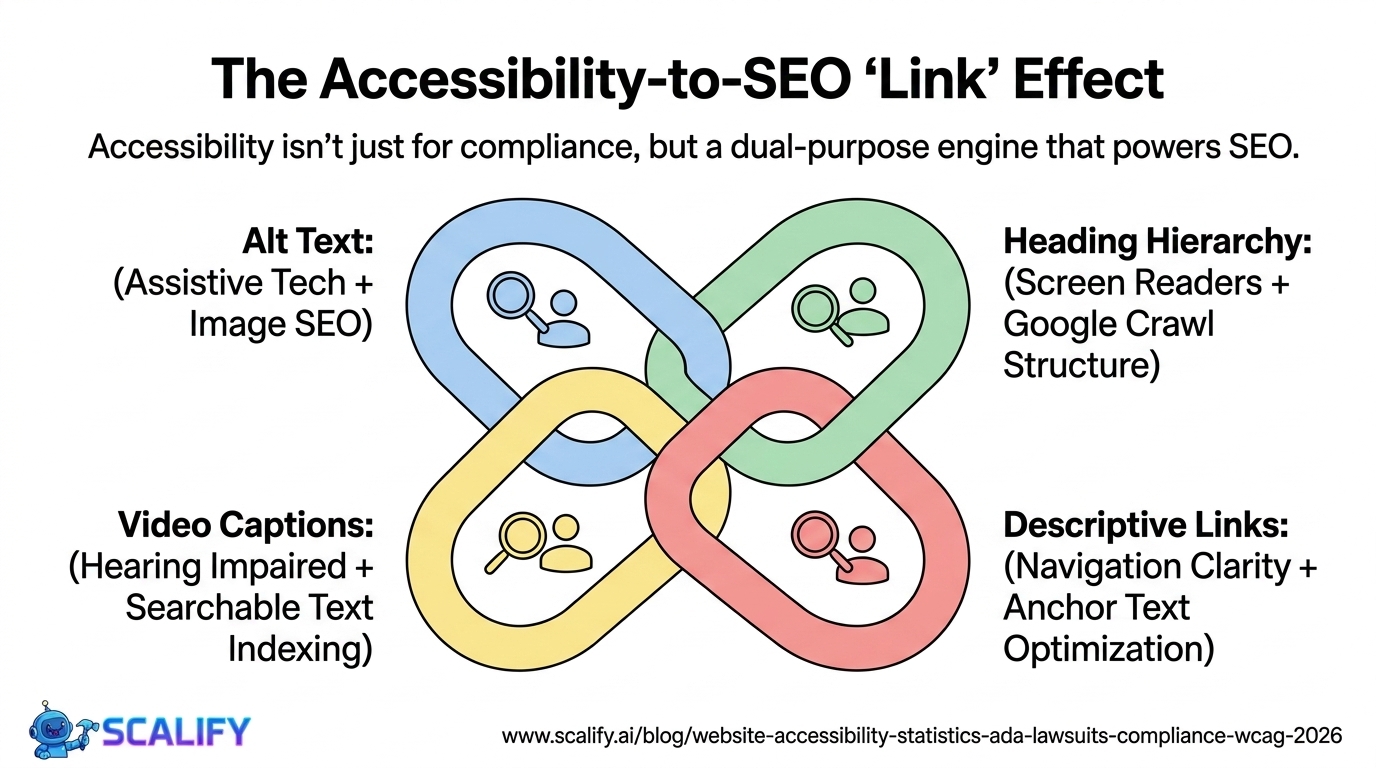
Anchor text signals: Navigation link text (anchor text) contributes to how Google understands what the linked pages are about. "Web Design Services" as a nav label provides more SEO signal than "What We Do." Descriptive, keyword-relevant navigation labels produce stronger SEO signals than vague labels.
Testing Your Navigation
The only reliable way to know if your navigation works is to test it with real users. Several testing approaches:
Tree testing: Present users with a text-only version of your site's information hierarchy (no visual design) and ask them to find specific content by navigating the hierarchy. Tree testing isolates navigation structure from visual design — it tests whether the organization makes sense, not whether the design looks good. Tools: Treejack, Optimal Workshop.
Card sorting: Participants sort content topics into groups that make sense to them, then name those groups. The resulting clusters reveal how users naturally categorize information — which often differs from how the company organized it. Use card sorting results to inform navigation category labels and groupings.
First-click testing: Show participants a screenshot of your homepage and ask where they would click to accomplish specific tasks. Research by CXL shows that if the first click is correct, users complete tasks successfully 87% of the time — making first-click testing a highly predictive measure of navigation effectiveness. Tools: Optimal Workshop, UsabilityHub.
Session recordings: Watch real visitors navigate your site in session recordings (Hotjar, Microsoft Clarity). Observe where navigation confusion occurs — repeated clicking on the same nav items, backtracking, searching after navigating, or using search when navigation didn't work. These behavioral signals reveal problems that surveys don't capture.
The Bottom Line
Navigation is the infrastructure through which visitors access all your content. Design it around user goals and mental models, not internal organizational structures. Use language visitors recognize. Keep it consistent. Indicate current location clearly. Test with real users before committing to a structure.
Good navigation is invisible — visitors find what they need without thinking about the navigation. That invisibility is the goal, and achieving it produces measurable improvements in engagement, time on site, and conversion rate from the same traffic.
At Scalify, information architecture and navigation design are core parts of every website project — we design navigation that serves visitors, not just looks good in a mockup review.



.jpeg)
.jpeg)

78 SW 7th St, Miami, FL 33130