


How Much Does a Website Cost? The Honest Pricing Breakdown
By Josh Ternyak

March 29, 2026
Website pricing ranges from free to $500,000+ — and most pricing guides either lowball or inflame the numbers. This is the honest, complete breakdown of what websites actually cost and why.
The Question That Gets the Widest Range of Answers
"How much does a website cost?" is one of the most searched questions in web development. It's also one of the questions with the widest legitimate range of answers. A legitimate answer could be "free" (a DIY site on a free tier). It could also be "$500,000" (a custom enterprise e-commerce platform). Both answers would be correct, for completely different situations.
The problem with most pricing guides: they present ranges so wide they're meaningless, or they focus on one slice of the market without acknowledging the others. "Websites cost $500 to $50,000" is technically true and practically useless.
This guide breaks down website pricing honestly — by type, by who builds it, by what's included, and by what drives costs up or down. By the end, you'll know what you should expect to pay for your specific situation, what questions to ask, and what warning signs suggest a quote is off in either direction.
The Variables That Determine Website Cost
Website cost is determined by four primary variables:
Complexity: A 5-page brochure site is not the same project as a 200-page e-commerce store with custom product configurators and ERP integration. Complexity includes the number of pages, the functionality required, the design uniqueness, the number of integrations, and the sophistication of the content management system.
Who builds it: A skilled senior designer at a top agency in New York charges differently than a junior freelancer in a lower cost-of-living market. DIY costs only your time. These aren't quality rankings — a skilled freelancer often produces better work than a mediocre agency, and a well-chosen template can outperform a mediocre custom design. But the rate structures are genuinely different.
What's included: Does the price include copywriting? Photography? SEO setup? Ongoing hosting? Maintenance? Training? Support? A $5,000 quote that includes everything can be better value than a $3,000 quote that includes only the build and leaves everything else to you.
Timeline: Rushed timelines cost more. If you need something in two weeks that normally takes eight, expect to pay a premium for the prioritization. Relaxed timelines can sometimes negotiate lower rates from providers with available capacity.
DIY Website Builders: $0–$50/Month (Ongoing)
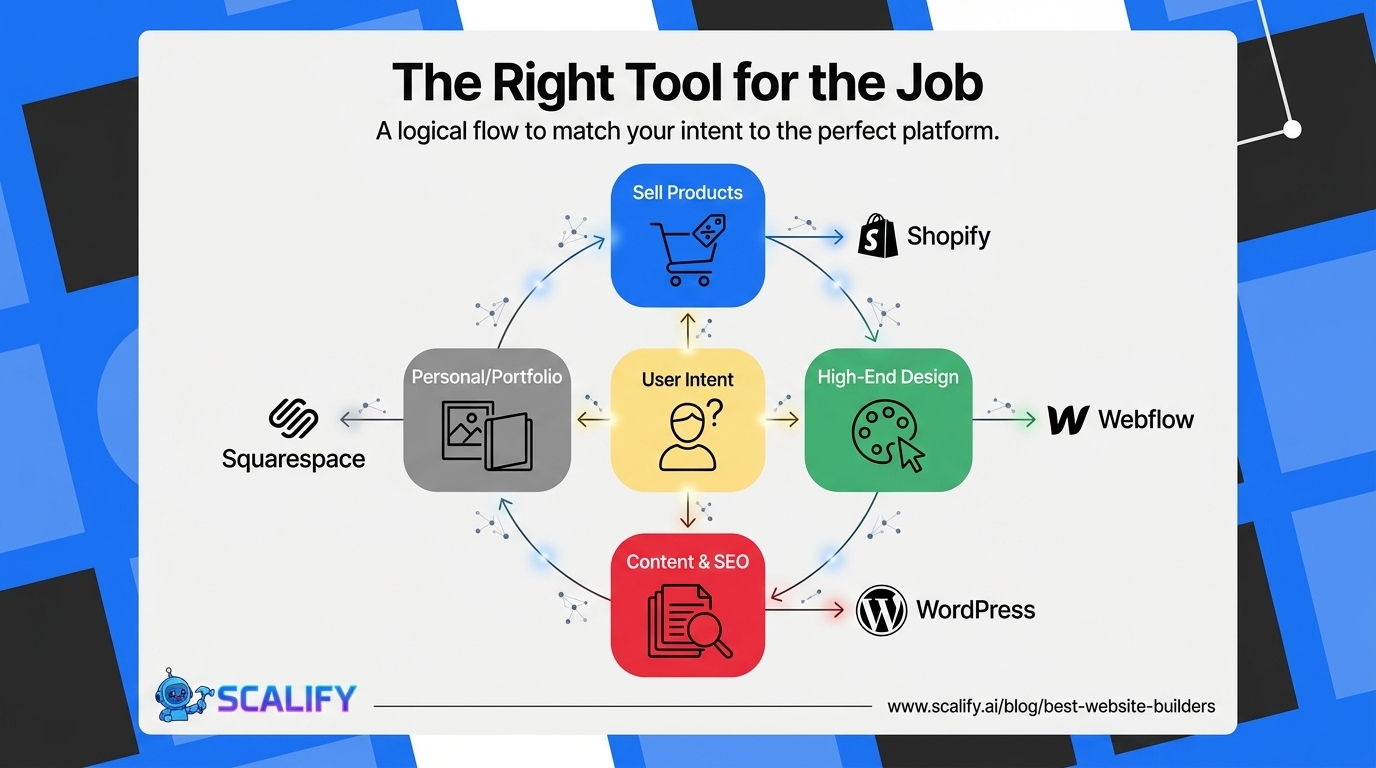
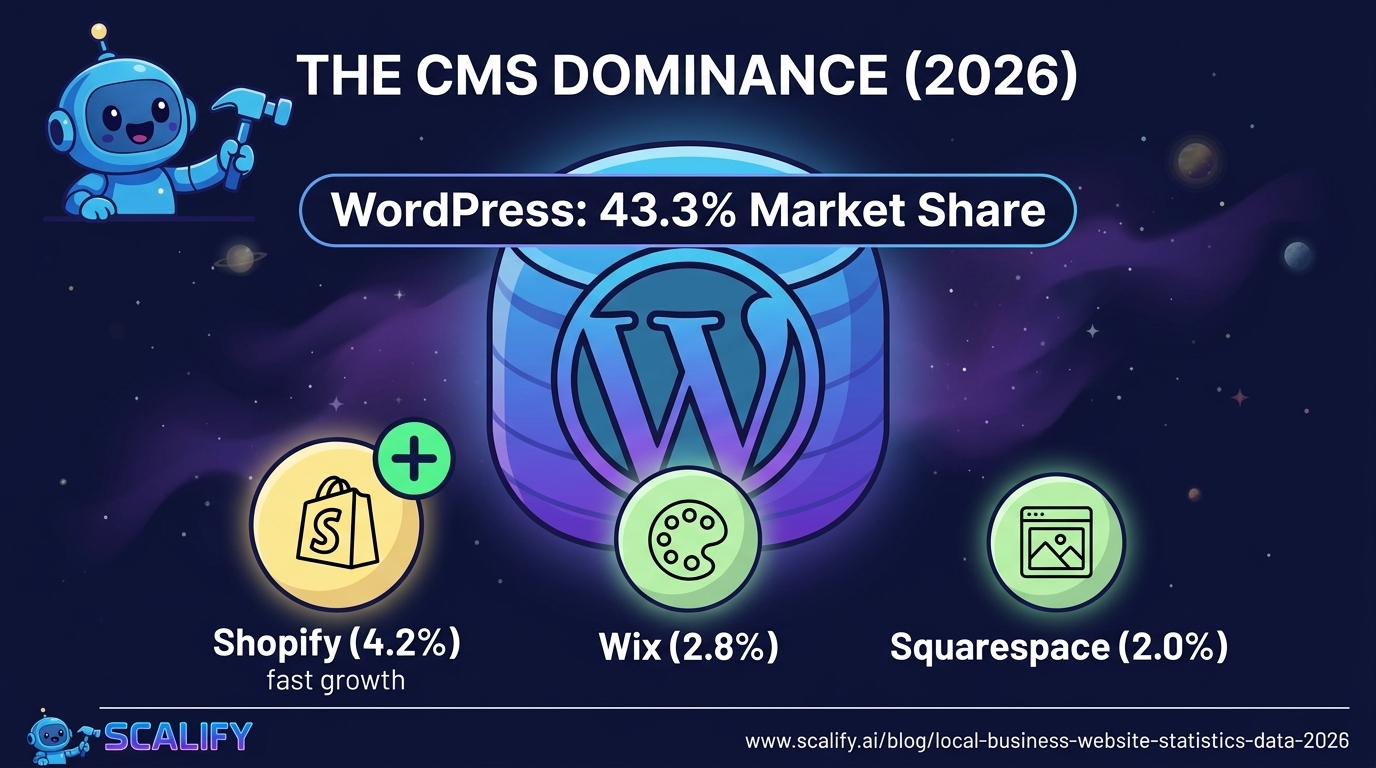
The entry point for website presence. Platforms like Squarespace, Wix, Webflow, and WordPress.com offer plans ranging from free (with significant limitations) to $50+/month for e-commerce capabilities.
What you get: Hosting, templates, a drag-and-drop editor, basic analytics, and for higher tiers, e-commerce functionality and custom domains. The template library means you can have a professional-looking site without design skills.
What you don't get: Your time. Depending on the platform and your familiarity, building a decent DIY site takes 20–100+ hours. If that time has value to you (and it does), the "free" calculation changes.
The quality ceiling: Modern website builders have good ceilings. A well-designed Webflow or Squarespace site can look genuinely professional. The limitation is that you're working within the template's design language, and without design judgment, many DIY sites still look "template-y" in ways that undermine credibility.
Total annual cost: $0–$600/year for platform fees, plus your time investment, plus potentially a premium theme ($50–150 one-time) or premium plugins.
Right for: Individual professionals, early-stage businesses, bloggers, side projects, and anyone with time to invest in learning the platform and genuinely limited budget.
Freelance Web Designer/Developer: $1,500–$15,000
The middle tier that represents most professionally-built small business websites. This range is enormous and the quality variance within it is significant.
$1,500–$4,000: Entry-level freelancers, often newer to the profession or working in lower cost-of-living markets. Template-based builds with customization. Can produce solid results for straightforward projects; less reliable for complex requirements. Due diligence on portfolio and references is essential at this price point.
$4,000–$8,000: Mid-level experienced freelancers. This range can produce genuinely custom-feeling websites with solid technical execution. Appropriate for most small business brochure sites, portfolio sites, and moderate-complexity content sites. Freelancers at this level typically have 3–7 years of experience and a portfolio that demonstrates consistent quality.
$8,000–$15,000: Senior freelancers and small specialist studios. Full-process projects with discovery, strategy, custom design, development, and launch support. Can handle complex CMS setups, moderate e-commerce, and sites requiring multiple custom components. This tier also includes specialized services like Scalify that deliver custom websites with structured, efficient processes.
Total cost considerations: Many freelance quotes don't include copywriting, professional photography, SEO setup, or ongoing maintenance. Add $500–2,000 for professional copywriting of a 5-page site, $500–2,000 for photography, and $100–300/year for hosting if not managed by the freelancer.
Small/Mid-Size Web Agency: $10,000–$75,000
Agencies bring process, specialization, and team depth — and charge accordingly. What you pay for at the agency tier beyond the mid-tier freelancer:
Process and project management: A dedicated project manager coordinating design, development, content, and QA. Regular updates, clear milestones, accountability structures. Less common in freelance work.
Specialization depth: Separate specialists for UX research, visual design, front-end development, back-end development, SEO, and content. A strong agency with ten specialists on your project has more depth than any single freelancer can provide.
Account management and relationship: Ongoing contact, regular reviews, someone to call when something breaks six months after launch.
$10,000–$25,000: Small agencies (3–10 people), typically producing custom sites on platforms like Webflow or WordPress. Discovery process, custom design, CMS setup, launch support. The most common price range for a full-service professional website from a boutique agency.
$25,000–$75,000: Mid-size agencies with established process, strategy phase, user research, custom design system, multiple templates built out, performance optimization, SEO strategy, training, and extended support. Appropriate for businesses where the website is a primary lead generation or sales tool that needs to be genuinely excellent.
Important caveat: Agency size and price don't correlate directly to quality. A well-run 5-person boutique agency often produces better work than a mediocre 50-person shop. Portfolio quality, client references, and specific project fit matter more than headcount.
Enterprise Web Development: $75,000–$500,000+
Enterprise projects involve custom applications, complex integrations, multiple stakeholder groups, extensive user research, and months of development. These aren't "websites" in the traditional sense — they're digital platforms.
What drives enterprise costs:
Custom web application development (not a CMS-based website but a purpose-built software application). Deep technical integrations (ERP systems, CRM platforms, payment processors, inventory management). Compliance requirements (HIPAA for healthcare, SOC 2 for SaaS, PCI DSS for payment processing). Extensive user research and testing phases. Multi-market or multi-language implementations. Accessibility audits and remediation. Enterprise security reviews. Change management for large organizations.
Who needs this tier: Large enterprise companies, government entities, financial institutions, healthcare organizations, and businesses building digital products that are themselves the core business.
E-Commerce: A Separate Pricing Tier
E-commerce websites have their own pricing structure because the complexity requirements are genuinely different from brochure sites at every scale.
Simple Shopify store (under 50 products): $2,000–8,000 for a professionally built storefront. Shopify template + customization, product setup, payment processing configuration, basic shipping setup. DIY is very achievable here.
Mid-size Shopify store (50–500 products, some custom features): $8,000–25,000. Custom theme design or significant template customization, custom functionality (size guides, product bundles, subscription features), integration with inventory or accounting systems, performance optimization.
Complex e-commerce (500+ products, custom logic, integrations): $25,000–150,000+. Custom checkout flows, multi-currency, complex discount engines, ERP integration, custom product configurators, extensive performance optimization for scale.
Ongoing costs specific to e-commerce: Platform fees (Shopify: $39–399+/month), payment processing fees (typically 2.9% + $0.30 per transaction for Stripe/Shopify Payments), app subscriptions for added functionality ($100–500+/month for a typical mid-size store). E-commerce has a higher ongoing cost baseline than informational sites.
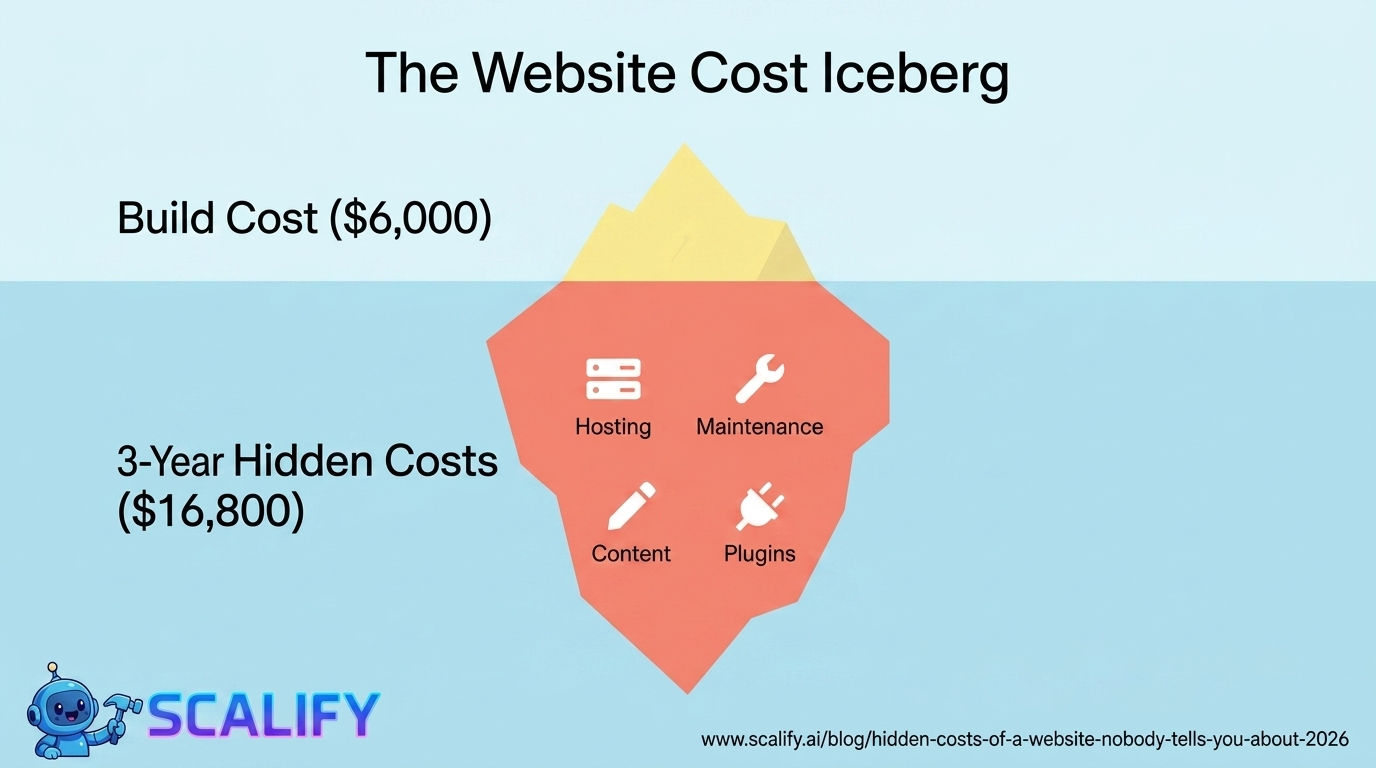
Ongoing Costs: The Part Most Quotes Leave Out
A website quote typically covers the build. The ongoing costs that follow are real and need to be planned for:
Hosting: $10–300+/month depending on platform and traffic. Managed WordPress hosting: $30–100/month. Webflow: $23–39/month plan fee includes hosting. Shopify: $39–399/month includes hosting. Custom server: $20–500/month depending on scale.
Domain registration: $10–20/year for most .com domains. Premium or .ai domains can cost significantly more.
SSL certificate: Typically included in hosting or platform plans. If not, $0 (Let's Encrypt) to $200+/year (commercial certificates).
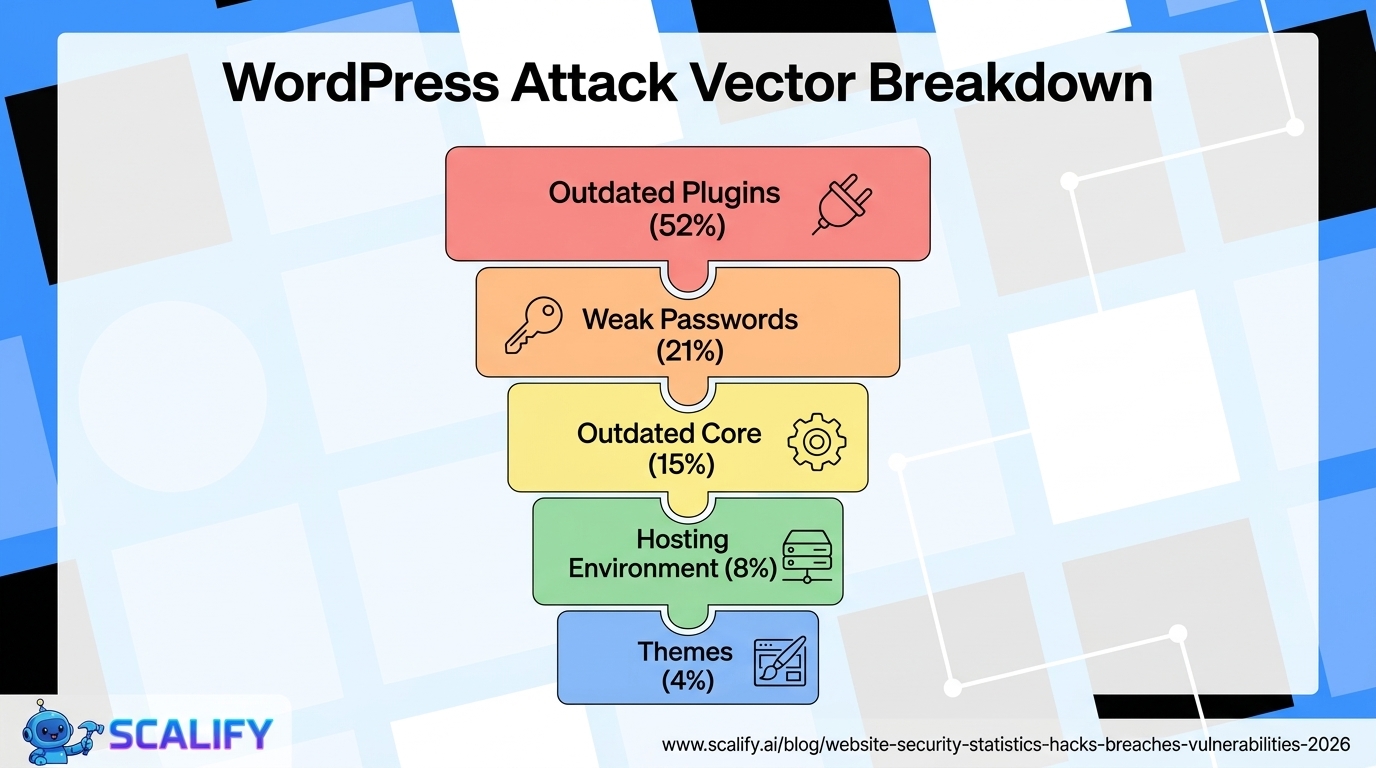
Maintenance and updates: WordPress sites in particular need ongoing plugin and core updates, security monitoring, and occasional bug fixes. Budget $100–300/month for a managed WordPress maintenance service, or accept the ongoing time cost of doing it yourself.
Content updates: Someone needs to keep the site current — blog posts, updated team pages, new case studies, product updates. This is often an internal resource cost but is real regardless.
SEO and analytics tools: Google Analytics and Search Console are free. More advanced SEO tools (Ahrefs, Semrush) run $99–250/month. Email marketing platforms ($20–500+/month depending on list size and features).
Total annual ongoing cost for a typical small business website: $600–3,000/year in platform and hosting fees, plus any content, maintenance, and marketing tool costs.
What Affects Price Within Each Tier
Number of pages: More pages = more design, more development, more content. A 5-page site is fundamentally a different scope than a 30-page site. Custom-designed interior page templates are often the primary driver of scope differences within the same tier.
Custom functionality: Booking systems, membership areas, complex filtering, custom calculators, interactive maps, subscription management — each adds significant development time. "Simple" features often aren't. A calendar integration that sounds like an afternoon takes several days to implement correctly.
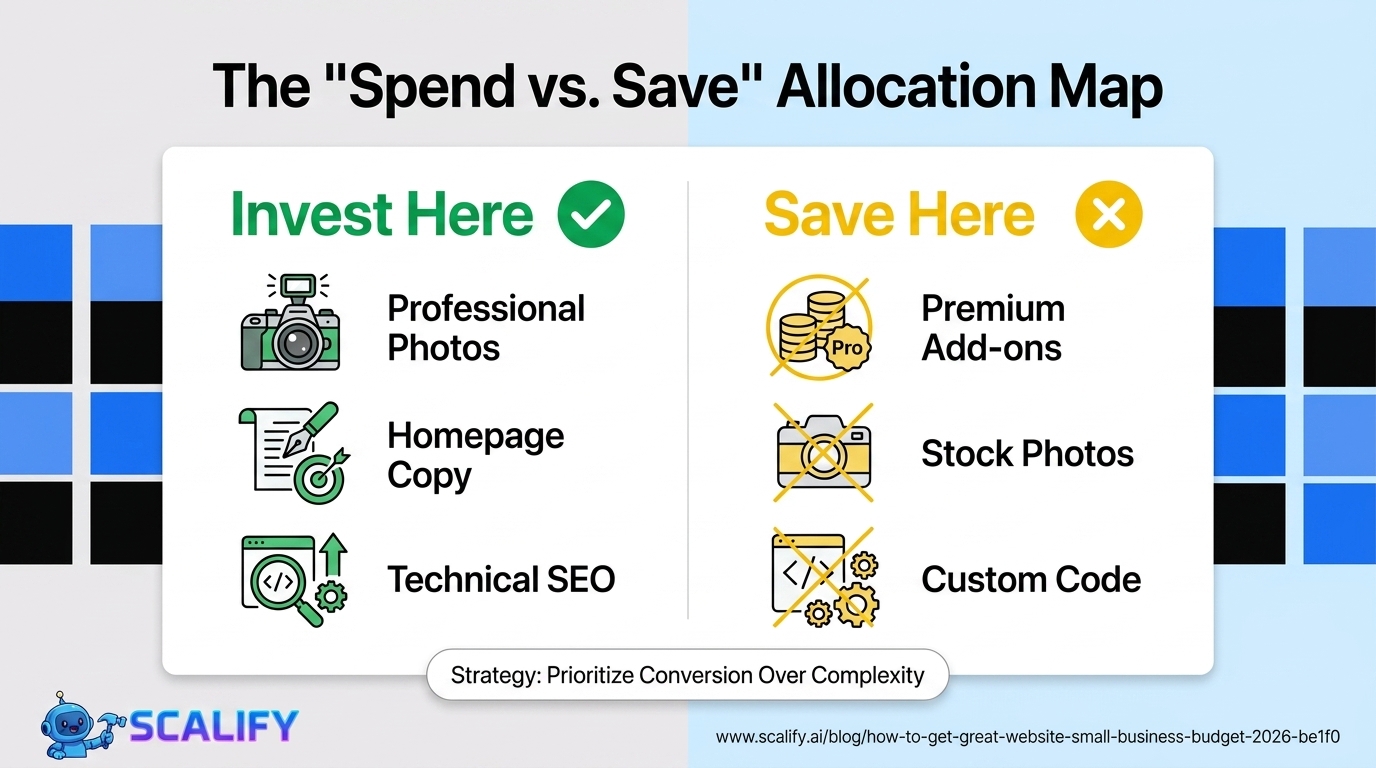
Content readiness: Providing finished, approved copy and professional photos is worth 20–30% of a project's cost compared to requiring the agency to write copy and source imagery. Come with content and your project costs less and launches faster.
Number of revisions and stakeholders: Projects with a single decision-maker who gives clear feedback are dramatically faster and therefore cheaper than projects with five stakeholders who disagree. Many agencies cap revision rounds in contracts because unlimited revisions make projects economically unviable.
Timeline pressure: Rush fees of 20–50% are common for projects that need to compress timelines significantly. If you can be flexible on timeline, mention it — some providers will reduce rates for flexibility that allows them to fit your project into available capacity.
Red Flags in Website Quotes
Suspiciously low quotes: A $500 quote for a "custom" website isn't custom — it's a template with your logo. This might be fine for your needs, but go in with accurate expectations. Significantly below-market pricing typically means offshore production, template work represented as custom, or a provider who will be unavailable when things go wrong.
No discovery process: A provider who quotes a fixed price without asking about your goals, audience, requirements, and content is guessing at scope. That guess will be wrong in ways you'll pay for later — through scope creep disputes or a website that doesn't do what you actually needed.
Vague deliverables: "A website" is not a deliverable. A legitimate proposal specifies the number of pages, the features included, the content management system, the revision rounds, the handoff deliverables, and the support period.
No portfolio or client references: Anyone building websites professionally should have work you can see and clients you can speak to. The absence of verifiable past work is a serious due diligence gap.
Ownership questions: Do you own the website, the design assets, and the code at the end of the project? Some agencies retain ownership of custom-built themes or designs, limiting your ability to switch providers. Clarify ownership before signing.
Getting the Best Value
Across any budget tier, these practices consistently produce better outcomes:
Come with content: Finished, approved copy and professional photos reduce project cost and duration more than almost any other factor.
Define scope precisely before getting quotes: Know what pages you need, what functionality you require, and what success looks like before soliciting quotes. Comparison-shopping vague descriptions produces incomparable quotes.
Check references: Ask for two or three client references and actually call them. Ask specifically: did the project come in on time and on budget? What was communication like during the project? What happened when something went wrong after launch?
Prioritize fit over price: A provider who deeply understands your industry, has built similar sites, and communicates clearly is worth a premium over the cheapest quote. Website projects fail more often from communication failures and misaligned expectations than from technical shortcomings.
The Bottom Line
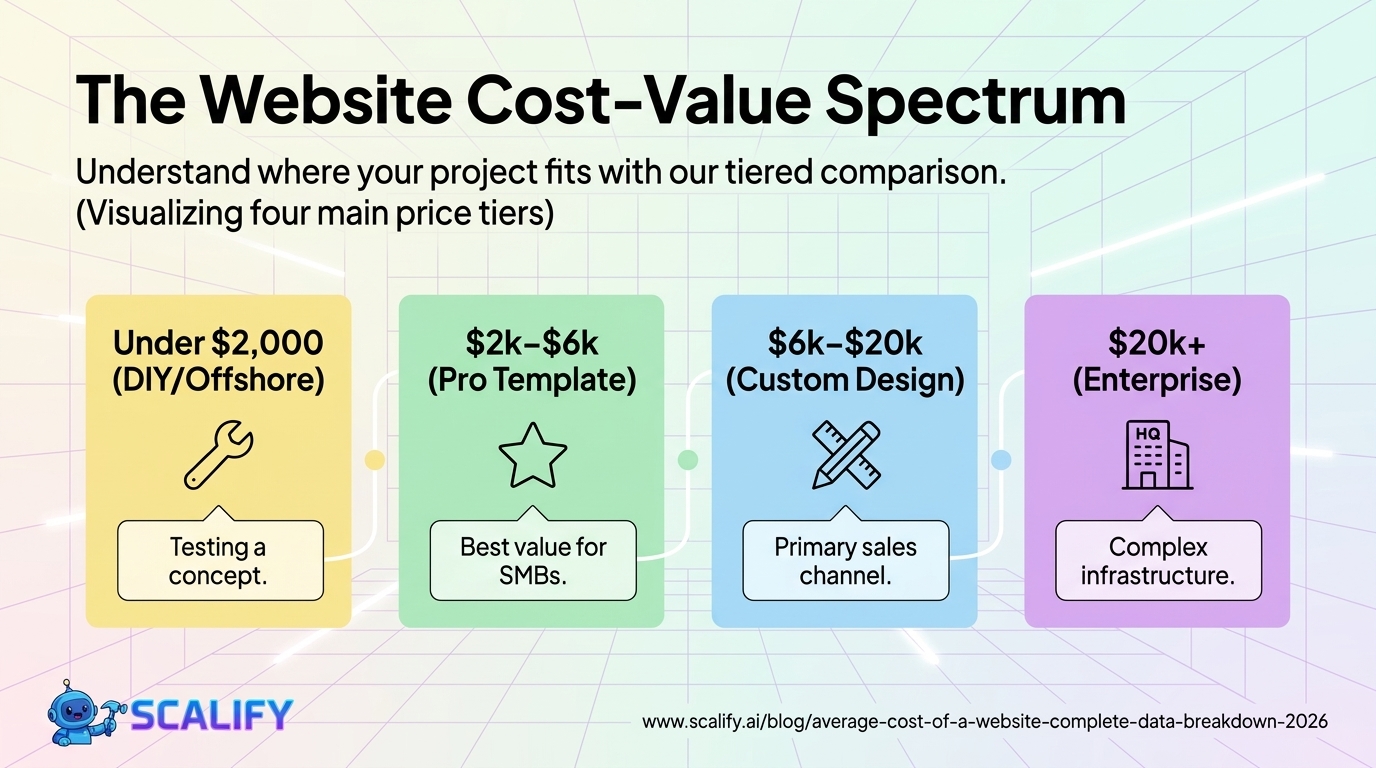
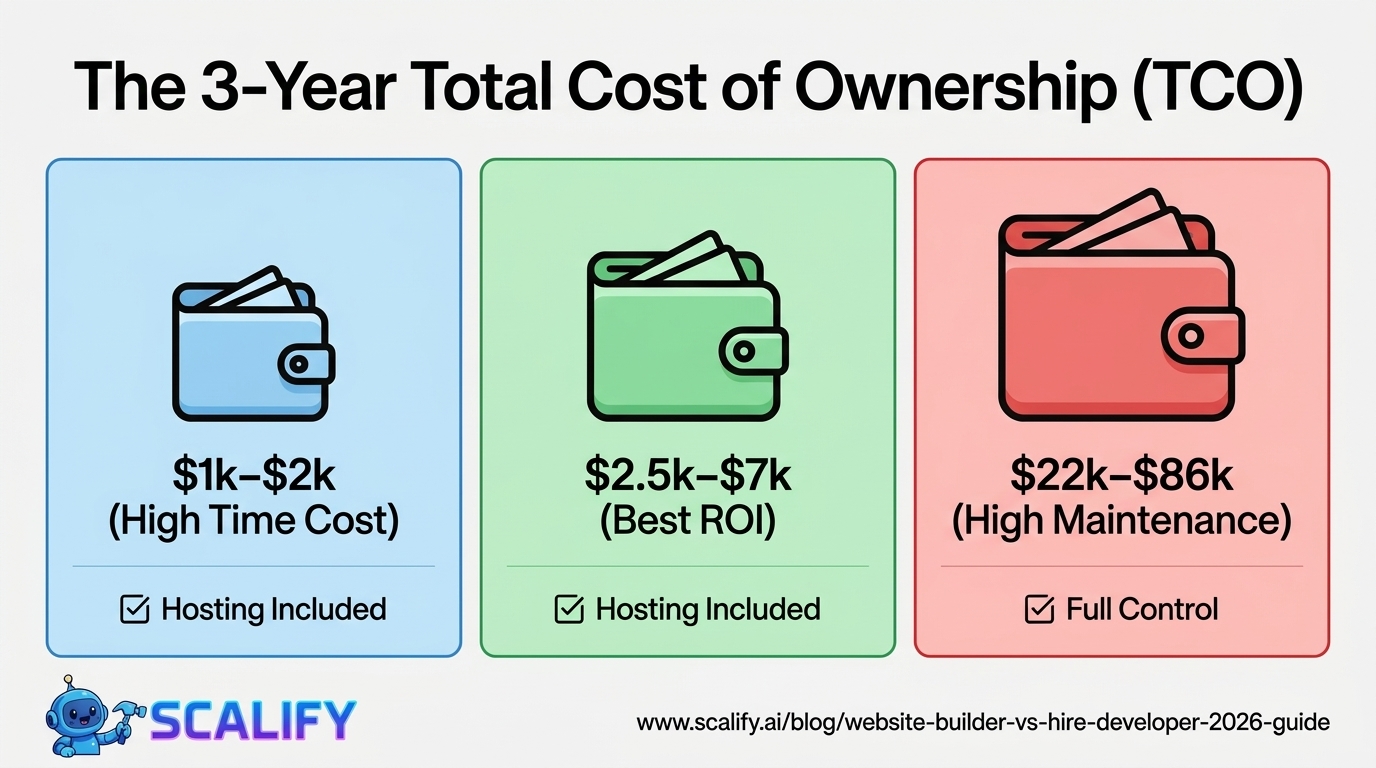
Websites cost what they cost based on complexity, who builds them, and what's included. DIY: $0–600/year ongoing. Professional freelancer: $1,500–15,000 for the build. Boutique agency: $10,000–75,000. Enterprise: $75,000–500,000+. E-commerce adds 50–200% to comparable brochure site costs. Ongoing costs of $600–3,000/year for most small business sites are real and should be planned for from the start.
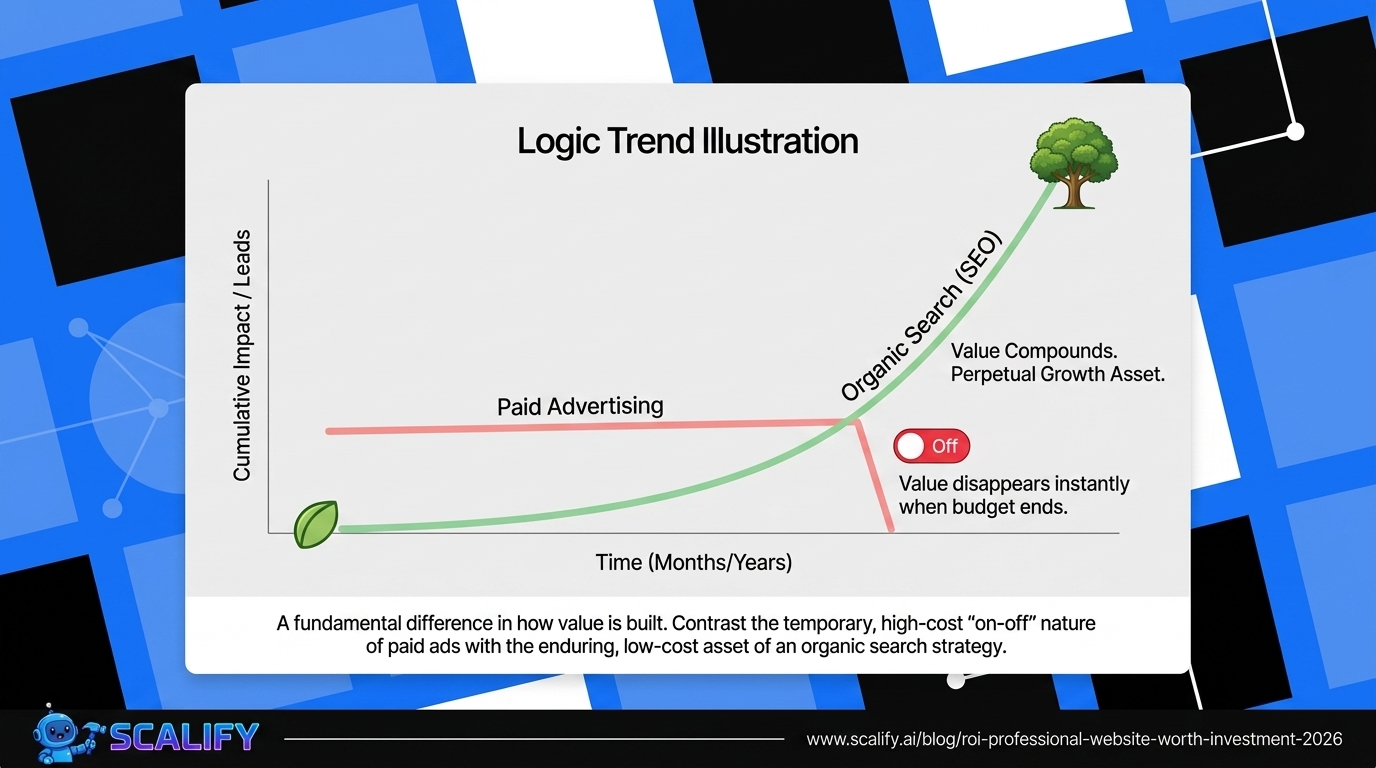
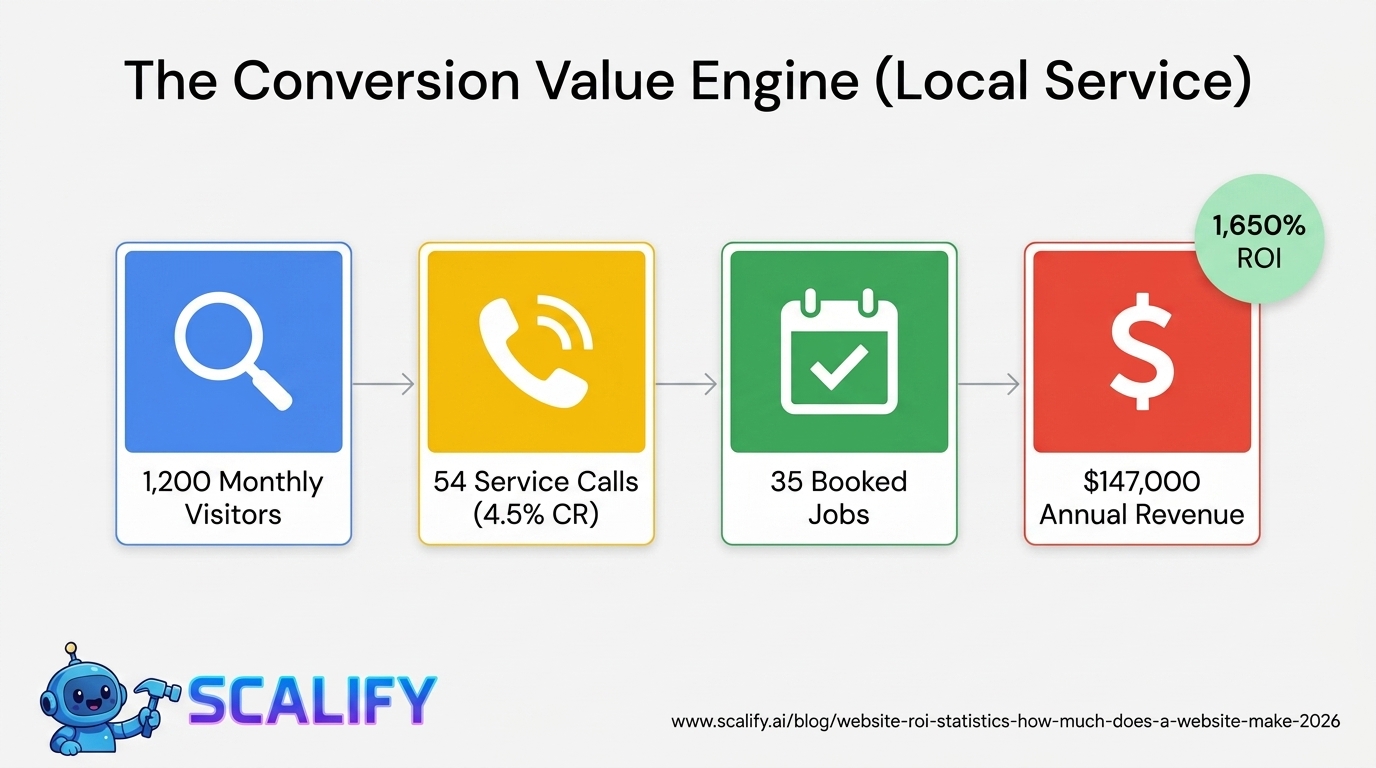
The right answer for your situation depends on what you need the website to do, how much time you have, and what the business value of a high-performing website is for your specific business. A lead generation site that generates $50,000/year in business is worth a $15,000 build investment. A personal portfolio that generates no direct revenue might not be.
Scalify delivers custom professional websites in a pricing tier that sits between mid-level freelancers and boutique agencies — combining the quality of custom design with a delivery system optimized for speed and value. If you're trying to figure out where your project fits, we're happy to talk through it.


.jpeg)
.jpeg)



78 SW 7th St, Miami, FL 33130