


What Is a Freelance Web Designer and How Do You Hire the Right One?
By Josh Ternyak

April 1, 2026
Comprehensive 2026 guide: What Is a Freelance Web Designer and How Do You Hire the Right One?
The Option That Can Beat Agencies or Cost You Everything
The freelance web design market is enormous, diverse, and wildly inconsistent in quality. On one end: seasoned professionals with 10 years of experience, impressive portfolios, excellent communication skills, and established processes that produce outstanding results. On the other end: people who learned to use a website builder last year, describing themselves as "professional web designers" with the same confidence.
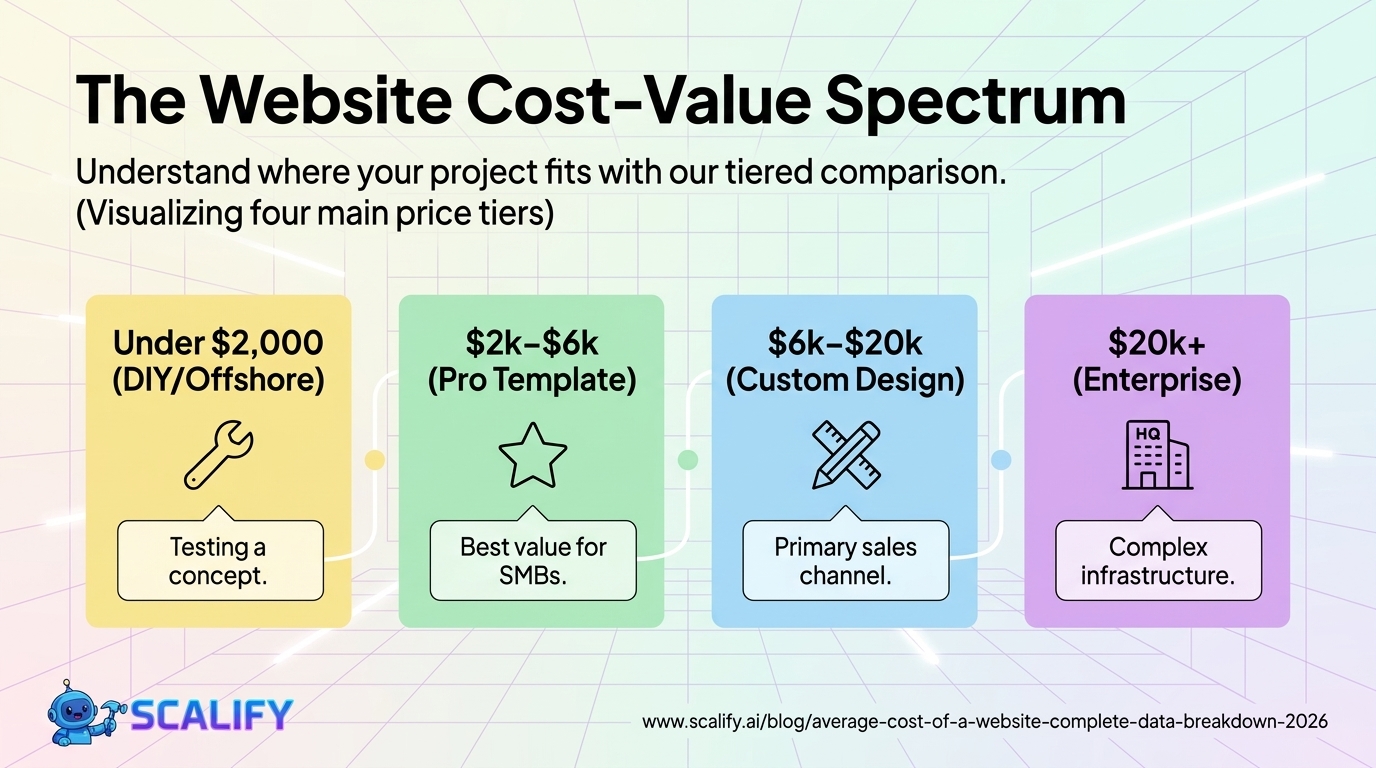
The price range reflects this span: from $500 for a "complete website" to $20,000 for a comparable project from a more experienced designer. The challenge is that neither the price nor the marketing language reliably distinguishes between these extremes. A $2,000 quote might come from someone exceptional working at a competitive rate, or from someone who'll deliver something worse than a free Squarespace template.
Getting freelance web design right — finding someone genuinely excellent, evaluating them correctly, managing the engagement well, and getting the outcome your business needs — is a learnable skill. This guide covers every step of the process.
What a Freelance Web Designer Does
A freelance web designer is an independent contractor who designs and often builds websites for clients, working project-by-project rather than as an employee. The scope of what they do varies significantly:
Design-only freelancers: Create the visual design — mockups, style guides, component libraries — but hand off to a developer for implementation. Often work in Figma or similar design tools. Best for projects where you need custom design and have separate development resources.
Designer-developers: Do both — design and build the website. The most common type of freelance web designer for small business projects. They design in Figma or directly in the platform (Webflow, WordPress), then build the final site. More versatile, typically preferred for end-to-end projects.
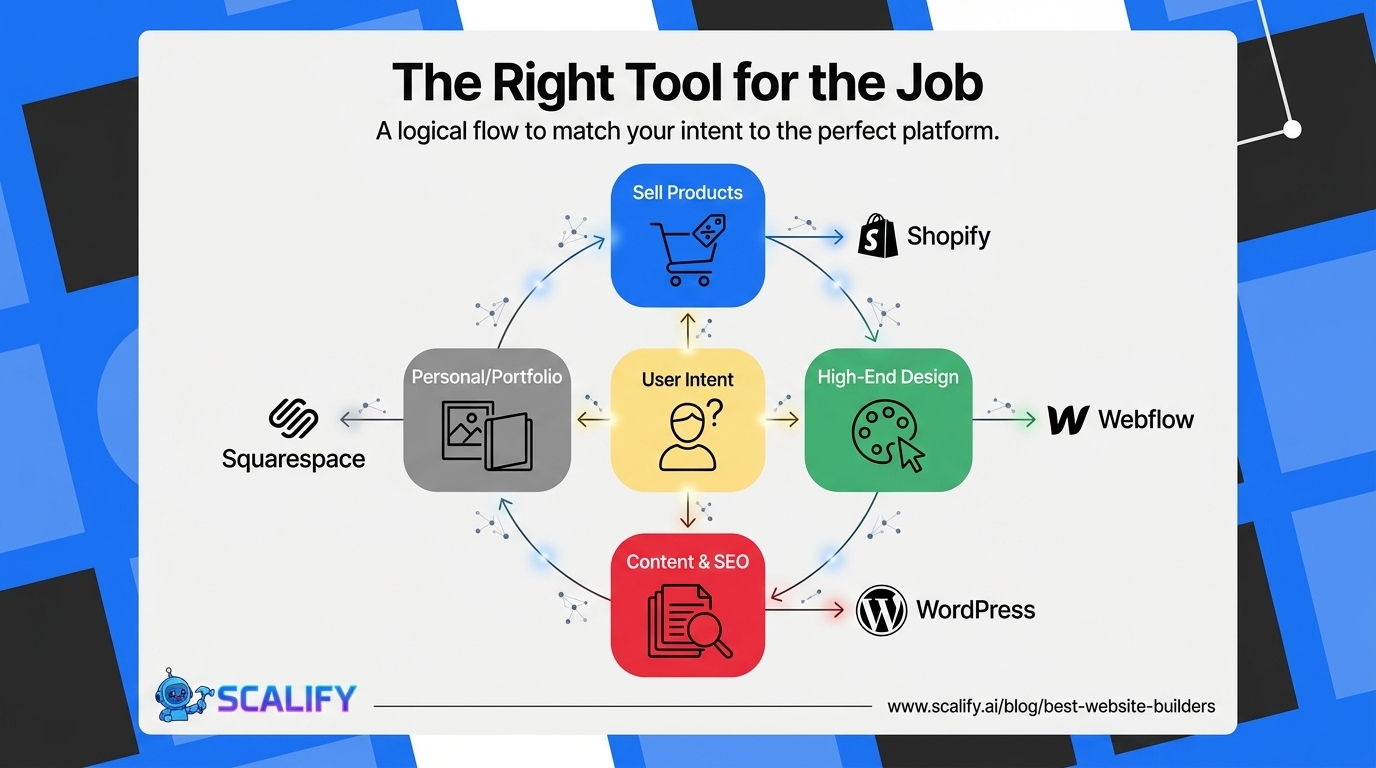
Platform specialists: Focus on a specific platform — Webflow specialists, WordPress theme developers, Shopify theme developers. Deep expertise in their specific platform; may have limited knowledge outside it. Best when you've already decided on a platform and want maximum expertise within it.
Full-service freelancers: Handle design, development, content, and sometimes strategy. Less common but valuable for clients who want a single point of contact for the entire project.
Where to Find Qualified Freelance Web Designers
Referrals from Trusted Sources
The most reliable channel. Ask your business network — founders, other business owners, people who've recently had positive website experiences. A personal referral comes with implicit quality validation: the person referring has seen the work and experienced the working relationship.
When asking for referrals: be specific about what you need. "I need a web designer for a professional services firm website — do you know anyone who does that kind of work well?" produces better results than "do you know any web designers?"
Behance and Dribbble
The primary portfolio platforms for designers. Dribbble leans toward UI/UX and visual design work; Behance is broader. Both have "Hire Me" sections where designers advertise their availability. More importantly, you can search for specific types of work — "web design for law firms," "Webflow portfolio sites," "e-commerce redesign" — and find designers whose actual work matches what you need.
The advantage over job platforms: you're evaluating based on real work rather than credentials and self-descriptions. What you see in the portfolio is what you can expect.
Search "web designer" + your city or relevant specialization. Check the designer's LinkedIn profile for: how long they've been doing this work, what types of clients they've served, whether you have mutual connections who can provide context, and what their recommendations section says. LinkedIn is particularly useful for assessing the professional background of designers who present themselves more formally.
Toptal and Contra
Toptal (toptal.com) curates the top 3% of freelancers through a rigorous screening process. Designers on Toptal have been vetted technically, professionally, and for communication. The quality floor is higher than other platforms; the price is accordingly higher ($100–200+/hour is typical). Best for high-budget projects where quality is more important than cost.
Contra (contra.com) is a newer platform positioning itself as a premium freelance marketplace with less noise than Upwork/Fiverr. Worth checking for designer discovery alongside portfolio platforms.
Upwork and Fiverr: Proceed with Caution
Both platforms have excellent designers — and 10x more mediocre ones. The challenge is distinguishing between them. On Upwork, filter aggressively: Top Rated Plus badge, Job Success Score above 95%, hourly rate above $60 (for North American or European designers), and reviews that specifically address quality rather than just "fast and professional." Even with these filters, portfolio review is essential before engaging.
Fiverr has improved significantly and includes many talented designers, but the platform structure incentivizes low prices and high volume — often incompatible with thoughtful, quality web design work. If using Fiverr: only consider sellers at Level 2 or Pro status, with substantial reviews, and always review the actual portfolio carefully.
Evaluating Freelance Web Designer Portfolios
Does Their Work Match What You Need?
The most important question. A designer who excels at personal portfolio sites may produce mediocre work for service businesses. A designer with strong e-commerce experience may not have the sensibility for a professional services firm's website.
Look for work that's similar in type (service business vs. e-commerce vs. portfolio), similar in target audience (consumer vs. B2B professional vs. luxury), and similar in design sensibility to what you want. The closer the match between their portfolio and your project type, the more predictive their work is of what they'd produce for you.
Are the Sites Actually Good?
Go beyond looking at screenshots. Click through to live websites from the portfolio. Ask yourself:
- Does it load fast on mobile? (Test on your phone)
- Does the mobile layout actually work, or just technically exist?
- Is the typography readable and well-chosen?
- Does the visual hierarchy make sense — is it obvious where to look first?
- Does the content communicate clearly?
- Does the site feel polished or rough?
A portfolio screenshot can look great; a live site reveals execution quality in ways screenshots obscure. Speed, mobile quality, and interaction behavior are only visible on the real site.
Can They Explain the Work?
During initial conversations, ask the designer to walk you through a portfolio project: what was the client's goal, what decisions they made in the design and why, what challenges they encountered, and what the client said about the outcome. A designer who can articulate their process and reasoning is more likely to make good decisions on your project than one who can only show screenshots without explanation.
The Hiring Process: What to Do in What Order
Step 1: Create a Brief
Before approaching anyone, prepare a brief that describes: what your business does, who your audience is, what the website needs to accomplish, what pages you need, what your timeline is, and what your budget range is. This brief does two things: it allows designers to give you accurate quotes rather than vague estimates, and it demonstrates that you're a serious, organized client (which attracts better designers).
Step 2: Initial Screening Call
A 20–30 minute call before any work agreement. Listen for: genuine interest in your project (vs. treating you like a number), intelligent questions about your goals and audience, clarity about their process, honest communication about what's achievable in your timeline and budget. Watch for: over-promising, vague answers about process, excessive focus on their technical skills rather than your business goals.
Step 3: Ask for a Proposal
A real proposal specifies: what's included (pages, features, revisions), timeline with milestones, payment terms, intellectual property ownership, and post-launch support. A designer who provides a detailed proposal is more organized and professional than one who sends a brief quote or "just let me know when to start."
Step 4: Check References
For any project over $3,000, ask for two client references and actually contact them. Ask: Did the project come in on time and on budget? How was communication throughout the project? What was it like when problems arose? Would you hire them again? The answers reveal what working with this designer is actually like, not just what they say it's like.
Step 5: Small Paid Test (Optional)
For larger projects, consider commissioning a small paid test before committing to the full project. A single page design or landing page for $300–500 lets you evaluate the designer's quality, communication style, and responsiveness before a larger commitment. Not appropriate for all relationships or all designers, but useful for high-stakes decisions where the portfolio doesn't tell the complete story.
Red Flags That Should Stop the Conversation
No clear portfolio of completed work: Mockups without live site examples, incomplete projects, or "I can show you work in our first call" without any public portfolio. Quality designers have public portfolios.
No clear process: Vague about how the project will work, no mention of discovery, no explanation of how revisions are handled, no timeline breakdown. Professional designers have defined processes.
Pushing you toward a specific platform without understanding your needs: Recommending WordPress (or any platform) before understanding your goals, content type, and technical requirements suggests they know that platform and are recommending it regardless of fit.
Poor communication in the sales process: Slow responses, unclear writing, failure to answer the questions you asked, confusion about basic details. The communication quality before you hire is the best predictor of communication quality during the project.
Can't provide client references: A freelancer who has been doing quality work for any length of time has satisfied clients willing to speak to their experience. Inability to provide references suggests either insufficient experience or client relationships that wouldn't provide positive references.
Setting Up the Engagement for Success
Many freelance web design projects that fail do so not because the designer was unqualified but because the client-designer relationship wasn't structured well. Practices that prevent the most common problems:
Provide complete, approved content before the build starts: The most common cause of project delays is copy and images arriving late, requiring rework of pages already built. Get your content finalized and approved before the build begins.
Designate a single decision-maker: Projects with multiple approvers who need to align on design decisions produce longer timelines, more revision rounds, and more friction. Designate one person with authority to provide feedback and approve deliverables.
Respond to deliverables promptly: A designer waiting a week for feedback is a project that's a week behind. Agreed turnaround times for feedback (typically 48–72 hours) keep projects moving.
Give specific feedback: "I don't like this" is not actionable. "The headline font feels too casual for our professional audience — can you try a serif or a heavier sans-serif?" is actionable. Specific feedback produces better iterations with fewer rounds.
The Bottom Line
The freelance web designer market has outstanding talent and considerable noise. Finding the excellent designers requires: looking in the right places (referrals, portfolio platforms, LinkedIn), evaluating the actual work on live sites (not just screenshots), checking references for real project experience, and structuring the engagement with clear scope, timeline, and communication expectations.
When it works — an experienced designer who understands your goals, communicates clearly, and delivers quality work — freelance is often the best value proposition in web design. When it doesn't work — misaligned expectations, poor communication, quality that doesn't match the portfolio — it's one of the most frustrating business experiences.
If you'd rather skip the search and hiring process entirely, Scalify delivers custom professional websites with a team whose quality and process are predictable — no portfolio evaluation required, no reference checking, no hoping it works out.
Key Takeaways and Next Steps
The principles and data in this guide reflect what actually works in professional web development and digital marketing in 2026 — not theoretical best practices but measured, documented outcomes from implementations at scale. The gap between knowing these principles and benefiting from them is always execution: the businesses that act on what they read, implement changes systematically, and measure the results consistently outperform those who consume information without converting it to action.
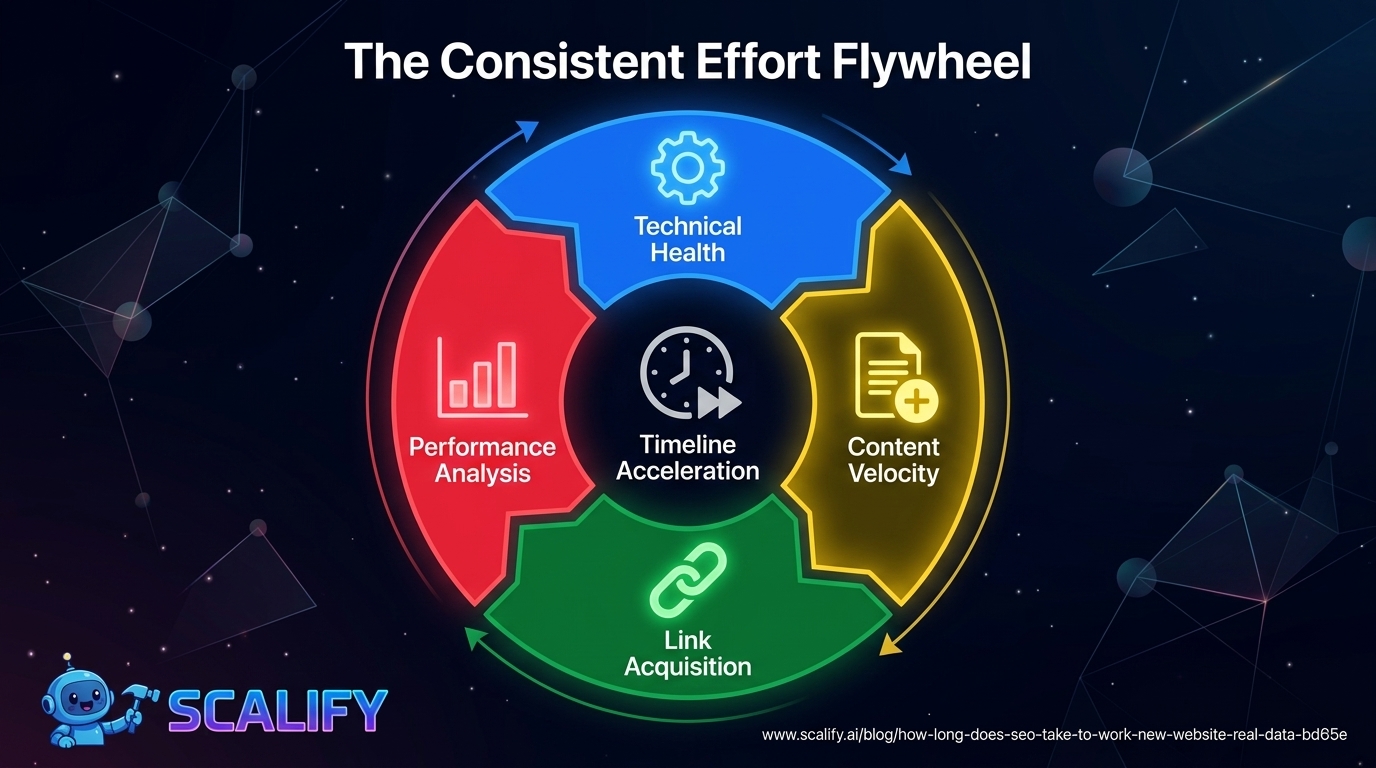
For any improvement described in this guide, the implementation sequence that produces the best outcomes: assess your current situation against the benchmarks provided, identify the 2–3 highest-impact improvements specific to your situation, implement them with measurement tracking in place, evaluate results after 30–60 days, and plan the next iteration based on what you learned. This cycle — assess, prioritize, implement, measure, iterate — is the operational foundation of continuous improvement that compounds into significant competitive advantage over the 12–24 month horizon.
The compounding returns from consistent web presence investment are not linear: a website that improves slightly each month accumulates to dramatic improvements over a year, and those improvements multiply with each other. Faster load times improve both search rankings and conversion rates simultaneously. Better content attracts backlinks that improve rankings that attract more traffic. More testimonials build trust that improves conversion rates that improve revenue that funds more investment. The interconnected nature of website performance means that each improvement amplifies the value of every other improvement — making the decision to invest consistently, across multiple dimensions simultaneously, the highest-ROI approach to digital marketing available to most businesses.
At Scalify, every website we build reflects these principles — technically optimized, conversion-focused, SEO-ready, and designed to compound in value over time as content, backlinks, and organic authority accumulate on the strong foundation we deliver in 10 business days.


.jpeg)
.jpeg)

78 SW 7th St, Miami, FL 33130