


The Best Webflow Alternatives in 2026 (Honest Comparison)
By Josh Ternyak

April 1, 2026
Comprehensive guide: The Best Webflow Alternatives in 2026 (Honest Comparison)
Webflow Is Excellent. It's Also Not for Everyone.
Webflow has earned its reputation as the most capable no-code website builder available for designers and design-forward businesses. Its visual editor maps directly to HTML and CSS concepts, its hosting infrastructure is fast and reliable, and the sites it produces are genuinely well-built — clean output, good performance, and flexible CMS capabilities.
But Webflow has a real learning curve that takes 15–30 hours to navigate for most new users. Its monthly plans cost more than basic alternatives. Its e-commerce capabilities, while improving, fall short of dedicated e-commerce platforms. And for businesses with very simple needs, it's more tool than they need.
This guide covers the best Webflow alternatives for different use cases — honestly, with real trade-offs rather than generic praise — so you can identify which tool actually makes sense for your situation.
Why You Might Be Looking for a Webflow Alternative
People typically look for Webflow alternatives for one of several reasons:
Learning curve is too steep: Webflow's power comes from its precision, but that precision requires understanding CSS-like concepts (flexbox, grid, margins vs. padding, position modes). For non-designers or anyone who just needs a site live quickly, this investment isn't worth it.
Price: Webflow plans start at $23/month for a basic site and $29/month for CMS functionality. For a simple site that won't use advanced CMS features, this is more expensive than alternatives that would serve equally well.
E-commerce needs: Webflow's e-commerce functionality covers the basics but lacks the depth of Shopify — particularly for complex product variants, international selling, subscription products, and third-party fulfillment integrations.
Team collaboration: Webflow's collaboration features are limited compared to some alternatives. Multiple editors working simultaneously on the same project isn't seamlessly supported.
Client management: For web design agencies managing many client sites, Webflow's workflow and client handoff is strong but alternatives like Framer or dedicated client-focused platforms may fit better.
The Best Webflow Alternatives by Use Case
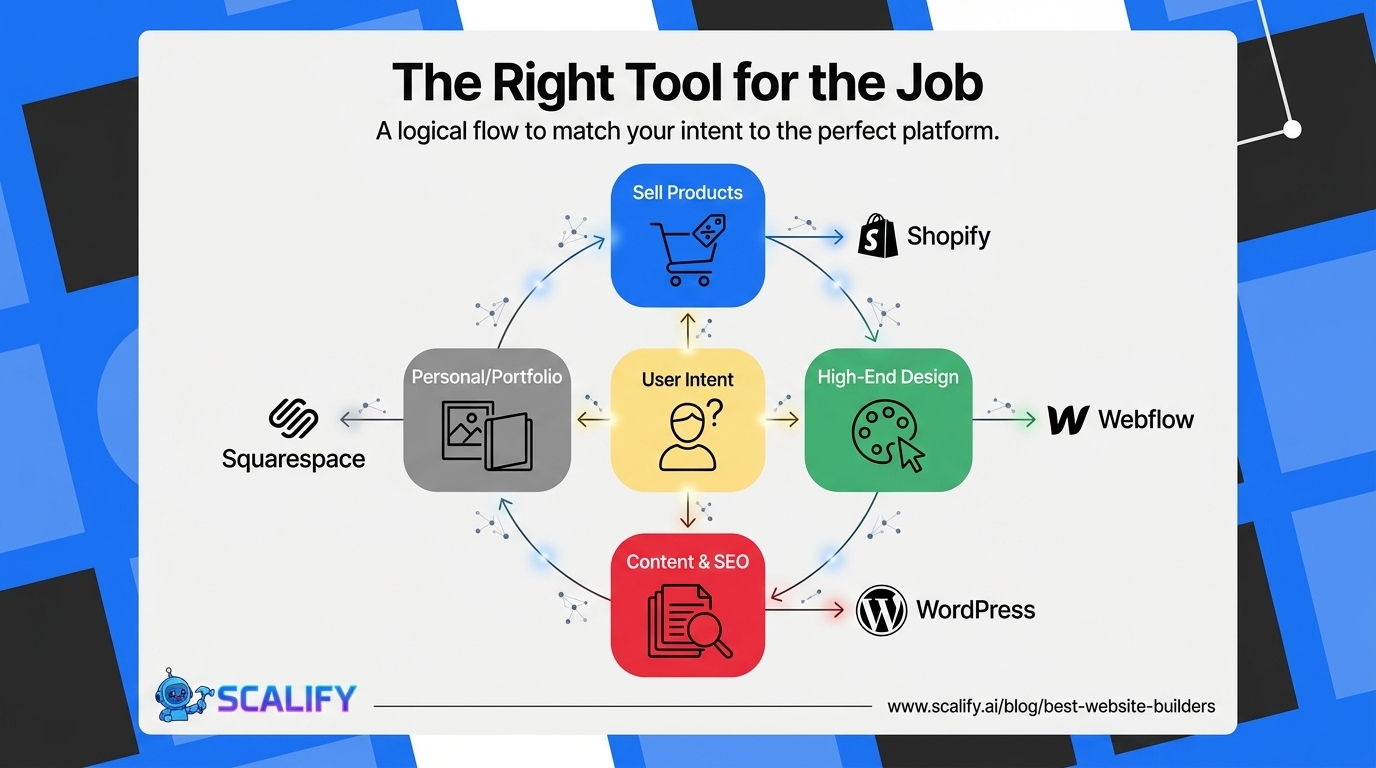
Best for Ease of Use: Squarespace
If the primary reason you're looking away from Webflow is the learning curve, Squarespace is the most direct alternative. It's the most immediately accessible website builder for non-technical users who want a professional result without an extended learning investment.
Squarespace's template library is genuinely beautiful — some of the best-looking templates in the website builder space. Its editing interface is block-based and intuitive. Most users can have a presentable site live within a few hours rather than the days or weeks Webflow requires for newcomers.
The trade-off: What you gain in simplicity you give up in design control. Squarespace constrains you within template design languages. Customizing beyond what the template allows is difficult without custom code injection. Designers who want precise control over spacing, typography, and layout will find Squarespace frustrating.
Pricing: $16–49/month depending on plan. Slightly cheaper than Webflow at the base level, comparable at higher tiers.
Right for: Creative professionals, small service businesses, anyone who wants a polished result quickly with minimal technical involvement.
Best for Design Freedom on a Budget: Framer
Framer has emerged as the designer community's alternative of choice for websites that need visual sophistication without Webflow's complexity. Originally a prototyping tool, Framer evolved into a capable website builder with a particularly strong motion and animation system.
Framer's interface is arguably more intuitive than Webflow's for designers familiar with design tools like Figma — it feels more like a design environment and less like a CSS configuration panel. The animation capabilities are exceptional — scroll-triggered animations, entrance effects, and micro-interactions are easier to implement than in Webflow.
Framer uses React components under the hood, enabling overrides and custom code that are more accessible to developers than Webflow's custom code approach.
The trade-offs: Framer's CMS is more limited than Webflow's — it handles blog posts and basic content well but lacks Webflow's robust custom content type system. E-commerce requires third-party integration. The component library and UI kit ecosystem is smaller than Webflow's mature marketplace.
Pricing: Free for basic sites, $19–49/month for production sites. Generally less expensive than Webflow for comparable use cases.
Right for: Designers who want an alternative to Webflow with better motion capabilities and a more familiar design-tool-like interface. Particularly strong for portfolio sites and marketing pages.
Best for WordPress Lovers: Elementor + WordPress
For businesses that want WordPress's extensibility and plugin ecosystem but find raw WordPress development too technical, Elementor provides a visual builder experience on top of WordPress. It's the most widely used WordPress page builder with the largest ecosystem of templates, widgets, and third-party extensions.
The Webflow comparison: Elementor on WordPress gives you access to 60,000+ WordPress plugins (vs. Webflow's more limited integration options), lower hosting costs if self-managed, and the world's largest available developer pool. For specific use cases — complex e-commerce via WooCommerce, specific industry plugins, membership sites — WordPress + Elementor covers functionality Webflow can't match.
The trade-offs: The visual output of Elementor rarely matches Webflow's precision. Elementor adds significant page weight (large JavaScript bundles) that can hurt performance and Core Web Vitals. Managing WordPress + Elementor + plugin updates requires ongoing maintenance that Webflow's managed hosting eliminates.
Pricing: Elementor free with WordPress hosting from $15–50/month, or Elementor Pro at $59/year for full features plus hosting. Generally cheaper than Webflow when managed yourself.
Right for: Businesses that need WordPress's plugin ecosystem, existing WordPress users comfortable with the platform, and agencies managing many client WordPress sites.
Best for E-Commerce: Shopify
If e-commerce is a primary or significant use case, Shopify is the alternative to evaluate — not just to Webflow but to essentially every website platform. Shopify is the dedicated e-commerce platform standard for businesses serious about online sales.
What Shopify does better than Webflow for e-commerce: mature product and inventory management, robust discount and promotion engine, excellent payment processing (Shopify Payments + multiple gateways), comprehensive shipping and fulfillment integrations, a massive app ecosystem for e-commerce-specific functionality, and multi-channel selling (sell through Facebook, Instagram, Amazon, and your own site from one platform).
Shopify's website builder (especially with the Online Store 2.0 and the Dawn theme) has significantly improved in design flexibility. It's not as design-flexible as Webflow, but for most e-commerce businesses, the product capabilities matter more than the design precision.
The trade-offs: Shopify's content management and blogging are notably weaker than Webflow. Transaction fees if not using Shopify Payments. Monthly costs add up when you factor in essential apps. Limited design flexibility without custom theme development.
Pricing: $39–399/month plus apps and payment processing fees. More expensive than Webflow's base pricing but purpose-built for e-commerce ROI.
Right for: Any business selling physical or digital products where e-commerce functionality is a core requirement.
Best for Developers: Next.js + Headless CMS
For teams with development resources who want maximum performance, flexibility, and ownership, the alternative to Webflow is leaving the all-in-one platform model entirely and building with a modern JavaScript framework and a headless CMS.
The typical stack: Next.js for the front-end (React-based, with server-side rendering, static generation, and API routes), Contentful or Sanity for content management (clean editorial interfaces with API-driven content delivery), and Vercel or Cloudflare Pages for hosting.
This stack produces genuinely fast sites (static generation with ISR means near-instant page loads), complete design freedom (you're writing CSS, not constrained by a visual builder's paradigms), perfect control over performance and optimization, and zero platform dependency for rendering logic.
The trade-offs: This isn't no-code — it requires a developer. Development takes longer than visual builder approaches. Ongoing maintenance requires technical resources. Not the right choice for non-technical teams or projects with tight budgets.
Pricing: Headless CMS $0–500+/month depending on scale and provider. Hosting on Vercel: free to $20+/month. Lower platform cost at scale than all-in-one builders, but development costs are the primary expense.
Right for: Technical teams, high-traffic sites with specific performance requirements, businesses that need deep customization impossible in visual builders.
Best for Simple Sites: Carrd or Super.so
For genuinely simple use cases — a single landing page, a personal portfolio, a simple one-pager — lightweight tools designed specifically for simplicity are worth considering.
Carrd is the simplest capable website builder available. One-page sites with clean, fast output. Pricing starts at free and goes to $19/year for Pro. The output is fast, the editor is simple, and the result looks clean if not sophisticated. For a single-purpose landing page, Carrd is often the right tool.
Super.so turns Notion pages into published websites. If your content already lives in Notion and you want a simple site with minimal setup, Super removes the friction of a separate CMS entirely. Less design flexibility but dramatically lower maintenance overhead.
Right for: Side projects, personal sites, one-page landing pages, situations where simplicity is the priority and sophisticated design is not required.
Best for Agencies Managing Multiple Client Sites: Duda
Duda isn't widely known outside agency circles but is worth mentioning for web design agencies that build and manage many client websites. Its white-label capabilities, client management dashboard, team collaboration features, and multi-site management tools are specifically designed for the agency workflow.
Duda's editor is capable (comparable to Squarespace in flexibility, somewhat less than Webflow), its hosting is reliable, and its agency-tier pricing model is more economical than Webflow at scale for agencies managing dozens of client sites.
Right for: Web design agencies managing multiple client sites who want a platform built for that workflow rather than adapting a platform designed for single-site owners.
The Comparison Matrix
Summarized by the dimensions that matter most for the decision:
Design control: Webflow > Framer > Squarespace > Elementor > Shopify > Carrd
Ease of use: Squarespace > Carrd > Framer > Webflow > Elementor > Custom dev
E-commerce capability: Shopify > WooCommerce > Webflow > Squarespace > Framer
Plugin ecosystem: WordPress/Elementor >> Webflow > Shopify > Squarespace
Performance (default): Custom dev > Webflow/Framer > Squarespace > Elementor/WordPress
Maintenance overhead: All hosted platforms (Webflow/Squarespace/Framer/Shopify) << WordPress/self-hosted
Price (base): Carrd < Super.so < Framer < Squarespace ≈ Webflow < Shopify < Agency tiers
How to Make the Decision
Work through these questions in order:
Is e-commerce a primary requirement? If yes: Shopify, not Webflow or any alternative to it.
Do you need WordPress's specific plugin ecosystem? If yes: WordPress + Elementor or WordPress + Beaver Builder.
Does your team have developer resources and need maximum flexibility? If yes: Next.js + headless CMS.
Is design quality the top priority and you're willing to learn a tool or hire a specialist? If yes: Webflow (or Framer as a somewhat easier alternative).
Do you need simplicity and speed above all, with adequate design quality? If yes: Squarespace.
Is this a single-page or very simple site? If yes: Carrd or similar lightweight tool.
The Bottom Line
Webflow is excellent for what it's designed for: professional, design-quality websites built by people with design knowledge and willingness to invest in the learning curve. When those conditions aren't met, alternatives often serve better. Squarespace for simplicity, Shopify for e-commerce, Framer for design-focused teams who find Webflow's model less intuitive, WordPress for extensibility, and custom development for maximum control and performance.
The best platform is the one that fits your team's skills, your project's requirements, and your budget — not the one with the most impressive demos or the most enthusiastic advocates online.
If you'd rather not navigate this decision at all — and just have a custom professional website delivered regardless of platform — Scalify handles the platform decision as part of the project, building on whatever foundation best serves your specific needs.
Putting It All Together: The Strategic Perspective
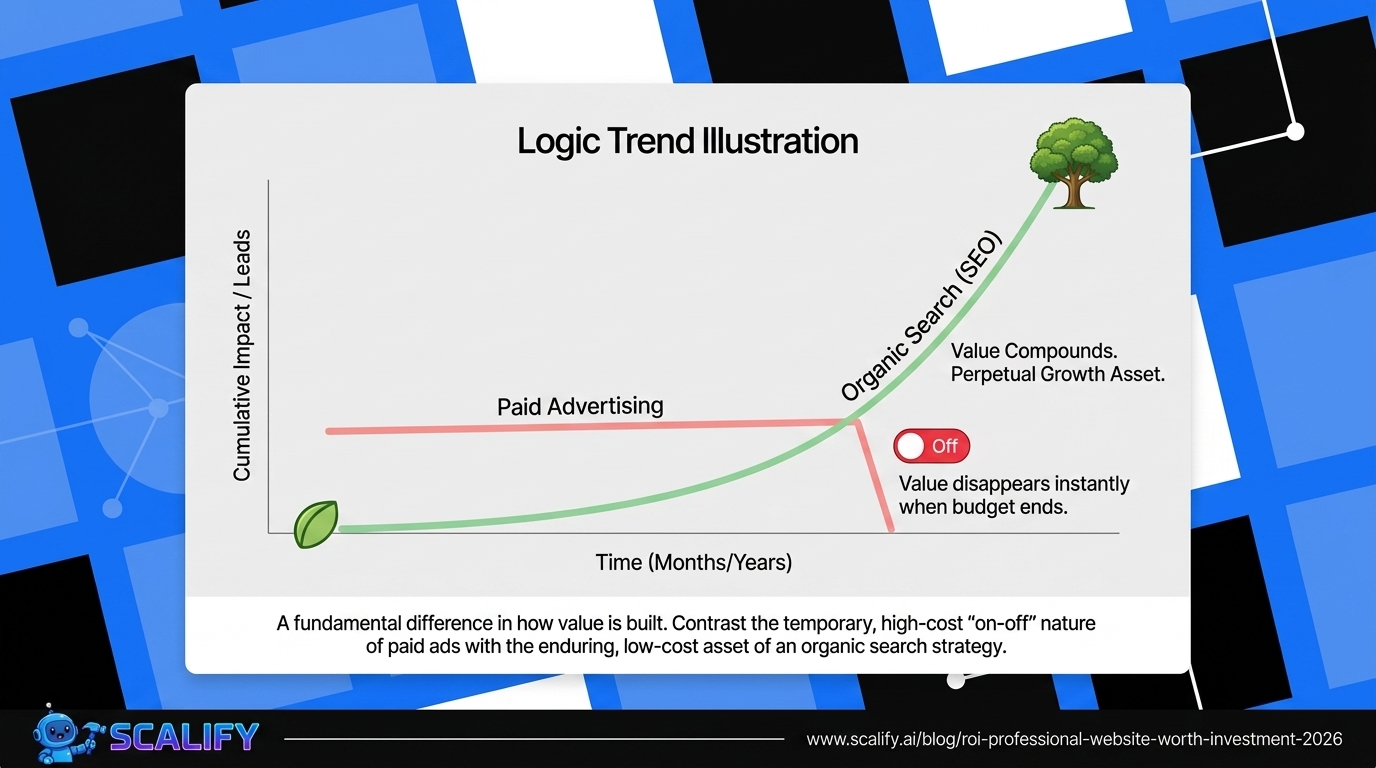
The most important takeaway from any technical or strategic guide is that individual tactics only produce results when they're embedded in a coherent strategy and executed consistently. A single well-optimized page, a single great testimonial, or a single speed improvement produces modest impact. The same investments compounded over 12–24 months — more optimized pages, more testimonials placed strategically, systematic performance maintenance — produce the compounding returns that separate high-performing websites from average ones in the same competitive landscape.
Every improvement documented in this guide is most valuable when it's implemented as part of a systematic, data-driven approach: measure current performance, identify the highest-impact opportunity, implement the improvement, measure again, and iterate. The businesses that achieve exceptional digital marketing results are almost never those who found a single breakthrough tactic — they're those who executed fundamentals consistently, measured what worked, and allocated their resources toward the highest-ROI improvements available at each stage of the


.jpeg)
.jpeg)



78 SW 7th St, Miami, FL 33130