


What Is a Website Analytics Dashboard and How Do You Build One?
By Josh Ternyak

April 1, 2026
Comprehensive guide: What Is a Website Analytics Dashboard and How Do You Build One?
The Difference Between Data and Decisions
Google Analytics 4 tracks hundreds of metrics. Most of them don't matter for your specific business goals. Staring at a screen full of numbers — sessions, users, events, engagement rates, scroll depth, page views, session duration — produces more confusion than clarity when there's no framework for which numbers actually tell you something useful.
An analytics dashboard is the answer to this problem. It's a curated, visual display of the specific metrics that answer your specific business questions — filtered to your situation, updated automatically, and designed to surface what's actionable rather than overwhelming you with what's available.
The test of a good dashboard: someone with 60 seconds should be able to look at it and know whether the website is performing better or worse than last period, and have one or two hypotheses about why. If the dashboard requires 20 minutes of analysis to extract any meaning, it's not doing its job.
What a Website Analytics Dashboard Is
A website analytics dashboard is a visual interface that aggregates, organizes, and displays key website performance metrics in a format designed for quick interpretation and decision-making. It pulls data from analytics platforms (primarily Google Analytics 4, but potentially also Search Console, heatmap tools, and advertising platforms) and presents it as charts, graphs, tables, and KPI tiles in a single view.
Dashboards exist on a spectrum from the completely automated (pre-built templates in GA4 or Looker Studio) to the fully custom (built from scratch in Looker Studio, Tableau, or similar tools to exact specifications). Most businesses land somewhere in the middle: customized reports in GA4 or a Looker Studio dashboard pulling from multiple data sources.
The fundamental value: dashboards prevent the analytics paralysis that happens when too much data is available without structure. They focus attention on what matters, compare current performance to historical baselines, and create the shared reference point that teams can use to align on whether things are going well or need attention.
The Metrics That Actually Belong on a Website Dashboard
Different businesses need different dashboards, but some metric categories are universally relevant:
Traffic Metrics
Total sessions (this period vs. last period): The baseline traffic trend. Is overall site traffic growing, stable, or declining? The directional trend matters more than the absolute number.
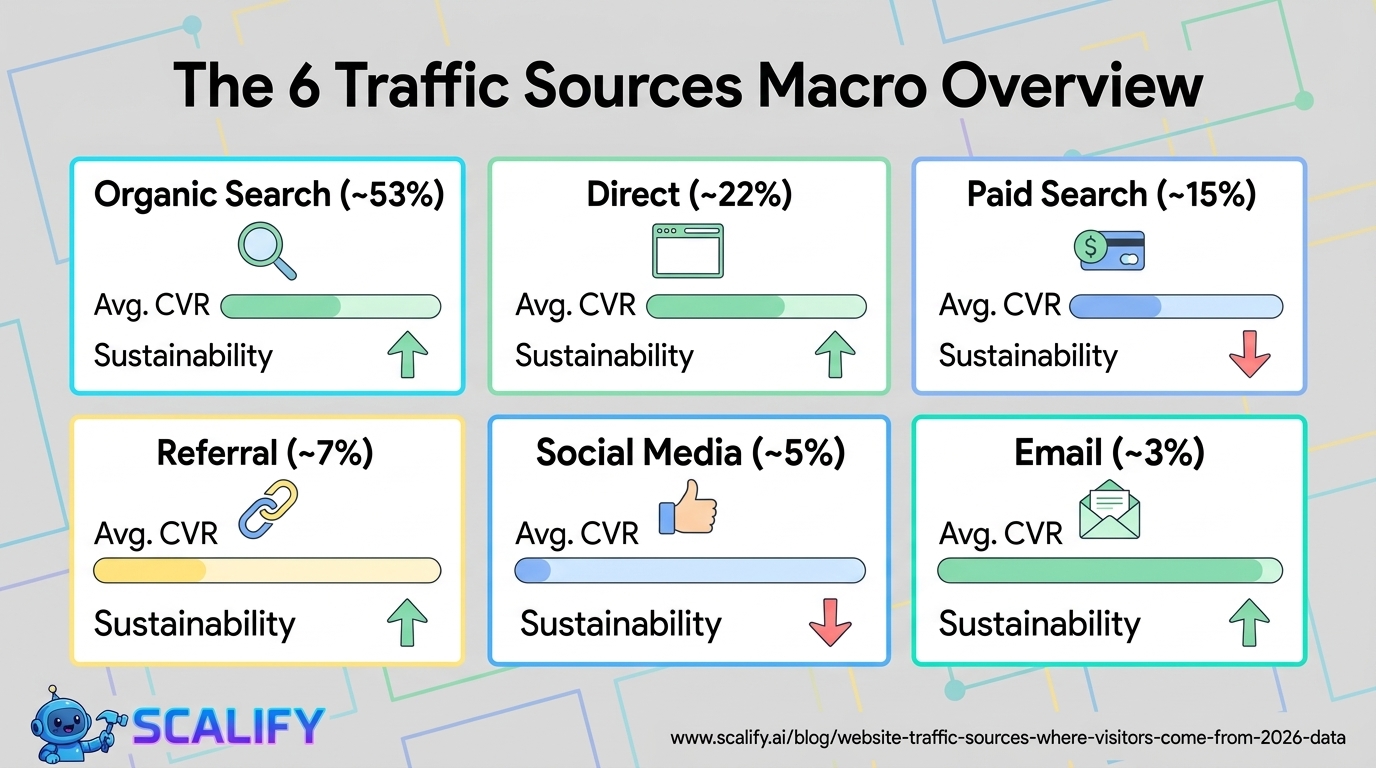
Sessions by channel: Organic search, direct, paid search, organic social, referral, email. This breakdown shows which channels are driving traffic and whether the mix is changing. A significant organic search decline while total traffic holds steady means another channel is compensating — important context that aggregate traffic hides.
New vs. returning users: New users indicate how well the site is attracting new audience; returning users indicate how well it's retaining interest. The right ratio depends on business model — e-commerce wants high return rates; content marketing businesses want growing new user numbers.
Engagement Metrics
Engagement rate: The percentage of sessions where users engaged meaningfully (stayed 10+ seconds, converted, or viewed 2+ pages). The GA4 replacement for bounce rate. A declining engagement rate suggests the site is attracting less qualified traffic or the experience has deteriorated.
Average engagement time per session: How long on average are visitors spending with the site? Longer is generally better for content sites; for transactional sites (e-commerce, appointment booking), low time-to-conversion may be the goal.
Pages per session: How many pages do visitors view per visit? Low pages per session on a site with significant content may indicate poor internal linking or navigation issues preventing exploration.
Conversion Metrics — THE Most Important
Total conversions (this period vs. last period): However you define conversion — contact form submissions, purchases, downloads, sign-ups — the total count is the most business-critical metric on any website dashboard. Everything else is context for this number.
Conversion rate: Conversions ÷ Sessions. A site with high traffic and low conversion rate has a different problem than a site with low traffic and high conversion rate. The conversion rate points to whether the problem is acquisition (need more traffic) or optimization (need to convert existing traffic better).
Conversions by channel: Which traffic sources drive the most conversions? Which have the highest conversion rates? This attribution data informs where to invest marketing effort.
Revenue (e-commerce): Total revenue, average order value, and revenue by product/category for businesses where purchases are tracked. The most direct connection between website analytics and business outcomes.
Top Pages
Top 10 pages by sessions: Which pages drive the most traffic? Are these the pages you want driving traffic (key service pages, high-value content) or pages you'd rather not have as primary entry points?
Top pages by conversions: Which pages generate the most conversion events? These are your highest-value pages and deserve disproportionate attention for optimization.
Top pages by organic search: Which pages receive the most organic search traffic? This reflects your current SEO performance and shows which content is finding audience through search.
SEO Metrics (from Search Console)
GA4 alone doesn't show search-specific performance. A complete website dashboard includes Google Search Console data:
Total clicks and impressions: The overall organic search footprint. Impressions show reach; clicks show the traffic generated from that reach.
Average position: Where your pages rank on average. A declining average position with stable impressions suggests maintaining visibility but losing specific top rankings.
Click-through rate: Clicks ÷ Impressions. A low CTR relative to average position suggests title tags and meta descriptions need improvement.
Top queries: Which search terms drive the most impressions and clicks? Are these the terms you intended to target, or has organic traffic developed in unexpected directions?
Building a Dashboard in GA4 Explorations
GA4's built-in Explorations feature allows custom report creation. For a basic conversion-focused dashboard:
Free-form Exploration approach: Navigate to Explore → Free Form. Configure dimensions (Channel Group, Landing Page, Device Category) and metrics (Sessions, Engaged Sessions, Conversions, Total Revenue). This allows the core channel + conversion breakdown in GA4's native interface without external tools.
The limitation: GA4 Explorations expire after 2 months if not interacted with and can't be shared as persistent dashboards the way Looker Studio can. For a stable, shareable dashboard, Looker Studio is the better tool.
Building a Dashboard in Looker Studio
Google's Looker Studio (formerly Data Studio) is a free business intelligence tool that connects to GA4, Search Console, Google Ads, and hundreds of other data sources to create custom dashboards that update automatically and can be shared with any team member.
Getting Started
Navigate to lookerstudio.google.com. Create a new report. Add a data source: Google Analytics 4 (connect to your property). The report starts blank; you add charts, tables, and scorecards by dragging elements from the sidebar.
Essential Dashboard Components
Scorecard tiles for key metrics: Large, prominent tiles showing: Total Sessions, Total Conversions, Conversion Rate, and Total Revenue (if applicable). Each scorecard should show the current period value and a comparison to the previous equivalent period (this week vs. last week, this month vs. last month).
Time-series chart for traffic trend: A line chart showing daily or weekly sessions over the past 90 days. Trend visualization catches patterns (weekly cycles, gradual growth/decline) that point-in-time numbers miss.
Channel breakdown bar chart: Horizontal bar chart showing sessions and conversions by channel group. Immediately visible which channels are contributing and at what rates.
Top pages table: A sortable table showing top pages by sessions, with secondary columns for conversions and conversion rate. Identifies both high-traffic pages and high-converting pages.
Search Console scorecard + query table: Connect a Search Console data source (separate from the GA4 source). Add scorecards for Total Clicks and Total Impressions. Add a table of top queries by clicks with a column for position.
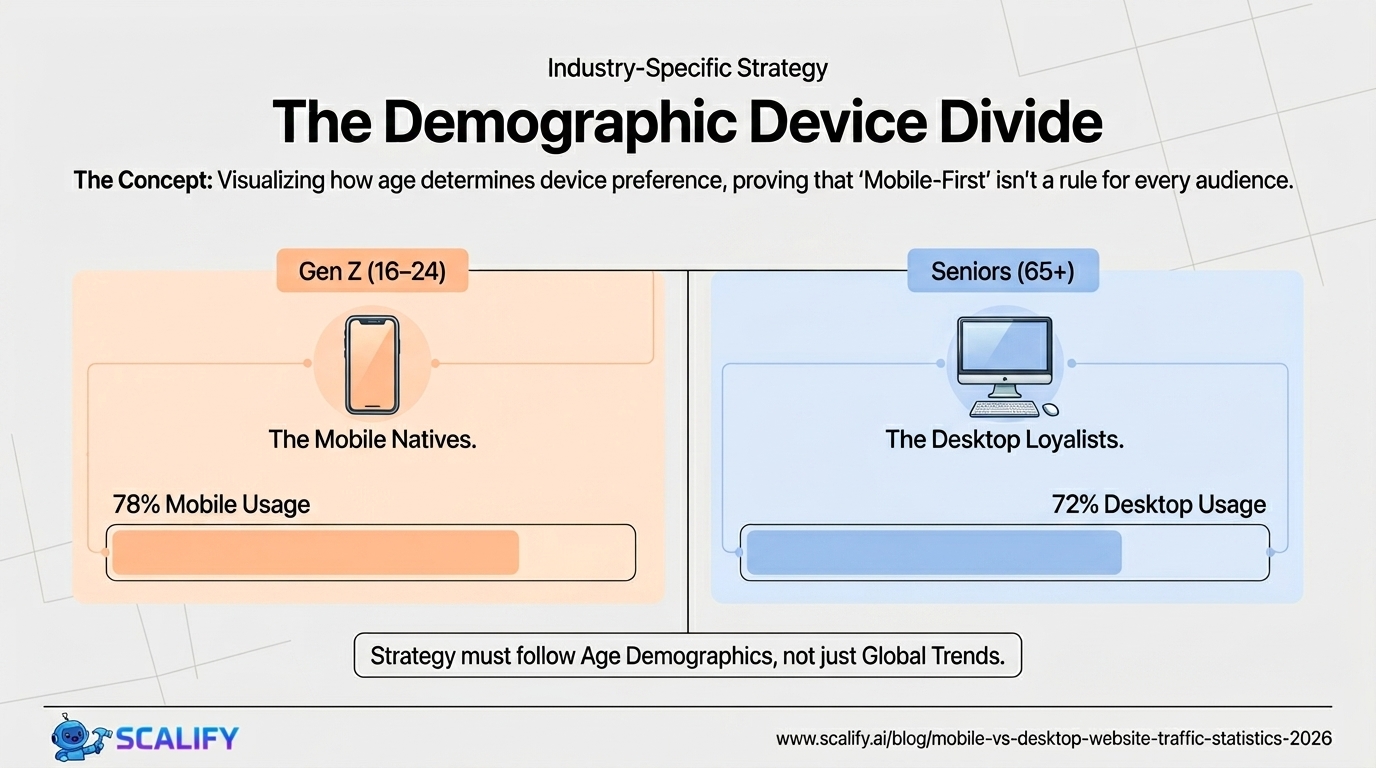
Device breakdown donut chart: Proportion of sessions from Mobile, Desktop, and Tablet. Critical context for performance assessment — a site with 75% mobile traffic that has poor mobile Core Web Vitals scores has a bigger performance problem than the same site with 25% mobile traffic.
Filters and Date Controls
Add date range controls to the dashboard so the viewer can adjust the comparison period without editing the report. A date range selector widget in Looker Studio allows switching from "last 30 days" to "last 90 days" or "year-to-date" with a click.
Add segment filters where useful: filter by channel, by device type, or by landing page category to create segmented views within the same dashboard rather than building multiple separate reports.
Dashboard Best Practices
Fewer Metrics, More Context
The instinct is to add every available metric to the dashboard "just in case." This produces dashboards that take 30 minutes to interpret. Limit to 10–15 metrics maximum. Include only metrics that drive decisions. If a metric never causes anyone to do anything differently when it changes, it doesn't belong on the dashboard.
Always Show Comparisons
A number without context is meaningless. 1,000 sessions this week is excellent if last week was 500; it's concerning if last week was 1,500. Every metric on a dashboard should include a comparison to a baseline: previous period, year-over-year, or a target. Looker Studio's comparison date range feature makes this automatic.
Use Visual Hierarchy
The most important metrics should be the most visually prominent — largest font, most prominent position (top of page, left of the visual hierarchy). Secondary metrics can be smaller and positioned lower. The viewer's eye should be guided to what matters most without having to scan the entire dashboard to find it.
Review It on a Schedule
A dashboard that's created and never reviewed is useless. Schedule a regular review — 15 minutes weekly for operational monitoring, 30 minutes monthly for strategic assessment. Review the dashboard on the same day each period so trends are visible and comparisons are consistent.
Share It Actively
Looker Studio dashboards can be shared with view access to anyone with a link (or restricted to specific Google accounts). Share with stakeholders who should be aware of website performance — executives, marketing team, the person responsible for content or SEO. Visibility creates accountability and keeps website performance on the team's radar.
Dashboard Templates Worth Using
Building a dashboard from scratch takes 2–4 hours. Several high-quality free templates accelerate the process:
Google's official GA4 template in Looker Studio: Search "GA4 Looker Studio template" in Google's Looker Studio Gallery. Multiple templates available from Google and community contributors. Start with one that covers traffic + conversions and customize from there.
Ahrefs, Semrush, or HubSpot templates: Each publishes free Looker Studio templates for SEO or marketing dashboards. Useful for teams using these platforms for Search Console integration.
The Bottom Line
A website analytics dashboard focuses attention on the metrics that answer the questions that drive decisions. Traffic trend, conversion rate, channel performance, and top content — these core metrics tell you whether your website is performing and where to focus improvement effort.
Build the simplest dashboard that serves your monitoring needs. Use Looker Studio for persistent, shareable, auto-updating reports. Include comparisons to make every number meaningful. Review on a schedule. Act on what you see.
At Scalify, we configure Google Analytics 4 and Search Console on every website we launch — the data infrastructure that makes dashboard-driven decisions possible from day one.
Putting It All Together: The Strategic Perspective
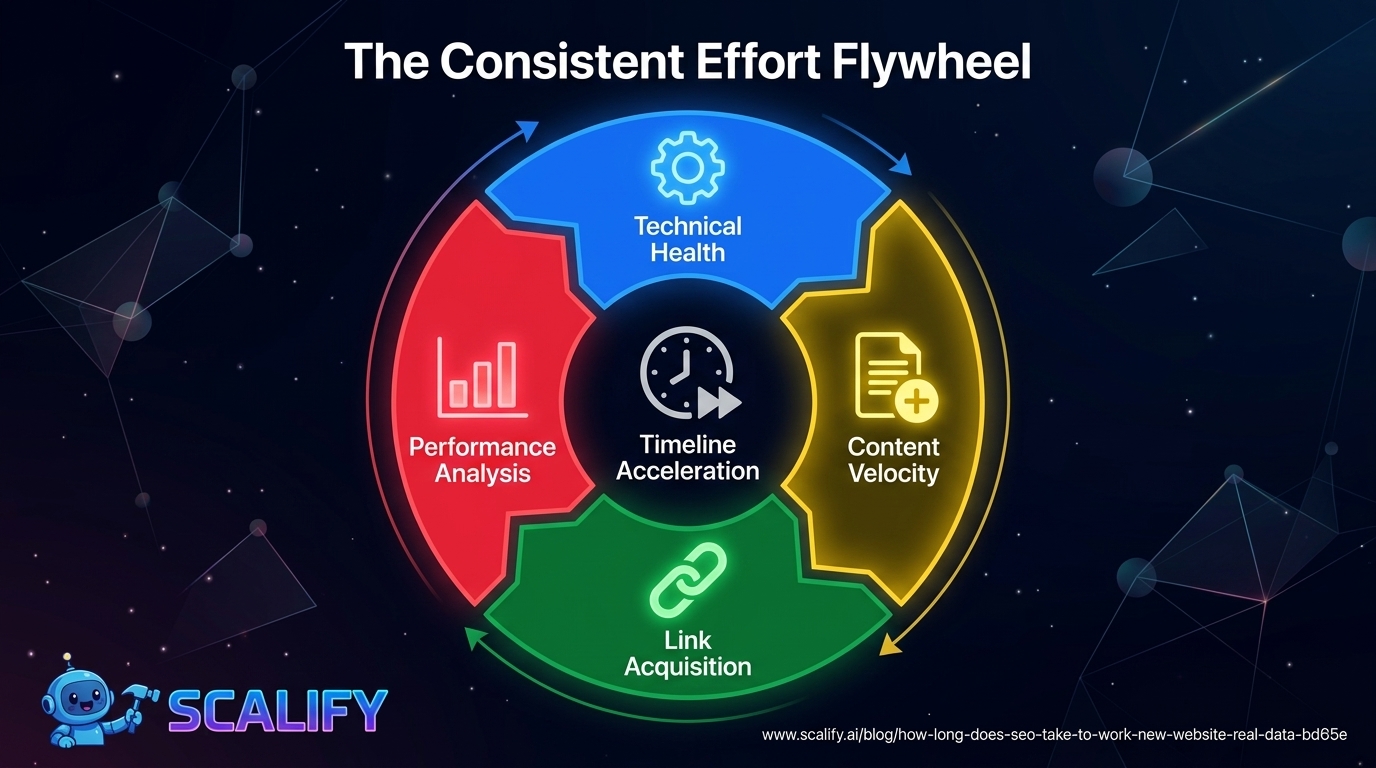
The most important takeaway from any technical or strategic guide is that individual tactics only produce results when they're embedded in a coherent strategy and executed consistently. A single well-optimized page, a single great testimonial, or a single speed improvement produces modest impact. The same investments compounded over 12–24 months — more optimized pages, more testimonials placed strategically, systematic performance maintenance — produce the compounding returns that separate high-performing websites from average ones in the same competitive landscape.
Every improvement documented in this guide is most valuable when it's implemented as part of a systematic, data-driven approach: measure current performance, identify the highest-impact opportunity, implement the improvement, measure again, and iterate. The businesses that achieve exceptional digital marketing results are almost never those who found a single breakthrough tactic — they're those who executed fundamentals consistently, measured what worked, and allocated their resources toward the highest-ROI improvements available at each stage of the













.jpeg)
.jpeg)





78 SW 7th St, Miami, FL 33130