


How to Choose the Right Website Color Palette for Your Brand
By Josh Ternyak

March 29, 2026
Color is one of the most powerful — and most misunderstood — design decisions on any website. This guide explains the psychology, the principles, and the practical process for choosing colors that actually work for your brand.
The Decision That Shapes Every First Impression
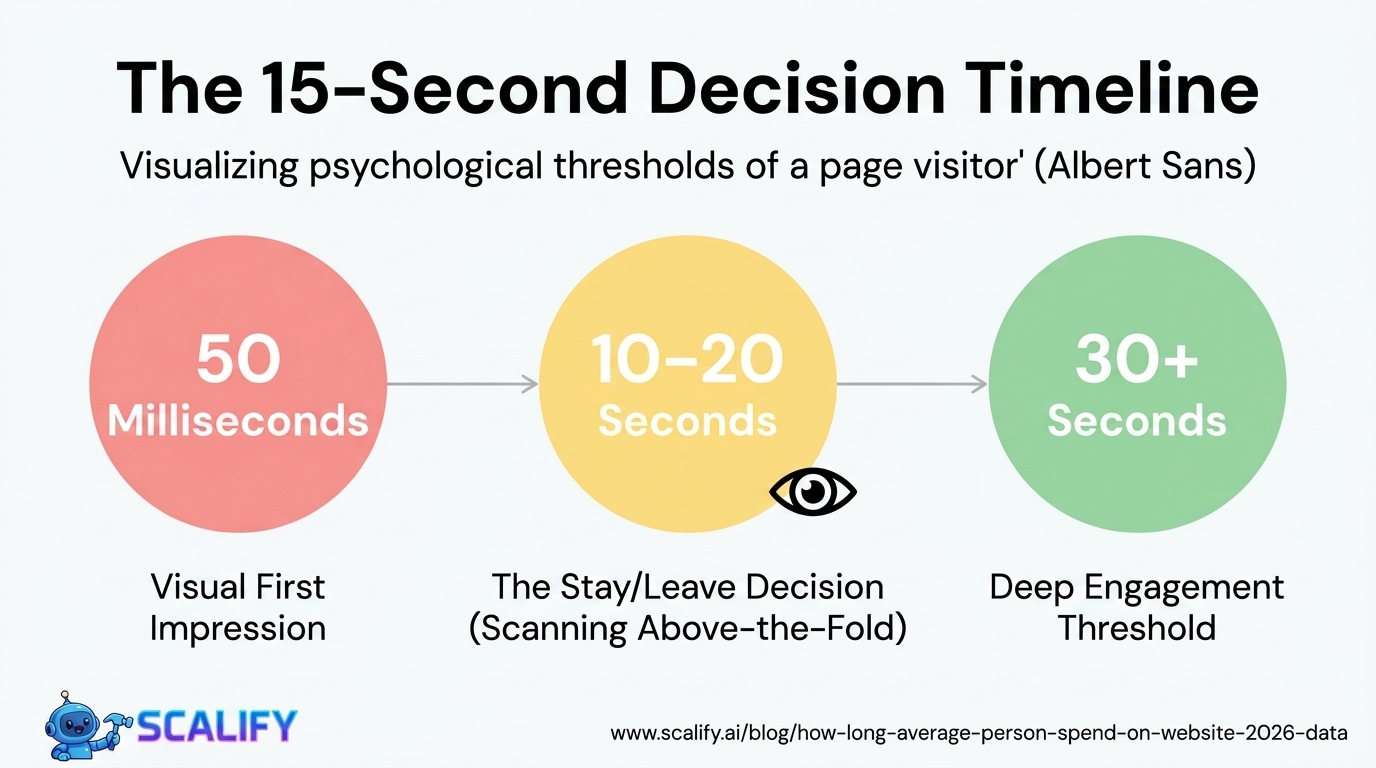
Visitors form their first impression of a website within 50 milliseconds — faster than conscious thought. In those 50 milliseconds, color is doing more work than any other design element. Color communicates mood, personality, industry category, quality level, and trustworthiness before a single word is read or a single image is processed. It's the most immediate, most visceral visual signal you have.
Get it right and your color palette becomes a brand asset — a consistent visual identity that makes your business instantly recognizable and emotionally resonant with your target audience. Get it wrong and you're fighting against subconscious associations your visitors make before they've consciously decided anything about your business.
This guide covers the psychology that makes color choices matter, the practical process for selecting a palette that works for your specific brand and audience, how to build a complete color system, and the most common color mistakes that undermine websites that are otherwise well-designed.
Color Psychology: Why Certain Colors Work for Certain Brands
Color psychology is real but frequently oversimplified. You'll often see claims like "blue means trust" or "green means health" stated as universal laws. The reality is more nuanced: color associations are real but culturally influenced, context-dependent, and modified by hue, saturation, and brightness variations within the same color family.
That said, some broad associations are consistent enough across Western markets to be useful starting points for brand color decisions:
Blue: The most consistently "safe" choice in business contexts. Associated with trust, reliability, competence, and calm. Dominant in finance (Chase, PayPal, American Express), technology (Facebook, Samsung, Dell), healthcare (several major healthcare systems), and professional services. The specific shade matters enormously: navy blue reads as authoritative and traditional; bright blue reads as modern and approachable; light sky blue reads as friendly and accessible.
Red: High energy, urgency, passion, confidence. Used in food and beverage (Coca-Cola, McDonald's — red stimulates appetite), retail and e-commerce (Target, Kohl's — creates urgency), and entertainment. In web design, used frequently for CTA buttons because its visual prominence draws the eye. Overused in "danger" contexts; appropriately used in high-energy brand contexts.
Green: Growth, health, nature, sustainability, money (in US contexts). Used heavily in health and wellness brands, organic and natural products, financial services (money association), and environmental companies. Specific shades: deep forest green reads as premium and nature-connected; bright lime green reads as modern and energetic; sage green reads as calm and wellness-focused.
Black: Luxury, sophistication, power, elegance. Common in premium and luxury positioning (Apple, Chanel, Luxury automotive). In web design, black backgrounds communicate premium quality but require careful typography and contrast work. Over-use of black in mid-market contexts can feel pretentious; in genuinely premium contexts it communicates appropriate quality.
Orange: Enthusiasm, creativity, warmth, accessibility. Used by brands that want to be perceived as approachable and energetic without the aggression of red. Amazon, Harley-Davidson, and many tech startups use orange to signal warmth and enthusiasm. More distinctive than blue in competitive brand spaces.
Purple: Creativity, wisdom, royalty, imagination. Common in creative industries, beauty and cosmetics, and brands targeting female demographics. Also used in tech (Twitch, Discord) for its distinctiveness in a space dominated by blue.
Yellow: Optimism, warmth, attention. The highest-visibility color — used for warning signs because it's impossible to ignore. In brand contexts, signals positivity and approachability. Difficult to use for text due to contrast challenges; works better as accent and background color than as primary text color.
Industry Conventions: When to Follow and When to Break Them
Every industry has color conventions — the "standard" palette that most businesses in that category use. Finance uses navy and forest green. Healthcare uses blue and white. Legal uses dark navy and gold. Technology uses blue, white, and the occasional bright accent. Food uses warm reds, oranges, and yellows.
These conventions exist because they work — they align with consumer expectations and psychological associations in those categories. A new fintech startup that uses navy and white is signaling trustworthiness through color category membership. A healthcare company using blue and white is meeting patient expectations for cleanliness and competence.
The trade-off: following conventions means fitting in but not standing out. Every navy-and-white fintech looks vaguely like every other navy-and-white fintech. In crowded markets, visual differentiation from category norms can be a competitive advantage — if it's done deliberately and the differentiation serves the brand's positioning.
The decision framework:
Follow conventions when: trust and competence are the primary emotional objectives (financial services, healthcare, legal), you're entering a conservative market, or your target audience has strong category color expectations that deviation would violate.
Break conventions when: you're explicitly positioning as a disruptor in the category, your target audience values distinctiveness and innovation over tradition, and the differentiation is backed by a brand positioning that the color choice expresses rather than contradicts.
Building a Complete Color Palette
A functional brand color palette isn't just one or two colors — it's a complete system designed to work across all use cases, from hero backgrounds to body text to interactive elements.
Primary Colors (1–2)
Your primary colors are the most distinctive brand colors — the ones most closely associated with your brand identity. They're used for:
- Primary CTA buttons
- Key brand elements (logo, important headings)
- Section accents that define brand visual identity
- Active state indicators in navigation
One strong primary color is more memorable than two competing primaries. If you want two brand colors, consider making one primary (used most frequently) and one secondary (used as a complement and for variety).
Secondary Colors (2–3)
Supporting colors that complement the primaries without competing with them. Used for:
- Section backgrounds that create visual variety without clashing with primary elements
- Secondary UI elements (secondary buttons, non-primary highlights)
- Visual interest in illustrations and graphics
- Dividers and subtle separators
Secondary colors should harmonize with primary colors through established color relationships: analogous (adjacent on the color wheel), complementary (opposite on the color wheel, for contrast), or triadic (evenly spaced on the color wheel).
Neutral Palette (4–6 values)
The neutrals are often the most important and least exciting part of a color system. They handle the majority of the interface: backgrounds, text, dividers, and the "rest" of the page that isn't making a strong brand statement.
A typical neutral palette progresses from near-white through light gray, medium gray, dark gray, to near-black. Each value serves specific purposes:
- Near-white or white: primary page backgrounds
- Light gray: section backgrounds, card backgrounds, subtle differentiation
- Medium gray: disabled states, secondary text, dividers
- Dark gray: body text (often preferred over pure black — softer contrast)
- Near-black: headings, primary text, strong contrast elements
Many designers give neutral palettes a slight temperature — slightly warm grays (with yellow/red undertone) or cool grays (with blue undertone) — that aligns with the overall brand temperature. A warm brand feels inconsistent with ice-cold neutral grays.
Semantic Colors
Semantic colors communicate specific system states independent of brand color:
- Success green: Form submission success, positive status indicators, completion states
- Warning yellow/orange: Caution states, non-critical alerts
- Error red: Form validation errors, critical alerts, destructive action confirmations
- Info blue: Informational alerts, helper text callouts
Semantic colors should be clearly distinct from your brand colors to prevent confusion. If your primary brand color is red, your error state needs a distinctly different red — or a different color entirely — to avoid confusion between "brand element" and "something is wrong."
Color Accessibility: Non-Negotiable Requirements
WCAG (Web Content Accessibility Guidelines) requires minimum contrast ratios between text and background colors to ensure readability for people with visual impairments:
- Level AA (standard): 4.5:1 for normal text, 3:1 for large text (18px+ regular or 14px+ bold)
- Level AAA (enhanced): 7:1 for normal text, 4.5:1 for large text
Check every color combination you plan to use for text against its background in a contrast checker. Tools: WebAIM Contrast Checker (webaim.org/resources/contrastchecker), Stark (Figma plugin), or Chrome DevTools' built-in color contrast auditor.
Common accessibility failures:
- Light gray text on white backgrounds (fashionable in modern design, often fails accessibility)
- Colored text on colored backgrounds without sufficient contrast
- White text on medium-value colored backgrounds
- Relying on color alone to communicate information (red for error vs. green for success without any other indicator)
Design your color palette with accessibility baked in from the start. It's dramatically easier to choose accessible colors during the palette creation phase than to retrofit accessibility into a palette that's already been applied throughout a design.
Practical Process for Choosing Your Palette
Step 1: Define Your Brand Personality First
Before looking at any colors, clarify what emotional qualities your brand should communicate. Write down 5–7 adjectives: sophisticated, energetic, trustworthy, innovative, warm, accessible, premium. These become the filter through which you evaluate color options.
Also define what your brand should NOT communicate. "Not: stiff, corporate, impersonal, generic." Knowing what you're avoiding is as useful as knowing what you want.
Step 2: Research Your Competitive Landscape
Screenshot the websites of your 5–10 main competitors. What colors are they using? What's the dominant color in the category? Are there gaps — colors that no competitor is owning? Understanding the competitive palette helps you decide whether to align with category conventions or intentionally differentiate.
Step 3: Explore Starting Points
With personality and competitive context in mind, start exploring. Sources:
Adobe Color: A free tool for creating color harmonies. Input a starting color and see analogous, complementary, triadic, and other harmonic variations. Good for finding palettes that have mathematical color relationships.
Coolors.co: Random palette generator with locking capabilities — lock a color you like and regenerate the rest until you find a combination that works. Excellent for exploration.
Dribbble color search: Search for colors you're considering and see how other designers have used them in real design contexts. Helps you understand what a color looks like in actual UI applications.
Inspiration from photography: Extract palettes from photographs with the mood you want your brand to evoke. Adobe Color has a "Create from Image" feature. A landscape with the warmth, depth, and organic quality you want for a natural wellness brand will yield a palette that communicates those qualities.
Step 4: Test in Context
Color looks completely different in isolation versus in a real interface context. Before committing to a palette, apply it to a rough mockup of your homepage — headline over a colored background, buttons in your primary color, body text on white. Colors that look beautiful in isolation often produce uncomfortable contrast ratios or visual clashes when applied to actual UI elements.
Step 5: Check Accessibility for Every Text Combination
Before finalizing, run every planned text/background combination through a contrast checker. Document which combinations pass and which fail. Adjust colors as needed — often slight adjustments to lightness or saturation preserve the visual character while achieving required contrast ratios.
Common Color Mistakes to Avoid
Too many colors: Every color added to a palette reduces the coherence of the visual system. More than 3–4 brand colors (before neutrals and semantic colors) typically produces visual chaos rather than variety. Constraint produces coherence.
Low contrast text combinations: Light gray on white, yellow on white, light teal on white. These combinations are consistently popular in design trends and consistently fail accessibility. The aesthetic appeal doesn't justify the readability cost.
Inconsistent color use: Using the same color for both "primary brand element" and "error state," or using three slightly different blues in different sections that aren't clearly intentional — these inconsistencies signal lack of design rigor and undermine the credibility the design is trying to build.
Choosing colors before testing on screens: Colors look different on different screens, in different lighting, at different times of day. A color that looks rich and saturated on a calibrated design monitor may look muddy on a typical laptop screen. Test your palette on multiple devices and in different lighting conditions before committing.
Ignoring color temperature harmony: Mixing warm colors (with yellow/red undertone) and cool colors (with blue undertone) without intentionality produces visual tension. Your brand colors, neutral palette, and accent colors should have consistent temperature — all warm, all cool, or a deliberate warm/cool contrast used purposefully.
The Bottom Line
Your website's color palette is doing significant communication work before visitors read a single word. It shapes first impressions, establishes brand personality, and either builds or undermines credibility. Choosing it well requires understanding color psychology in your specific industry context, building a complete system of primary, secondary, neutral, and semantic colors, and validating every text combination against accessibility standards.
The investment in getting color right pays dividends in every piece of content produced for your website — because every designer, developer, and content creator working within your color system is building on a foundation that communicates consistently and professionally.
At Scalify, color system design is part of every website we build — a complete, accessible, on-brand palette with documented usage guidelines that maintains its quality as your website grows.















.jpeg)

.jpeg)





78 SW 7th St, Miami, FL 33130