


What Is a Pricing Page and How Do You Design One That Converts?
By Josh Ternyak

March 29, 2026
Your pricing page is where the buying decision happens — and most businesses design it wrong. This guide covers exactly how to structure, write, and optimize a pricing page that turns hesitant visitors into paying customers.
The Page Where Visitors Become Customers — or Leave Forever
The pricing page is one of the most visited pages on any website that sells something. It's also one of the most anxiety-provoking pages to design, because the numbers you put on it have direct, immediate consequences for your revenue. Price too high and you lose prospects who'd otherwise buy. Price too low and you leave money on the table and signal lower quality than your work deserves. Present pricing poorly and you lose people who'd have happily paid the right price if the value had been communicated correctly.
Most pricing pages are bad. They show numbers without context. They use feature lists that mean nothing to buyers who care about outcomes. They force visitors to make complex trade-off decisions without guidance. They end without a clear next step.
The pricing page done right is one of the highest-converting pages on your site — a trust-building, objection-handling, confidence-building experience that transforms the price reveal from an anxiety moment into a validation of value.
The Psychology of Pricing Pages
Before the tactics, the psychology. Visitors landing on your pricing page are in a specific mental state: they're interested enough to be evaluating, but cautious. The dominant emotions are curiosity (how much does this cost?), anticipation (can I afford this?), and risk anxiety (what if I pay and it's not worth it?).
Everything on a pricing page should work toward converting that risk anxiety into confident decision-making. The job is not to hide the price, minimize it, or apologize for it — it's to contextualize the price so thoroughly in terms of the value delivered that the number feels appropriate rather than alarming.
The four mental questions every pricing page visitor is asking:
- What am I actually getting?
- Is this right for me specifically?
- Is it worth the price?
- What if it doesn't work?
A pricing page that answers all four — with specificity, evidence, and clear risk mitigation — converts at dramatically higher rates than one that just shows numbers.
The Elements of a High-Converting Pricing Page
Clear Pricing Structure
The fundamental job of a pricing page: make the pricing immediately comprehensible. Visitors should understand what options exist, what each costs, and what they get with each option within 30 seconds of landing on the page.
Most businesses use one of three structures:
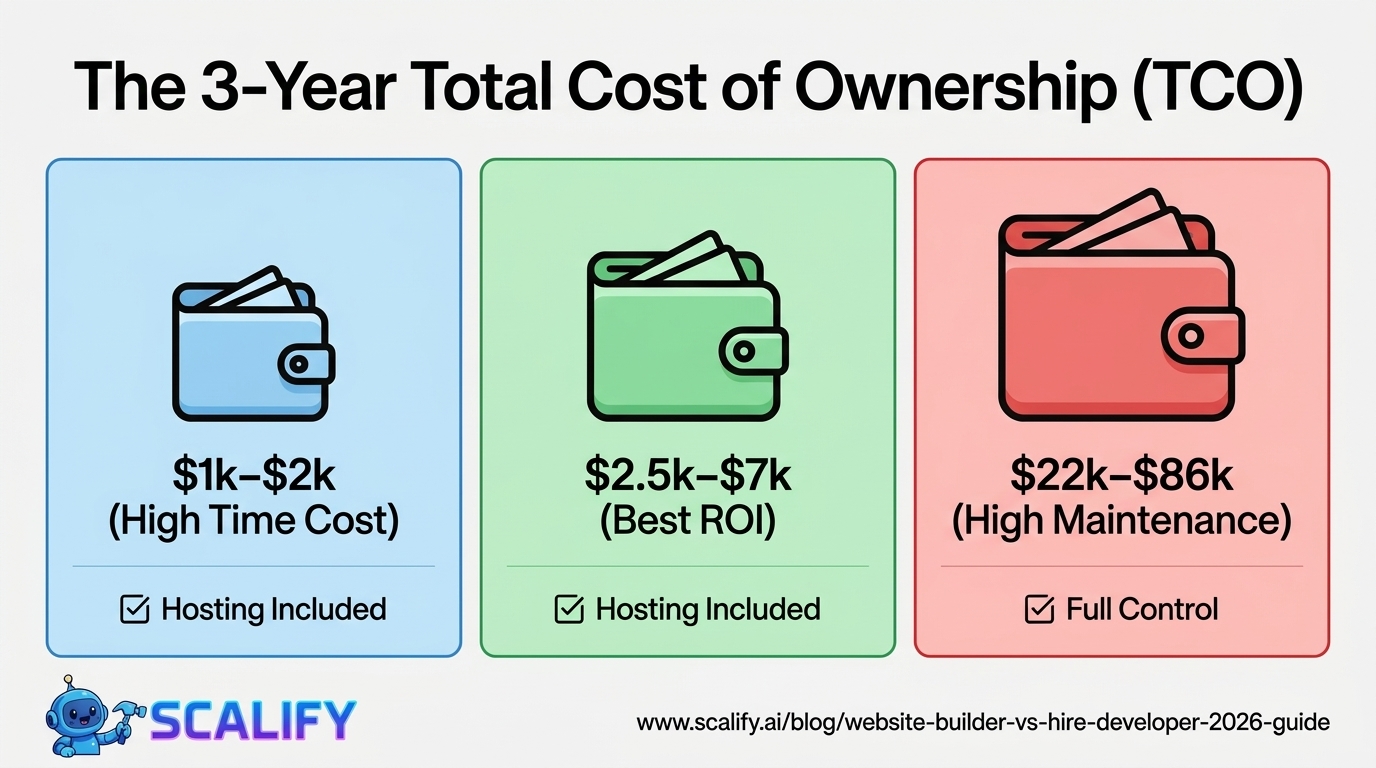
Single price: One offering, one price. The simplest and often the highest-converting structure — there's no decision to make, no comparison required. Service businesses with a defined, standardized offering benefit from single-price simplicity. Scalify's custom website in 10 business days at a clear price is a single-price structure — visitors aren't managing a feature trade-off decision, they're deciding yes or no.
Tiered pricing (typically 2–4 tiers): Multiple options at different price points, typically differentiated by scope, features, or service level. This is the dominant SaaS pricing structure. The classic three-tier model (Starter, Professional, Enterprise) gives buyers a sense of range and lets them self-select based on need and budget.
Custom/contact for pricing: For enterprise products, custom-scoped services, and complex engagements where price depends heavily on specific requirements. The risk: many buyers won't contact to get pricing — they'll leave to find a competitor who shows prices. "Contact for pricing" loses the portion of your audience that self-screens before talking to sales. For service businesses, showing starting prices or ranges with a contact CTA for custom scoping is typically better than no public pricing at all.
Highlighting a Recommended Plan
For tiered pricing, visual emphasis on a recommended or most popular plan significantly reduces decision paralysis and increases conversion. Highlighting one tier with visual weight (a colored border, a "Most Popular" badge, slightly larger sizing) guides visitor attention and reduces the cognitive load of choosing between similar options.
The recommended plan should be the one that: serves the majority of your customers, has the best margin for your business, or represents the sweet spot between too basic and too complex for most buyers. The "Enterprise" tier is almost never the recommended plan on a public pricing page — it's the option buyers graduate to, not start with.
Feature/Benefit Lists That Mean Something
Every tiered pricing page has feature lists showing what's included in each tier. Most feature lists are written for the people who built the product, not the people buying it. "API access," "Advanced analytics," "Multi-user roles" — these mean something to someone who already uses the product and understands its vocabulary. They mean nothing to a first-time visitor evaluating whether to buy.
Translate every feature into its customer benefit:
Feature-focused: Responsive design included
Benefit-focused: Works perfectly on phones and tablets — no separate mobile version needed
Feature-focused: CMS integration
Benefit-focused: Update your own content anytime — no developer required
Feature-focused: SEO setup
Benefit-focused: Google-ready from day one — title tags, meta descriptions, and sitemap configured for search visibility
The question to ask for every feature: "So what? Why does a buyer care about this?" The answer is the benefit.
Social Proof on the Pricing Page
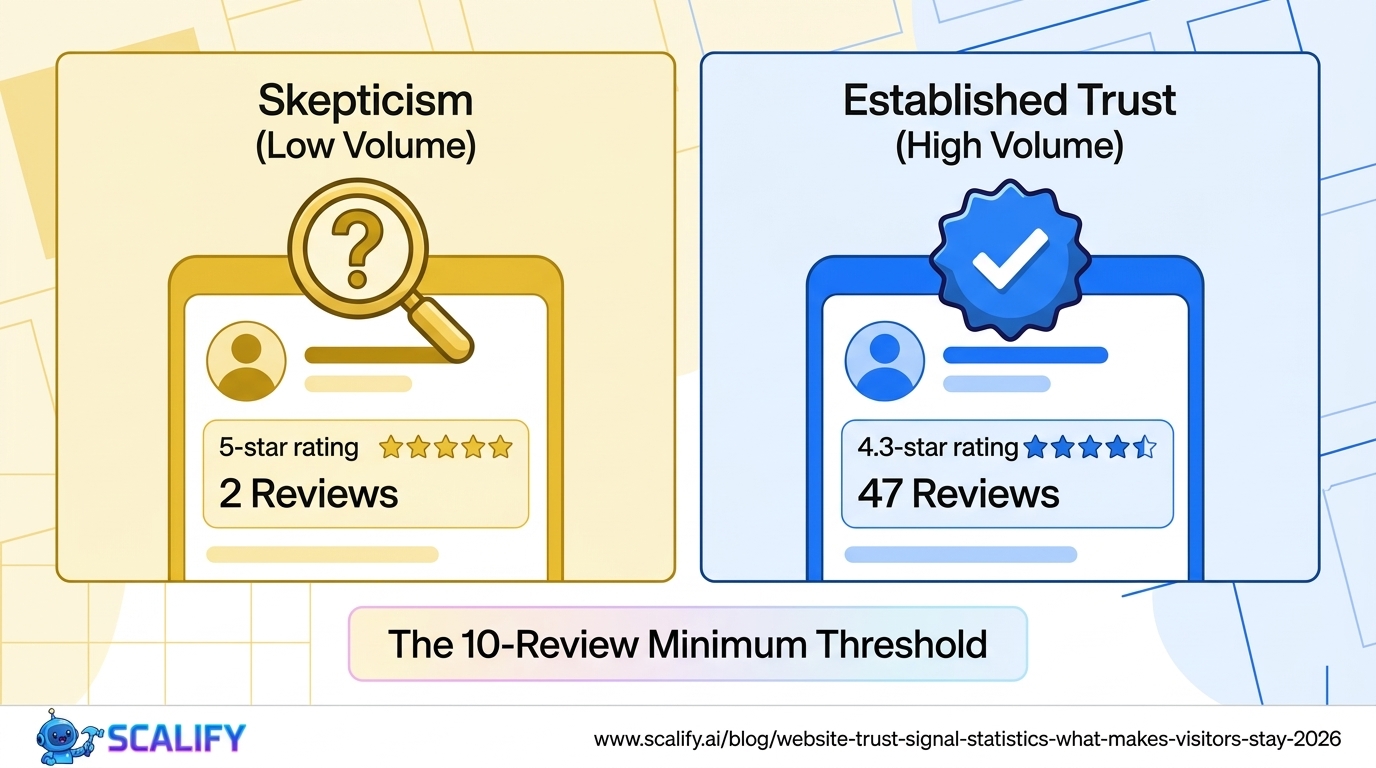
The pricing page is a moment of maximum hesitation — the highest-anxiety point in the buying journey. Social proof at this exact moment addresses the core anxiety: "Other people like me have paid this and found it worthwhile."
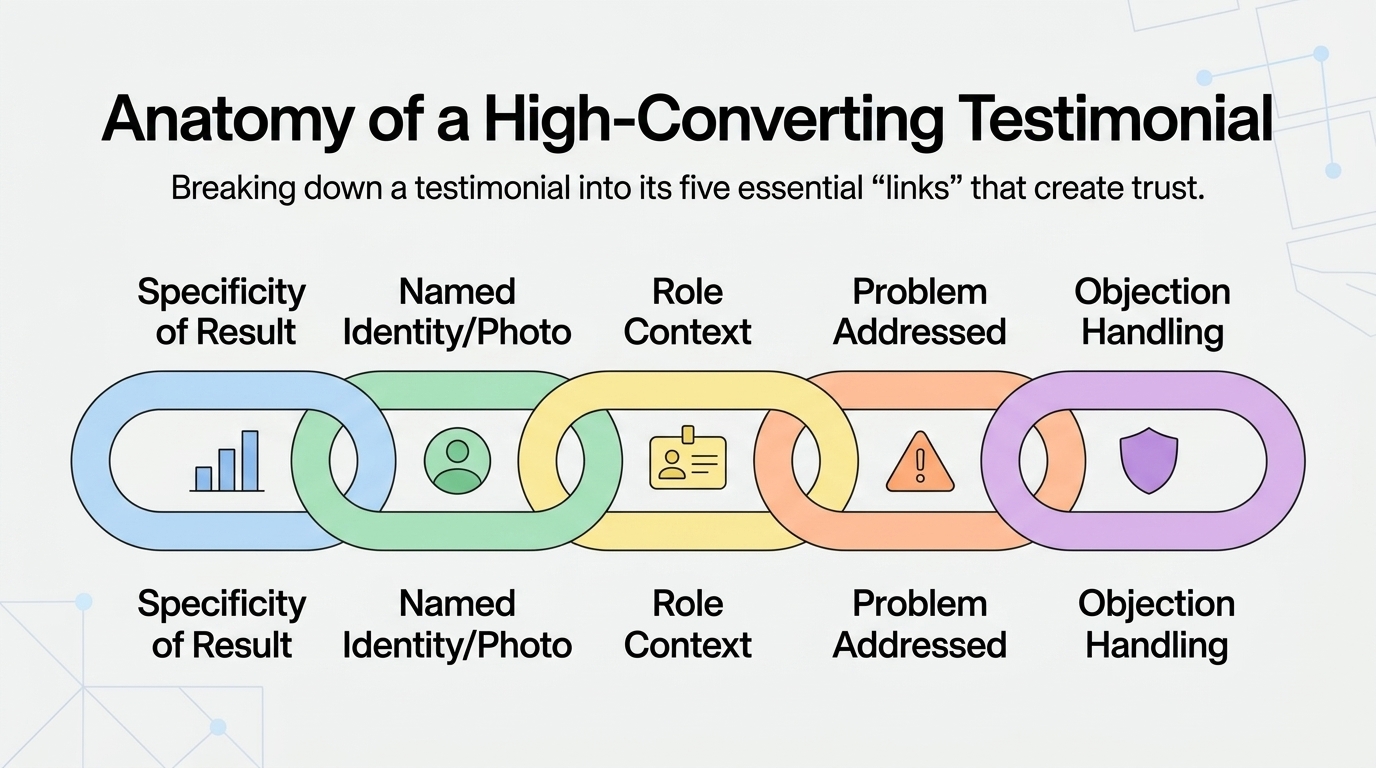
The most effective social proof for pricing pages: testimonials that specifically address value and ROI ("Worth every dollar — we made it back in the first month"), reviews with star ratings, specific client outcomes ("Generated 15 leads in the first 30 days"), and recognizable client logos that signal the caliber of businesses that have trusted you.
Place social proof directly adjacent to or between pricing tiers — not on a separate page or below the fold. Proximity to the buy decision is what makes social proof effective at converting hesitant visitors.
Objection Handling on the Page
Every pricing page has predictable objections that prevent ready buyers from clicking the CTA. Address them directly rather than letting them silently drive abandonment.
The most common pricing page objections:
"This seems expensive." Address with: ROI framing ("At your average deal value, this pays for itself with one new client"), comparison ("Less than one month of a freelancer's retainer"), or value enumeration ("This includes [list of deliverables worth far more individually]").
"What if it doesn't work out?" Address with: satisfaction guarantees, clear refund policies, revision policies, or case studies showing that it does work.
"I'm not sure this is right for my situation." Address with: a "Is this right for you?" section listing ideal client profiles, a FAQ addressing common fit questions, or a "not sure? let's talk" CTA alongside the buy CTA.
"What if I need more/less than what's listed?" Address with: clear scope of what's included, a note about custom scoping for unusual needs, and transparent language about what's out of scope.
FAQ sections on pricing pages are consistently high-converting elements because they directly engage with the questions preventing purchase. The FAQ should address the specific questions your sales team hears repeatedly, not generic questions about the company.
Guarantees and Risk Reduction
A guarantee reduces the perceived risk of the purchase decision — the visitor has less to lose if things don't work out. Even a modest guarantee (two rounds of revisions, 30 days of post-launch support) signals confidence in the quality of the work and reduces the psychological barrier to committing.
For service businesses specifically: a defined revision policy addresses the anxiety of "what if I don't like what they create?" directly. "Two rounds of revisions included — we work until you love it" is more reassuring than a feature list that doesn't address this fundamental anxiety.
The CTA: Specific, Action-Oriented, Adjacent to Price
The CTA button should appear immediately adjacent to the price — not separated by more content that requires scrolling. Visitors who decide they want to buy should be able to act on that decision at the exact moment it occurs.
CTA copy: specific is better than generic. "Get My Custom Quote" beats "Contact Us." "Start My Project" beats "Get Started." "Book My Strategy Call" beats "Schedule a Call." The first-person framing ("My") performs better than second-person ("Your") in most testing.
For tiered pricing: each tier should have its own CTA button. The most popular/recommended tier should have the most visually prominent button. Secondary tiers have secondary visual weight.
Annual vs. Monthly Pricing Toggle
For SaaS and subscription products, the annual/monthly toggle is a standard pricing page element that deserves deliberate design:
Default to annual if you want customers to choose annual (they're more profitable — lower churn, higher initial payment). Make the annual discount highly visible (usually 15–30% off monthly equivalent). Show the monthly-equivalent price with annual billing prominently alongside the total annual commitment.
Research from multiple SaaS companies shows that defaulting the toggle to annual rather than monthly, and making the annual saving visually prominent, increases annual plan uptake by 30–60%. The toggle default position alone has meaningful revenue impact.
Pricing Page vs. Custom Quote Flow
For complex service businesses where scope varies significantly: a hybrid approach often works better than either pure transparent pricing or pure "contact us" models:
Show starting prices or price ranges to establish the scope of investment and pre-qualify visitors by budget. Include a brief form that collects scope context (type of project, timeline, budget range) and connects to a proposal or consultation process rather than a direct purchase button.
This hybrid respects buyers' desire to understand pricing before committing to a sales conversation, while acknowledging that exact pricing requires scope context. "Custom websites from $5,000 — tell us about your project" is more conversion-friendly than either a specific price that won't fit all situations or "contact us for pricing" that provides no information at all.
What Not to Include on a Pricing Page
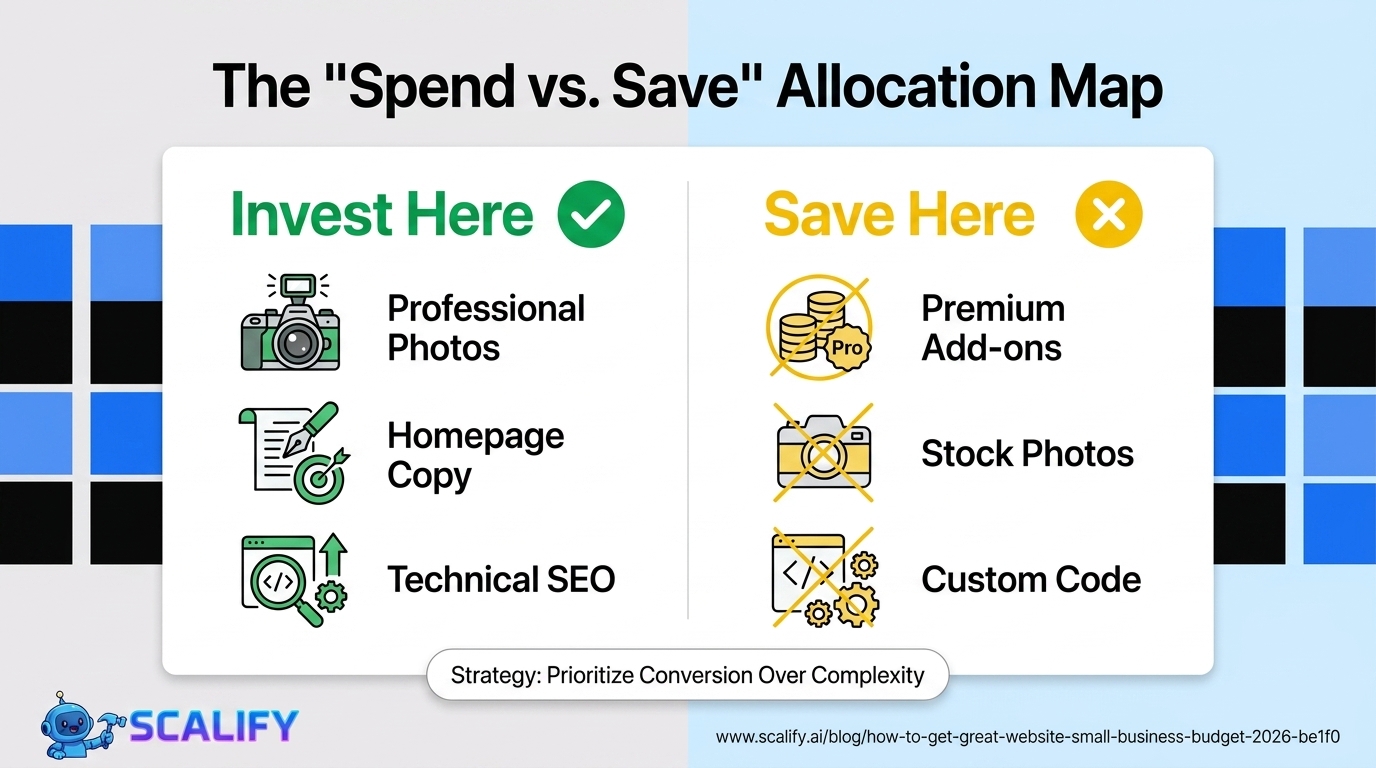
Too many tiers: Four or more pricing tiers create decision paralysis for most buyers. Paradox of choice — more options produce less satisfaction and more abandonment. Two to three tiers is the sweet spot for most businesses. If you must have more, consider segmenting into separate pricing pages by use case or customer type.
Confusing feature comparisons: Large feature comparison tables with dozens of rows of checkmarks vs. X marks are difficult to parse quickly and often obscure rather than clarify the actual differences between tiers. Lead with the key differentiators; save the detailed feature grid for buyers who want that depth.
Hidden mandatory add-ons: Pricing that shows a low number but hides mandatory costs (setup fees, required add-ons, per-seat charges that make the real cost much higher) creates the worst kind of pricing page experience — visitors feel deceived when they reach checkout and discover the total is significantly higher. Transparency builds trust; hidden costs destroy it.
Jargon in feature descriptions: Writing feature lists in technical vocabulary that only existing users understand prevents new buyers from evaluating whether the features are relevant to their needs.
Pricing Page SEO
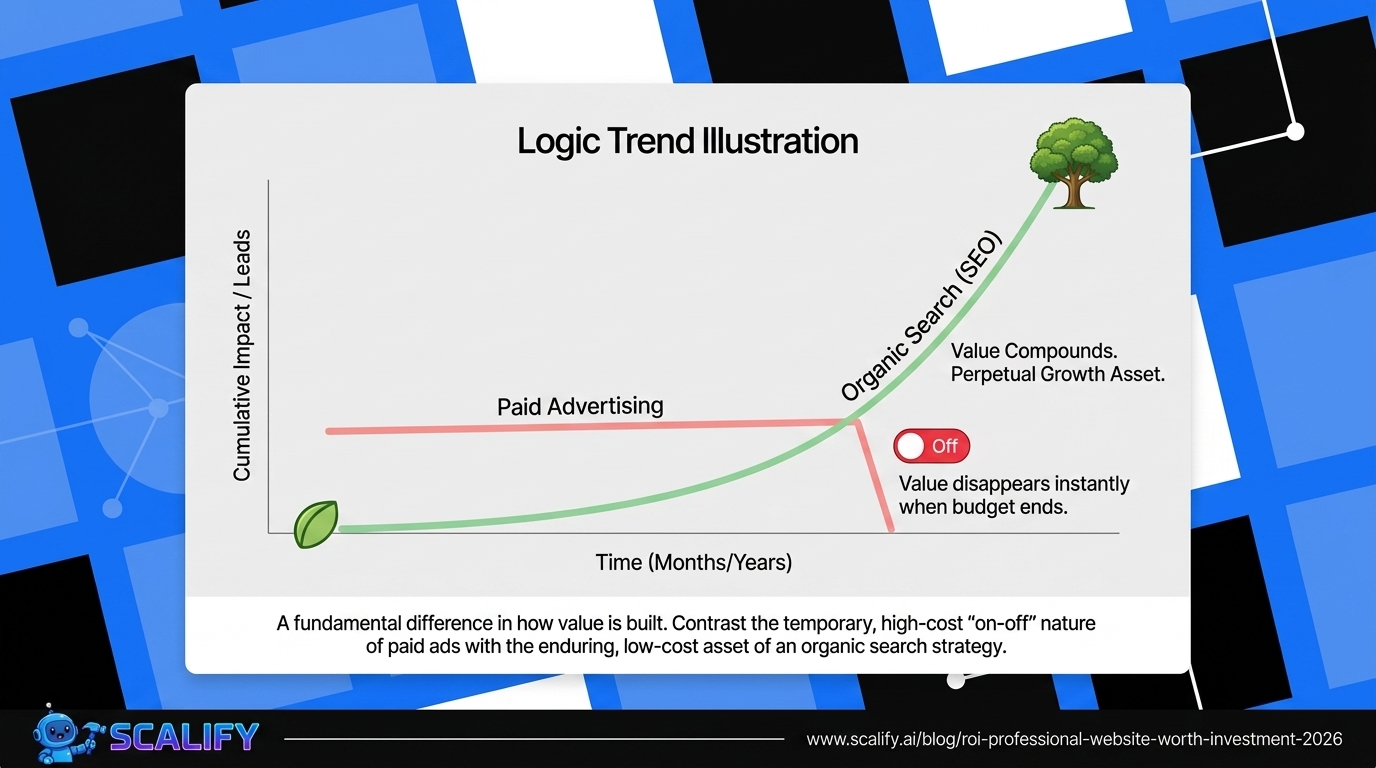
Pricing pages often rank for high-intent commercial queries: "[product/service] pricing," "[product/service] cost," "how much does [service] cost." These queries have high commercial intent — the searcher is actively evaluating whether to buy. Optimizing your pricing page for these queries captures searchers at the moment of peak purchase readiness.
Title tag: "[Your Service] Pricing — Starting at $[X] | [Brand]"
H1: "Web Design Pricing" or "Custom Website Cost"
Content: The pricing page should include enough text to help Google understand the page's topic — not just numbers and feature lists, but explanatory text about what's included and the value delivered.
The Bottom Line
Your pricing page is where the buying decision happens. Design it to answer the four questions every visitor is asking: what am I getting, is it right for me, is it worth it, and what if it doesn't work? Use clear pricing structure, benefit-focused feature descriptions, contextual social proof, direct objection handling, and risk-reducing guarantees. Make the CTA prominent and adjacent to the price.
The pricing page that converts best isn't the one that hides the price or apologizes for it — it's the one that contextualizes the price so thoroughly in value that the number feels like the obvious conclusion of everything on the page.
At Scalify, we build pricing pages the same way we build every page — with conversion architecture as the foundation, not an afterthought. The price is clear. The value is clear. The next step is clear.


.jpeg)
.jpeg)

78 SW 7th St, Miami, FL 33130