


What Is a Website Wireframe and Why Do You Need One?
By Josh Ternyak

March 29, 2026
Wireframes are the low-fidelity blueprints that shape how a website is built before a single pixel of design is created. This guide explains what they are, why they matter, and how to make your own.
The Blueprint That Saves Thousands of Dollars
There's a scene that plays out constantly in web design projects. The designer spends two weeks creating beautiful, high-fidelity mockups for the homepage. The client reviews them. "This is beautiful — but actually, I think the services section should come before the about section, and we need a testimonials section between the hero and the features, and the CTA should be at the top, not the bottom..." The designer goes back, restructures the entire layout, and delivers revised mockups two days later. The client reviews them. "Almost, but..."
This cycle is expensive when it happens at the mockup stage. It's nearly free when it happens at the wireframe stage.
Wireframes are low-fidelity representations of a web page's structure — black-and-white skeletal layouts that show what content will appear, in what order, with what relative importance, without any visual design applied. They're the blueprints before the architecture, and they're one of the highest-ROI steps in any web design process.
What a Wireframe Is
A wireframe is a simplified visual representation of a web page's layout — the structure and organization of content without color, typography, detailed imagery, or visual design. Think of it as the floor plan of a building: it shows where rooms are, how they're sized, and how they connect, without showing the paint colors, furniture, or decor.
A typical webpage wireframe includes:
- Placeholder blocks representing content sections (labeled "Hero Section," "Services Overview," "Testimonials," etc.)
- Rough placeholder boxes where images will appear, often labeled "Image" or illustrated with an X through a box
- Lorem ipsum text or descriptive labels where copy will appear
- Approximate relative sizing of different sections
- Navigation placement and structure
- Button and CTA placement
- Form field arrangement
What wireframes deliberately omit: specific typography choices, colors, images, icons, specific copy, detailed styling. These are the domain of the design phase that follows. Adding these details to a wireframe defeats the purpose — you want the structural conversation to happen before visual decisions are made.
The Three Levels of Wireframe Fidelity
Wireframes exist on a spectrum of detail and effort:
Low-Fidelity (Lo-Fi) Wireframes
The roughest form — often hand-drawn on paper or a whiteboard, or quickly sketched in a digital tool. Lo-fi wireframes prioritize speed and are used for rapid exploration of structural concepts. They're imprecise, don't need to be polished, and are often disposable — used to generate ideas and align stakeholders before investing in more refined representations.
A lo-fi wireframe might be drawn in five minutes during a meeting. It doesn't need to be beautiful. It needs to communicate the layout concept clearly enough that everyone in the room understands what's being proposed.
Mid-Fidelity Wireframes
The most common wireframe type in professional web design. Created in tools like Figma, Balsamiq, Whimsical, or Adobe XD. More precise than lo-fi sketches but still intentionally stripped of visual design. They typically include actual navigation labels, real section headings, rough content blocks, form layouts, and button placements.
Mid-fi wireframes are detailed enough to review meaningfully and provide real feedback on. They're the primary tool for the structural alignment conversation with clients before visual design begins.
High-Fidelity Wireframes
Detailed, precise wireframes that are close to the final design in terms of structure and proportions, but still lacking color and full visual design. Some teams skip this level entirely and move directly from mid-fi wireframes to full visual design; others use high-fi wireframes as an intermediate step when structural precision is critical before visual work begins.
Why Wireframes Matter: The Value They Provide
Separating Structure from Style
The single most important function of wireframes is separating the structural decision from the visual decision. These are genuinely different decisions that require different thinking and different types of feedback.
Structural decisions: What content sections does this page need? In what order should they appear? How much visual weight should the hero get relative to the content sections? Where does the CTA appear? How is the navigation organized? These decisions are about communication strategy and information hierarchy.
Visual decisions: What colors? What fonts? What imagery style? What visual treatment creates the right emotional impression? These decisions are about aesthetic execution.
When these decisions happen simultaneously — when the first thing the client sees is a full visual design mockup — structural feedback gets drowned out by visual feedback. "The blue is wrong" and "the logo should be bigger" dominate the review, while structural problems (the wrong content sections, the wrong information hierarchy, the wrong CTA placement) go unaddressed until they're discovered during development — when they're much more expensive to fix.
Wireframes force the structural conversation to happen explicitly, before visual design, when structural changes cost nothing.
Aligning Stakeholders Early
Reviewing a wireframe with clients, stakeholders, or team members surfaces expectations, requirements, and preferences before any significant design work has been done. This is when misalignments are cheapest to discover and correct.
A typical discovery during wireframe review: "We actually need a case studies section on the homepage — our sales team constantly sends prospects to case studies and they need to be prominent." This discovery at the wireframe stage adds a section to a black-and-white sketch. The same discovery after two weeks of visual design work requires redesigning several sections of a polished mockup.
Enabling Better Design Work
Designers who work from agreed wireframes produce better visual work than designers who are simultaneously solving structural and visual problems. When the structure is decided, the designer can focus entirely on visual execution — what colors, typography, imagery, and styling best express the brand within the established structure.
This is also why clients tend to get better results when they provide approved wireframes rather than "do what you think is best." The designer isn't guessing at structure — they're executing visual decisions within a framework that's already been validated with the people who know the business.
Facilitating Developer Estimates
Wireframes give developers something to estimate against. A detailed wireframe for all pages of a site allows a developer to assess the complexity of what's being built: how many unique page templates are needed, what functionality each section requires, what edge cases need to be considered. Estimates based on wireframes are significantly more accurate than estimates based on verbal descriptions.
When to Skip Wireframes
Wireframes add value proportional to the complexity and novelty of what's being designed. For some projects, they're overkill.
Template-based builds where the template largely determines structure: If you're buying a premium template and primarily customizing content within its existing structure, wireframes may add little value. The template itself defines the structure; your job is filling it with your content.
Simple, clearly-scoped sites with experienced teams: A seasoned designer and client who have worked together before, building a 5-page site with standard structure (Home, About, Services, Blog, Contact), may not need wireframes if they have sufficient shared understanding of what "standard structure" means.
Rapid iterative prototyping: In very agile design processes where the team iterates rapidly in the actual design tool (Figma) with quick client review cycles, the wireframing step sometimes gets absorbed into an accelerated mockup process. This works when the team is experienced and the client is highly available for rapid feedback cycles.
The rule of thumb: the more complex the project, the larger the team, the more stakeholders involved, and the higher the cost of getting structure wrong — the more valuable wireframes are.
Tools for Creating Wireframes
Paper and Pen
The fastest, most accessible wireframing tool. No software to learn, no templates to navigate, no interface constraints. A blank piece of paper and a pen produce wireframes in minutes. The limit is that paper wireframes aren't easy to share, annotate digitally, or iterate on systematically.
Paper wireframing is excellent for initial exploration and alignment — sketch options during a meeting, agree on a direction, then build a digital wireframe from the agreed sketch.
Figma
The dominant professional design tool for both wireframing and full design. Figma's collaborative nature (multiple people can work in the same file simultaneously) makes it particularly good for team wireframing. Free for up to 3 projects; paid plans from $12/month.
Many designers wireframe in Figma using a monochrome template library, then evolve the wireframes into full visual designs in the same tool — maintaining a continuous design file from wireframe to final design.
Balsamiq
Purpose-built wireframing software with a deliberately sketch-like aesthetic that communicates "this is not the final design" visually. This aesthetic is intentional: clients who see clean, polished wireframes sometimes treat them as near-final designs, providing feedback on visual details that aren't appropriate at the wireframe stage. Balsamiq's roughness signals "structural discussion only."
Less widely used than Figma in contemporary practice but still popular for teams specifically focused on wireframing rather than using a single tool for wireframing and design.
Whimsical
A lighter, faster alternative to Figma for wireframing. Excellent for rapid mid-fi wireframes with a clean interface and an easy learning curve. Less powerful than Figma for full design work but faster for wireframe-specific tasks.
Miro and FigJam
Digital whiteboards that are excellent for collaborative wireframe ideation — teams in different locations sketching and iterating together in real time. Particularly useful for the early lo-fi exploration phase before moving to a more precise wireframing tool.
How to Wireframe Effectively: A Practical Process
Start with Goals and Audience
Before drawing anything, clarify what each page needs to accomplish and for whom. A wireframe is a visual decision about how to best achieve a communication goal. Without understanding the goal, wireframing is arbitrary arrangement of boxes.
For each page: What is the visitor's intent when they arrive here? What should they understand when they leave? What action should they take? What information do they need to make that decision? The answers to these questions determine what sections the wireframe needs and in what order.
Map Content Before Layout
List all the content elements the page needs — every section, feature, testimonial block, image, form, CTA. Don't think about layout yet; think about what needs to exist. Then prioritize: what's most important? What should be most prominent? What's secondary? This prioritization becomes the layout hierarchy.
Sketch Multiple Options for Key Sections
For sections where the right approach isn't obvious (particularly the hero section and key conversion sections), sketch 2–3 alternative approaches and evaluate which best achieves the communication goal. This exploration is cheap at the wireframe stage; it's much more expensive during design.
Annotate Your Wireframes
Wireframes communicate better with annotations — notes that explain the intended content, purpose, or behavior of elements that aren't self-evident from the visual. "This section displays 3 rotating testimonials" is more useful than an unlabeled box. "Sticky navigation — stays visible on scroll" describes behavior the visual doesn't convey. Good annotations reduce review ambiguity and developer questions.
Review and Iterate Before Visual Design
Share wireframes with relevant stakeholders — the client, the content team, the developer — before moving to design. The questions and feedback this review generates are the structural decisions you need to resolve before design begins. An hour of wireframe review typically prevents several hours of design revision.
Mobile Wireframing: Don't Forget the Small Screen
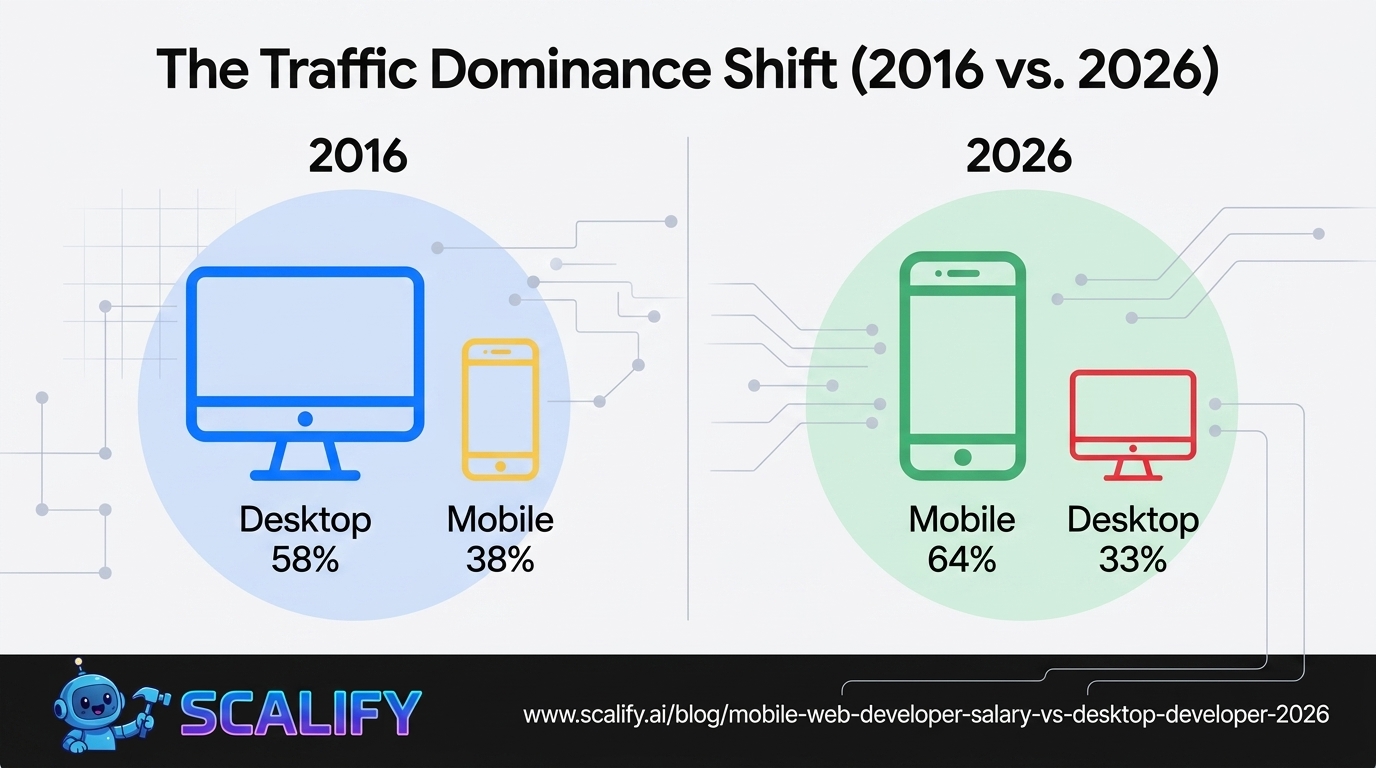
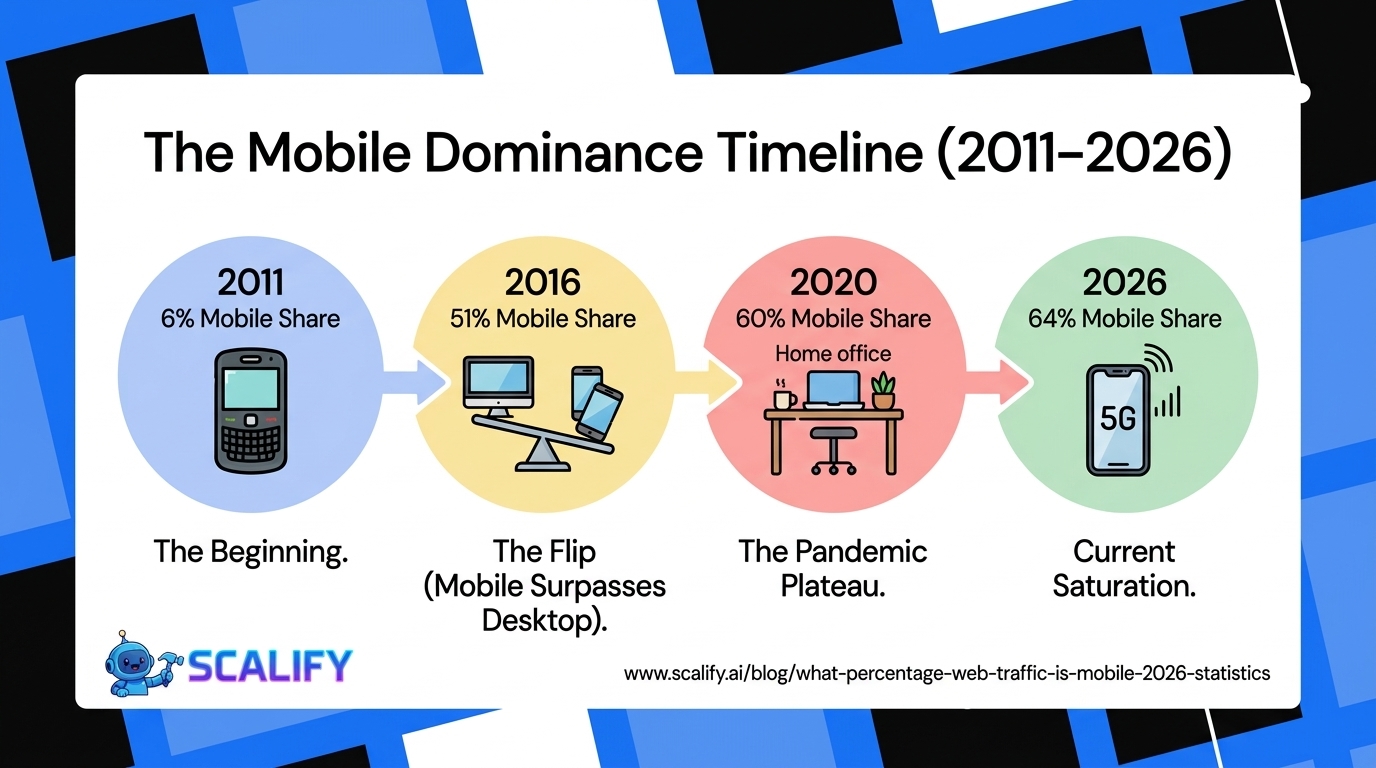
With over 60% of web traffic on mobile, wireframing for mobile is as important as wireframing for desktop. And the decisions are genuinely different — a three-column layout on desktop becomes a single-column stack on mobile. Navigation becomes a hamburger menu. Content priority matters even more on small screens because vertical space is limited and scrolling is the primary interaction.
Best practice: wireframe mobile first. Designing from the most constrained context (mobile) forces prioritization decisions that produce better designs at all screen sizes. A page that communicates its value proposition clearly in a single column at 375px wide will communicate even more clearly when expanded to a wider desktop layout.
Show wireframes at both mobile and desktop viewport sizes when presenting to clients — many clients haven't thought carefully about how their site will work on mobile, and seeing both simultaneously often surfaces important decisions earlier in the process.
The Bottom Line
Wireframes are the structural blueprint of a web page — the agreement on what content exists, in what order, with what hierarchy, before visual design decisions are made. They're valuable because they separate the structural conversation from the visual conversation, surface alignment issues when they're cheap to fix, and give designers and developers a clear foundation to work from.
They're most valuable for complex projects, large teams, and situations with multiple stakeholders who need to align before significant design investment begins. For simple projects or experienced teams with established processes, they can sometimes be abbreviated or skipped — but the principle they embody (structure before style) remains useful even when explicit wireframes aren't created.
At Scalify, every website we build goes through a structured planning and layout review process before design begins — ensuring that what gets designed is what the business actually needs, not our guess at what might work.






.jpeg)
.jpeg)




78 SW 7th St, Miami, FL 33130