


Above the Fold vs Below the Fold: Does It Still Matter?
By Josh Ternyak

March 28, 2026
The fold used to be a hard line in web design. Today it's more complicated — different screens, different behaviors, different rules. Here's what actually matters and what you should stop worrying about.
An Old Newspaper Term That Still Shapes How We Design Websites
The phrase "above the fold" comes from print newspapers. A broadsheet folded in half horizontally has two sections: the top half, which is visible when the paper is folded on a newsstand, and the bottom half, which is hidden. To sell papers, the most important headlines and photos were placed above that physical fold — where passersby could see them without picking up the paper.
When the web emerged, designers borrowed the metaphor. The "fold" became the bottom edge of the browser window — everything visible without scrolling was "above the fold," everything requiring a scroll was "below the fold." The logic: important content should be visible immediately, because users might not scroll.
That was reasonable thinking in 1998. It's still partially relevant in 2026. But the "fold" has become a vastly more complicated concept in an era of infinitely varied screen sizes, touch-based scrolling behavior, and sophisticated user research that has upended some of the original assumptions.
Let's separate what's still true from what's been overtaken by how the web actually works now.
The Original Case for Above-the-Fold Design
The early web rationale for above-the-fold thinking was based on a real user behavior: many visitors didn't scroll, especially if the page didn't immediately signal that there was something worth scrolling for.
In the early days of the web, pages loaded slowly, screens were small (typically 800×600), and users were less comfortable with the medium. The behavior "see what's visible, decide if it's worth more time, then maybe scroll" was common. Data from that era showed that the majority of user attention concentrated in the top portion of pages.
This shaped design conventions that persist today: logos in the top left, navigation across the top, the most important headline as large as possible in the first visible area, and the primary call to action somewhere in the first screen. These aren't arbitrary — they came from real data about where attention concentrates.
What Changed: Screens, Scrolling Behavior, and Touch
Several things happened that complicated the original fold model:
Screen sizes exploded. In the late 1990s and early 2000s, most users were on 800×600 or 1024×768 resolution monitors. Today, screens range from 320px wide mobile phones to 4K monitors over 3000px wide, and everything in between. There is no single "fold" — the fold is a different line on every device. Content that's comfortably above the fold on a 1440p desktop monitor might be deep below the fold on a 375px-wide phone screen.
Scrolling became natural and expected. The rise of social media — Instagram, Twitter, Facebook — trained an entire generation to scroll endlessly. The "scroll reflex" is deeply conditioned for most internet users today. The assumption that users don't scroll is outdated for most contexts.
Touch interfaces made scrolling frictionless. On mobile, scrolling is a single fluid gesture. The physical friction of moving a mouse to a scrollbar and dragging it — which made early web users reluctant to scroll — doesn't exist on touch devices. Swiping up to scroll is effortless and instinctive.
User research evolved. Eye-tracking studies, scroll depth analytics, and heatmapping tools gave designers actual data about where users look and how far they scroll on real pages. Some of the findings contradicted the original above-the-fold assumptions.
What the Research Actually Shows
Multiple major studies — from Nielsen Norman Group, the Chartbeat team, and various content analytics platforms — have examined scroll behavior on the modern web. The key findings:
Users do scroll — more than the original model assumed. On pages with compelling content, users regularly scroll through the entire page. Content quality is the main determinant: if what's above the fold signals that there's something worth reading below, users will scroll. If it doesn't, they leave.
The above-the-fold zone still gets disproportionate attention. Even accounting for scrolling, the content in the first visible area gets more engagement than content further down the page. Chartbeat's analysis of billions of page views found that content in the "above fold" zone gets roughly twice the attention of content below the fold. The top of the page is still the highest-value real estate — just not the only real estate.
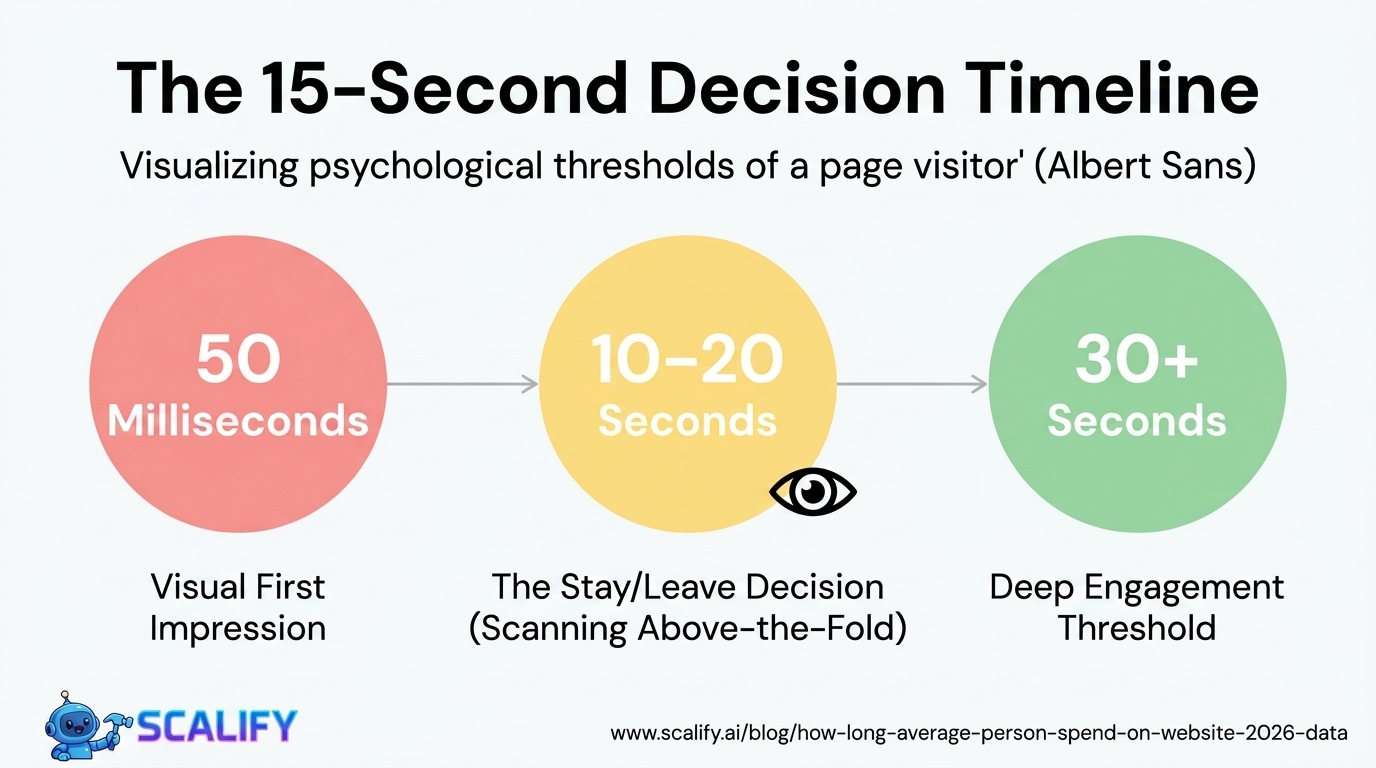
The scroll behavior varies dramatically by content type. Users reading a long-form article are far more likely to scroll to the bottom than users on a homepage evaluating whether a company is right for them. Landing page visitors, in particular, often make their "convert or leave" decision in the first few seconds based primarily on what's above the fold.
"The fold" itself is highly variable. On mobile, the fold might be at 500–600px of page height. On desktop, it might be 700–900px. On a large monitor, it might be over 1000px. Designing for a fixed fold location is inherently imprecise. What matters is designing the first "visible zone" well, without being able to specify exactly where that zone ends.
What Actually Matters: Principles That Hold Across All Screens
Rather than obsessing over a specific pixel position as "the fold," the practical principles that produce better designs are these:
The First Visible Zone Must Communicate Clearly and Quickly
Whatever is visible when a user first arrives on your page needs to answer three questions almost instantly: What is this? Is it for me? What should I do? If a visitor can't answer those questions from what they see before scrolling, the rest of the page doesn't matter to them — they've already decided to leave.
This is still the core insight from above-the-fold thinking, and it's as valid as ever. The application is just less rigidly tied to a specific pixel line.
Visual Cues That Invite Scrolling Are Important
One of the most consistent findings in scroll behavior research: when users don't scroll, it's often because the page design didn't signal that there was more below. A hero section that feels visually "complete" — where the design doesn't create any sense of continuity below the visible area — produces less scrolling than one where something is partially visible below the fold or where there's visual flow suggesting more content below.
Techniques that encourage scrolling: having content start within the visible area and continue below it (rather than ending at the fold), using directional cues (arrows, animation, gradient fades that suggest continuation), and avoiding designs where the hero section looks like a self-contained "poster" with nothing else to see.
CTAs Above the Fold Still Convert Better — But CTAs Throughout a Page Convert Better Still
For conversion-focused pages, having a primary CTA above the fold remains best practice — it's visible immediately and available for users who are ready to act without reading further. But repeating the CTA at natural breaking points throughout the page — after a section of persuasive copy, after testimonials, after the pricing section — consistently outperforms relying solely on the above-fold CTA.
The ideal isn't "put everything important above the fold" — it's "put the most essential elements above the fold, and make the rest of the page compelling enough that users who scroll are rewarded with content that builds their confidence to act."
Mobile Is Now the Primary Design Context
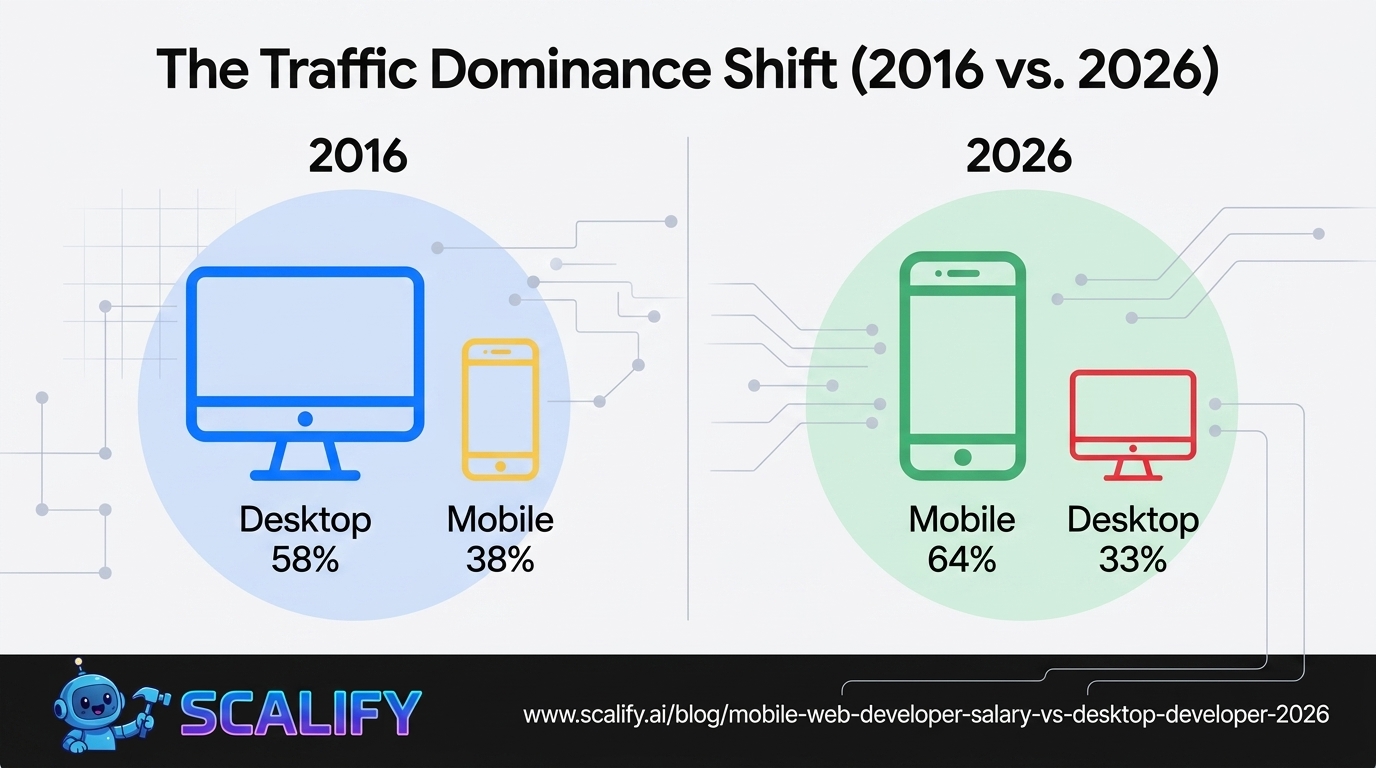
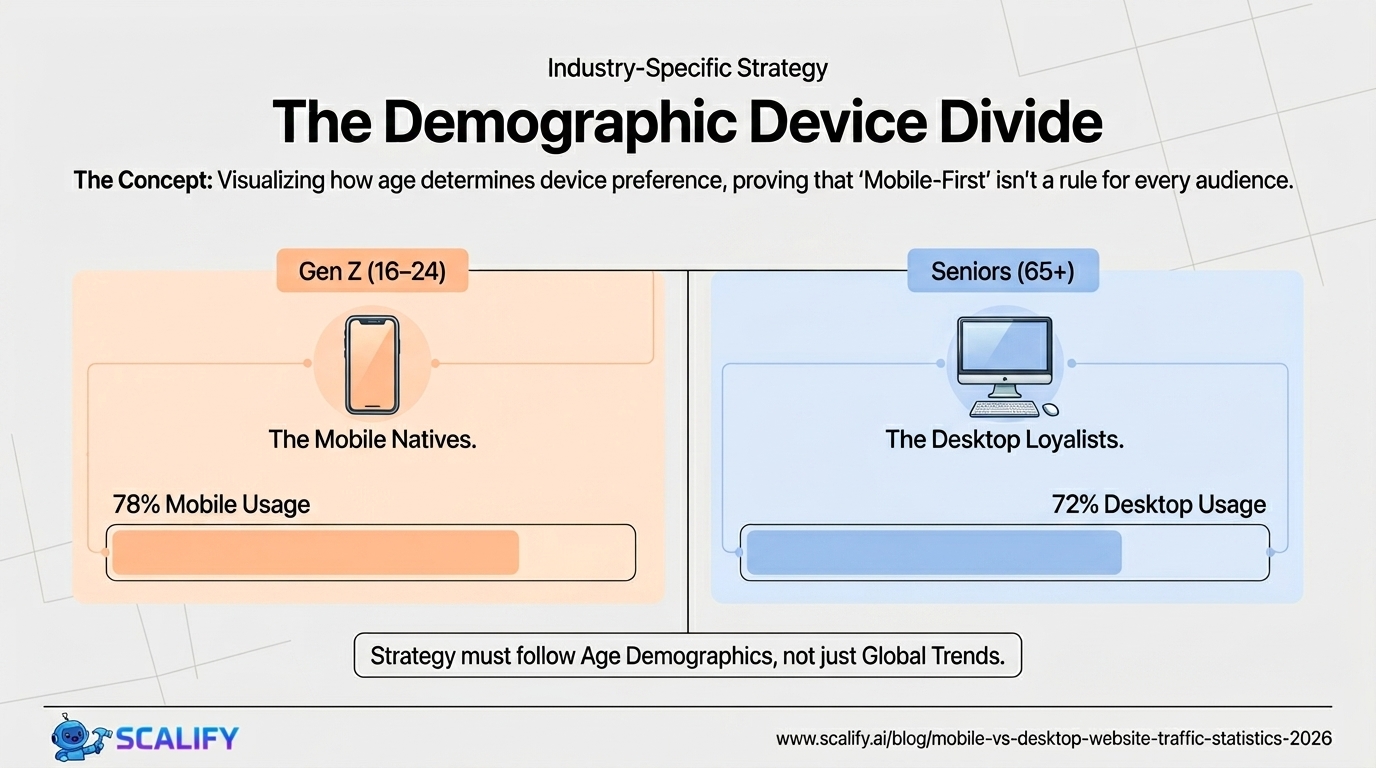
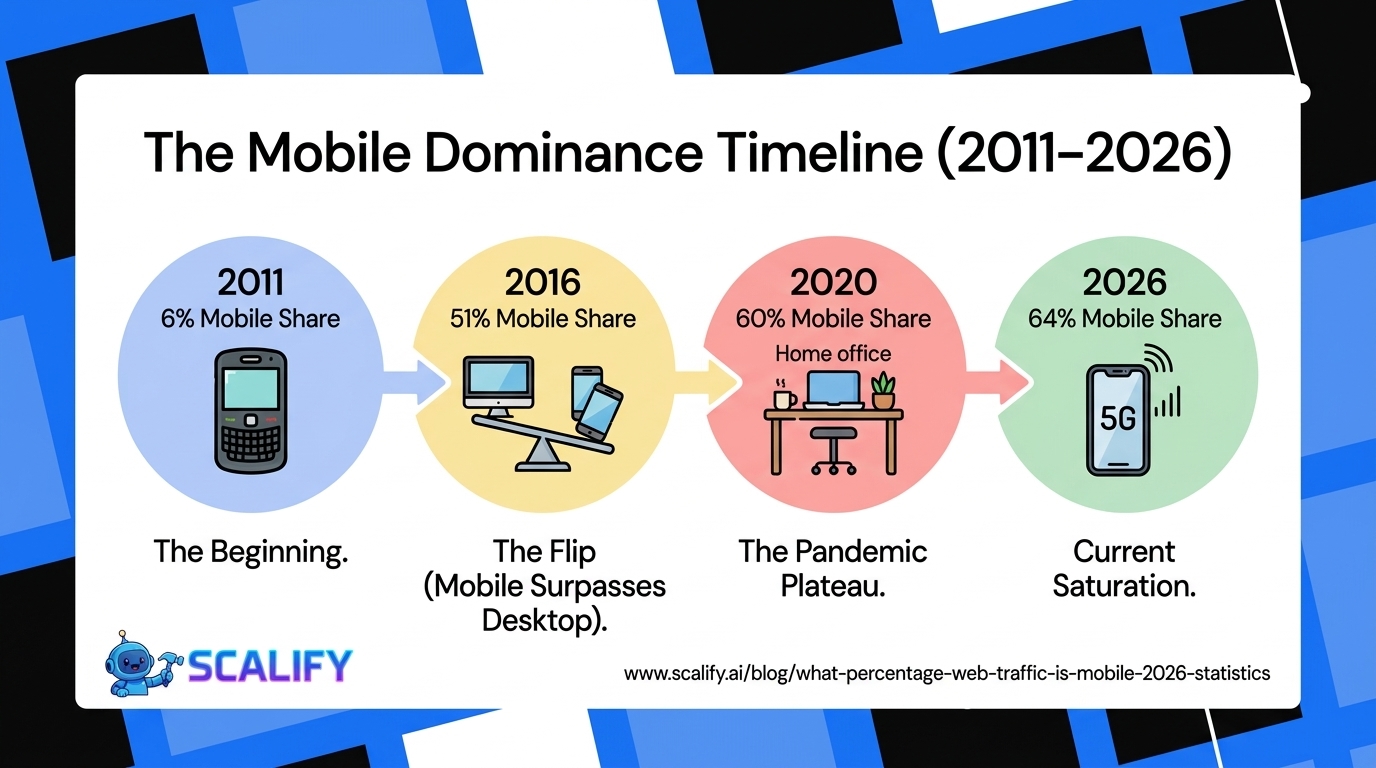
With over 60% of web traffic coming from mobile devices, the mobile "fold" is the more important design constraint. On mobile, the fold typically sits at around 500–600px of page height — much less visible content than desktop. This makes the mobile hero even more ruthlessly competitive: less space, more critical to nail the messaging and visual hierarchy.
Google's mobile-first indexing means the mobile version of your page is what's primarily evaluated for search rankings. Page experience metrics — Core Web Vitals, interactivity, visual stability — are measured on the mobile experience. Designing mobile-first isn't just a best practice for users; it's aligned with how search engines evaluate and rank your site.
The "Lazy Load" Fold Consideration for Performance
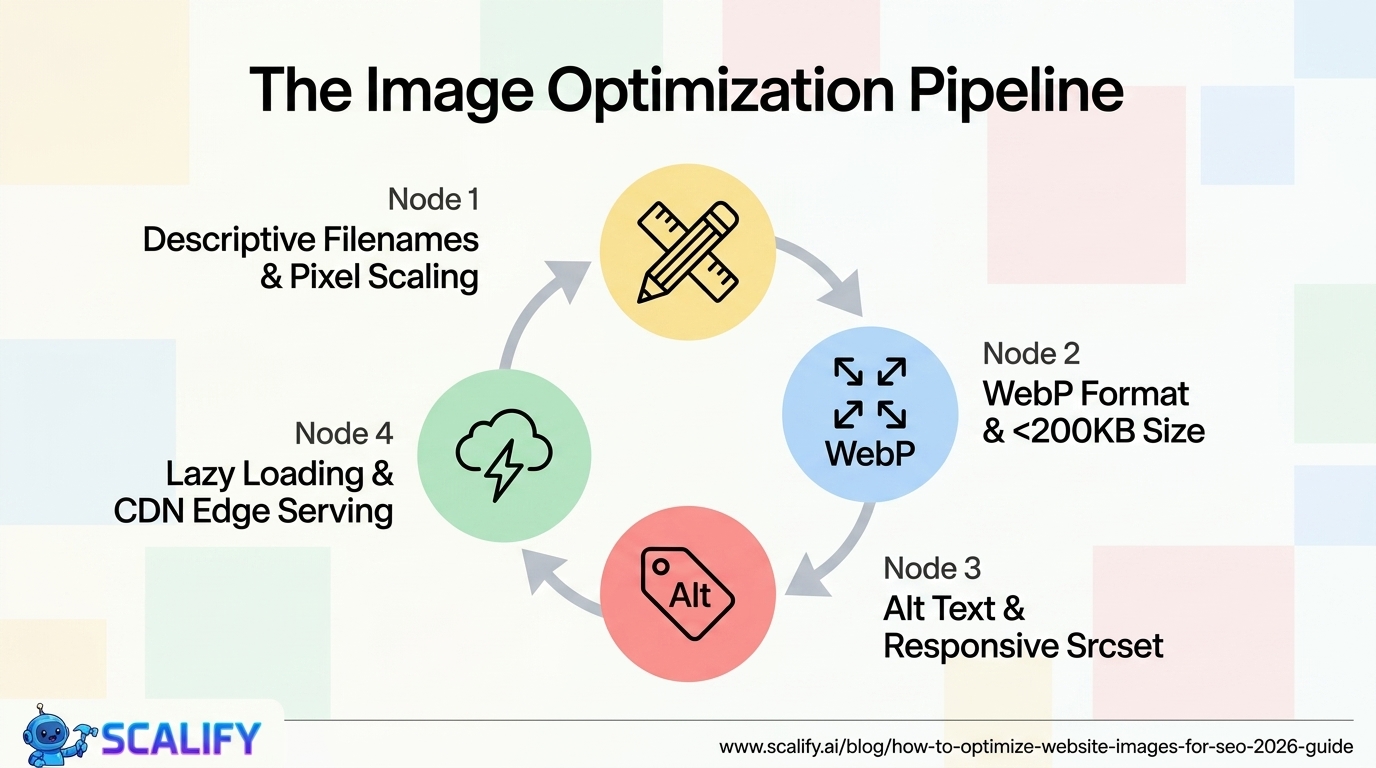
Here's a technical dimension to above-fold thinking that's grown more important: page performance. Content below the fold doesn't need to load immediately. Modern best practice for page performance involves loading above-fold content first (the "critical path") and deferring below-fold resources — images, off-screen components, certain scripts — until they're needed.
This technique, called lazy loading, can dramatically improve Time to First Contentful Paint (one of Google's Core Web Vitals) without affecting what users ultimately see. It does require correctly identifying what is and isn't "above the fold" for the purpose of critical resource loading, which varies by screen size and requires some technical implementation.
Where Above-the-Fold Thinking Is Overused
The fold obsession becomes counterproductive in a few common scenarios:
Cramming too much into the hero. Some designers try to include every important piece of information above the fold: headline, subheadline, CTA, social proof, feature list, pricing, and testimonials, all competing for space in the first screen. The result is visual chaos that's overwhelming rather than clear. The first visible area should do a focused job, not try to replace the rest of the page.
Avoiding necessary content because it's "below the fold." Detailed product descriptions, thorough explanations, comprehensive FAQs — this content belongs on the appropriate pages even if it's below the fold. Users who have scrolled to that section are actively seeking that information. Content that's useful and correctly placed in the page hierarchy doesn't need to be forced above the fold to be valuable.
Hiding important secondary navigation below the fold. Navigation elements (like secondary calls to action, links to key resources) that would be useful to visitors who've scrolled should be accessible in the context where they're needed — not forced into an already crowded above-fold zone.
Treating all pages the same. The importance of above-fold content varies by page type. On a homepage and key landing pages, the above-fold zone is critical and worth careful attention. On a blog post, an about page, or a FAQ page — where the value is in the content itself and users arrived specifically to read — the "fold" is less strategically significant. Worry about above-fold most on your highest-traffic, highest-conversion pages.
Practical Checklist: Evaluating Your Above-Fold Zone
For any key page on your site — especially your homepage and primary landing pages — here's a quick framework to evaluate whether your above-fold zone is doing its job:
Within 3 seconds of landing, can a first-time visitor identify:
- What your company does?
- Who it's for?
- What the primary action they should take is?
If any of these three are unclear from the first visible screen, that's the problem to solve — not a conversion rate problem, not a design problem. A clarity problem.
Does the design invite scrolling? Is there a visual or content cue that something valuable continues below? Or does the hero feel like a complete, self-contained unit that doesn't hint at more?
Is the primary CTA visible without scrolling? On both desktop and mobile screen sizes? Test this by actually loading the page on a mobile device and seeing what you see before any scrolling.
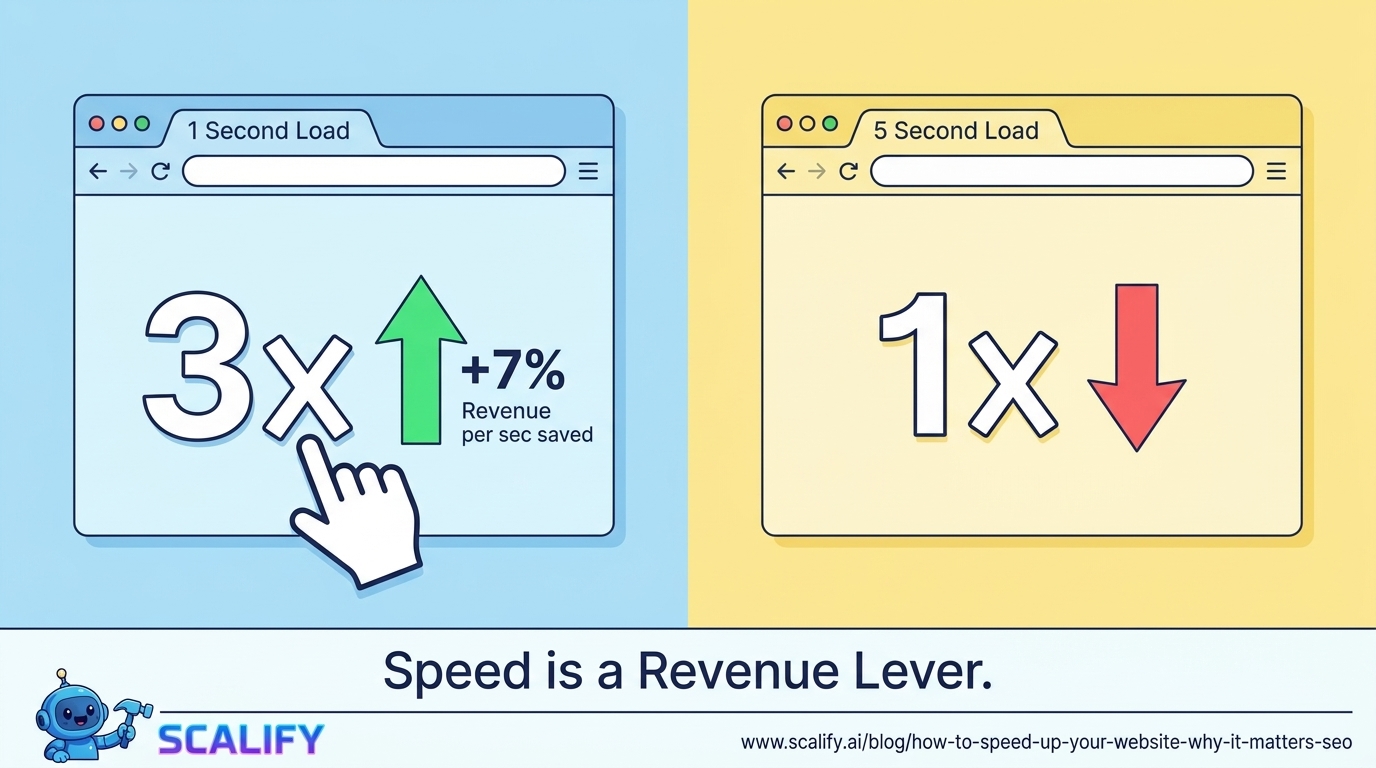
Is the above-fold zone loading fast? Google's Largest Contentful Paint (LCP) measures how long it takes for the largest above-fold content element to appear. An LCP over 2.5 seconds is flagged as "Needs Improvement." Slow above-fold loading undermines everything else — visitors leave before the content even appears.
The Bottom Line
The fold still matters, but it's not the rigid rule it was once treated as. The modern understanding: the first visible area of any page carries disproportionate importance for first impressions, initial comprehension, and conversion readiness. Treat it accordingly — with clarity, hierarchy, and a compelling reason to engage further.
Below the fold isn't wasted space. It's where you build the case, provide the detail, address the objections, and deliver the content that turns an interested visitor into a convinced one. The best pages use the full canvas: a sharp, focused above-fold zone that hooks attention and a well-designed below-fold experience that converts it.
Great web design isn't about where the fold sits — it's about creating a coherent experience where every visible area, above or below, does its job. That's what Scalify designs into every website we build.



.jpeg)
.jpeg)



78 SW 7th St, Miami, FL 33130