

Entry-Level Web Developer Salary: What to Expect Starting Out in 2026
By Josh Ternyak

April 22, 2026
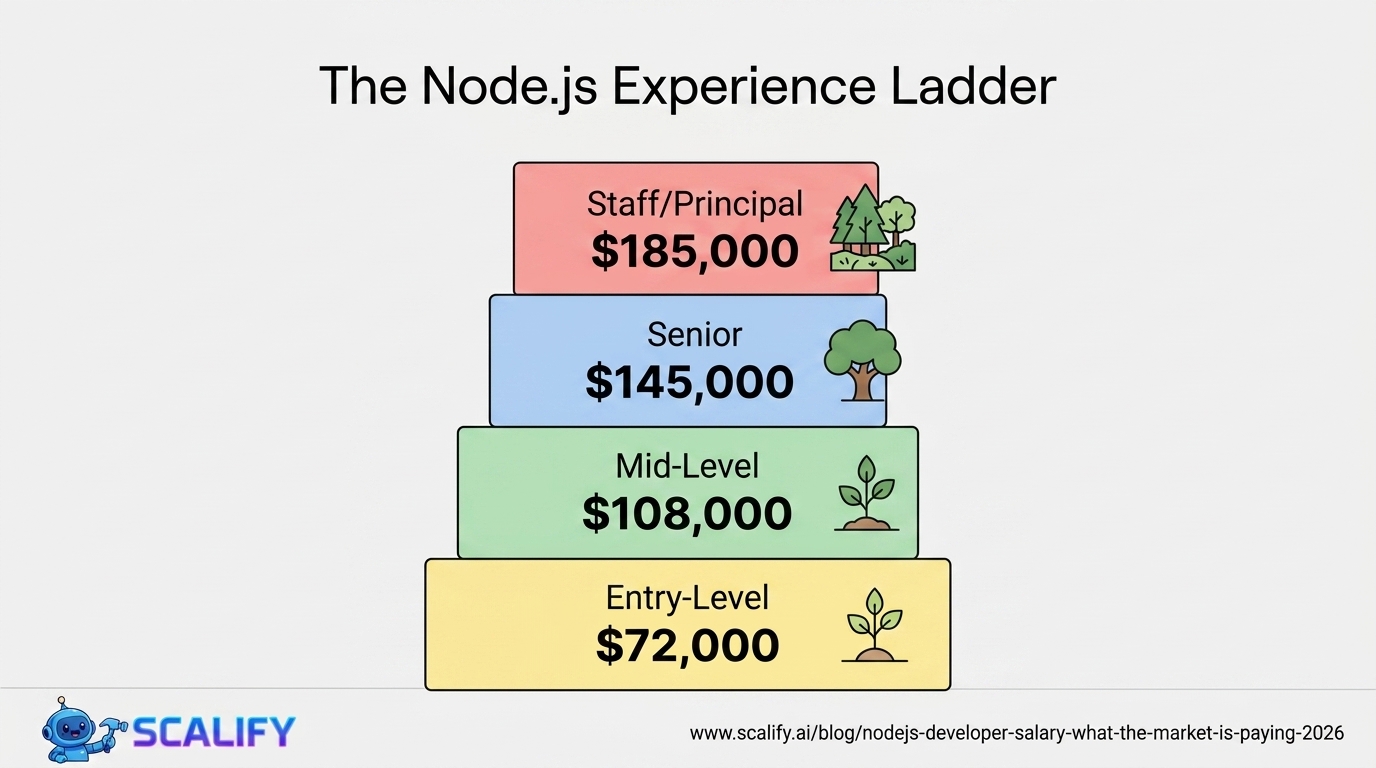
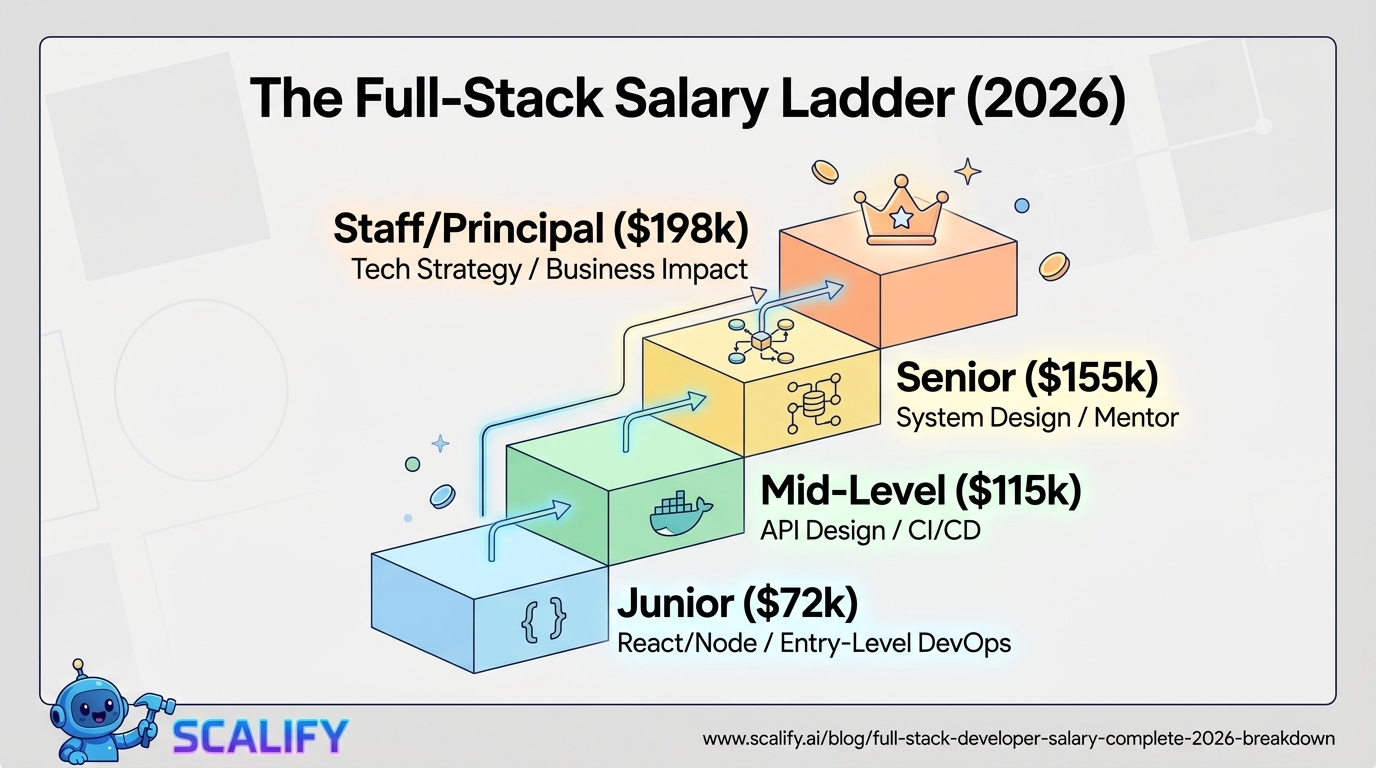
Entry-level web developers earn $48,000-$165,000 depending on credentials, location, and specialization — median is $65,000-$72,000. This comprehensive guide covers salary by background and tech stack, what actually determines first-job compensation, job market realities, learning environment vs salary trade-off, negotiation tactics, offer red flags, total benefits evaluation, and realistic first-year expectations.
Entry-Level Web Developer Salary: What to Expect Starting Out
Starting your career as a web developer is one of the most financially significant transitions you'll make — and the entry-level salary you negotiate, the employer you choose for your first role, and the skills you prioritize in those first 12–24 months compound into dramatically different trajectories over the next decade. Understanding what entry-level web developer salaries actually look like, what drives variation in first-role compensation, and how to position yourself at the top of the entry-level range rather than the bottom are among the most valuable pieces of knowledge a new developer can have.
Key Entry-Level Web Developer Salary Statistics
Entry-Level Salary by Background and Credentials
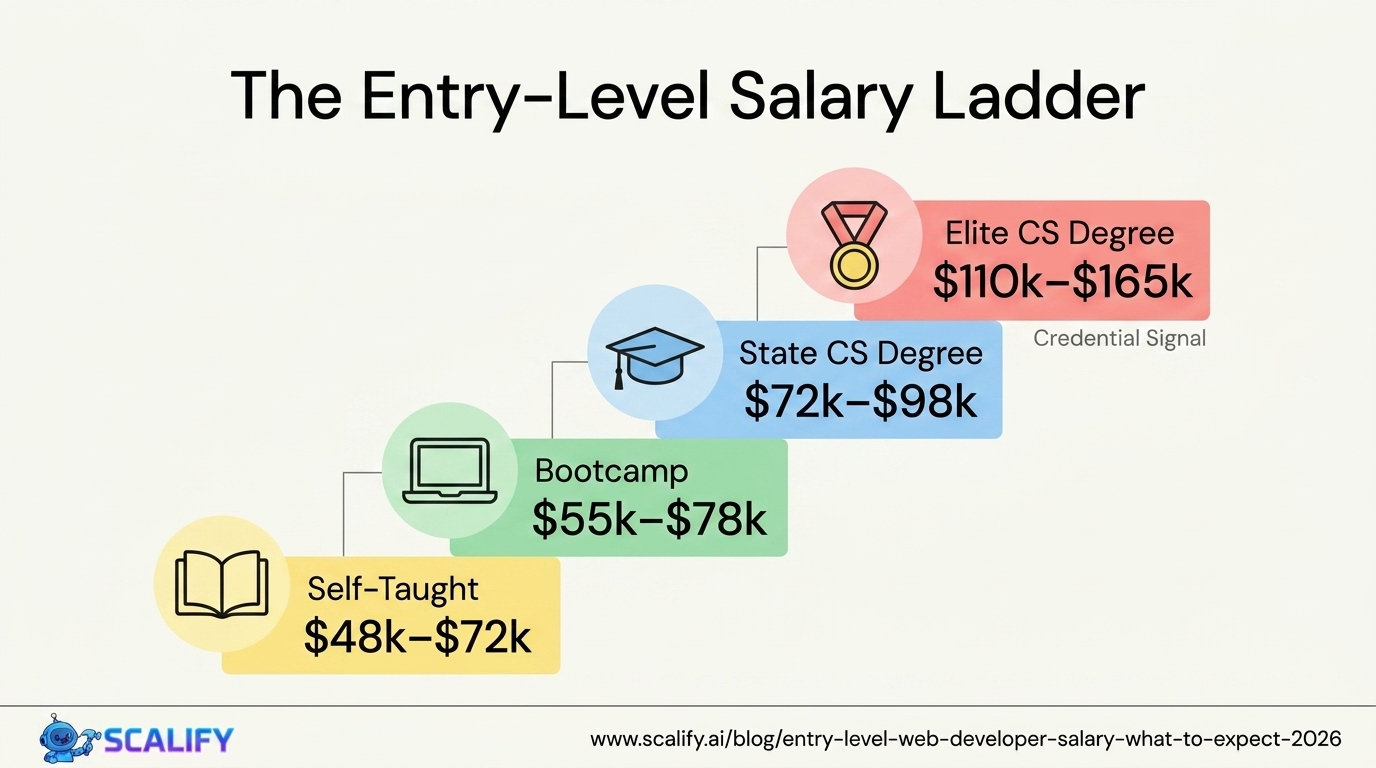
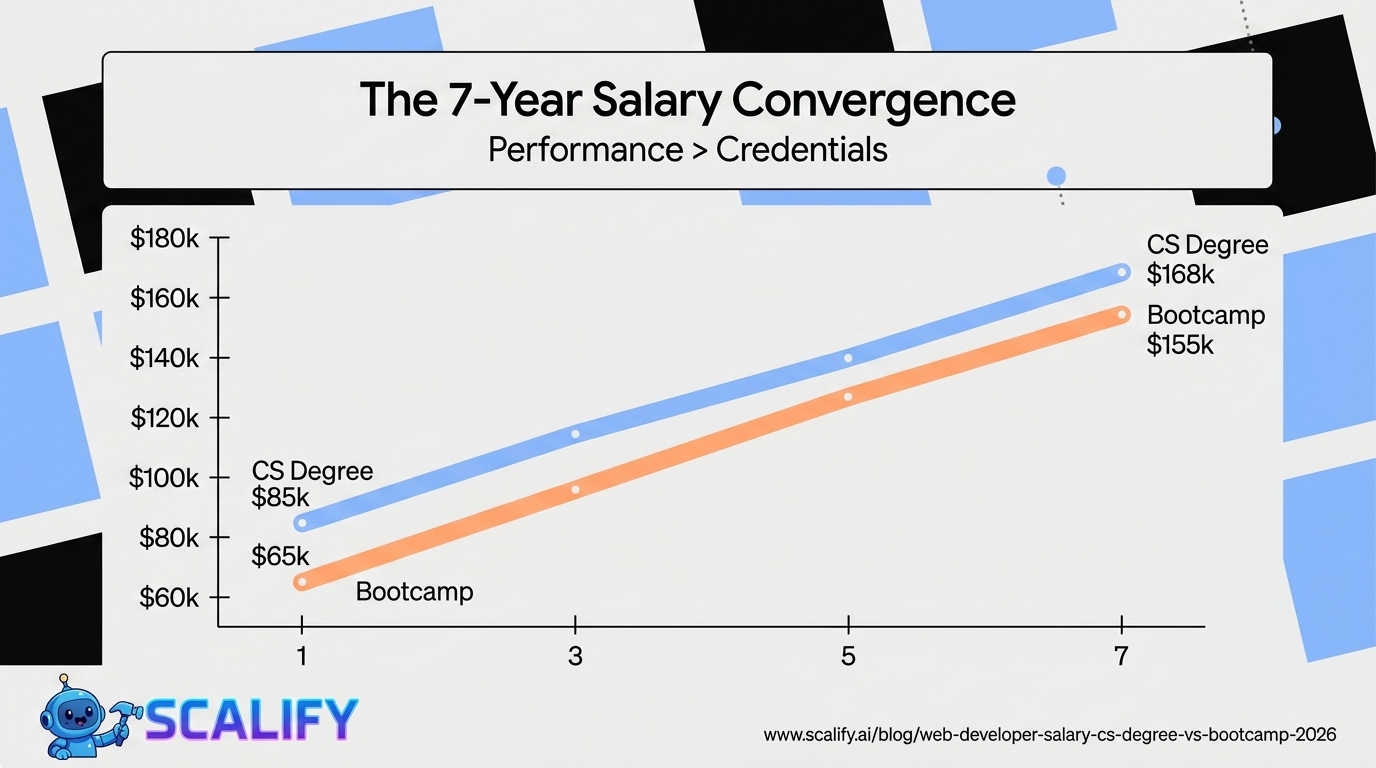
BackgroundTypical First SalaryTypical First EmployerAdvantageChallengeCS degree (top-20 university)$110,000 – $165,000FAANG, top startupsAccess to elite recruiting pipelinesHigh cost of education; 4-year investmentCS degree (state university)$72,000 – $98,000Tech companies, mid-size businessesCredential opens doors; solid fundamentals$40,000–$80,000 in debt commonBootcamp (reputable program)$55,000 – $78,000Agencies, startups, mid-size companiesFast (3–6 months); low cost; practical skillsNo credential signal; algorithm interviews harderSelf-taught with strong portfolio$48,000 – $72,000Agencies, freelance, small companiesZero cost; maximum flexibilityNo credential; longest job search oftenAssociate's degree / community college$52,000 – $72,000Local businesses, agenciesLower cost than 4-year; credential signalLimited to local/regional opportunities
Entry-Level Salary by Technology Specialization
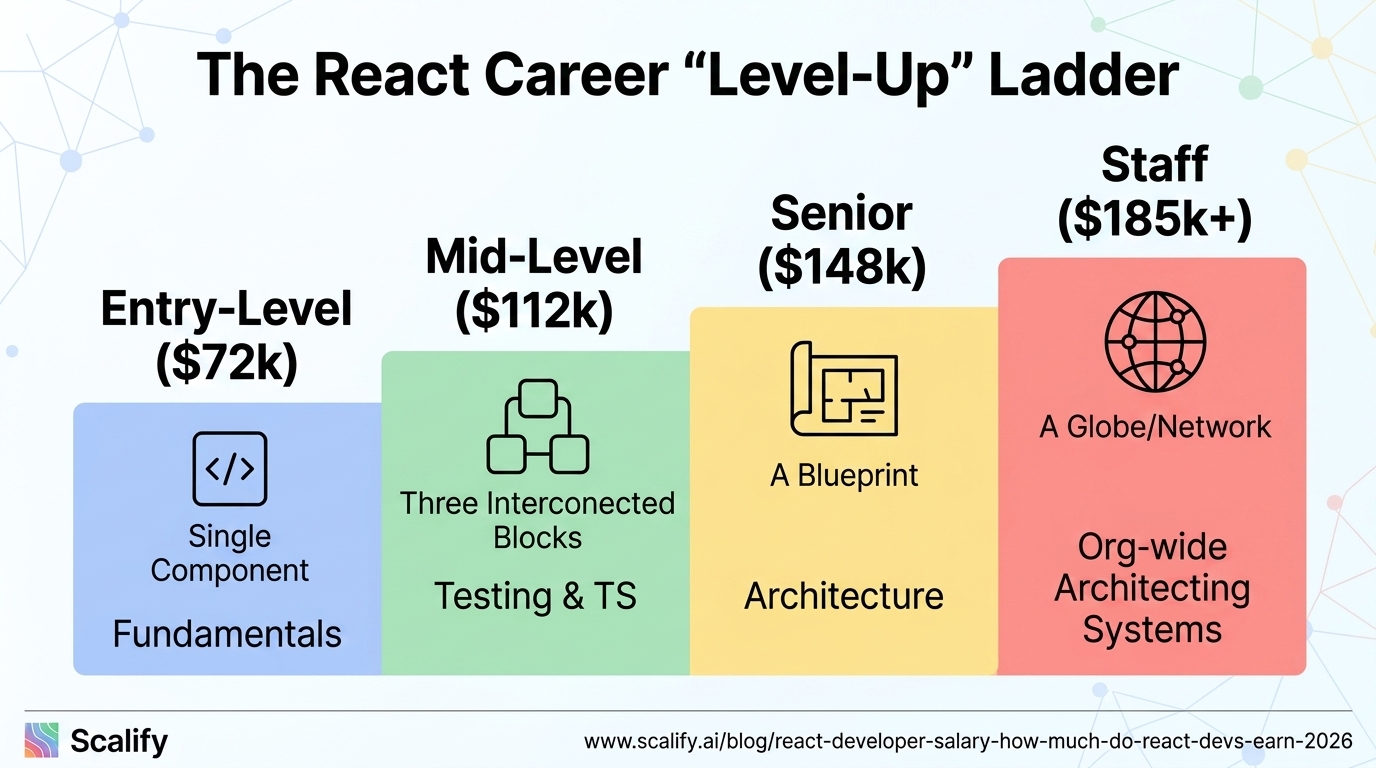
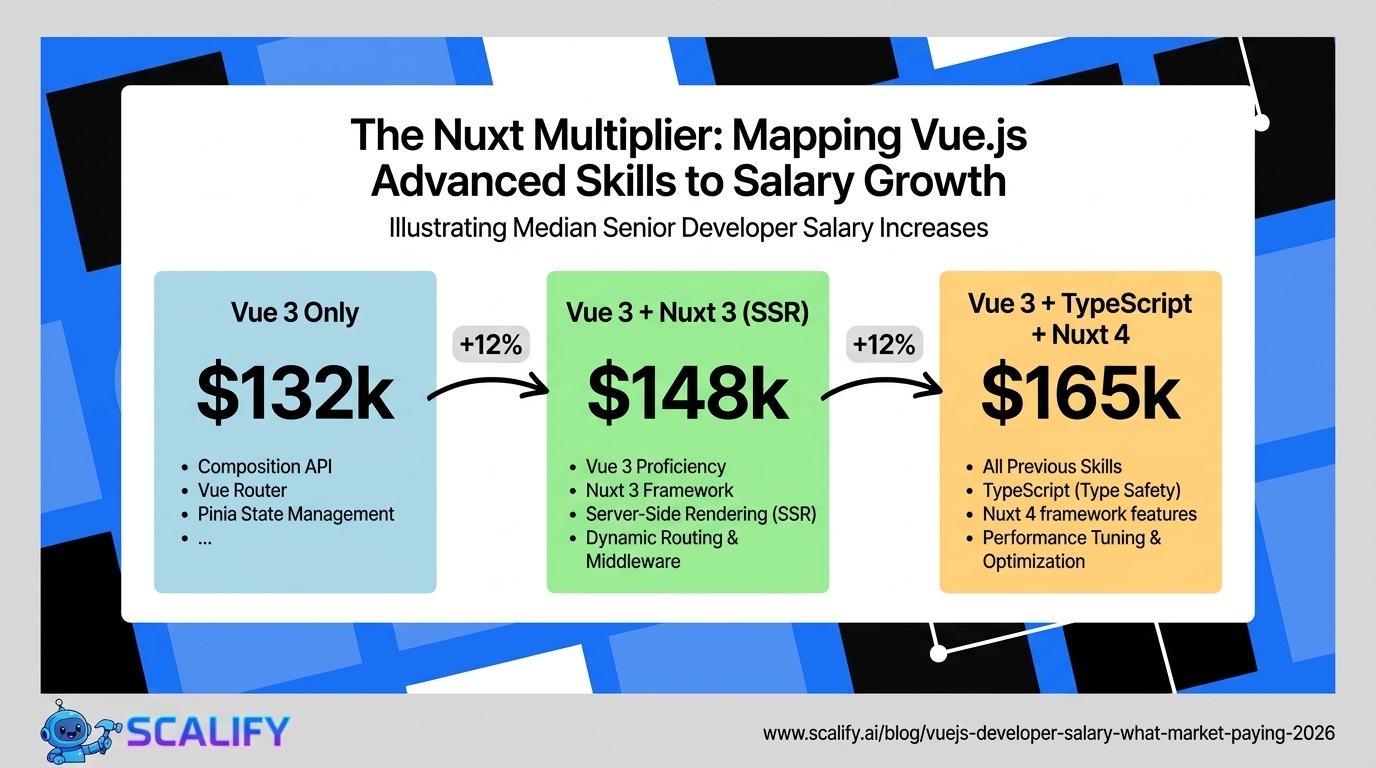
SpecializationStarting Salary RangeFirst-Job Demand2-Year TrajectoryReact / Front-End (TypeScript)$65,000 – $88,000Very HighStrong — most jobs require itFull-Stack (React + Node.js)$68,000 – $90,000Very HighExcellent — most versatile profilePython / Back-End$65,000 – $88,000HighStrong — AI premium buildingWordPress / Webflow$45,000 – $65,000HighModerate — lower ceilingVue.js$58,000 – $78,000ModerateGood in specific nichesGeneral HTML/CSS/JS$42,000 – $60,000Low — commodity tierPoor without additional specialization
What Actually Determines Your First Salary
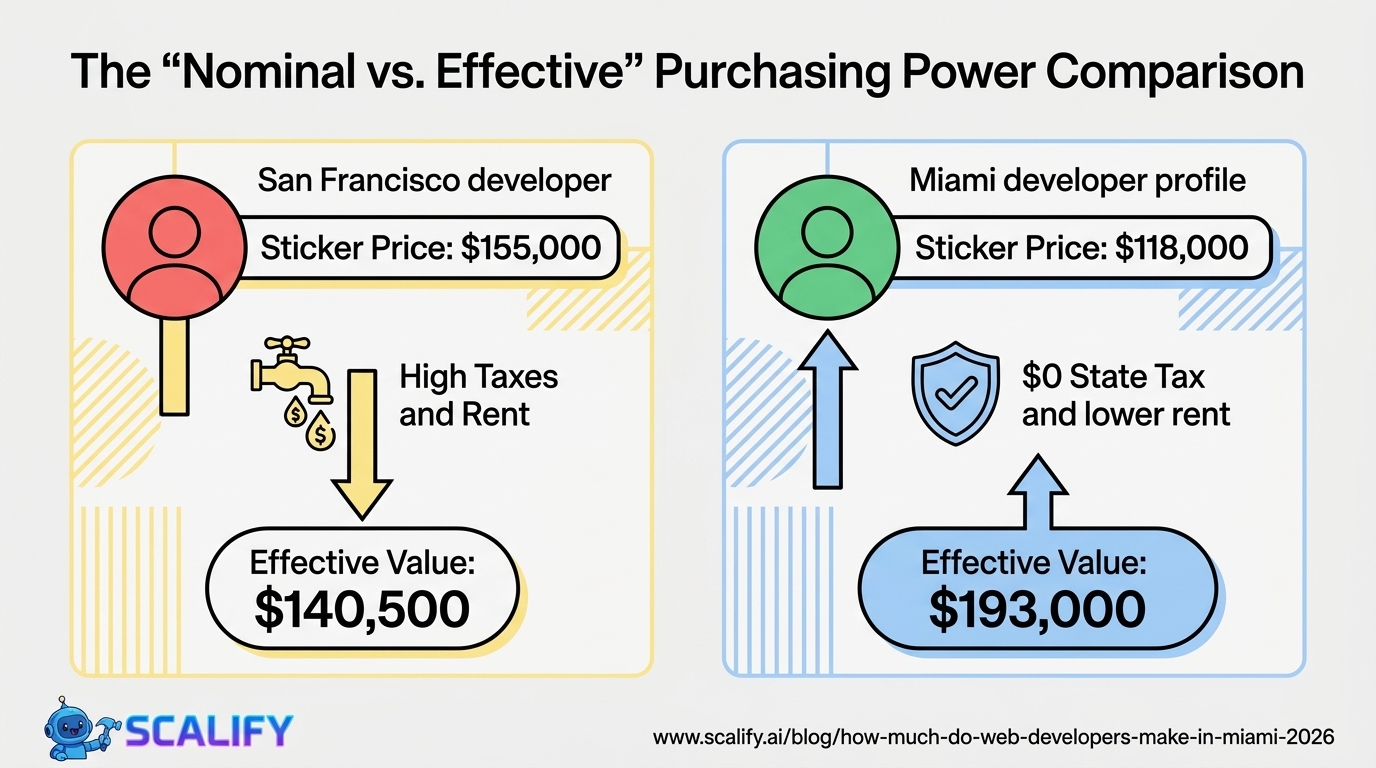
The most important factors in first-role compensation are: geographic market (SF/NYC vs. national average is a 20–40% difference), employer type (FAANG vs. agency is a 3x difference), specific technology skills (React + TypeScript vs. general web development is $5,000–$15,000), portfolio quality (deployed projects vs. tutorial completions), and negotiation behavior (developers who negotiate their first offer receive $3,000–$8,000 more on average than those who don't). Of these, geographic market and employer type have the largest impact — followed by technology specialization and negotiation.
Portfolio quality deserves specific emphasis for bootcamp and self-taught developers. At the entry level where credentials are limited, the portfolio is the primary mechanism for demonstrating capability to skeptical hiring managers. The portfolios that get interviews are those showing 3–5 deployed, functional applications (not tutorial clones) that demonstrate specific technical skills the employer cares about. A portfolio with a deployed React + TypeScript application using a real API, with proper error handling and a professional UI, is worth more than 10 certificate completions from online courses.
Entry-Level Developer Job Search: The Market Reality
The entry-level web developer job market in 2026 is meaningfully more competitive than it was in 2020–2021. The bootcamp graduation surge of 2021–2023, combined with tech layoffs that pushed experienced developers into the entry-level market, has increased competition for junior roles. Average time-to-first-job for bootcamp graduates is now 4–7 months rather than the 2–3 months marketed during bootcamp enrollment. Self-taught developers typically search for 6–12 months.
The job search strategies that reduce this timeline: targeting companies with established junior developer programs or apprenticeship tracks (which accept that they're training developers rather than expecting immediate senior-level contribution), building a personal brand through GitHub activity and technical writing before the search begins (making it easier for recruiters to find you rather than requiring 100% outbound applications), and networking specifically in the developer community rather than applying exclusively through job boards (personal connections generate 3–4x higher response rates than cold applications).

The Learning Environment Decision: More Important Than Starting Salary
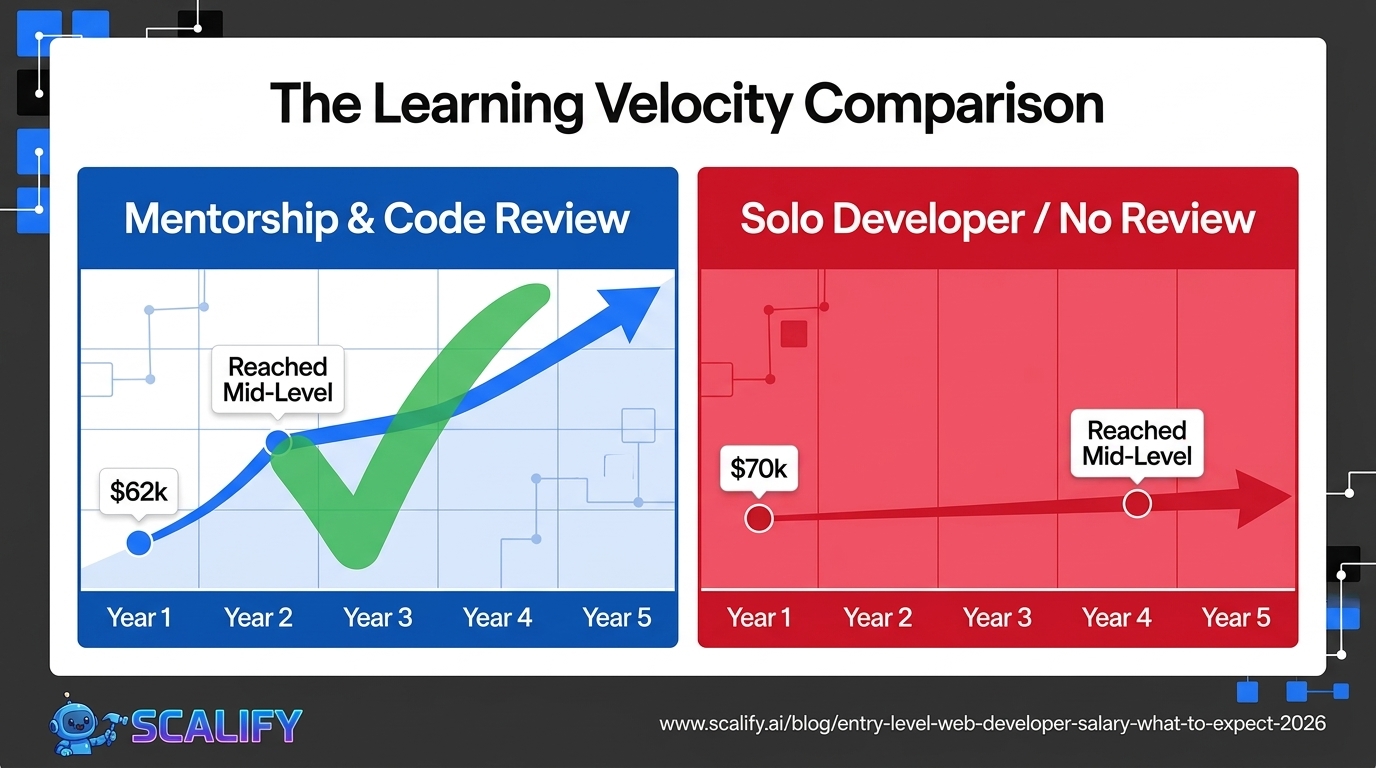
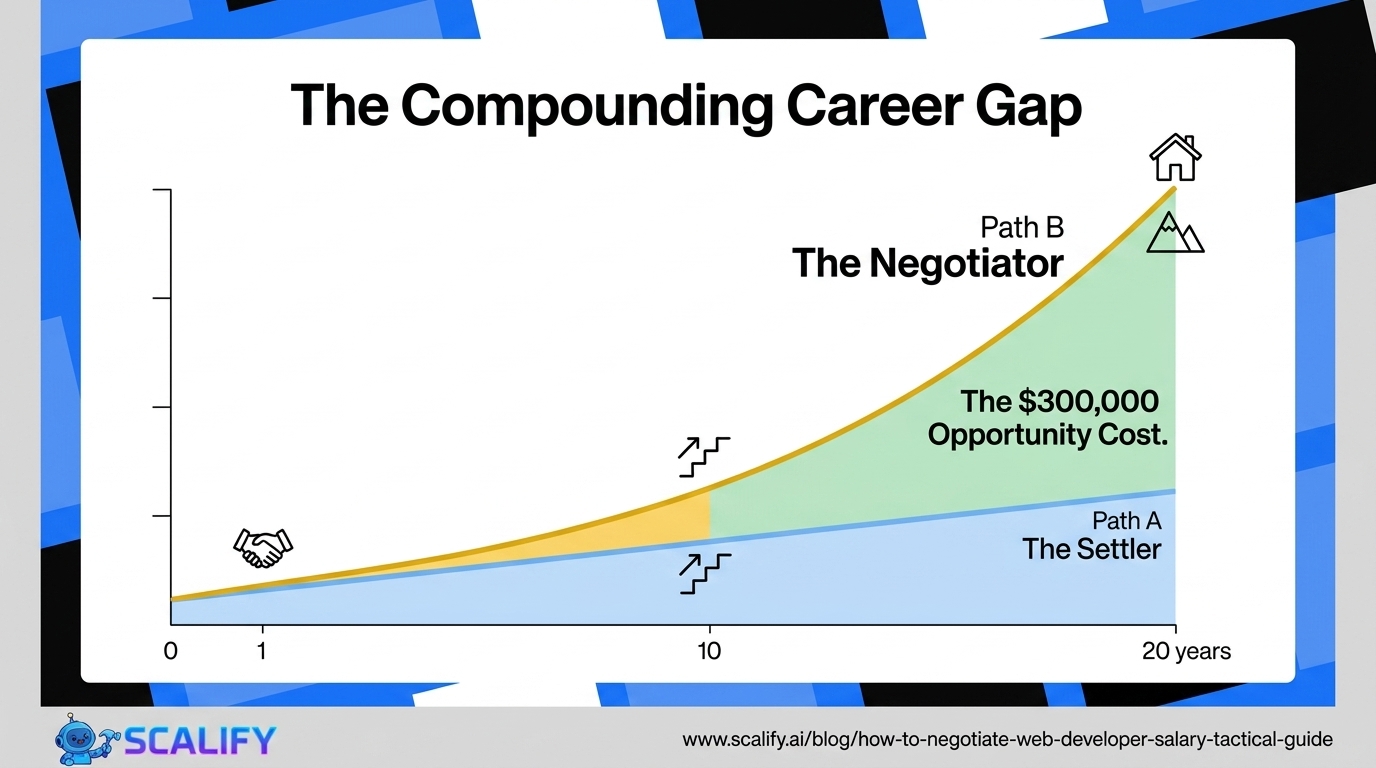
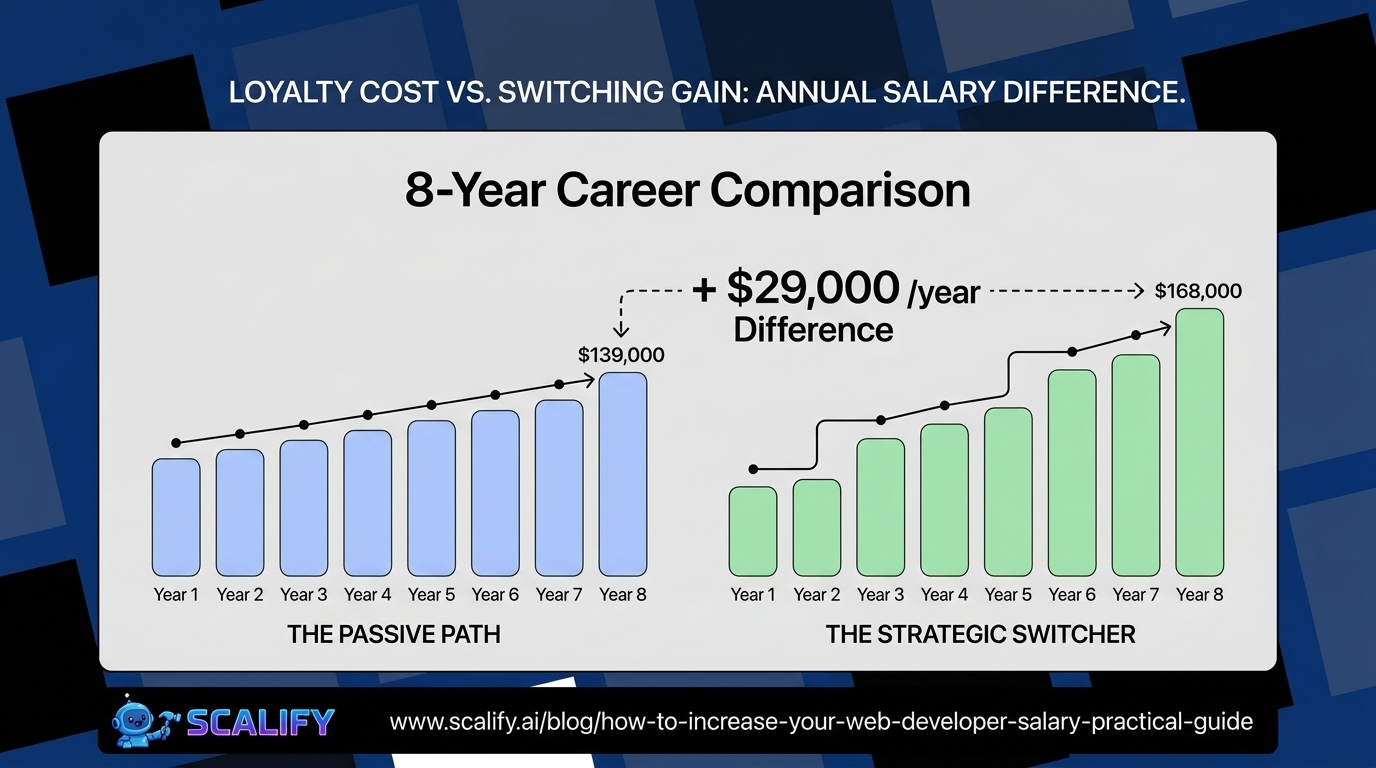
The most financially significant first-job decision most new developers make is optimizing for starting salary rather than learning environment — and the research consistently shows this is backward. A developer who takes $62,000 at a company with strong senior engineers, meaningful code review, complex technical challenges, and an active learning culture typically reaches mid-level in 18–24 months. A developer who takes $70,000 at a company where they're the only developer, there's no code review, and the technical work is template setup and maintenance typically reaches mid-level in 4–5 years — if at all.
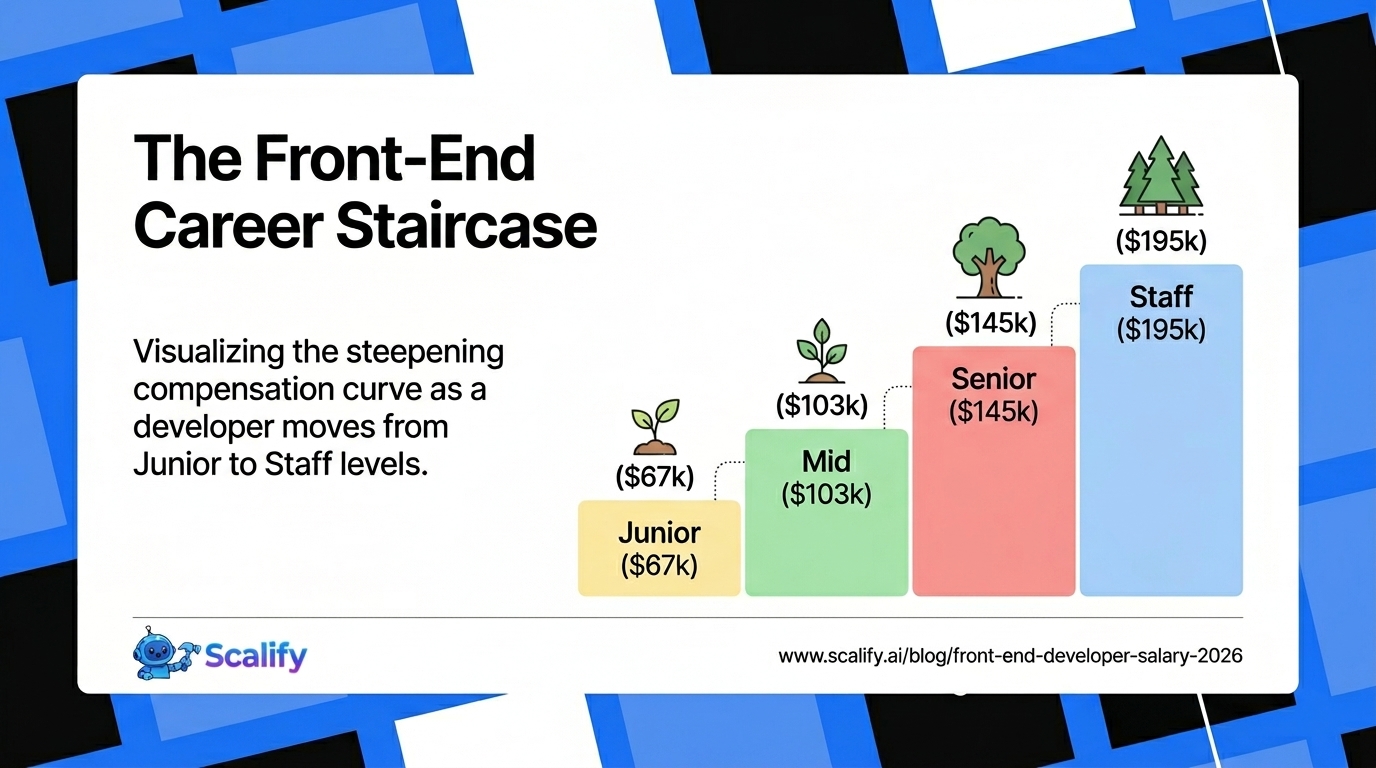
The 18-month developer who reaches mid-level at $105,000 has earned more over a 5-year period than the 4-year developer who reaches mid-level at $115,000 — and the difference in skill development and career optionality that accompanies the faster progression compounds throughout the entire career. Evaluate first-job offers on learning potential first, compensation second: ask about code review practices, team structure, complexity of the technical work, mentorship availability, and the seniority distribution of the engineering team. Prioritize the role that will make you a better developer fastest.
Negotiating Your First Developer Salary
Most new developers don't negotiate their first offer — and those who don't leave $3,000–$8,000 on the table unnecessarily. Employers make initial offers expecting some negotiation; not countering signals to the employer that you don't advocate for yourself, which is useful information for them but not helpful for you. The negotiation approach that works for entry-level developers:
Research the specific company's offer range first. Glassdoor, LinkedIn, and Levels.fyi provide offer data for specific companies and roles. Knowing that a company's typical entry-level offer is $68,000–$78,000 before receiving an offer at $68,000 gives you concrete information for a counter — "Based on my research into typical compensation for this role, I was expecting something closer to $76,000" is a specific, informed counter rather than a vague "I was hoping for more."
Counter with a specific number, not a range. Asking for a range gives the employer an easy escape: they offer the bottom of your range. A specific counter — "I'd like to request $75,000" — produces a clearer negotiating dynamic and is more likely to result in a meaningful salary improvement.
Don't accept the first offer on the spot. Even if you intend to accept, asking for 24–48 hours to review the offer is professional, expected, and allows time to research and potentially counter. Immediate acceptance signals that the offer exceeded your expectations — useful information for the employer's future offers but unhelpful for your current negotiation.
The First-Year Priorities: What to Do Before You Get There
The actions taken in the 3–6 months before the first developer job substantially affect the starting salary and the quality of the first role available. Specific actions that produce measurable results: deploy 2–3 portfolio projects to a custom domain (not just GitHub) that demonstrate the specific skills the target employer values, contribute at least one meaningful pull request to an open source project (demonstrates collaborative development experience), build a presence on LinkedIn with specific technical skills listed (recruiters search by technology, not "developer"), set up a GitHub profile that shows active contribution history (daily commits, meaningful commit messages, organized repositories), and practice answering behavioral interview questions about teamwork, technical problem-solving, and career motivation (these questions eliminate as many candidates as technical questions at the entry level).
The Bottom Line
Entry-level web developer salaries range from $45,000 for commodity web skills in small markets to $165,000+ for top CS graduates entering FAANG — a 3.5x range reflecting genuine differences in skill depth, credential value, employer quality, and geographic market. Most entry-level developers land in the $62,000–$82,000 range at their first role, with TypeScript, React, and full-stack skills commanding the top of that range. The first salary matters less than the first learning environment — choose the role that will make you a 2-year developer in 18 months rather than the role that pays $8,000 more for work that doesn't challenge you.
At Scalify, we work with developers at every stage — building professional websites in 10 business days that represent technical expertise with the digital presence it deserves.
Top 5 Sources
Red Flags in Entry-Level Developer Job Offers
New developers are more vulnerable to problematic job offers than experienced ones because they haven't yet developed the pattern recognition that comes from seeing many job descriptions and compensation packages. Watch for these specific red flags:
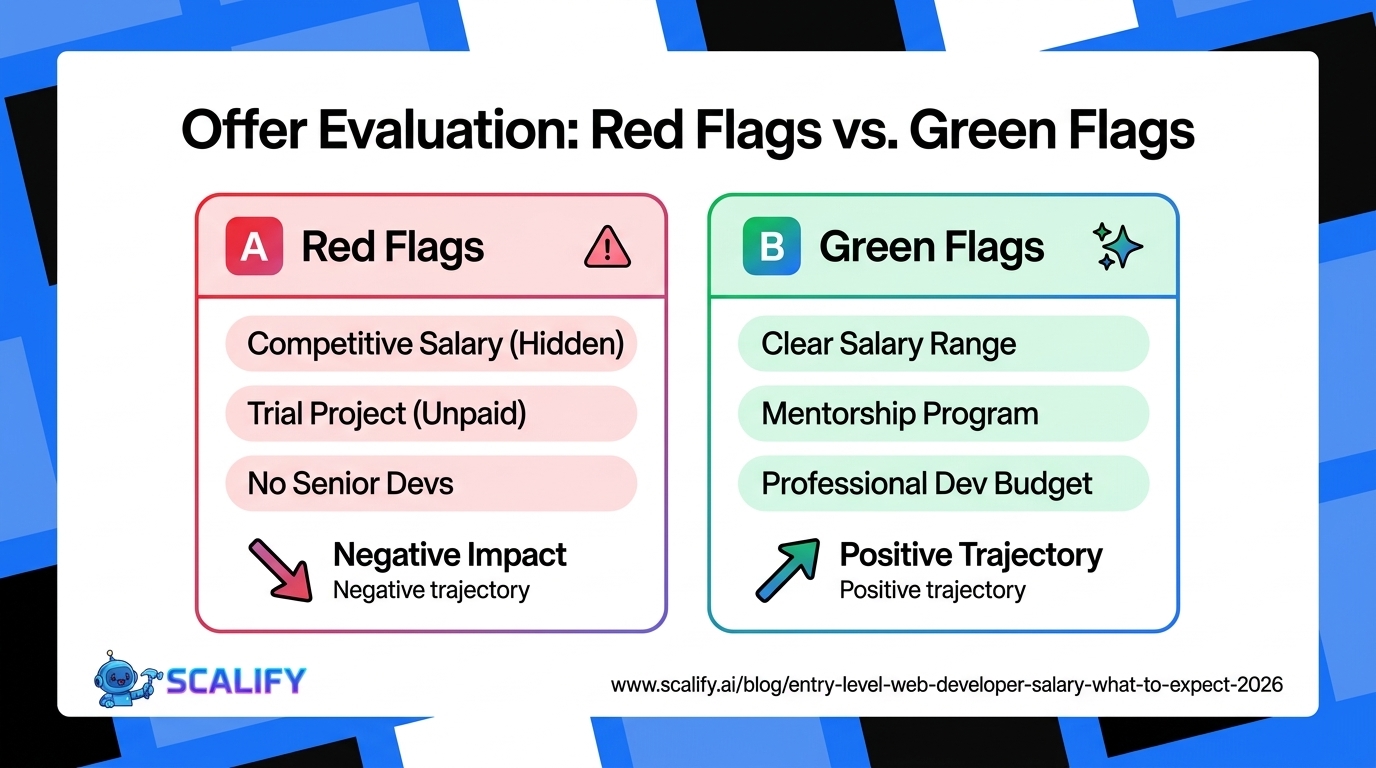
Red FlagWhat It SignalsWhat to Do"Competitive salary" with no specific rangeOften below market — employer hiding the number for a reasonAsk for the range before proceeding; don't invest in a process for a salary you'll declineUnpaid or very low-paid "trial project"May be extracting work without compensationShort paid tests are normal; multi-day unpaid projects are notEquity instead of market salary at non-startupUnderpaying employees with non-liquid assetsEquity at established companies should supplement, not replace, market salary"You'll wear many hats" with no clear roleUnderstaffed team; you'll do everything including non-development workClarify specifically what 80% of your time will be doingNo senior developers on the teamNo one to learn from; limited growth environmentAsk about team structure and who you'll learn fromExtremely rapid hiring processHigh turnover — filling a role that people leave quicklyAsk why the role is open; how long the previous person was in it
Entry-Level Developer Benefits: What to Evaluate Beyond Salary
Total compensation at entry level extends well beyond base salary — and the benefits package can be worth $10,000–$25,000 annually in additional economic value. The benefits worth evaluating carefully:
Health insurance quality and employee cost. Employer-sponsored health insurance ranges from comprehensive coverage with $0 employee premium to bare-bones coverage with $400+/month employee contribution. The difference in annual out-of-pocket health insurance cost between good and poor employer coverage is often $4,000–$8,000 — a significant portion of any salary gap.
401(k) employer matching. A 4% employer match on a $68,000 salary is $2,720/year in free retirement contributions. This compounds significantly over a career — always contribute enough to get the full match before any other financial decision.
Professional development budget. Employers that provide $1,000–$3,000/year for courses, conferences, and books accelerate your skill development and signal that they invest in their people — both indicators of a good learning environment.
Remote/hybrid flexibility. The financial value of remote work (saved commuting time and cost, housing flexibility) can be worth $5,000–$15,000 annually. An offer $5,000 lower than a competing offer that requires 5-day in-office work is effectively equivalent or better when commute costs and time are factored in.
Your First Developer Job: Setting Expectations Correctly
Most new developers enter their first role with expectations shaped by bootcamp marketing and the best-case stories of successful alumni — and they're surprised by the gap between those expectations and the reality of being the least experienced person on an engineering team. Setting accurate expectations helps navigate the first year more effectively:
You will write code that gets reviewed and significantly revised by more senior developers. This is not criticism — it's the primary learning mechanism of professional development. Developers who embrace code review as the most valuable feedback they receive advance faster than those who experience it as judgment on their ability. You will feel slow, confused, and out of your depth regularly in the first 3–6 months. This is universal — experienced developers returning to new codebases feel the same way, just for shorter durations. You will make mistakes in production. This is also universal — what matters is how you respond (own it, learn from it, implement prevention) rather than that it happened at all. The developers who survive and thrive in their first year are those who prioritize learning over appearing competent, ask for help sooner rather than struggling in silence, and take the quality of their work seriously without taking the inevitable mistakes personally.



.jpeg)
.jpeg)




78 SW 7th St, Miami, FL 33130