


Junior vs Mid vs Senior Web Developer Salary Breakdown
By Josh Ternyak

April 22, 2026
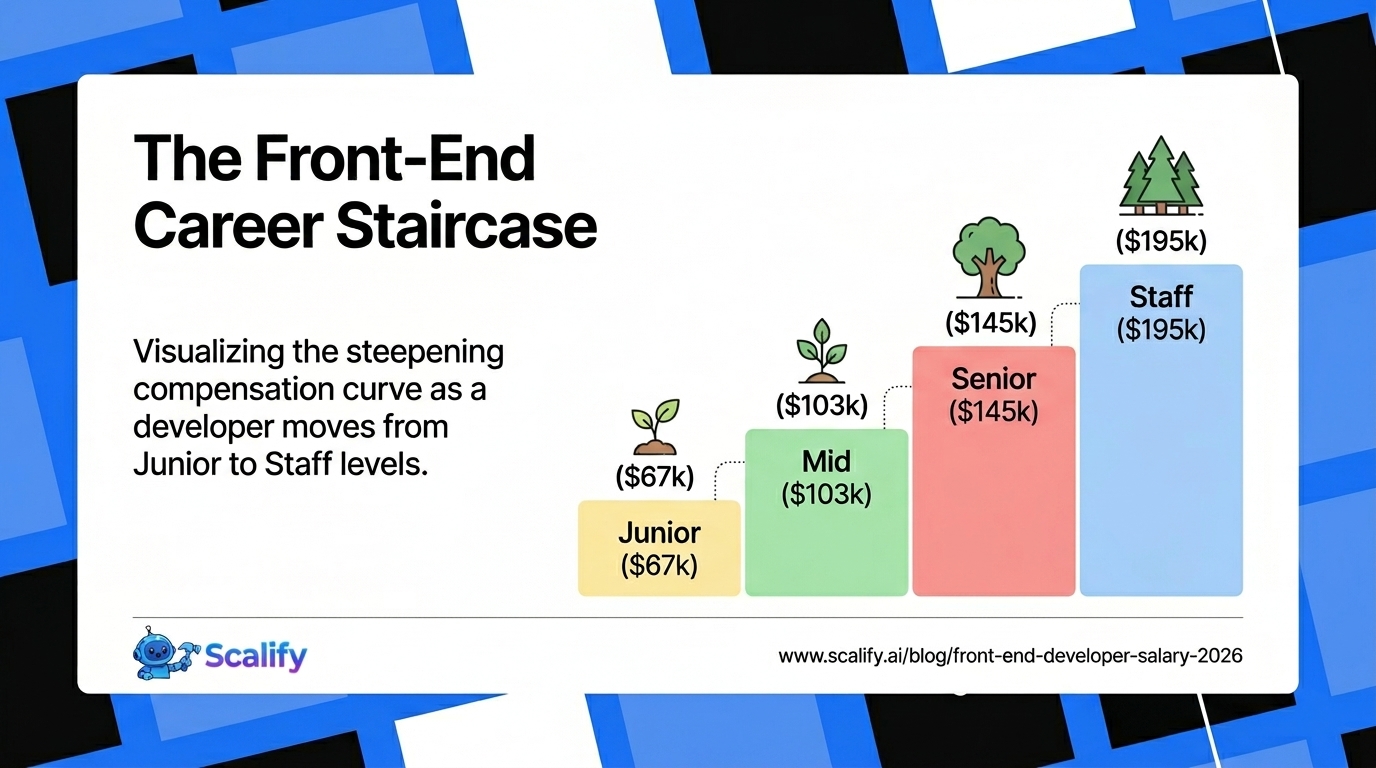
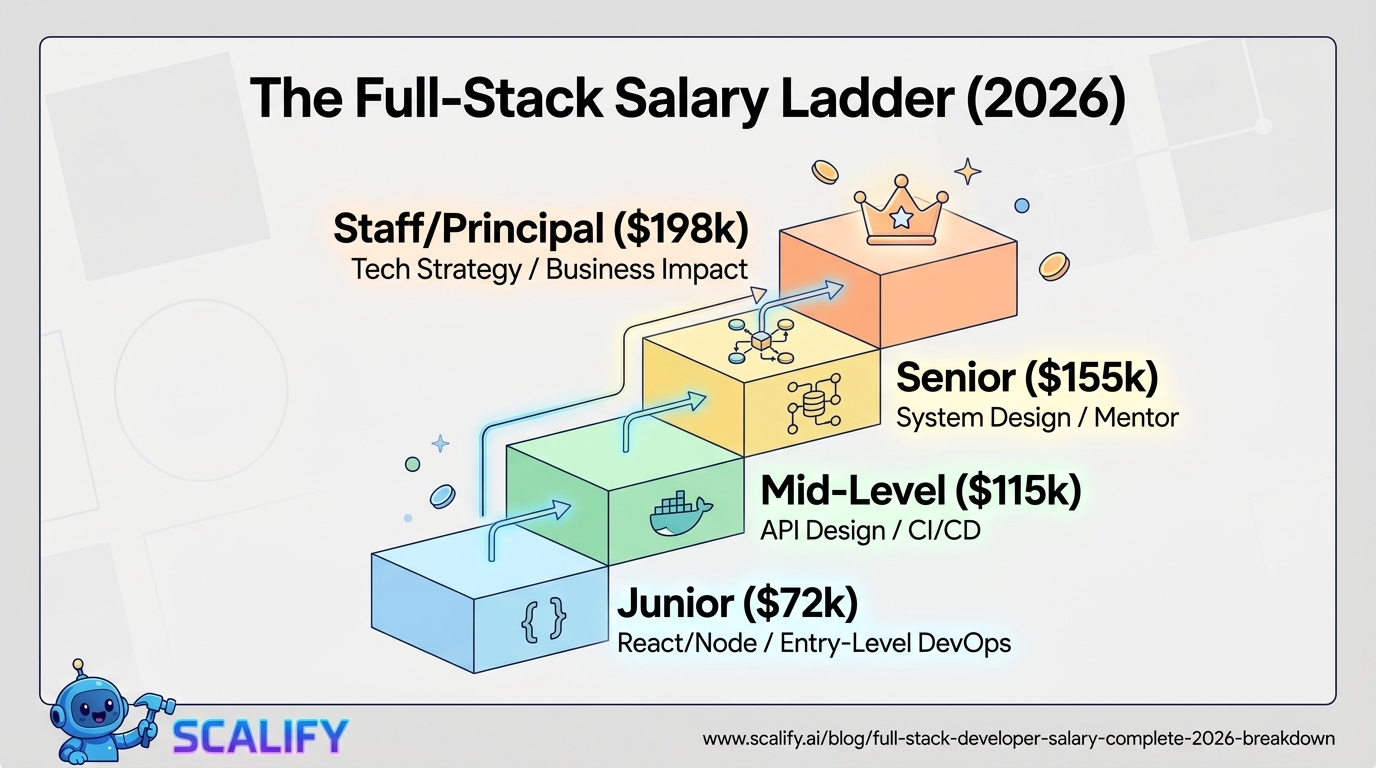
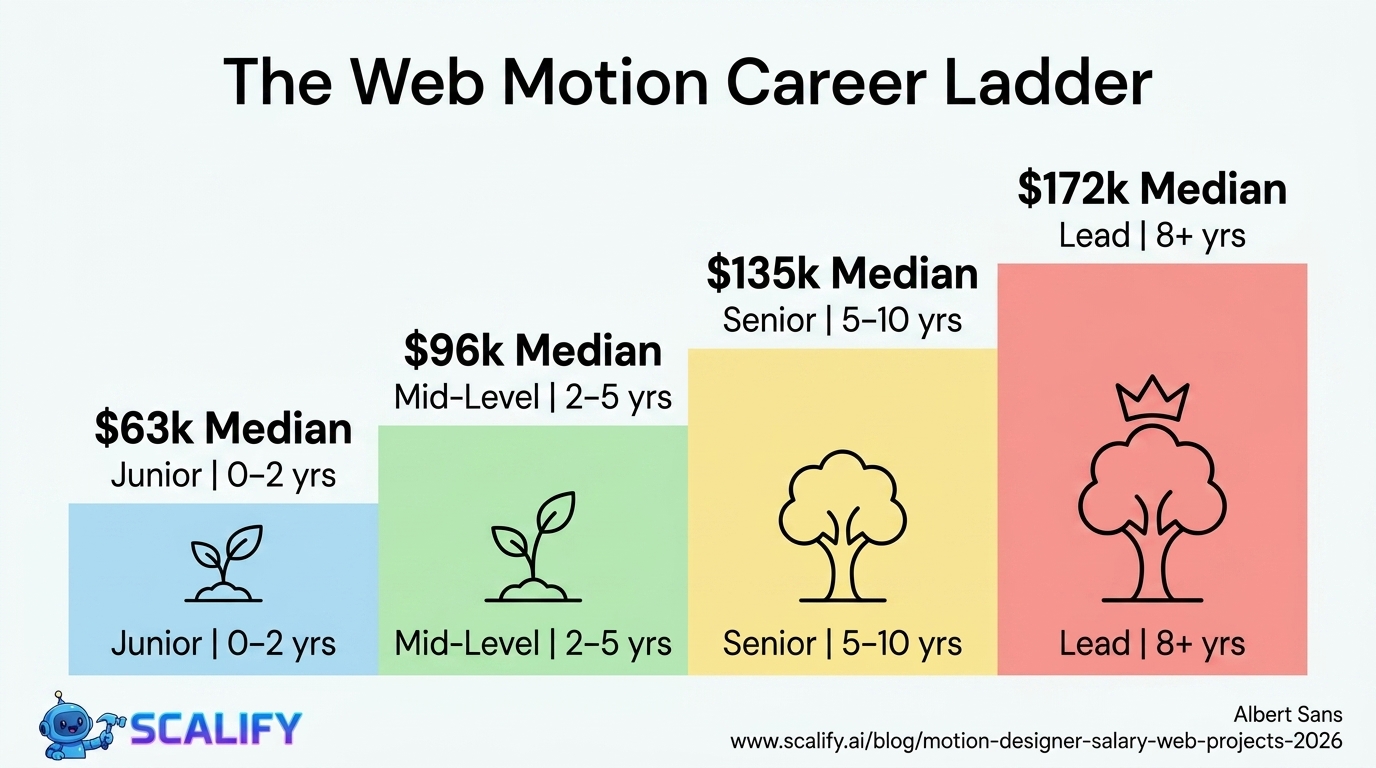
Junior web developers earn $68k, mid-level $108k, and senior $152k on average — a $84,000 total progression. This comprehensive guide covers the three-level salary comparison, what actually changes at each level, the fastest path to senior compensation, salary by specialization at each level, negotiation strategy by level, timeline expectations, certifications and their impact, and when to push for promotion.
Junior vs. Mid vs. Senior Web Developer Salary Breakdown
The salary gap between junior, mid-level, and senior web developers is one of the most significant compensation progressions in any professional field. A developer who starts at $68,000 as a junior engineer and reaches senior level can earn $152,000 or more — more than doubling their income without changing employers or industries. Understanding what drives this progression, what timeline is realistic, and which skills produce the largest compensation jumps is the most actionable career intelligence a developer can have.
The Three-Level Salary Comparison
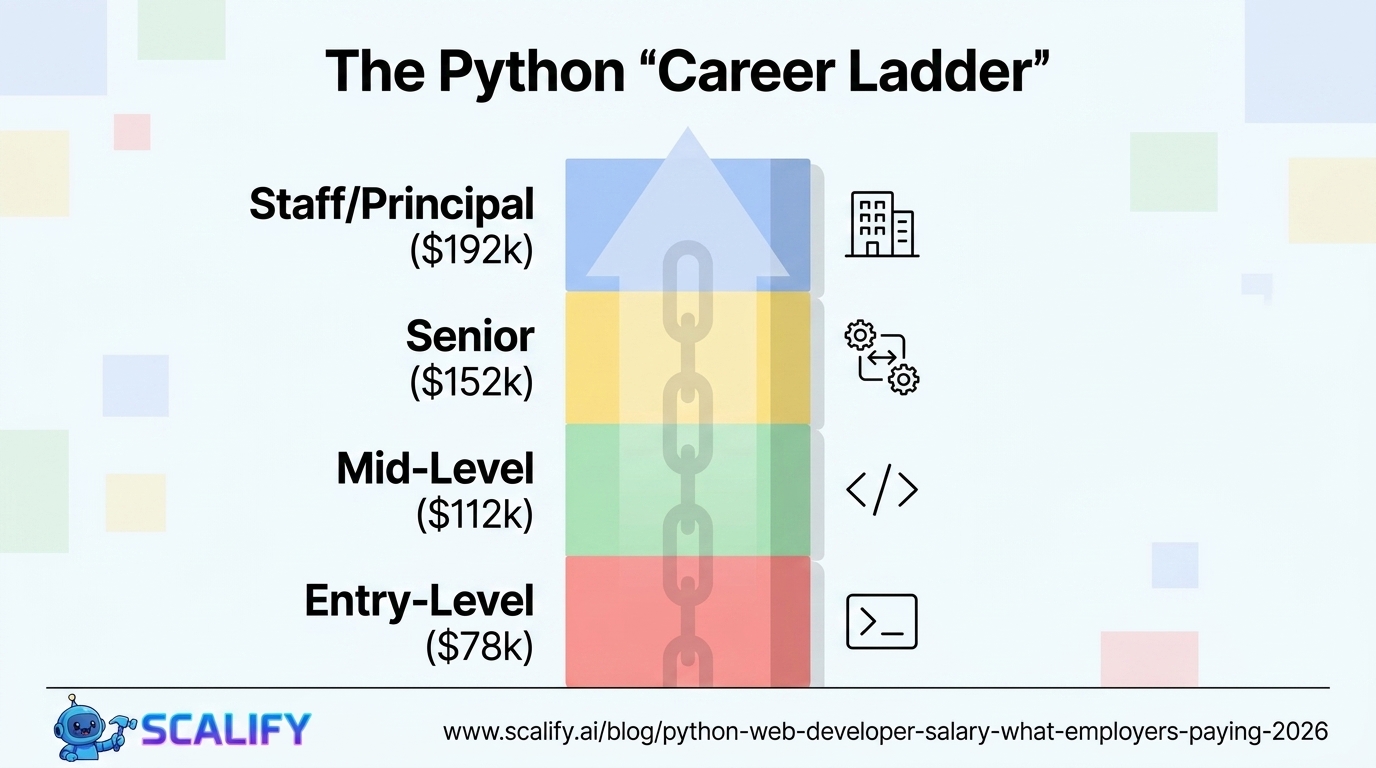
LevelYears Exp.Salary RangeMedianHourly Equiv.Freelance RateJunior Developer0–2 yrs$52,000 – $82,000$68,000$33/hr$35–$60/hrMid-Level Developer2–5 yrs$82,000 – $132,000$108,000$52/hr$75–$125/hrSenior Developer5+ yrs$128,000 – $175,000$152,000$73/hr$110–$185/hrStaff / Principal8+ yrs$175,000 – $225,000$192,000$92/hr$160–$250/hr
Key Statistics
What Changes at Each Level (Not Just Experience)
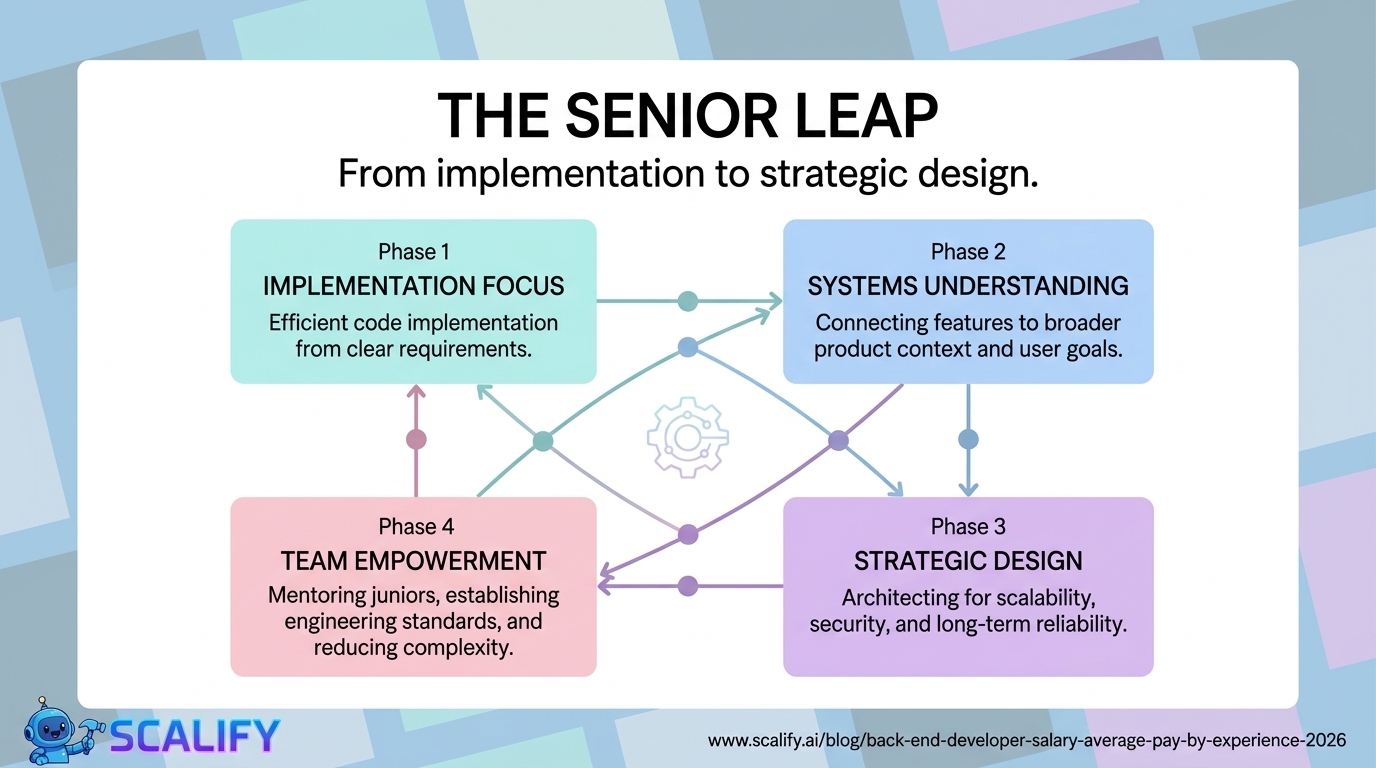
DimensionJuniorMid-LevelSeniorScope of workIndividual tasks with clear specsComplete features with some ambiguitySystems, projects, technical directionIndependenceNeeds guidance on approachOwns features end-to-endDefines approach for othersCode reviewReceives detailed feedbackGives and receivesSets standards; mentors through reviewSystem designImplements what's designedContributes to design discussionsLeads and owns design decisionsAmbiguity toleranceLow — needs clear requirementsModerate — clarifies what's missingHigh — navigates uncertainty independentlyBusiness contextFocuses on technical requirementsUnderstands product goalsConnects technical decisions to business outcomesMentoringReceives mentoringInformally helps juniorsActively develops others' capabilitiesIncident responseHelps under guidanceCan investigate and fix familiar issuesLeads complex incident resolution
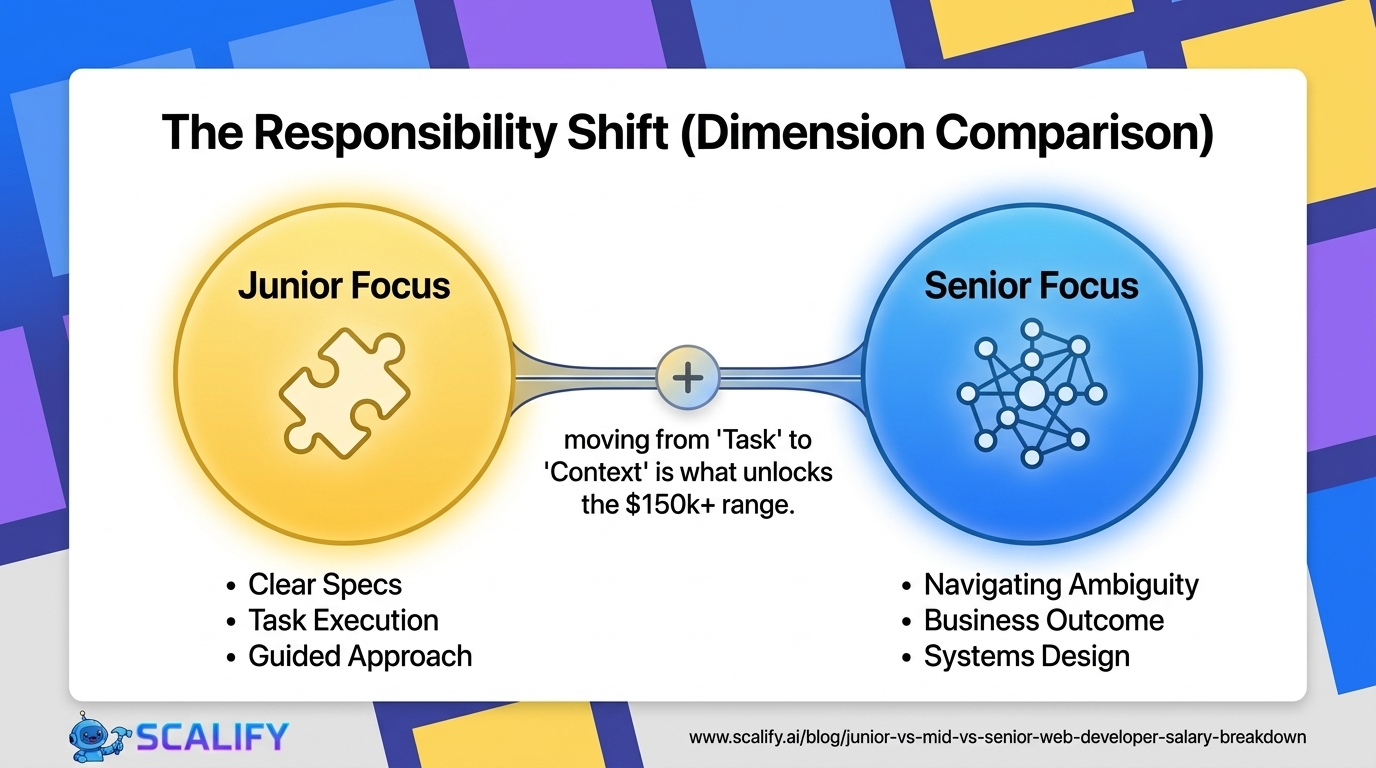
The Junior Developer: Starting Strong
The junior developer period (typically 0–2 years, sometimes longer) is the highest-variance career phase in web development. Some juniors are indistinguishable from mid-level engineers after 18 months; others are still operating as juniors after 4 years. The difference is almost never raw talent — it's learning velocity, deliberate skill development, proactive ownership, and strategic mentorship-seeking.
Junior developers who accelerate fastest toward mid-level salaries share specific patterns: they work on a codebase with experienced engineers who do thorough code reviews (not just "LGTM"), they proactively ask for feedback on approach not just implementation, they build projects outside work that push them into new territory, and they develop opinions about technical tradeoffs rather than just executing what they're told. The salary difference between a junior who does these things and one who doesn't — by the time both are 2 years into their career — is already $20,000–$30,000 annually.
The Mid-Level Developer: The Most Competitive Market Tier
Mid-level (2–5 years) is the most populous tier in the web development job market, and it's where salary negotiation leverage is most variable. The mid-level market ranges from developers who are technically capable but undifferentiated to those who have built clear specializations, strong portfolios, and the reputation signals (open source, writing, community engagement) that justify premium compensation. The $82,000–$132,000 salary range at mid-level is wide because it encompasses both of these profiles.
Mid-level developers who maximize their compensation invest in differentiation rather than general competence accumulation. Adding TypeScript to React skills, developing genuine system design capability, building a portfolio of complex deployed applications, and contributing to open source projects creates the market positioning that justifies the top of the mid-level range rather than the median.
The Fastest Path to Senior-Level Salary
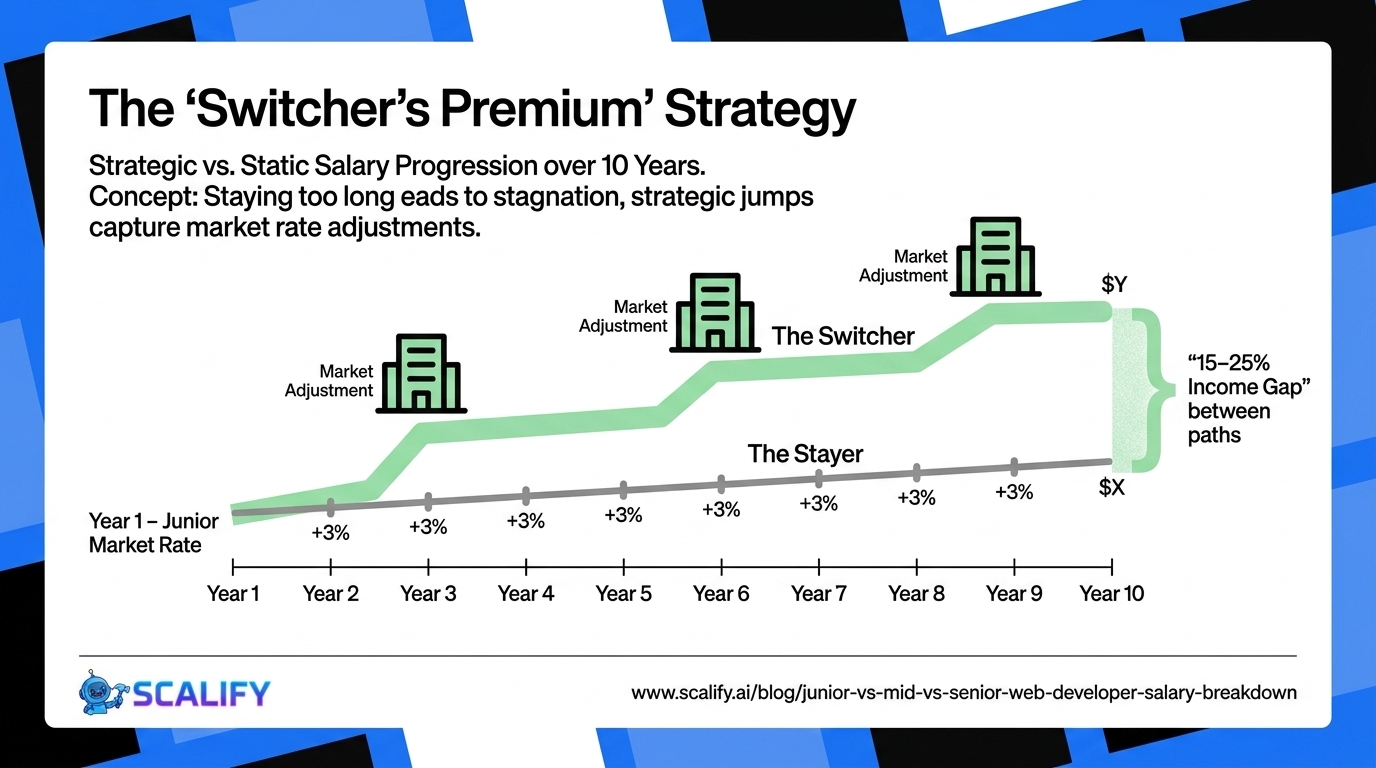
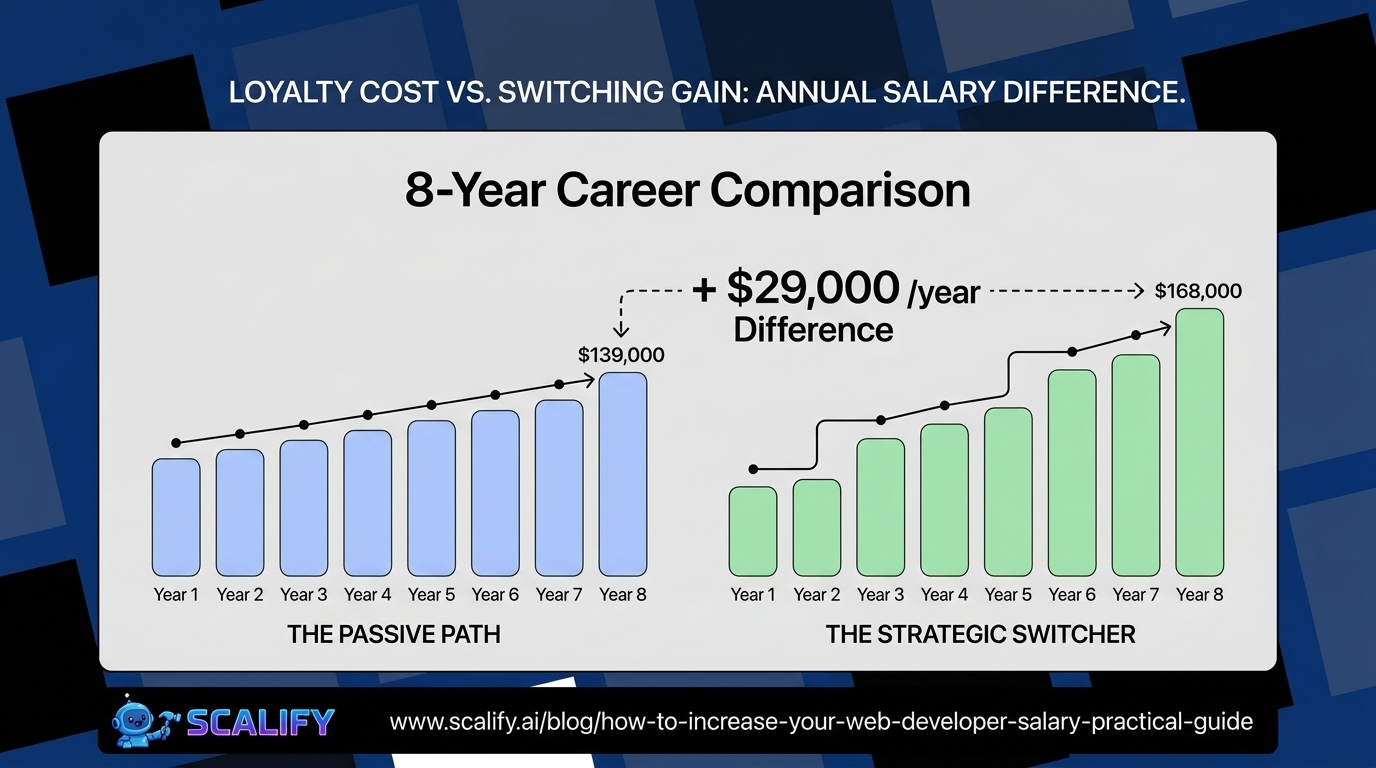
The single most effective accelerator for reaching senior-level compensation faster than the average 5–7 year timeline is strategic job-switching. Developers who stay at the same company for their entire junior-to-senior progression earn on average 15–25% less than those who switch companies at each level — because internal promotion cycles are slower than market rate adjustments, and companies rarely raise existing employees' salaries to match what they'd pay a new hire with equivalent skills.
The optimal career strategy for salary maximization: develop strong skills at a company with good engineering culture and meaningful code review (good learning environment), stay 2–3 years (enough to demonstrate sustained impact, not so long that you're trading market-rate increases for salary stagnation), and move to the next role at a higher level and market-rate salary. Each transition captures the market premium for the skills developed in the previous role while moving to a context where you can continue developing the capabilities that justify the next level's compensation.
Salary by Specialization at Each Level
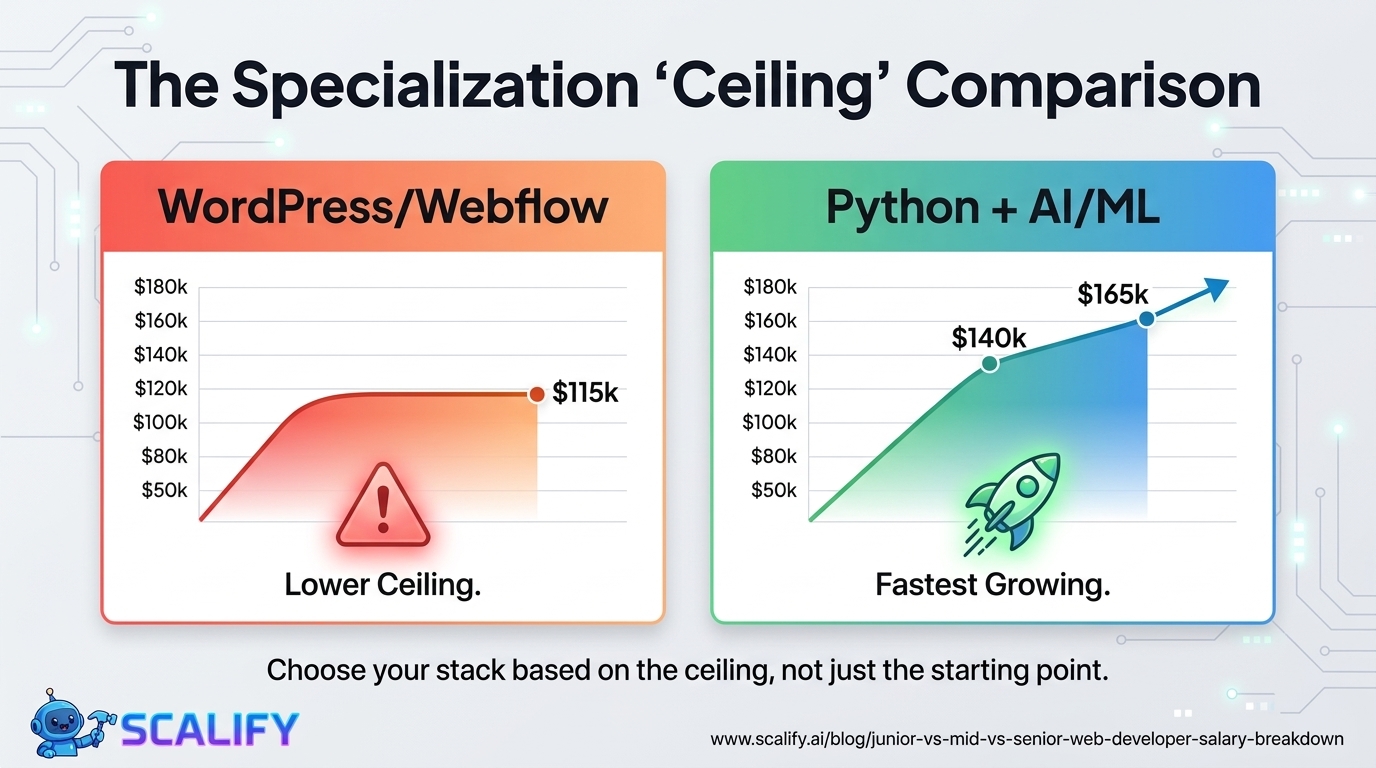
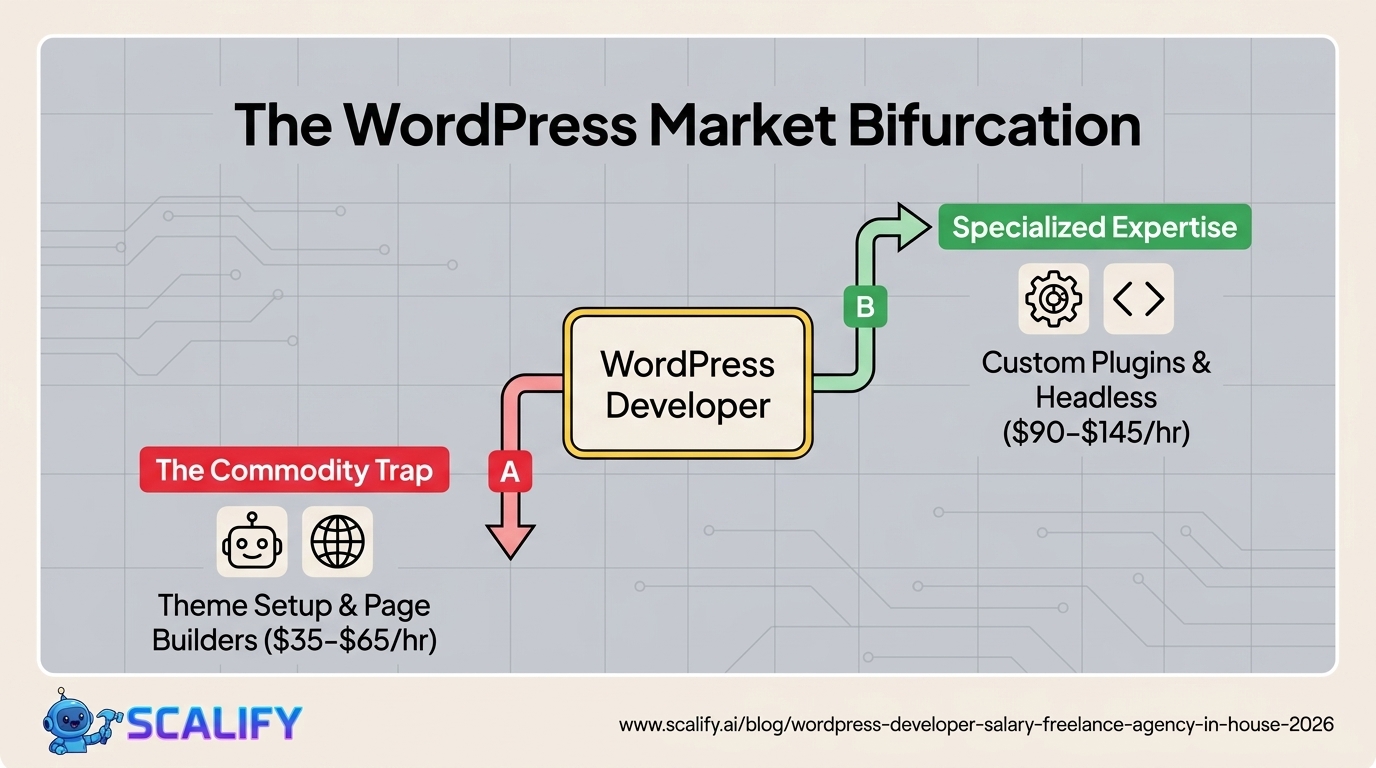
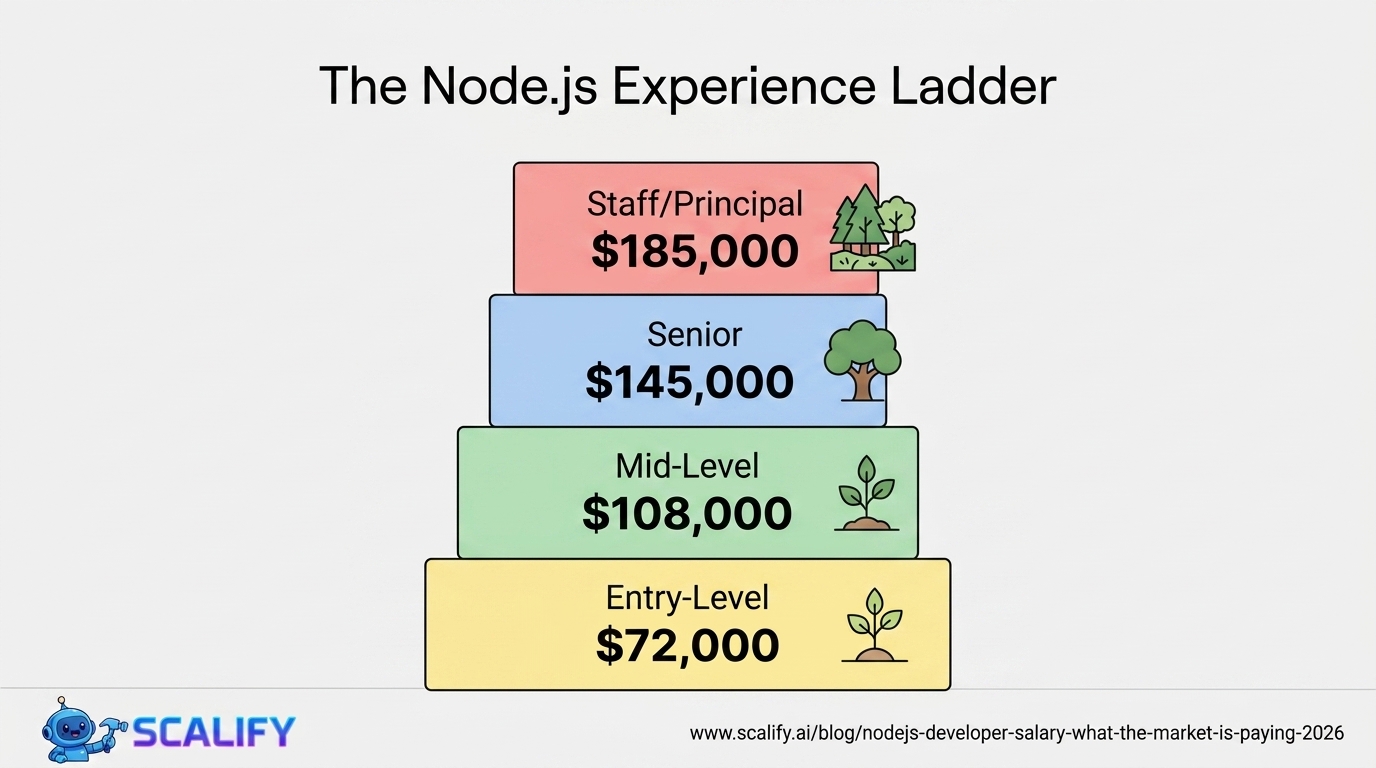
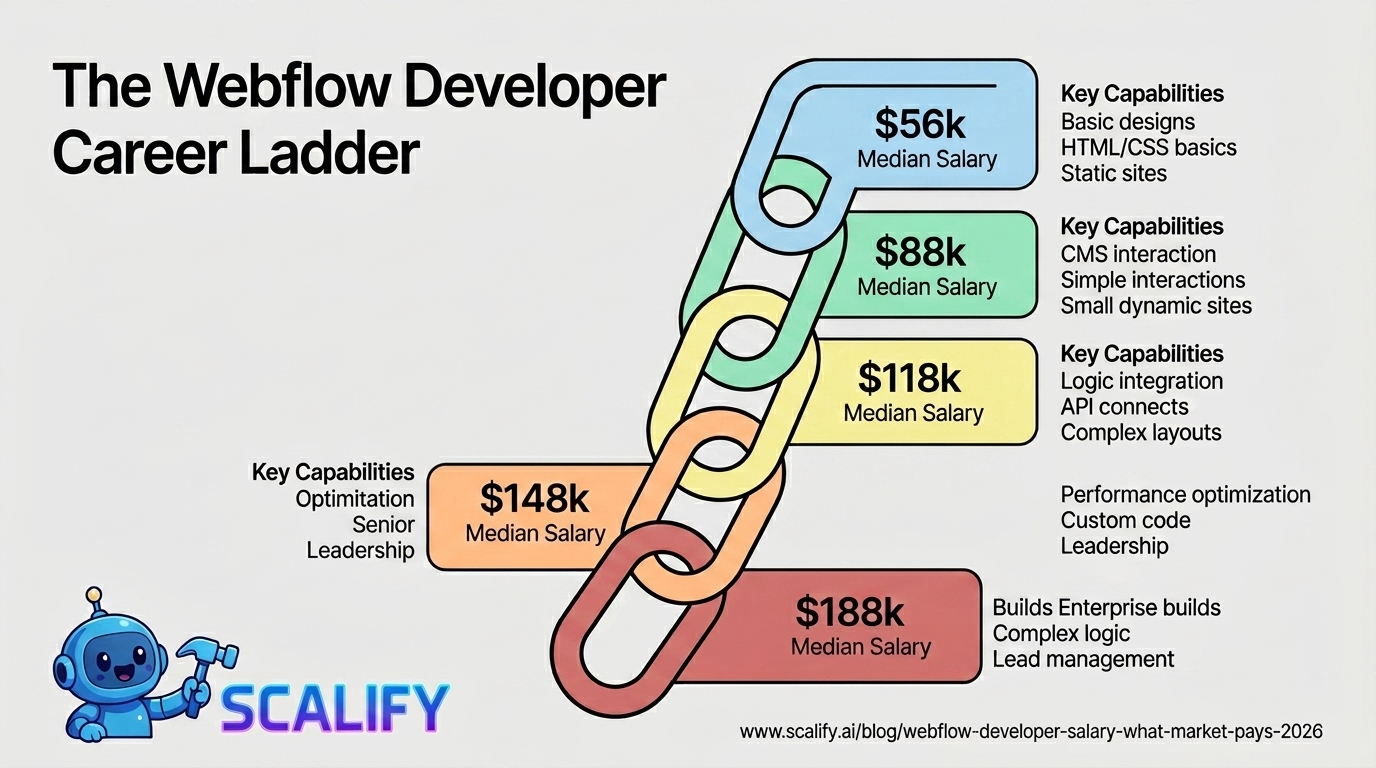
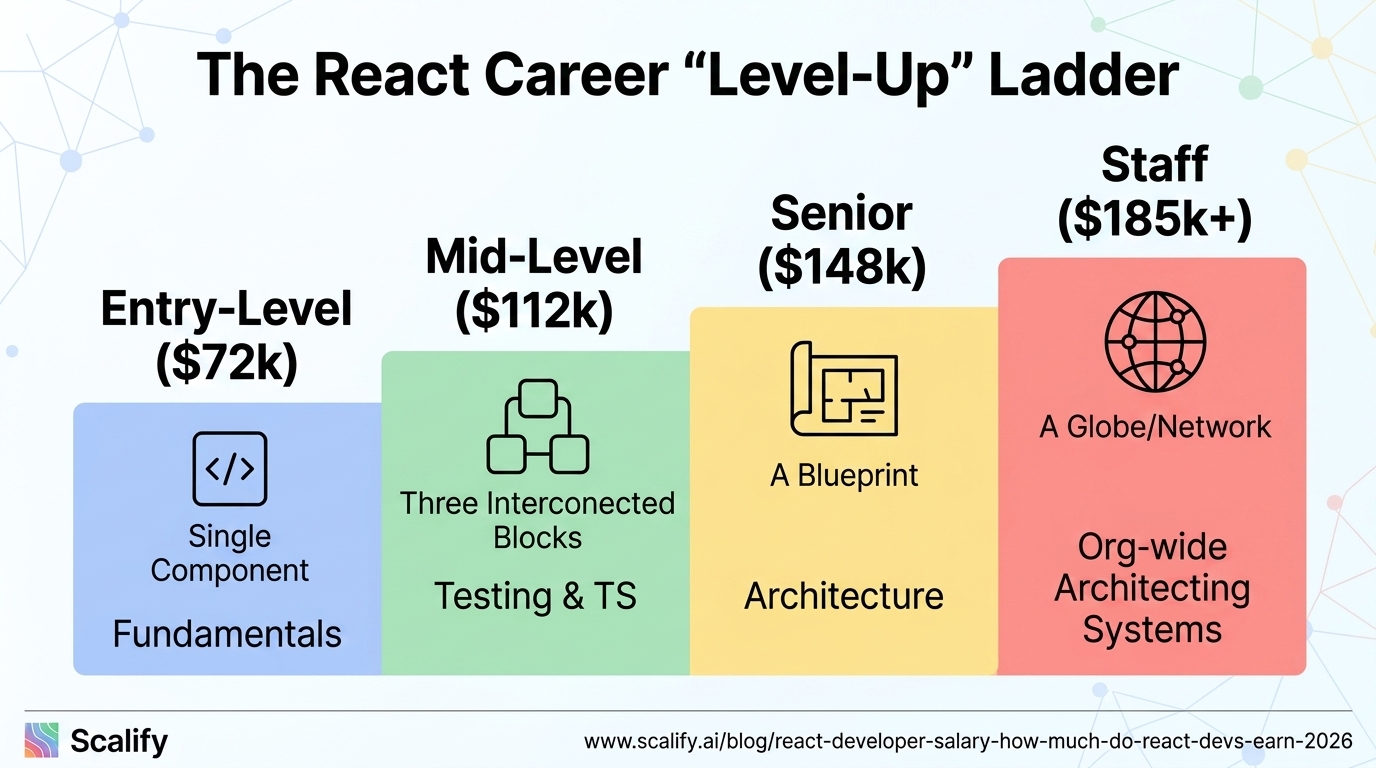
SpecializationJuniorMid-LevelSeniorProgression PremiumReact / TypeScript Front-End$68,000$112,000$148,000+$80,000 (junior to senior)Node.js / Back-End$65,000$108,000$145,000+$80,000Python + AI/ML Integration$72,000$118,000$165,000+$93,000 — fastest growingFull-Stack (React + Node)$68,000$112,000$152,000+$84,000DevOps / Platform$72,000$122,000$168,000+$96,000WordPress / Webflow$48,000$82,000$115,000+$67,000 — lower ceiling
Salary Negotiation at Each Level
Junior negotiation: Limited leverage at the start — you're unproven. The most effective junior negotiation strategy is using competing offers (even one competing offer dramatically changes the dynamic), researching the specific company's typical offer range (Glassdoor, LinkedIn), and not accepting the first offer without countering. A junior developer who counters with $5,000–$8,000 over the initial offer will get it approximately 60–70% of the time — most companies low-ball initial junior offers expecting negotiation.
Mid-level negotiation: Much stronger leverage — you have demonstrated work and can point to specific contributions. At mid-level, specialization justifies premiums: if you've built expertise in TypeScript or React Native that the company needs, your market value is higher than a general mid-level developer, and you can negotiate the TypeScript or specialization premium specifically. Competing offers work even better at mid-level because you're easier to evaluate and harder to replace.
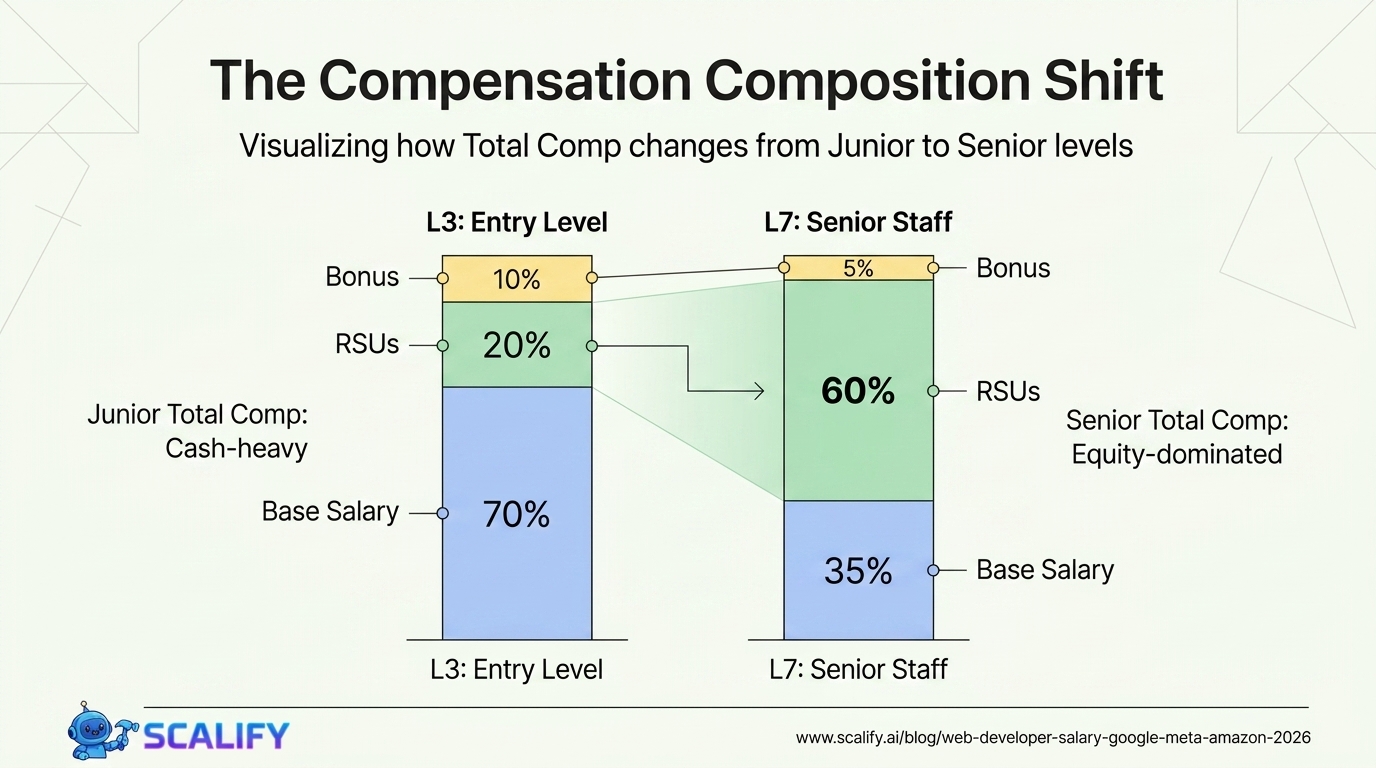
Senior negotiation: Maximum leverage. Senior developers are genuinely scarce, and companies know that replacing a departing senior costs 50–200% of annual salary in recruiting, onboarding, and productivity loss. At senior level, negotiating toward the top of the band rather than accepting the middle, negotiating equity vesting schedule acceleration, negotiating professional development budget, and negotiating flexible work arrangements alongside base salary are all reasonable expectations. The total compensation package at senior level is meaningfully negotiable — don't focus only on base salary.
The Bottom Line
Junior-to-senior salary progression in web development adds $80,000–$100,000+ in annual income over a 5–7 year career. The fastest progressions are achieved by developers who invest deliberately in specialization, switch companies at each major level to capture market-rate adjustments, build visible portfolios and open source presence, and develop the system design and communication capabilities that separate mid-level from senior. The timeline is compressible — but only through deliberate career management, not passive experience accumulation.
At Scalify, we work with developers at every level — building professional websites in 10 business days that help technology companies and agencies present their engineering talent to the world.
Top 5 Sources
Timeline Expectations: How Long Does Each Transition Take?
The junior-to-mid transition takes an average of 2–3 years for developers in good learning environments — meaning teams with strong engineers, meaningful code review, and exposure to complex technical problems. In weak learning environments (solo developer roles, low-complexity codebases, no senior mentorship), the same transition can take 4–5 years or longer because the skill development that justifies mid-level compensation isn't happening at the same rate.
The mid-to-senior transition takes an average of 3–5 years from mid-level designation, though here the variance is larger. Developers who actively seek out difficult problems — system design challenges, performance bottlenecks, architectural decisions — and who build visibility through technical writing or open source contribution can make this transition in 2–3 years. Developers who remain in comfortable mid-level execution without expanding their scope can remain at mid-level for 8+ years without ever organically developing senior capabilities.
The most important factor in both transitions is not calendar time but skill development rate — and skill development rate is almost entirely a function of the quality of challenges encountered and the quality of feedback received on the work. Choosing employers, teams, and projects based on learning potential rather than immediate compensation is the most reliable strategy for maximizing lifetime career earnings, because higher early learning rates produce senior-level capability (and compensation) earlier than the median trajectory.
Certifications and Their Salary Impact by Level
CertificationImpact on Junior SalaryImpact on Mid SalaryImpact on Senior SalaryAWS Solutions Architect Associate+$5,000–$8,000+$12,000–$18,000+$15,000–$22,000Google Cloud Professional+$4,000–$7,000+$10,000–$16,000+$12,000–$20,000Kubernetes CKA/CKAD+$3,000–$6,000+$10,000–$15,000+$12,000–$18,000React (Meta certification)+$2,000–$4,000+$4,000–$8,000Minimal — skills assumedMongoDB Professional+$2,000–$4,000+$5,000–$9,000+$6,000–$10,000
Certifications matter most at the junior and mid levels, where they provide verifiable signals that compensate for limited track record. At senior level, the portfolio and demonstrated impact matter more than any certification — a senior developer's GitHub profile, contribution history, and specific examples of architectural decisions are more compelling to hiring managers than certifications that can be passed with study without practical application. The exception is cloud certifications (AWS, GCP, Azure) at senior level — these remain meaningful because they verify specific technical knowledge that's hard to fake and directly relevant to production systems.
First Job Salary: What to Realistically Expect
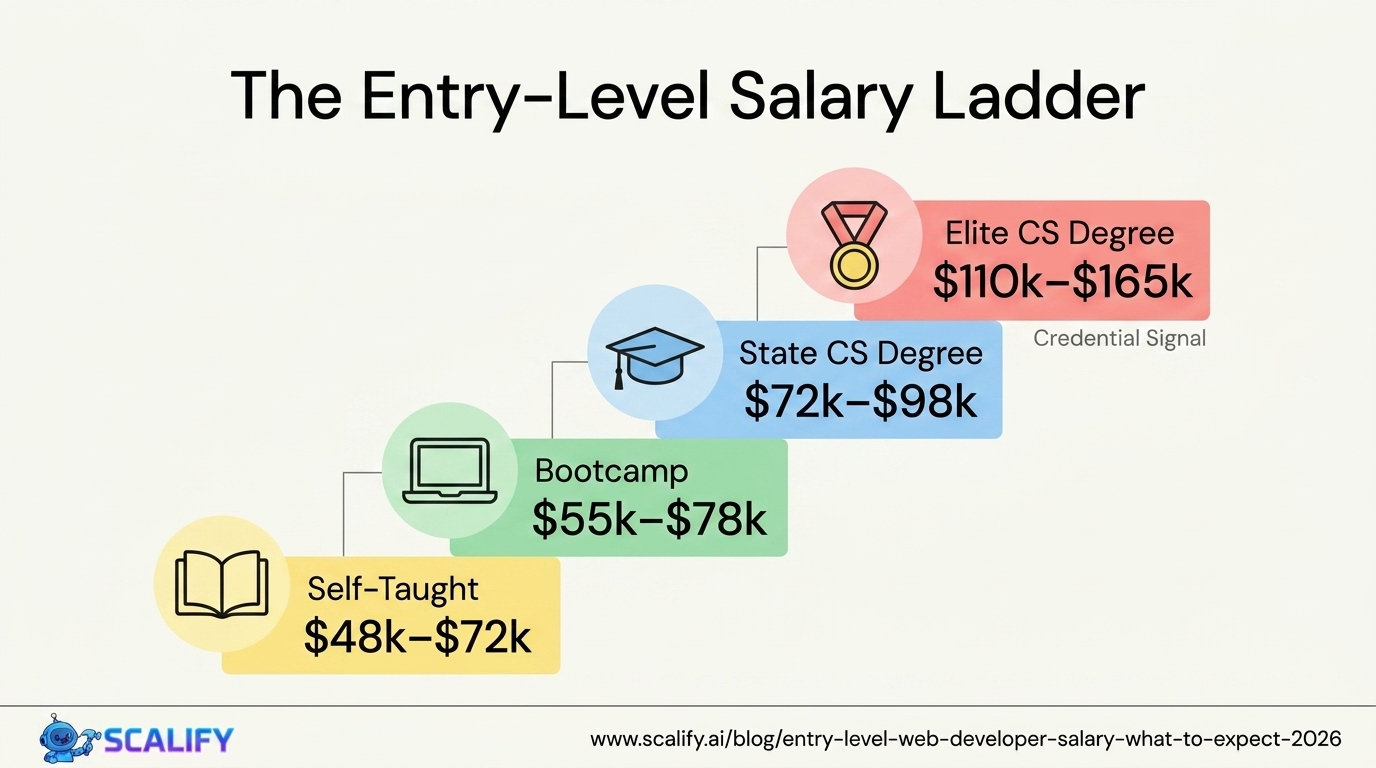
The wide range of junior developer starting salaries ($52,000–$82,000) reflects genuine differences in employer type and geographic market rather than arbitrary variation. Entry-level web developers at agencies or non-tech companies in mid-tier markets typically start at $52,000–$65,000. The same developer with a CS degree or strong bootcamp portfolio entering at a funded startup or mid-size tech company in a major market typically starts at $68,000–$82,000. Entry into FAANG as an L3 starts at $185,000–$220,000 total compensation — but requires CS fundamentals, algorithm interview preparation, and significantly more selectivity in the hiring process.
For new developers evaluating first job offers: the starting salary matters less than the learning environment and the trajectory it enables. A $65,000 role with strong mentorship, complex technical challenges, and active code review culture typically produces better 5-year outcomes than an $80,000 role with minimal mentorship and low technical complexity — because the first role's learning compound produces mid-level and senior capabilities faster, capturing larger salary jumps sooner. Optimize for learning environment in the first 2–3 years, then optimize for market-rate compensation once you've built the skills that justify negotiating from strength.
When to Push for a Promotion (And How)
Most developers who are ready for a promotion don't get it automatically — they need to initiate the conversation. The right time to push for a promotion is when you've been operating at the next level's responsibilities for 3–6 months, you can articulate specific examples of impact at that level, and you have market data showing your current compensation is below market for the capabilities you've developed. The conversation with your manager should present evidence of next-level contributions, reference specific accomplishments, and make the explicit request — "I believe my contributions over the last 6 months reflect senior-level responsibilities and impact. I'd like to discuss what's needed to formalize that progression." Waiting for someone to notice and promote you without this explicit conversation is the most common reason talented developers remain below their market value for years longer than necessary.


.jpeg)
.jpeg)



78 SW 7th St, Miami, FL 33130