

Web Developer Salary at Google, Meta, and Amazon in 2026
By Josh Ternyak

April 22, 2026
Google, Meta, and Amazon pay senior web developers $300,000-$490,000 in total compensation — 2-3x the market rate. This comprehensive guide covers level-by-level salary breakdowns at each FAANG company, web-specific roles, the interview process, negotiation strategies, equity vs cash tradeoffs, working culture at each company, and post-FAANG career paths.
Web Developer Salary at Google, Meta, and Amazon in 2026
FAANG companies — Google, Meta, Amazon, Apple, and Netflix — pay the highest software engineering salaries in the world. The total compensation packages at these companies are so far above typical market rates that they exist in a separate category from even well-paying mid-size tech companies. Understanding what these companies actually pay, how their compensation structures work, and what it takes to get hired is essential knowledge for any web developer who wants to benchmark their compensation or pursue these opportunities.
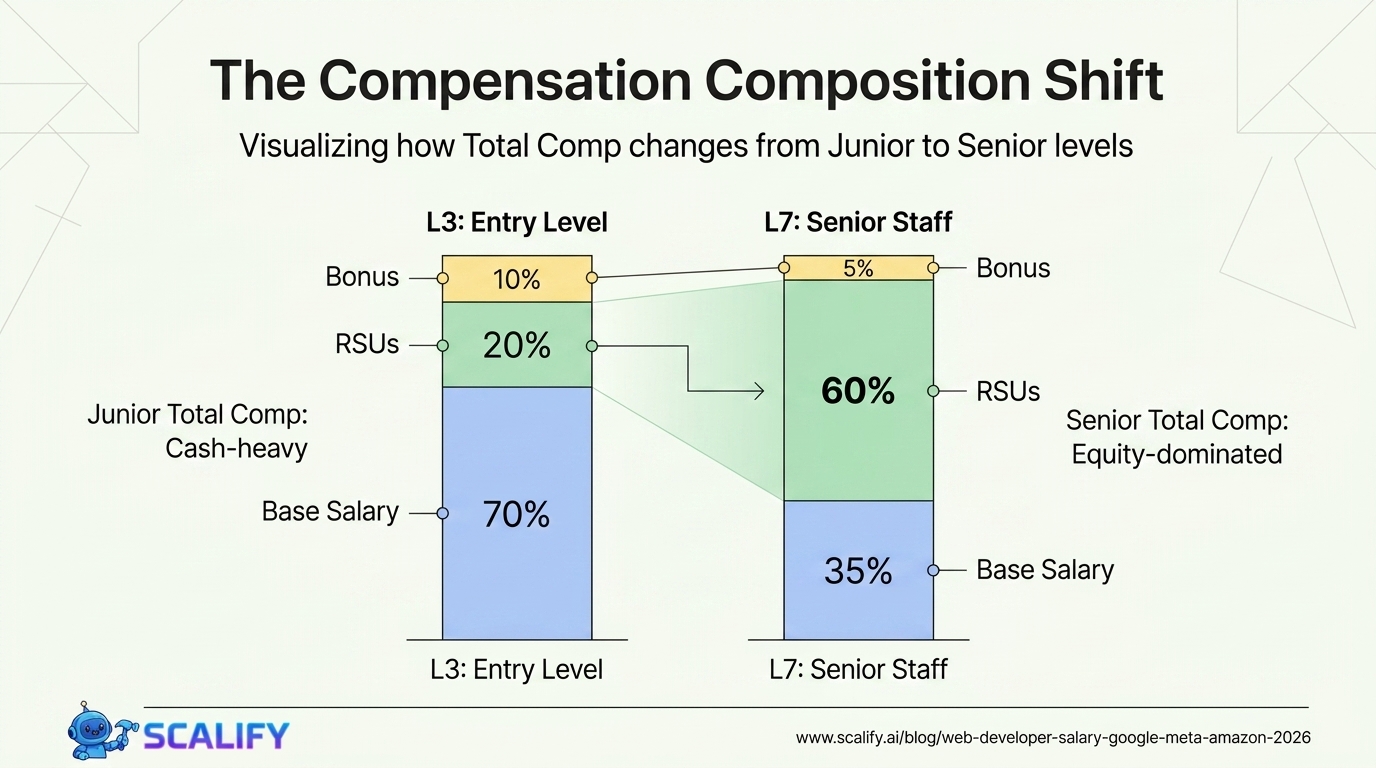
The defining characteristic of FAANG compensation is that base salary represents only 30–60% of total compensation at senior levels. Stock-based compensation (RSUs that vest over 4 years) and performance bonuses make up the remainder — and at companies like Netflix, the structure is entirely different: Netflix pays enormous cash salaries with minimal equity. Understanding these structures is essential for comparing offers accurately.
Key Statistics: Big Tech Developer Salaries
Google Software Engineer Compensation by Level
LevelTitleBase SalaryAnnual RSUBonusTotal CompL3Software Engineer I$130,000 – $150,000$30,000 – $50,000$10,000 – $15,000$185,000 – $220,000L4Software Engineer II$155,000 – $185,000$55,000 – $85,000$15,000 – $20,000$240,000 – $300,000L5Senior Software Engineer$185,000 – $225,000$95,000 – $145,000$25,000 – $35,000$320,000 – $420,000L6Staff Software Engineer$215,000 – $265,000$180,000 – $280,000$35,000 – $50,000$450,000 – $620,000L7Senior Staff Engineer$250,000 – $300,000$280,000 – $450,000$50,000 – $80,000$580,000 – $850,000
Meta (Facebook) Software Engineer Compensation by Level
LevelTitleBase SalaryAnnual RSUBonusTotal CompE3Software Engineer$130,000 – $155,000$30,000 – $50,000$15,000 – $20,000$185,000 – $230,000E4Software Engineer$155,000 – $190,000$75,000 – $120,000$20,000 – $28,000$260,000 – $345,000E5Senior Software Engineer$190,000 – $235,000$130,000 – $200,000$30,000 – $45,000$360,000 – $490,000E6Staff Software Engineer$240,000 – $290,000$220,000 – $350,000$45,000 – $65,000$530,000 – $725,000E7Senior Staff Engineer$280,000 – $340,000$350,000 – $600,000$65,000 – $95,000$720,000 – $1,050,000
Amazon Software Development Engineer Compensation by Level
LevelTitleBase SalaryRSU (4yr)Sign-OnTotal Comp Yr 1L4SDE I$120,000 – $145,000$100,000 – $160,000$20,000 – $40,000$185,000 – $235,000L5SDE II$155,000 – $185,000$200,000 – $300,000$30,000 – $60,000$255,000 – $345,000L6Senior SDE$185,000 – $220,000$350,000 – $520,000$50,000 – $90,000$325,000 – $430,000L7Principal SDE$210,000 – $250,000$600,000 – $900,000$70,000 – $120,000$440,000 – $580,000
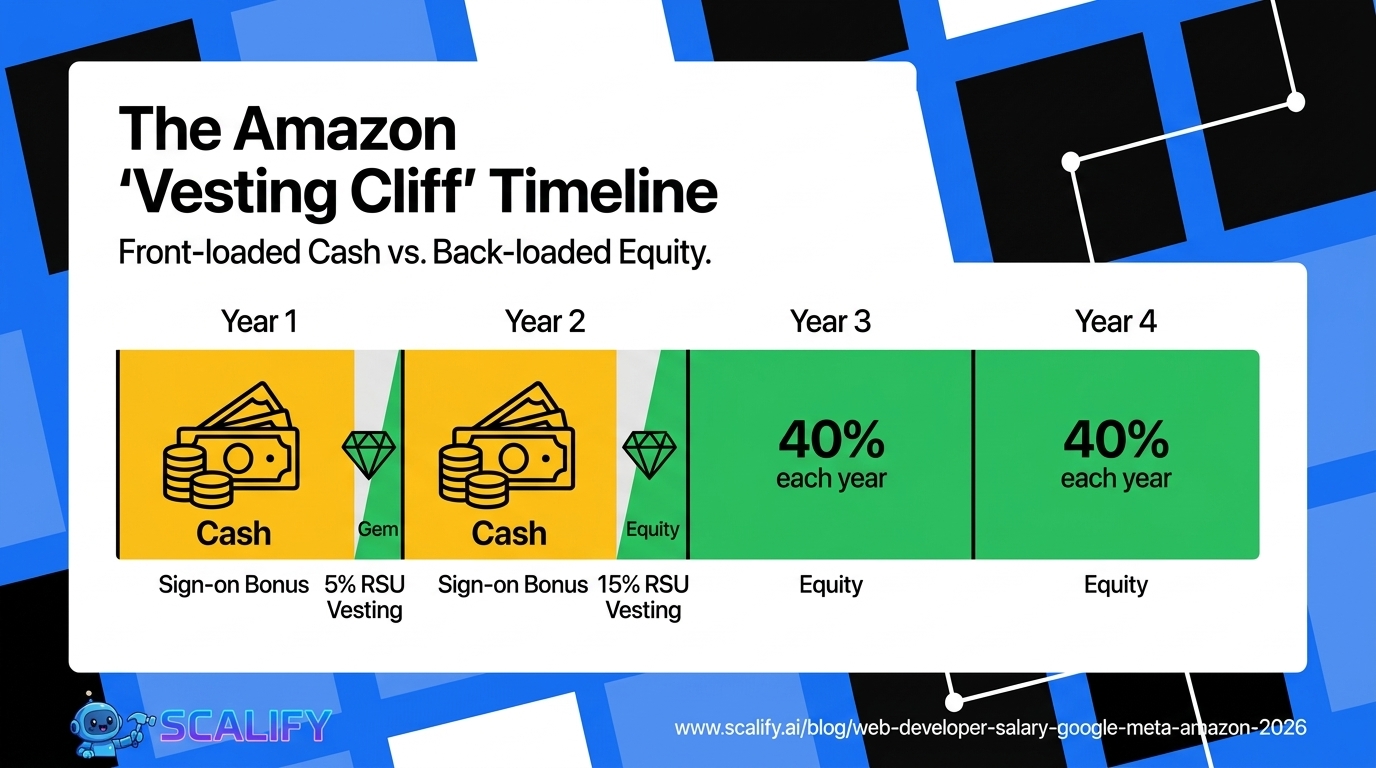
Amazon's compensation structure has a unique characteristic: the base salary cap is $350,000 (Amazon's policy), which means above a certain level, all additional compensation comes as equity. Amazon's sign-on bonuses are typically largest in Year 1 and decline through Year 2, creating a front-loaded offer structure that inflates first-year total compensation relative to ongoing years — an important consideration when evaluating Amazon offers against competitors. Year 3 and Year 4 often have higher RSU cliff vesting, compensating somewhat for the reduction in sign-on.

Web-Specific Roles at FAANG: What Front-End and Full-Stack Developers Do
CompanyFront-End / Web FocusKey TechnologiesNotable TeamsGoogleVery strong — built Angular, Lit, contributed to web standardsTypeScript, Angular, React, PolymerChrome, Maps, Search, WorkspaceMetaExtremely strong — created ReactReact, GraphQL, Relay, Hack/PHPReact core team, Instagram, WhatsApp WebAmazonLarge front-end org across many product teamsReact, Node.js, TypeScriptAmazon.com, AWS Console, AlexaNetflixKnown for React expertise and web performance innovationReact, Node.js, Gibbon (custom)Playback UI, Partner PortalAppleWebKit ownership, iCloud web appsSwift/JS interop, React, WebKitiCloud, Maps, App Store
The FAANG Interview Process for Web Developers
Getting hired at Google, Meta, or Amazon requires passing a demanding multi-stage interview process that tests computer science fundamentals far beyond typical web development work. Most web developers who target FAANG need 3–6 months of dedicated preparation even if they're already strong engineers.
Interview StageWhat It TestsPreparationResume screenCredentials, experience, CS degreeStrong GitHub, relevant experience, CS degree strongly preferredRecruiter callBackground, motivation, availabilityKnow your resume; research the companyTechnical phone screen (1–2)Data structures, algorithms, codingLeetCode Medium problems; 100+ problems solvedOnsite (4–6 rounds)Algorithms, system design, behavioralLeetCode Hard; System Design Primer; STAR behavioral prepFront-end specific round (some teams)DOM APIs, async JS, React patterns, CSSGreat Front End, Frontend Expert resources
Is FAANG Worth Pursuing for Web Developers?
The financial case for FAANG employment is compelling — $300,000–$450,000 total compensation for a senior engineer is 2–3x what the same engineer earns at a typical tech company. Over a 5-year career, the financial difference between FAANG and non-FAANG employment can be $1,000,000–$2,000,000 in total compensation. The tradeoffs are real: the interview process is grueling and the preparation investment is substantial; the work environment at large tech companies involves significant organizational complexity, slower decision-making, and less individual impact than startups; and the skills required to excel at FAANG (algorithm optimization, large-scale system design) differ meaningfully from the skills required for most web development work. For web developers with strong CS fundamentals who are willing to invest in the preparation and trade some degree of startup-style autonomy for significant financial reward, FAANG employment is one of the most financially rewarding career paths available in software engineering.
The Bottom Line
Google, Meta, and Amazon pay senior web developers $300,000–$490,000 in total compensation — 2–3x the market rate for equivalent experience at non-FAANG companies. The path to these roles requires strong CS fundamentals, 3–6 months of dedicated interview preparation, and usually a CS degree or equivalent demonstrated capability. For web developers who are willing to make that investment and who value financial reward highly, FAANG employment represents the most lucrative career path in the profession. For those who prioritize autonomy, variety, and startup-style impact, the financial premium may not compensate for the tradeoffs that large-company engineering involves.
At Scalify, we work with engineers at every level — from early-career developers to FAANG alumni — building professional websites in 10 business days that represent their expertise to the world.
Top 5 Sources
Negotiating FAANG Offers: How to Maximize Your Package
FAANG offers are negotiable — more than most candidates realize. Companies have compensation bands at each level, and the initial offer is almost never the top of the band. The most effective negotiation strategies for FAANG offers:
Compete offers against each other. A competing offer from another FAANG or high-paying tech company is the single most effective negotiating leverage. A Google recruiter who knows you have a Meta offer at a higher level will frequently revise the Google offer — including advocating internally for a higher level placement — to compete. Without a competing offer, you're negotiating against a standard band with no external pressure. If you're seriously pursuing FAANG employment, interview at multiple companies simultaneously to create this leverage.
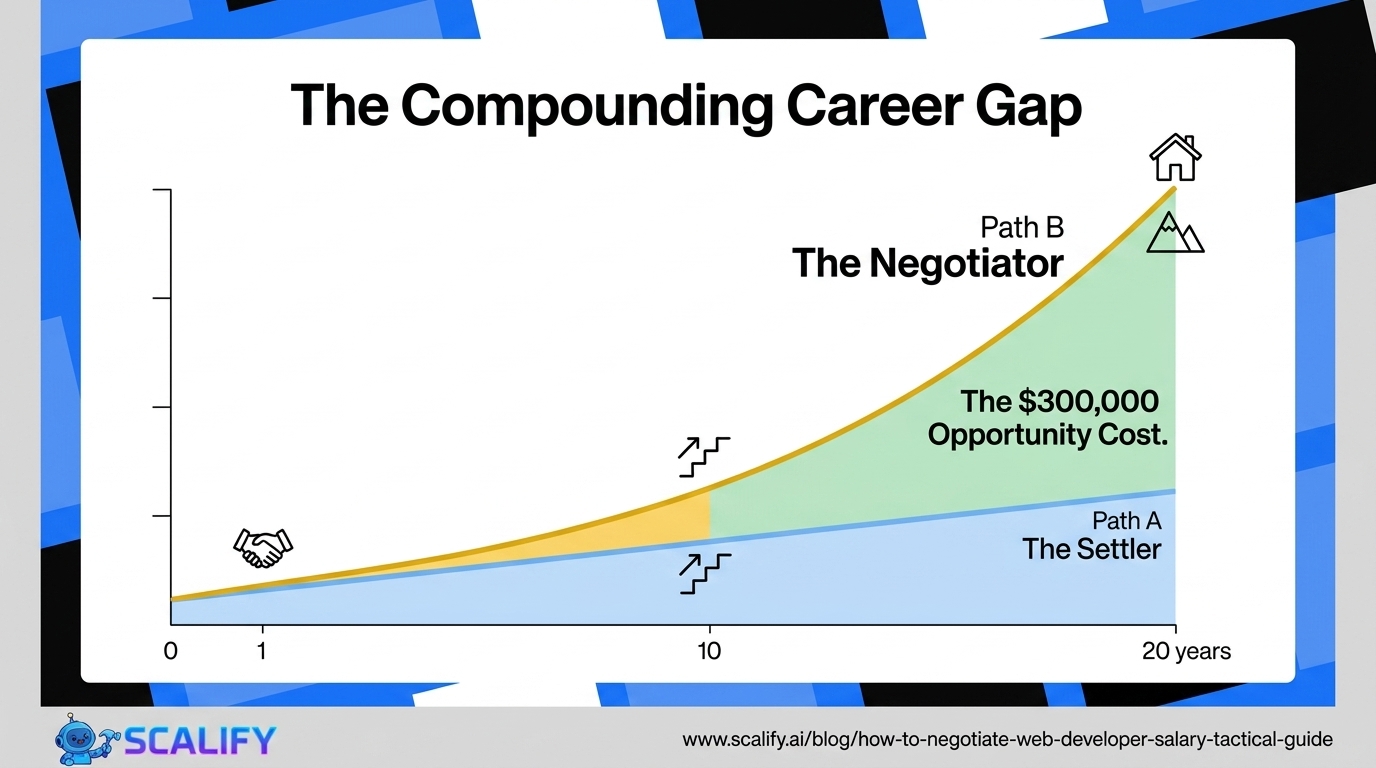
Negotiate the level, not just the compensation. FAANG compensation scales exponentially by level — the difference between L4 and L5 at Google is $80,000–$100,000 in total annual compensation. Candidates who receive L4 offers when they expected L5 should push back on the level designation rather than just accepting the L4 compensation and trying to negotiate it up. Level-matching the offer to your experience is more important than negotiating within a band.
Leverage RSU refresh and year-over-year vesting cliffs. When evaluating multi-year value of an offer, understand the RSU vesting schedule. Amazon's typical 4-year schedule (5%/15%/40%/40%) front-loads vesting heavily in years 3–4. Meta's quarterly vesting provides more consistent income. Google's annual vesting is straightforward. Understanding when the cliff and acceleration events occur affects when to time a potential departure to maximize realized equity.
Total Compensation vs. Cash Compensation: What Actually Hits Your Bank Account
The total compensation figures reported on Levels.fyi include RSU value at grant price — which may differ significantly from the value at vesting due to stock price changes. A Google engineer who was granted $200,000 in RSUs in 2021 at a grant price of $2,900/share saw those vest at significantly different values as the stock fluctuated. Understanding the difference between grant-date value and vest-date value is important for financial planning, and why some engineers at companies with declining stock prices find their effective annual compensation meaningfully below the total compensation their offer letter projected.
For this reason, many engineers at risk-aware career stages (approaching mortgage, family expenses, financial goals with specific timelines) prefer companies like Netflix that pay entirely in cash rather than equity-heavy compensation that can fluctuate significantly with market conditions. The Netflix model — base salaries of $300,000–$600,000+ with no equity — provides complete certainty about annual income that equity-heavy packages cannot match, at the cost of the upside potential that significant RSU ownership provides when the underlying company performs well.
Life at Google, Meta, and Amazon: What Web Developers Actually Experience
Understanding the day-to-day reality at each FAANG company helps developers make career decisions that match their working style preferences, not just their compensation goals:
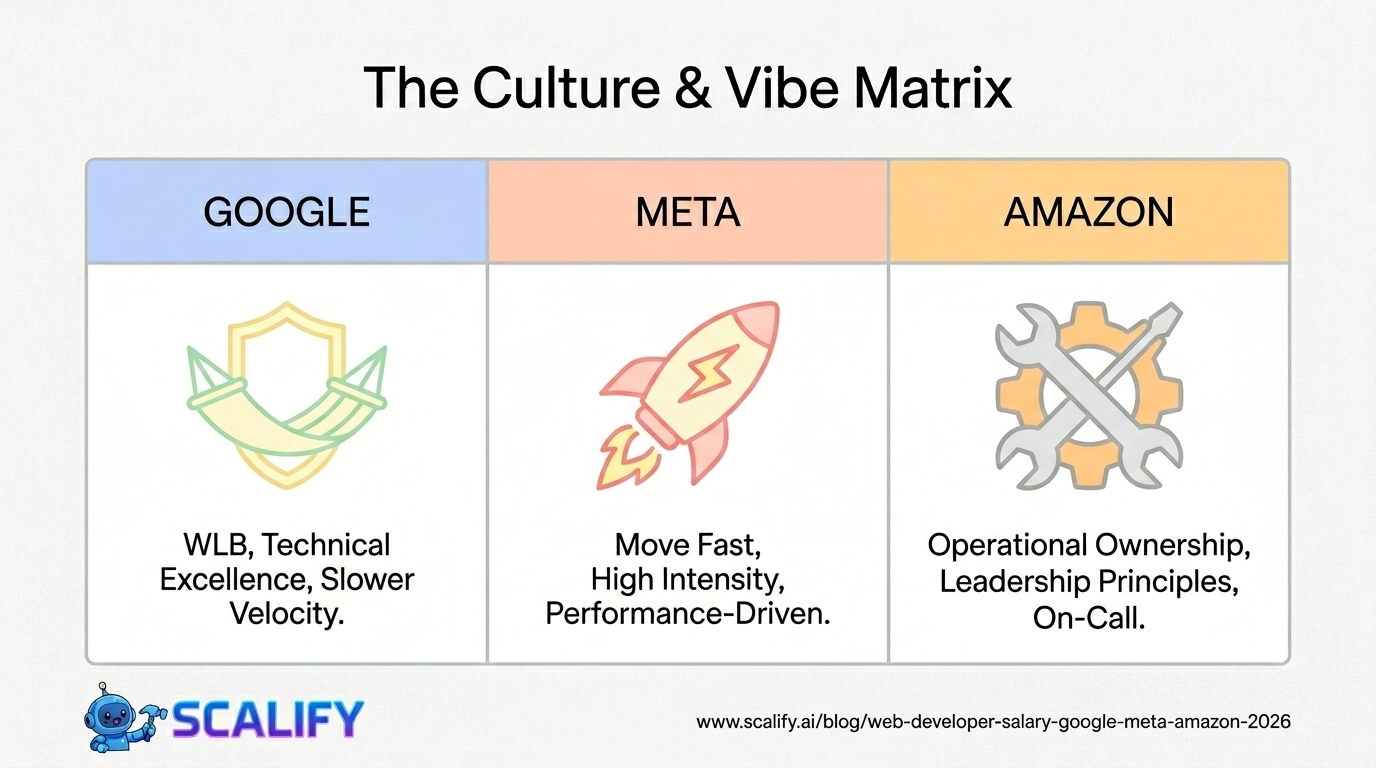
Google: Known for the most comfortable working environment in tech — strong work-life balance relative to other FAANG companies, excellent perks and facilities, strong engineering culture that values technical excellence, and significant autonomy in choosing projects within your team. Google's engineering culture favors well-thought-out solutions over fast shipping — which suits developers who prioritize quality and long-term thinking. The company's size creates significant bureaucracy that can frustrate engineers who want to see immediate impact.
Meta: Known for the highest total compensation at senior levels and the most intense performance culture in FAANG. Meta's semi-annual performance review cycles and its use of performance ratings for compensation differentiation creates a competitive environment that some engineers find motivating and others find exhausting. Meta's engineering velocity is higher than Google's — features ship faster, but with more pressure to deliver. The React and GraphQL teams at Meta are among the most technically prestigious in web development globally.
Amazon: Known for the most demanding operational culture in FAANG — Amazon's Leadership Principles are deeply embedded in how work gets evaluated and how the interview process works. Amazon's on-call rotations and operational responsibilities are more significant than at Google or Meta for many teams. The compensation structure's heavy RSU weighting in years 3–4 creates retention pressure that some engineers find constraining and others leverage as a financial planning tool. AWS teams are particularly strong for engineers interested in cloud infrastructure and distributed systems.
Post-FAANG Careers: Where Big Tech Engineers Go Next
FAANG experience is one of the most valuable career credentials in the tech industry — both for the skills developed and the signal it provides to future employers and investors. Engineers who leave FAANG typically go one of three directions: joining growth-stage startups as senior or staff engineers, often with significant equity that can produce major financial outcomes if the company succeeds; founding their own companies, leveraging both the technical skills and the network developed at FAANG; or joining other large technology companies at a higher level than they'd enter without the FAANG credential. The exit routes from FAANG are generally excellent — the combination of technical caliber signal and the specific experiences (operating at scale, contributing to large codebases, exposure to rigorous engineering practices) opens doors that are harder to access without that background.


.jpeg)
.jpeg)


78 SW 7th St, Miami, FL 33130