

How to Rank Your Local Business Website on Google (2026 Guide)
By Josh Ternyak

April 18, 2026
Complete guide to ranking a local business website on Google.
Local SEO: The Most Valuable Search Opportunity for Small Businesses
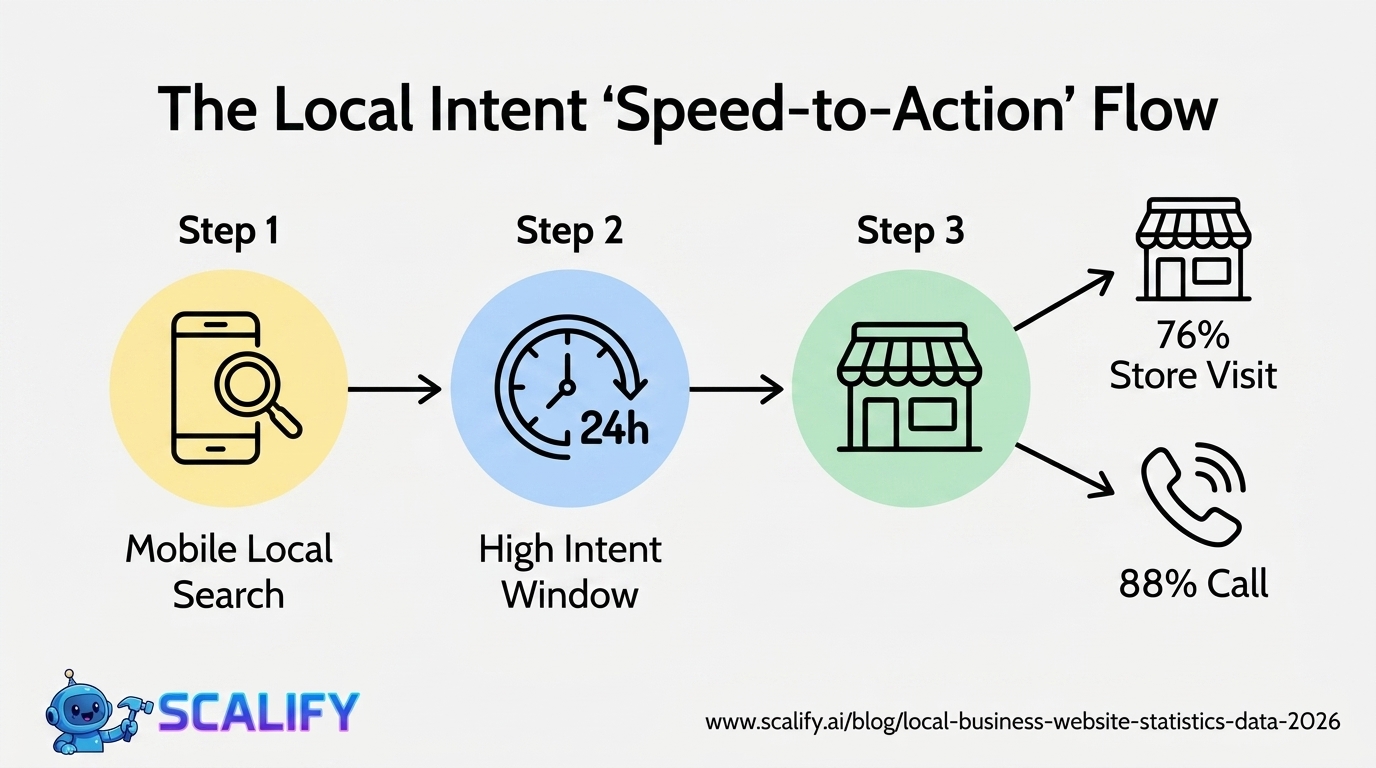
Local search is the single most commercially valuable search category for small and medium businesses. When someone searches "plumber near me" or "dentist Miami," they're not browsing — they're ready to hire. The conversion rate for local search queries is dramatically higher than for informational queries, which makes ranking in local results one of the highest-ROI marketing investments a local business can make.
Key Statistics: Local Search and Local SEO
The Two Local Search Surfaces: Map Pack and Local Organic
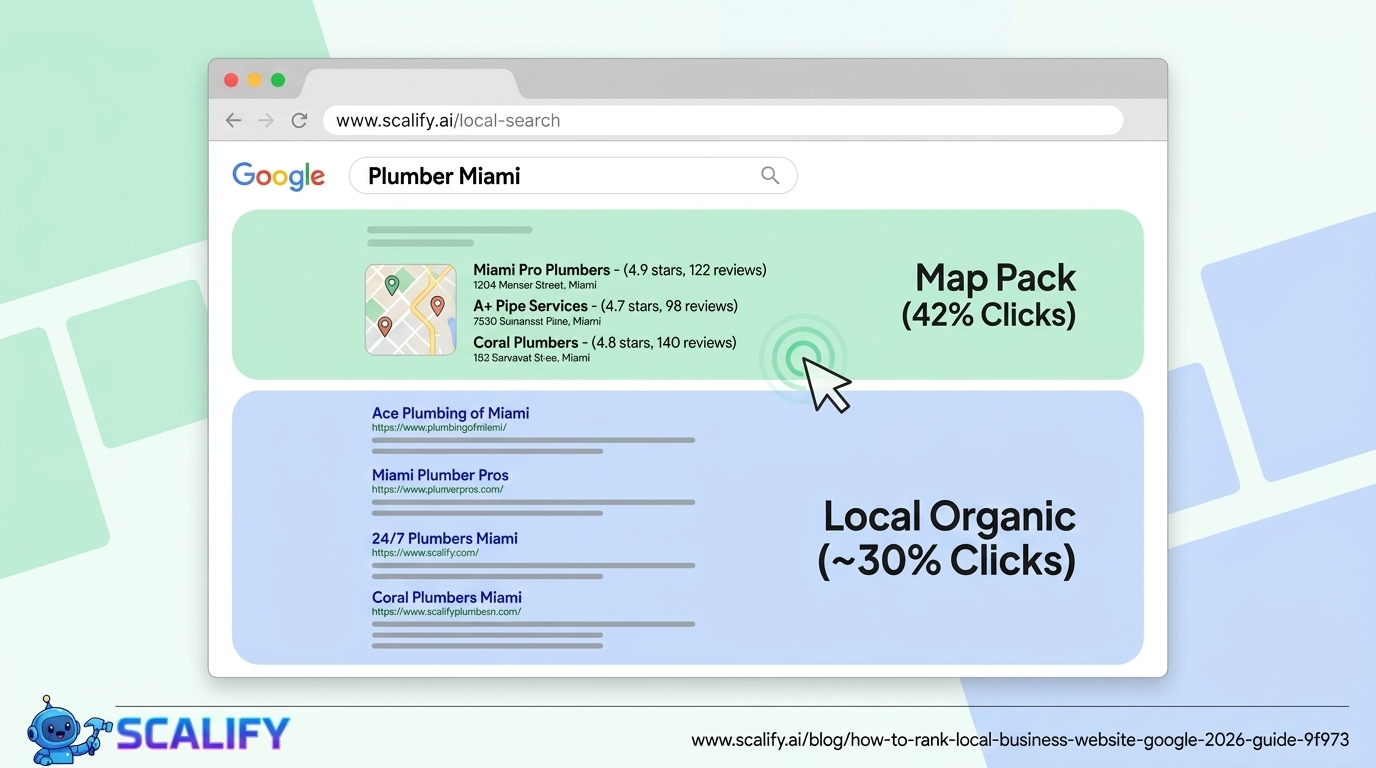
Local businesses compete in two distinct search result surfaces, each with different ranking factors:
Search SurfaceWhat It IsPrimary Ranking FactorsTraffic PotentialLocal Pack (Map Pack)3 business listings with map at top of resultsGoogle Business Profile, proximity, reviews, citations42% of local search clicksLocal Organic ResultsRegular blue-link results below the Map PackWebsite SEO, content, backlinks, technical factors~30% of local search clicks
The most powerful local SEO strategy targets both surfaces: optimize your Google Business Profile for Map Pack rankings and optimize your website content for local organic rankings. Businesses that appear in both the Map Pack AND the local organic results below it dominate the search results page for their target queries.
Step 1: Google Business Profile Optimization (Map Pack Foundation)
Your Google Business Profile (formerly Google My Business) is the most important single asset for local search visibility. It's the data source that Google uses to populate the Map Pack, and it's free.
GBP ElementOptimization ActionImpact LevelBusiness nameUse exact legal business name — no keyword stuffing (against Google's guidelines)HighPrimary categoryChoose the most specific category that describes your core businessVery HighAdditional categoriesAdd all relevant secondary categories (up to 9 additional)HighBusiness description750 character description, include primary keywords naturallyMediumPhotosAdd 10+ high-quality photos: exterior, interior, team, work examplesHighHours of operationKeep current including holidaysMediumPhone numberLocal phone number (not toll-free) matching website and citationsHighWebsite URLLink to your websiteMediumServices/ProductsComplete services section with descriptionsHighQ&A sectionProactively add questions and answers about your businessMediumPostsRegular Google Posts (weekly if possible) with offers, events, updatesMedium
NAP Consistency: Your Name, Address, and Phone number must be exactly identical across your GBP, website, and all citations (directories). Even small variations (St. vs Street, Suite 100 vs Ste 100) can dilute local ranking signals. Choose one format and use it everywhere.
Step 2: Google Reviews — The Most Impactful Local Ranking Factor
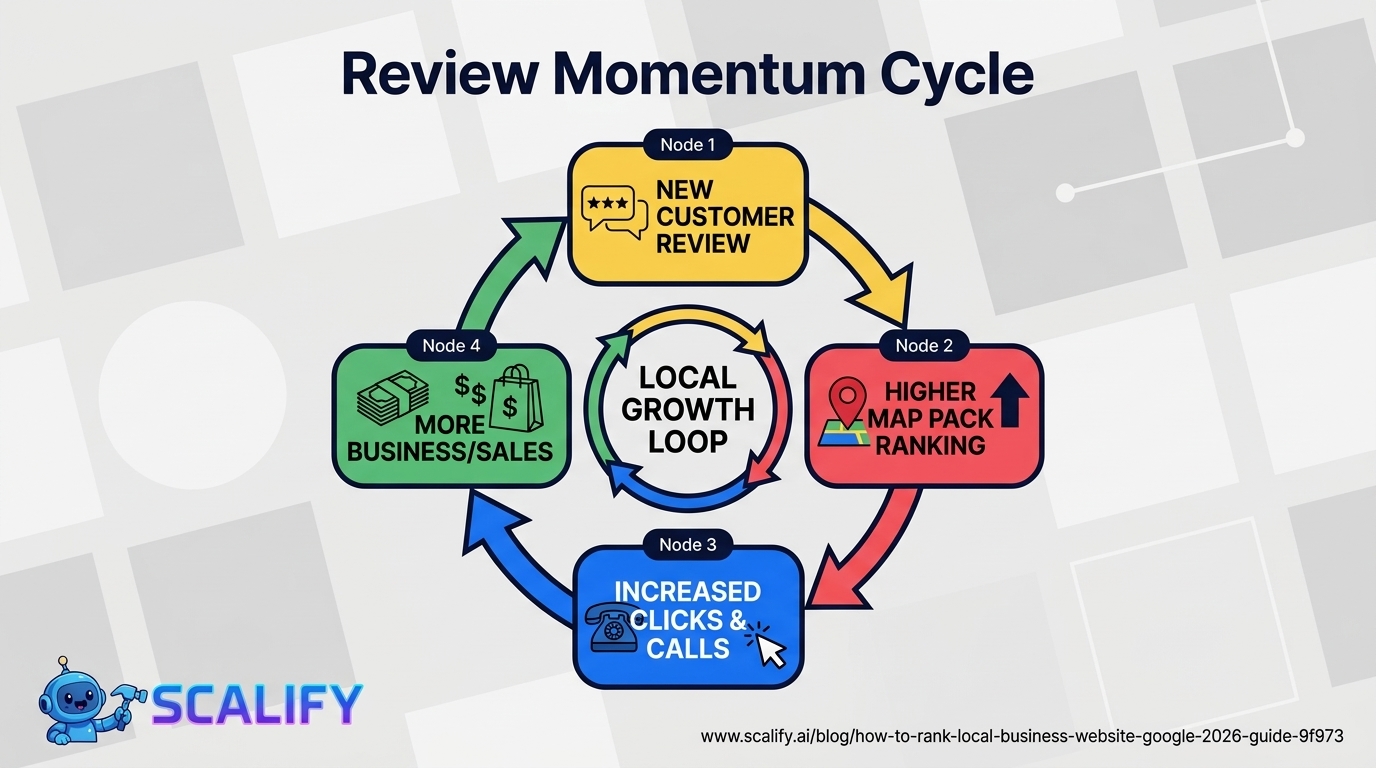
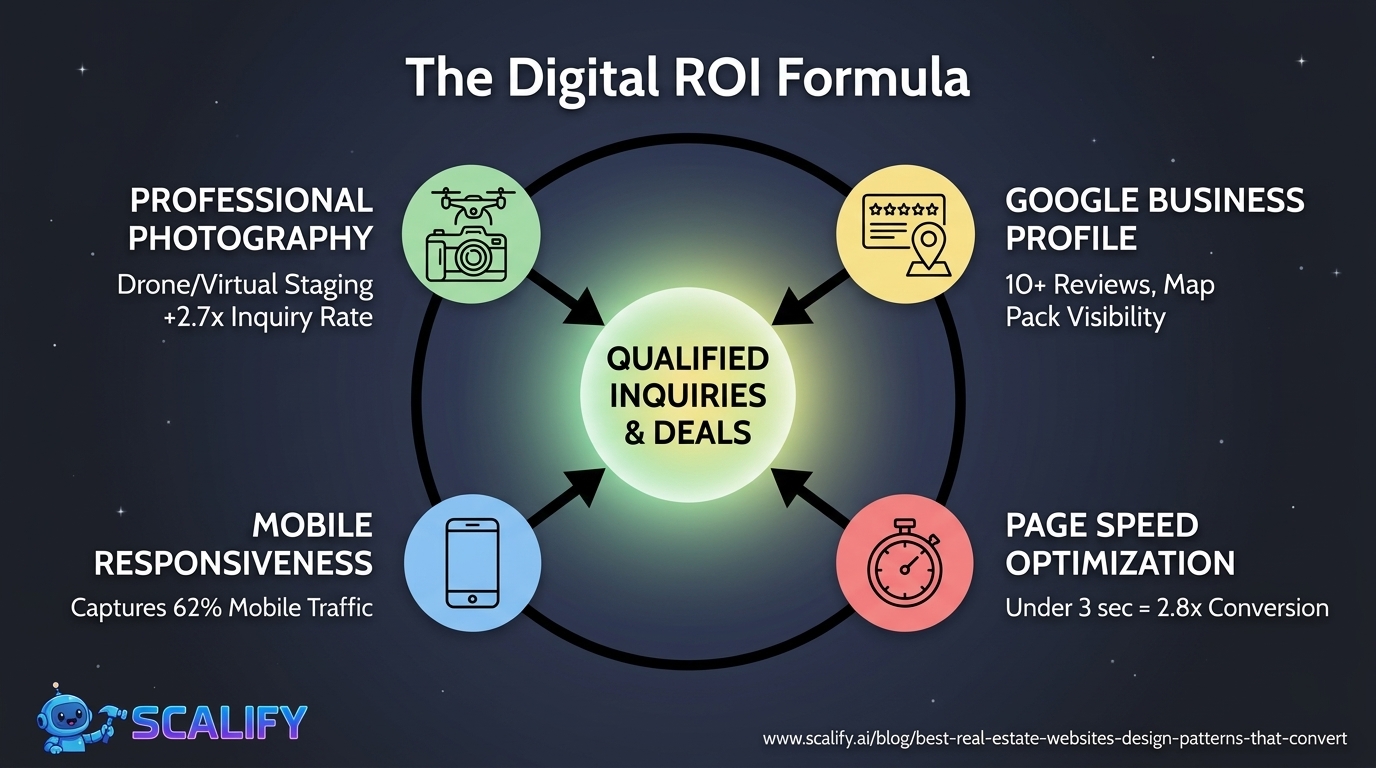
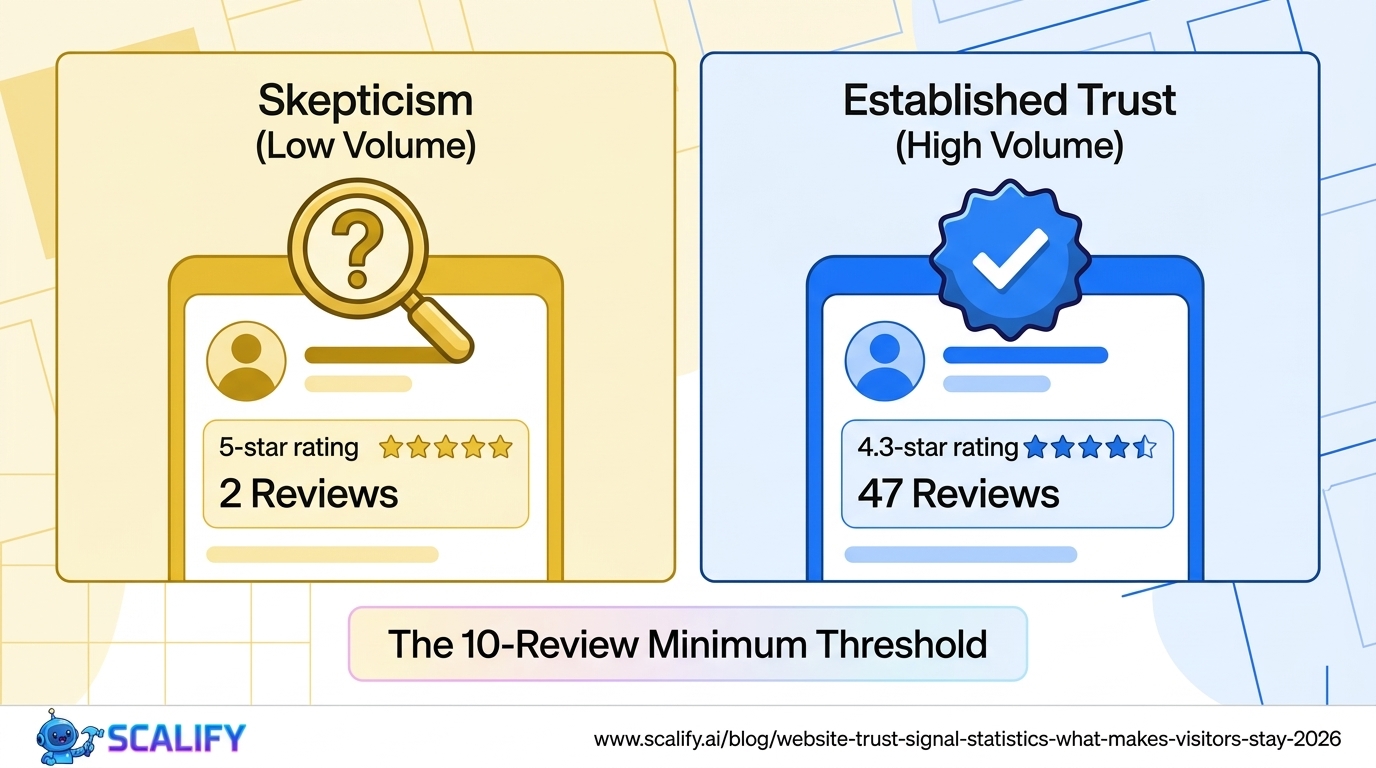
Google reviews are simultaneously a ranking factor and a conversion factor. Businesses with more reviews, higher ratings, and recent reviews rank higher in the Map Pack and convert more clicks into contacts.
Review FactorImpact on Local RankingsImpact on CTR/ConversionsReview quantityHigh — more reviews signal popularityHigh — 10+ reviews drives 5x more clicksReview rating (avg stars)High — higher ratings ranked higherVery High — 4+ stars dramatically improves clicksReview recencyMedium — fresh reviews valued over old onesMedium — recent reviews signal active businessReview content (keywords)Medium — reviews mentioning services helpHigh — detailed reviews convert betterOwner responsesLow-Medium direct signalHigh — shows business engagement
How to get more Google reviews:
Step 3: Local Citation Building (Directory Consistency)
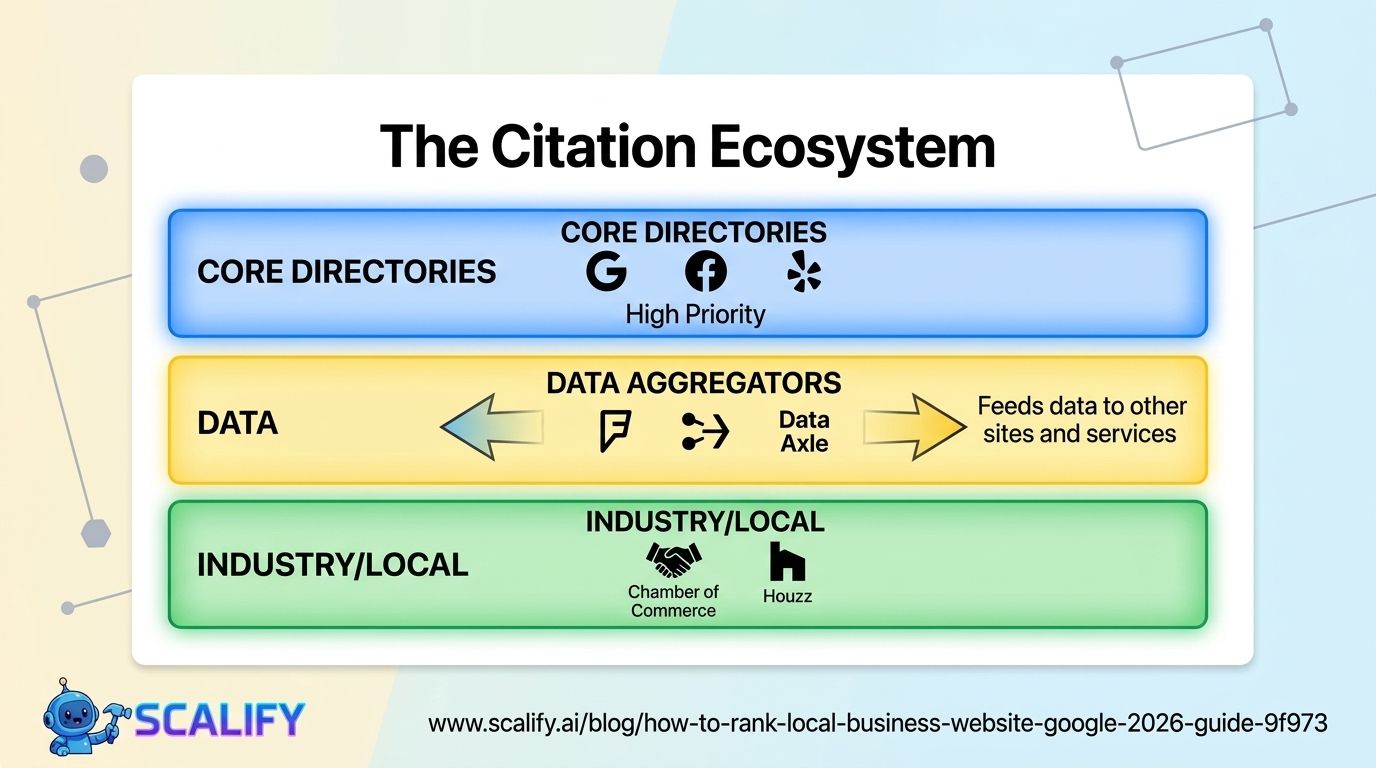
Citations are mentions of your business name, address, and phone number on third-party websites — directories, aggregators, industry sites, and local sites. Consistent citations across many authoritative sources signal to Google that your business is real, established, and accurately represented.
Citation Source TierExamplesPriorityTier 1: Core directoriesYelp, Facebook Business, Apple Maps, Bing Places, Yellow PagesEssential — complete firstTier 2: Data aggregatorsNeustar Localeze, Foursquare, Data AxleHigh — feeds other directoriesTier 3: Industry directoriesHouzz (home), Avvo (legal), Healthgrades (medical), Clutch (agencies)High — industry-relevantTier 4: Local directoriesLocal Chamber of Commerce, city business directoriesMedium — local signalsTier 5: General directoriesAngi, HomeAdvisor, Thumbtack, etc.Medium — additional reach
Citation audit tools: BrightLocal, Whitespark, and Moz Local can audit your existing citations for inconsistencies and submit to major directories. BrightLocal's Citation Tracker shows exactly where you appear and where you're missing compared to competitors.
Step 4: Local Keyword Research
Local SEO requires a different keyword approach than general SEO — you're targeting location-modified queries and near-me searches:
Local Keyword TypeExampleIntentService + city"plumber Miami" / "web designer Austin"Very high intent — ready to hireService + neighborhood"electrician Coconut Grove" / "dentist Midtown"Very high intent + specific areaNear me queries"restaurant near me" / "accountant near me"Very high intent — mobile, immediateService + "near" + landmark"hotel near Miami airport"Very high intent + specific locationBest + service + city"best sushi Miami" / "top web designer Dallas"High intent, comparison stageService + review queries"Miami plumber reviews"High intent, pre-purchase validation
Step 5: Location Pages on Your Website
For businesses serving multiple areas, location pages — dedicated pages for each city or neighborhood served — are one of the highest-ROI local SEO investments available. Each location page is a separate ranking opportunity for that city's search traffic.
Location Page ElementBest PracticePage title"[Service] in [City, State] | [Business Name]"H1"[Service] in [City]" or "Serving [City] and Surrounding Areas"Unique contentWrite unique content for each location — don't duplicate pages with only the city name changedLocal detailsMention local landmarks, neighborhoods, and area-specific contextLocal testimonialsInclude reviews from customers in that specific areaEmbedded Google MapEmbed a map showing service area or office locationLocal phone numberUse local area code — avoid toll-free numbersSchema markupLocalBusiness schema with location-specific address information
Warning on duplicate location pages: Creating 20 location pages with only the city name changed is a thin content strategy that Google's algorithms penalize. Each location page needs genuinely unique content — different service descriptions tailored to that area, area-specific testimonials, local landmark references, or unique case studies from that location.
Step 6: On-Page Local SEO for Your Website
On-Page Local ElementBest PracticeNAP on websiteExact match to GBP — in footer and contact pageLocal schema markupLocalBusiness schema on homepage and contact pageTitle tagsInclude city/region for location-specific pagesEmbedded mapGoogle Map embed on contact page — reinforces location signalLocal contentBlog posts about local events, local industry news, area-specific guidesService area pageList all cities served if a service-area business (no physical location visited by customers)
Step 7: Local Link Building
Local backlinks — links from other businesses, organizations, and publications in your geographic area — send strong local relevance signals to Google:
Local SEO Timeline: Realistic Expectations
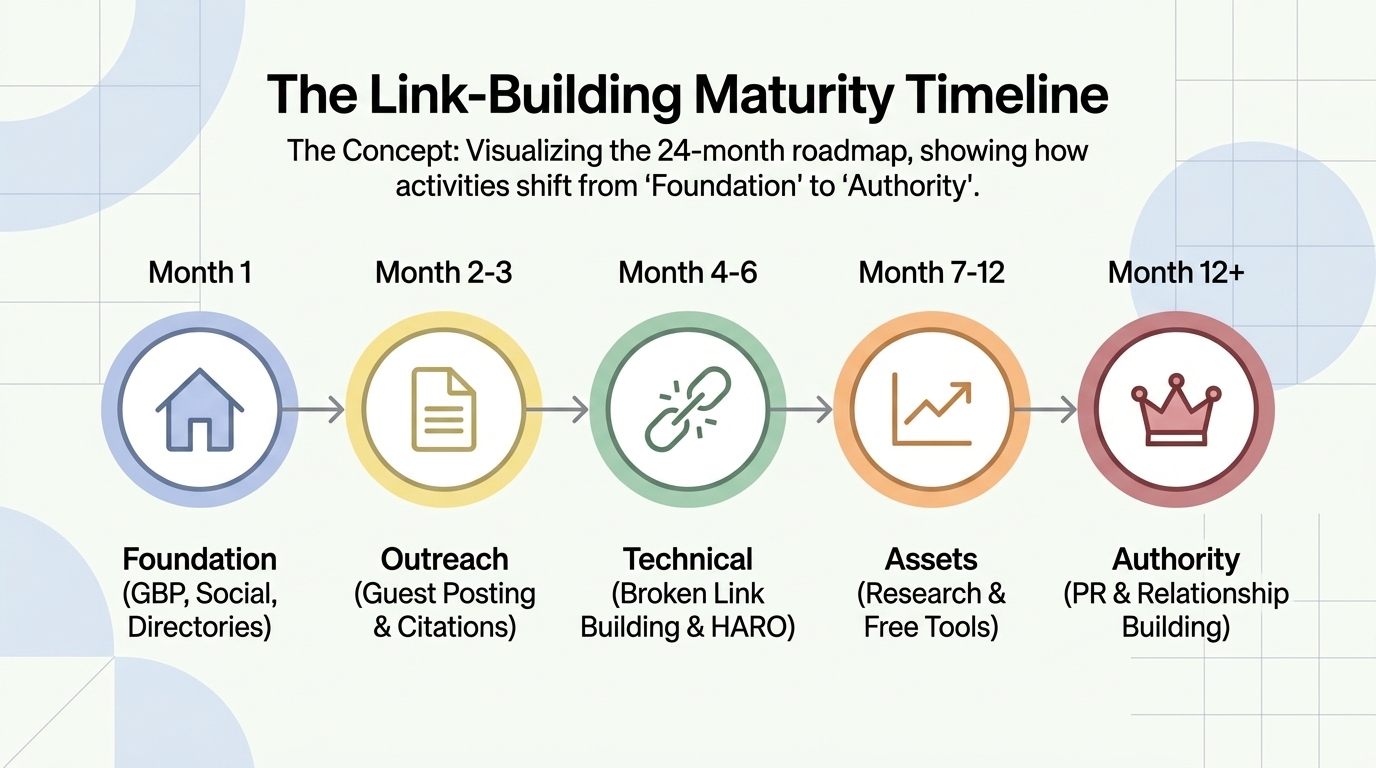
TimeframeWhat to ExpectWeek 1–2GBP optimized, citations submitted to core directoriesMonth 1–2GBP updates indexed, beginning to appear in Map Pack for less competitive queriesMonth 2–4Review accumulation builds; Map Pack positions improving for primary keywordsMonth 4–6Local organic rankings improving for location-specific content; location pages starting to rankMonth 6–12Established presence across target queries; Map Pack positions stabilizingMonth 12+Compound growth as reviews, citations, and content authority accumulate
The Bottom Line
Local SEO is the highest-ROI search marketing investment for local service businesses because it targets the highest-intent search queries (service + location = someone ready to buy) with a sustainable organic presence rather than ongoing paid spend. The foundation is Google Business Profile optimization — it's free and has the fastest impact. Layering reviews, citations, location pages, and local content on top of that foundation produces compounding visibility improvements that grow over months and years. The 46% of searches with local intent represent an enormous, permanently available traffic opportunity that any local business with a properly optimized online presence can capture.
At Scalify, we build local business websites with local SEO as a first-class design consideration — proper schema markup, location-optimized page structure, and the technical foundation that helps local businesses appear where their customers are searching.
Top 5 Sources
The Local SEO Advantage: Why Local Beats National
Local SEO produces results faster and more durably than national SEO for businesses with geographic service areas. The reason: local competition is dramatically smaller than national competition, and Google's local ranking algorithm places heavy weight on Google Business Profile optimization and local review signals that can be improved in weeks rather than months. A plumber in Denver competes with perhaps 50–200 local plumbing businesses for local search visibility, not the millions of websites competing nationally for "best plumber." This compressed competitive landscape means a properly optimized local presence can produce Map Pack visibility within 4–8 weeks of implementation.
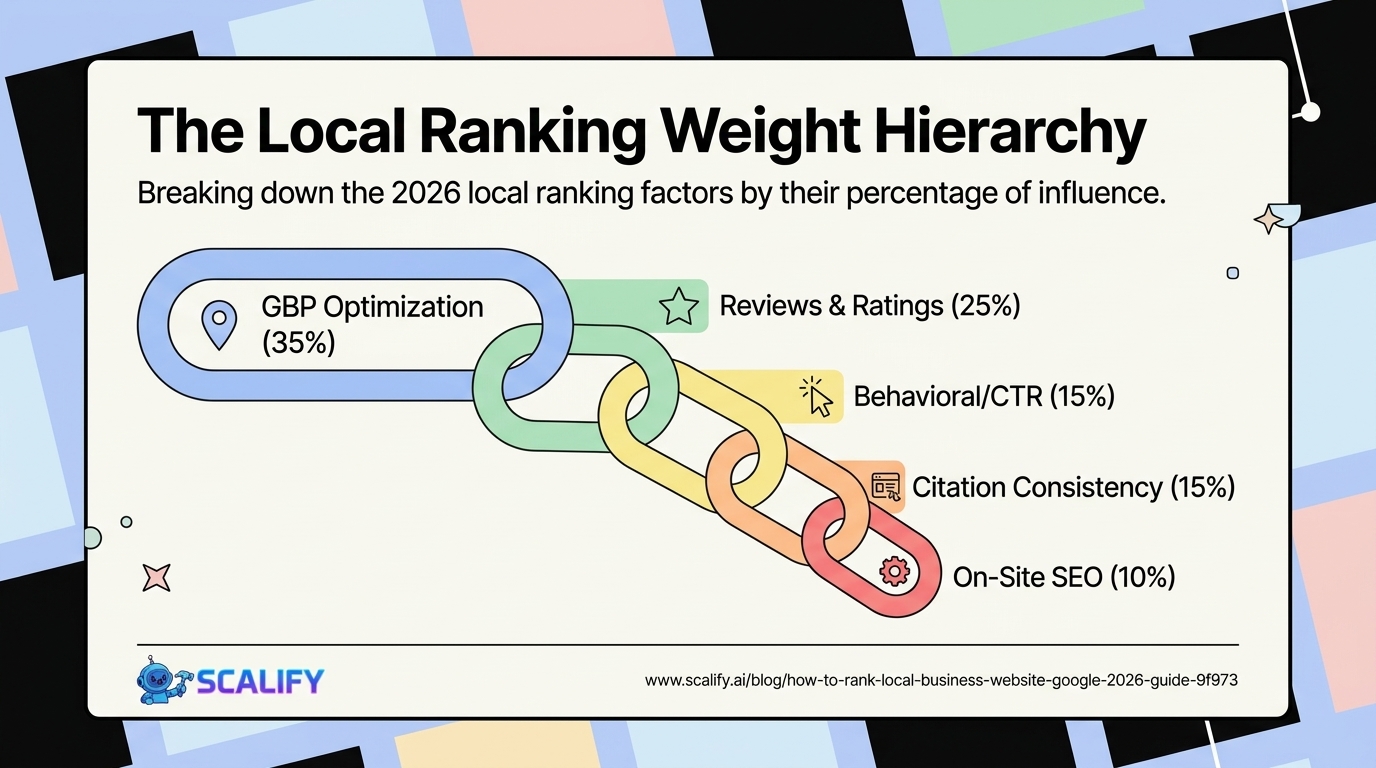
The most impactful local ranking factors in 2026: Google Business Profile completeness and consistency (35% weight in local algorithm estimates), proximity to searcher (not controllable, but manageable through service area definition), review quantity and quality (25% weight), local citations NAP consistency (name, address, phone across all directories, 15% weight), on-site local signals (10% weight), and behavioral signals like click-through rate and phone call rate (15% weight). Addressing the top three controllable factors — GBP optimization, systematic review acquisition, and citation consistency — produces the majority of local ranking improvement for most businesses.
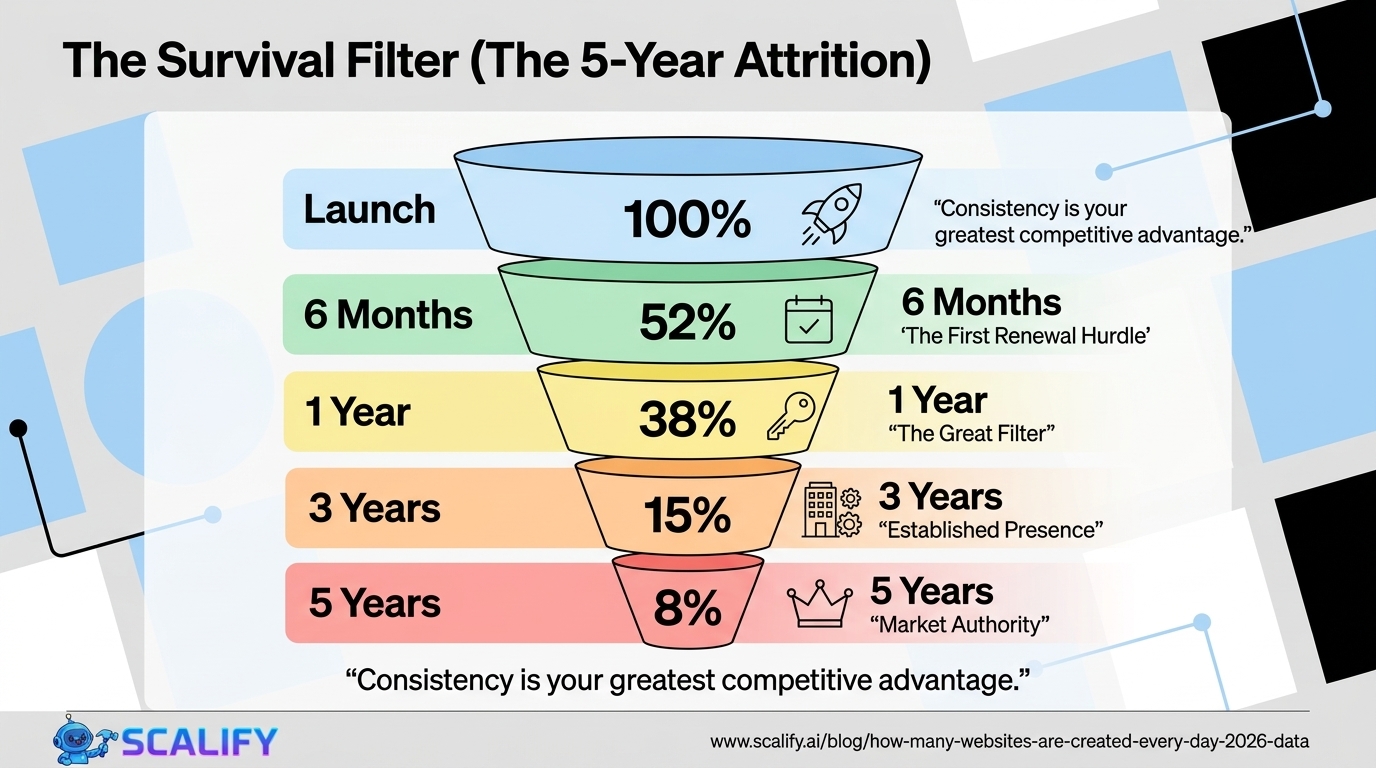
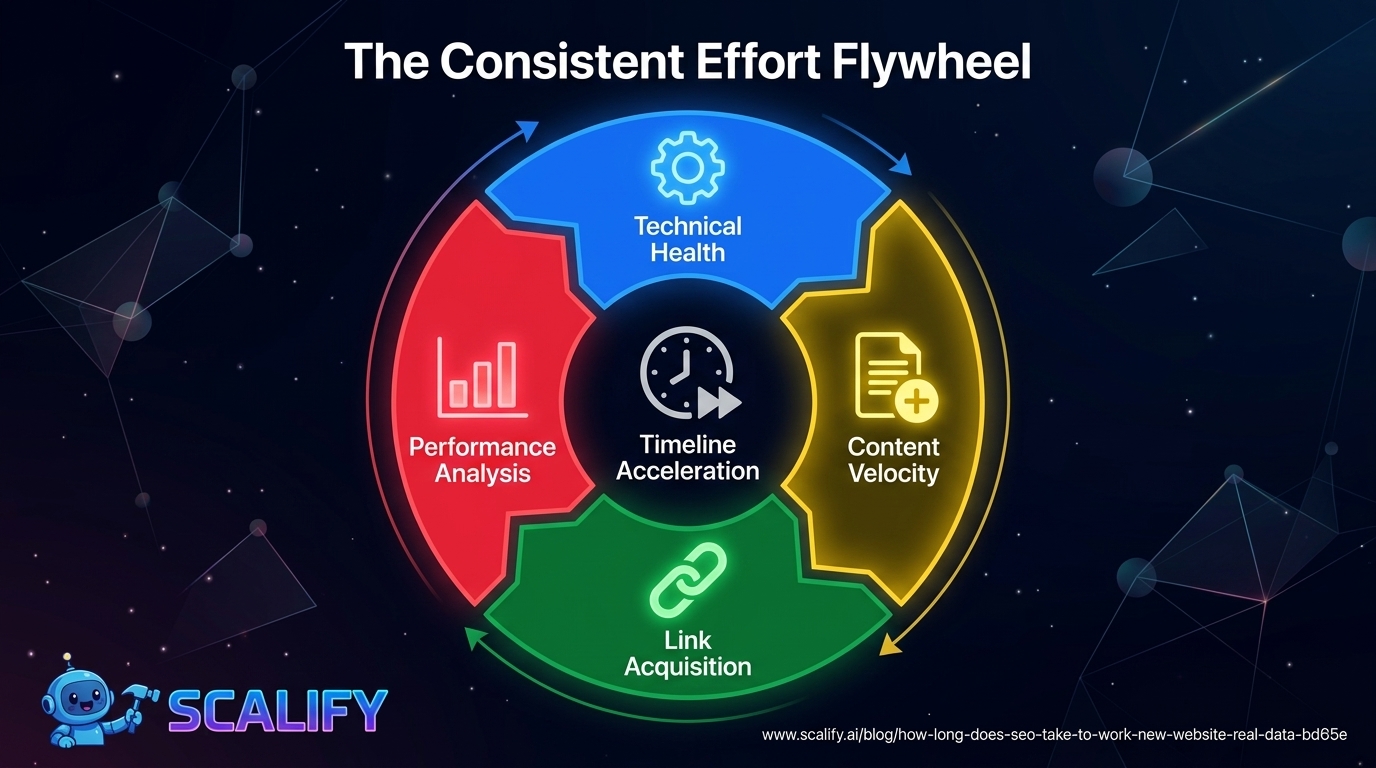
Local SEO is an ongoing investment that rewards consistency: new reviews signal ongoing quality to Google's algorithm; regular GBP posts demonstrate operational activity; updated hours and service information prevents the citation inconsistencies that suppress local rankings. Building a systematic monthly routine — requesting reviews from every served customer, posting weekly GBP updates, responding to all reviews within 24 hours — creates the operational signals that sustain local rankings over time and gradually push rankings upward as the business's local authority accumulates.



.jpeg)
.jpeg)



78 SW 7th St, Miami, FL 33130