

Node.js Developer Salary: What the Market Is Paying in 2026
By Josh Ternyak

April 22, 2026
Node.js developers earn $72,000 to $220,000+ in 2026. This comprehensive guide covers salary by experience level, TypeScript premium, framework comparison, industry breakdowns, FAANG total compensation, freelance rates, the skills commanding the highest premiums, career progression stages, and how to build a portfolio that wins Node.js jobs.
Node.js Developer Salary: What the Market Pays
Node.js has been one of the most commercially dominant back-end technologies for over a decade, powering APIs and real-time applications at companies ranging from bootstrapped startups to Netflix and LinkedIn. In 2026, Node.js developer salaries remain strong — reflecting both the technology's continued market dominance and the depth of expertise the best Node.js engineers bring to production systems at scale.
Understanding Node.js developer compensation requires separating the wide range of people who claim the skill. A developer who can write basic Express CRUD routes and connect to a MongoDB database is technically a "Node.js developer" — but so is the engineer who architects event-driven microservices handling 100,000 requests per second, designs custom stream processing pipelines, and maintains the TypeScript monorepo infrastructure for a 200-person engineering team. The market prices these two profiles very differently, and this guide covers the full spectrum.
Key Node.js Developer Salary Statistics
Node.js Developer Salary by Experience Level
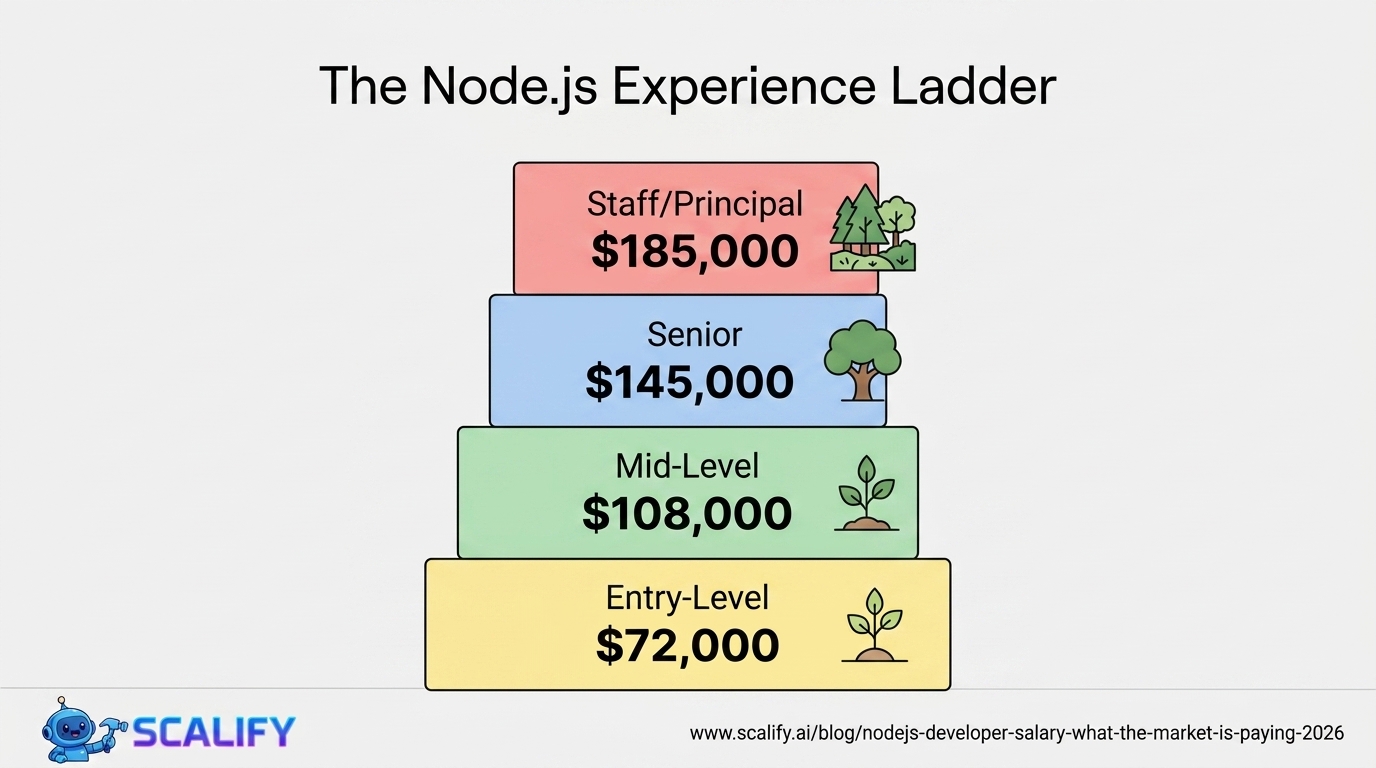
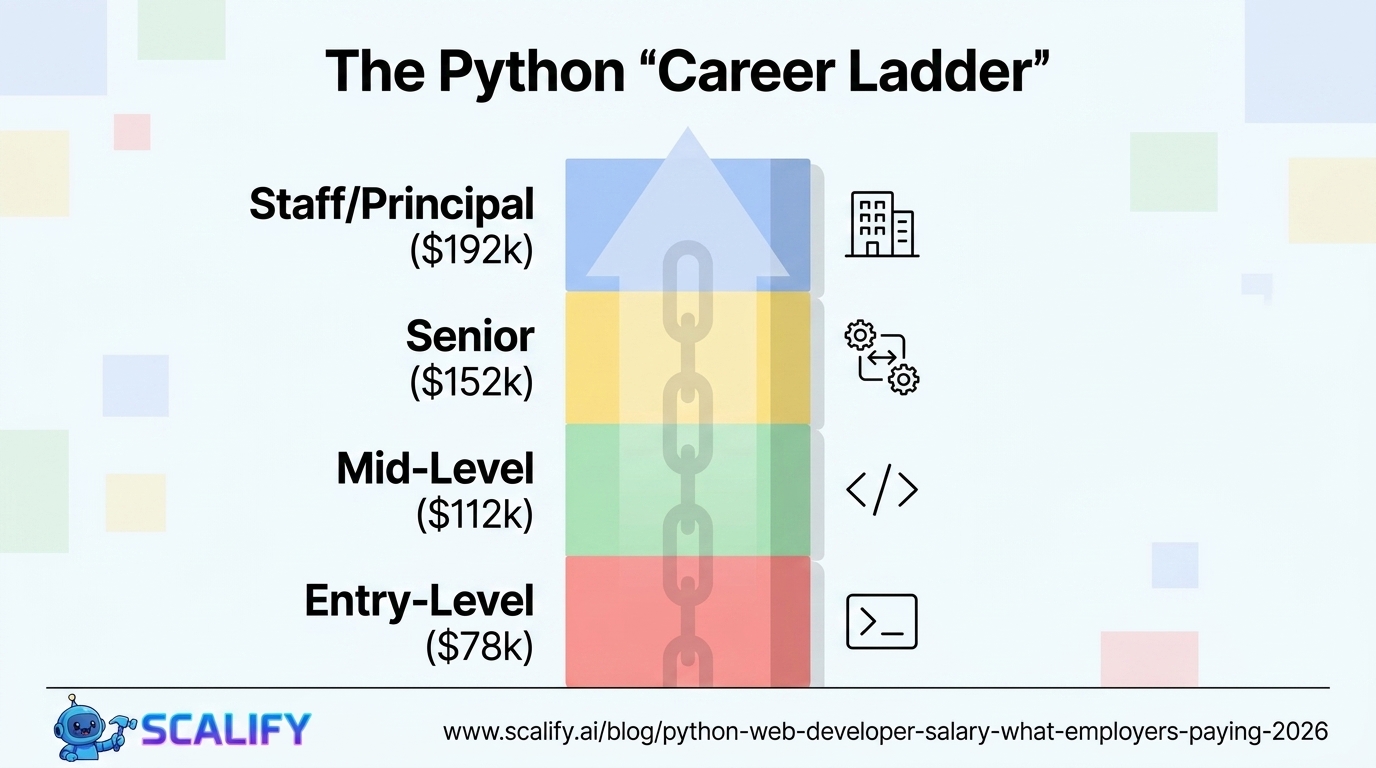
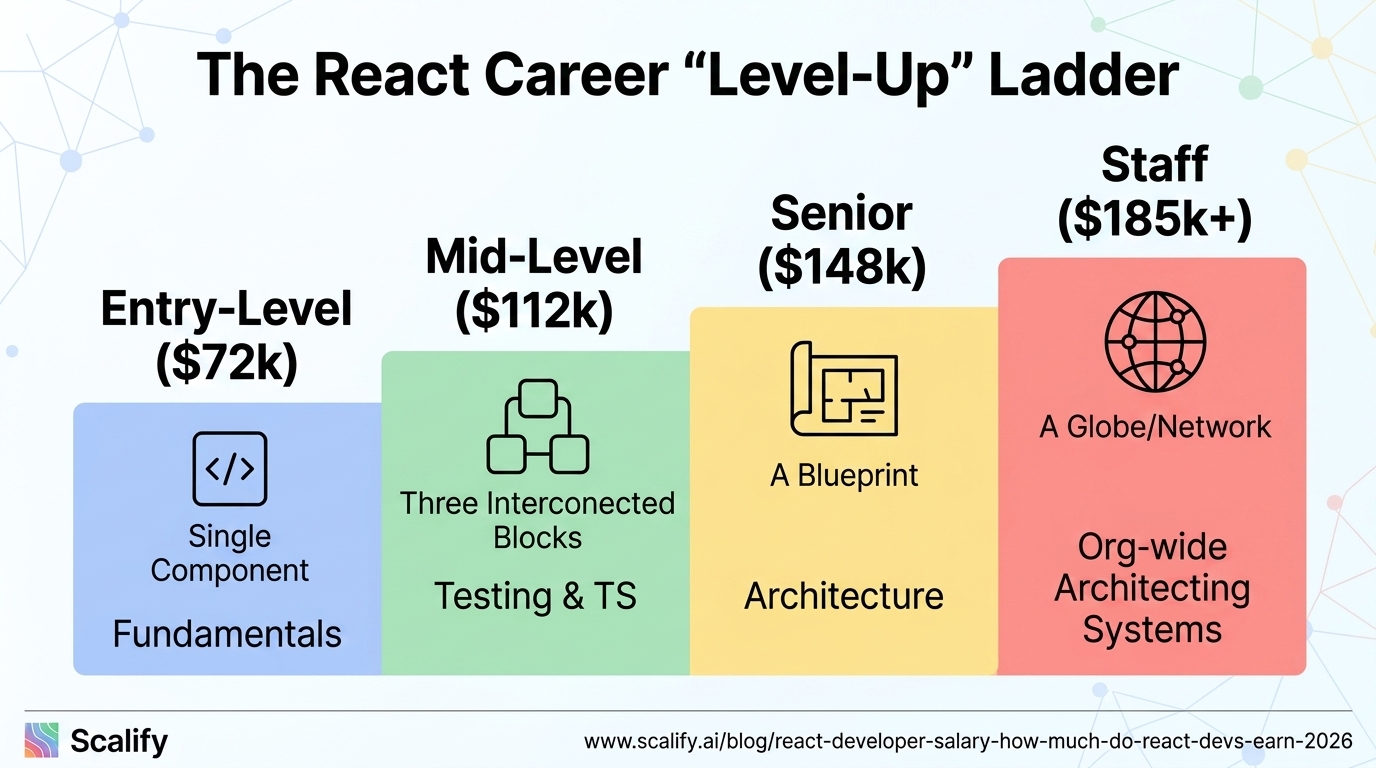
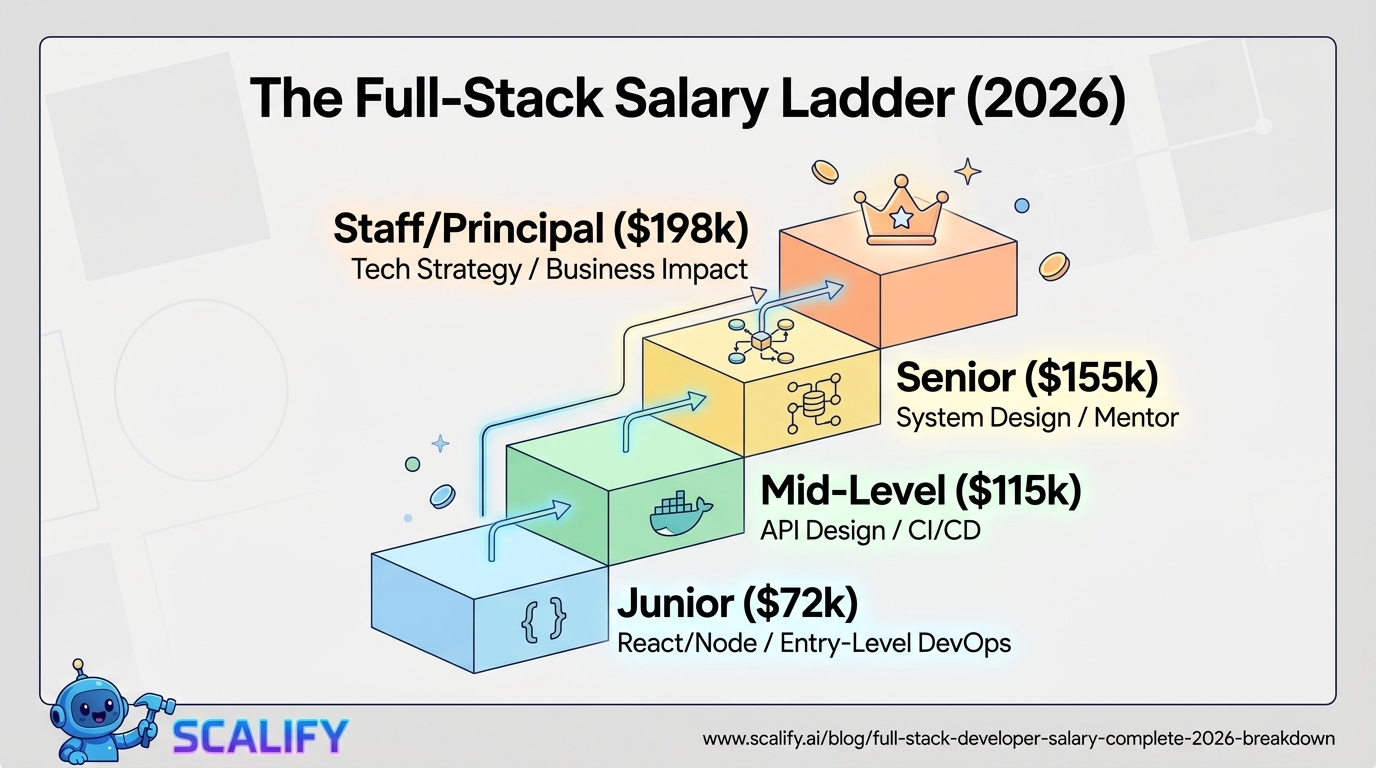
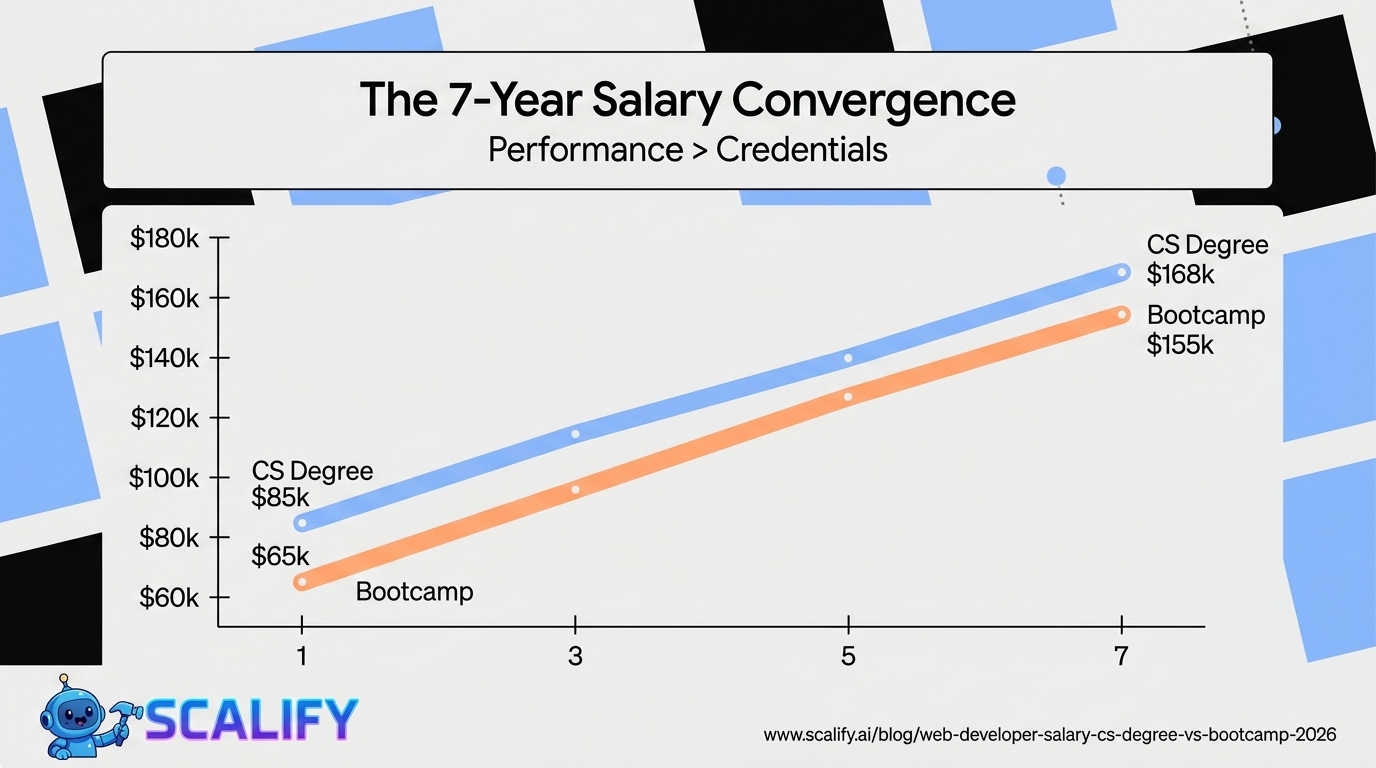
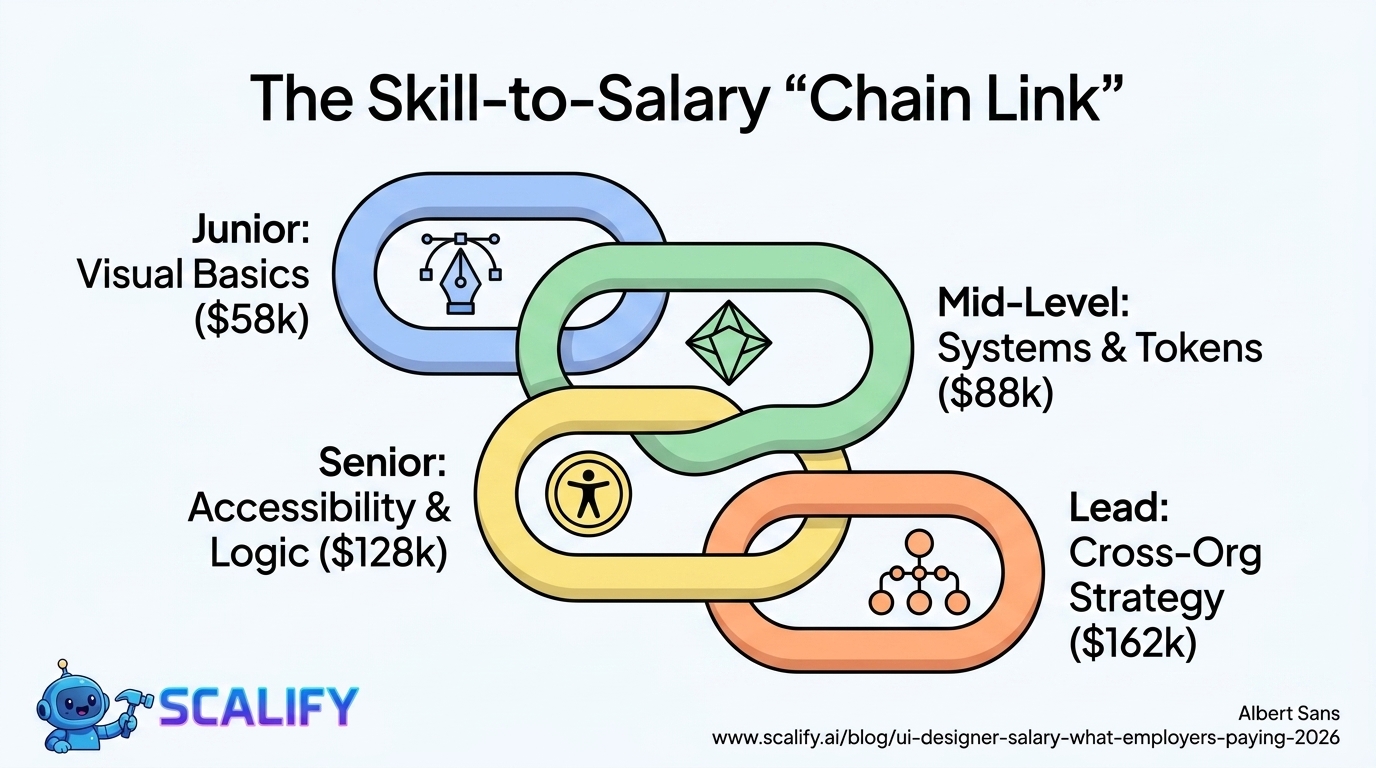
LevelYearsCore SkillsSalary RangeMedianEntry-Level0–2 yrsExpress.js, REST APIs, basic async/await, SQL/NoSQL basics$62,000 – $88,000$72,000Mid-Level2–5 yrsTypeScript, API design, authentication, Docker, testing, performance$88,000 – $132,000$108,000Senior5–9 yrsMicroservices, system design, event-driven architecture, observability$128,000 – $168,000$145,000Staff / Principal8+ yrsOrg-wide architecture, performance at scale, platform engineering$162,000 – $220,000$185,000
Node.js Framework and Stack Salary Comparison
Stack / FrameworkMid-Level MedianSenior MedianMarket DemandExpress.js + TypeScript$112,000$148,000Very High — most common Node stackNestJS (TypeScript framework)$115,000$152,000Growing — enterprise preferenceFastify$112,000$148,000Growing — performance-focusedNext.js (full-stack, SSR)$118,000$155,000High — most popular React meta-frameworkNode.js + GraphQL (Apollo)$115,000$152,000High — API-first companiesNode.js microservices (Kafka/RabbitMQ)$122,000$162,000High — enterprise systemsPure Express.js (JavaScript only)$98,000$132,000Stable — legacy and smaller teams
Why TypeScript Is Now a Node.js Salary Requirement
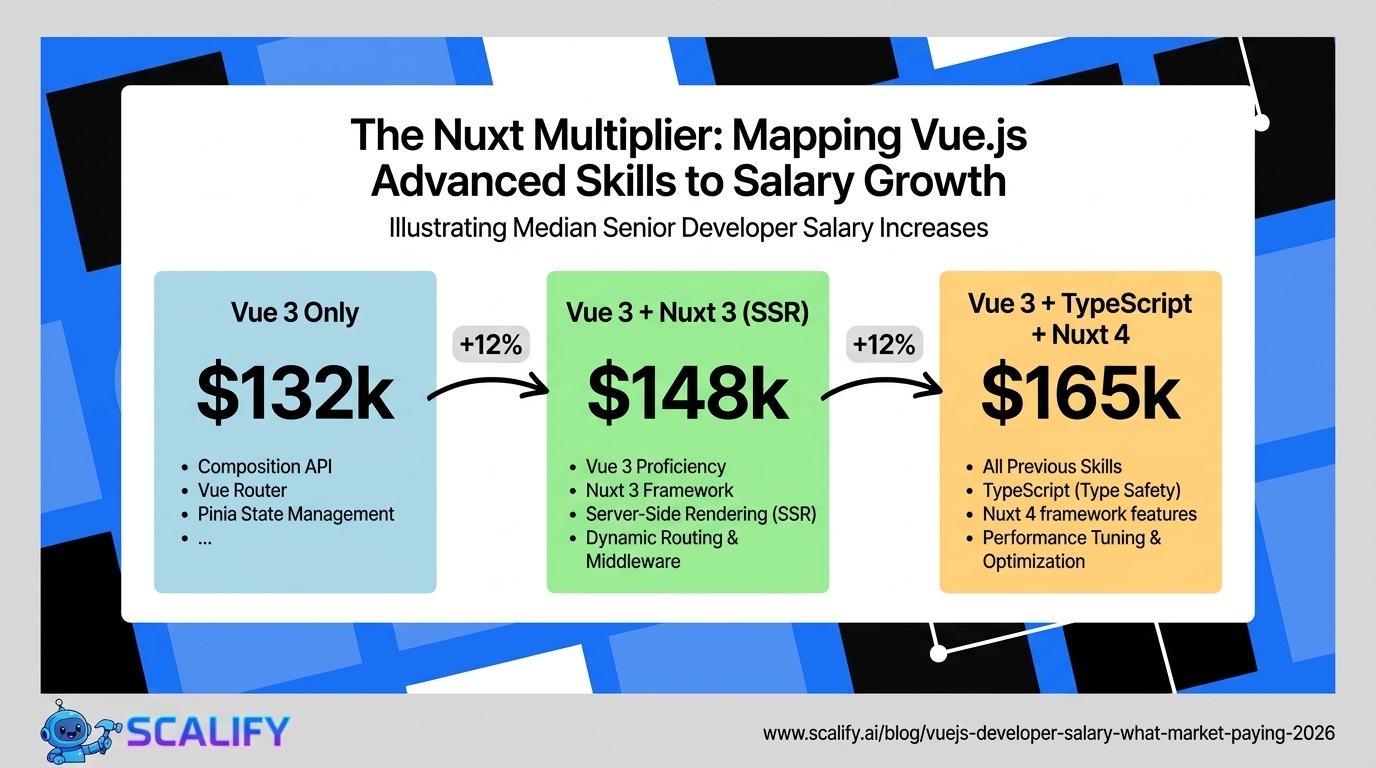
TypeScript has become so dominant in professional Node.js development that JavaScript-only Node.js expertise is increasingly viewed as a limitation rather than a neutral choice. The $10,000–$18,000 TypeScript premium isn't just a skills premium — it's a signal to employers about whether a developer is working in the way modern Node.js teams actually work. The majority of established Node.js codebases at mid-size and large companies are TypeScript-first in 2026, which means JavaScript-only Node.js developers are a poor fit for the largest share of available roles.

TypeScript's value in Node.js development is particularly significant because Node's dynamic, loosely-typed runtime is where type safety produces the most visible benefits. Production Node.js services that handle complex API contracts, database schemas, and inter-service communication benefit enormously from TypeScript's compile-time validation — reducing the runtime type errors that are notoriously difficult to debug in large JavaScript codebases. Senior engineers who can architect type-safe Node.js systems using TypeScript generics, discriminated unions, and proper module type definitions are solving real, costly production problems.
Node.js Developer Salary by Location
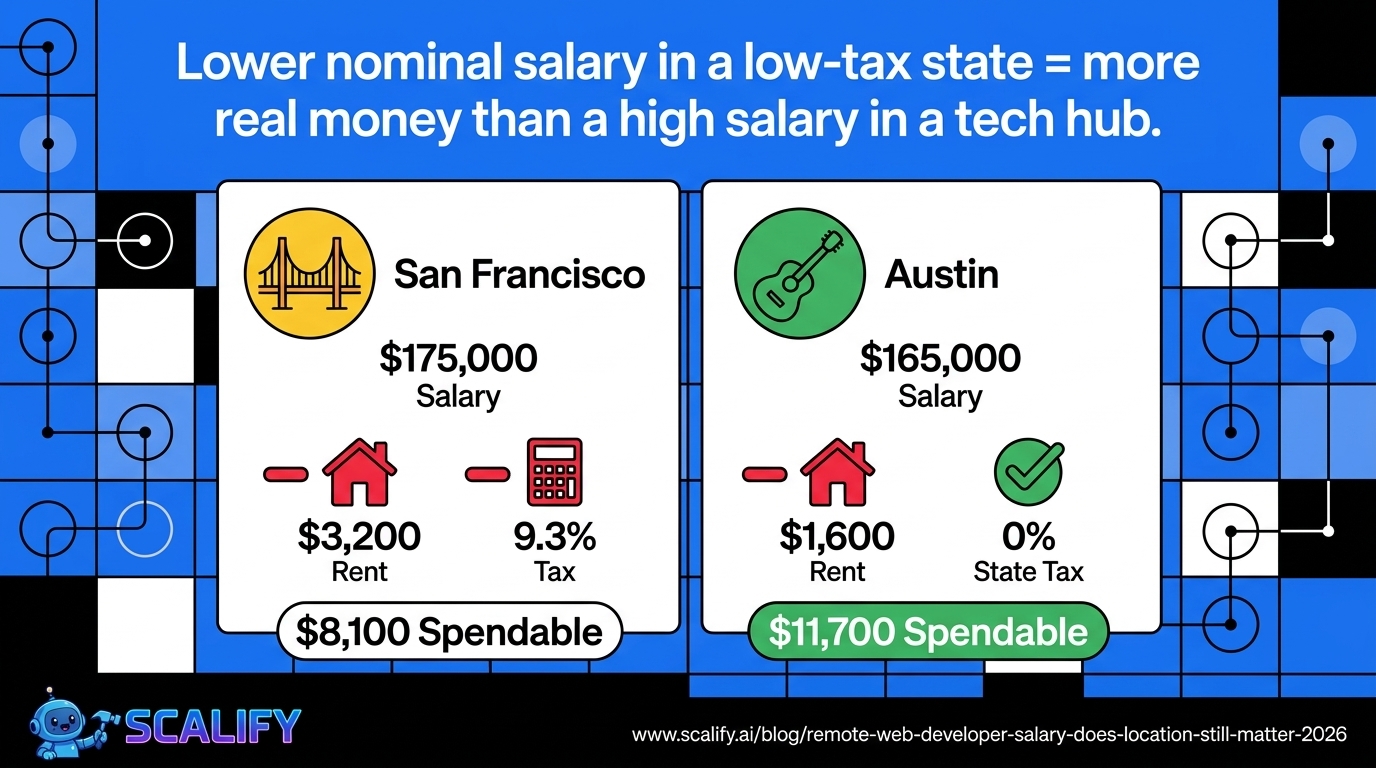
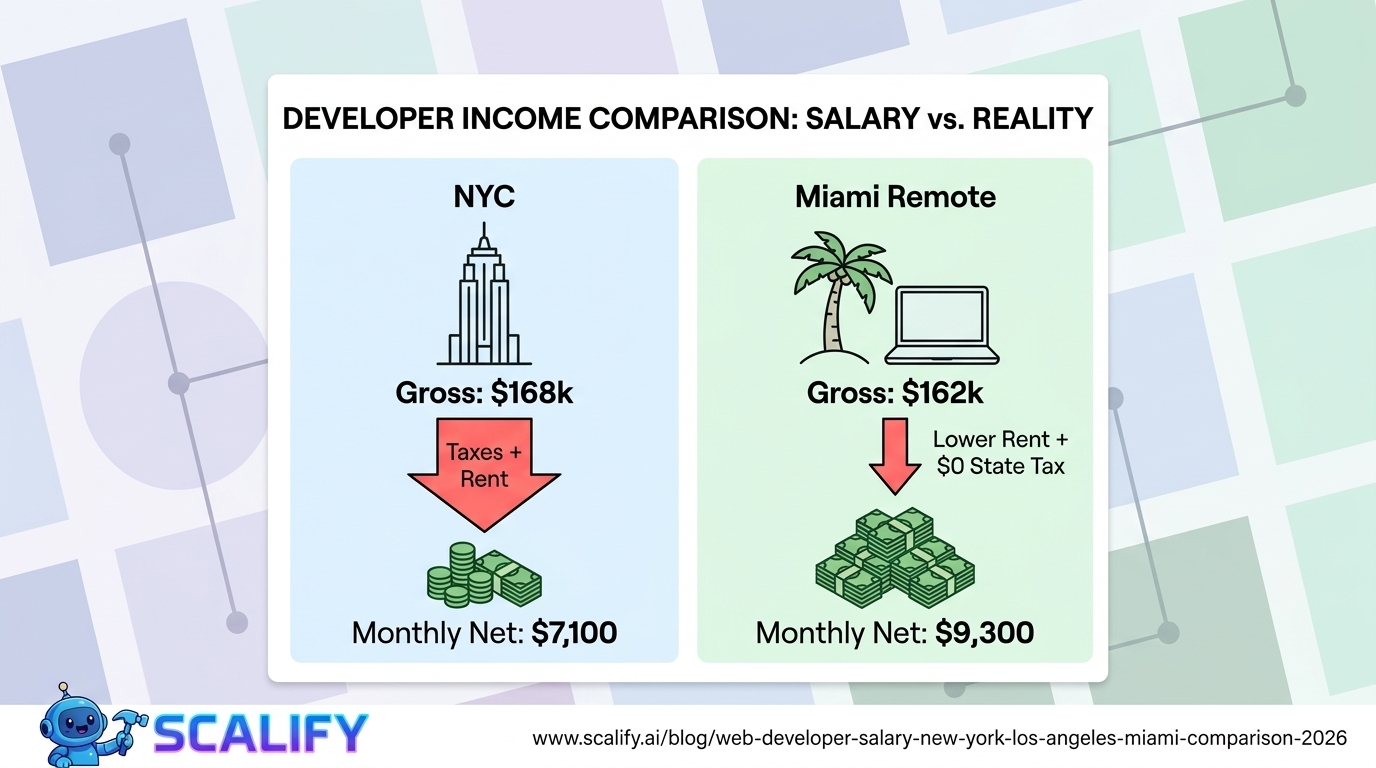
LocationMid-LevelSeniorNotesSan Francisco / Bay Area$128,000 – $158,000$165,000 – $215,000Highest nominal, very high COLNew York City$118,000 – $148,000$155,000 – $200,000Strong fintech marketSeattle$115,000 – $145,000$152,000 – $195,000Amazon/Microsoft ecosystem influenceAustin / Denver$98,000 – $128,000$132,000 – $168,000Excellent purchasing powerChicago / Atlanta$95,000 – $125,000$128,000 – $162,000Solid mid-marketMiami$88,000 – $118,000$118,000 – $155,000Growing tech marketRemote (US company)$102,000 – $132,000$138,000 – $175,000Near-parity with company HQ market
Node.js Developer Salary by Industry
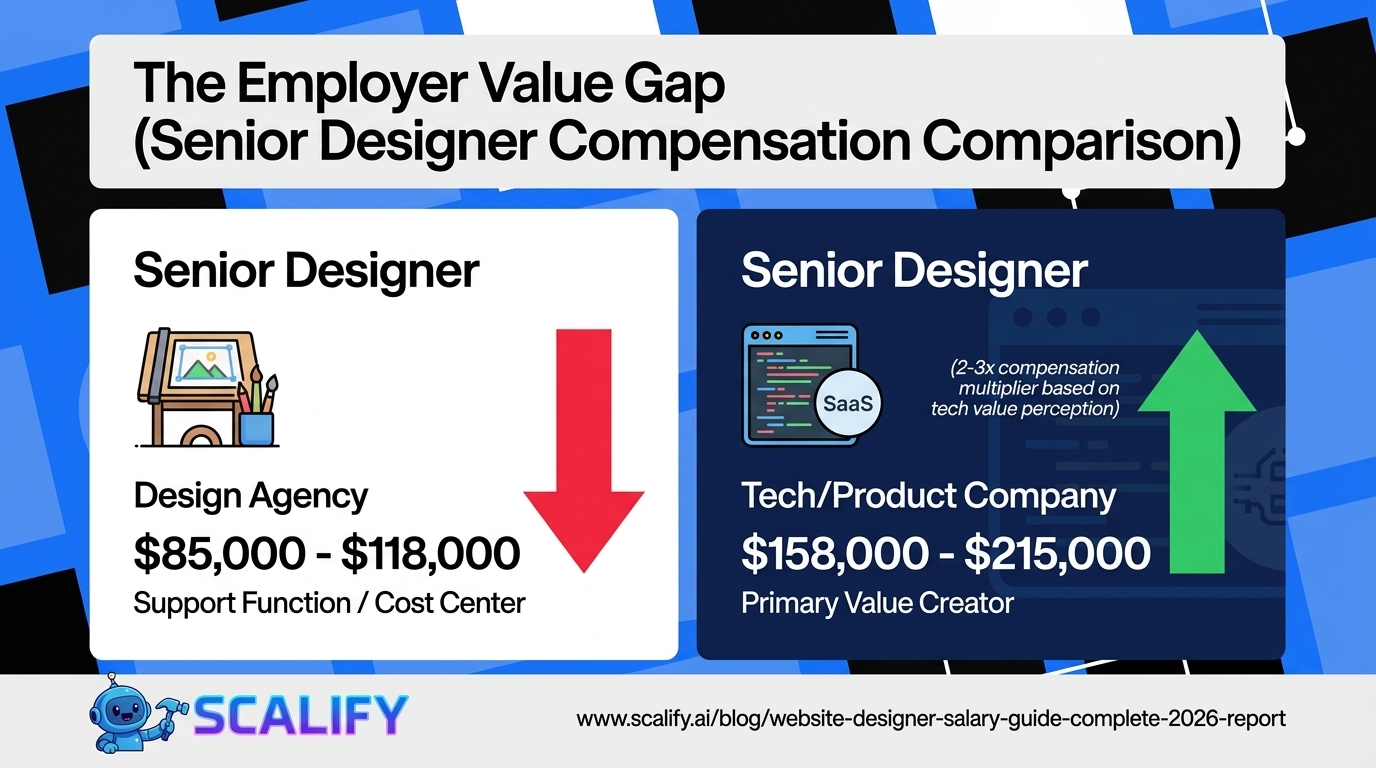
IndustryMid-Level MedianSenior MedianWhy Node.js Is Valued HereFintech / Financial Services$118,000$158,000High-throughput transaction APIs, real-time data feedsSaaS / Developer Tools$115,000$155,000API-first products, webhook systems, developer experienceE-Commerce / Retail Tech$108,000$148,000Product APIs, checkout services, inventory systemsMedia / Streaming$112,000$152,000Real-time, event-driven architecturesHealthcare Tech$105,000$142,000HIPAA-compliant APIs, data ingestionAgency / Consulting$88,000$122,000Broad client work across industries
Node.js at FAANG and Top-Tier Tech Companies
CompanyNode.js RoleMid-Level Total CompSenior Total CompNetflixNode.js powers much of the UI API layer$280,000 – $340,000$340,000 – $450,000LinkedInNode.js is a primary back-end language$240,000 – $300,000$310,000 – $420,000UberNode.js for API gateway and real-time services$220,000 – $280,000$295,000 – $400,000PayPalMigrated to Node.js for core services$185,000 – $245,000$255,000 – $350,000MetaNode.js in tooling and some services$240,000 – $310,000$330,000 – $460,000
Freelance Node.js Rates
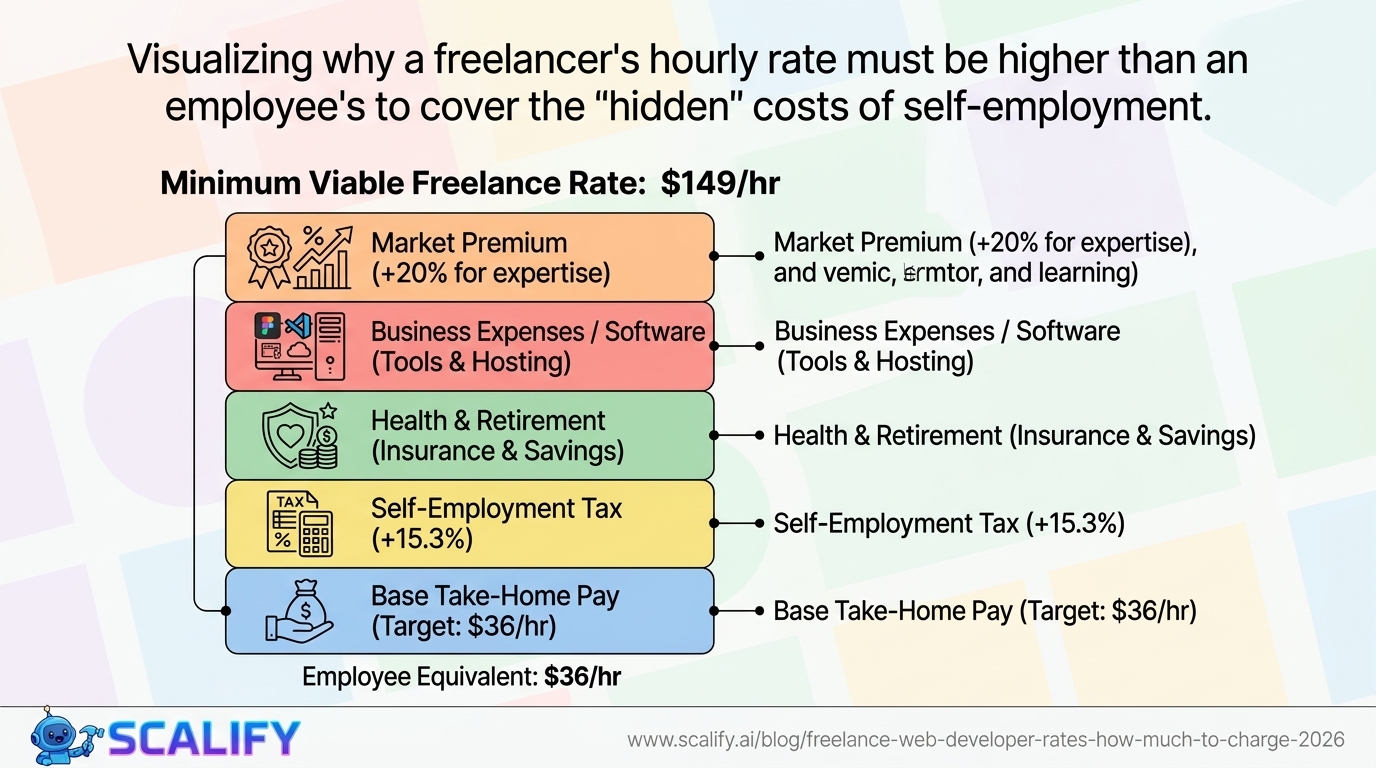
SpecializationHourly RateTypical ProjectGeneral Node.js API development$85 – $130/hrREST API builds, CMS backends, integration workNode.js + TypeScript specialist$100 – $150/hrType-safe API systems, enterprise back-endsNode.js microservices architect$125 – $190/hrService decomposition, event-driven system designReal-time systems (WebSockets, SSE)$115 – $175/hrChat systems, live dashboards, collaborative toolsNode.js + GraphQL$110 – $165/hrGraphQL API design, resolver optimization, federationNode.js performance optimization$130 – $200/hrProfiling, bottleneck removal, throughput improvement
The Skills That Command the Highest Node.js Premium
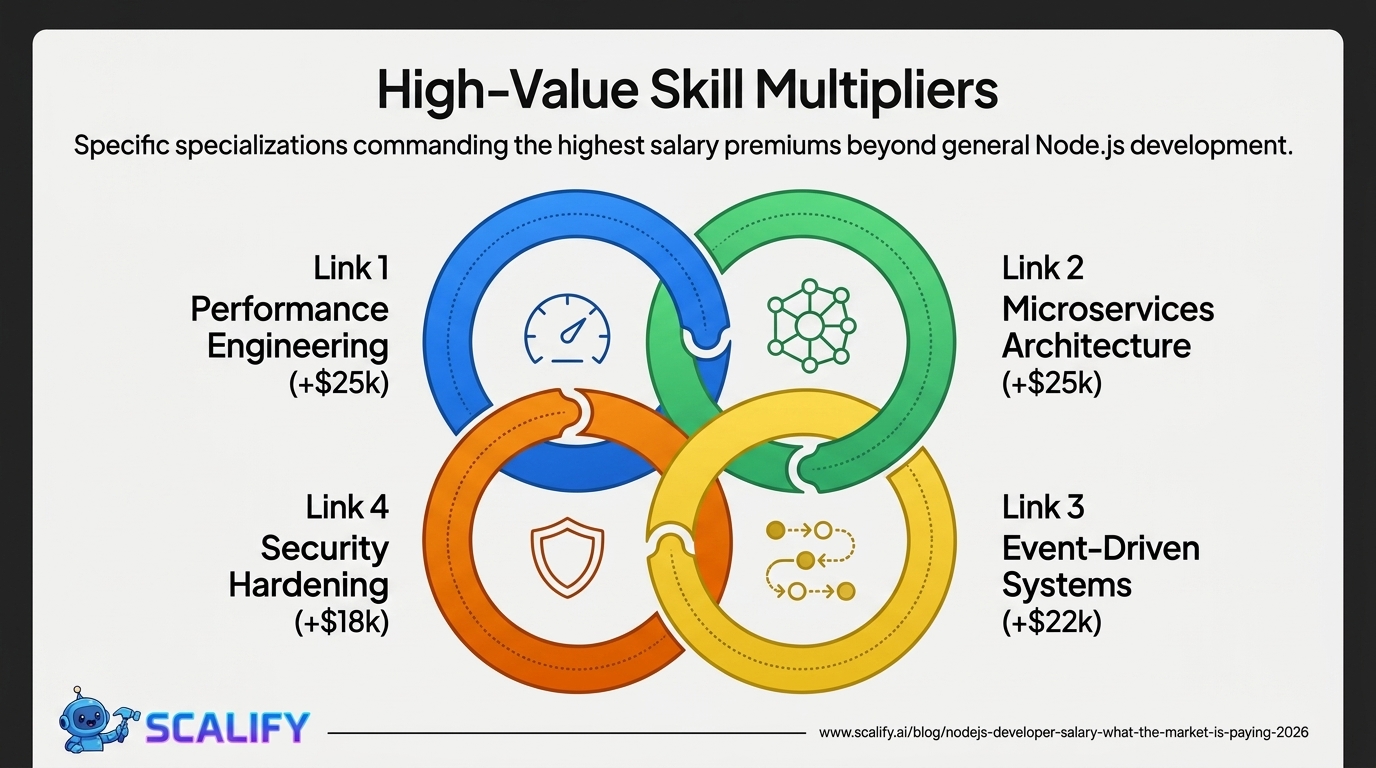
SkillSalary PremiumDemand TrendWhy It Commands a PremiumTypeScript (advanced)+$10,000 – $18,000Growing — becoming baseline expectationType safety at scale reduces production bugs significantlyMicroservices architecture+$15,000 – $25,000Stable — enterprise demandDecomposing monoliths requires systems design expertiseEvent-driven architecture (Kafka, RabbitMQ)+$12,000 – $22,000GrowingAsync messaging patterns handle high-throughput systemsNode.js performance engineering+$15,000 – $25,000High demandFinding and fixing Node bottlenecks requires deep runtime knowledgeGraphQL API design+$8,000 – $15,000Stable-growingSchema design, DataLoader optimization, federationReal-time systems (WebSockets)+$12,000 – $20,000GrowingConnection management at scale is genuinely hardSecurity hardening (Node-specific)+$10,000 – $18,000GrowingOWASP Node vulnerabilities, dependency auditing, secrets management
Node.js vs. Other Back-End Languages: The Salary Comparison
Language / RuntimeMid-Level MedianSenior MedianKey DifferentiatorGo (Golang)$125,000$170,000Best performance premium; cloud-native dominancePython (FastAPI/Django)$112,000$152,000AI/ML integration premium; data engineeringNode.js / TypeScript$108,000$145,000Largest talent pool; JavaScript everywhere; real-timeJava / Kotlin$115,000$155,000Enterprise stability; Spring ecosystemRuby (Rails)$105,000$142,000Developer productivity; startup heritagePHP (Laravel)$88,000$122,000Largest legacy codebase share; WordPress
Node.js sits in the middle of back-end salary ranges — above PHP and Ruby, below Go and Python's AI-boosted premium. However, Node's advantage is volume: with 36.5% of developers using it professionally, the job market for Node.js developers is larger than for any other back-end technology. This means more opportunities, more companies building in Node, and consistent demand that doesn't depend on a single company or industry sector's health. For developers who value employment security alongside compensation, Node's market breadth is a meaningful factor.
How to Increase Your Node.js Developer Salary
Master TypeScript and never look back. If you're still writing Node.js applications in plain JavaScript, the $10,000–$18,000 TypeScript premium is directly accessible through a focused 2–3 month investment in learning TypeScript and refactoring existing projects. At mid-level, this is the single fastest salary improvement available within the Node.js ecosystem — it's the difference between being competitive for 60% of Node.js roles and being competitive for 95% of them.
Build demonstrated expertise in one high-value area. Real-time systems, microservices architecture, performance engineering, and event-driven architecture each command $12,000–$25,000 premiums over general Node.js development. Picking one specialization and building genuine depth — through production projects, open source contributions, or technical writing — creates the kind of portfolio evidence that justifies premium compensation in interview contexts.
Develop cloud architecture knowledge. Node.js APIs don't run in a vacuum — they run on AWS Lambda, GCP Cloud Run, or containerized Kubernetes deployments. Senior Node.js engineers who understand how their code actually runs in production — auto-scaling behavior, cold start optimization for serverless, connection pooling for containerized deployments, distributed tracing for microservices — are solving problems that junior and mid-level engineers hand off to DevOps. This infrastructure awareness consistently commands senior-level compensation.
Specialize in a high-value industry. Fintech Node.js developers earn 12–20% more than agency Node.js developers. The knowledge premium — understanding financial transaction patterns, compliance requirements, high-availability expectations, and domain-specific data models — justifies the compensation difference. Moving your Node.js expertise into a higher-value industry vertical is one of the most reliable paths to above-market compensation without changing your core technology stack.
The Node.js Salary Outlook Through 2030
Node.js's position as the most widely used back-end technology creates structural salary stability through 2030. The risk of major salary compression is low because Node.js adoption is too widespread to deprecate quickly — millions of production systems run on Node, and the expertise to maintain and evolve them will be demanded for years regardless of what new technologies emerge. The upside for Node.js specialists is in the continued complexity growth of Node applications: as TypeScript adoption matures, as event-driven and microservices architectures spread, and as real-time features become standard in web applications, the ceiling for senior Node.js compensation continues to rise.
The Bottom Line
Node.js developers earn $72,000 to $220,000+ in 2026, with TypeScript expertise, microservices architecture, and real-time systems specialization commanding the strongest premiums. Node's dominance as the most widely used back-end technology creates consistent, broad-market demand that makes it one of the most secure technology investments available. The developers earning the most in the Node.js ecosystem are those who combine TypeScript proficiency with genuine system design capability and specialized expertise in one high-value domain — whether that's real-time systems, event-driven architecture, or performance engineering at scale.
At Scalify, we build professional websites for technology companies, startups, and developer tools in 10 business days — representing your engineering team's expertise with the digital presence it deserves.
Top 5 Sources
Node.js Developer Career Path: From Junior to Principal
The Node.js developer career path has well-defined stages with clear skill expectations at each level. Understanding what separates each level — beyond just years of experience — helps developers accelerate their progression and compensation growth.
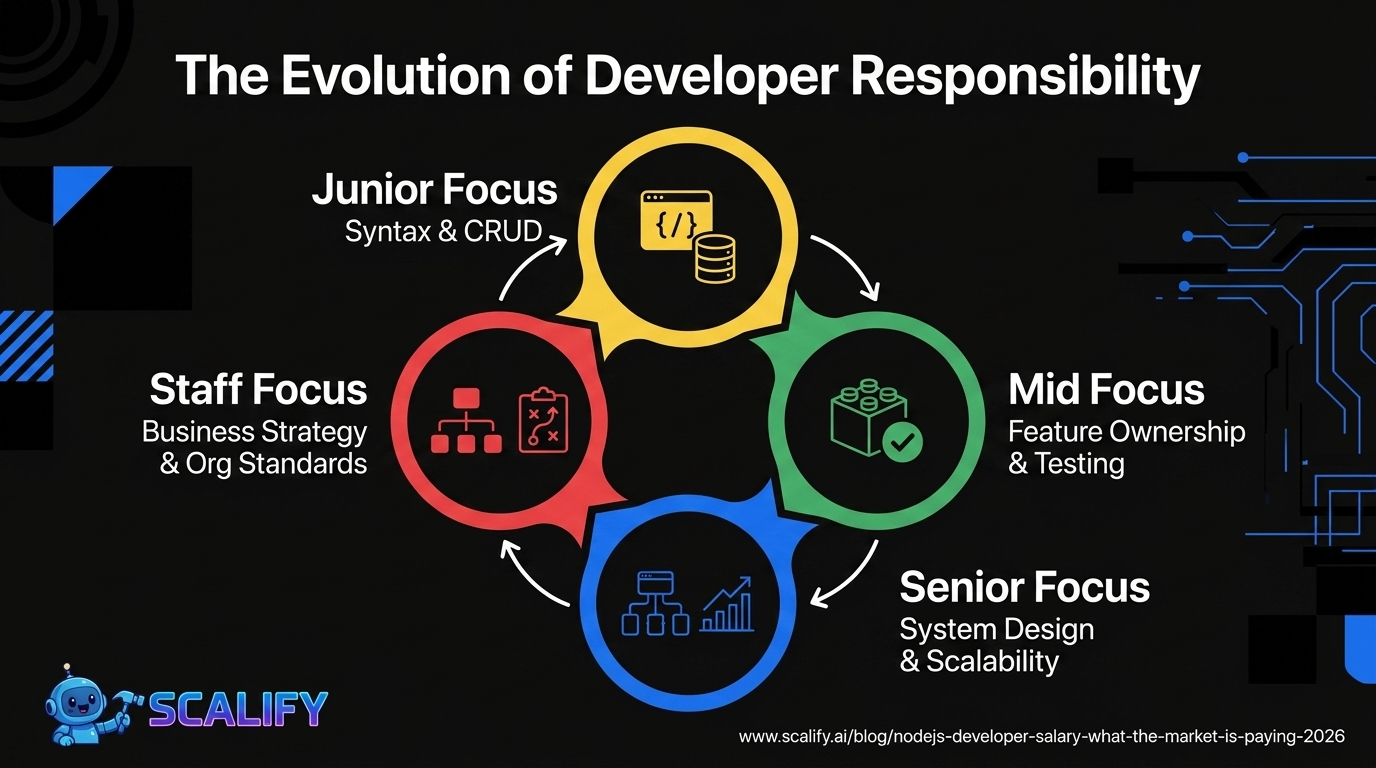
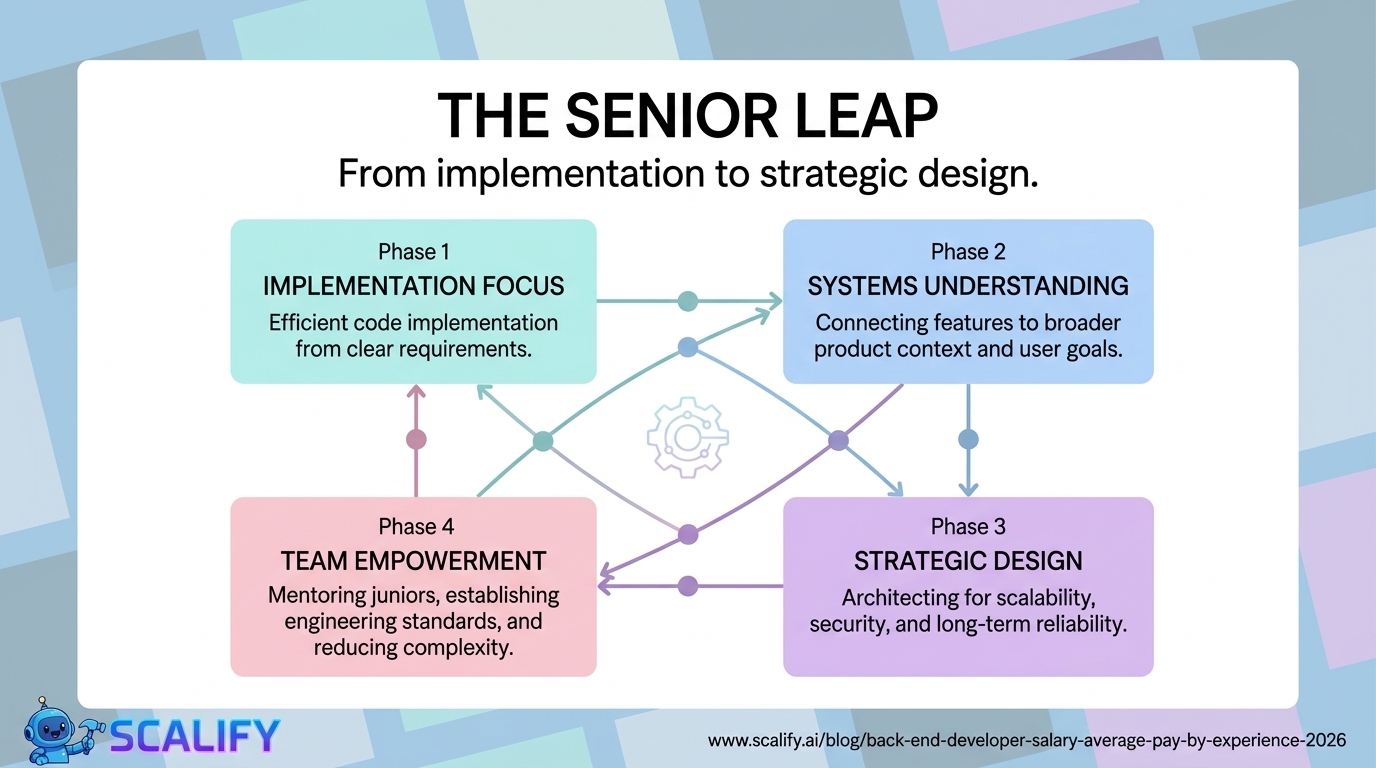
Junior Node.js Developer (0–2 years): Can build basic Express routes, connect to a database, write simple async/await code, and ship features with guidance. The primary gap at this level is not knowledge of Node.js syntax — it's production thinking. Junior developers don't yet have the instincts to ask "what happens when this API receives 1,000 concurrent requests" or "what happens to my database connections when this service restarts." Developing production awareness — through reading incident reports, studying monitoring dashboards, and deliberately working on reliability concerns — is the fastest path to mid-level progression.
Mid-Level Node.js Developer (2–5 years): Owns features end-to-end. Can design a database schema, build a complete REST or GraphQL API, implement authentication, write comprehensive tests, configure Docker deployment, and handle code review. The gap to senior is system design: the ability to make architectural decisions — choosing between REST and GraphQL, designing for horizontal scaling, selecting between SQL and NoSQL for specific requirements — and justify those decisions with clear technical reasoning.
Senior Node.js Developer (5–9 years): Can design systems, not just features. Understands performance characteristics of the Node.js event loop under load, can diagnose memory leaks and CPU bottlenecks, designs for failure (circuit breakers, retry logic, graceful degradation), and has opinions about microservices vs. monolith tradeoffs grounded in production experience. Senior engineers also begin influencing beyond their immediate work — improving team processes, reviewing junior engineers' architectural decisions, and contributing to technology choices that will affect the codebase for years.
Staff / Principal Node.js Engineer (8+ years): Works at the intersection of technology and business strategy. Identifies the technical investments that will most impact the company's ability to ship product, reduce operational costs, or scale to new markets. Communicates technical tradeoffs to non-technical stakeholders. Defines the engineering standards that the entire organization follows. This level is rare, well-compensated, and requires both technical mastery and the organizational skills to create change across teams and reporting structures.
Building a Portfolio That Gets Node.js Jobs
For Node.js developers — particularly those early in their careers or transitioning from other technologies — a strong portfolio of deployed projects is more influential than any certification or course completion. The projects that impress Node.js engineering interviewers share specific characteristics that go beyond functional completeness.
The most compelling portfolio projects for Node.js roles demonstrate: proper API design conventions (RESTful naming, HTTP status codes, pagination, versioning), TypeScript throughout rather than plain JavaScript, database schema design that reflects understanding of normalization and query optimization, authentication and authorization implementation (JWT, OAuth, role-based access), error handling that distinguishes between client errors (4xx) and server errors (5xx) and produces useful error messages, and deployment configuration showing the project actually runs in a real environment rather than just locally.
Projects that particularly stand out for senior-level roles: a real-time feature using WebSockets with reconnection logic and room management, an event-driven architecture using a message queue like RabbitMQ or Redis Streams, a GraphQL API with DataLoader for N+1 query prevention, or a custom middleware layer that handles rate limiting, authentication, and request logging in a reusable, well-tested way. These projects demonstrate the kind of Node.js depth that separates senior engineers from mid-level developers in the market.

















.jpeg)


.jpeg)














78 SW 7th St, Miami, FL 33130