

Mobile Web Developer Salary vs Desktop Developer: 2026 Comparison
By Josh Ternyak

April 20, 2026
Mobile web development and desktop web development have converged — but salary differences still exist. This deep guide breaks down exactly what mobile-first developers, PWA specialists, and cross-platform web engineers earn in 2026 vs their desktop-focused peers.
The Mobile vs Desktop Question Has Evolved — But Still Matters
In 2026, the old binary distinction between "mobile web developer" and "desktop web developer" is largely obsolete as a job category — but it remains meaningful as a skill depth dimension. Almost all professional web development today requires building for both surfaces, with responsive design and mobile-first methodology being standard practice rather than specialization. But developers who go genuinely deep into mobile web performance, Progressive Web App architecture, or the intersection of web and native mobile command specific premiums that general responsive-capable developers don't.
Understanding where the real salary differences lie — and what skills specifically drive them — is the purpose of this guide. We'll cover salary data across every relevant specialization, explain the market demand that drives those rates, and give you a clear picture of how mobile and desktop web expertise translates to compensation in the current market.
Mobile Web Traffic: Why It Matters for Developer Careers
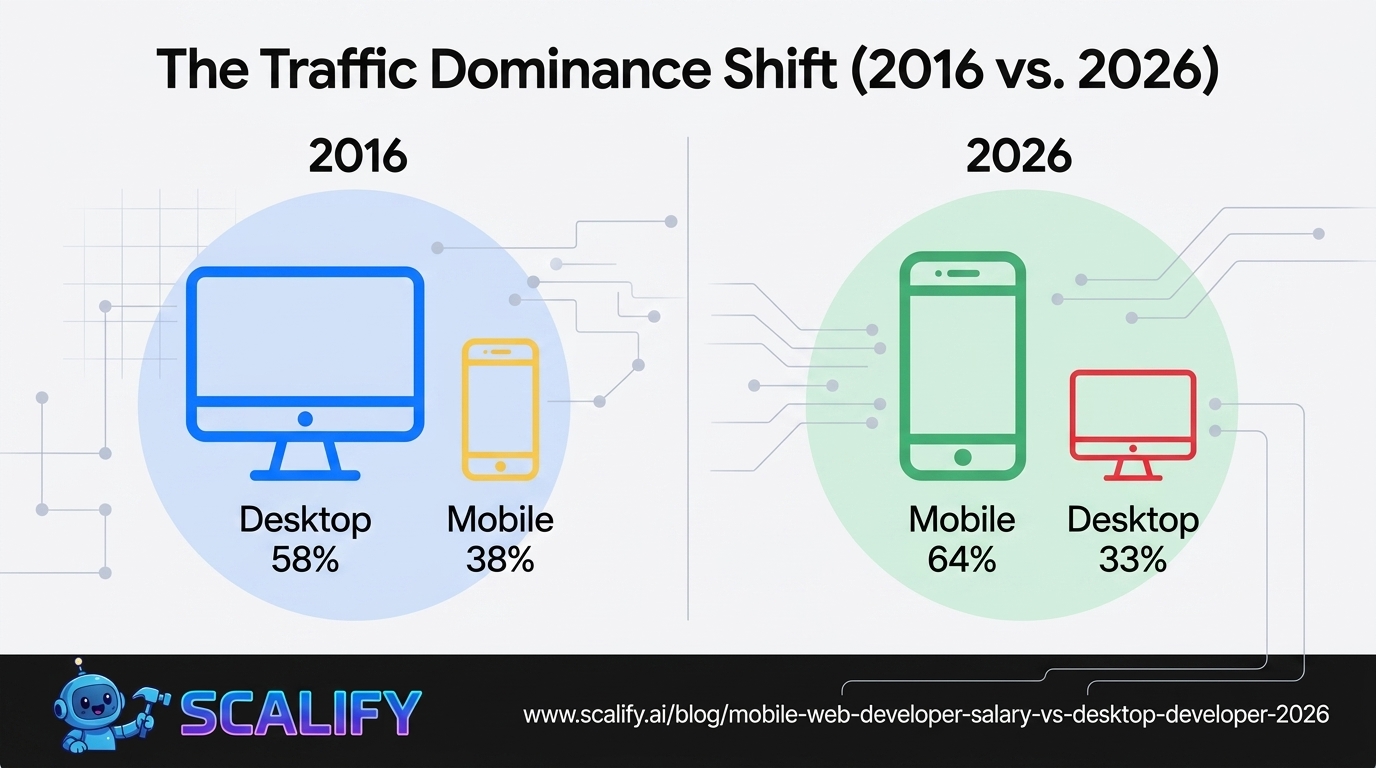
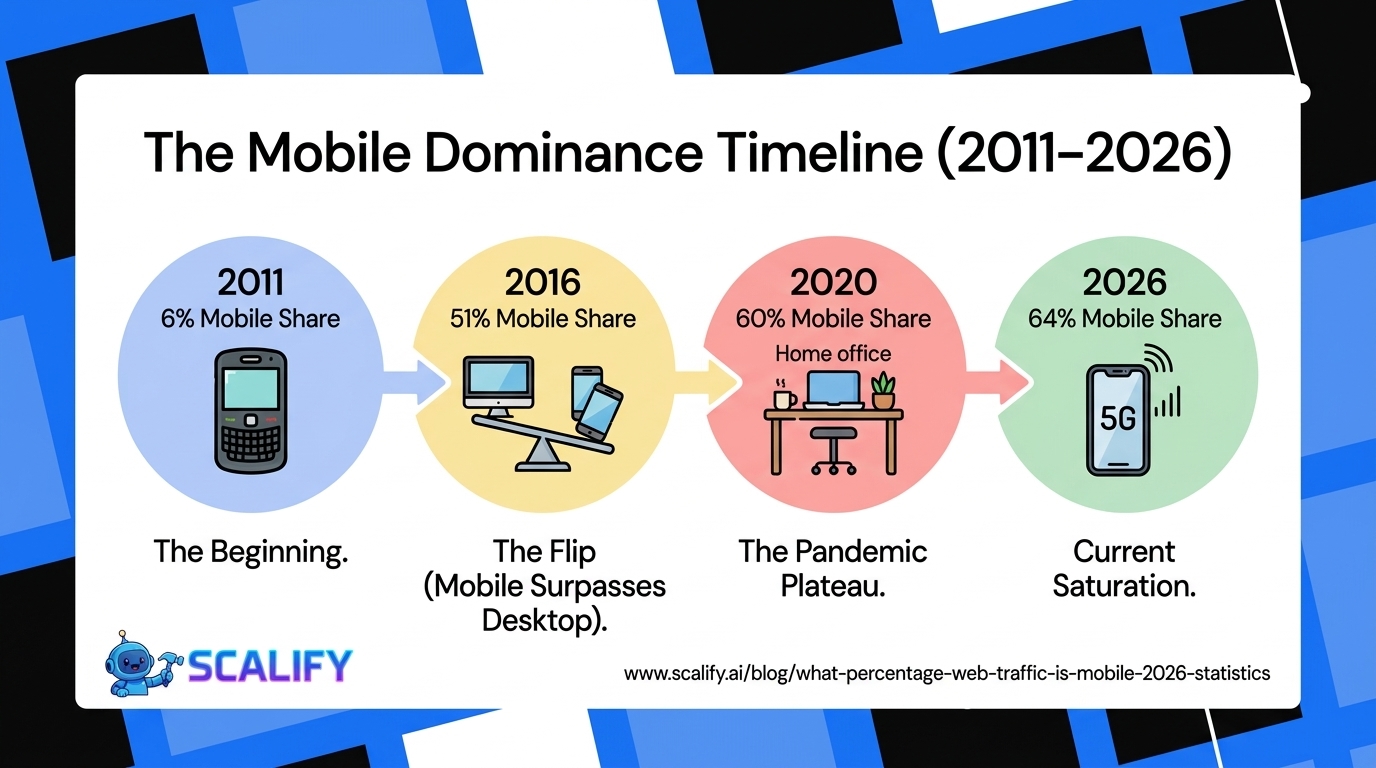
Before getting into salary numbers, it's worth grounding this discussion in the traffic reality that shapes developer demand and therefore compensation. Mobile's dominance of web traffic is one of the most significant trends in the history of the web, and it has fundamentally reshaped which developer skills employers value.
YearMobile Web Traffic ShareDesktop Web Traffic ShareTablet201638%58%4%201852%44%4%202055%41%4%202259%37%4%202462%35%3%2026 (est.)64%33%3%
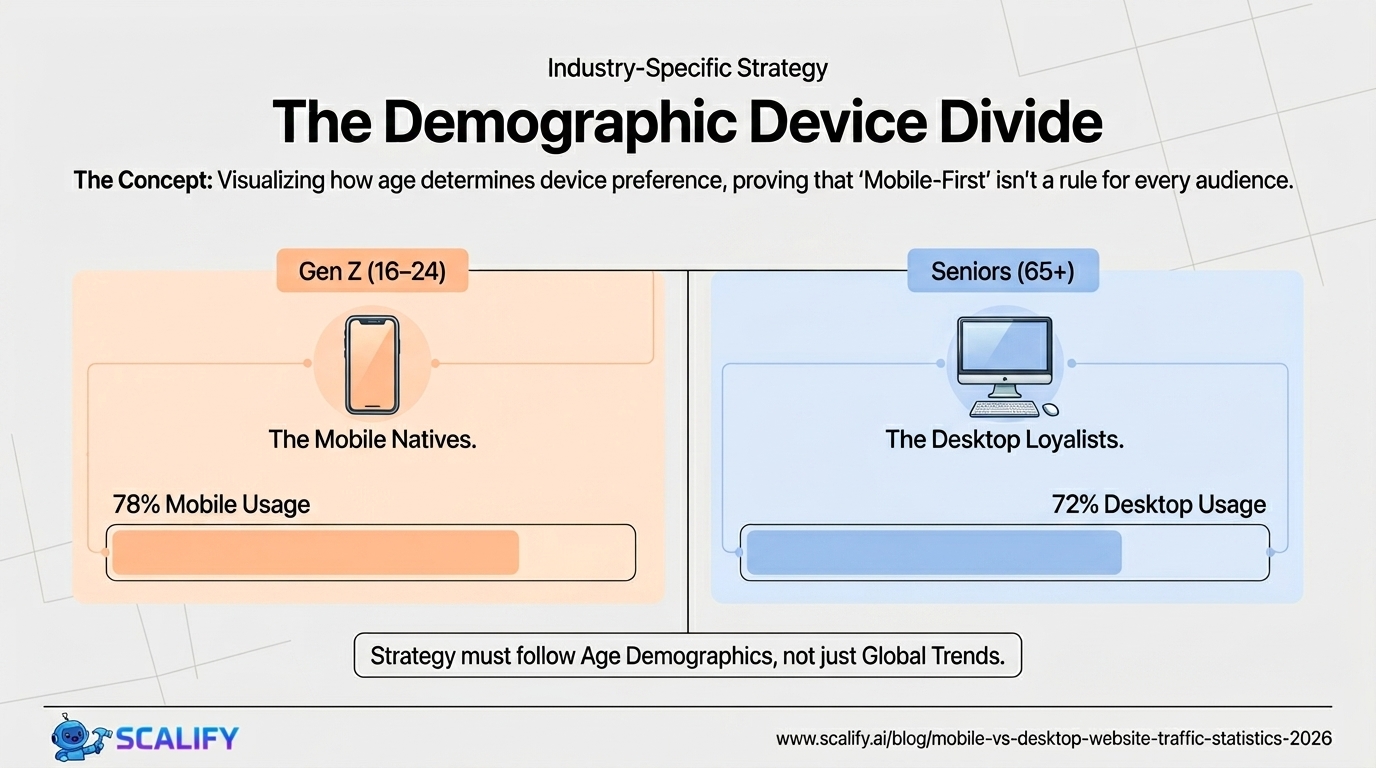
When over 60% of web traffic comes from mobile devices, and when Google uses mobile-first indexing as the primary ranking signal, the ability to build excellent mobile web experiences is not optional expertise for serious web developers — it's baseline competence. The salary premium story isn't about mobile vs. desktop as competing specializations. It's about the depth to which you've mastered mobile-specific challenges: touch UX, viewport management, mobile performance budgets, offline capability, and the web-to-native bridge.
Salary Overview: Mobile-Focused vs Desktop-Focused Web Developers
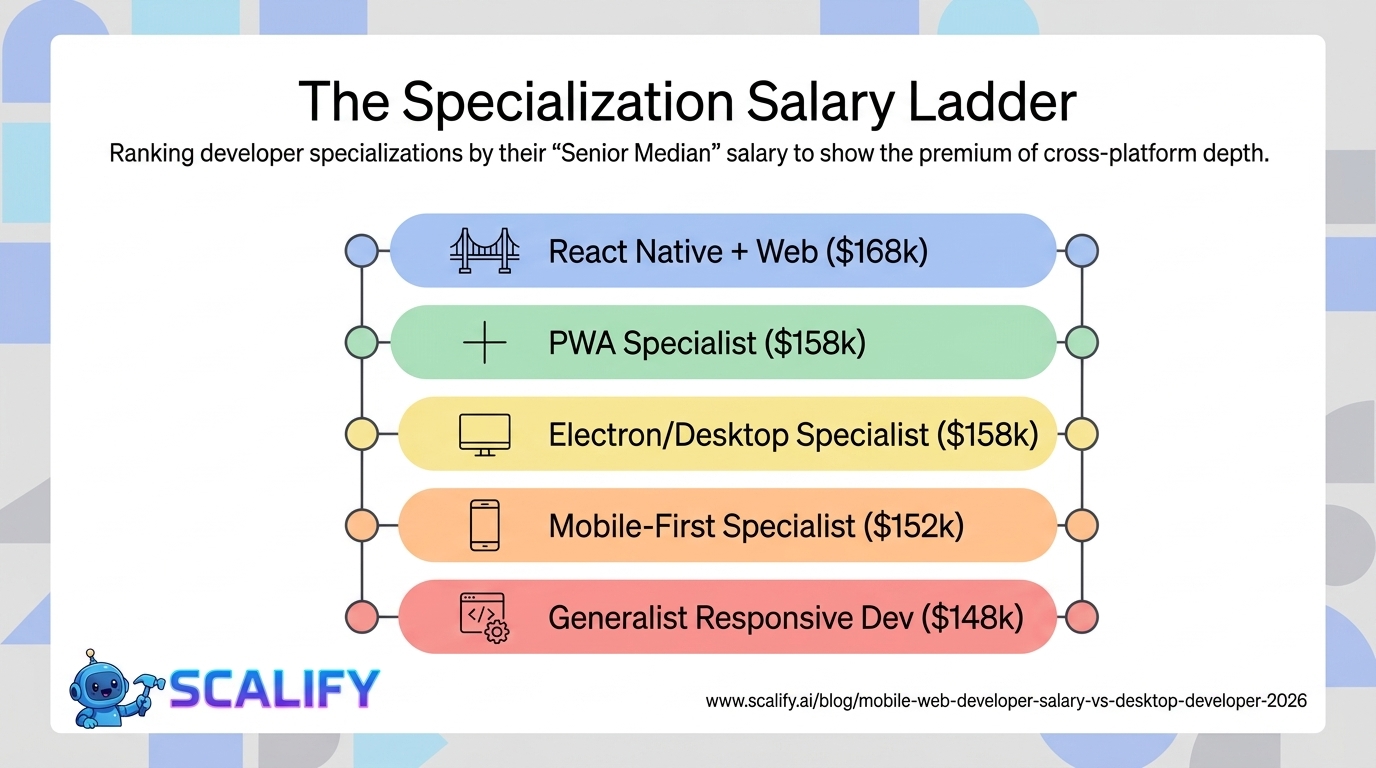
SpecializationJunior RangeMid-Level RangeSenior RangeSenior MedianResponsive Web Developer (generalist)$58,000 – $85,000$88,000 – $128,000$125,000 – $172,000$148,000Mobile-First Web Specialist$62,000 – $88,000$92,000 – $132,000$128,000 – $178,000$152,000Progressive Web App (PWA) Specialist$68,000 – $95,000$98,000 – $140,000$135,000 – $185,000$158,000React Native + Web Developer$75,000 – $105,000$108,000 – $152,000$148,000 – $200,000$168,000Electron / Desktop Web App Developer$70,000 – $98,000$100,000 – $142,000$138,000 – $185,000$158,000Capacitor / Ionic Developer$65,000 – $90,000$92,000 – $132,000$128,000 – $175,000$150,000
The pattern is clear: the deeper you go into mobile-specific or cross-platform-specific expertise, the higher the salary ceiling. The React Native + Web developer profile — someone who can build both the web experience and the native mobile wrapper using React Native — commands the highest premium in this category, with senior developers earning $148,000–$200,000. Pure desktop-focused web developers (Electron, desktop-optimized applications) sit in a competitive middle tier.
What Mobile Web Specialization Actually Means in 2026
When a company posts a job for a "mobile web developer" or prioritizes mobile web expertise, they're typically looking for one or more of the following specific skill sets:
Mobile Performance Engineering
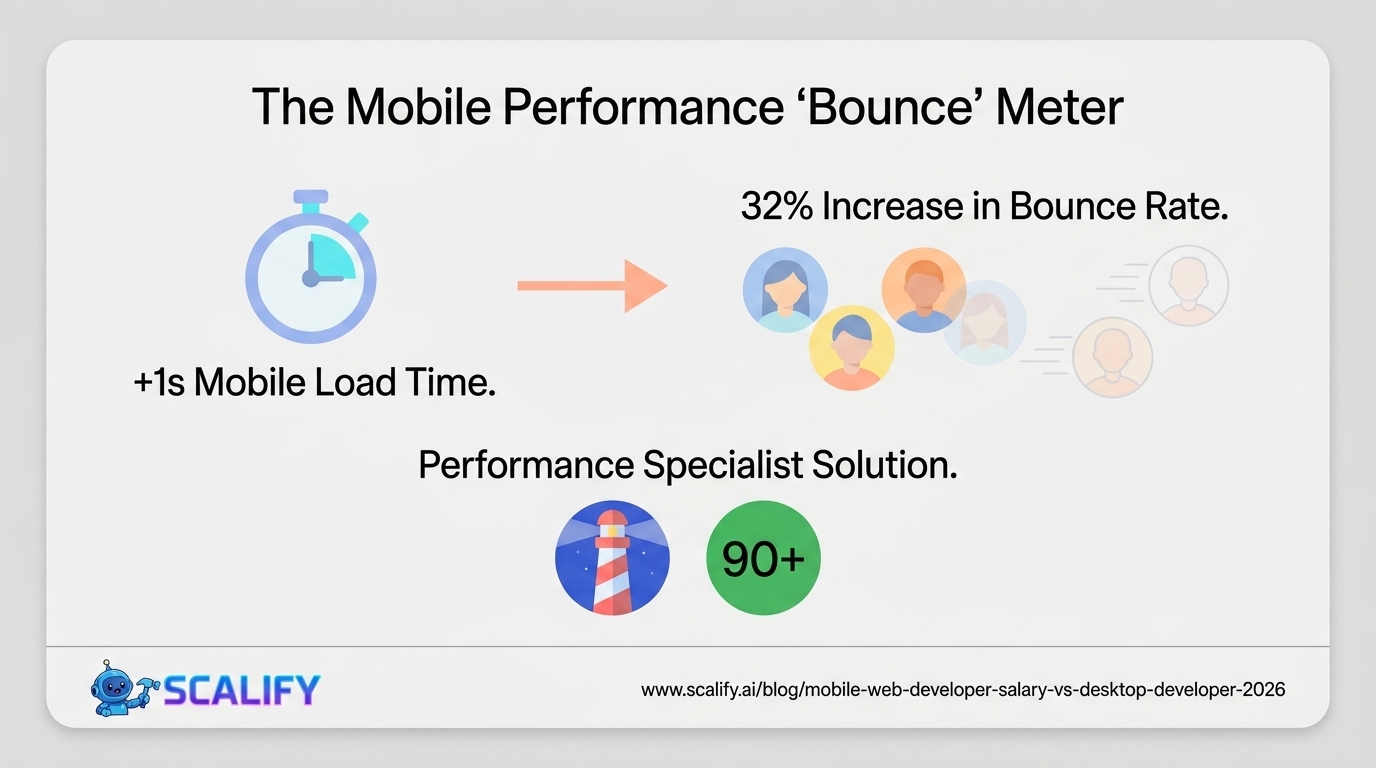
The most commercially valuable mobile web specialization. Mobile devices have slower CPUs, more limited memory, variable network connections, and thermal throttling constraints that desktop doesn't face. A developer who can build and optimize web experiences that score 90+ on Lighthouse Mobile — not just Desktop — is solving a problem with direct business impact. Studies consistently show that each additional second of mobile load time increases bounce rate by 32% and reduces conversion rate significantly.
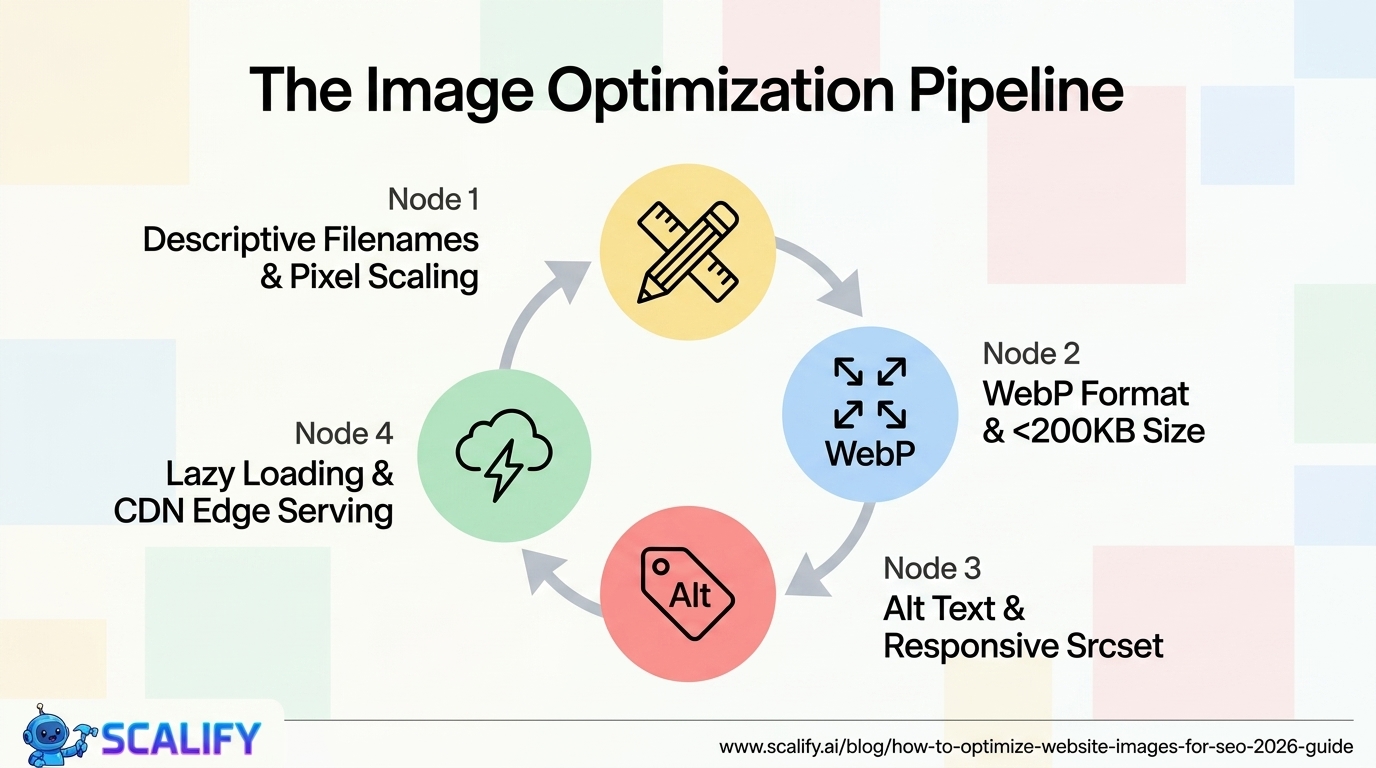
Mobile performance engineers understand: mobile-specific CPU throttling behavior, how to test on real devices vs. emulated throttling, mobile render path optimization, efficient use of image formats (WebP, AVIF) with proper srcset and sizes attributes, layout shift minimization on small viewports, and how to profile performance on low-end Android devices that represent a large portion of global mobile traffic.
Senior mobile performance engineers earn $145,000–$185,000 — the performance premium applied specifically to mobile optimization contexts.
Progressive Web App (PWA) Architecture
PWAs combine the reach of the web with capabilities previously only available to native apps: offline functionality (service workers), background sync, push notifications, app installability (Web App Manifest), and home screen presence. Building production-quality PWAs requires deep understanding of the Service Worker API, caching strategies (Cache First, Network First, Stale While Revalidate), and the complex edge cases around update cycles and cache invalidation.
PWA specialists command a premium because this skill is genuinely complex — service worker debugging is notoriously difficult, caching strategies require careful design, and the behavior differences across iOS Safari, Chrome for Android, and desktop browsers create real implementation challenges. Companies like Twitter (now X), Starbucks, Pinterest, and Uber have invested significantly in their PWAs because the reach advantage over native apps in markets with high mobile usage is substantial.
Senior PWA specialists earn $135,000–$185,000, with the premium reflecting the scarcity of developers who can build PWAs that are genuinely production-ready rather than technically-qualifying-but-poorly-implemented.
Touch Interaction and Mobile UX Engineering
Building touch interfaces that feel as responsive and natural as native apps requires specific expertise: touch event handling (touchstart, touchmove, touchend vs. pointer events), swipe gesture implementation, scroll performance (passive event listeners, overscroll-behavior), safe area handling on notched devices, virtual keyboard management, and building components that work intuitively with one thumb on a 390px screen.
This skill set sits at the intersection of front-end engineering and mobile UX, and developers who genuinely have it — who can make a complex web application feel genuinely native on a phone — earn a premium over developers who treat mobile as a second consideration after desktop.
Web + Native Bridge: React Native and Capacitor
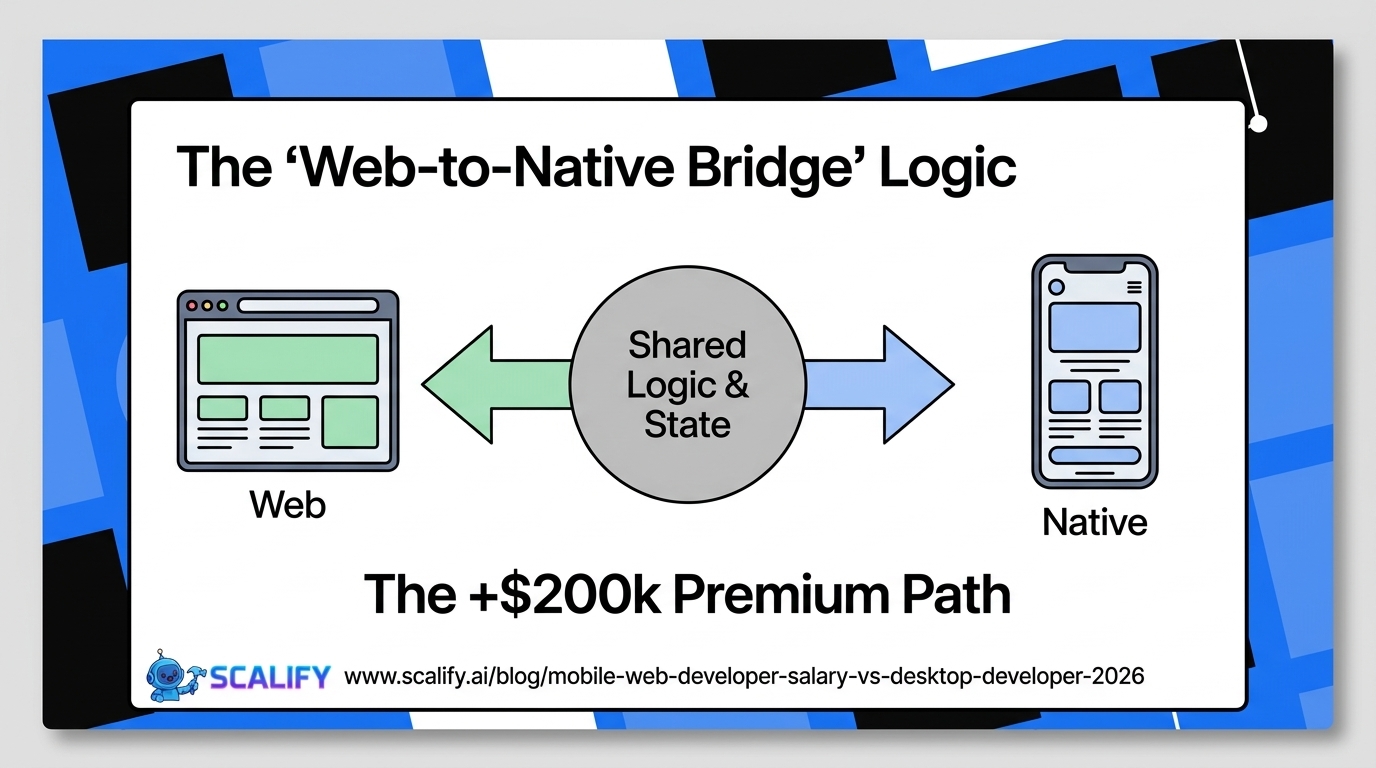
The highest-premium specialization in this category. React Native developers who also have strong web development skills (React, Next.js, TypeScript) can build both the web experience and the native app from a shared codebase, dramatically increasing their value to companies that need both. This is increasingly a common architecture at startups and mid-size companies that want both a web product and a mobile app without maintaining two completely separate codebases.
A senior developer who can build a React web application and the corresponding React Native iOS/Android app — sharing business logic, API integration, and state management between them — commands $148,000–$200,000 because they're effectively doing the work of two specialists. Expo (the React Native development platform) has simplified React Native development considerably, making this a more accessible skill combination in 2026 than it was 2–3 years ago.
Desktop Web Development: Electron and Desktop-First Applications
On the other side of the mobile/desktop divide, desktop-specific web development has its own salary story. Electron — the framework used by VS Code, Slack, Discord, Figma (desktop app), 1Password, and thousands of other applications — allows web developers to build cross-platform desktop applications using web technologies (HTML, CSS, JavaScript/TypeScript).
Electron Developer Salary
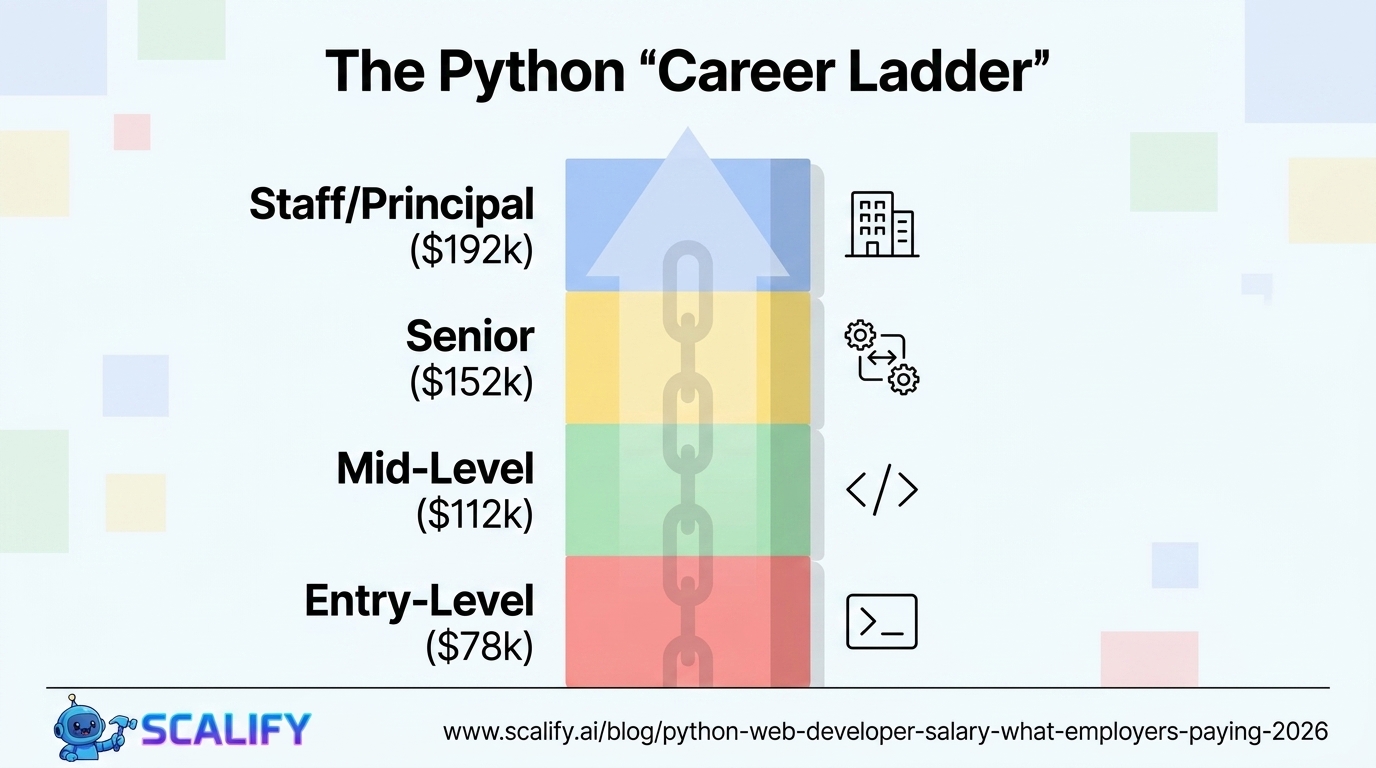
LevelSalary RangeMedianNotesJunior Electron Developer$68,000 – $95,000$80,000Entry into desktop web appsMid-Level Electron Developer$98,000 – $140,000$118,000Main/renderer process expertiseSenior Electron Developer$138,000 – $185,000$158,000Performance, security, IPC architectureExpert (VS Code, Slack tier)$168,000 – $230,000+$192,000Rare, high-value skill set
Electron development earns a premium over general web development for several reasons: the security model is more complex (Electron apps have OS-level access that browsers don't), performance optimization in Electron requires understanding the main/renderer process architecture, and the testing and distribution requirements (code signing, auto-update, platform-specific packaging) are significantly more complex than web deployment.
The most in-demand Electron developers are those who can optimize performance — Electron apps have a reputation for high memory usage, and developers who can build Electron apps that are genuinely performant (like VS Code's notoriously efficient architecture despite being Electron-based) are highly valued.
Tauri: The Rising Rust-Based Alternative
Tauri is emerging as a lighter-weight alternative to Electron, using Rust for the back-end instead of Node.js and the OS's native webview instead of bundling Chromium. The result is dramatically smaller application bundles and lower memory usage. Tauri + Rust developers are a small but growing and well-compensated niche — the combination of Rust skills and web front-end expertise commands $155,000–$210,000 at senior levels.
Cross-Platform Framework Salary Comparison
FrameworkTarget PlatformSenior Salary RangeDemandReact NativeiOS + Android native$148,000 – $200,000Very HighElectronDesktop (Mac/Win/Linux)$138,000 – $185,000HighTauriDesktop (Mac/Win/Linux)$145,000 – $210,000Growing, niche premiumCapacitor/IoniciOS + Android (hybrid)$125,000 – $172,000ModerateFlutter WebWeb + mobile + desktop$128,000 – $175,000GrowingPWA (standalone)Web-to-mobile install$132,000 – $182,000High at product companies
Mobile Web Developer Salary by City
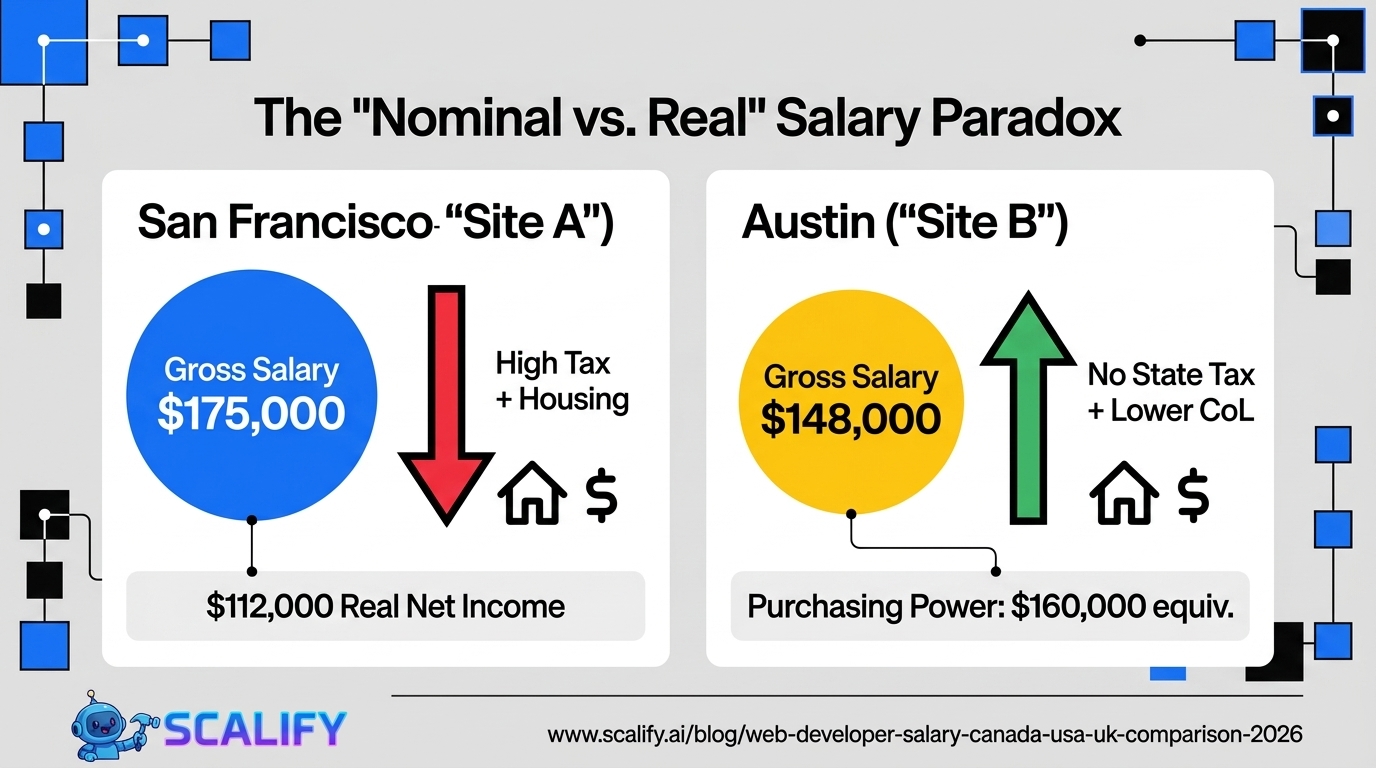
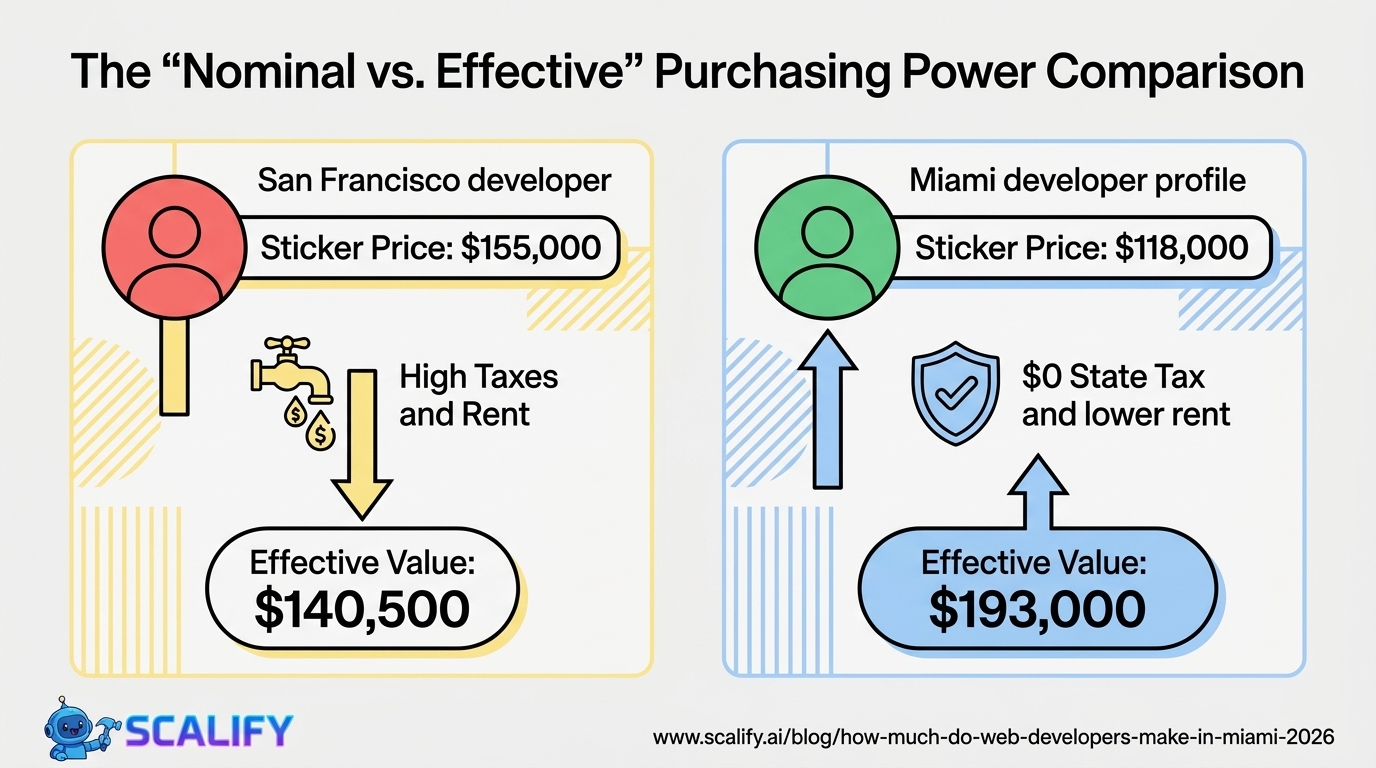
CityMid-Level (Mobile Specialist)Senior (Mobile Specialist)San Francisco Bay Area$122,000 – $158,000$172,000 – $228,000+Seattle$115,000 – $148,000$162,000 – $215,000New York City$112,000 – $145,000$158,000 – $210,000Austin / Denver$95,000 – $130,000$135,000 – $172,000Miami$85,000 – $118,000$118,000 – $158,000Remote (primary market company)$108,000 – $145,000$148,000 – $200,000
Skills That Differentiate High-Earning Mobile Web Developers
The specific skills that produce the largest salary premiums for developers working at the mobile/web intersection:
Service Worker Mastery
Service workers are the foundation of PWAs and one of the most powerful — and most misused — browser APIs available. Developers who genuinely understand the service worker lifecycle, caching strategies, background sync, and push notification implementation are rare. Most developers who claim service worker experience have implemented a basic cache-first strategy from a tutorial. The developers who earn premiums are those who understand scope, update mechanisms, the complex interaction between service workers and HTTP caching, and how to build offline-first experiences that handle edge cases gracefully.
Web Performance on Mobile Devices
Lighthouse scores on Desktop are relatively easy to optimize. Lighthouse scores on Mobile require understanding throttled CPU behavior, touch event handling costs, main thread blocking, and how to deliver a genuinely smooth 60fps experience on a mid-range Android device. Developers who can consistently achieve 90+ Lighthouse Mobile scores on complex, content-rich applications are solving a problem that directly affects search rankings and conversion rates.
React Native + TypeScript
React Native has matured significantly. The combination of strong TypeScript skills, React expertise, and React Native knowledge creates a developer who can build and maintain a mobile app and the corresponding web application from a shared codebase — dramatically reducing the staffing burden for companies that need both products. This combination is one of the most economically compelling skills packages in the current web development market.
Viewport and Safe Area Management
Building web experiences that work correctly across the extraordinary range of mobile viewport sizes, aspect ratios, and physical constraints (notches, punch-holes, dynamic islands, varying safe area insets) requires specific knowledge that most web developers haven't fully mastered. CSS environment variables, viewport unit quirks, sticky header/footer behavior on iOS Safari, and the differences between iPhone safe areas and Android safe areas all require careful, specific handling.
Touch Gesture Libraries and Custom Implementation
Complex touch interactions — swipe-to-dismiss, pull-to-refresh, multi-touch pinch/zoom, long-press context menus — require implementing either through well-maintained libraries (Framer Motion, react-use-gesture) or custom touch event handling. Developers who can build these interactions in ways that feel truly native — correct momentum, appropriate threshold triggers, smooth cancellation handling — are producing UI quality that most web applications don't achieve.
Career Paths for Mobile Web Specialists
Developers who specialize in mobile web have several compelling career trajectory options:
Path 1: PWA-focused product developer. Build deep expertise in service workers, offline-first architecture, and installable web apps. This is most valuable at companies with global products where app store distribution overhead is significant and web reach is critical — media companies, fintech serving emerging markets, e-commerce at scale.
Path 2: React Native + Web full-stack. The highest-ceiling path in this category. Senior developers who can own both the web and mobile app for a product are extremely valuable at startups and scale-ups where team size makes two separate specialists uneconomical. Total compensation at $148,000–$200,000 for senior level reflects the dual-specialization value.
Path 3: Mobile performance engineering. Specialize in making mobile web experiences fast — Core Web Vitals optimization, image delivery, JavaScript payload reduction, critical rendering path analysis. This is a consulting-friendly specialization with strong freelance rates ($165–$250/hr) because the outcomes are measurable and directly tied to business metrics.
Path 4: Desktop application development (Electron/Tauri). Build expertise in desktop web app development for companies building cross-platform desktop tools — developer tooling, productivity applications, creative applications. This is a narrower market than mobile but has strong compensation and interesting technical work.
How to Build and Price Mobile Web Expertise
If you're a web developer looking to capture the mobile web premium, the practical path:
The Bottom Line
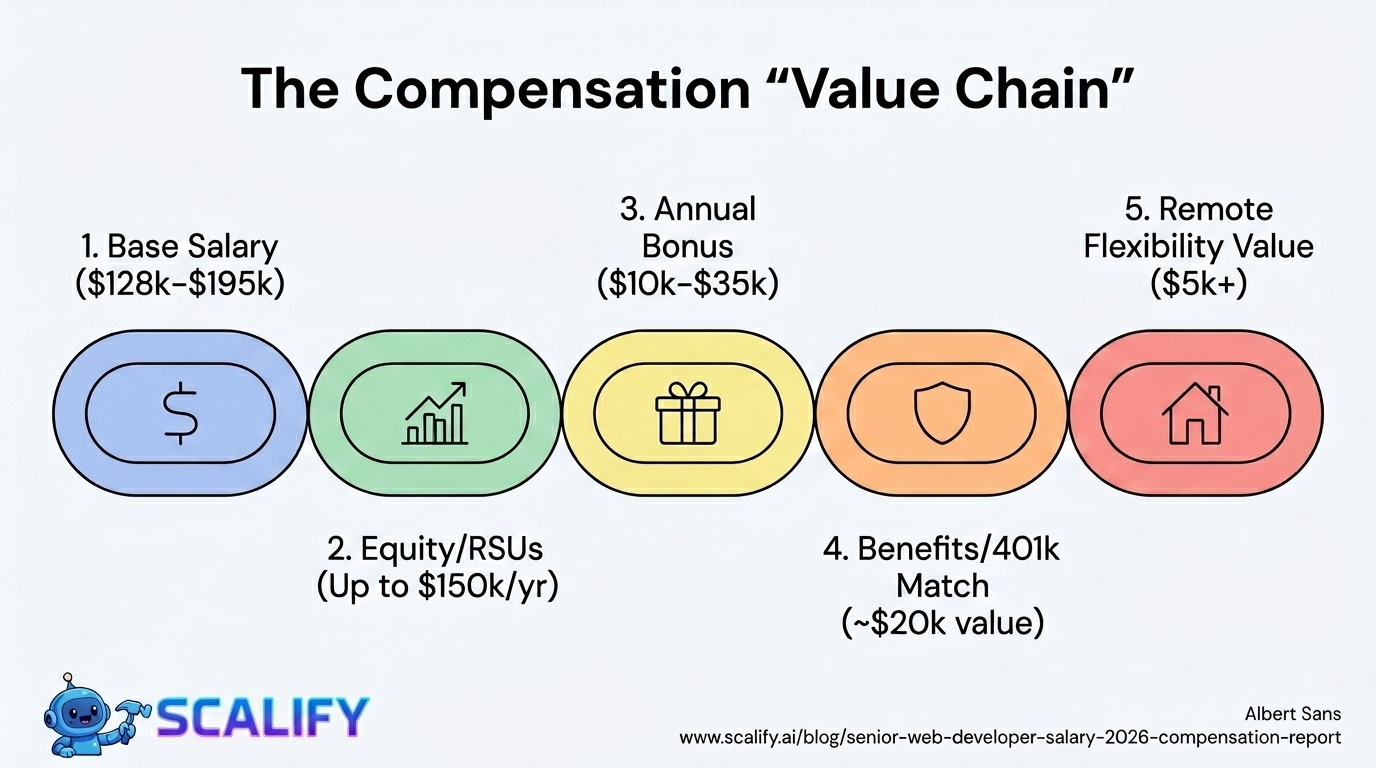
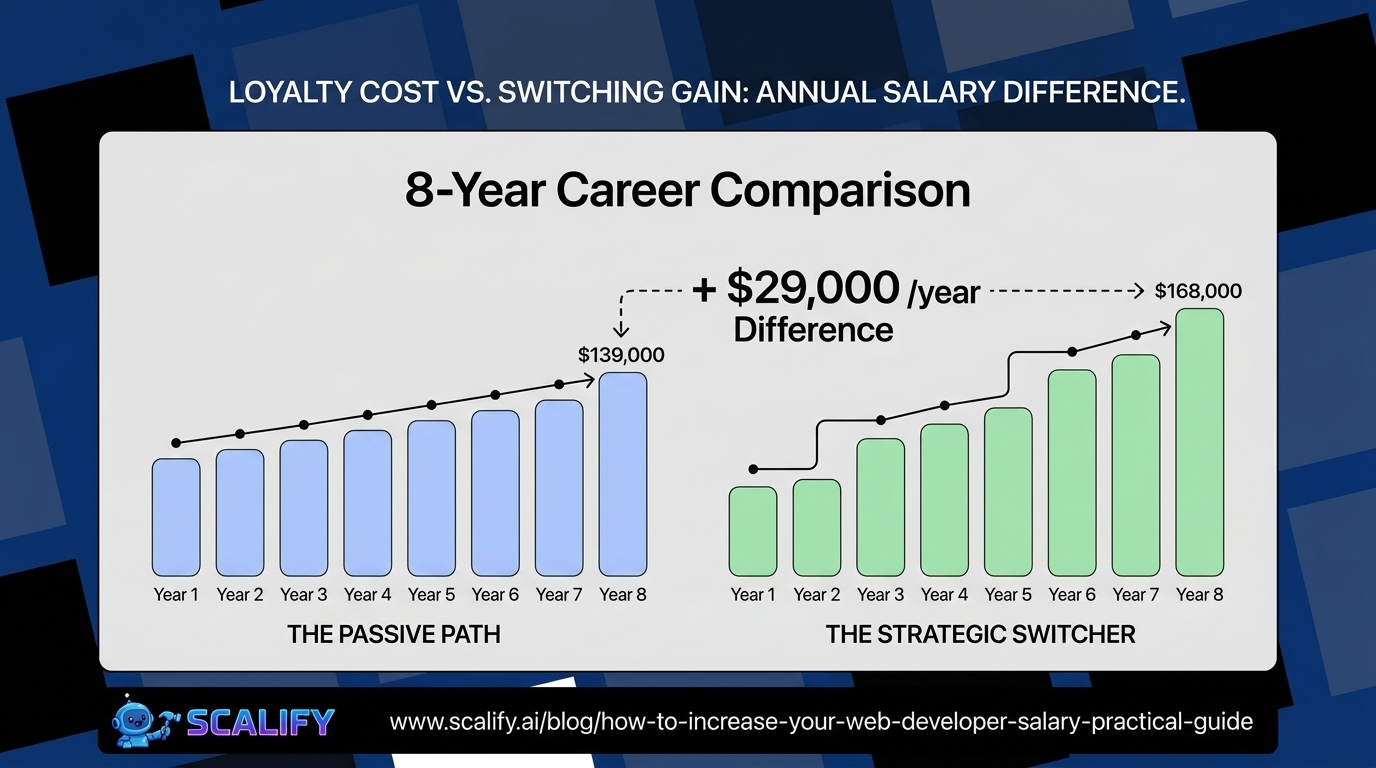
The mobile vs. desktop web developer distinction isn't a binary career choice — it's a depth dimension within web development. Developers who go genuinely deep into mobile web specialization — PWA architecture, mobile performance engineering, React Native + web full-stack, or advanced touch interaction implementation — earn $5,000–$30,000+ premiums over generalist responsive web developers at equivalent experience levels. The highest-ceiling option is React Native + web full-stack development ($148,000–$200,000 for senior), followed closely by PWA specialization and mobile performance engineering. Desktop-focused web development (Electron, Tauri) is a strong parallel path with $138,000–$210,000 for senior developers, especially for those targeting developer tooling or productivity application companies.
At Scalify, we build professional websites for web developers, mobile specialists, and agencies in 10 business days — the portfolio that demonstrates your expertise to the companies paying premium rates.



.jpeg)
.jpeg)

78 SW 7th St, Miami, FL 33130