

The Best Spa and Salon Websites: Designs That Fill Appointment Books
By Josh Ternyak

April 22, 2026
Spa and salon websites must do something precise: make a prospective client feel the experience before they arrive. This guide examines what the highest-performing spa and salon websites do to create that feeling and convert it into booked appointments.
Selling an Experience Before It Happens
The beauty and wellness industry has a unique challenge: the product is an experience, and experiences can't be photographed or described with the same precision that a physical product can be shown. A spa visit is a feeling — warmth, quiet, the particular way a skilled massage therapist reads what your body needs. A haircut is a transformation — the specific way a stylist understands your face shape, your lifestyle, your relationship with your hair, and creates something that's distinctly right for you specifically.
Communicating these things through a website requires a specific set of design and content decisions. The spa or salon website that evokes the emotional experience of the service — the serenity, the expertise, the personalization — before the client walks through the door is doing the highest-value work a website can do in this category. It's not just showing services; it's selling the feeling of being well taken care of.
This guide covers what distinguishes the best spa and salon websites from the generic majority, with specific attention to the design, photography, content, and functional elements that consistently drive appointment bookings.
The Atmosphere Problem and How Great Spa Websites Solve It
A spa or salon's physical environment is its primary differentiator — the lighting, the scent, the sound design, the quality of the materials, the way the space makes you feel when you enter. None of these things can be directly communicated through a website. But they can be evoked.
The best spa and salon websites evoke atmosphere through a specific combination of elements:
Photography that feels like the space feels. Not just photographs of the space — photographs that capture the quality of light, the warmth of materials, the invitation of the environment. A wide-angle photo of a treatment room taken in harsh overhead light communicates very differently from a close detail shot of the same room taken in warm afternoon light. The photography must make the viewer feel something — specifically, what they would feel if they were actually in the space.
Design that reflects the experience. A spa positioned as urban luxury should have a sophisticated, minimal design that communicates restraint and refinement. A beachside spa should evoke the ease and openness of its setting. A holistic wellness center should feel grounded and natural. The website's design is the digital equivalent of the physical environment — it should make the visitor feel they've already stepped into the space.
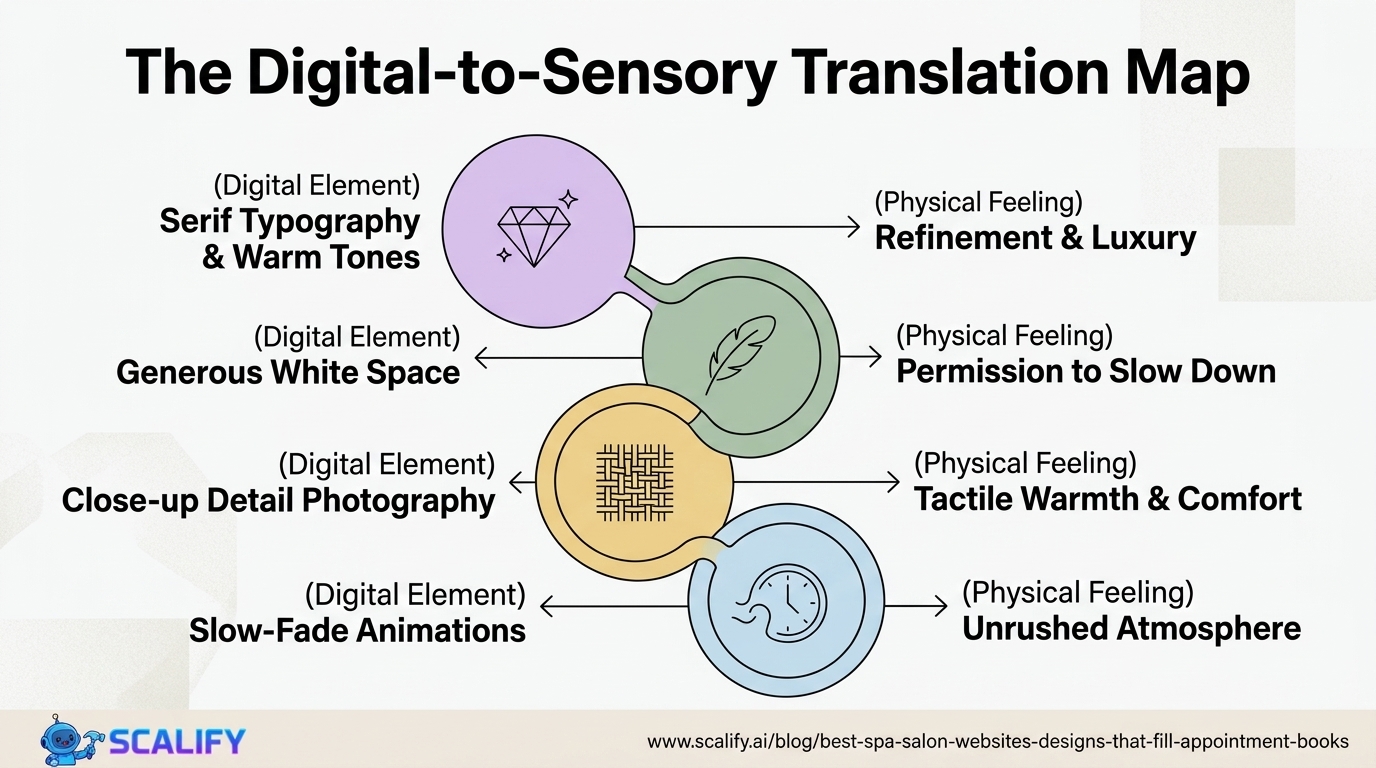
Typography and color as sensory signals. Serif type in warm tones feels different from geometric sans-serif in cool neutrals. Cream and warm white backgrounds feel different from stark white. These choices aren't arbitrary — they're communicating the sensory experience of the space before any image or word does.
Pacing and space. Generous white space, slow-fade animations, and an unhurried visual tempo on a spa website communicate something: this is a place where you can slow down. The opposite — a crowded, fast, high-density website — undermines the experience before the client arrives.
The Essential Elements of High-Performing Spa and Salon Websites
Online Booking That Works Seamlessly
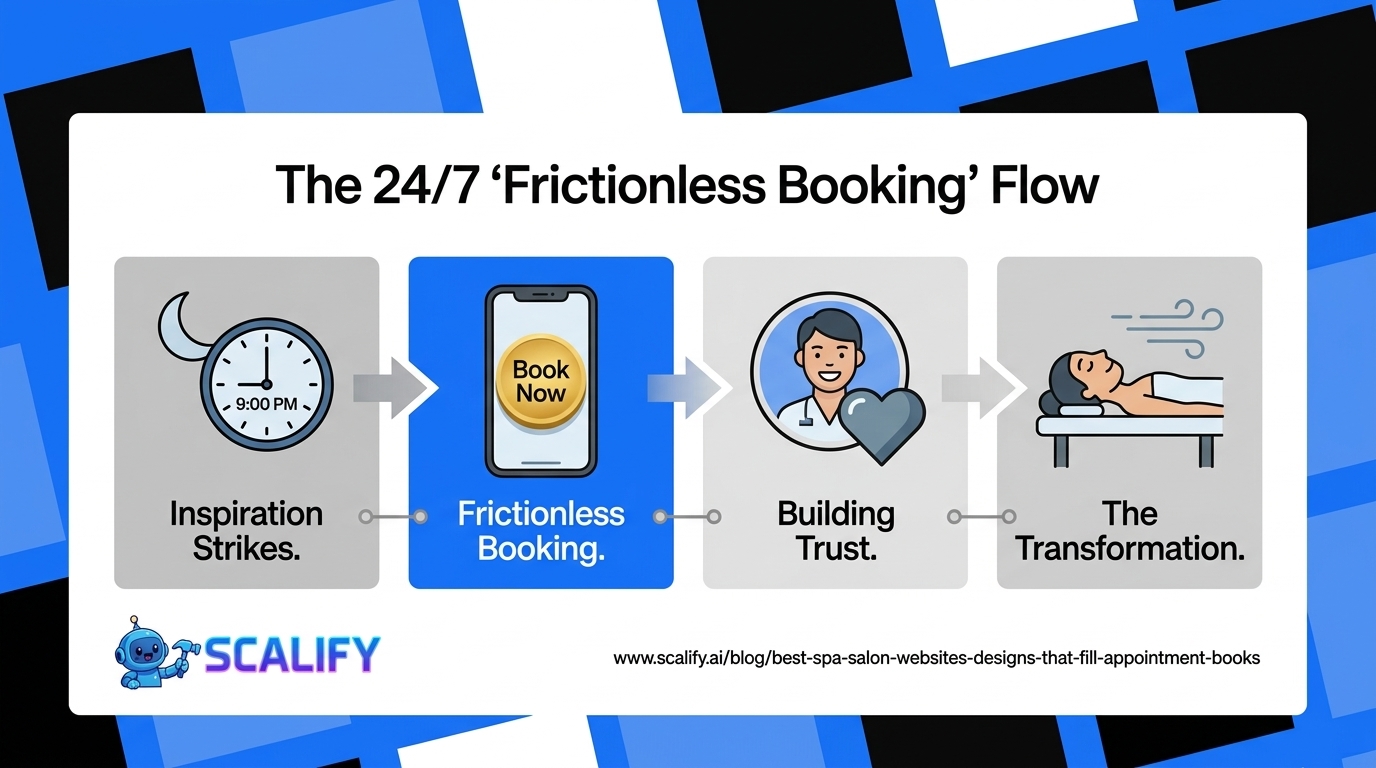
This is non-negotiable and the single highest-impact conversion element. The spa or salon that requires phone calls or emails to book appointments is systematically losing clients who decide at 9pm on a Sunday, or during their lunch break, or in any moment outside business hours.
Online booking requirements:
The booking button should appear in the primary navigation header (persistent across all pages) and as a prominent CTA in the hero section and service sections. It should be obvious and unavoidable without being aggressive. The visitor who has decided to book should never have to hunt for how to do it.
Booking platform options: Vagaro, Mindbody, Booker, Boulevard, and Square Appointments all offer embeddable booking widgets with varying levels of sophistication and cost. The choice depends on practice size, team size, and the complexity of services offered.
Service Menu with Real Descriptions
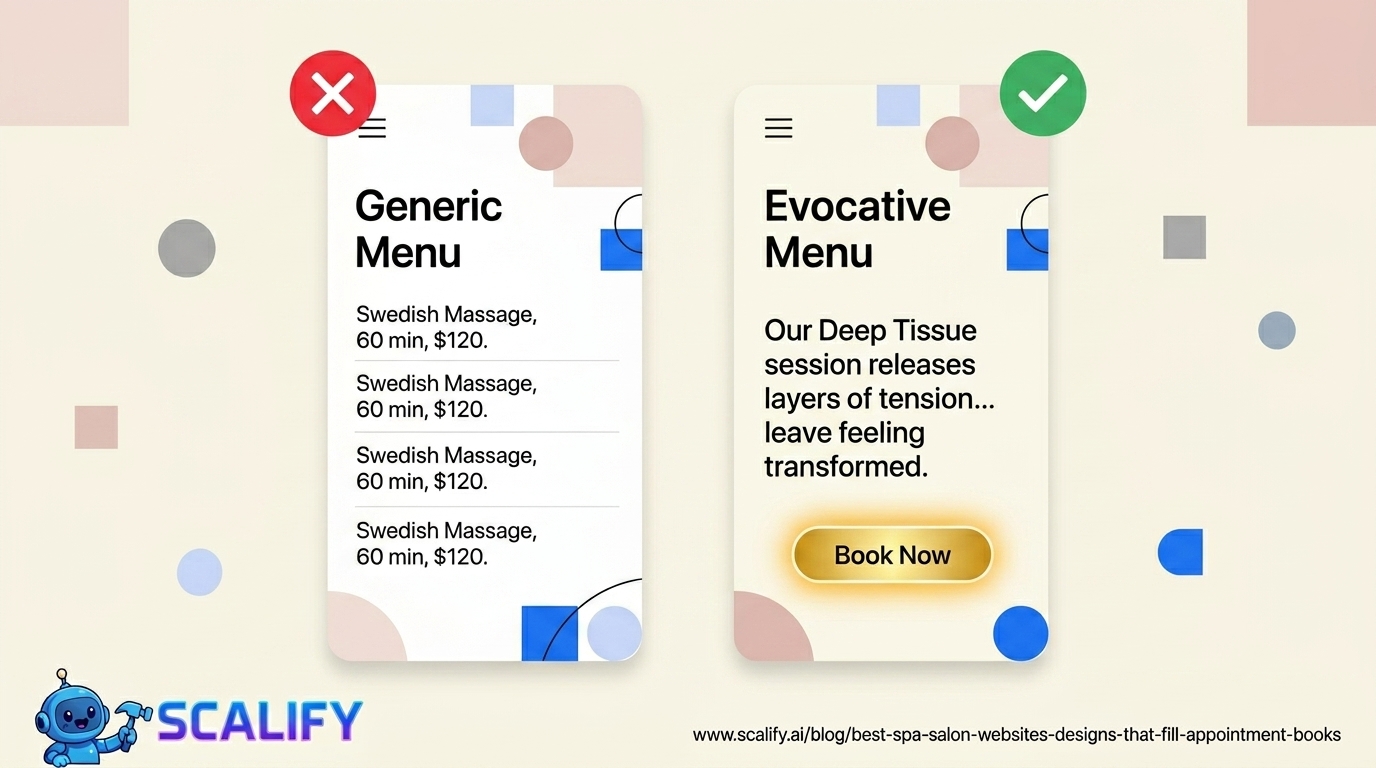
Most spa and salon service menus list names and durations without explaining what the experience actually involves. "Swedish massage, 60 min, $120" tells the visitor nothing about what distinguishes this massage from any other studio's Swedish massage, nothing about who performs it, nothing about what they'll experience during those 60 minutes.
Service descriptions that convert explain:
"Our Deep Tissue Massage is designed for people carrying chronic tension — the kind that lives in your shoulders, between your shoulder blades, in the base of your skull. Our therapists are trained to read your body's holding patterns and work with sustained, focused pressure to release layers of tension that have built up over time. Clients typically describe the days following a deep tissue session as the first time they've felt genuinely relaxed in months." This description sells the experience, identifies who it's for, and creates anticipation — the bare listing of "Deep Tissue, 60 min" doesn't do any of these things.
Practitioner Profiles That Build Trust
Clients choose specific stylists and therapists, not just services. In the spa and salon context, the relationship between client and practitioner is one of the primary reasons for loyalty — clients follow their stylist when they change salons, rebook with the same massage therapist for years, specifically request particular estheticians. The website should support this relationship-building by introducing the practitioners meaningfully.
Practitioner profiles that work:
Client testimonials attached to specific practitioners are particularly valuable — a glowing review for a specific therapist by name ("I've been seeing Maria for 18 months and I've never left a session without feeling transformed") is more persuasive than a general review of the spa.
Photography That Evokes the Right Feeling
The photography on a spa or salon website is doing as much conversion work as any text on the site. The specific photographic requirements for this category:
Environment photography: The actual physical space, shot at the time of day and in the lighting conditions that show it at its best. Typically warmer light is more evocative of wellness and comfort than harsh overhead light. Details — the texture of a heated towel, the surface of the treatment table, the arrangement of products — can be more evocative than wide shots.
Service photography: Hands-on work, shown with care and dignity. Not clinical documentation but experiential capture — the quality of a practitioner's hands on a client's shoulder, the moment of a hot stone placement, the careful focus of an esthetician's work. These images must convey expertise and care simultaneously.
Results photography: For hair salons especially, before/after photography showing the quality of the work is the most direct evidence of capability. For spas and skin care services, glowing skin photography after treatments. These should be real clients, not stock models.
Product photography: If the spa or salon uses or retails specific product lines, beautiful product photography (particularly of signature scent, texture, and material elements) contributes to the overall sensory communication.
Pricing Transparency
Luxury spas sometimes deliberately omit pricing from their websites on the theory that "if you have to ask..." — and for a specific tier of ultra-luxury positioning, this may be defensible. For the vast majority of spas and salons, price opacity creates friction. Prospective clients who can't find pricing must either call to ask (a barrier many won't cross) or assume the prices are outside their budget and don't inquire.
Transparent pricing, clearly presented with the service descriptions, removes this barrier. Clients self-select appropriately — those for whom the prices are right move toward booking; those for whom they're not don't waste anyone's time. This is better for everyone involved.
Membership and Package Programs
Spa and salon businesses with recurring service models — monthly memberships, prepaid packages, loyalty programs — benefit enormously from dedicating clear website real estate to these programs. A client who joins a monthly facial membership is worth 10–12× more over the following year than a client who books once and doesn't return.
The membership or package section should explain: what's included, the value compared to individual bookings, the commitment required, and how to join. The CTA should be prominent — "Join Our Membership" as a primary navigation item or a dedicated landing page.
Local SEO for Spas and Salons
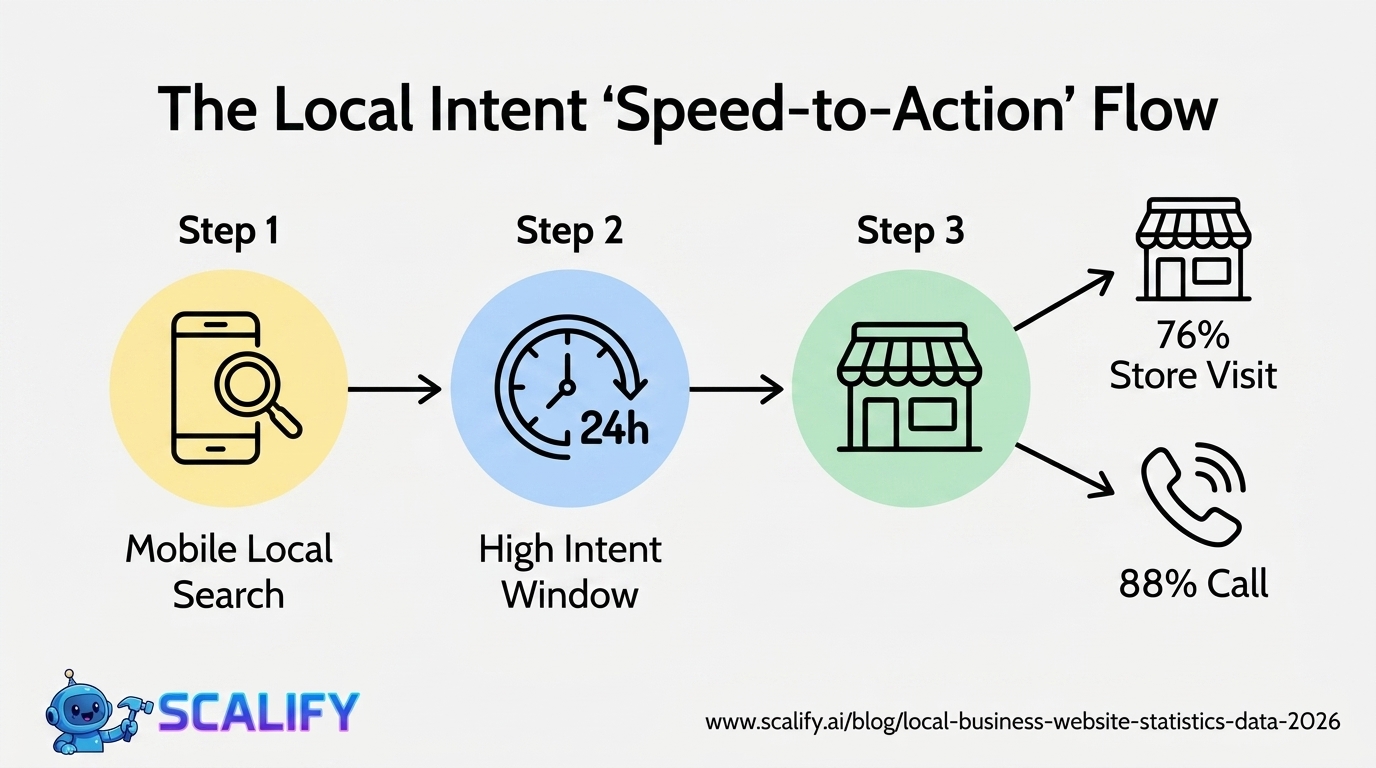
Spa and salon discovery is overwhelmingly local — people search for services in their area, near their home or office. Local SEO is therefore one of the highest-return investments in this category.
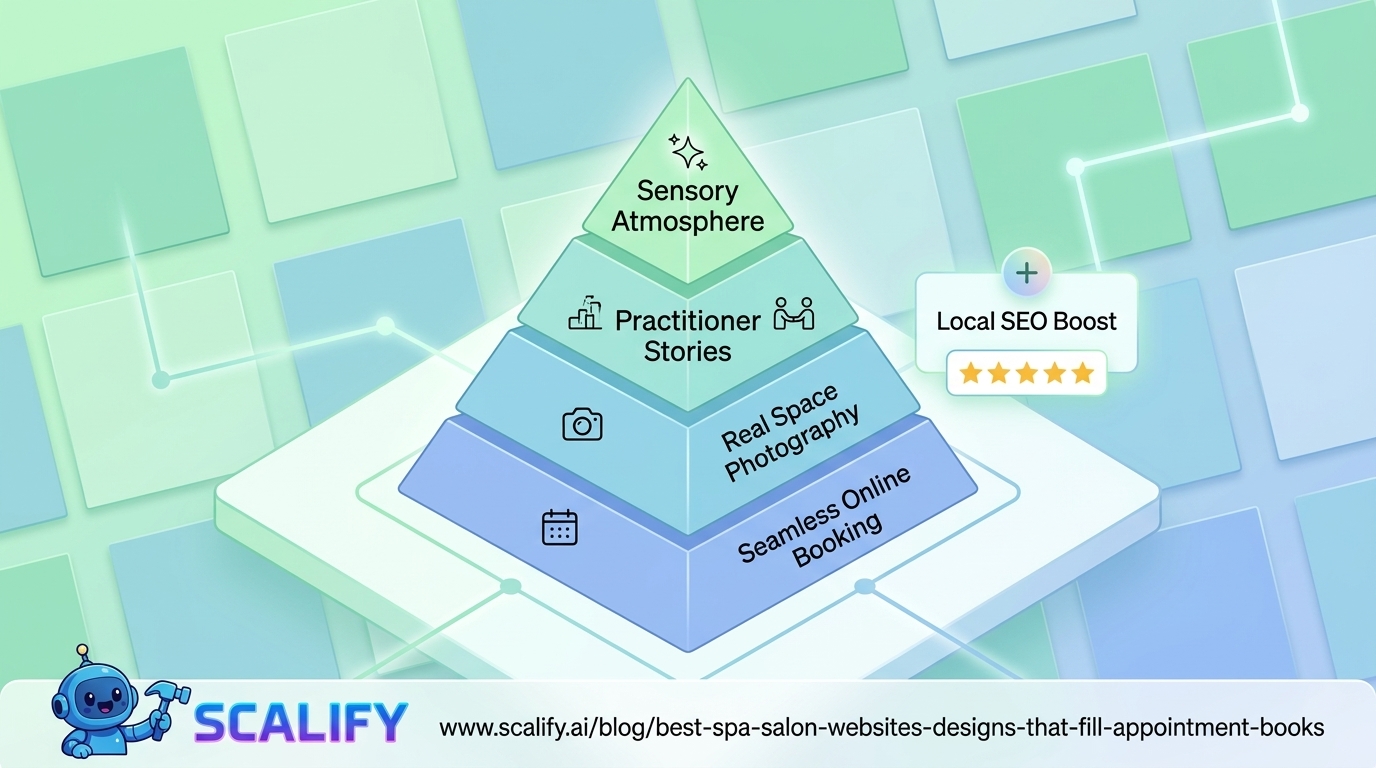
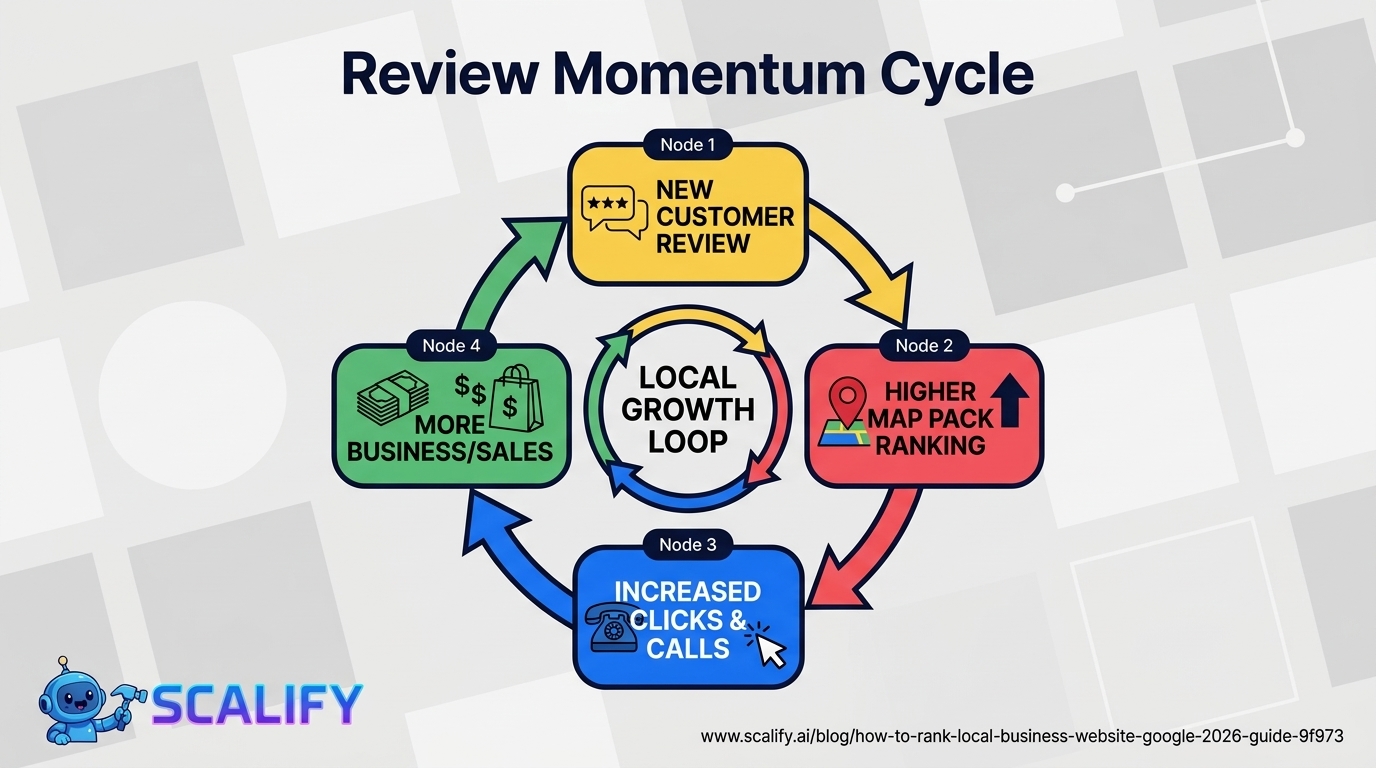
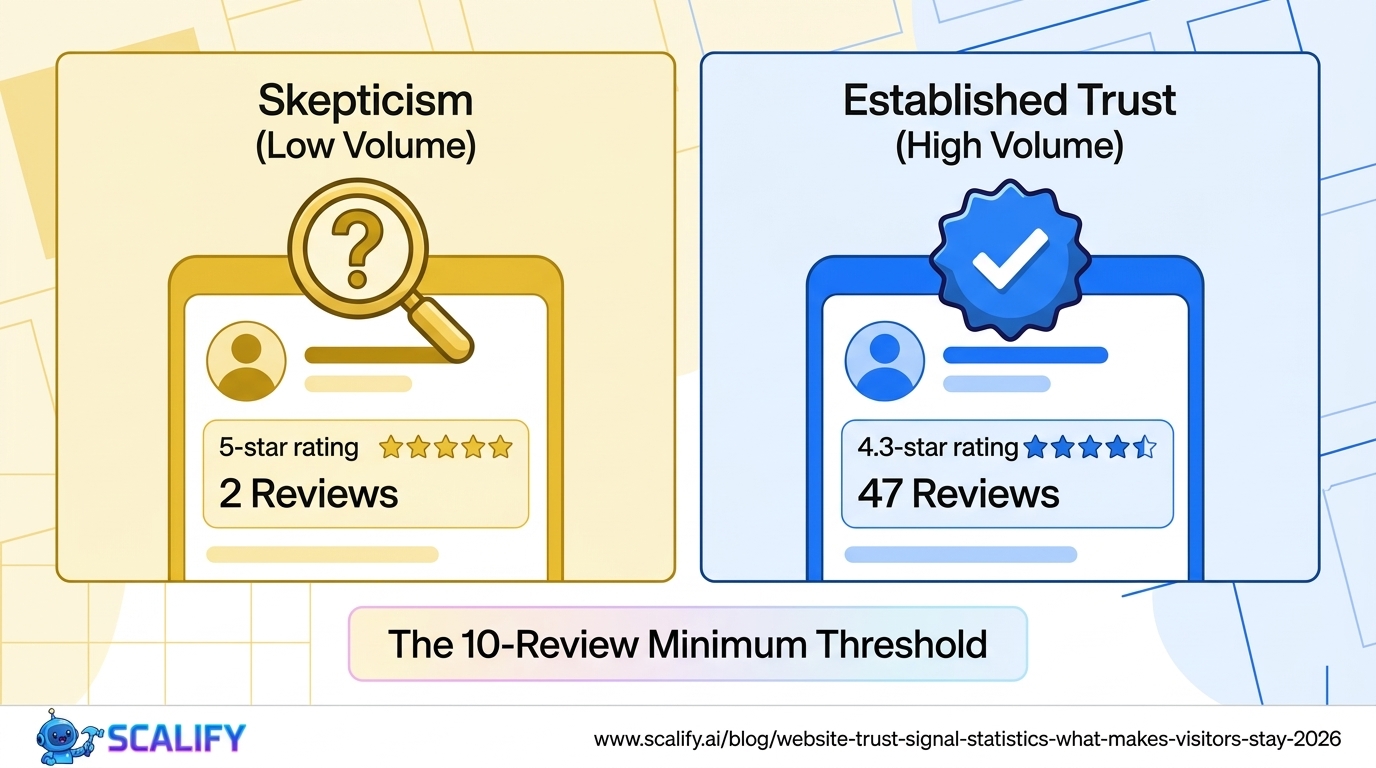
The Google Business Profile is the foundation: claimed, verified, complete with services listed, photos of the space and team, hours accurate and updated (including holiday hours), and Google reviews actively managed. The salon or spa with 150 Google reviews at 4.8 stars is going to win more local search clicks than an equally good competitor with 12 reviews.
Review generation: the most effective moment to request a review is immediately after a great service — a text or email sent within 24 hours with a direct review link. Scripts matter: "We'd love your feedback — it means the world to our small team and helps other clients like you find us" is more effective than a generic "please leave us a review."
Common Spa and Salon Website Mistakes
Booking buried or missing: Making clients hunt for how to book is the single most expensive mistake a spa or salon website can make. If the booking button isn't visible in the header on every page, fix this before everything else.
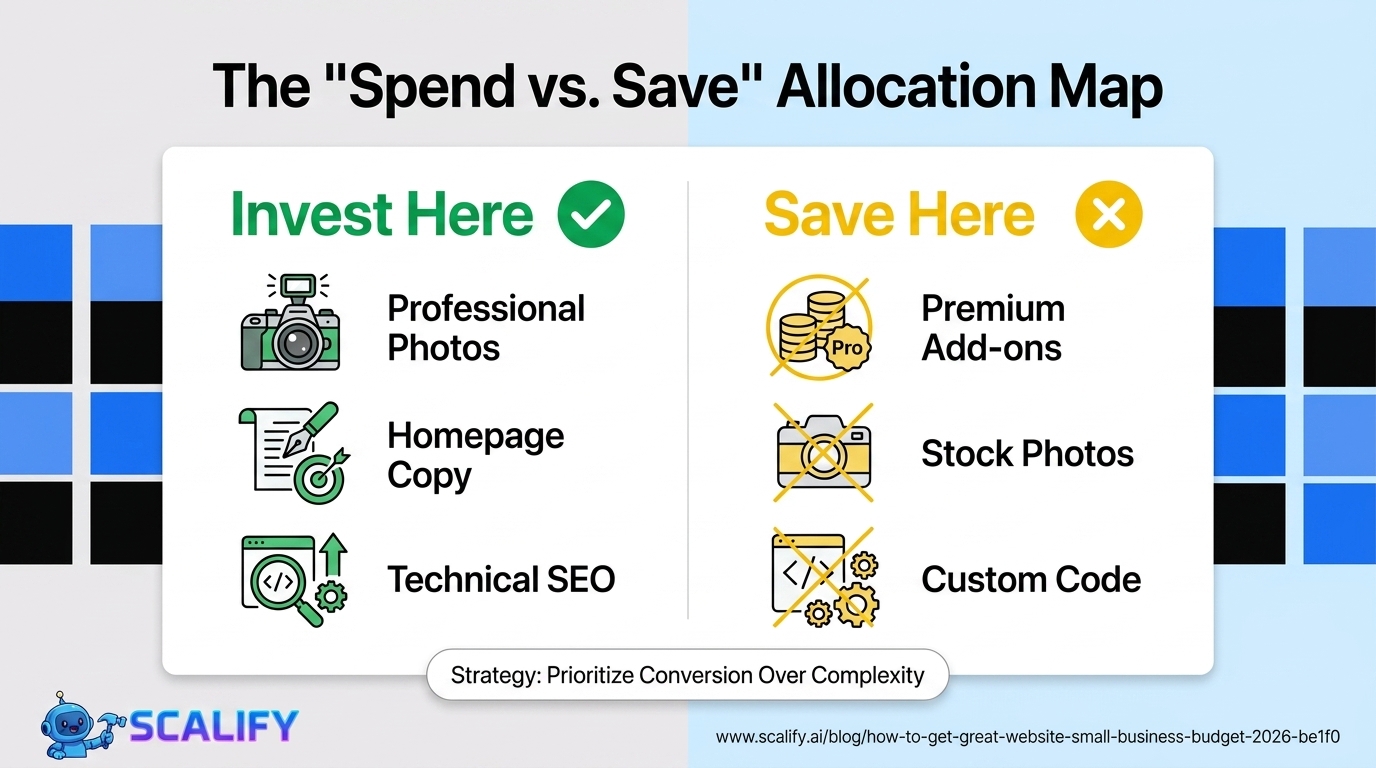
Generic stock photography: Stock photos of women in robes or lit candles that appear on dozens of competitor sites don't communicate what's distinctive about this particular space and team. The investment in professional photography of the actual space and team is among the highest-ROI marketing investments available.
Service menus without descriptions: A list of service names and prices is a menu, not a sales tool. Descriptions that evoke the experience and identify the ideal client for each service convert at substantially higher rates.
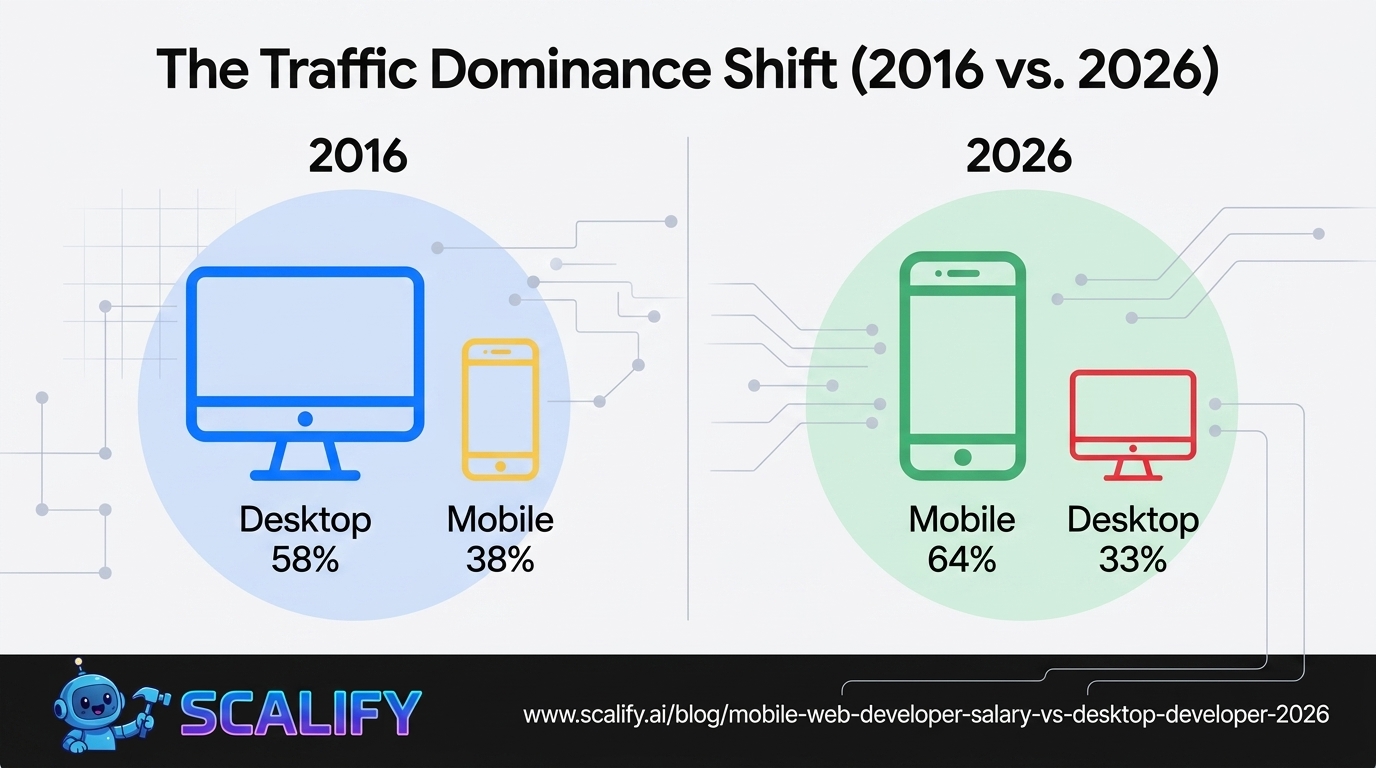
No mobile booking optimization: If the booking experience on mobile is awkward, small-typed, or requires pinching to navigate, a significant portion of potential clients who decide to book on their phones will abandon the process.
The Bottom Line
The best spa and salon websites win clients before the first appointment by creating the feeling of the experience through photography, design, and copy that evoke warmth, expertise, and care. They make booking immediate and frictionless, introduce practitioners as people worth trusting, describe services as experiences worth having, and provide the pricing transparency that removes the anxiety that prevents many prospective clients from ever reaching out.
In a category where word-of-mouth drives significant business, the website's job is to serve both as the first impression for new clients and as the reinforcement of the experience for returning ones. Done well, it fills the appointment book and builds the client relationships that create long-term business stability.
At Scalify, we build spa and salon websites that evoke the quality of the experience before the client arrives — because in the wellness industry, the first impression begins online, long before the front door opens.







.jpeg)
.jpeg)




78 SW 7th St, Miami, FL 33130