

How to Do Competitor Website SEO Analysis (2026 Guide)
By Josh Ternyak

April 17, 2026
Competitor SEO analysis produces 35% faster organic growth. This 7-step guide covers identifying true SEO competitors, analyzing domain authority and backlinks, keyword gap analysis, competitor content analysis, identifying backlink opportunities (Link Intersect, Skyscraper technique), technical SEO comparison, ongoing monitoring setup, creating an action plan, tool comparison, common mistakes, and integrating competitor analysis into your content calendar.
How to Do Competitor Website SEO Analysis
Competitor SEO analysis is the fastest way to understand what it takes to rank well in your market. Rather than starting from scratch — guessing which keywords to target, what content to create, how many backlinks you need — you can systematically study the websites already ranking for your target queries and reverse-engineer the strategy that put them there. Competitor SEO analysis turns the uncertainty of SEO into a more structured problem: understand what's working for others, then do more and better of the same things.
Key Competitor SEO Analysis Statistics
Step 1: Identify Your True SEO Competitors
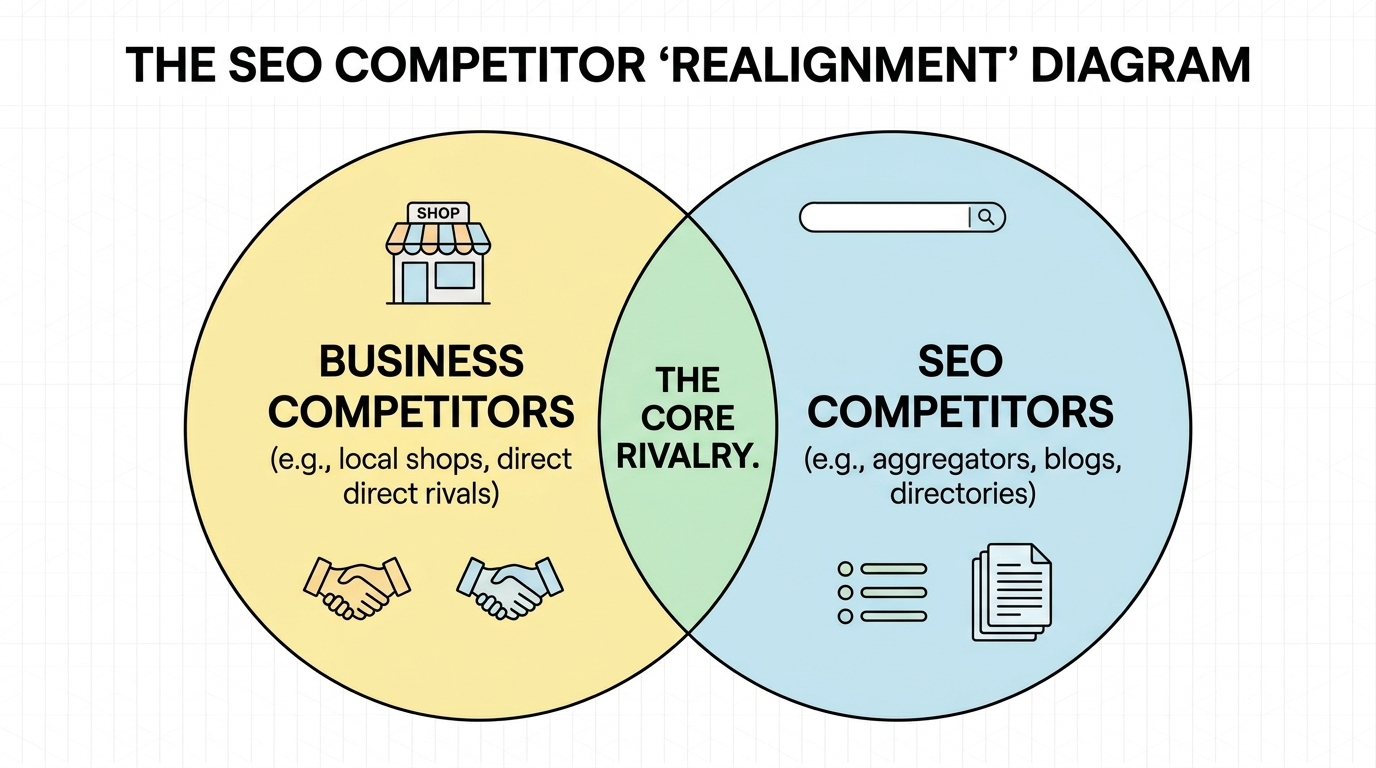
Your SEO competitors are not necessarily your business competitors. SEO competitors are the websites that rank for the same keywords you're trying to rank for — and they may include aggregators, industry publications, informational sites, and directories alongside direct business competitors.
How to identify SEO competitors: search your most important target keywords and note who appears in positions 1–5. Use Ahrefs' "Competing Domains" report (Site Explorer → your domain → Competing Domains) which shows sites with the most keyword overlap. Use Semrush's Organic Research → Competitors tab for the same data. The result is a clear list of your actual SEO competition — which often surprises businesses because the SEO competitors for their terms may be very different from who they think of as business competitors.
Step 2: Analyze Competitor Domain Authority and Backlink Profile
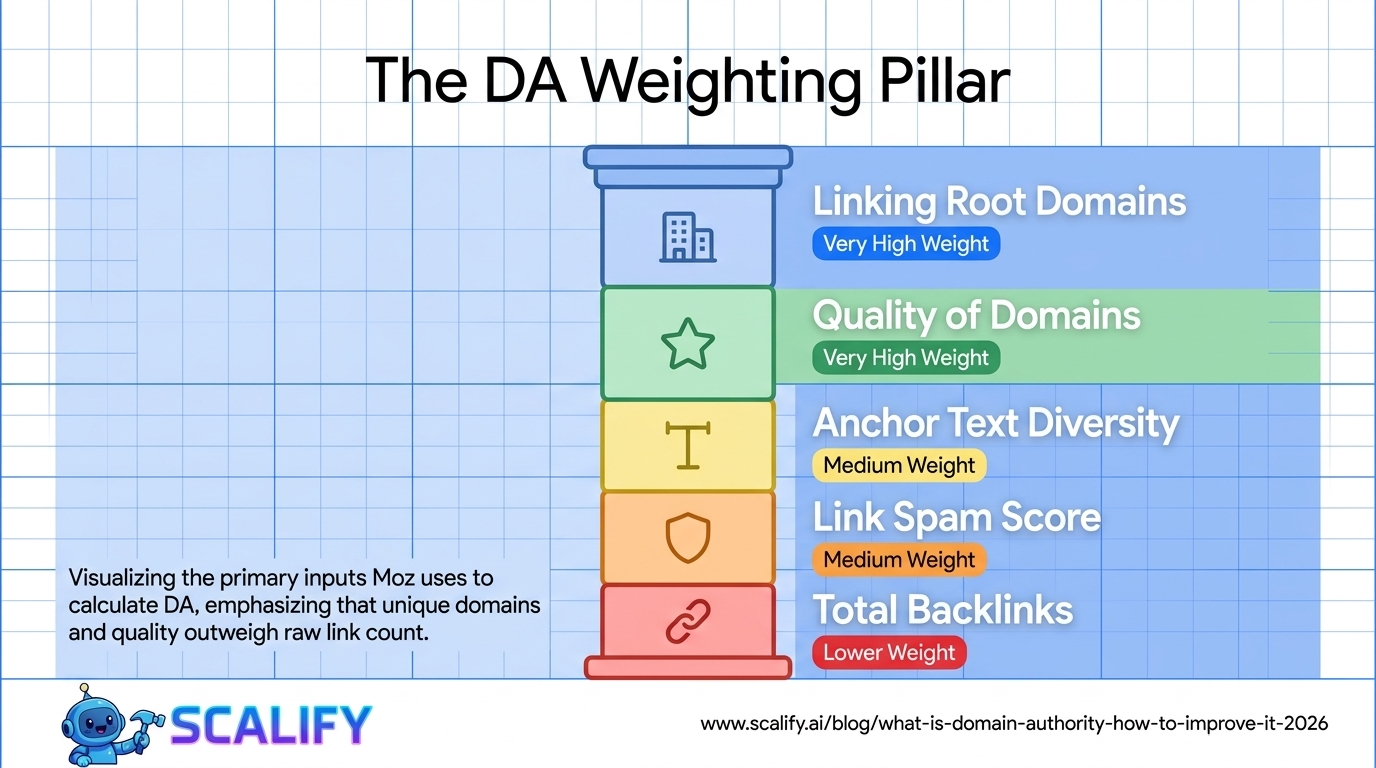
Metric to CompareToolWhat It Tells YouDomain Rating / Domain AuthorityAhrefs DR / Moz DAOverall authority gap — how much link building needed to competeNumber of referring domainsAhrefs / SemrushLink diversity — do competitors have many varied sources or few?Top linked pagesAhrefs → Best by LinksWhat content earns the most links — content type to replicateAnchor text distributionAhrefs → AnchorsHow aggressively keyword-optimized their anchor text isLink velocity (new links over time)Ahrefs → New BacklinksHow actively they're building links currently
Step 3: Keyword Gap Analysis
Keyword gap analysis identifies keywords your competitors rank for that you don't. These are your highest-priority content opportunities because they have proven search demand (competitors are ranking) and you have clear competitive context to understand what it takes to rank for them.
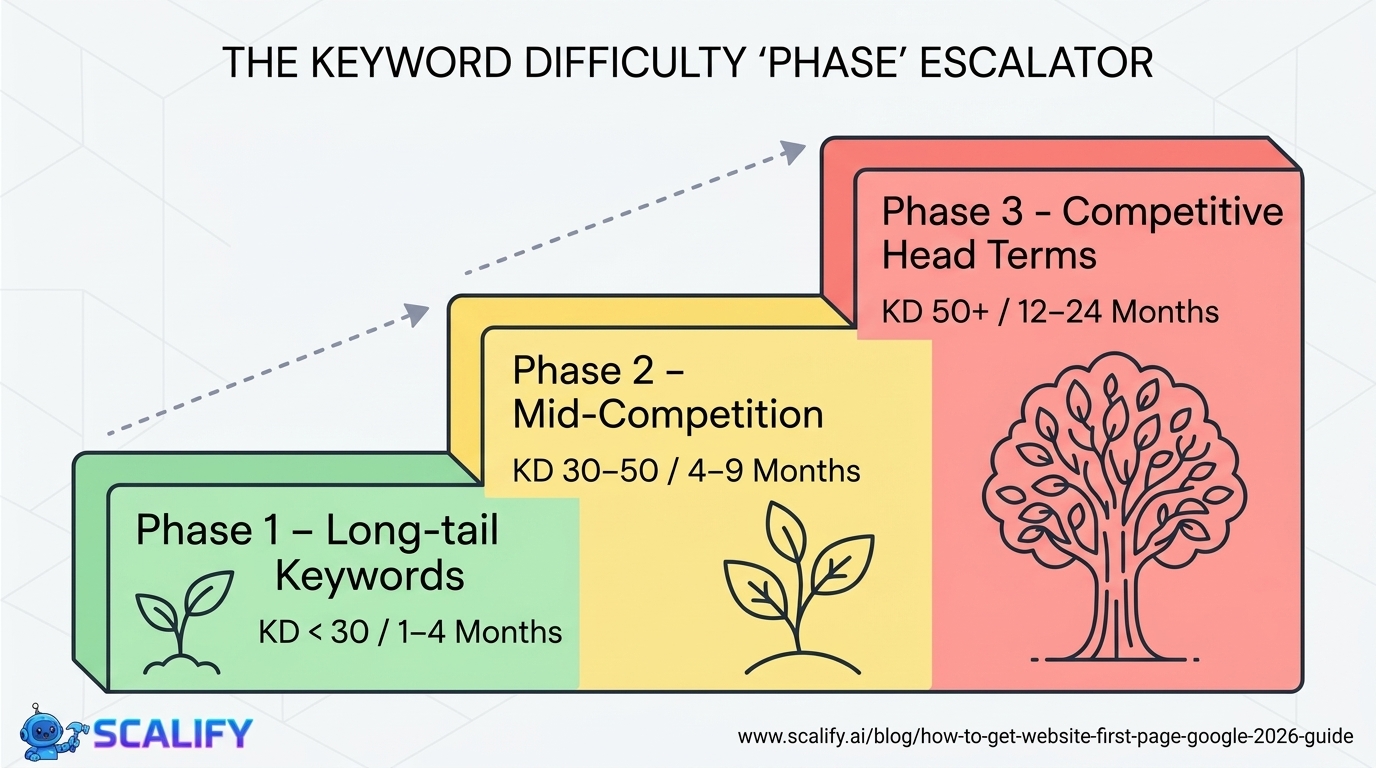
Running a gap analysis in Ahrefs: Competitive Analysis → Content Gap → enter your domain and 3–5 competitor domains → Ahrefs shows keywords where competitors rank in the top 10 but you don't appear in the top 100. Filter by search volume (minimum 100/month) and keyword difficulty (start with under 30 for fastest wins). Export the list and categorize by:
Step 4: Competitor Content Analysis
Competitor content analysis reveals what content formats, lengths, structures, and approaches Google is currently rewarding in your niche. The analysis:
Content Element to AnalyzeHow to AnalyzeWhat to Look ForContent lengthCount words on top-ranking competitor pages for target queriesAverage length that ranks — your minimum content length targetContent formatIdentify whether lists, guides, comparison tables, or case studies rank bestFormat preference for your query type — match itHeader structureAnalyze H2/H3 structure of top-ranking pagesSubtopics being covered — your outline starting pointMedia typesNote images, videos, infographics, calculators usedContent elements that enhance pages in this categoryUpdate frequencyCheck "Last Updated" dates on top-ranking contentHow often content needs refreshing to maintain rankingsQuestions answeredUse AlsoAsked.com or People Also Ask in SERPQuestions your content should answer to be comprehensive
Step 5: Identify Competitor Backlink Opportunities
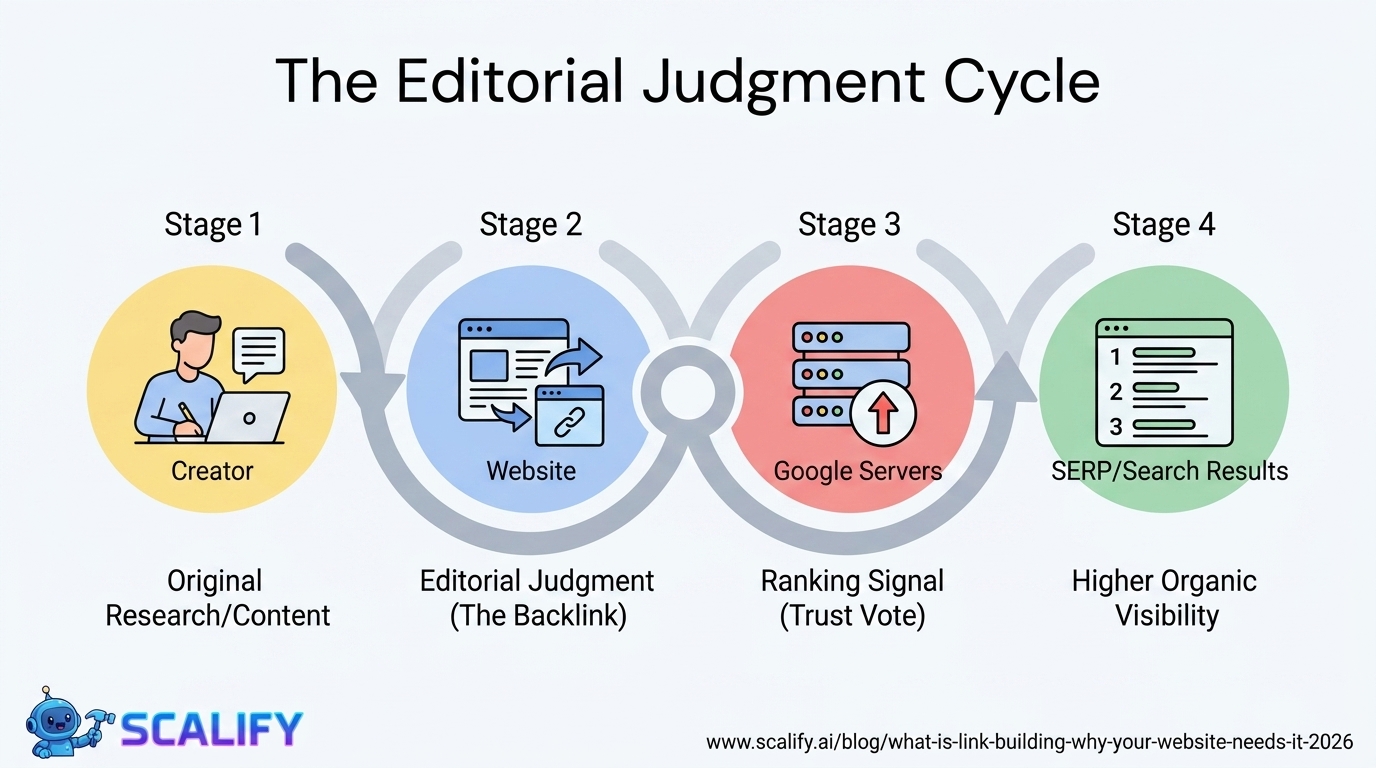
Once you understand where competitor backlinks come from, you can prioritize reaching out to the same sources with a pitch for linking to your content. The link building outreach that works best targets sources that have already demonstrated willingness to link to content on your topic.
Link Intersect analysis: In Ahrefs, Competitive Analysis → Link Intersect → enter 3–5 competitors → Ahrefs shows sites that link to multiple competitors but not to you. These are your highest-priority outreach targets because they've linked to similar content multiple times, demonstrating genuine interest in the topic area. Filter by Domain Rating (start with DR 30+ for quality) and sort by the number of competitors they link to (highest first — most receptive prospects).
Skyscraper technique: Find competitor pages with many backlinks (in Ahrefs: Site Explorer → competitor domain → Best by Links → filter for high-traffic pages). These are the content types that earned the most links in your niche. Create a comprehensively better version of those pieces and reach out to sites linking to the original.
Step 6: Technical SEO Competitive Comparison
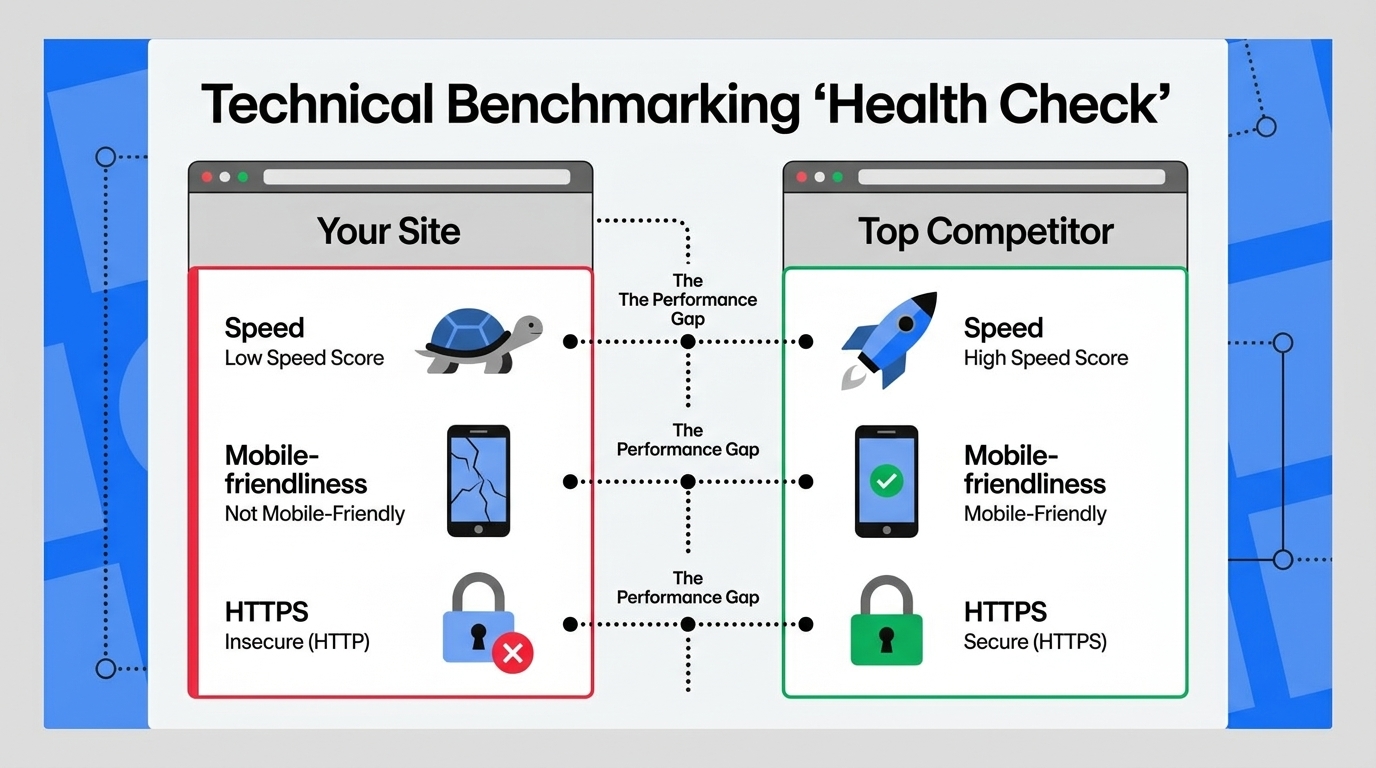
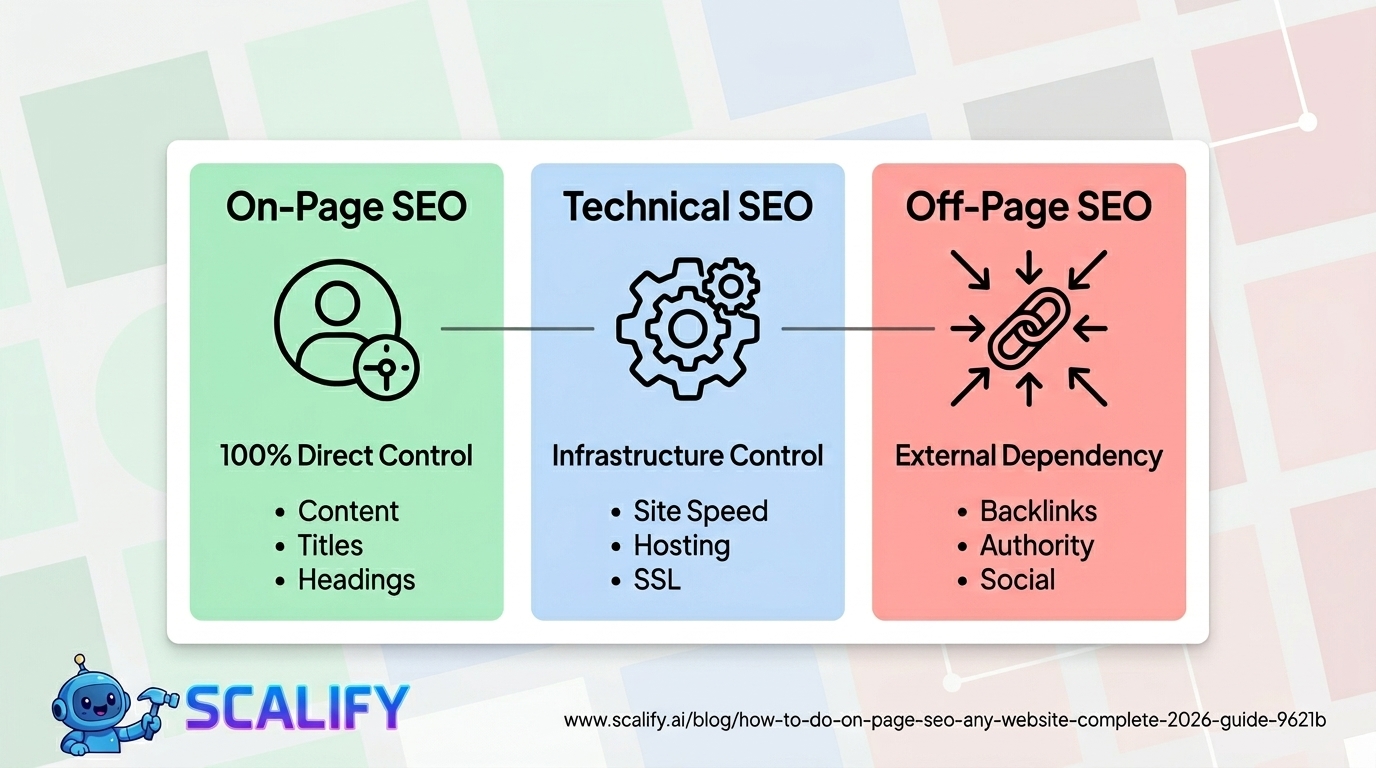
Technical MetricHow to CheckWhat a Competitive Gap Looks LikePage load speedPageSpeed Insights for competitor key pagesCompetitors scoring 85+ on mobile; you scoring 45Core Web VitalsCrUX data in PageSpeed InsightsCompetitors passing all 3; you failing LCPMobile friendlinessGoogle Mobile-Friendly TestCompetitors fully mobile-optimized; your site notSchema markupGoogle Rich Results Test on competitor pagesCompetitors have review schema, FAQ schema; you have noneHTTPSBrowser address barCompetitors all HTTPS; you still on HTTPContent freshness"Last Updated" dates or publication datesCompetitors updating quarterly; your content from 2021
Step 7: Monitor Competitors Ongoing
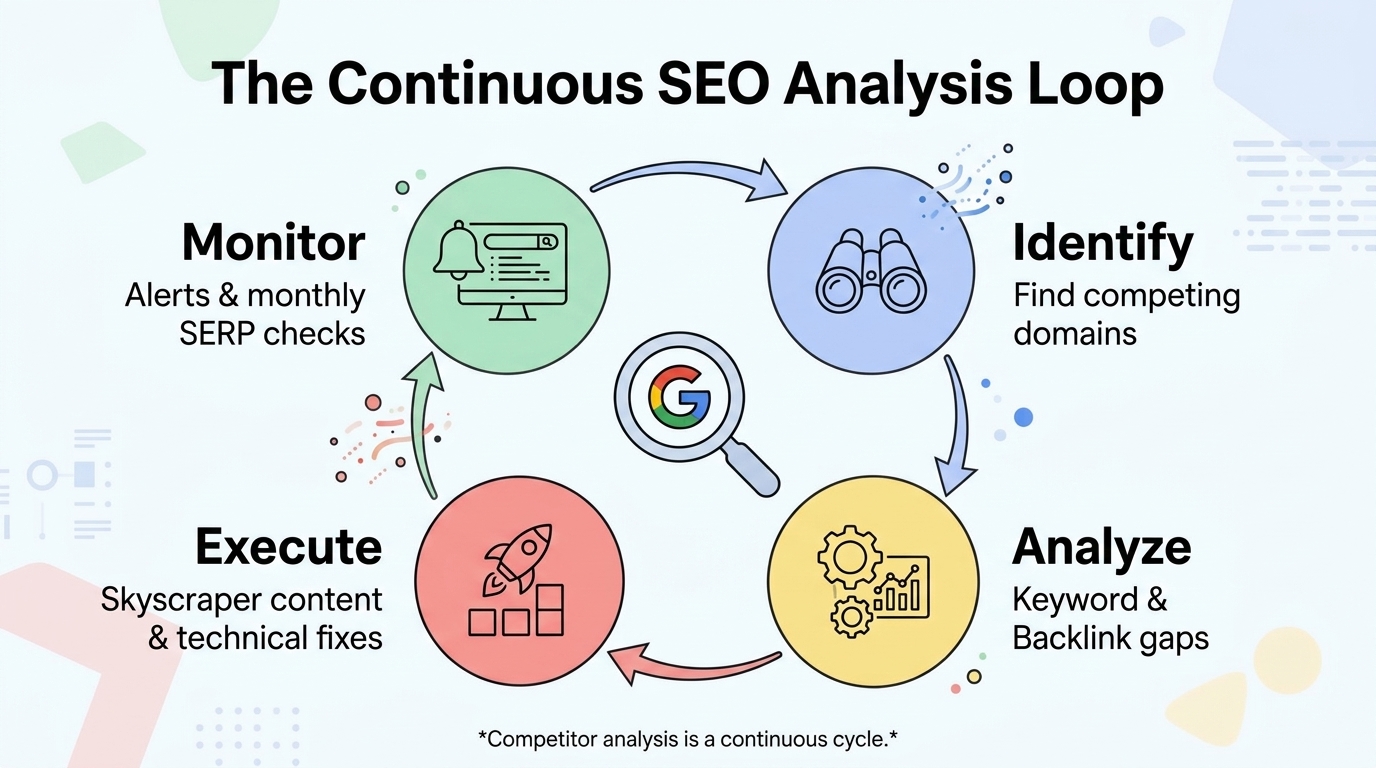
Competitor SEO is not a one-time analysis — it's an ongoing monitoring practice. Rankings shift, competitors publish new content, backlink profiles change, and technical improvements can rapidly change competitive dynamics. Set up:
Ahrefs Alerts: Set up alerts for competitor domain backlinks (notify when competitors earn significant new links), and keyword position tracking for shared keywords (see when competitors gain or lose positions).
Google Alerts: Track competitor brand names to monitor press coverage and mentions that might indicate link-earning activity.
Monthly SERP checks: For your highest-priority target keywords, manually review the top 10 results monthly — new entrants to the top 10 represent both threats (if they're stealing rankings you had) and opportunities (if they're weak new entries that you can beat).
Creating Your Competitive SEO Action Plan
After completing the competitor analysis, synthesize findings into a prioritized action plan:
PriorityActionTimelineExpected Impact1 — ImmediateFix technical issues where you trail competitors (speed, mobile, HTTPS)1–4 weeksRemoves ceiling on content ranking2 — Next 30 daysPublish 3–5 pieces targeting quick-win gap keywords (low KD)30 daysEarly organic traffic from low-competition terms3 — Next 90 daysLaunch Link Intersect outreach campaign targeting 50+ prospectsOngoingAuthority building toward competitive terms4 — OngoingMonthly content from gap analysis; quarterly backlink campaignsContinuousCompounding organic growth over 12–24 months
The Bottom Line
Competitor SEO analysis transforms the uncertainty of organic search into a structured competitive intelligence process. By systematically understanding what keywords competitors rank for, what content earns them links, what technical quality standard they've achieved, and what backlink sources they're drawing from, you can build a data-grounded SEO strategy rather than guessing what might work. The businesses that consistently outperform in organic search are not those that work hardest without direction — they're those that study the competitive landscape and execute strategically against the evidence of what actually works.
At Scalify, we build professional websites with the technical foundation, content structure, and SEO architecture that gives every competitive SEO effort the strongest possible starting position.
.jpeg)
Top 5 Sources
Tools for Competitor SEO Analysis: Full Comparison
ToolStrengthWeaknessPriceBest ForAhrefsBest backlink index; excellent keyword gapExpensive; traffic estimates can be off$99–$999/moProfessional SEO teamsSemrushBest keyword data; strong competitive researchExpensive; cluttered interface$119–$449/moMarketing teams + SEOMoz ProDomain Authority metric; good SERP analysisSmaller index than Ahrefs; slower updates$99–$599/moContent marketersMajesticTrust Flow metric; deep backlink historyKeyword data limited; dated interface$49–$399/moLink building specialistsGoogle Search ConsoleReal data from Google; freeOnly shows your own site; no competitor dataFreeAll websites — must-haveSimilarWebTraffic estimates across all channelsEstimates can be inaccurate for small sitesFree basic; $149+/mo fullBroad competitive intelligence
For most businesses doing periodic competitor analysis without a full-time SEO team, Ahrefs Webmaster Tools (free for your own site analysis) combined with a single-month paid subscription to Ahrefs or Semrush for comprehensive competitor research produces the best value. Running a thorough competitive analysis in one month, then implementing findings over 3–6 months before refreshing, is often more cost-effective than maintaining a full monthly subscription when competitive dynamics don't change rapidly.
Common Competitor Analysis Mistakes
Only analyzing direct business competitors. The websites ranking for your target keywords may include industry publications, comparison sites, aggregators, and educational resources that are not business competitors but are your SEO competitors. Analyzing only direct business competitors misses the full competitive picture and can lead to a content strategy that's optimized to beat the wrong targets.
Copying instead of improving. The goal of competitor content analysis is to understand what Google is rewarding and then produce something better — not to copy competitor content. Duplicating competitor content produces no ranking advantage and can create duplicate content penalties. Use competitor content as a research framework for what to cover, then create something more comprehensive, more accurate, or more useful.
Focusing only on domain-level metrics. A competitor with high overall Domain Authority might have pages ranking for your target keywords that have very few page-specific backlinks — because the domain authority carries them. Check the individual page's URL Rating and backlinks, not just the domain's overall metrics, when assessing how many links you'd need to compete with a specific competitor page.
Not monitoring continuously. Competitive SEO landscapes change: competitors update content, earn new backlinks, lose existing rankings, and publish new competing articles. An analysis done once and never repeated produces increasingly stale intelligence. Quarterly refreshes and monthly monitoring of key ranking positions keeps the competitive picture current and reveals opportunities when competitors create openings.
Integrating Competitor Analysis Into Your Content Calendar
The most effective content marketing programs use competitor analysis to systematically populate their content calendar with the highest-probability ranking opportunities. The workflow: quarterly, run a full keyword gap analysis against top 5 competitors → categorize opportunities by difficulty and search volume → allocate 50–60% of content production to gap keywords with proven competitor demand, 20–30% to brand/differentiation content, and 10–20% to experimental new topics. This allocation ensures the content calendar is grounded in competitive intelligence rather than purely intuition — producing content that has documented search demand because someone is already ranking for it, rather than content that might generate demand.
Competitor SEO analysis is ultimately a way of converting the uncertainty of organic search into structured, evidence-based decision-making. Every ranking gap identified is a specific content opportunity. Every backlink source discovered is a specific outreach target. Every technical deficiency found is a specific fix with a known ranking impact. The businesses that consistently outperform in search are those that systematically study their competitive landscape and execute against the evidence — not those that guess at what might work and produce content hoping the market will eventually reward it.







.jpeg)
.jpeg)



78 SW 7th St, Miami, FL 33130