

UX/UI Designer Salary: Full 2026 Breakdown
By Josh Ternyak

April 20, 2026
Comprehensive 2026 guide: UX/UI Designer Salary: Full 2026 Breakdown
UX/UI Designer Compensation in 2026: Understanding the Combined Role
The UX/UI designer title is both the most common design job posting in 2026 and the one most likely to mean something slightly different at every company. At some companies, UX/UI means a visual designer who also conducts user interviews. At others, it means a full product designer who owns the entire experience from research through visual execution through developer handoff. At others still, it means someone who does primarily wireframing and interaction design with a team of dedicated visual designers.
Understanding what the UX/UI title actually encompasses at the companies paying the highest rates — and how to position yourself within that spectrum — is foundational to maximizing compensation in this role. This guide breaks down the salary data comprehensively and gives you the detailed picture of what's actually driving compensation at each level.
UX/UI Designer Salary by Experience Level
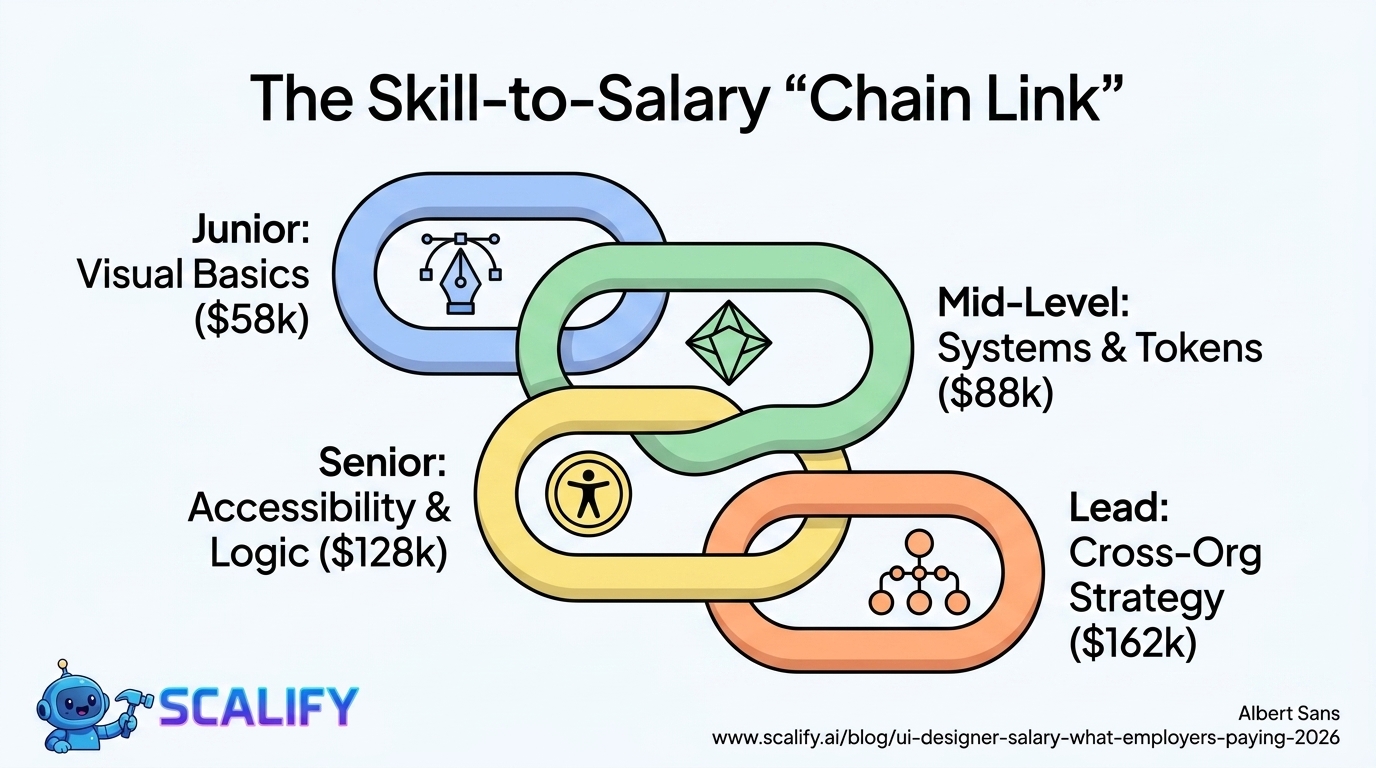
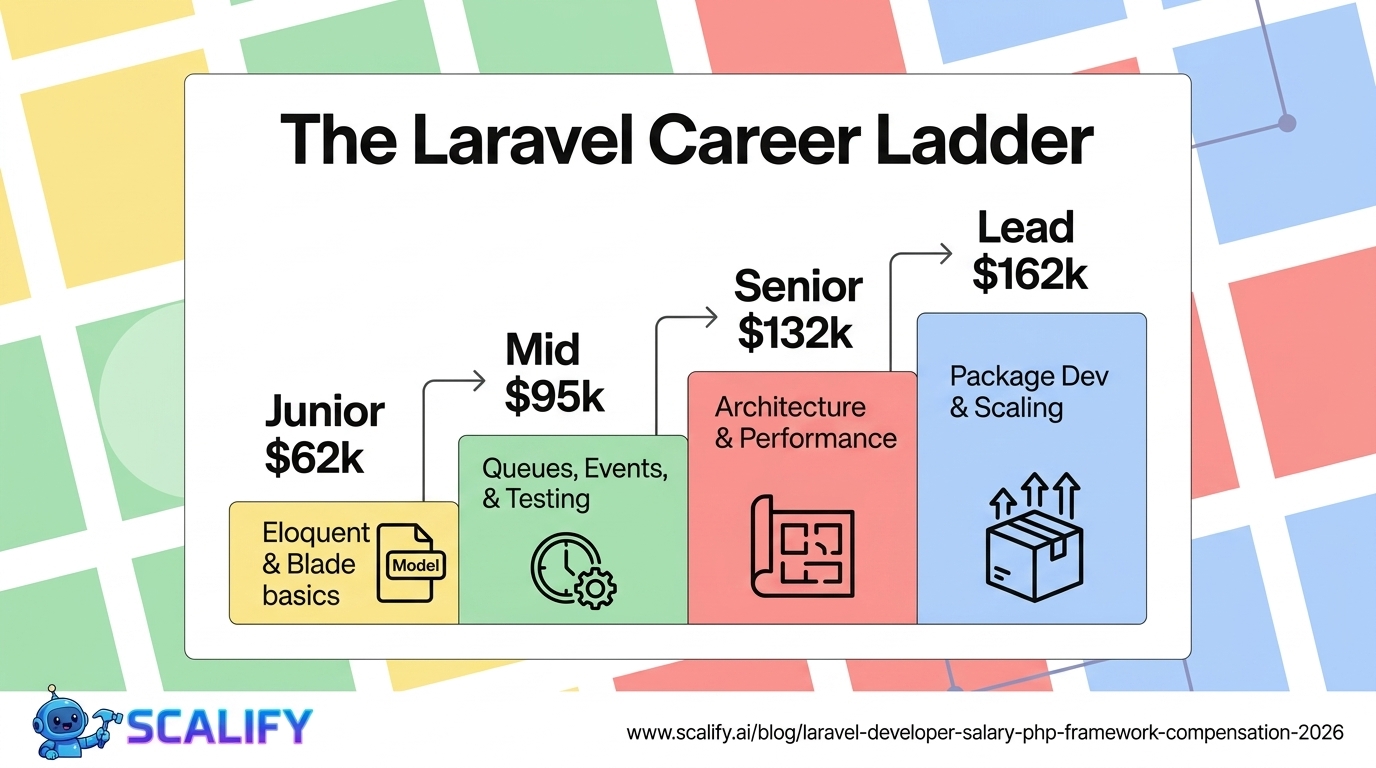
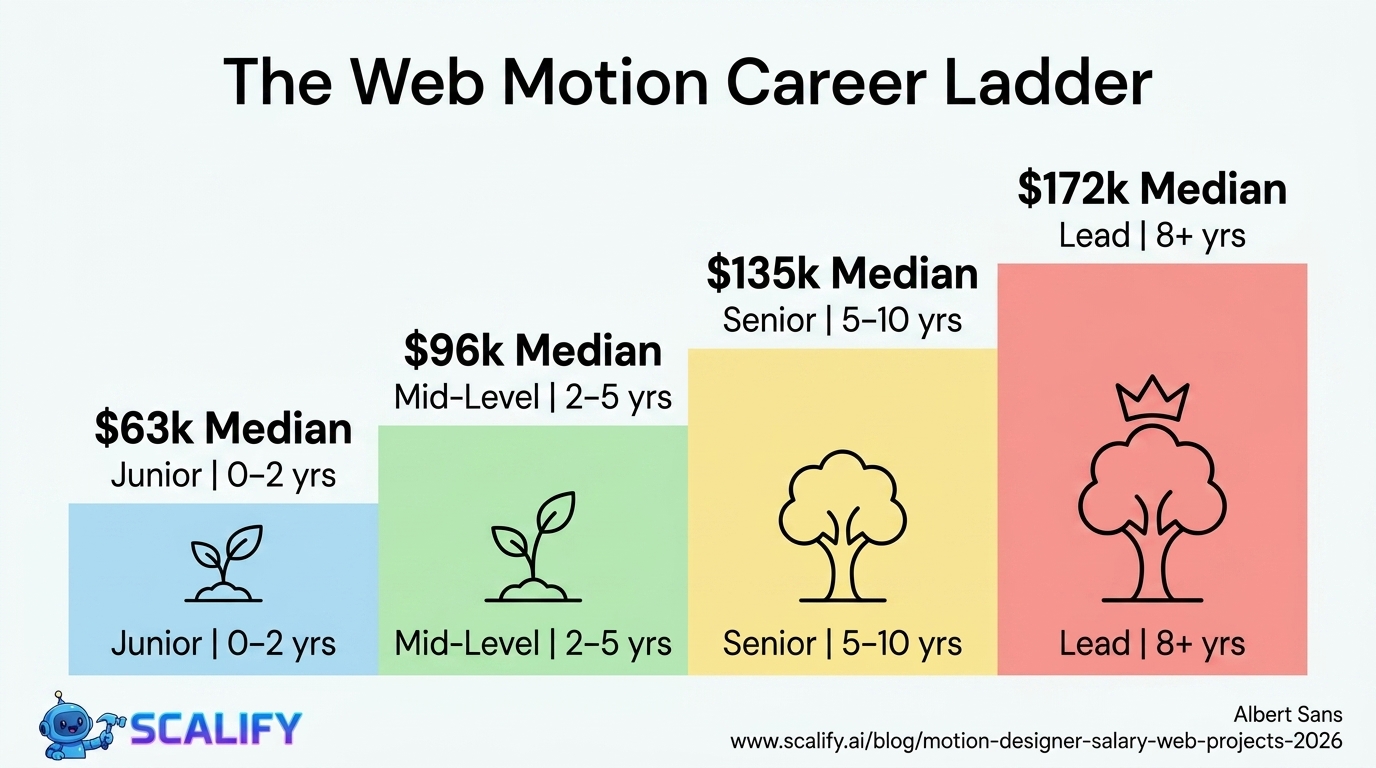
LevelYears ExperienceSalary RangeMedianJunior UX/UI Designer0–2 years$52,000 – $78,000$62,000Mid-Level UX/UI Designer2–5 years$78,000 – $118,000$95,000Senior UX/UI Designer5–10 years$112,000 – $162,000$135,000Lead / Principal UX/UI Designer8+ years$145,000 – $210,000+$172,000
The UX to UI Spectrum: Where You Sit Changes Your Pay
Within the broad UX/UI category, designers sit on a spectrum from pure UX research on one end to pure visual/UI execution on the other. Where you sit on that spectrum — and where the companies you target value designers to sit — significantly affects your compensation.
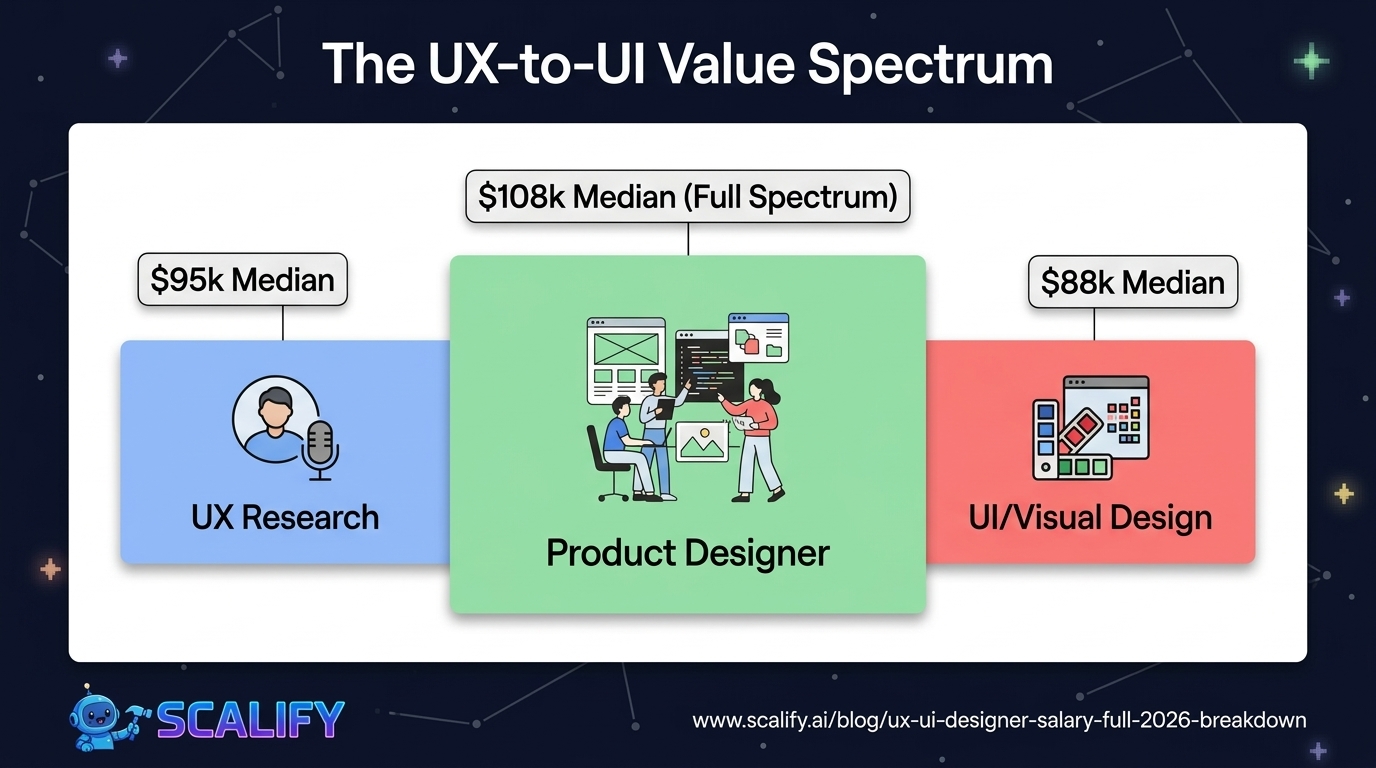
Role EmphasisPrimary ActivitiesMid-Level MedianSenior MedianUX Research–HeavyUser interviews, usability testing, synthesis, journey maps$95,000$142,000UX Strategy + Information ArchitectureFlows, IA, content strategy, sitemaps, testing$92,000$138,000Balanced UX/UI (most common)Research + wireframes + visual design + handoff$95,000$135,000UI-Heavy / Visual Design FocusComponent design, visual systems, brand application$88,000$128,000Product Designer (full spectrum)Strategy + research + design + measurement$108,000$152,000
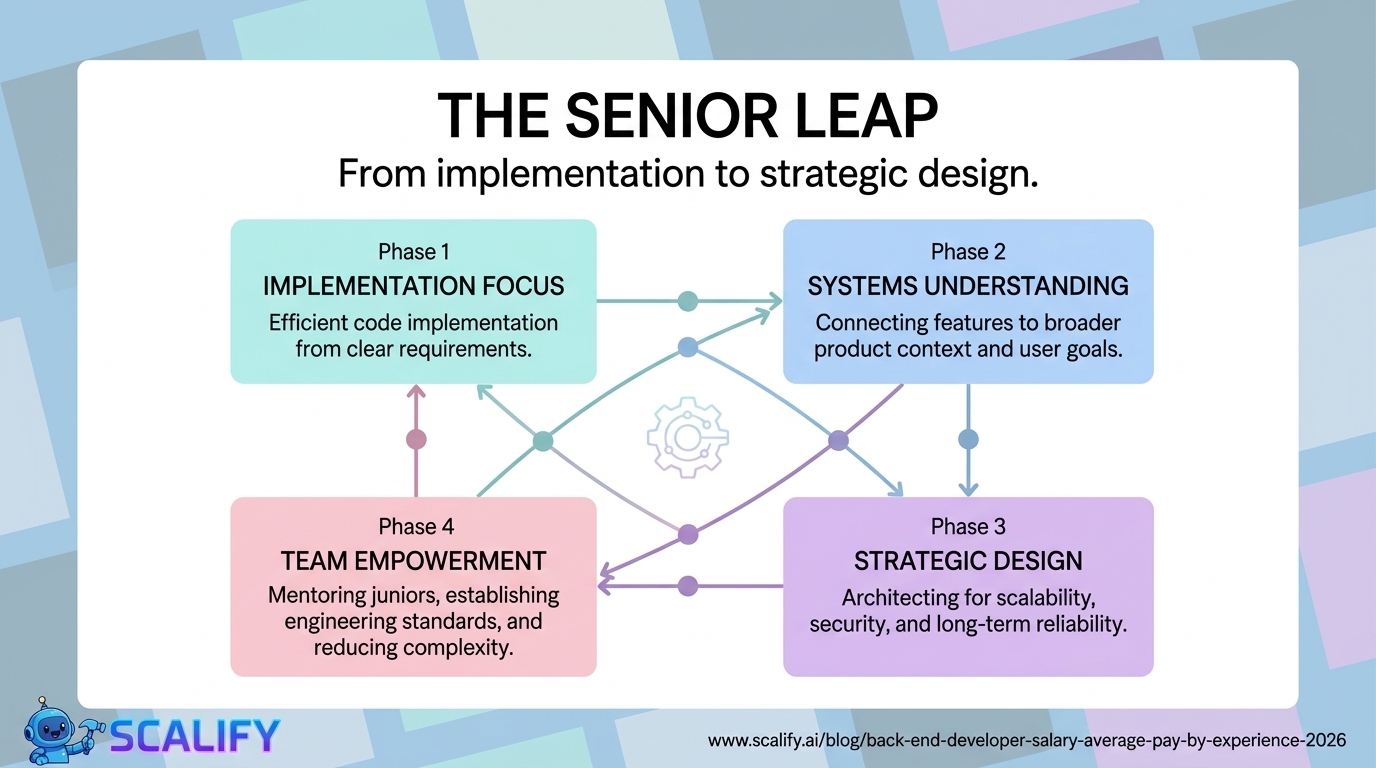
The "product designer" title — which implies responsibility for the full design-to-outcome cycle including strategic thinking and measurement — commands the highest compensation because it requires the most capabilities and has the most direct business impact. A product designer who can formulate the design problem, conduct the research, design the solution, and measure whether it worked is solving a problem that typically requires three people at less sophisticated organizations.
The Five Phases of UX Work and Which Pay Most
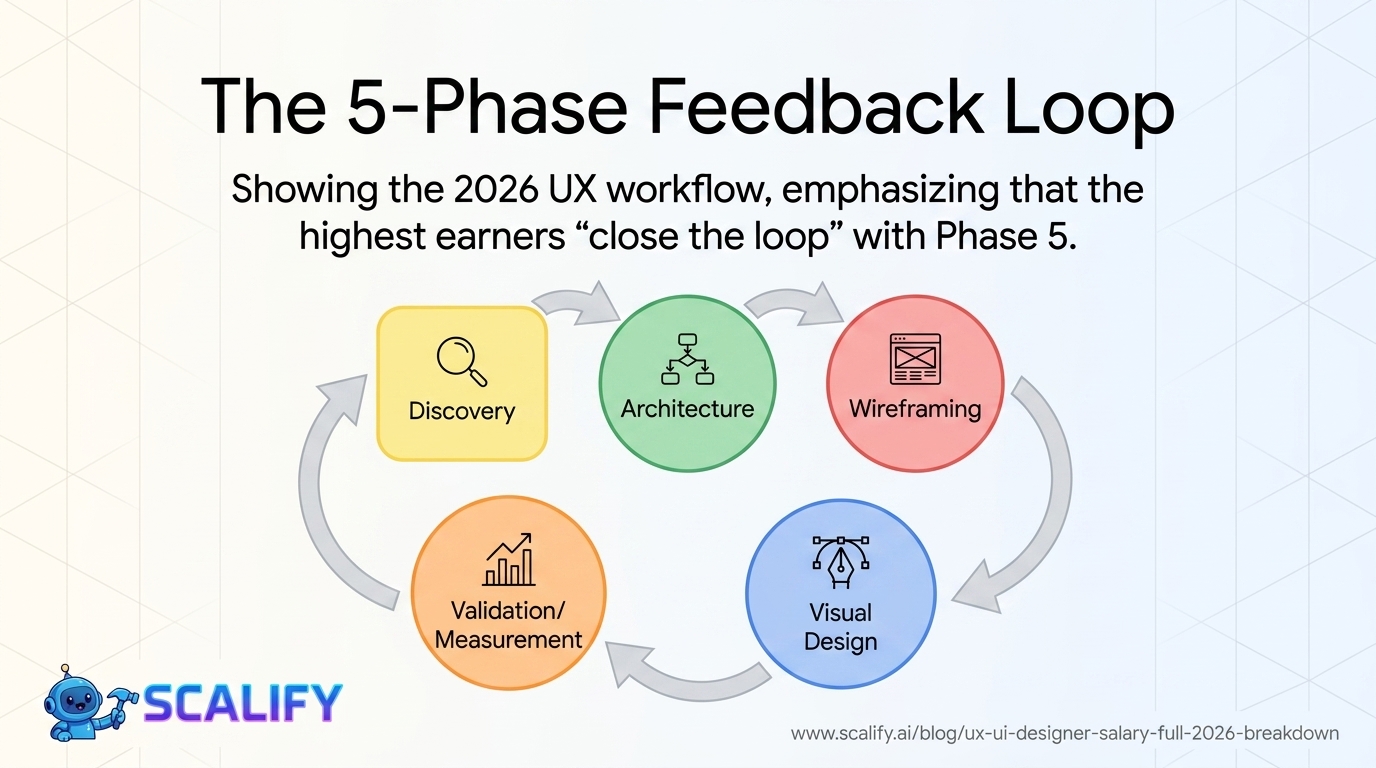
UX/UI design work can be divided into five phases, and designers who are genuinely excellent at all five — rather than strong at just two or three — earn significantly more:
Phase 1: Discovery and Research
User interviews, competitive analysis, analytics review, heuristic evaluation, stakeholder interviews. This phase defines the problem before design begins. Designers who skip this — jumping straight to wireframes from a product manager's requirements — are designing solutions to problems they may not have correctly understood.
The designers who earn the most don't skip discovery. They also don't spend months in research while products stall. The skill is doing meaningful discovery in a time-efficient way — a 3–5 user interview set with synthesis can inform months of design work if done well.
Phase 2: Information Architecture and Flows
Site maps, user flows, task flows, and content hierarchy. Before any pixels are placed, the logical structure of the experience needs to be correct. Designers who can map complex user journeys across multiple touchpoints, identify where the current architecture creates friction, and propose IA improvements that reduce cognitive load are providing strategic value that extends well beyond visual design skills.
Phase 3: Wireframing and Interaction Design
Low-to-mid fidelity wireframes, interaction states, prototype flows, navigation patterns. This is where most junior designers feel most comfortable — it's the "design" work they were trained on. The quality differentiator at this phase isn't craft (most designers can make clean wireframes) but judgment: knowing when a pattern from an existing design system is appropriate vs. when a new pattern is needed, designing for edge cases not just the happy path, and considering mobile-first responsive behavior from the first wireframe rather than as an afterthought.
Phase 4: Visual Design and Prototyping
High-fidelity UI, component design, motion/interaction specs, developer handoff. This is where visual craft, typography skill, color system knowledge, and design system fluency combine. Designers who produce beautiful, accessible, system-consistent visual designs that developers can implement efficiently and without ambiguity are genuinely rare — and compensated accordingly.
Phase 5: Validation and Measurement
Usability testing, A/B testing, analytics review, design iteration based on data. The designers at the top of the compensation range close the loop — they don't just ship a design and move to the next project, they measure whether the design achieved its goal and iterate. This requires both comfort with data (setting up the right analytics events, reading A/B test results, interpreting usability testing data) and the professional infrastructure to actually learn from live products.
UX/UI Designer Salary by Company Type
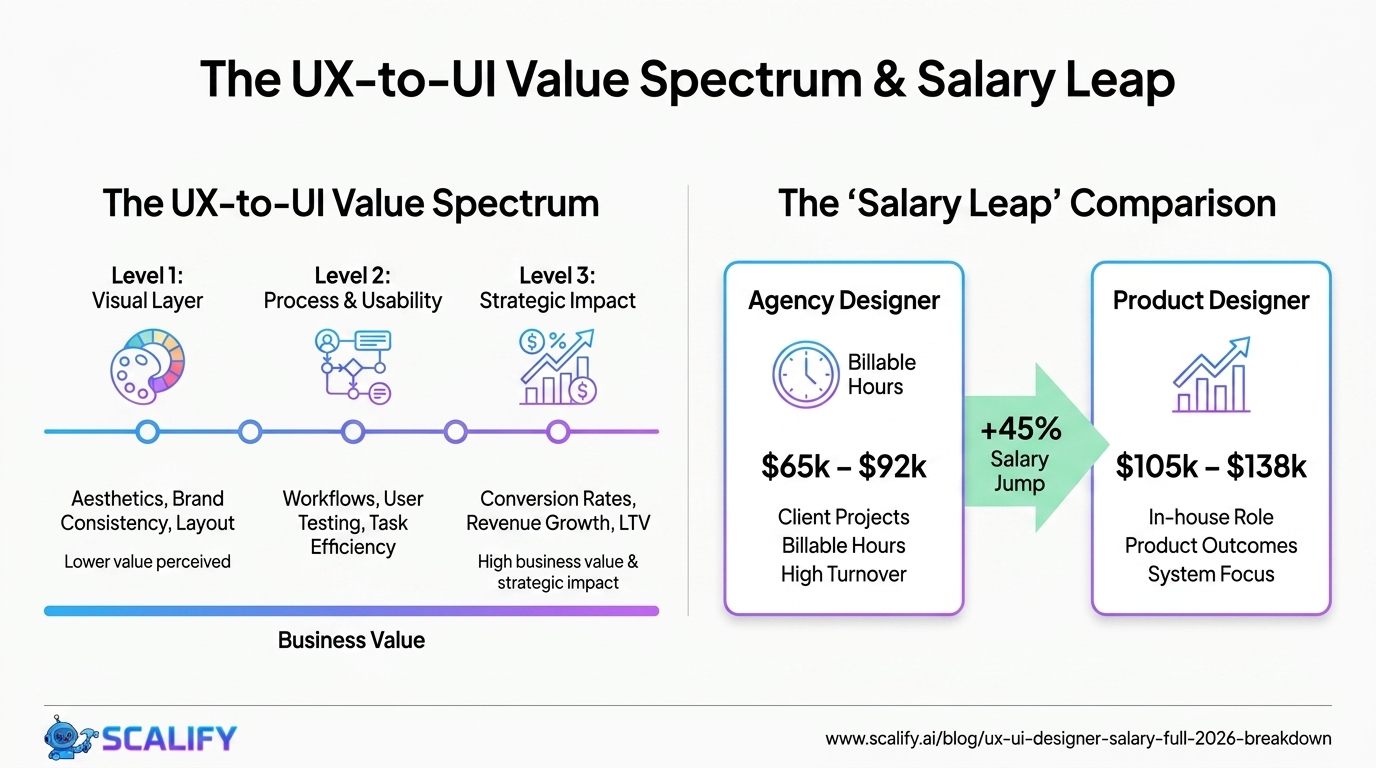
Company TypeMid-LevelSeniorEquity/BonusFAANG / Large Tech$120,000 – $155,000$158,000 – $210,000Very High (RSUs)Series B–D Startups$105,000 – $138,000$138,000 – $185,000Meaningful equitySaaS Companies (established)$98,000 – $128,000$128,000 – $168,000Moderate equityFintech / Healthtech$100,000 – $135,000$132,000 – $175,000Moderate-High equityEnterprise / Non-Tech$78,000 – $108,000$105,000 – $142,000LowAgencies / Studios$65,000 – $92,000$88,000 – $120,000None
UX/UI Designer Salary by City
CityMid-LevelSeniorSan Francisco Bay Area$112,000 – $148,000$155,000 – $215,000New York City$102,000 – $135,000$140,000 – $192,000Seattle$102,000 – $135,000$140,000 – $192,000Austin / Denver$85,000 – $115,000$118,000 – $158,000Miami$72,000 – $102,000$100,000 – $138,000Non-tech hub markets$55,000 – $82,000$82,000 – $115,000
UX/UI Design Tools Salary Impact
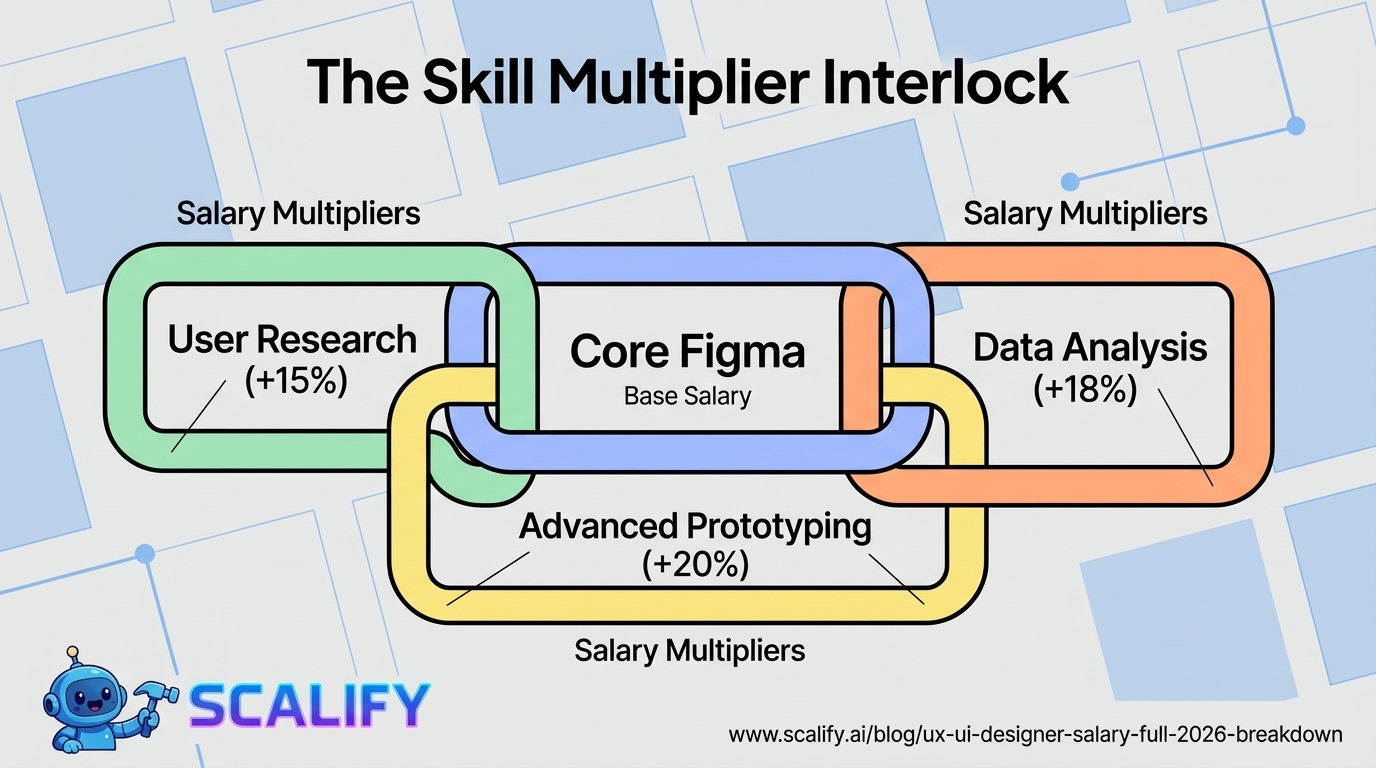
ToolRole It PlaysSalary Premium vs. Non-UsersFigma (expert: variables, dev mode, components)Primary design toolBaseline requirement — no premium for basicsFigma Advanced (auto layout, variables, plugins)Systems efficiency+5–12%Maze / UserTesting / HotjarResearch and validation+8–15% (shows UX rigor)FramerAdvanced prototyping, live React output+12–20%WebflowDesign + build capability+15–25%Principle / ProtoPieAdvanced motion prototyping+8–15%Amplitude / MixpanelData analysis for design decisions+10–18%Miro / FigJamFacilitation and collaborationMinimal (very common skill)
The Biggest Salary Jumps in UX/UI: What Actually Works
Adding User Research to a Visual-Only Practice
Many UI-trained designers describe themselves as "UX/UI" without doing meaningful UX research. Adding genuine user research capability — even at a basic level (screener writing, interview moderation, affinity diagram synthesis, findings presentation) — is a meaningful differentiator that justifies higher compensation at companies who value it. A visually skilled designer who can also recruit 5 users, run a usability study, and present findings to a product team is worth more than one who can only do the visual work.
Transitioning from Agency to Product
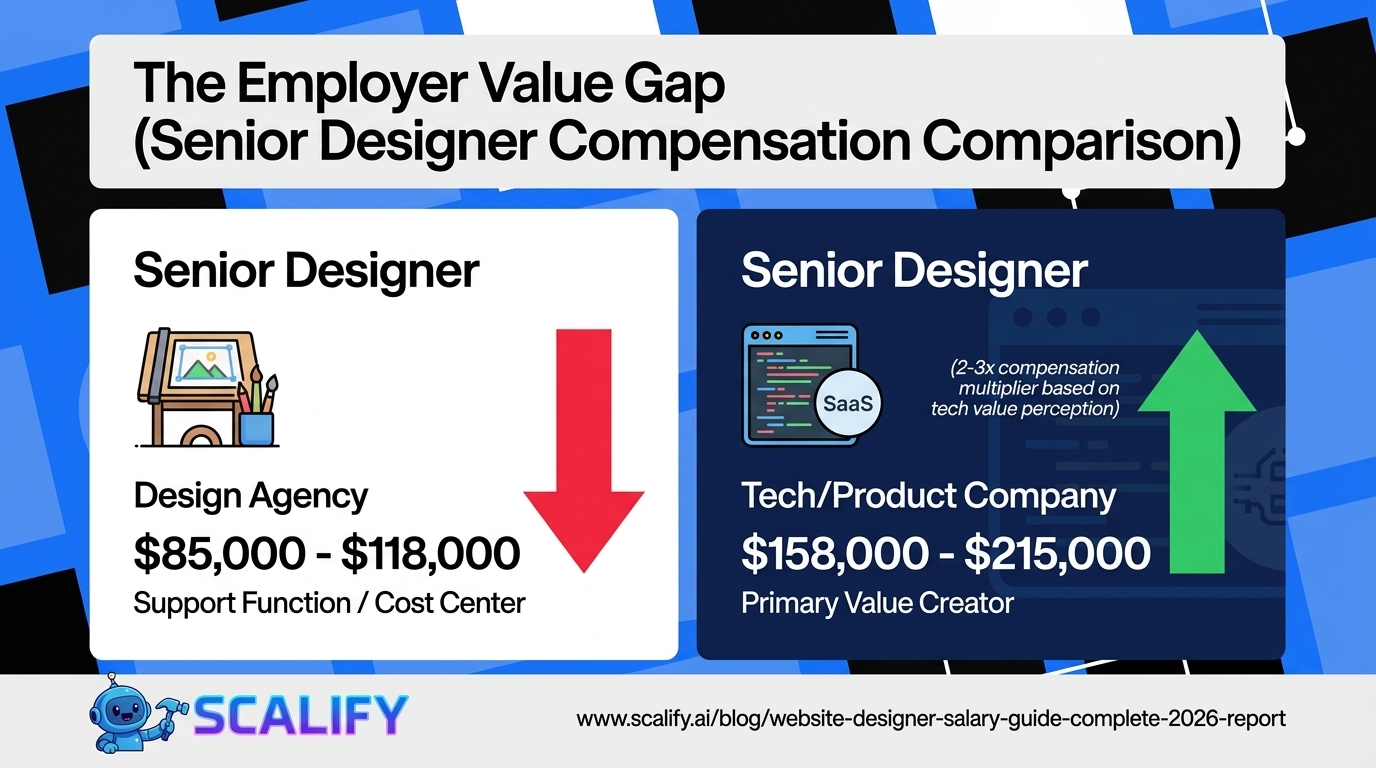
The most impactful single career move for most UX/UI designers is moving from agency or marketing-team employment to a product company. The same UX/UI skills are worth 25–45% more at a product company than at a design agency — because at a product company, design work is directly tied to product success, not treated as a billable service. This transition typically requires 2–3 years of agency experience, a portfolio that demonstrates product design thinking (not just visual execution), and active targeting of product company roles rather than passively applying to whatever appears.
Making Design Outcomes Measurable
The highest-earning UX/UI designers are those who can demonstrate the business impact of their work quantitatively. This requires setting up the measurement before launch (not as an afterthought), knowing what metrics to track for different types of design changes (conversion rate for checkout redesigns, task completion for navigation changes, time-on-page for content layout changes), and being willing to ship, measure, and iterate rather than perfecting in isolation.
In salary negotiations, the difference between "I redesigned the onboarding experience" and "I redesigned the onboarding experience and reduced drop-off from 68% to 45%, which contributed to a 28% increase in free-to-paid conversion" is tens of thousands of dollars in negotiating leverage.
Portfolio Guidance: What Senior UX/UI Portfolios Look Like
The portfolio gap between mid-level and senior compensation is primarily a documentation gap, not a craft gap. Senior-earning portfolios have these characteristics:
Freelance UX/UI Designer Rates
LevelHourly RateTypical Project ScopeJunior UX/UI Designer$40 – $70/hrWireframes, basic UI designMid-Level UX/UI Designer$70 – $120/hrFull product design, user flowsSenior UX/UI Designer$120 – $195/hrStrategy, research, full product designUX Strategist / Design Consultant$165 – $250+/hrProduct strategy, design audits, team coaching
The Bottom Line
UX/UI designer salaries in 2026 range from $52,000 for entry-level designers at small agencies to $210,000+ in total compensation for lead product designers at major tech companies. The combined UX/UI skill set — genuine user research capability plus strong visual execution — commands higher compensation than either skill alone. Product designer is the title that unlocks the highest ranges, and reaching it requires demonstrating the full cycle of design work from problem definition through measured outcomes. Moving from agency to product company and documenting design impact quantitatively are the two most reliable paths to senior compensation.
At Scalify, we build professional portfolio websites for UX/UI designers and product designers in 10 business days — the case study presentation that earns you the senior-level interview.
Key Takeaways and Next Steps
The principles and data in this guide reflect what actually works in professional web development and digital marketing in 2026 — not theoretical best practices but measured, documented outcomes from implementations at scale. The gap between knowing these principles and benefiting from them is always execution: the businesses that act on what they read, implement changes systematically, and measure the results consistently outperform those who consume information without converting it to action.
For any improvement described in this guide, the implementation sequence that produces the best outcomes: assess your current situation against the benchmarks provided, identify the 2–3 highest-impact improvements specific to your situation, implement them with measurement tracking in place, evaluate results after 30–60 days, and plan the next iteration based on what you learned. This cycle — assess, prioritize, implement, measure, iterate — is the operational foundation of continuous improvement that compounds into significant competitive advantage over the 12–24 month horizon.
The compounding returns from consistent web presence investment are not linear: a website that improves slightly each month accumulates to dramatic improvements over a year, and those improvements multiply with each other. Faster load times improve both search rankings and conversion rates simultaneously. Better content attracts backlinks that improve rankings that attract more traffic. More testimonials build trust that improves conversion rates that improve revenue that funds more investment. The interconnected nature of website performance means that each improvement amplifies the value of every other improvement — making the decision to invest consistently, across multiple dimensions simultaneously, the highest-ROI approach to digital marketing available to most businesses.
At Scalify, every website we build reflects these principles — technically optimized, conversion-focused, SEO-ready, and designed to compound in value over time as content, backlinks, and organic authority accumulate on the strong foundation we deliver in 10 business days.


.jpeg)
.jpeg)


78 SW 7th St, Miami, FL 33130