
Chatbot on Website Statistics 2026: Usage, Conversions, and ROI
By Josh Ternyak

April 17, 2026
Chatbots on websites produce 20-35% more leads, handle 68% of inquiries autonomously, and reduce support costs by 30%. This comprehensive 2026 guide covers chatbot types and conversion rates, industry benchmarks, ROI calculator, lead generation mechanics, top platforms, implementation best practices, performance metrics, AI vs rule-based comparison, and the future of website chatbots.
Chatbot on Website Statistics 2026: Usage, Conversions, and ROI
Chatbots have moved from experimental novelty to mainstream business tool over the past five years, driven by advances in natural language processing, the explosion of AI-powered chat capabilities, and a steady accumulation of evidence that well-implemented chatbots genuinely improve conversion rates, reduce support costs, and increase customer satisfaction when deployed correctly. In 2026, the chatbot market has matured to the point where the question is no longer whether chatbots work but which types work for which use cases, what the actual data shows about performance, and how to implement them in ways that add value rather than friction.
Key Chatbot Statistics 2026
Chatbot Types and Their Conversion Rates
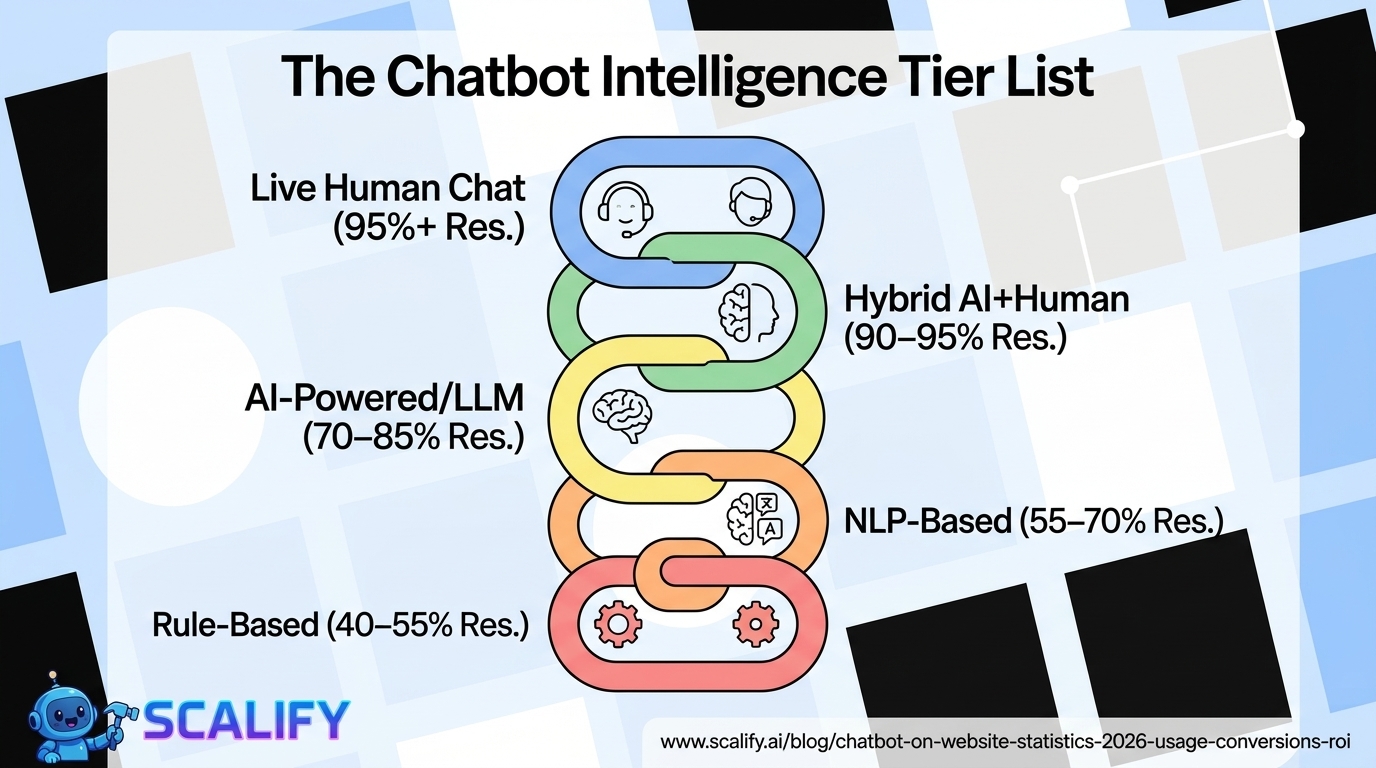
Chatbot TypeTechnologyAvg. Resolution RateConversion vs. No ChatBest Use CaseRule-based / Decision treeScripted flows, buttons40–55%+15–20%FAQ deflection, simple routingNLP-based (intent detection)Trained intent classifiers55–70%+20–30%Customer service, order trackingAI-powered (LLM-based)GPT-4, Claude, Gemini70–85%+28–40%Complex queries, personalizationHybrid (AI + human handoff)AI with live agent escalation90–95%+35–45%High-value sales, complex supportLive chat (human agents)Human-operated95%++40–50%Complex, high-value conversations
Industry-Specific Chatbot Performance
IndustryAdoption RateAvg. Deflection RatePrimary Use CaseConversion ImpactE-Commerce / RetailHigh — 68%65%Order status, product recommendations, returns+25–35% cart recoveryFinancial ServicesHigh — 72%58%Account questions, loan pre-qualification+18–28% lead captureHealthcareModerate — 42%52%Appointment scheduling, symptom triage+30% appointment bookingsReal EstateModerate — 45%55%Property inquiries, lead qualification+35–45% lead captureSaaS / TechnologyVery High — 78%70%Product questions, onboarding, trial conversion+20–30% trial signupsTravel / HospitalityHigh — 65%60%Booking assistance, itinerary questions+22–32% direct bookingsLegal ServicesLow — 28%40%Initial intake, FAQ, appointment scheduling+25–35% consultation requests
The Lead Generation Chatbot: How It Works
Lead generation chatbots — deployed on landing pages, pricing pages, and contact pages — are the highest-converting chatbot use case for most B2B businesses. Rather than waiting for prospects to fill out a contact form, these chatbots proactively engage visitors with relevant opening messages, qualify them through conversational questioning, and capture contact information in a context that feels like a conversation rather than a form.
The conversion mechanics work because chatbots address the primary barriers to form completion: uncertainty about whether the business can help (answered in the first message), ambiguity about what information to provide (resolved through guided questions), and the cognitive effort of composing a formal inquiry (reduced by the conversational format). A prospect who types "I'm looking for help with my website" into a chatbot is giving the business infinitely more signal than the same prospect who abandons a contact form — and the chatbot can immediately provide relevant information, collect qualification data, and ensure someone follows up.
Chatbot ROI Calculator
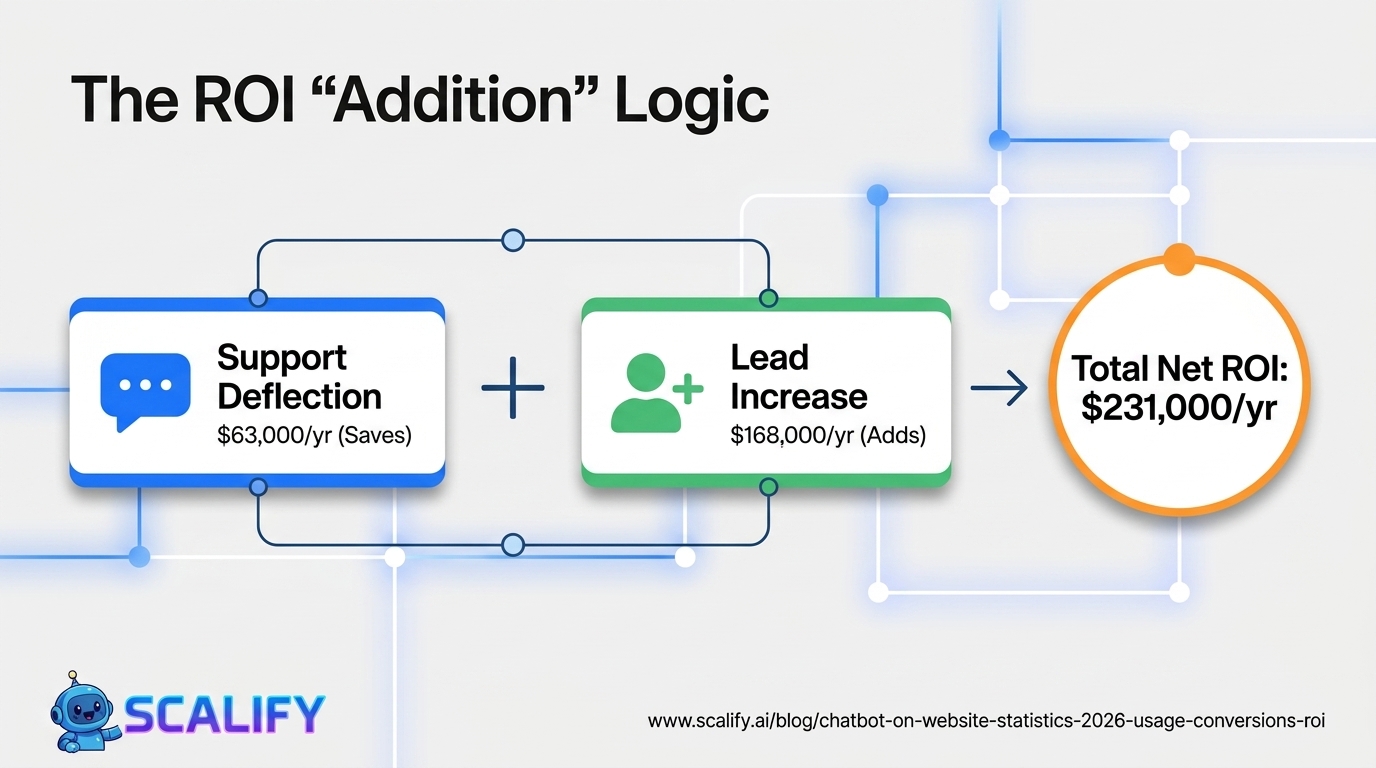
Business MetricWithout ChatbotWith ChatbotAnnual ImpactMonthly support inquiries500500 (same volume)—Agent-handled inquiries500150 (chatbot deflects 70%)350 fewer agent contacts/moCost per agent contact ($15)$7,500/mo$2,250/moSaves $5,250/mo = $63,000/yrMonthly leads from website100128 (+28% with chatbot)28 additional leads/moLead value ($500 avg)$50,000/mo$64,000/mo+$14,000/mo = +$168,000/yrChatbot monthly cost—$200–$500/mo-$3,600 to -$6,000/yrNet annual ROI$225,000–$231,000
When Chatbots Hurt Conversions
Chatbots do not universally improve conversion rates — they hurt them when implemented poorly. The most common chatbot failure modes:
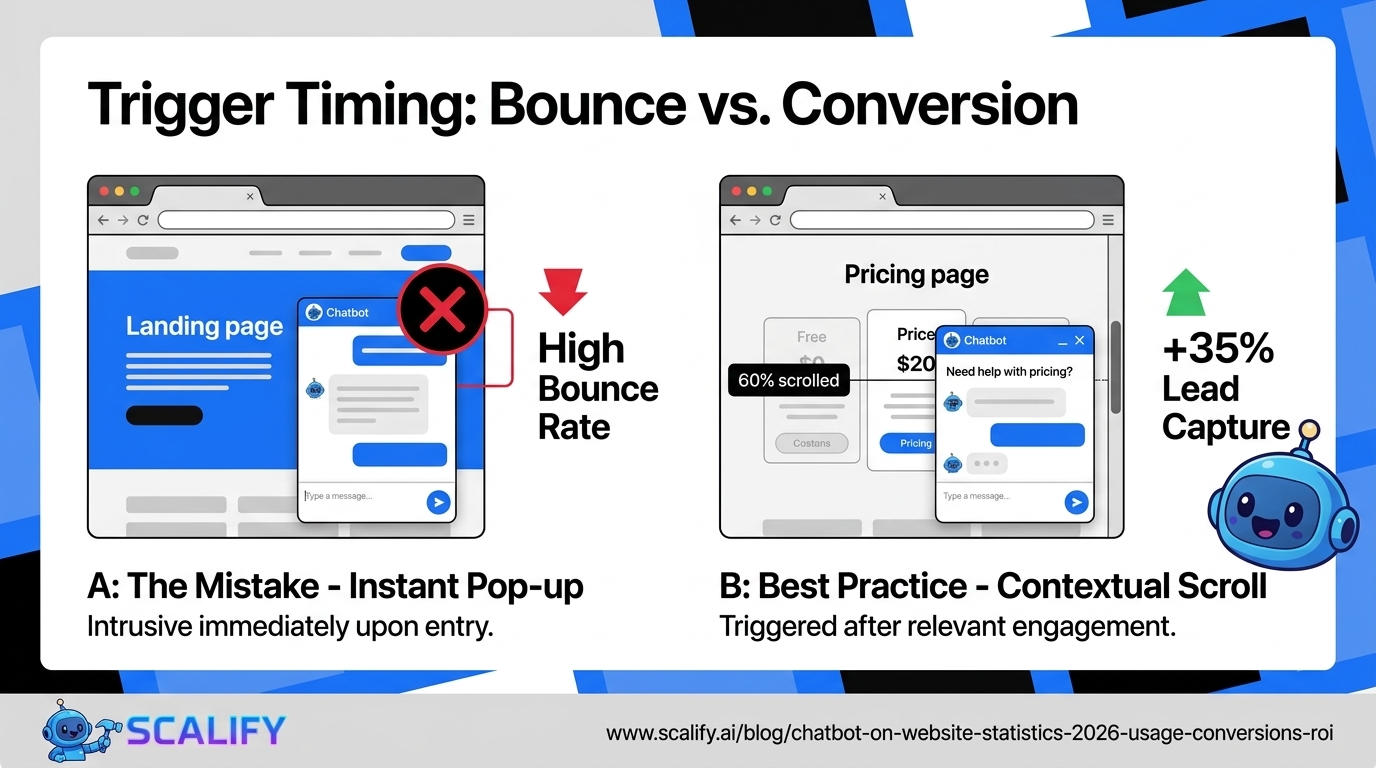
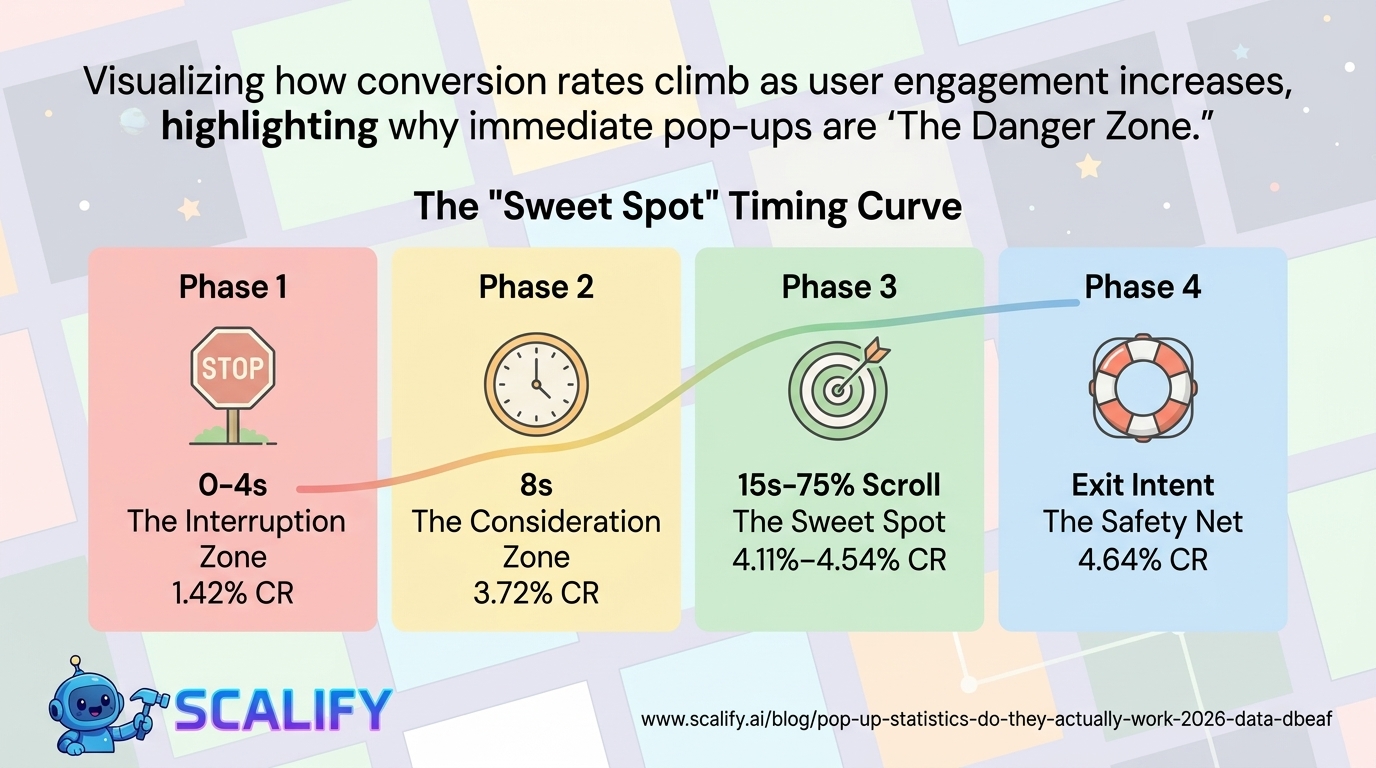
Aggressive proactive triggering. A chatbot that pops up within 3 seconds of a visitor landing on any page with a pushy message interrupts the visitor's natural reading flow and creates an impression of desperation. The result is increased bounce rates and lower conversion, not higher. Best practice: trigger chatbot proactively only on high-intent pages (pricing, contact, checkout) after 20–30 seconds of engagement or exit intent.
Bot-only experience with no human escalation. Visitors with complex questions who reach a chatbot's capability limit and can't get to a human feel trapped and frustrated. The chatbot becomes an obstacle rather than an aid. Any chatbot implementation on a website that handles complex or high-value inquiries needs a clear, easy path to human assistance.
Generic greeting with no context. "Hi there! How can I help you today?" on a pricing page is a missed opportunity. A chatbot that greets visitors with context-aware messaging — "Looking for pricing? Here's what's included in each plan" — demonstrates relevance and adds value immediately.
Top Chatbot Platforms in 2026
PlatformBest ForAI CapabilityStarting PriceIntercomSaaS, B2B, customer supportGPT-4 powered Fin AI$39/seat/moDrift (Salesloft)B2B sales and marketingStrong AI, ABM featuresCustom pricingTidioSMB e-commerce and serviceLyro AI (Claude-based)Free tier, $19+/moHubSpot ChatHubSpot CRM usersModerate — improvingIncluded in HubSpotZendesk Answer BotHigh-volume support teamsGPT-based, good deflectionIncluded in Zendesk SuiteCrispSMB, startup-friendlyBasic AI, good live chatFree tier, $25/moCustom LLM chatbotComplex use cases, maximum flexibilityBest — trained on own data$2,000–$20,000 build
Chatbot vs. Live Chat vs. AI Chat: Choosing the Right Approach
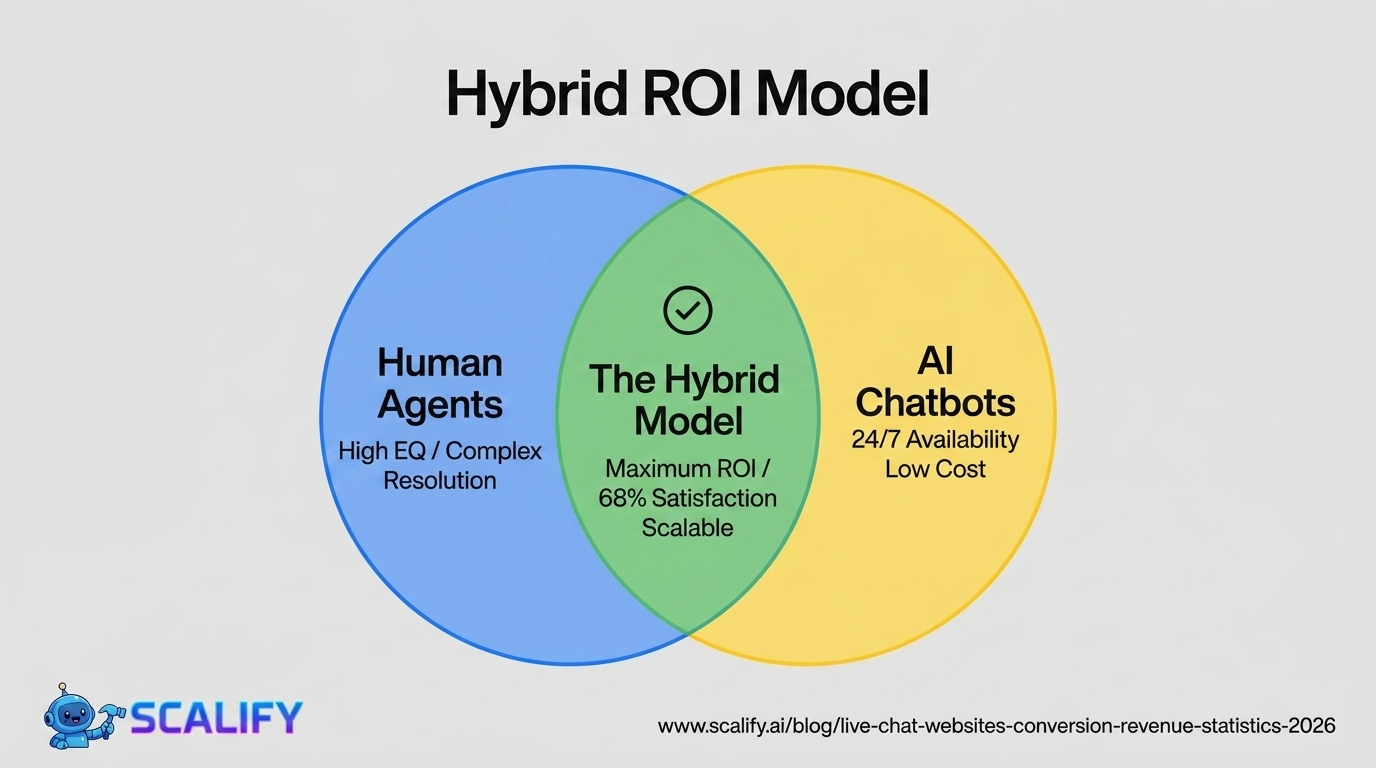
The choice between fully automated chatbot, live chat with human agents, and AI-powered chat depends primarily on inquiry complexity, business hours coverage, budget, and volume. For most SMBs, a hybrid approach — AI chatbot handling routine inquiries 24/7, with human handoff for complex or high-value conversations during business hours — provides the best combination of coverage, cost efficiency, and conversion performance. Pure live chat is expensive to staff for 24/7 coverage but produces the highest conversion rates when agents are available. Pure rule-based chatbots are cheap but limited in what they can handle. AI chatbots in 2026 increasingly approach the capability level of human agents for structured queries, making the fully automated path viable for a wider range of use cases than was true two years ago.
The Bottom Line
Chatbots on websites produce measurable improvements in lead capture, conversion rates, and support efficiency when implemented correctly — with the average business seeing 20–35% more leads, 30% lower support costs, and positive ROI within 12 months of a proper implementation. The key success factors are: using AI-powered rather than rule-based chatbots for complex query types, triggering proactively only on high-intent pages after genuine engagement, always providing a human escalation path, and measuring chatbot performance against specific conversion goals rather than engagement metrics alone. The chatbot implementations that fail are almost always either poorly triggered, under-powered, or deployed without a clear goal beyond "having a chatbot."
At Scalify, we build professional websites that integrate seamlessly with leading chatbot and live chat platforms — delivering the technical foundation that makes customer engagement tools perform at their best.
.jpeg)
Top 5 Sources
Chatbot Implementation Best Practices: What High-Performing Chatbots Do Differently
The gap between a chatbot that improves conversions and one that damages them is almost entirely in implementation quality. The following practices separate high-performing chatbot implementations from poor ones:
Proactive Triggering Done Right
High-performing chatbots trigger based on behavioral signals rather than time alone. Rather than popping up 3 seconds after every page load, they trigger when a visitor demonstrates high intent — scrolling 60% through a pricing page, pausing on a "Contact Us" section, spending 30+ seconds on a specific product page, or showing exit intent on the checkout page. These behavior-triggered messages arrive when the visitor is most likely to be thinking about the exact question the chatbot addresses: "I see you're looking at our enterprise plan — I can answer any pricing questions right now." This context-aware approach consistently outperforms generic time-based triggers on conversion metrics.
Conversation Design: Writing for the Medium
Chatbot conversations require a different writing style than website copy or email. Effective chatbot messages are short (2–3 sentences maximum), use natural, conversational language without corporate jargon, ask one question at a time rather than multiple questions in a single message, acknowledge what the visitor said before asking the next question, and use first-person language that sounds like a helpful person rather than a corporate FAQ. The most common chatbot copy mistake is writing responses that sound like a support article rather than a helpful colleague — which undermines the conversational premise of the medium and signals to visitors that they're interacting with a script rather than a capable assistant.
Data Integration: The Performance Multiplier
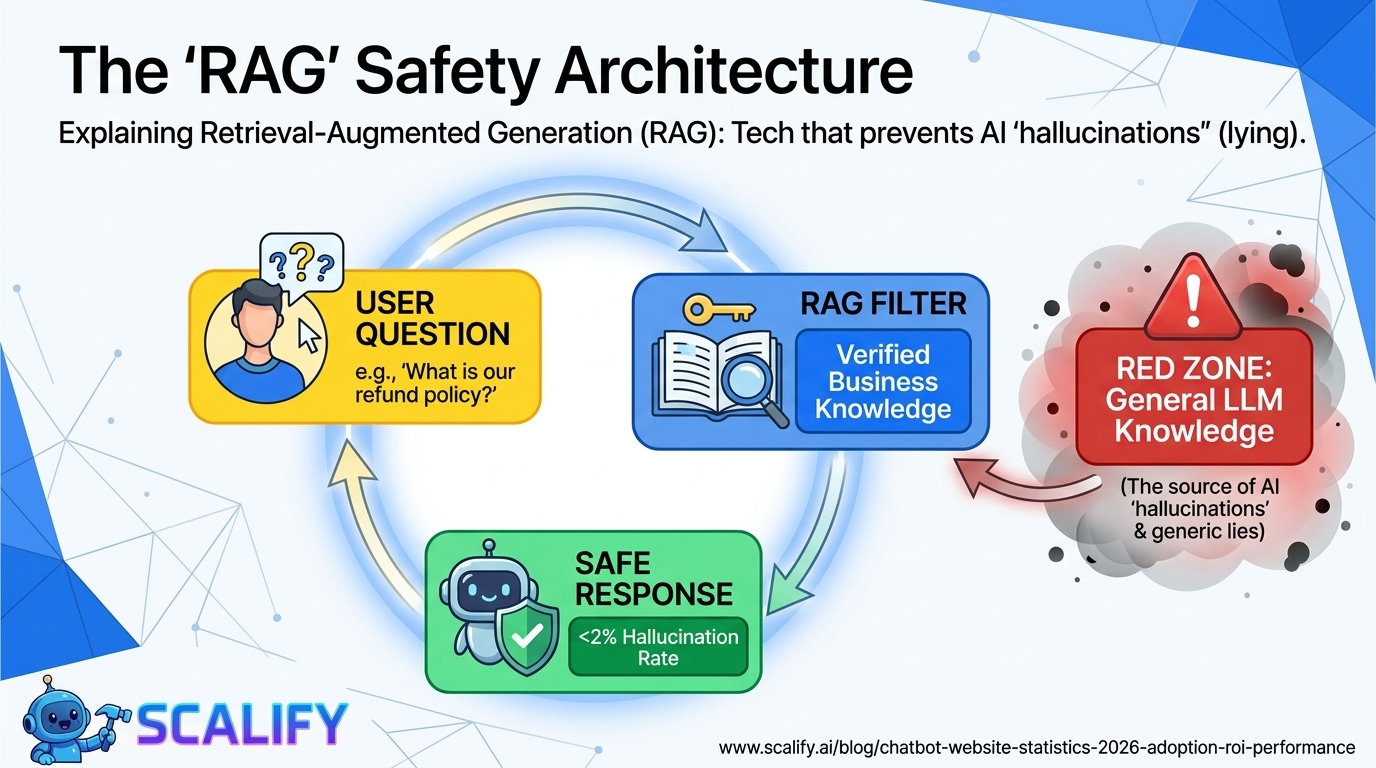
Chatbots integrated with CRM, product databases, and customer data platforms significantly outperform standalone chat implementations. A chatbot that can identify returning customers by email and greet them by name, reference their previous orders or interactions, and provide personalized responses based on their account status is serving as a genuine customer service enhancement rather than a generic query-handling tool. Similarly, a B2B chatbot integrated with a company's CRM that can identify website visitors from target accounts and route them to dedicated sales representatives is providing commercial value that no amount of clever scripting in a standalone chatbot can replicate. These integrations require more implementation investment but deliver proportionally higher ROI.
Measuring Chatbot Performance: The Right Metrics
MetricWhat It MeasuresTargetHow to Improve If LowResolution rate% of conversations resolved without human handoff60–80% (AI chatbot)Improve training data, add FAQ coverageContainment rate% of support tickets deflected to chatbot40–70%Expand chatbot coverage to more inquiry typesLead capture rate% of chatbot conversations that capture contact info15–35%Optimize lead capture timing and messagingCustomer satisfaction (CSAT)Post-conversation rating4.0+ / 5.0Improve response quality, add human escalation pathsConversion rate contribution% of conversions that engaged chatbotBenchmark vs. non-chat visitorsImprove proactive triggering on high-intent pagesAbandonment rate% who leave during chatbot conversationUnder 30%Shorten conversation flows, add quick option buttons
AI Chatbots vs. Rule-Based: The 2026 Performance Gap
The performance gap between AI-powered chatbots (GPT-4, Claude, or similar LLM-based) and traditional rule-based chatbots has widened substantially over the past three years. Rule-based chatbots are limited to queries that exactly match their programmed decision trees — a visitor who phrases their question in an unexpected way, uses industry jargon the rules don't account for, or has a multi-part query gets redirected to a human or receives an irrelevant response. This limitation makes rule-based chatbots useful for highly structured, high-volume query types (order status, appointment scheduling, account balance) but frustrating for anything requiring nuanced understanding.
LLM-powered chatbots handle natural language variation, multi-part queries, and context across a conversation in ways that rule-based systems cannot. The 25–40% higher satisfaction scores for AI chatbots reflect this genuine capability difference. The remaining gap vs. human agents is most pronounced in emotionally complex situations (complaints, billing disputes, technical failures) where empathy and judgment matter more than information accuracy — and where the hybrid model (AI + human escalation) consistently outperforms either approach alone.
The Future of Website Chatbots: What's Coming
The chatbot technology landscape is evolving rapidly in several directions that will affect website implementation decisions over the next 2–3 years. Multimodal AI chatbots — capable of processing images, documents, and voice inputs alongside text — are emerging from labs into production deployments, enabling interactions like "Here's a photo of my product issue" or "I'm attaching my invoice." Personalization at the individual level, where chatbots adapt their tone, vocabulary, and recommendations based on accumulated visitor behavior data, is becoming technically feasible at reasonable cost for mid-market companies. And the line between chatbot and full AI agent — capable of taking actions (looking up order status, initiating returns, scheduling appointments directly) rather than just providing information — is blurring as agent frameworks mature. Businesses that invest in chatbot infrastructure today are building the foundation for significantly more capable automated customer interaction systems in the near future.


.jpeg)
.jpeg)

78 SW 7th St, Miami, FL 33130