

How Much Do Web Developers Make in Miami? 2026 Salary Guide
By Josh Ternyak

April 20, 2026
Miami web developer salaries range from $62,000 to $175,000+ with zero state income tax making effective purchasing power near or above national averages. This comprehensive guide covers Miami salary by role and experience, the Florida tax advantage, comparison to other tech markets, the growing Miami tech ecosystem, remote work opportunities, and negotiation strategies for Miami-based developers.
Web Developer Salary in Miami: The Complete Guide
Miami's technology sector has undergone a dramatic transformation since 2020. What was once primarily known as a finance, tourism, and real estate hub has become one of the fastest-growing tech markets in the United States — driven by the migration of tech workers and founders from New York, San Francisco, and other high-cost markets, the emergence of a thriving startup ecosystem, and the arrival of major financial technology companies establishing operations in the city. This growth has significantly impacted web developer salaries in Miami, pulling them higher as demand for technical talent competes with a supply that hasn't grown as fast as the market's ambitions.
Miami web developer salaries in 2026 are meaningfully below San Francisco and New York in nominal terms — but when adjusted for Florida's zero state income tax and Miami's lower cost of living compared to coastal tech hubs, the effective purchasing power differential is much smaller than the headline numbers suggest. For web developers who want access to a dynamic, sun-drenched city with strong quality of life and access to Latin American business opportunities, Miami's tech market offers a compelling combination of career opportunity and lifestyle that pure salary comparisons don't fully capture.
Key Statistics: Miami Web Developer Market
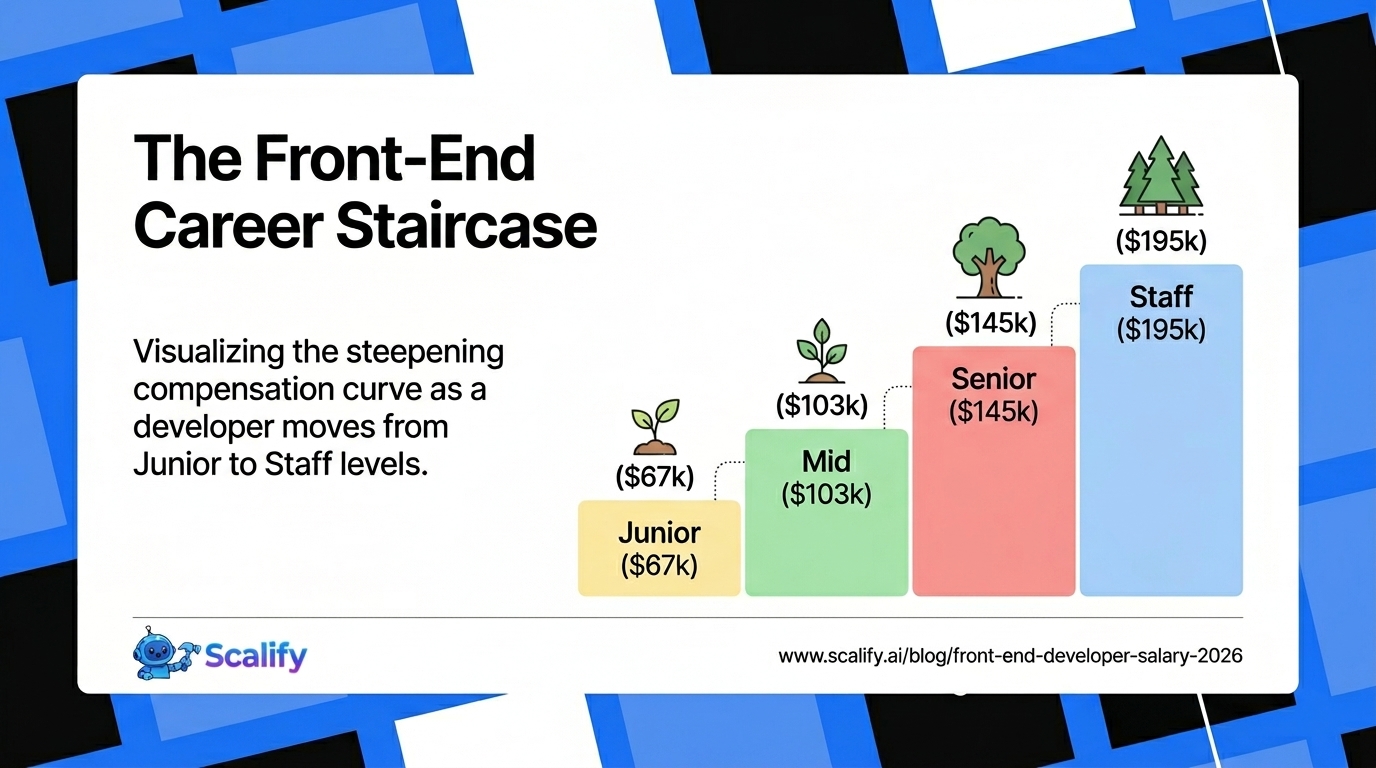
Miami Web Developer Salary by Role and Experience
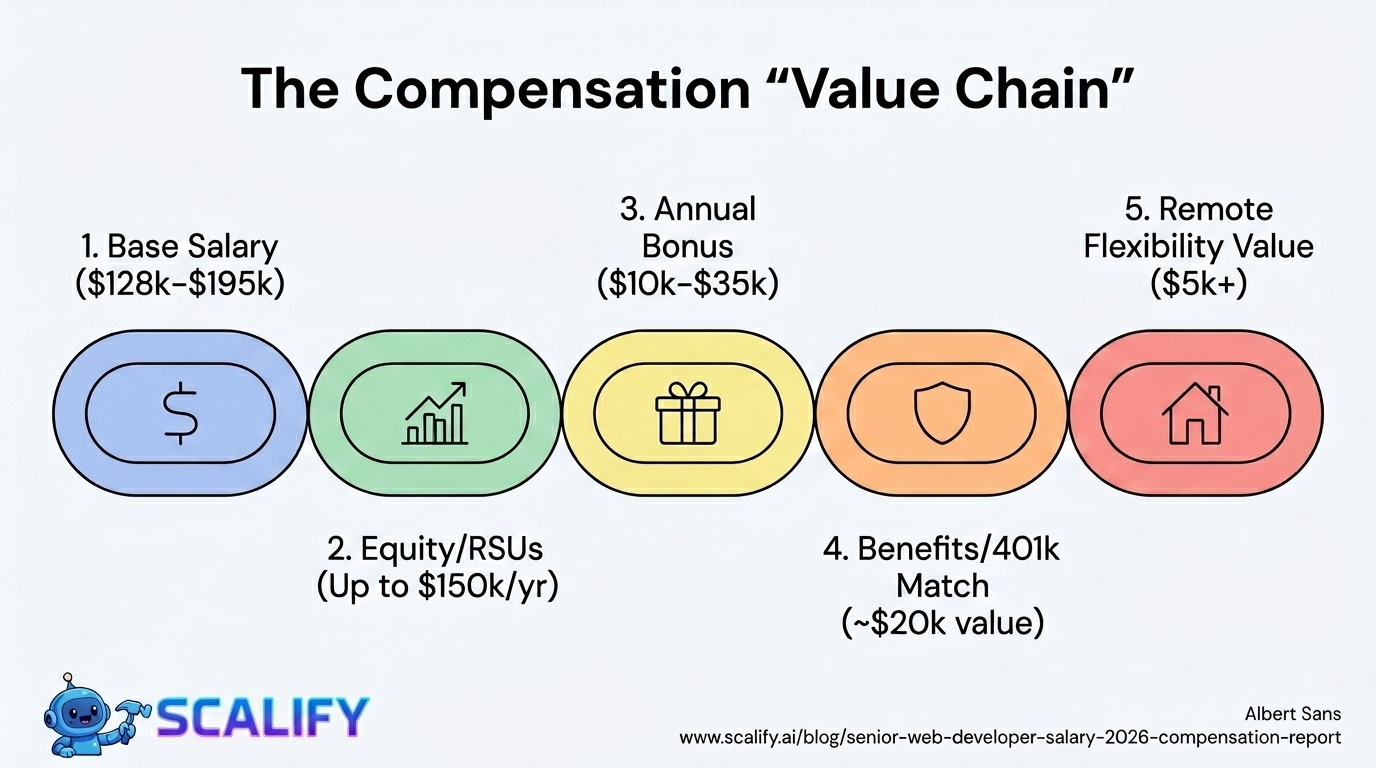
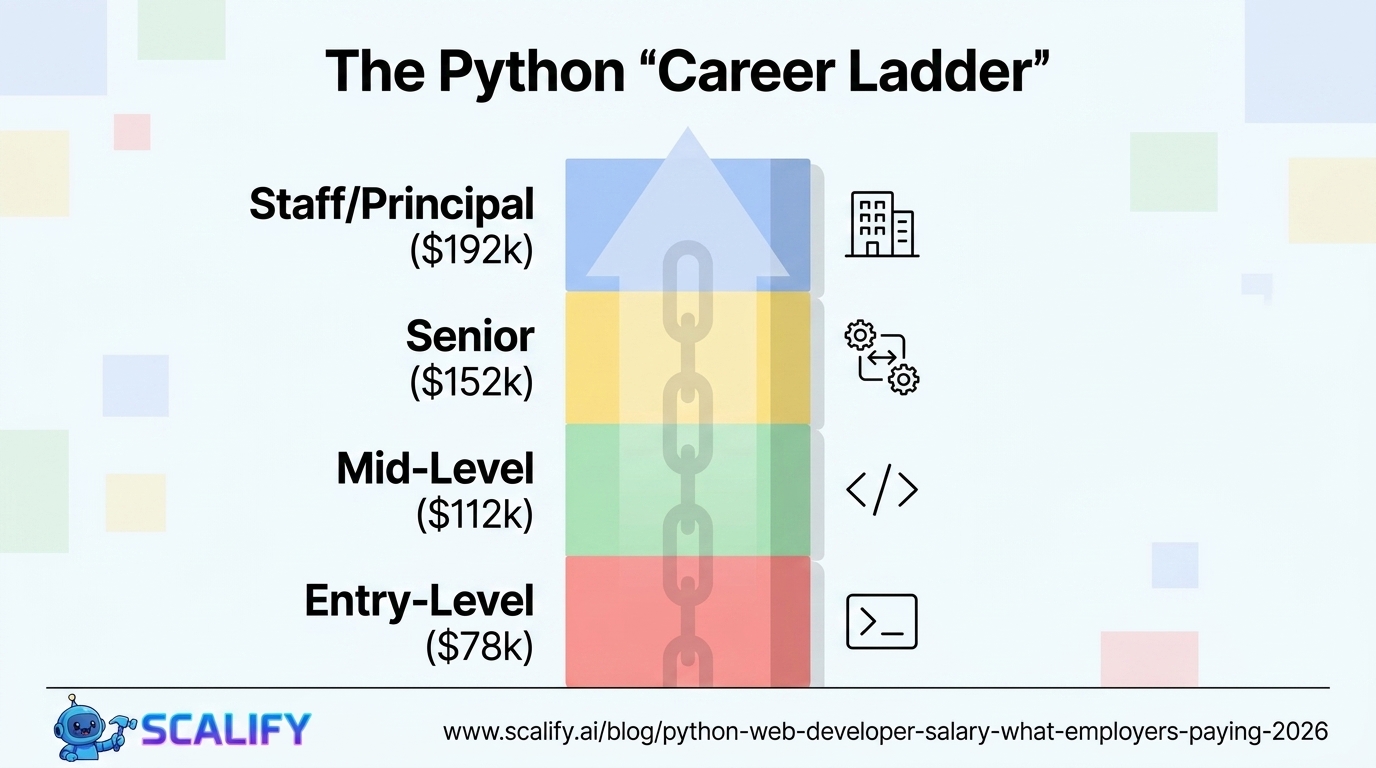
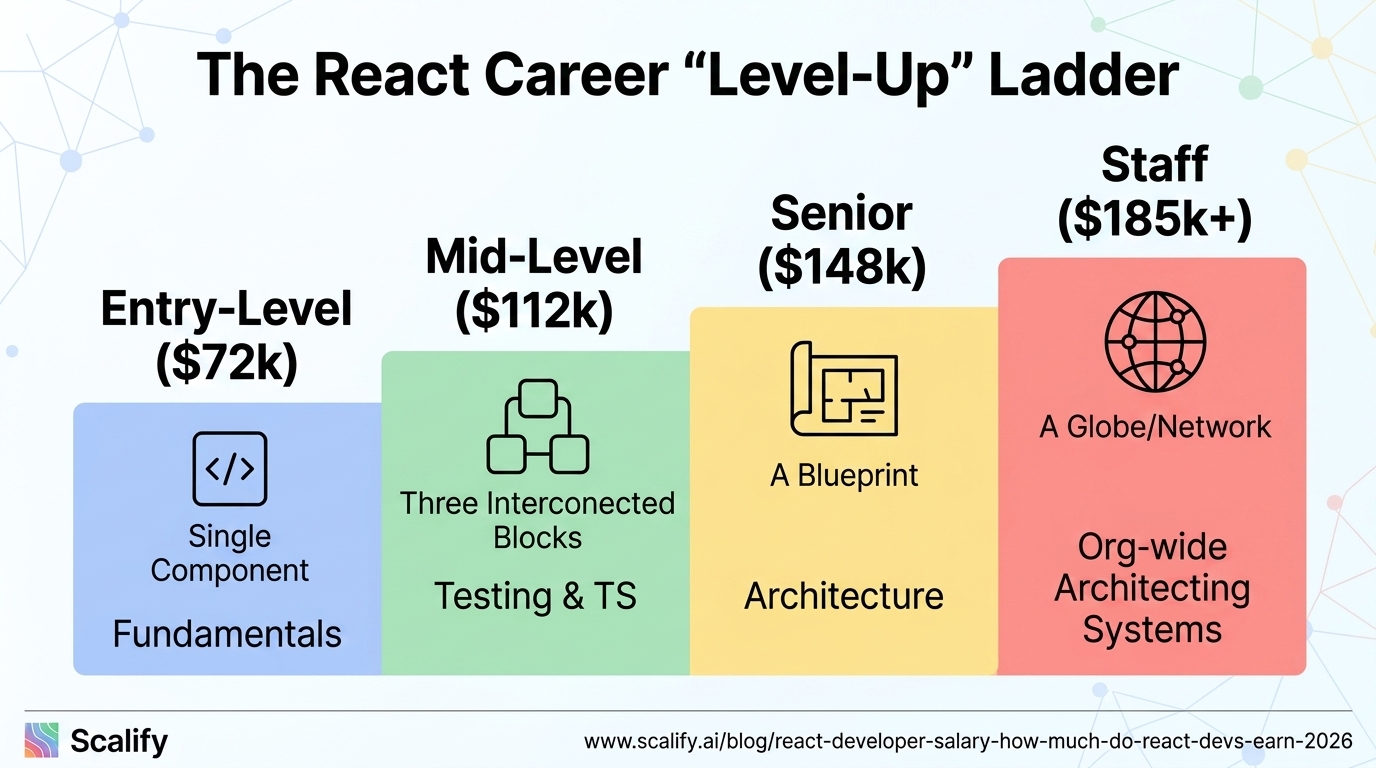
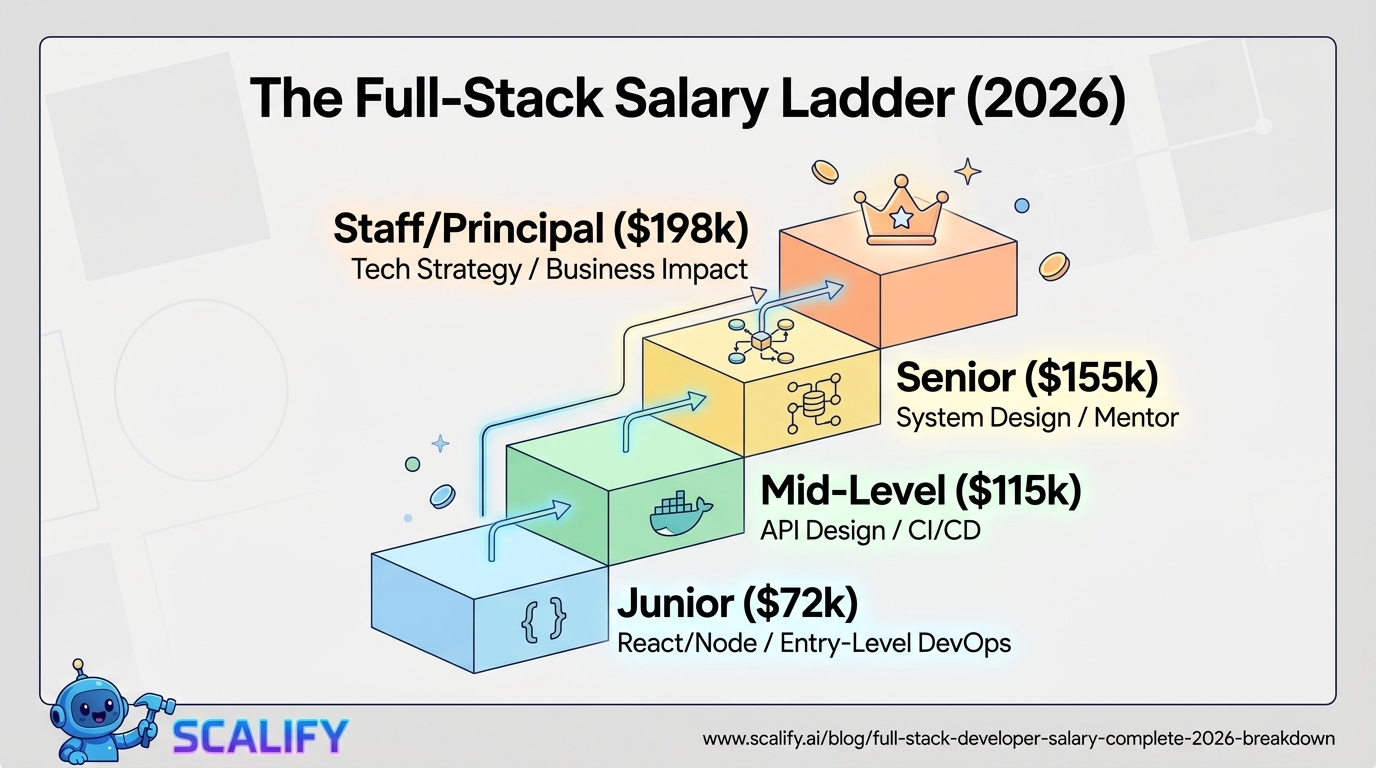
RoleEntry-LevelMid-LevelSeniorvs. National AverageFront-End Developer$55,000 – $75,000$80,000 – $108,000$112,000 – $148,000-12 to -18%Back-End Developer$60,000 – $82,000$88,000 – $118,000$120,000 – $158,000-10 to -15%Full-Stack Developer$58,000 – $80,000$85,000 – $115,000$118,000 – $155,000-10 to -15%React Developer$60,000 – $82,000$88,000 – $120,000$122,000 – $162,000-8 to -14%Node.js Developer$58,000 – $80,000$85,000 – $118,000$118,000 – $158,000-10 to -15%DevOps / Platform Engineer$65,000 – $90,000$95,000 – $130,000$130,000 – $172,000-8 to -12%Webflow Developer$50,000 – $70,000$70,000 – $98,000$98,000 – $135,000-5 to -10%Remote (Miami-based, US company)$68,000 – $92,000$100,000 – $132,000$135,000 – $175,000Near national average
The Florida Tax Advantage: What It's Worth in Real Dollars
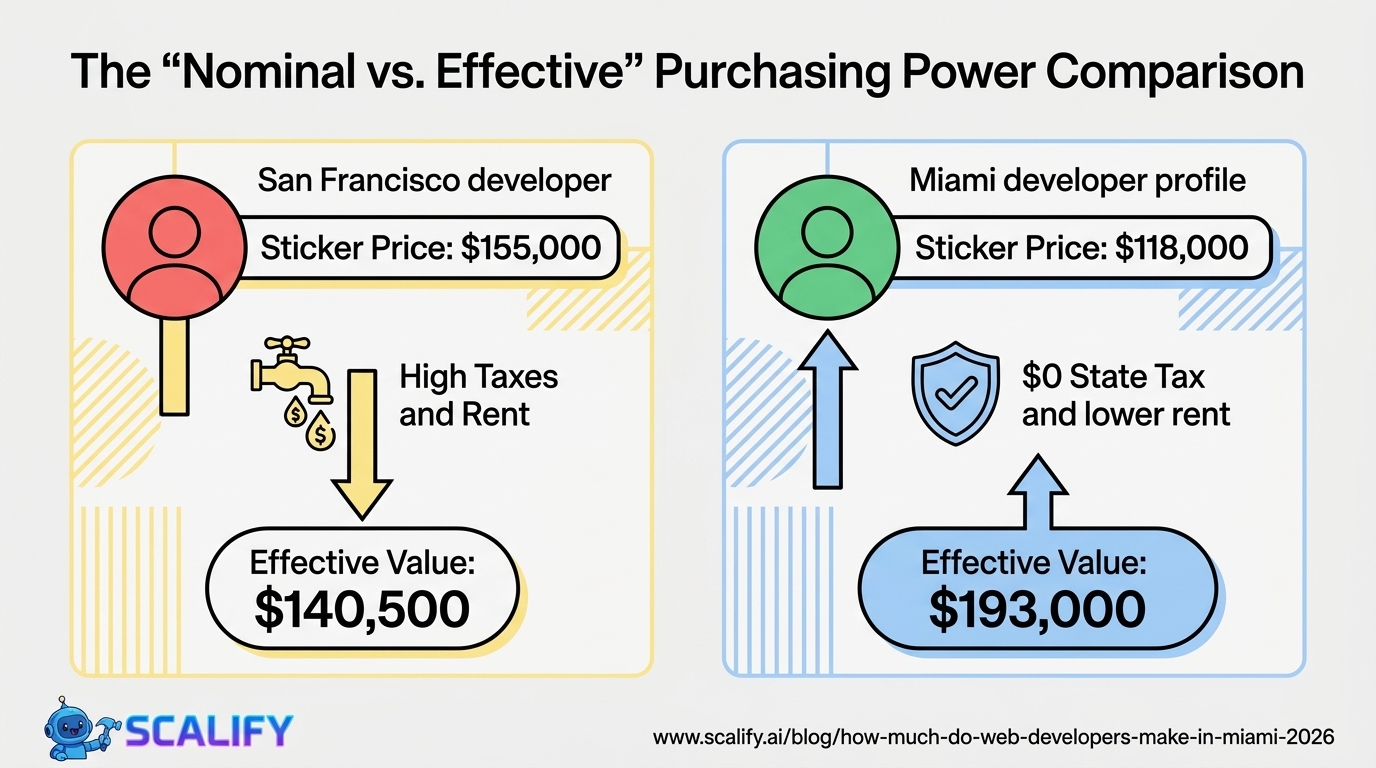
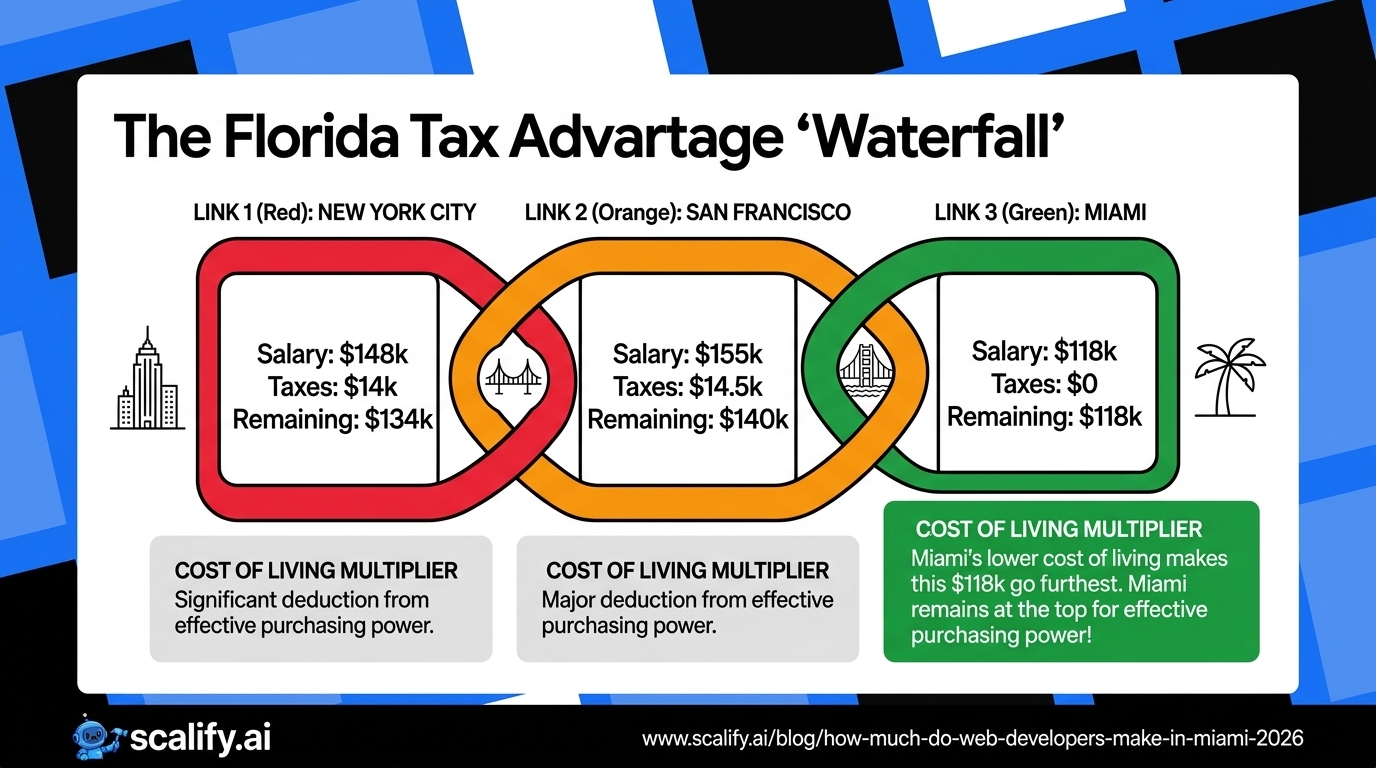
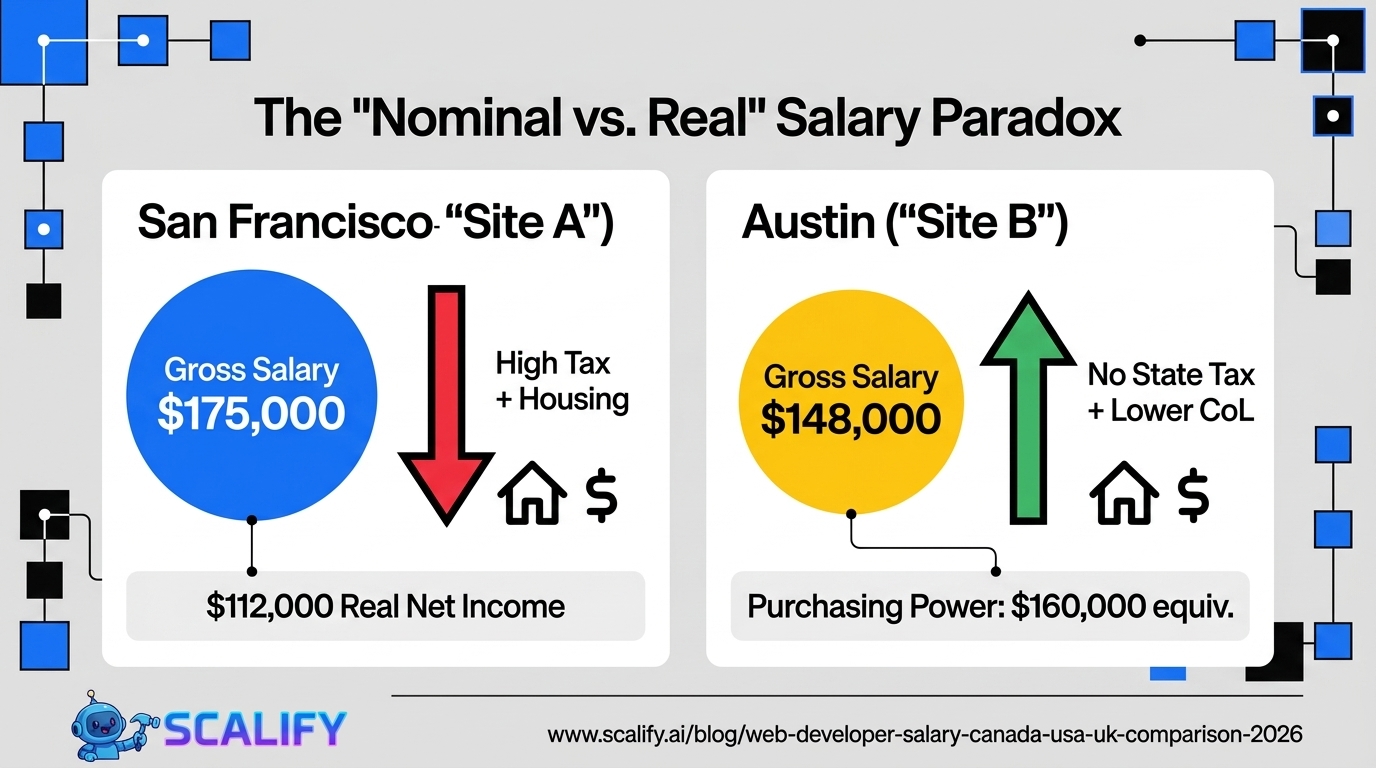
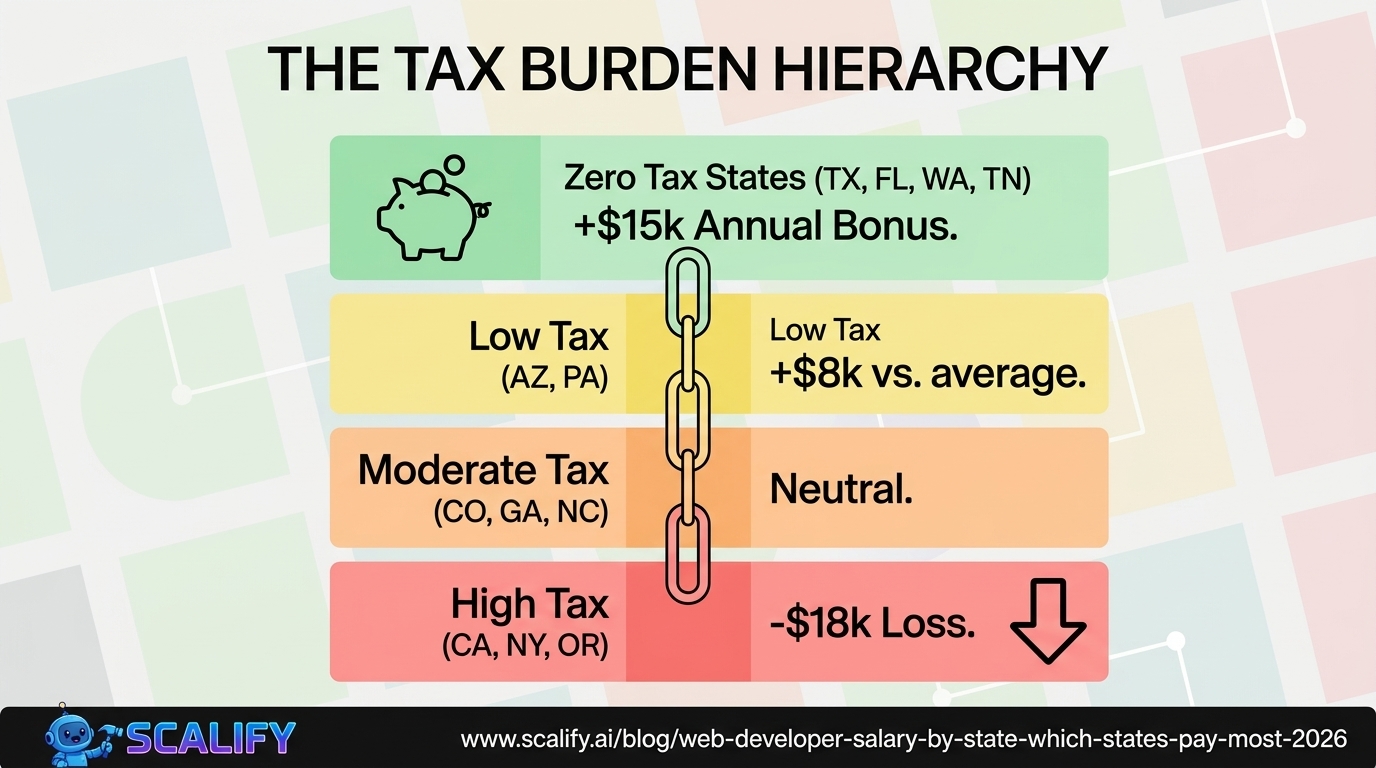
Florida has no state income tax — a significant financial advantage that meaningfully reduces the salary gap between Miami and higher-tax tech markets. A web developer earning $120,000 in Miami pays zero state income tax. The same developer earning $150,000 in California pays approximately $12,000–$14,000 in California state income tax. The developer earning $140,000 in New York City pays approximately $10,000–$12,000 in state income tax plus local income tax.
CitySalary ExampleState/Local TaxAfter-Tax IncomeCost of Living IndexEffective Purchasing PowerSan Francisco$155,000~$14,500 (CA state)~$140,500100 (baseline)$140,500New York City$148,000~$14,200 (NY state + NYC)~$133,80088~$152,000 equivalentMiami$118,000$0 (no state income tax)$118,00061~$193,000 equivalentAustin (comparison)$128,000$0 (no state income tax)$128,00062~$206,000 equivalent
The purchasing power analysis reveals that a Miami web developer earning $118,000 effectively lives at a higher standard than a San Francisco developer earning $155,000 — because Miami's cost of living is 39% lower and Florida's zero income tax preserves more of every dollar earned. This is the calculation that has driven significant developer migration to Miami and continues to make the city attractive to web developers who can either find local opportunities or work remotely for companies in higher-cost markets.
Miami's Growing Tech Ecosystem
The Miami tech ecosystem has attracted several categories of employers who are now significant web developer employers in the metro:
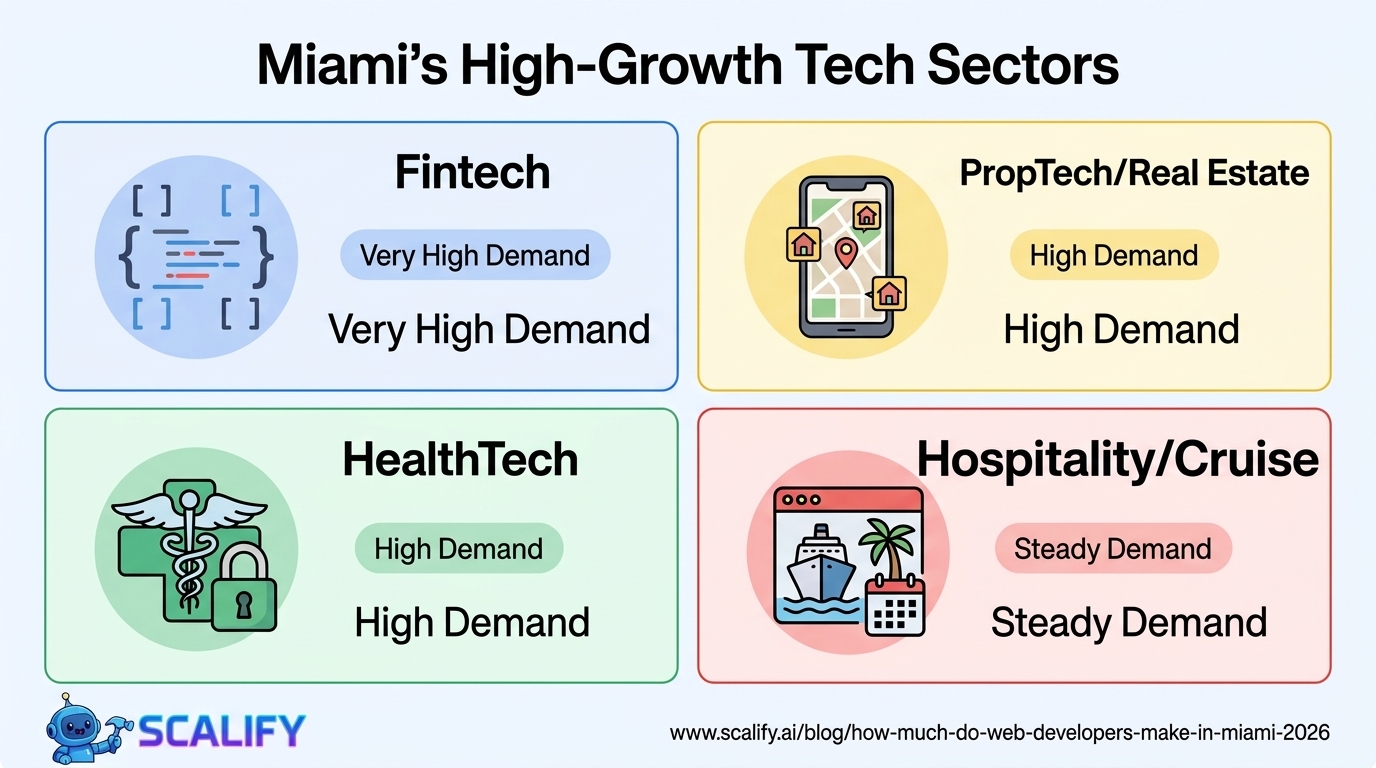
SectorExample CompaniesDeveloper DemandTypical RolesFintechPipe, Relay, Rokk3r, NuveiVery HighFull-stack, back-end, securityReal Estate TechLennar Digital, Fortune InternationalHighFront-end, mobile, CRM integrationHealthcare TechModernizing Medicine, InkiaHighFull-stack, HIPAA-compliant systemsE-Commerce / DTCFounderMade portfolio companiesModerate-HighShopify, front-end, analyticsAgencies and StudiosNumerous mid-size digital agenciesHighWebflow, WordPress, ReactRemote / Distributed (Miami residents)Any US company with remote rolesVery HighAll specializations
Remote Work: Miami's Biggest Salary Unlock
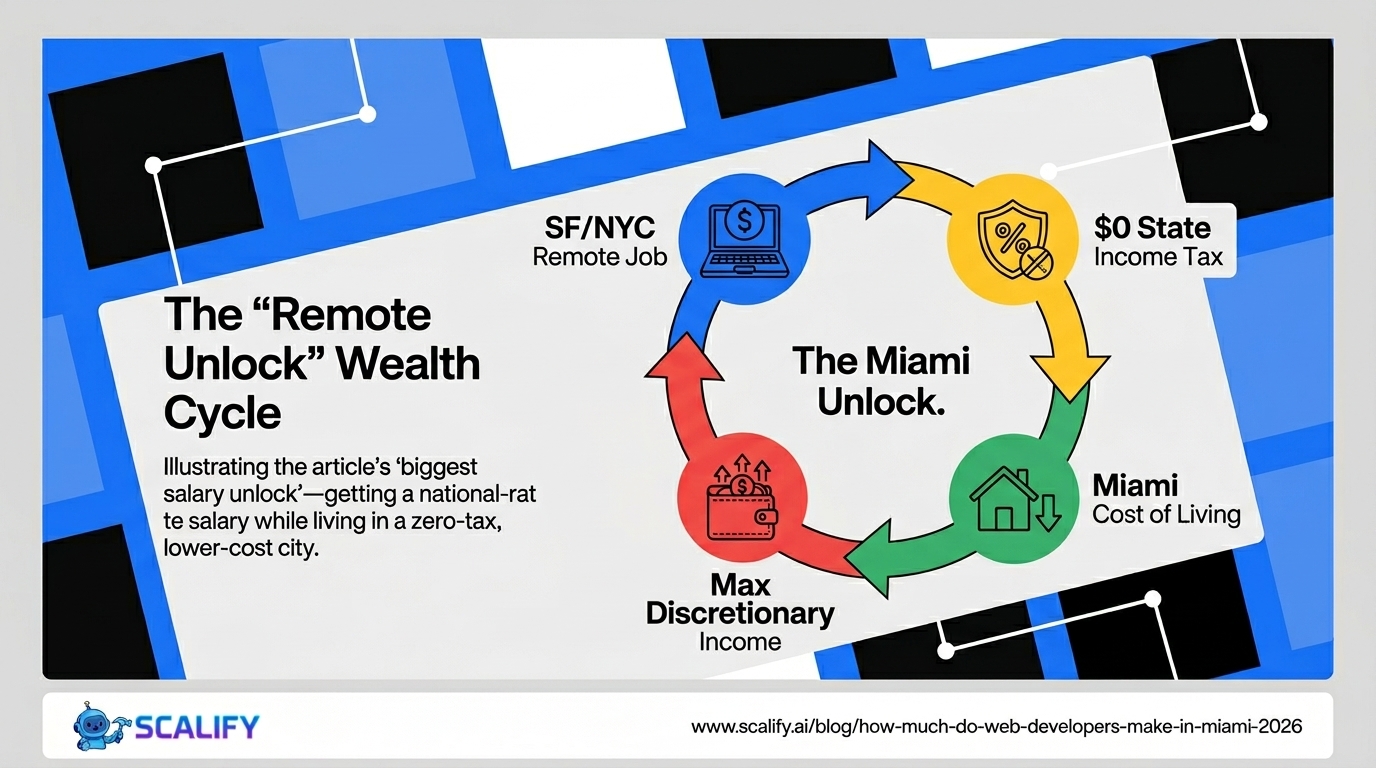
The most significant salary opportunity for Miami-based web developers is remote employment with companies headquartered in San Francisco, New York, Seattle, or other higher-paying markets. Companies that pay San Francisco-anchored salaries to remote employees regardless of location — which many FAANG-adjacent companies do — are effectively paying Miami-based developers $130,000–$175,000+ for senior roles while that developer enjoys Miami's cost of living and zero state income tax. The combination produces exceptional effective purchasing power that neither in-market San Francisco nor in-market Miami employment alone provides.
For Miami-based developers targeting remote roles, the strategy is clear: pursue companies with explicitly location-agnostic compensation (Stripe, Shopify, GitHub, and many funded startups use this model), get certified in high-demand specializations (AWS, React, TypeScript, Python/AI), and build a visible portfolio that competes nationally rather than locally. A Miami developer competing for SF-anchored remote roles is no longer competing against Miami's local salary market — they're competing against the national developer talent pool, and the combination of Miami's lifestyle advantages and no state income tax makes winning those roles especially valuable.
Negotiating Salary in Miami
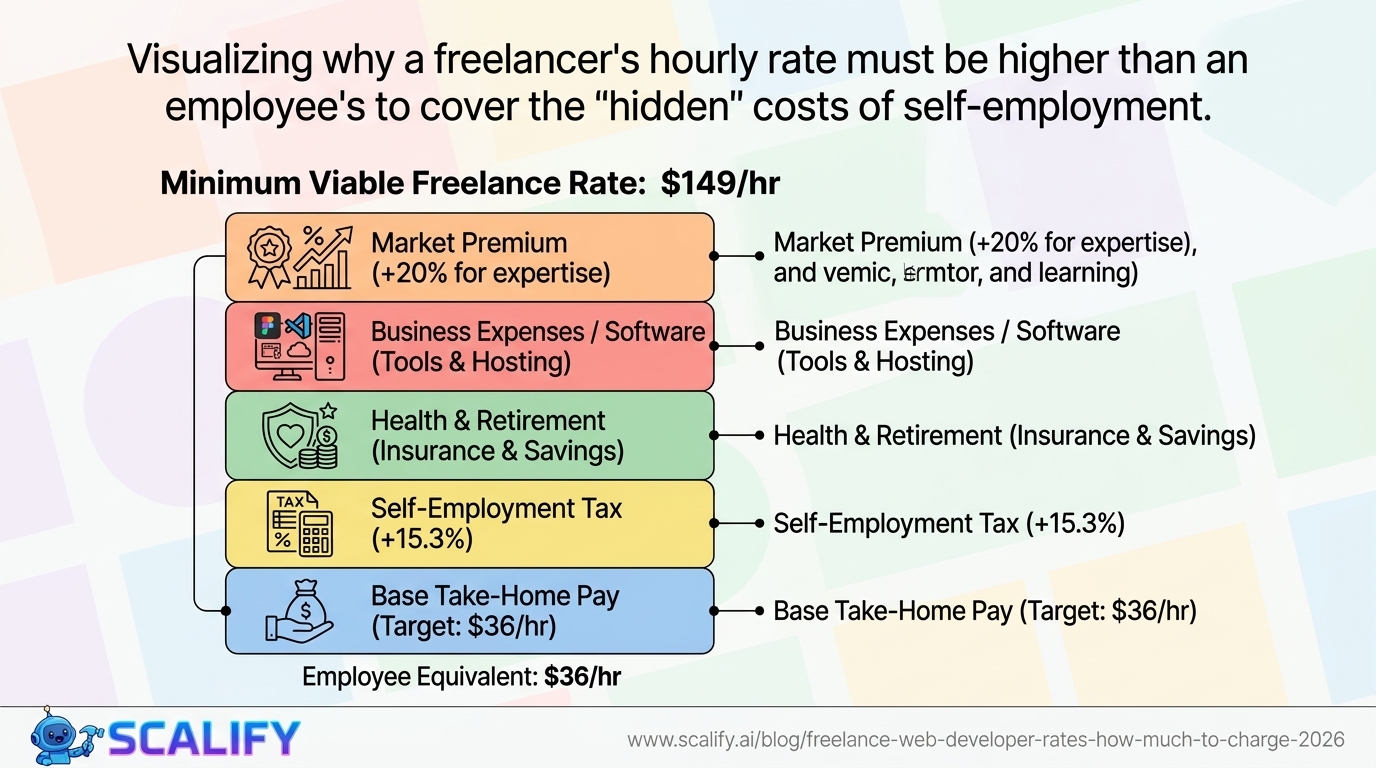
Miami-based web developers negotiating salaries face a market-specific challenge: local employers are accustomed to paying Miami market rates (18% below national average), while remote employers may apply geographic pay tiers that reduce their standard rates for Miami-based candidates. Strategies that work for Miami developers:
The Bottom Line
Miami web developer salaries are 10–18% below national averages in nominal terms but close to or above national averages in effective purchasing power when accounting for Florida's zero state income tax and Miami's significantly lower cost of living. The fastest-growing opportunity for Miami developers is remote employment with nationally-paying companies — the combination of national pay scales, zero state income tax, and Miami's quality of life creates exceptional effective compensation. For developers committed to the local Miami market, specializations in fintech, real estate tech, and healthcare tech are where compensation is growing fastest as the Miami ecosystem matures.
At Scalify, we build professional websites for Miami-based businesses, startups, and technology companies in 10 business days — helping local businesses compete digitally with the quality their market position demands.
Top 5 Sources
Miami vs. Other Major Tech Markets: Detailed Salary Comparison
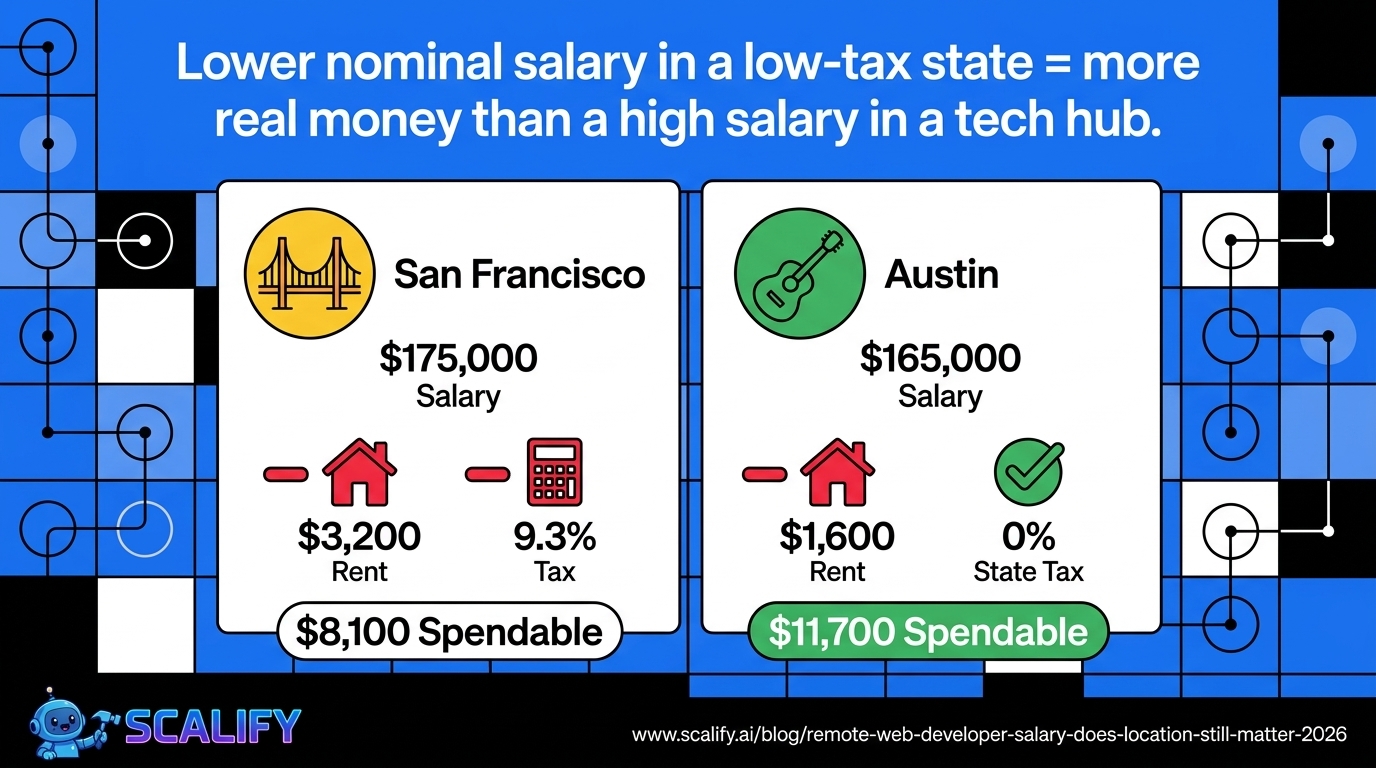
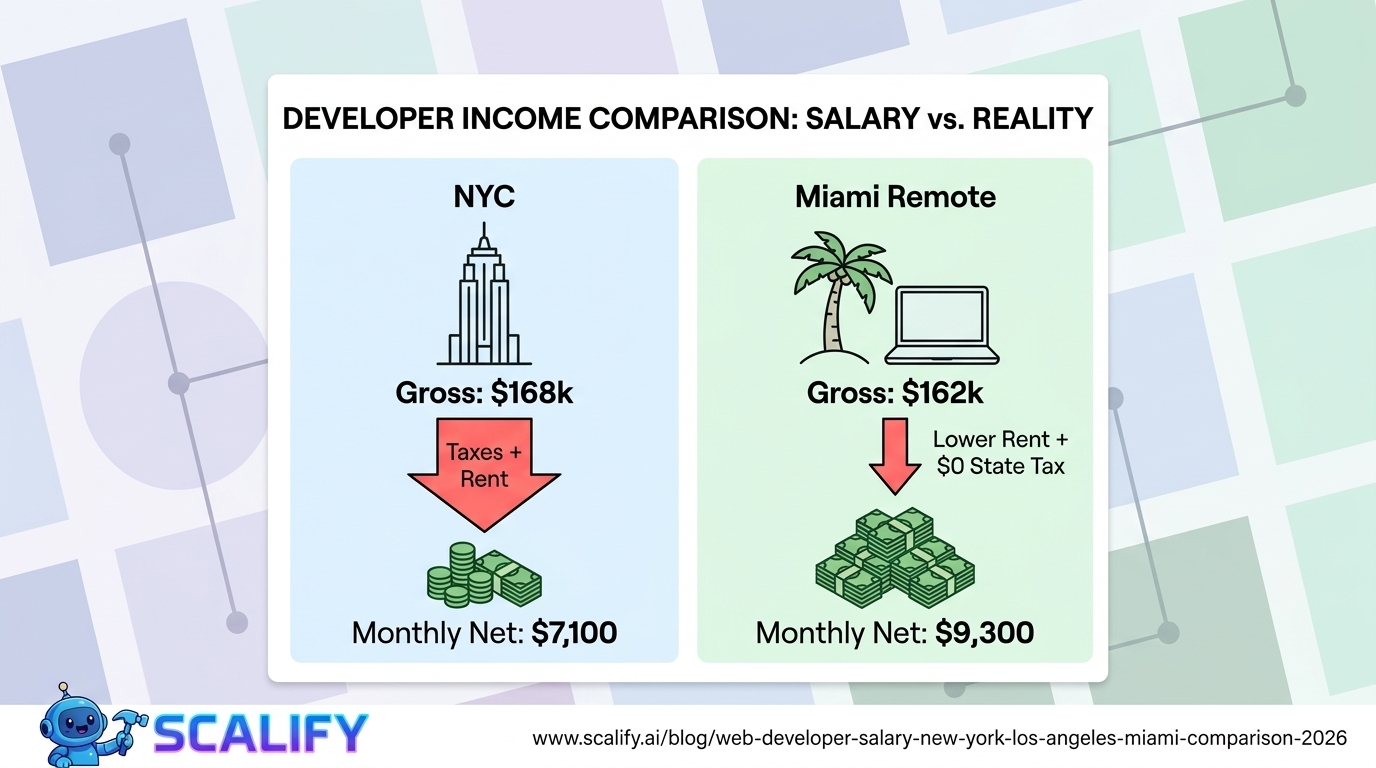
MetroSenior Dev SalaryState Income TaxAvg Rent (1BR)After-Tax After-Rent MonthlySan Francisco$175,000~9.3% ($16,275)$3,200/mo~$8,100New York City$168,000~10.8% ($18,144)$3,500/mo~$7,400Seattle$172,000$0 (no income tax)$2,200/mo~$10,700Austin$148,000$0 (no income tax)$1,600/mo~$10,700Miami$135,000$0 (no income tax)$2,100/mo~$9,150Miami (remote SF rate)$168,000$0 (no income tax)$2,100/mo~$11,900
The after-tax, after-rent monthly figure is the most honest comparison of what each market's salary actually buys in terms of discretionary income. Miami at $135,000 local salary produces roughly $9,150/month in after-tax, after-rent income — less than Seattle or Austin but more than New York City despite the nominal salary difference. A Miami developer earning a remote SF-rate salary of $168,000 with no state income tax and Miami's rent levels outperforms every other market in this comparison on pure discretionary income — producing $11,900/month versus San Francisco's $8,100/month on a nominally similar gross salary.
The Miami Tech Community: Meetups, Events, and Networking
Miami's tech community has developed rapidly since 2020 and now offers meaningful professional networking opportunities for web developers: Miami Tech Works holds monthly networking events across the metro; eMerge Americas is the region's flagship annual tech conference drawing thousands of developers, founders, and investors; Wyncode and CareerFoundry provide bootcamp communities with alumni networks; and the Miami chapter of various developer communities (React Miami, Python Miami, JavaScript Miami) host regular technical meetups. The tech community is notably more accessible in Miami than in San Francisco or New York — the scene is growing fast enough that being an active early participant in its development carries real networking advantages that translate into job opportunities and referrals over time.
For web developers considering a move to Miami or currently building their career in the city, investing in the local tech community is a higher-ROI networking activity than it would be in more established markets. The Miami tech community is at a stage where early active participants know each other, know the growing companies, and have built the relationships that generate the best job opportunities before they're publicly posted. The Miami Developer LinkedIn group, the Miami Tech Slack workspace, and in-person events at The LAB Miami and Wynwood Yard are good starting points for building these connections.
Industries Driving Miami Web Developer Demand
Beyond fintech and real estate tech, several other industry sectors are creating growing demand for web developers in Miami that didn't exist at this scale five years ago. Healthcare technology is becoming a major employer as large healthcare systems serving Miami's large and aging population invest in patient portals, telemedicine platforms, and EHR integrations. The cruise and hospitality technology sector — home to major cruise lines headquartered in Miami including Carnival, Royal Caribbean, and Norwegian — employs significant numbers of web developers for booking platforms, passenger experience apps, and internal operations systems. E-commerce and direct-to-consumer brands launching and scaling in Miami's business-friendly environment are creating demand for Shopify developers, React front-end engineers, and digital marketing technology specialists. And the legal technology sector, supported by Miami's substantial law firm community, is generating steady demand for web developers who can build client portals, document management systems, and practice management tools. Together, these sectors are creating a more diversified Miami developer job market than existed when the market was narrowly concentrated in tourism and finance technology.
Remote Work Best Practices for Miami-Based Developers
Miami-based developers working remotely for companies in other time zones face specific practical considerations. Miami is in the Eastern Time Zone, which aligns well with New York and the rest of the East Coast, but creates a 3-hour lag with San Francisco that requires explicit management: morning standups at 7am Eastern (10am Pacific) work well for Miami developers, but late-afternoon San Francisco meetings (4-5pm Pacific = 7-8pm Eastern) cut into evening time significantly. Miami developers who target West Coast companies should clarify meeting time expectations during the hiring process and negotiate boundaries that respect the time difference without creating the perception of unavailability. For developers targeting Latin American companies or serving Latin American markets, Miami's location, Spanish proficiency, and cultural familiarity create a genuine competitive advantage that justifies premium positioning relative to non-Miami remote competitors.






.jpeg)
.jpeg)




78 SW 7th St, Miami, FL 33130