

Full-Stack Developer Salary: The Complete 2026 Breakdown
By Josh Ternyak

April 22, 2026
Full-stack developers earn $72,000-$235,000+ in 2026, commanding a 5-10% premium over specialists. This comprehensive guide covers salary by experience level, technology stack comparisons, full-stack vs specialist trade-offs, company type breakdown, what makes a genuinely senior full-stack developer, freelance rates, how to maximize full-stack salary, the learning path for building both sides well, and the 2030 market outlook.
Full-Stack Developer Salary: The Complete 2026 Breakdown
Full-stack web developers occupy a unique market position: they can build both the front-end experience users interact with and the back-end systems that power it, making them highly valuable at companies that want versatile engineers who can own an entire feature from database to browser. In 2026, this versatility commands a consistent premium over single-specialization developers — and the full-stack developer market is one of the largest and most consistently in-demand in all of web development.
Key Full-Stack Developer Salary Statistics
Full-Stack Salary by Experience Level
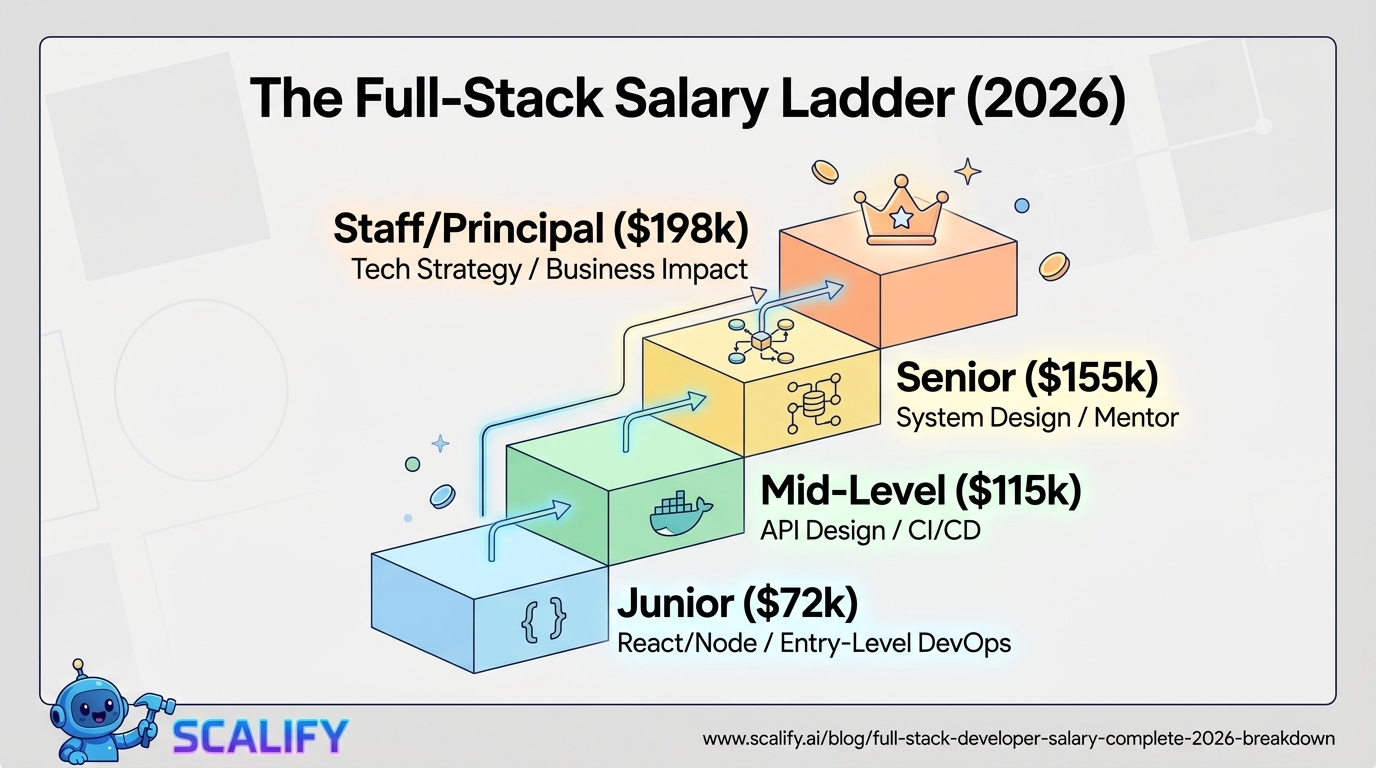
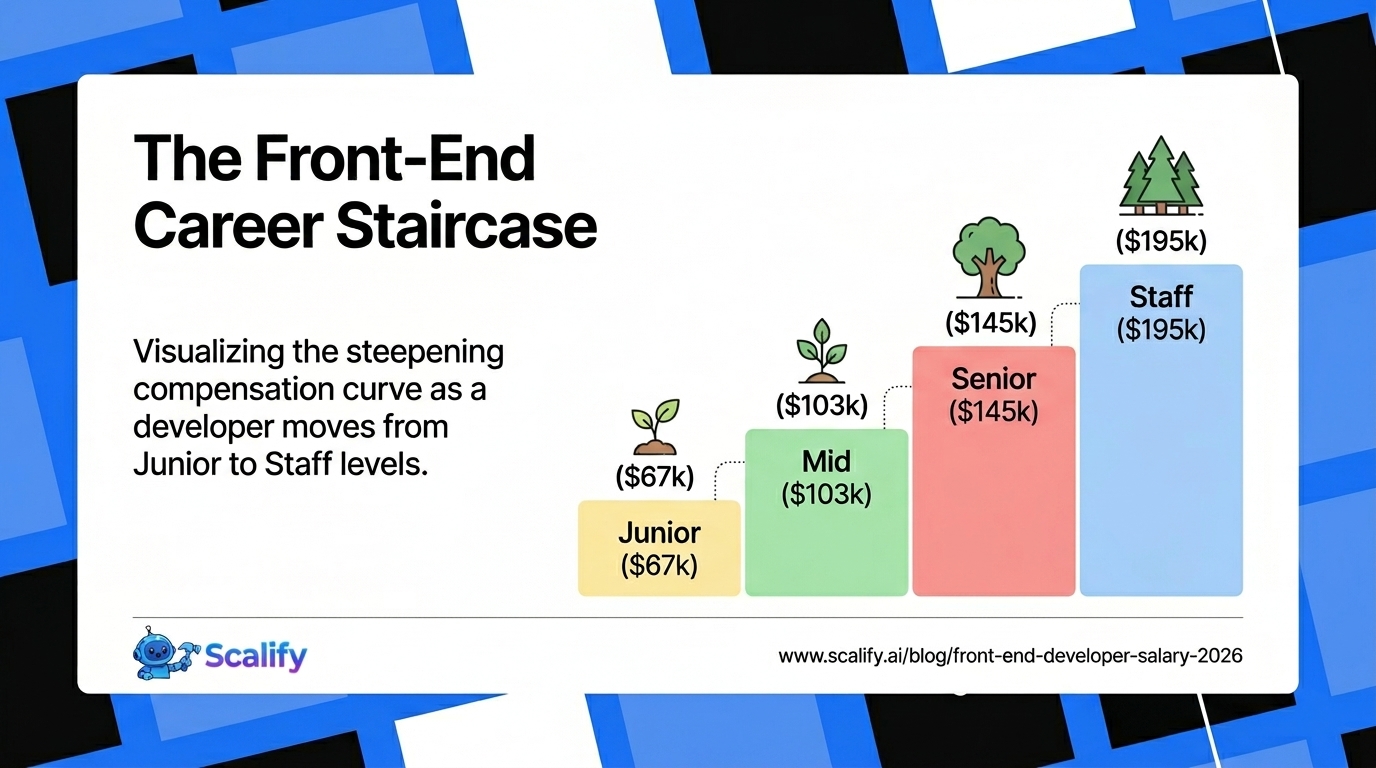
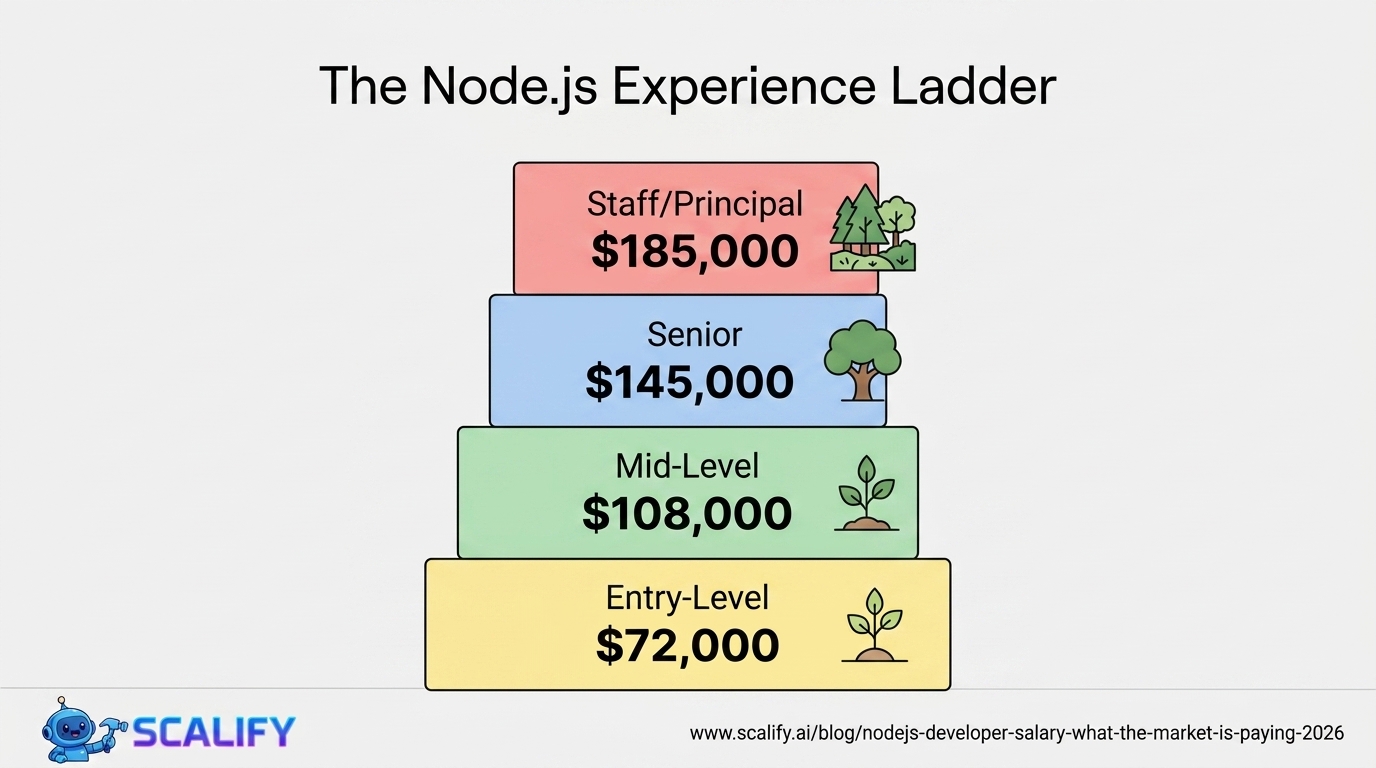
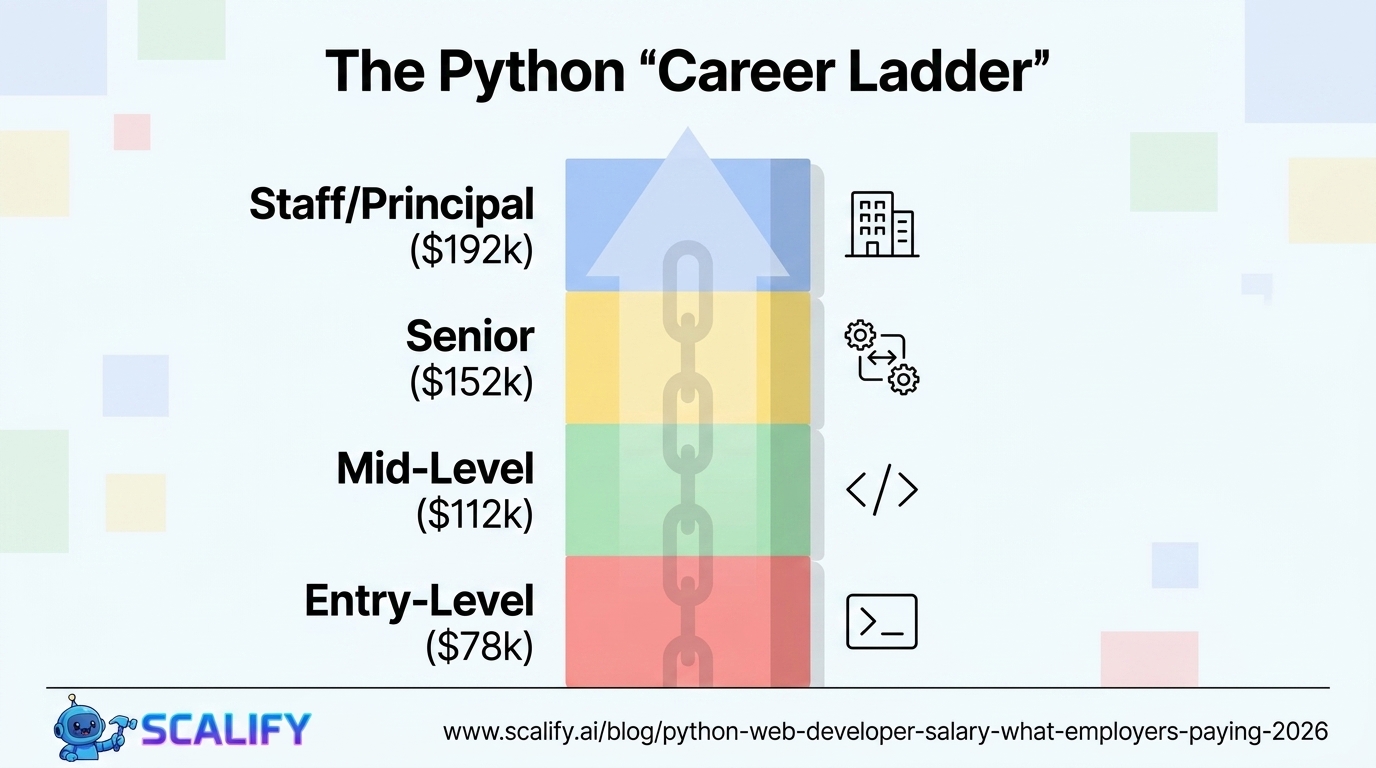
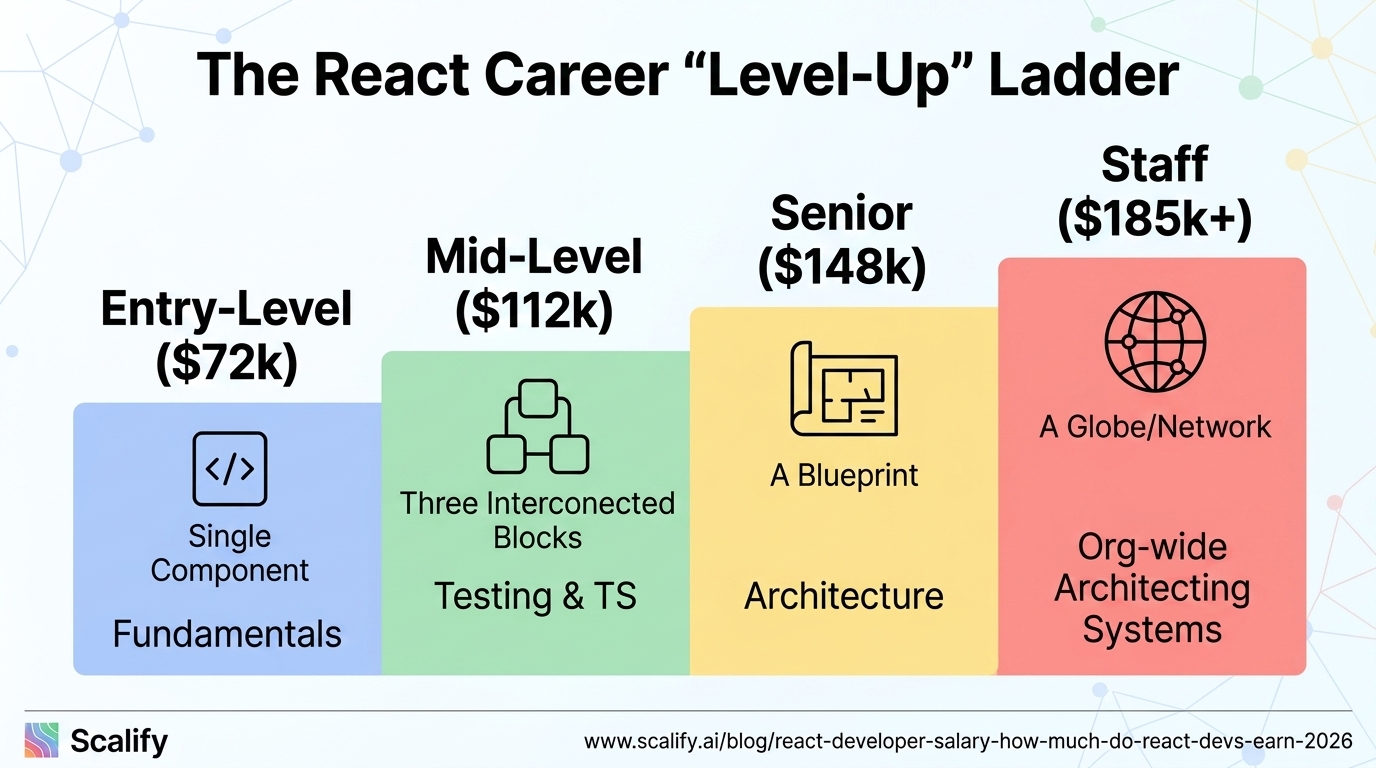
LevelYearsCore CapabilitiesSalary RangeMedianJunior Full-Stack0–2 yrsReact, Node.js/Express, SQL basics, REST APIs, Git$60,000 – $88,000$72,000Mid-Level Full-Stack2–5 yrsTypeScript, state management, ORM, Docker, testing, auth patterns$88,000 – $142,000$115,000Senior Full-Stack5–9 yrsSystem design, API architecture, performance engineering, CI/CD, security$138,000 – $178,000$155,000Staff / Principal Full-Stack8+ yrsOrg-wide architecture, technical leadership, platform engineering, mentorship$178,000 – $235,000$198,000
Full-Stack Salary by Technology Stack
StackMid-Level MedianSenior MedianJob Market DemandSalary DirectionReact + Node.js (TypeScript)$118,000$158,000Very High — dominantStable/GrowingReact + Next.js (full-stack)$122,000$162,000High — growing fastGrowingReact + Python (FastAPI/Django)$120,000$162,000High — AI premiumStrongly GrowingVue.js + Node.js$108,000$145,000ModerateStableAngular + .NET$112,000$150,000Moderate — enterpriseStableReact + Ruby on Rails$108,000$148,000Moderate — declining newStable (legacy)MERN (MongoDB/Express/React/Node)$112,000$150,000HighStableT3 Stack (TypeScript/Tailwind/tRPC)$118,000$158,000Growing — modern React ecosystemGrowing
Full-Stack vs. Specialist: The Salary and Career Trade-Off
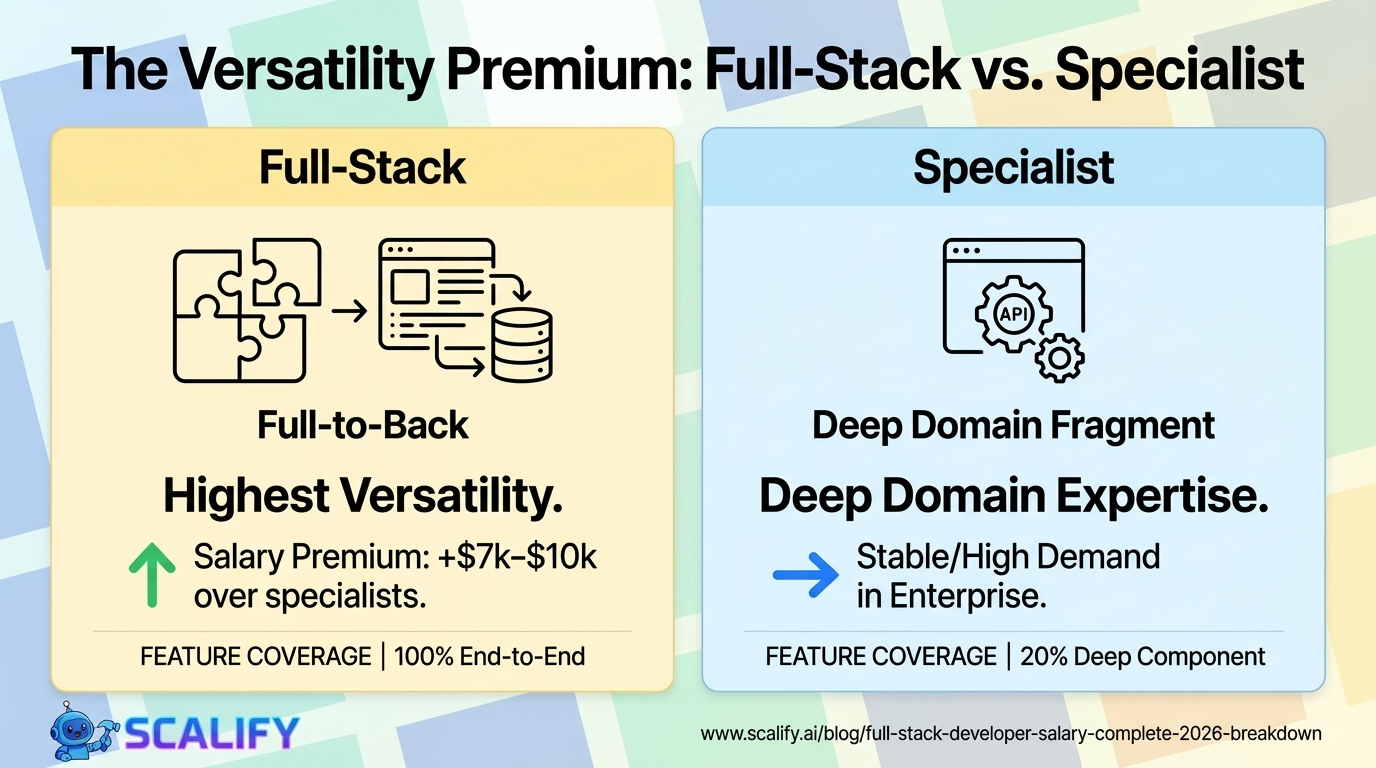
FactorFull-Stack DeveloperFront-End SpecialistBack-End SpecialistMedian mid-level salary$115,000$108,000$112,000Median senior salary$155,000$148,000$150,000Project ownershipComplete — front to backLimited — front-end onlyLimited — back-end onlyDemand at early-stage startupsVery High — most versatileModerateModerateDemand at large companiesHighHigh — specialized teamsHigh — specialized teamsDepth of expertiseBroad — some depth in both areasDeep front-end expertiseDeep back-end expertiseCareer ceilingHigh — broader opportunitiesHigh in front-end domainHigh in back-end domainFreelance versatilityHighest — can serve most client typesGoodGood
Full-Stack Developer Salary by Company Type
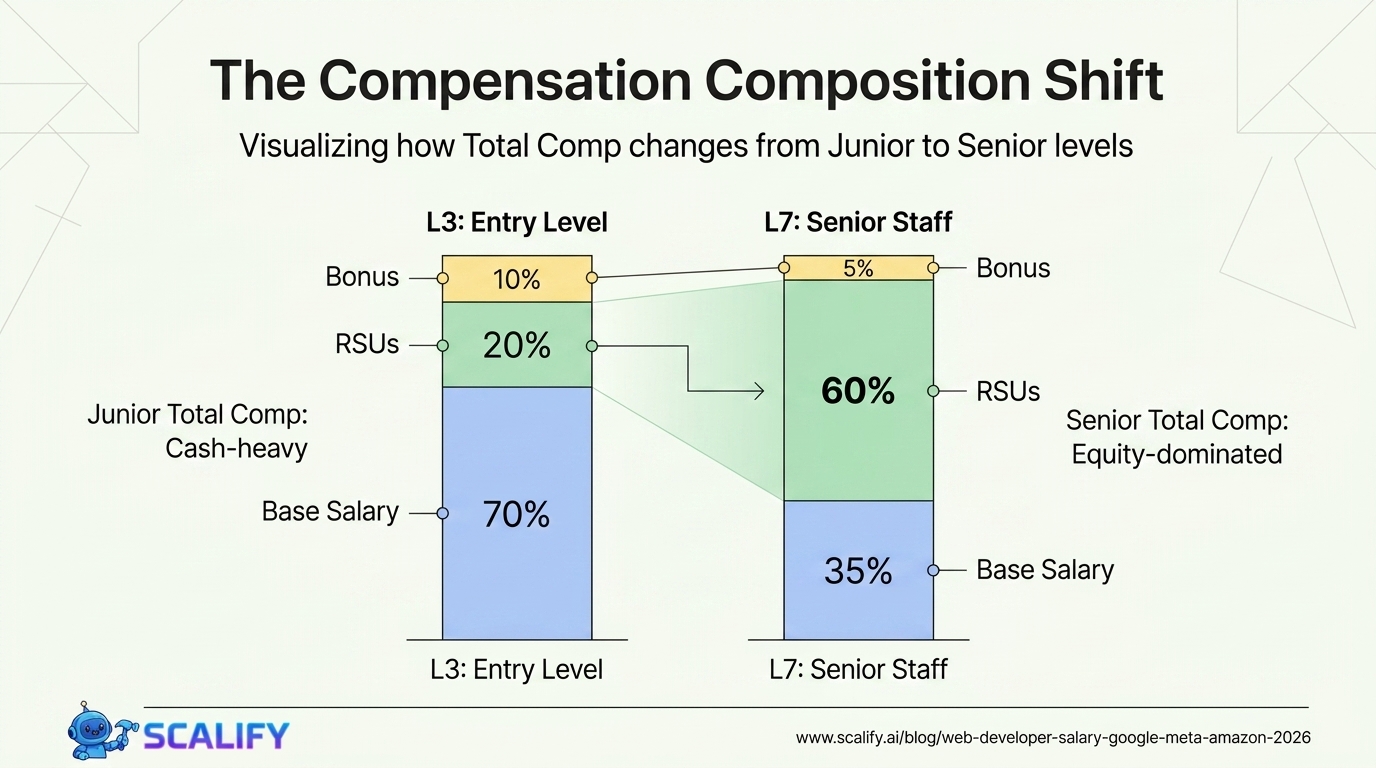
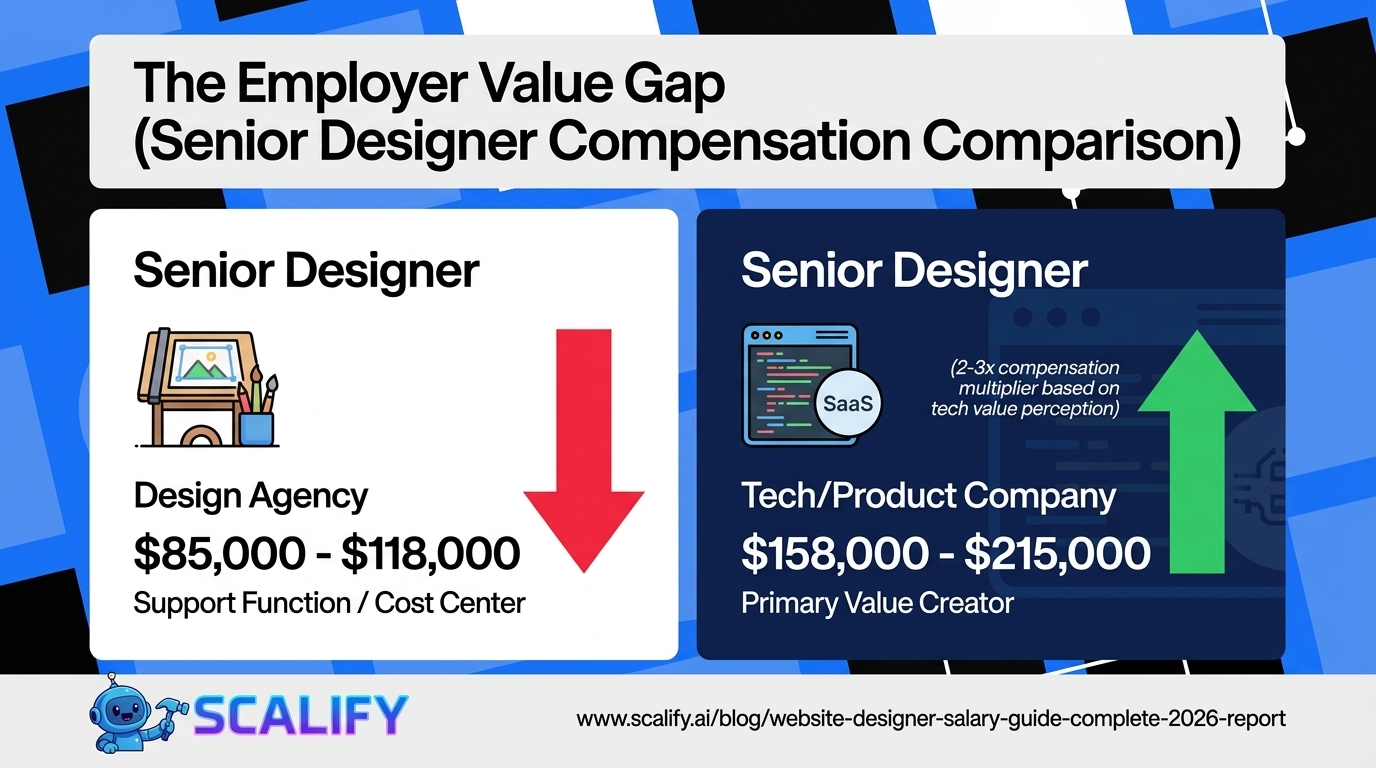
Company TypeBase Salary (Senior)Total CompNotesFAANG / Top Tech$185,000 – $235,000$310,000 – $480,000Highest total comp; rigorous processGrowth Startup (Series A/B)$148,000 – $188,000$175,000 – $280,000Equity upside; higher autonomyMid-Size Tech Company$138,000 – $175,000$158,000 – $215,000Balanced stability and growthEnterprise / Fortune 500$128,000 – $165,000$145,000 – $195,000Strong benefits; steady paceDigital Agency$95,000 – $130,000$108,000 – $145,000Breadth; lower ceilingRemote-First (US company)$138,000 – $178,000$155,000 – $220,000Near-parity with HQ market rate
What Makes a Full-Stack Developer Genuinely Senior
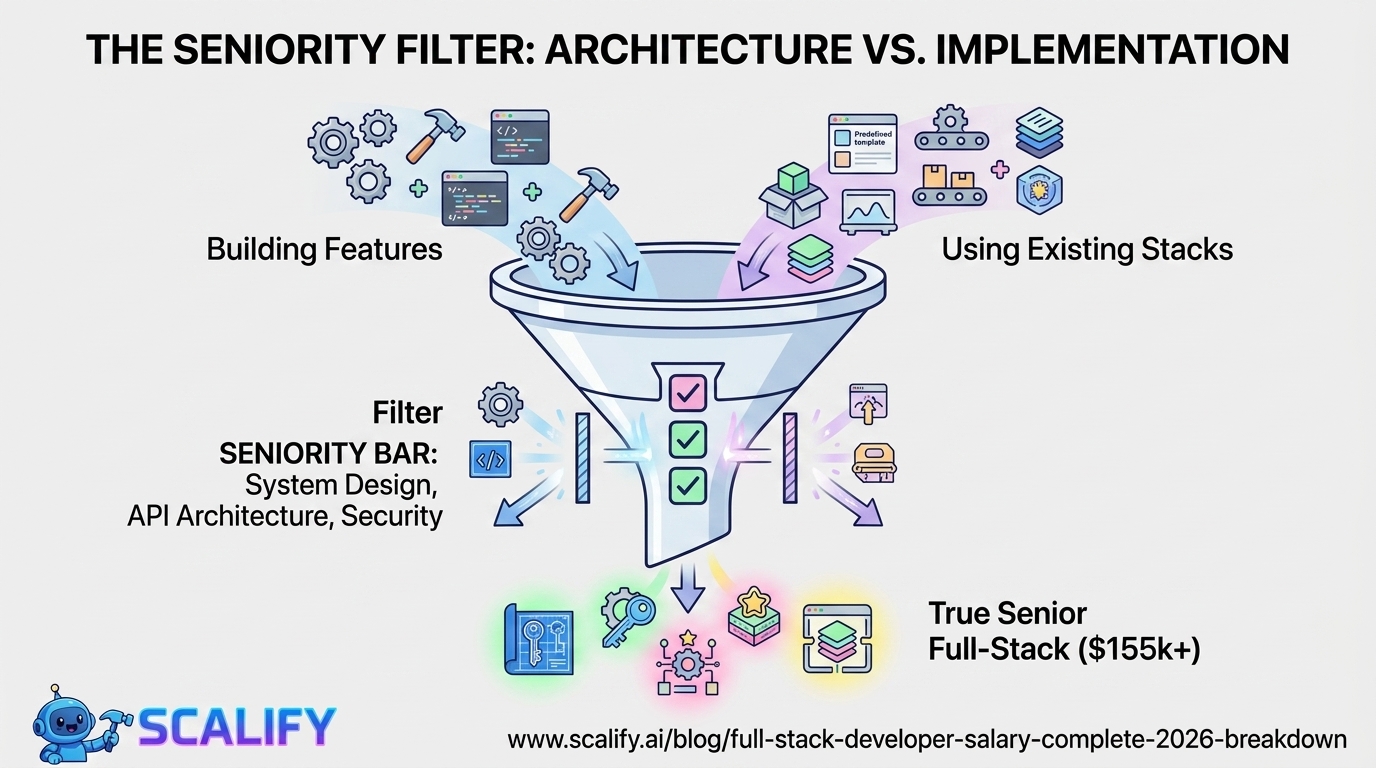
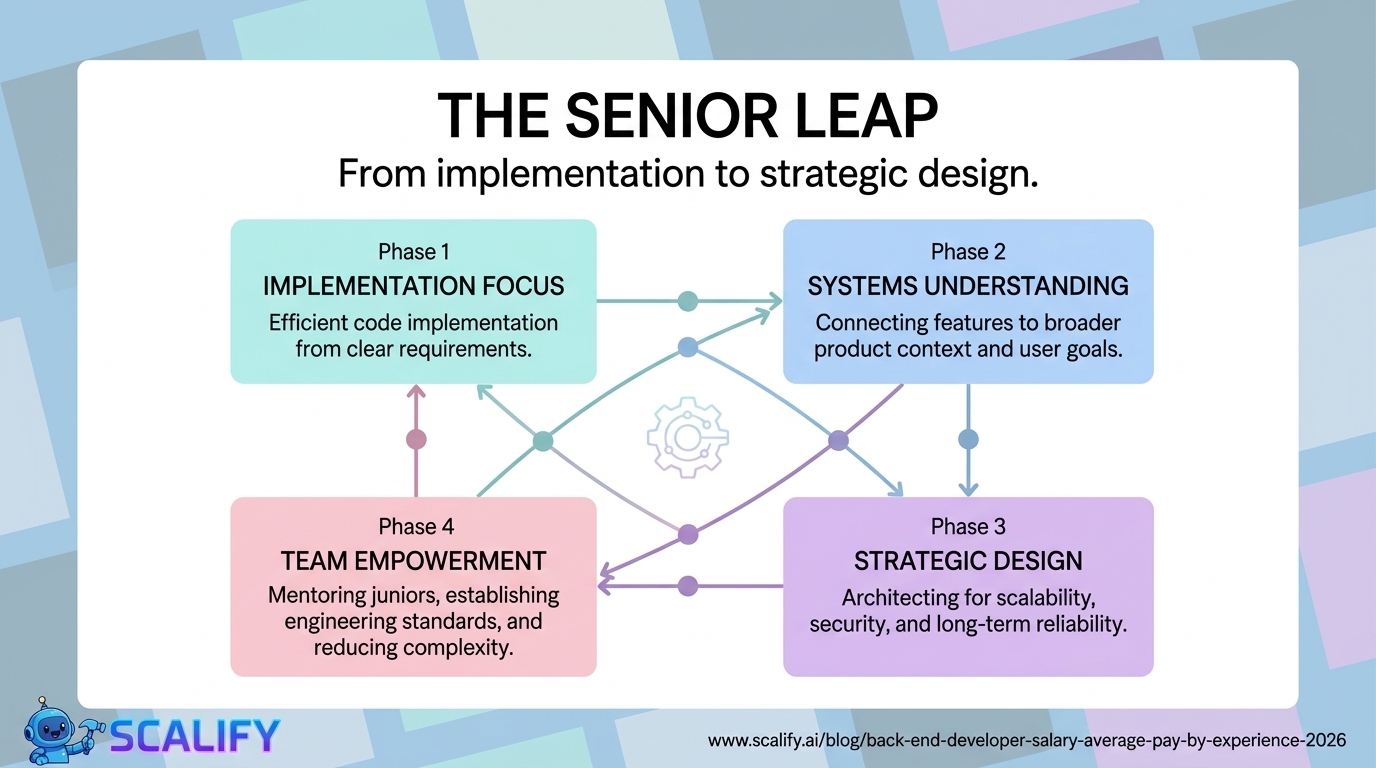
The full-stack developer title is one of the most inflated in web development — junior developers claim it because they've used both React and Node.js, when the market's definition of a senior full-stack developer implies a very different capability level. A genuinely senior full-stack developer can: design a complete system architecture from database schema through API design through front-end state management, optimize across the entire stack for performance and reliability, make informed decisions about when to colocate vs. separate front-end and back-end concerns, instrument a production system with meaningful observability, implement authentication and authorization patterns correctly and securely, and own the deployment infrastructure that gets the application to production reliably. Developers who can only operate in pre-built architectural contexts — who can add features to an existing stack but not design the stack from scratch — are not senior full-stack developers regardless of years of experience.
Full-Stack Developer Freelance Rates and Project Types
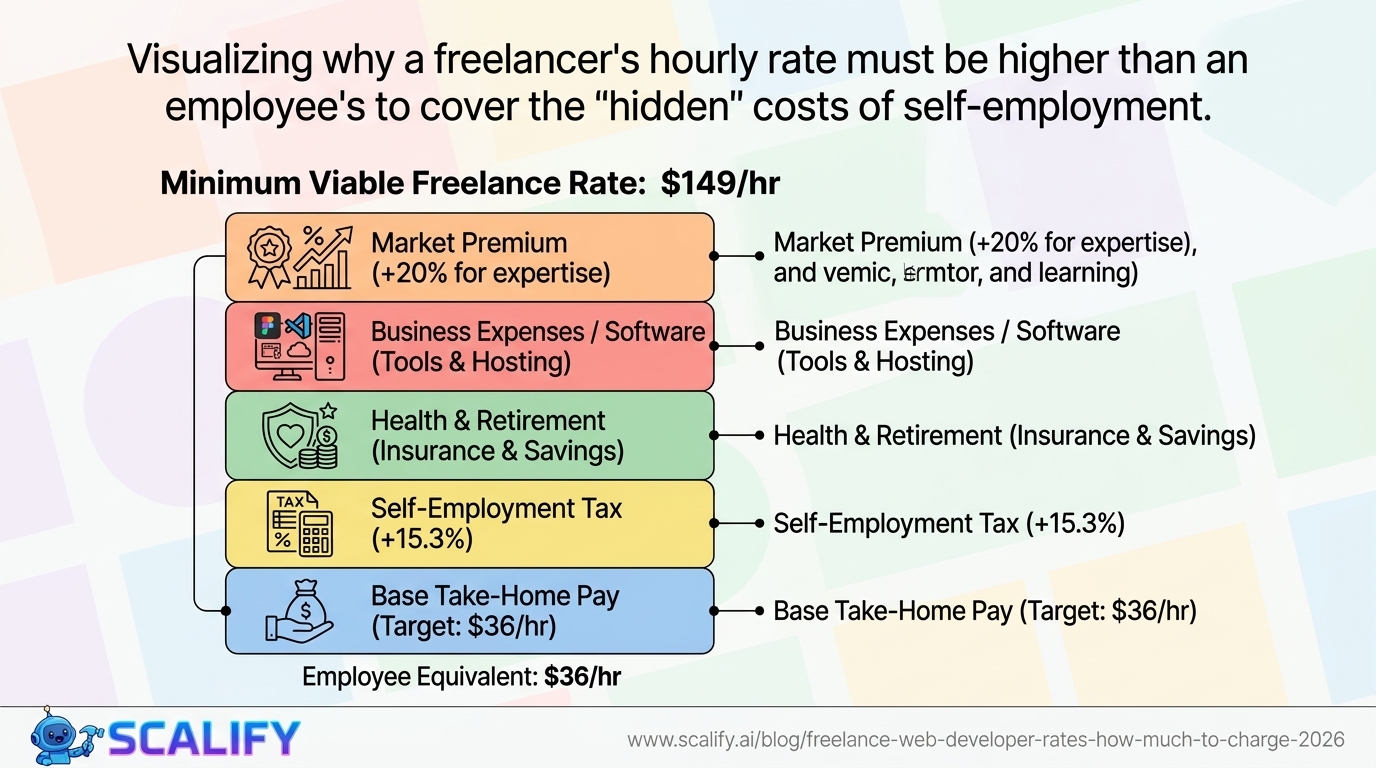
Project TypeTypical RateProject ValueFull-stack web application (greenfield)$115–$165/hr$25,000–$120,000API development and back-end architecture$110–$160/hr$15,000–$60,000React + back-end integration$100–$150/hr$8,000–$40,000Technical architecture consulting$150–$250/hr$5,000–$25,000 per engagementPerformance optimization (full-stack)$130–$185/hr$5,000–$20,000Monthly retainer (ongoing development)$8,000–$18,000/month$96,000–$216,000/year
How to Maximize Full-Stack Developer Salary
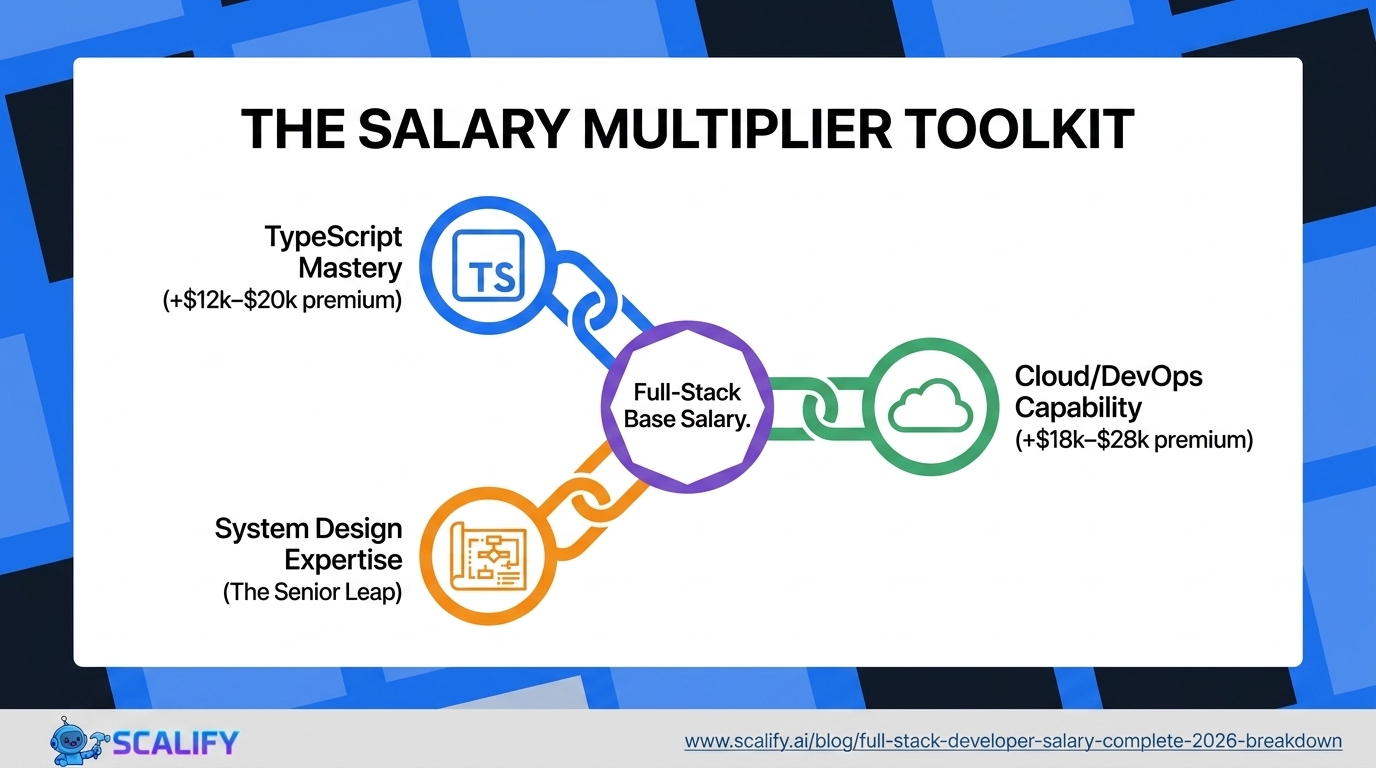
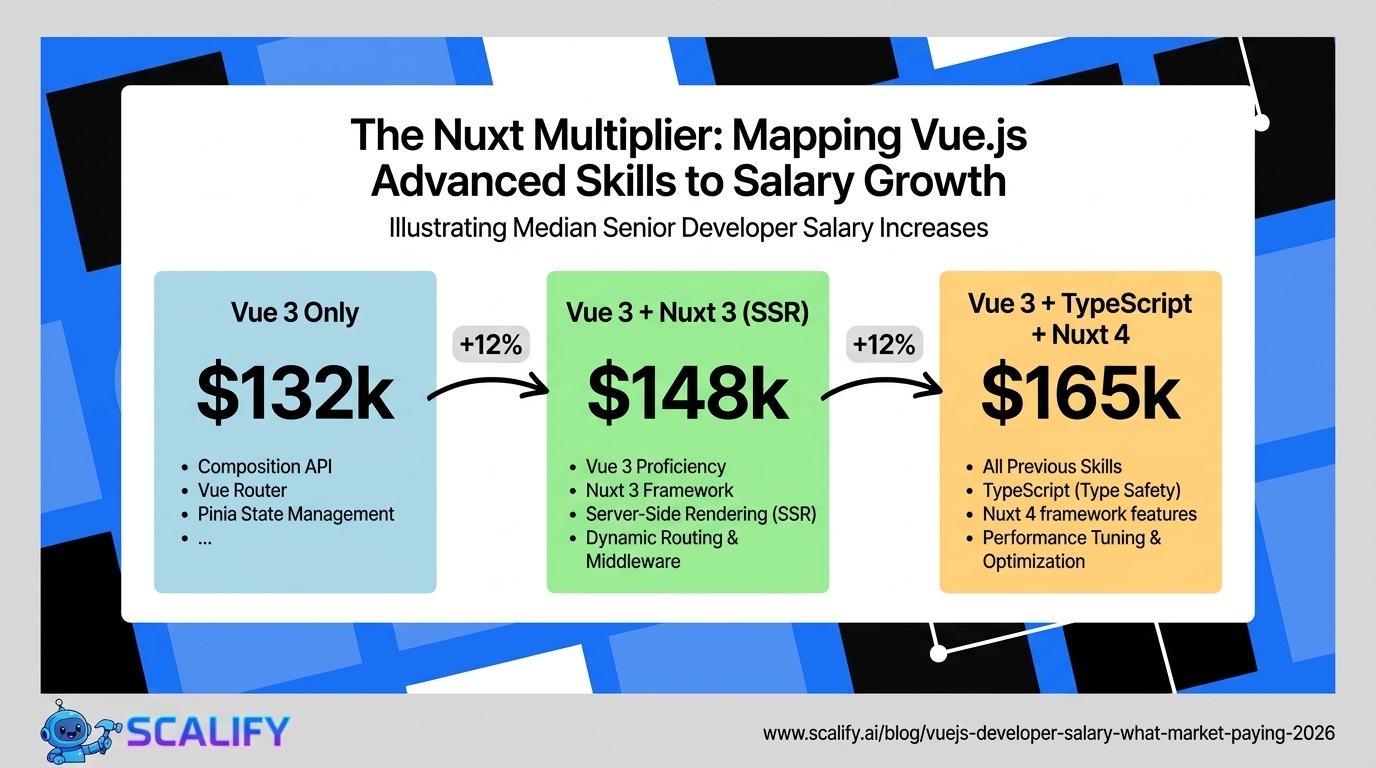
Master TypeScript on both sides of the stack. The $12,000–$20,000 TypeScript premium for full-stack developers reflects that TypeScript is the standard at most companies that pay well — and full-stack TypeScript (React front-end with tRPC or typed API contracts connecting to a TypeScript back-end) is the most in-demand full-stack configuration in 2026. If you're writing JavaScript on the front-end and JavaScript on the back-end without TypeScript, you're competing for a diminishing pool of roles that accept this configuration.
Add cloud infrastructure capability. Full-stack developers who can not only build applications but deploy and maintain them in AWS or GCP — configuring Kubernetes, managing RDS databases, setting up CloudFront distributions, writing Terraform for infrastructure as code — command $18,000–$28,000 more than full-stack developers who hand off deployment to separate DevOps resources. This capability is increasingly expected at senior full-stack roles at product companies where separate DevOps teams are the exception rather than the rule.
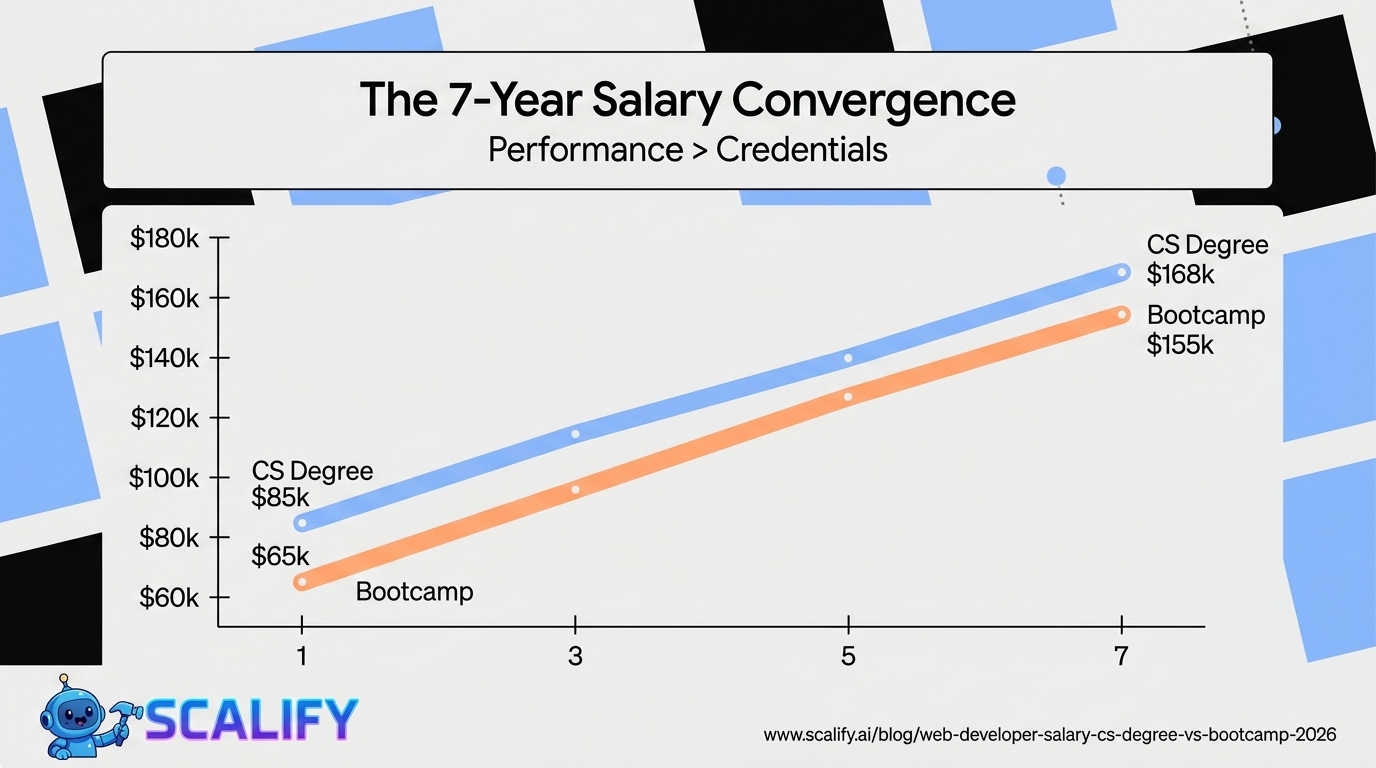
Build genuine system design capability. The difference between a developer who earns $115,000 as a mid-level full-stack developer and one who earns $155,000 as a senior full-stack developer is almost always system design capability — the ability to design APIs, database schemas, caching strategies, and service boundaries that scale and maintain well over time. Investing deliberately in system design education — through books (Designing Data-Intensive Applications), courses, and practice problems — is the most direct path to senior full-stack compensation.
The Bottom Line
Full-stack developers earn $72,000 to $235,000+ in 2026, with TypeScript proficiency, cloud infrastructure capability, and genuine system design expertise commanding the strongest premiums. The full-stack path provides broader career optionality than specialization — versatile developers who own complete features are the most valuable engineers at early-stage companies and remain highly competitive at larger organizations. The developers who maximize full-stack compensation are those who resist the breadth-without-depth trap: building genuine expertise in both front-end and back-end engineering rather than comfortable familiarity with the patterns of both.
At Scalify, we build professional websites for technology companies, startups, and software teams in 10 business days — representing engineering expertise with the digital presence it deserves.
Top 5 Sources
The Full-Stack Developer's Learning Path: Building Both Sides Well
Most developers who call themselves full-stack are significantly stronger on one side of the stack than the other — and that imbalance shows up in both their work quality and their earning potential. The developers who command true senior full-stack salaries have genuine depth on both the front-end and back-end, not merely familiarity with both. Building that genuine depth requires a deliberate learning path that doesn't stop at "I can write React components and I can write Node.js routes."
Front-End Depth for Full-Stack Developers
True front-end depth goes beyond component building: it includes deep understanding of browser rendering (how the browser parses HTML, when styles are calculated, what causes layout reflow and how to avoid it), React's reconciliation algorithm and when re-renders occur and how to prevent unnecessary ones, TypeScript advanced patterns (generics, utility types, discriminated unions) applied to React component interfaces, accessibility beyond alt text (ARIA roles, keyboard navigation, screen reader testing), and performance optimization from first paint to interaction response times. Full-stack developers who develop this depth on the front-end side are competitive for pure front-end roles at companies that value depth — giving them options that full-stack developers with surface front-end knowledge don't have.
Back-End Depth for Full-Stack Developers
Back-end depth for full-stack developers means understanding the operational characteristics of the systems they build: query optimization (how database indexes work, when to add them, how to identify slow queries), connection pooling (why naive database connections at scale cause connection exhaustion), caching strategies (when Redis helps, when it doesn't, what invalidation approaches work for which data patterns), authentication security (JWT token vulnerabilities, refresh token rotation, OAuth 2.0 implementation pitfalls), and API design patterns (REST resource design, when GraphQL adds value vs. complexity, gRPC for internal services). Full-stack developers who understand these back-end fundamentals deeply are far more valuable than those who can write Node.js routes without understanding the production behavior of what they've built.
Full-Stack vs. Going Deep: The Career Decision
The question of whether to stay full-stack or specialize deeper in one domain becomes increasingly important at mid-to-senior career stage. Full-stack generalism pays well and offers maximum optionality — but the highest-paid individual contributors at most large technology companies are specialists with unusual depth in specific domains. Staff-level machine learning engineers, principal distributed systems engineers, and lead security engineers at top companies often earn 20–40% more than equivalent-level full-stack generalists. The full-stack path is excellent for maximizing early-to-mid career earnings and optionality; for developers targeting maximum lifetime earnings and are willing to commit to deep specialization, the specialist path eventually produces higher outcomes.
For most developers, the optimal approach is full-stack competence combined with one area of genuine depth — a developer who is strong at both React and Node.js but has exceptional system design capability, or strong at both but with deep expertise in real-time systems or AI integration, occupies a position that commands both the versatility premium of full-stack and the depth premium of specialization simultaneously.
Interview Preparation for Full-Stack Roles
Full-stack developer interviews test both front-end and back-end knowledge, which makes preparation more comprehensive but also more varied. At most mid-size and large companies, full-stack interviews include: a front-end component or UI challenge (React component building, often with TypeScript), a back-end API design or database query challenge, a system design session for senior roles (design a URL shortener, design a social media feed), and behavioral questions. The most important preparation investments: ensure strong TypeScript proficiency for both React and Node.js sections, study database query optimization and index design for the back-end section, practice 5–10 full system design problems with explicit attention to API design, data modeling, and scalability considerations for senior roles.
Full-Stack Developer Job Market Outlook Through 2030
The full-stack developer job market is positioned for continued strong demand through 2030, driven by three structural factors: the continued growth of software-as-a-service businesses that need versatile engineers who can own features end-to-end, the consolidation of front-end and back-end development that Next.js and similar meta-frameworks enable (blurring the historical distinction between the two), and the continued startup ecosystem growth that consistently favors versatile full-stack developers over specialists for early-team hiring.
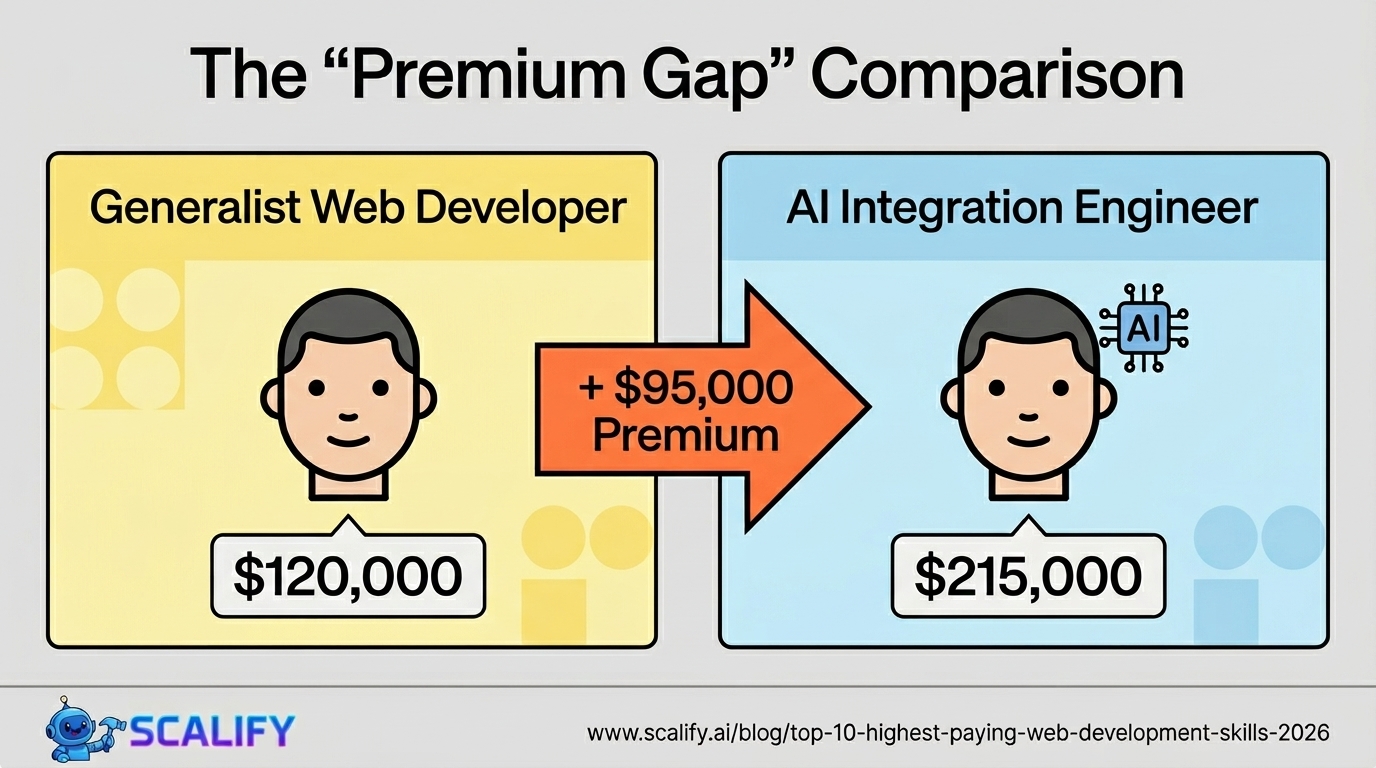
The most significant trend affecting full-stack developer compensation through 2030 is the AI integration premium. Full-stack developers who can build AI-powered features — integrating LLM APIs into both front-end interfaces (chat UI, streaming responses, AI-assisted form filling) and back-end services (RAG systems, AI processing pipelines, vector database queries) — are building the most in-demand skill combination in the current market. The full-stack developer who is strong at React + TypeScript + Node.js + AI integration is competing for roles at the intersection of the highest-demand JavaScript ecosystem and the highest-growth new domain in web development — a position that should produce above-market salary growth through the remainder of the decade.




.jpeg)
.jpeg)


78 SW 7th St, Miami, FL 33130