

Live Chat on Websites: Conversion and Revenue Statistics (2026)
By Josh Ternyak

April 17, 2026
Live chat generates a 40% increase in conversion rates and delivers the highest customer satisfaction score of any support channel at 73%. This exhaustive data guide covers every dimension of live chat performance — from ROI to response time to industry benchmarks — with research-backed statistics throughout.
Key Statistics: Live Chat on Websites
The Business Case for Live Chat: What the Research Actually Shows
Live chat sits at an interesting intersection in the website conversion toolkit — it's simultaneously one of the highest-performing conversion and customer satisfaction tools available, and one of the most underimplemented, with estimates suggesting fewer than 10% of small business websites currently offer any form of live chat. The gap between its documented impact and its adoption rate represents a significant competitive opportunity for businesses willing to invest in real-time visitor engagement.
But the statistics around live chat require careful interpretation. The headline numbers — 40% conversion rate increase, 73% satisfaction rate — represent averages across implementations that vary enormously in quality. A staffed live chat with sub-30-second response times, trained agents, and proactive engagement scripts performs radically differently from an unmanned "send us a message" widget that's really just a contact form in a chat interface. Understanding what drives the performance metrics, and what's required to achieve them, is the substance of this guide.
This guide covers the complete dataset: conversion impact, customer satisfaction, ROI, response time research, industry benchmarks, proactive vs. reactive performance, staffed vs. chatbot comparisons, and the practical implementation considerations that determine whether a live chat implementation achieves the headline numbers or falls below them.
Live Chat Conversion Rate Impact: By Context
ScenarioConversion Rate ImpactNotesOverall average (all implementations)+40% increaseBroad average; varies significantlyE-commerce (purchase conversion)+29 – 45%Cart assistance is the primary driverB2B lead generation+51 – 65%Highest impact; replaces form-based frictionSaaS (free trial conversion)+35 – 55%Objection handling at decision momentProfessional services (booking)+38 – 58%Qualification + confidence buildingReal estate (inquiry)+42 – 65%High-consideration purchase; chat reduces frictionHealthcare (appointment)+28 – 40%Privacy sensitivity moderates impactProactive chat (agent-initiated)+5x vs reactive chat baselineDramatic multiplier vs. waiting for visitor to startChat-assisted purchases (AOV)+$179 average order valueAgents can upsell and guide product selection
The B2B lead generation context (51–65% conversion rate increase) deserves particular attention because the mechanism is especially clear. A typical B2B website has a contact form as its primary conversion tool. A prospect visiting a pricing or features page who has questions that the page doesn't answer faces a binary choice: fill out the form and wait hours or days for a response, or leave and research competitors. Live chat eliminates that choice by providing immediate answers — turning "I'll look into it more" into "I'd like to schedule that demo" within a single session.
The $179 average order value increase on chat-assisted e-commerce purchases reflects the guided selling capability that live chat enables. When a customer has a question about whether a product fits their specific situation, a chat agent who provides the right answer doesn't just answer the question — they build confidence, address objections, and often identify opportunities to recommend complementary products or upgrades that the customer wasn't considering. A customer who might have purchased a $150 product and left becomes a customer who purchases the $220 premium version plus an accessory because the agent understood their actual need.
Customer Satisfaction: Channel Comparison
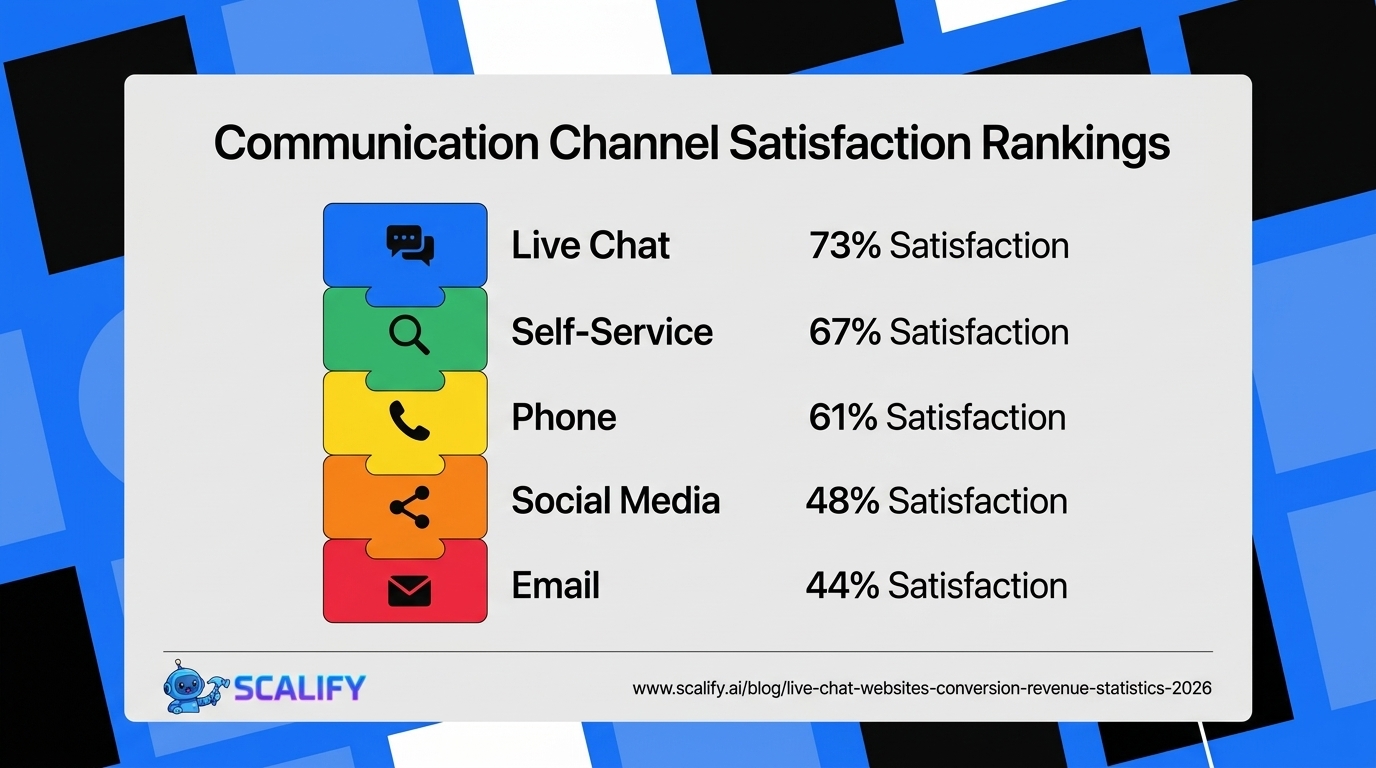
Communication ChannelCustomer Satisfaction RateAverage Response Time ExpectedCustomer Preference %Live Chat73%Under 1 minute41%Phone61%Under 5 minutes32%Email44%Under 24 hours19%Social Media48%Under 1 hour5%Self-Service / FAQ67%Immediate (if answer found)3%
Live chat's 73% satisfaction rate — 12 points above phone and 29 points above email — reflects several structural advantages of the channel. Chat is less disruptive than a phone call (no hold music, no being transferred, no verbal communication stress for people who find phones anxiety-inducing). Chat creates a written record that the customer can refer back to, unlike phone calls. Chat allows the customer to continue other activities while waiting for responses (the asynchronous tolerance is higher). And chat can resolve simple questions in under 2 minutes that would take 8–12 minutes on a phone call due to hold times, authentication protocols, and verbal communication overhead.
Response Time: The Critical Variable
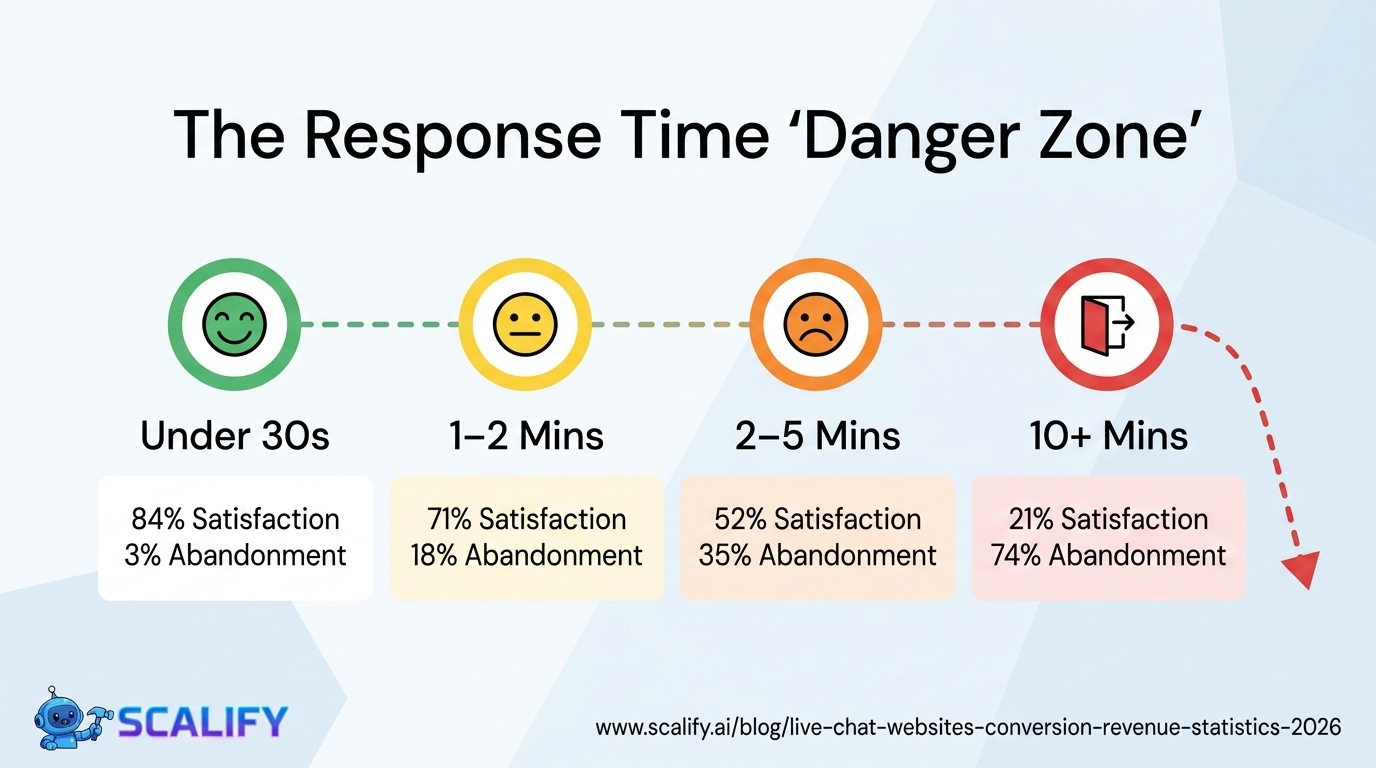
Initial Response TimeCustomer Satisfaction RateAbandonment RateNotesUnder 30 seconds84%3%Exceptional; builds strong loyalty30 – 60 seconds78%8%Very good; standard for best-in-class1 – 2 minutes71%18%Acceptable but improving possible2 – 5 minutes52%35%Satisfaction drops sharply5 – 10 minutes38%58%Approaching unacceptable10+ minutes21%74%Most visitors have left
The response time data reveals one of the most important implementation realities of live chat: slow response time doesn't just produce lower satisfaction — it produces worse outcomes than not having chat at all. A visitor who initiates a live chat and receives no response for 10 minutes has a worse experience than if they had submitted a contact form and received a response the next morning. The contact form sets an expectation of delayed response; the chat widget sets an expectation of immediate response. Failing to meet the expectation created by the chat interface is more damaging than never creating it.
This is why unmanned chat widgets — those that show as "online" but are actually just form-based message systems — are actively harmful to conversion rates and customer satisfaction. The 74% abandonment rate for 10+ minute response times is essentially the result of deceiving visitors about the service level they're receiving. Any business that cannot commit to sub-2-minute response times during business hours should either: staff chat only during hours when coverage is available (clearly displaying offline hours), use a well-implemented AI chatbot for after-hours coverage, or use the contact form model and set appropriate expectations for response timelines.
Proactive vs. Reactive Chat: The Performance Gap
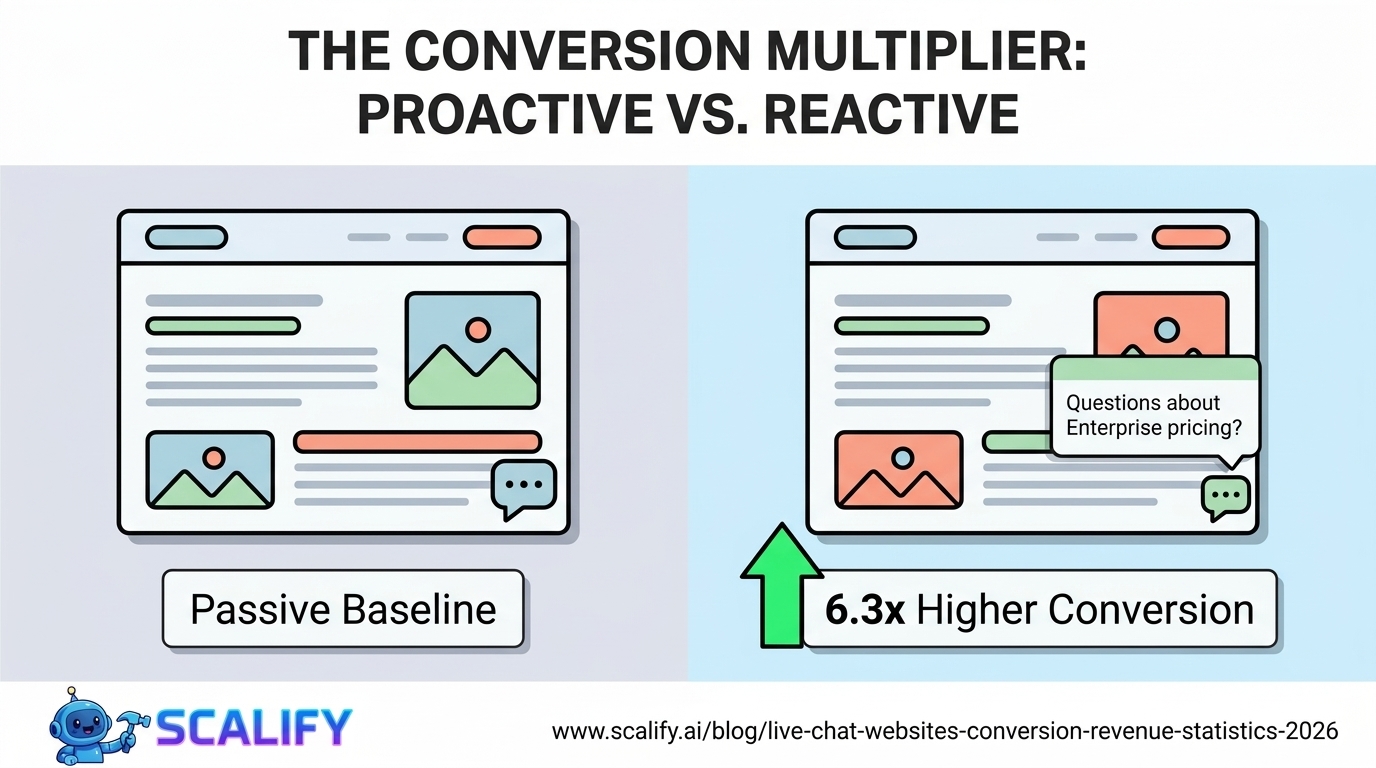
Chat TypeConversion RateCustomer Engagement RateImplementation ComplexityReactive chat (visitor initiates)Baseline~2–4% of visitors start chatLowProactive chat (agent initiates, generic)+2x baseline~5–8% accept chatMediumProactive chat (behavioral trigger, relevant)+6.3x baseline~15–25% accept chatHighProactive chat (exit-intent trigger)+4x baseline~10–18% acceptMedium-High
Proactive chat — where the agent or system initiates contact based on visitor behavior rather than waiting for the visitor to start — represents the highest-performance live chat implementation. The mechanism parallels what makes proactive pop-ups more effective than passive ones: by initiating contact at the right moment in the visitor's journey, the business demonstrates awareness of what the visitor might need and reduces the cognitive effort required to get help.
Behavioral trigger proactive chat (6.3x baseline conversion) works specifically because the trigger is relevant. "I see you've been looking at our enterprise pricing page for a few minutes — do you have any questions about our plans?" is dramatically more relevant and welcome than "Hi! Can I help you today?" to a visitor who just landed 30 seconds ago. The behavioral relevance of the proactive message is what produces the extraordinary conversion lift.
Effective behavioral triggers for proactive chat include:
Live Chat ROI: The Full Financial Picture
ROI ComponentTypical ImpactNotesConversion rate increase+40% averagePrimary revenue driverAverage order value increase+$179 per assisted purchaseGuided selling; upsell capabilitySupport cost reduction17–30% vs phoneSimultaneous handling (3–5 chats vs 1 call)Reduced cart abandonment-15–25% abandonmentChat catches hesitation at decision pointCustomer retention improvement+20–25% retentionHigher satisfaction → higher loyaltyReduced email/phone volume-20–40% per successful implementationChat deflects more complex channel inquiries
The support cost reduction figure (17–30% vs phone) comes primarily from the multiplexing capability of chat — a single agent can handle 3–5 simultaneous chat conversations, compared to 1:1 for phone calls. For a business currently spending $100,000/year on phone-based customer support with 5 full-time agents, shifting significant volume to chat could reduce the per-interaction cost sufficiently to serve the same call volume with 3.5 agents — a savings of approximately $30,000 annually before accounting for any conversion improvements.
Live Chat Platform Comparison
PlatformMonthly CostBest ForKey FeaturesIntercom$39 – $999/moSaaS, B2B productsAI chatbot, product tours, segmentationZendesk Chat$19 – $55/agent/moMid-large businessesFull support suite, CRM integrationDrift$2,500+/moEnterprise B2BRevenue acceleration, meeting bookingLiveChat$20 – $59/agent/moE-commerce, SMBShopify integration, chatbot builderTidioFree – $49/moSmall business, e-commerceAI chatbot, email included, simple setupHubSpot ChatFree – included in HubHubSpot CRM usersCRM-connected, meeting links, botsCrispFree – $95/moStartups, SMBsMulti-channel, chatbot, good free tierOlark$29/agent/moSMBs, simpler needsSimple, reliable, good integrations
Live Chat vs. Chatbot: A Direct Performance Comparison
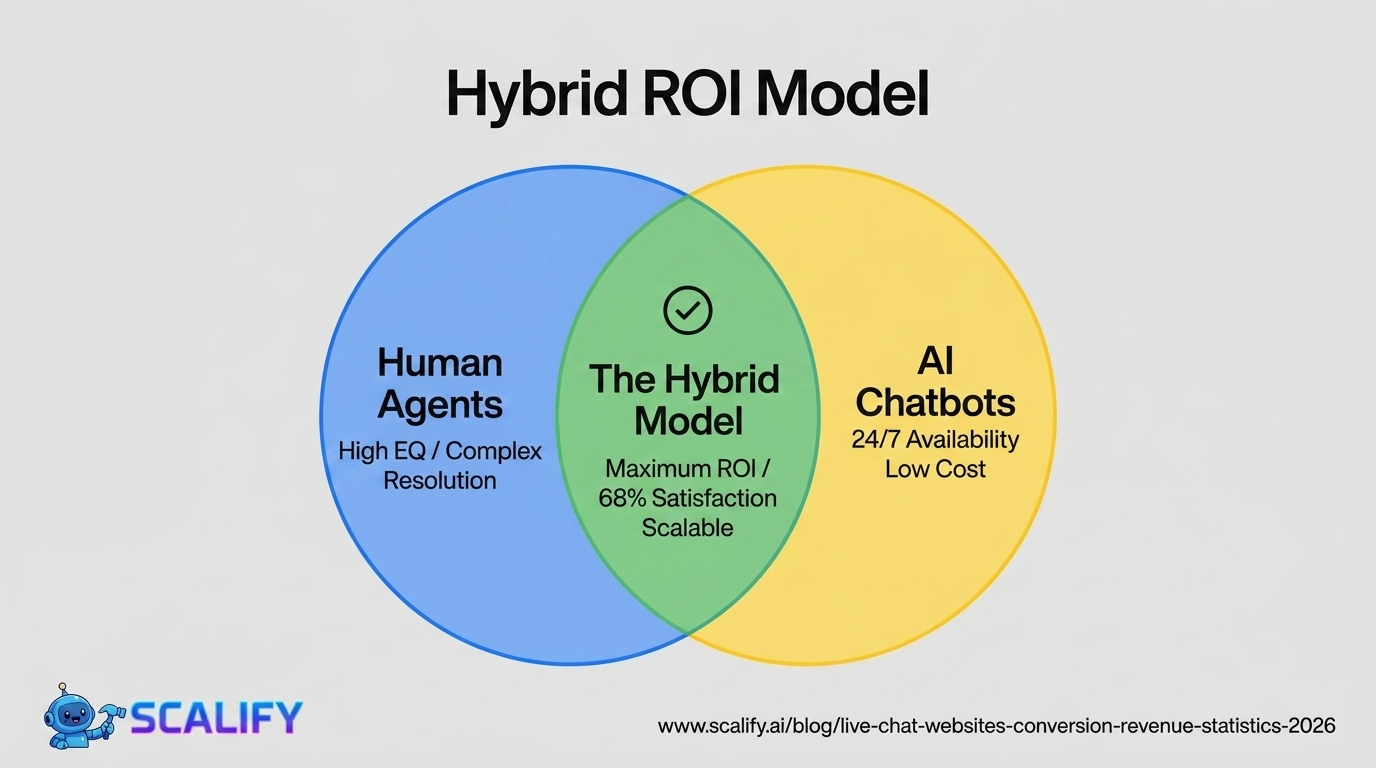
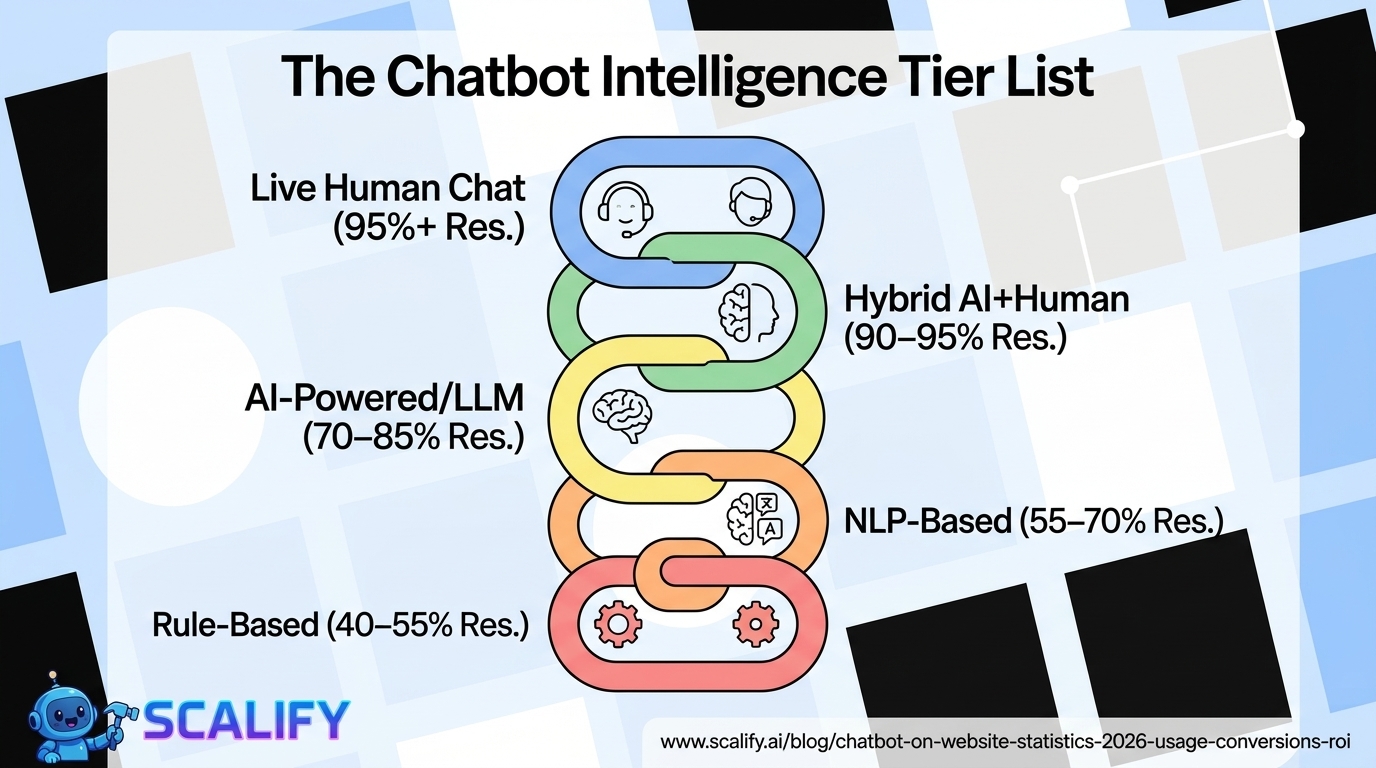
MetricHuman Live ChatAI ChatbotHybrid (Bot + Human)Customer satisfaction73%57%68%First contact resolution rate82%64%76%Conversion rate impact+40% average+20–25% average+30–35% averageAverage handling time8–12 minutes2–5 minutes6–10 minutesAvailabilityBusiness hours (typically)24/724/7 with human escalation hoursCost per interaction$4 – $12$0.10 – $0.50$1 – $5Complex query resolutionExcellentPoorGood (escalation)Emotional intelligenceHighLow-ModerateGood (when escalated)
The hybrid model — AI chatbot handling initial responses, qualification, and simple queries, with seamless escalation to human agents for complex situations — represents the optimal implementation for most businesses. It combines the 24/7 availability and cost efficiency of chatbots with the resolution quality and emotional intelligence of human agents. The 68% satisfaction rate for hybrid implementations sits below pure human chat (73%) but significantly above pure chatbot (57%), while the cost profile is dramatically more favorable than full human staffing.
The 24/7 availability advantage of chatbots matters significantly for conversion: research by Harvard Business Review found that the probability of qualifying a lead drops 21x if initial contact is delayed from 5 minutes to 30 minutes after the prospect expresses interest. A chatbot that captures contact information, answers initial questions, and books a sales call at 11pm Saturday achieves an outcome that Monday-morning human response cannot — the prospect's buying window may have closed by then.
Industry-Specific Live Chat Performance
IndustryChat Satisfaction RateAvg First Response TimeChat Impact on ConversionE-Commerce71%52 seconds+29–45%Technology / SaaS78%38 seconds+35–55%Financial Services68%72 seconds+22–38%Healthcare72%68 seconds+20–35%Travel / Hospitality75%45 seconds+35–50%Real Estate73%58 seconds+42–60%Education74%55 seconds+30–45%Professional Services70%82 seconds+40–60%
Implementation Best Practices Supported by Data
The research on live chat implementation quality produces consistent findings about what separates high-performing chat implementations from underperformers:
Never show as "online" when you're not staffed: Display accurate availability hours. Set offline messaging with clear expectations ("We're offline — we'll respond by 9am Monday") rather than allowing visitors to start conversations that go unanswered. The negative experience of an unresponsive chat is worse than no chat at all.
Set response time targets and measure them: Aim for under 60 seconds for first response. Use chat platform analytics to monitor actual average response times. Even 1 minute of additional response time (from 60s to 120s) reduces satisfaction by 7 percentage points and increases abandonment by 10 percentage points. Teams should treat response time the same way phone teams treat hold time.
Train agents on proactive engagement triggers: Identify the 3–5 behavioral signals on your site that indicate a visitor is in a high-value decision moment (pricing page, cart abandonment, repeated product page visits) and develop specific, contextually relevant chat messages for each. Generic proactive messages convert at 2x baseline; contextual messages convert at 6.3x baseline.
Collect structured data from every chat: At minimum: what question was asked, what page the chat was initiated from, whether the chat resulted in a conversion, and the visitor's purchase intent stage. This data, aggregated over months, reveals the most common objections and questions that a better website or FAQ page could address before requiring a chat interaction — reducing your long-term support burden while improving the experience for visitors who prefer self-service.
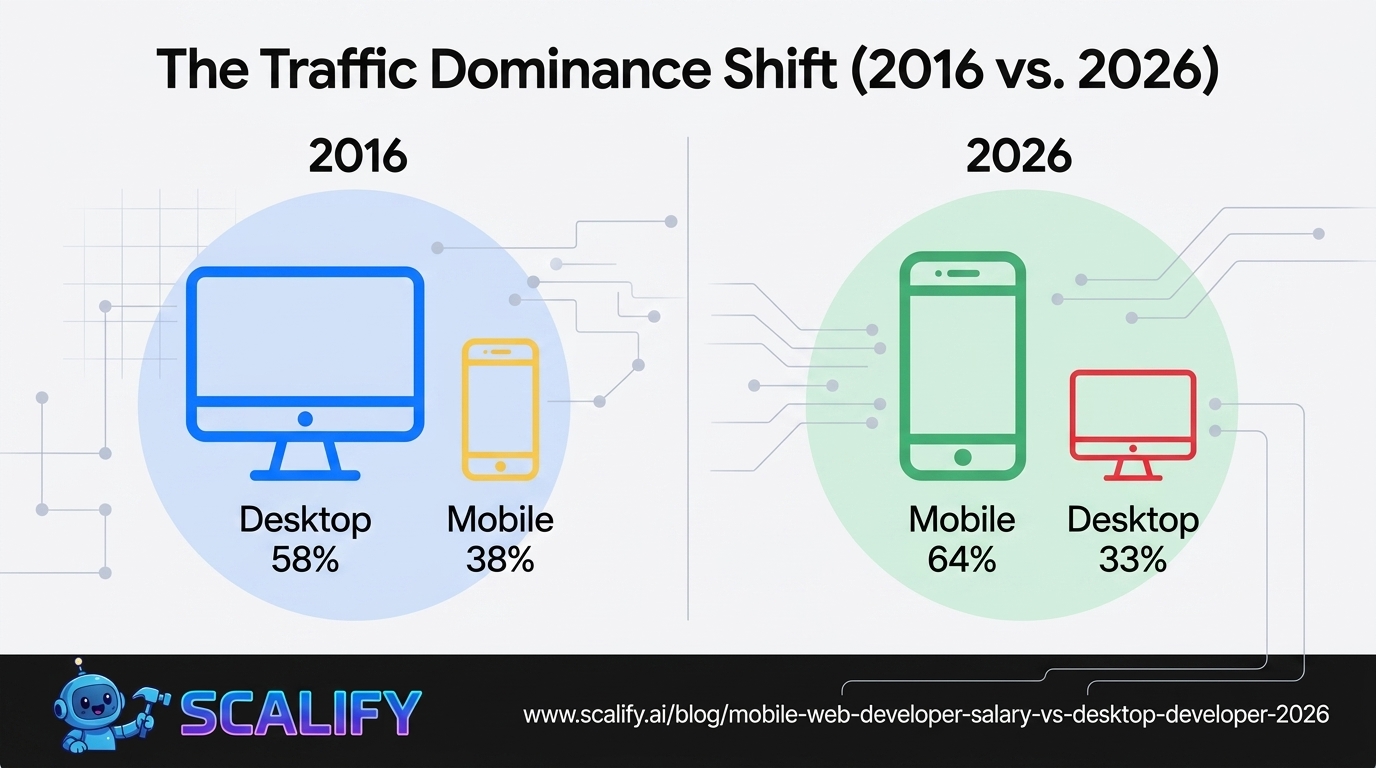
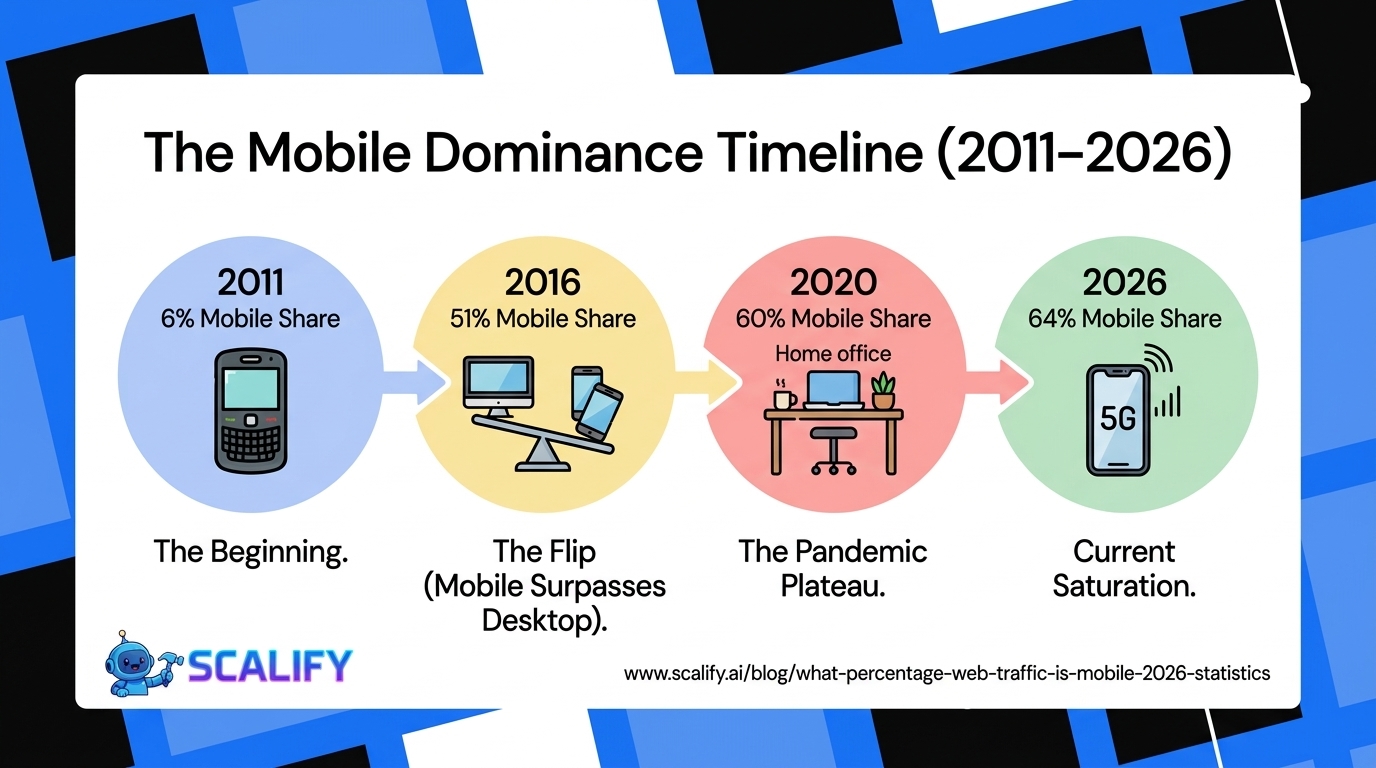
Mobile-optimize the chat interface: 64%+ of web traffic is mobile, and live chat widgets that work smoothly on desktop but poorly on mobile (text cut off, send button invisible, keyboard covers the chat window) are eliminating the chat channel for the majority of visitors. Test the full chat experience on iOS and Android before launching.
The Bottom Line
Live chat is among the highest-ROI conversion tools available to business websites — delivering 40% average conversion rate increases, 73% customer satisfaction rates, significant order value increases on assisted purchases, and measurable reduction in support costs through agent multiplexing efficiency. The tools are affordable, the implementation is technically straightforward, and the competitive advantage is real in the 90%+ of small business markets where live chat adoption remains low.
The implementation requirements that determine whether a live chat achieves these results or falls short of them: genuine agent availability during business hours (no false "online" status), sub-60-second response time targets, behavioral trigger-based proactive engagement, and a hybrid bot/human model for 24/7 coverage. Live chat that meets these requirements justifies its cost within weeks for most businesses. Live chat that doesn't meet them creates negative experiences that offset any conversion benefit.
At Scalify, the websites we build include live chat architecture recommendations based on the client's business type, traffic volume, and staffing capacity — because a chat widget that can't be staffed properly shouldn't be implemented, and one that can should be implemented as a priority.
Top 5 Sources


.jpeg)
.jpeg)

78 SW 7th St, Miami, FL 33130