

What Is E-E-A-T and How to Apply It to Your Website (2026 Guide)
By Josh Ternyak

April 17, 2026
E-E-A-T (Experience, Expertise, Authoritativeness, Trustworthiness) is Google's framework for evaluating content quality and credibility. This comprehensive guide covers each component, YMYL vs non-YMYL requirements, specific actions for each signal, site-type breakdowns, common mistakes, E-E-A-T and AI content, how to measure progress, and how to build E-E-A-T into your content strategy.
What Is E-E-A-T and How to Apply It to Your Website
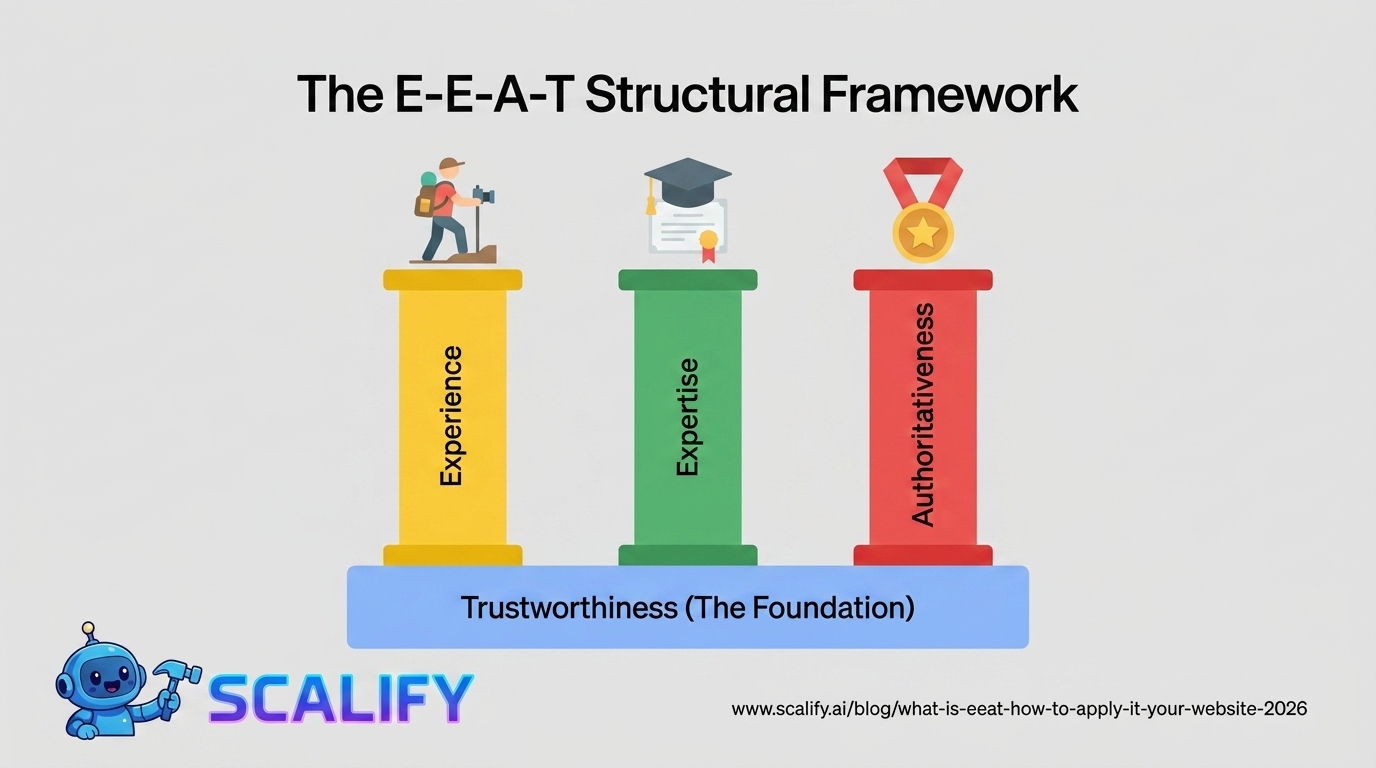
E-E-A-T stands for Experience, Expertise, Authoritativeness, and Trustworthiness — the four qualities Google evaluates when assessing the quality of web content and the credibility of the people and organizations who produce it. Understanding E-E-A-T is essential for any website trying to rank well in Google's search results, because E-E-A-T signals are baked into how Google's core algorithms and quality raters evaluate content quality across billions of web pages.
E-E-A-T is not a single ranking factor or algorithm setting that you can optimize with a checklist — it's a framework that captures the many different ways Google tries to assess whether content is produced by credible people with real knowledge and experience. A website with strong E-E-A-T signals consistently produces higher-quality content that earns more trust from both Google and users; a website with weak E-E-A-T signals produces content that may technically answer a query but doesn't demonstrate the real-world authority that Google increasingly requires for high rankings in competitive, consequential categories.
Key E-E-A-T Statistics and Context
Breaking Down Each Component
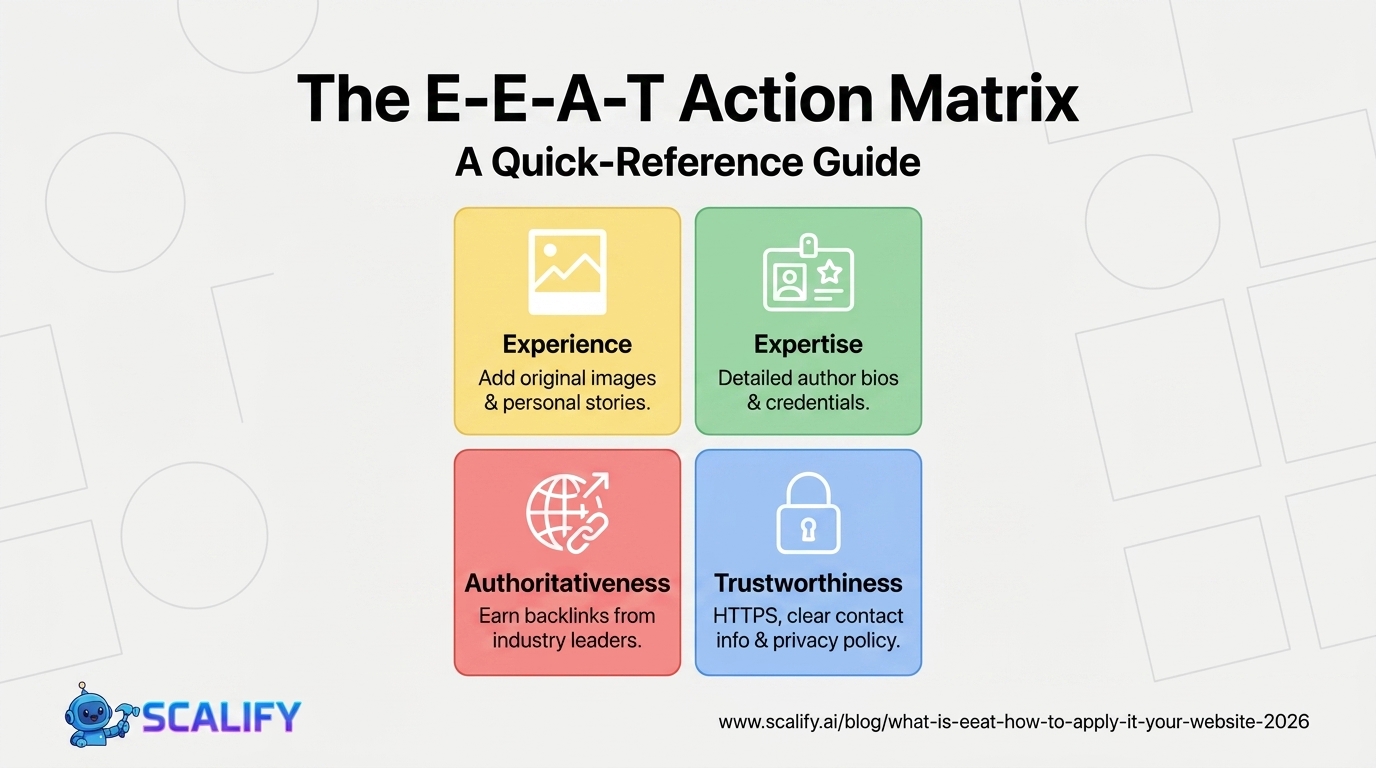
ComponentWhat It MeansHow Google Evaluates ItExamplesExperienceFirst-hand, real-world experience with the topicPersonal stories, specific details only someone with experience would know, photos or documentation of actual experienceA hiking boot review by someone who hiked 500 miles in those boots vs. a spec sheet summaryExpertiseDeep knowledge and skill in the subject areaCredentials, training, demonstrated understanding of nuance and complexity, accurate use of technical terminologyMedical advice from a board-certified physician vs. from an anonymous health bloggerAuthoritativenessRecognition as an authority by others in the fieldBacklinks from credible sources, citations, press mentions, industry awards, references from established institutionsA legal resource cited by law schools and bar associations vs. one cited only by similar legal directoriesTrustworthinessHonesty, transparency, and reliabilityClear ownership and contact info, accurate content that doesn't mislead, HTTPS, privacy policy, transparent business practicesA financial site with clear disclosures and accurate information vs. one with hidden affiliate relationships and misleading claims
E-E-A-T for YMYL vs. Non-YMYL Content
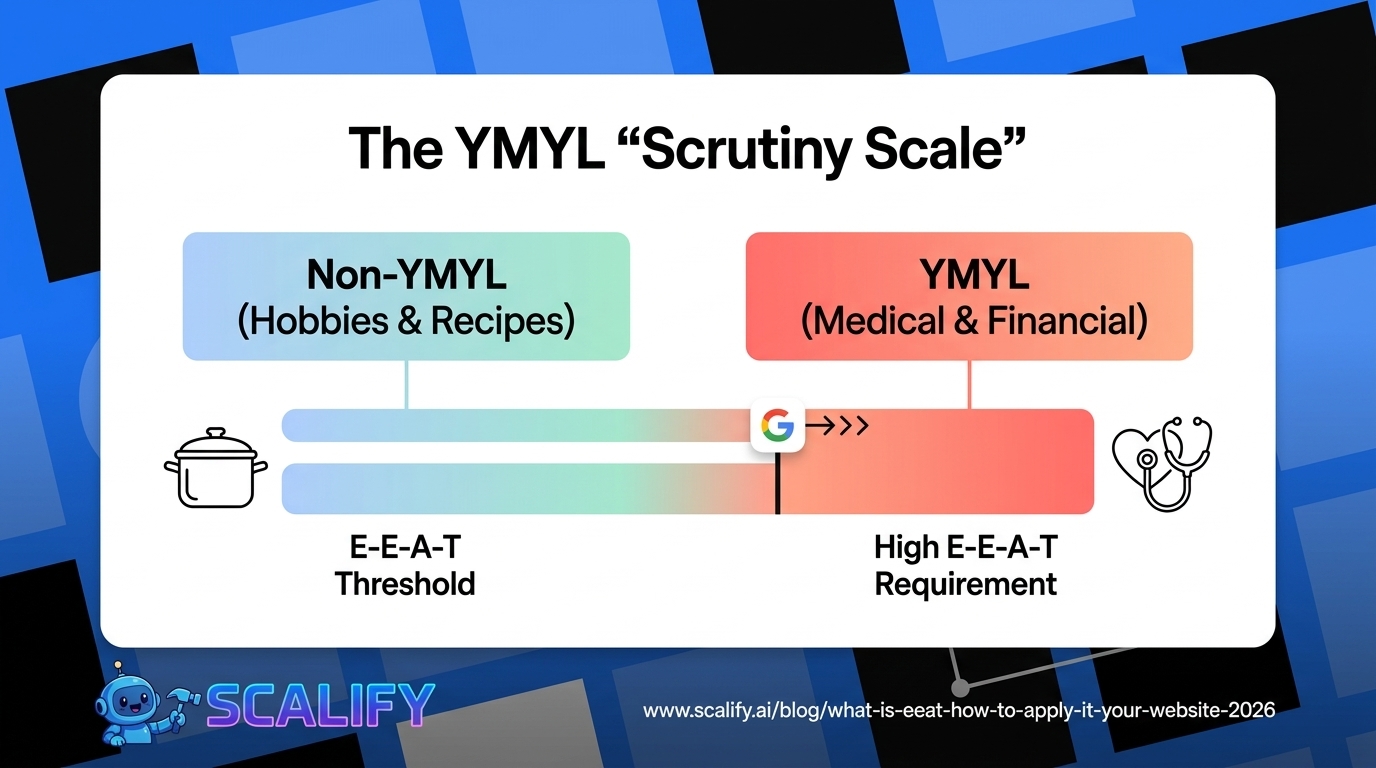
E-E-A-T requirements are not uniform across all content types. Google applies higher E-E-A-T scrutiny to YMYL (Your Money or Your Life) topics — content where poor quality or inaccurate information can cause real harm to users. YMYL categories include: medical and health advice, financial advice and investment information, legal guidance, news and current events affecting civic decisions, safety information, and content affecting major life decisions. For YMYL content, Google requires demonstrably high expertise and trustworthiness — a blog post giving medical advice from an anonymous author is treated very differently than the same information from a named, credentialed physician.
For non-YMYL content — recipe blogs, product reviews, how-to guides for low-stakes topics, entertainment and hobby content — E-E-A-T still matters, but the threshold is lower. A food blogger's experience-based recipe review doesn't require medical-level credentials; genuine culinary knowledge, demonstrable cooking experience, and honest, detailed content satisfy E-E-A-T for that context. Understanding which tier your content falls into helps calibrate how much investment in formal E-E-A-T signals is warranted.
How to Improve E-E-A-T: Specific Actions
Experience: Show the Real Thing
ActionHow to ImplementImpactFirst-person experience in contentWrite from direct experience; include specific details only someone with experience would knowHigh — differentiates from AI-generated or aggregated contentOriginal photos and videosPhotos of actual products, places, processes — not stock imagesHigh — authentic evidence of real experienceCase studies from real clientsNamed clients, specific projects, actual results with permissionVery High — strongest experience signal for B2BDocument the process, not just the conclusionShow your work; describe challenges and how you solved themHigh — demonstrates genuine engagement vs. surface-level coverage
Expertise: Demonstrate Knowledge Credibly
ActionHow to ImplementWho It Helps MostAuthor pages with credentialsDedicated author pages with education, certifications, career history, published workAll sites, especially YMYLExpert review of contentHave a credentialed expert review and sign off on health, financial, legal contentYMYL sites especiallyDetailed, nuanced contentCover exceptions, edge cases, differing opinions — demonstrate knowledge depthAll competitive nichesCite authoritative sourcesLink to peer-reviewed research, government sources, recognized institutionsAll sitesContent updates with date stampsShow when content was last reviewed and updated; update stale informationAll sites with time-sensitive information
Authoritativeness: Build Recognition
Authoritativeness is the component most closely aligned with traditional link-based SEO — it's built through recognition by other credible sources. Key authoritativeness signals: backlinks from authoritative sites in your industry (industry publications, .edu and .gov sites, established media), mentions and citations (even unlinked mentions of your brand or content in credible sources), quoted as an expert in news articles or industry reports, featured in industry associations or professional organizations, and awards or recognition from established industry bodies. Building authoritativeness is a long-term investment in reputation — it cannot be faked with low-quality link building, and attempts to shortcut it with unnatural links are more likely to result in penalties than improvements.
Trustworthiness: The Foundation
Trustworthiness is the most foundational E-E-A-T component — the others build on it. Trust signals that are table stakes for any serious website: HTTPS encryption, a clear and accurate "About" page that identifies the organization or individuals behind the site, visible contact information (phone, email, physical address where applicable), a transparent privacy policy that accurately describes data practices, editorial standards or methodology pages for content sites, clear disclosure of affiliate relationships or sponsored content, and accurate and up-to-date information throughout the site. Trustworthiness failures — misleading claims, hidden affiliate relationships, no identifiable author or organization — are treated very seriously by Google's quality evaluators and algorithms.
E-E-A-T Signals for Different Site Types
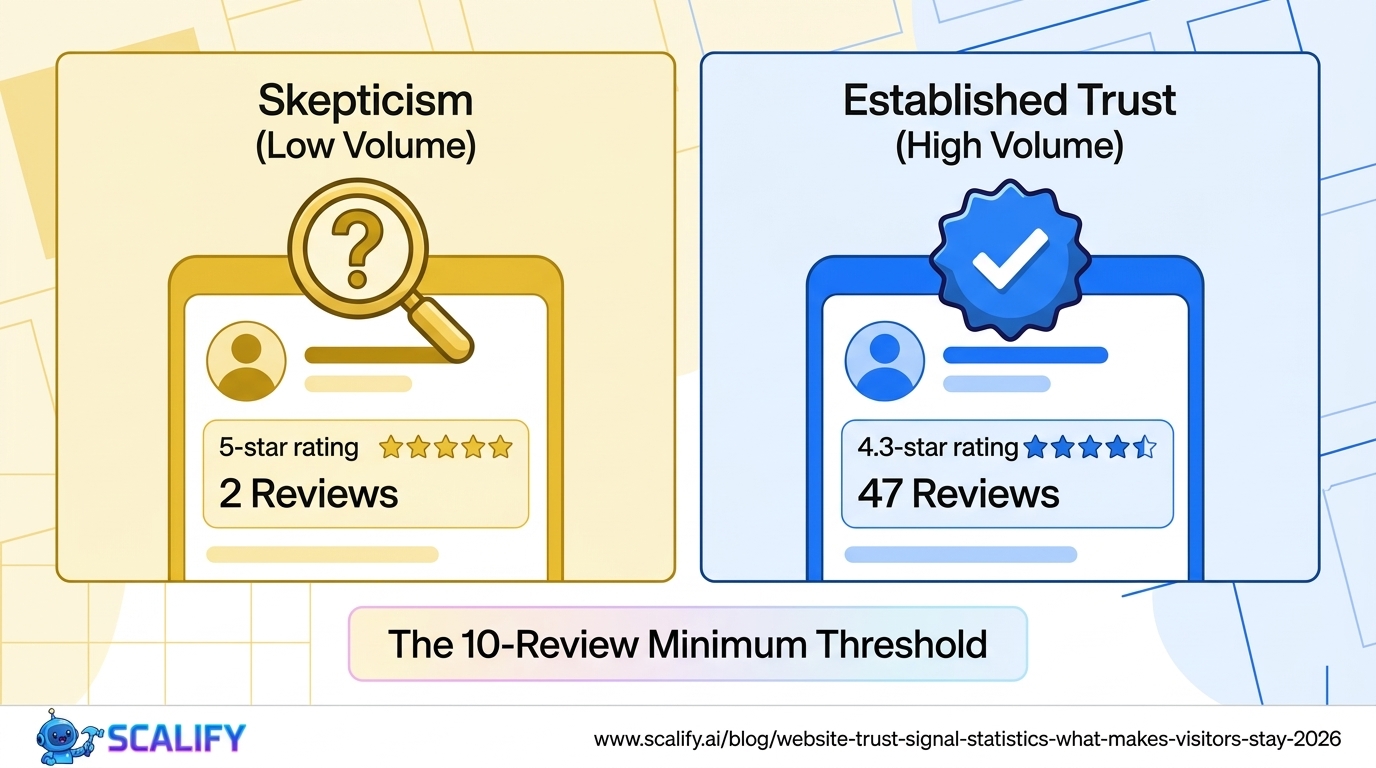
Site TypeMost Important E-E-A-T SignalsCommon Weakness to FixHealth/MedicalNamed, credentialed authors; medical review process; up-to-date citationsAnonymous content; no medical review; outdated guidelinesFinancial/LegalLicensed professionals as authors/reviewers; regulatory disclosures; accurate informationUnlicensed advice-giving; no compliance disclosure; generic contentProduct ReviewsFirst-hand testing; specific product experience; original photosNever tested the product; duplicated manufacturer specs; no photosNews and JournalismNamed journalists with credentials; editorial standards; corrections policyAnonymous reporting; no fact-checking; no corrections processB2B Professional ServicesTeam credentials; client case studies; industry recognition; thought leadershipNo team bios; no case studies; no press or recognition mentionsLocal BusinessPhysical address; consistent NAP; Google Business Profile; customer reviewsNo physical address; inconsistent contact info; no reviews
Common E-E-A-T Mistakes
Anonymous content on YMYL topics. Publishing health, financial, or legal content with no identified author or credentials is the single most damaging E-E-A-T failure for sites in those categories. Google's quality raters are explicitly instructed to rate content from an unidentified author much lower than content from a named expert — and the algorithms reflect this.
Stale content with no update indication. A medical article from 2017 with no indication of whether it's been reviewed since is less trustworthy than an article with a clear "Reviewed by [Dr. Name, MD] on [Date]" statement. Update dates and review processes signal ongoing commitment to accuracy.
No "About" page or company information. Google's quality raters cannot rate an anonymous website highly on trustworthiness because they literally cannot evaluate who is responsible for the content. A clear, honest About page that explains who runs the site, why they're qualified to produce this content, and how to contact them is the minimum trustworthiness baseline.
Thin affiliate content. Product review sites that add no genuine value beyond affiliate links and manufacturer spec-sheets are precisely the content Google's Helpful Content Updates targeted. Original testing, genuine recommendations based on real use, and honest assessments including negatives are the minimum E-E-A-T threshold for review content.
The Bottom Line
E-E-A-T is Google's framework for evaluating whether content is produced by people with genuine knowledge and experience who can be trusted to provide accurate, helpful information. Improving E-E-A-T is not a technical checklist — it's building a genuinely credible, trustworthy web presence: named authors with real credentials, first-hand experience demonstrated in content, external recognition through backlinks and citations, and transparent, honest business practices. Sites that build genuine E-E-A-T signals over time develop a quality advantage that is difficult to compete against and compounds with every piece of authoritative content produced.
At Scalify, every website we build is structured to support E-E-A-T signals — clear author information, About pages, credentials display, and the trust signals that make content credible to both users and Google.
Top 5 Sources
E-E-A-T and AI-Generated Content: The 2026 Reality
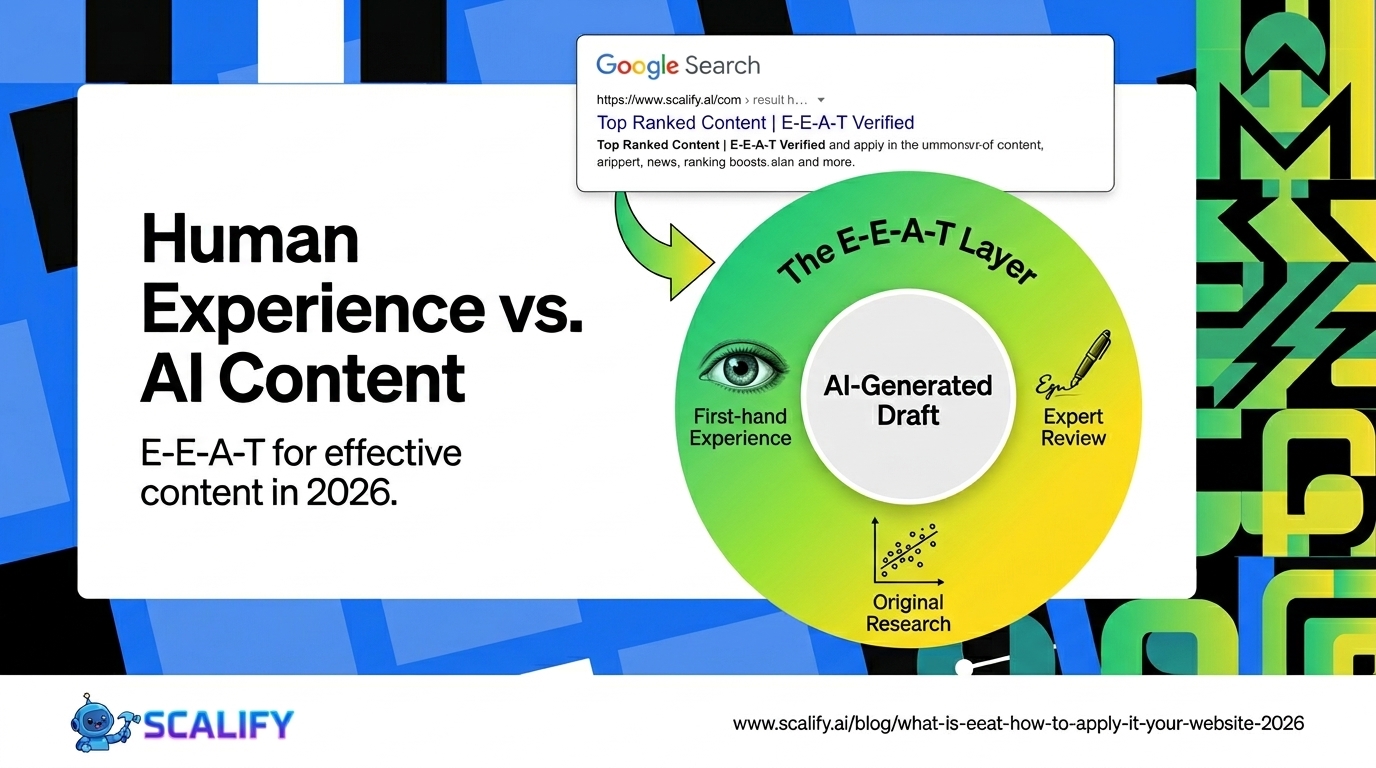
The explosion of AI-generated content since 2023 has made E-E-A-T more important, not less. Google's Helpful Content Updates and subsequent algorithm refinements have specifically targeted content that is "written for search engines rather than people" — a category that describes much AI-generated content produced without genuine expertise or first-hand experience behind it. Google's official position is that AI-generated content is not inherently against their guidelines, but that the quality, accuracy, and originality standards remain the same regardless of how content is produced.
In practice, this means that AI-generated content with genuine expertise and experience layered on top of it — expert review, original insights, accurate information, first-hand experience added by the author — can perform well. AI-generated content that is purely automated, contains no original perspective, and demonstrates no genuine expertise or experience is exactly what the Helpful Content system was designed to deprioritize. The differentiation is not "AI vs human" but "genuine value vs. content production at scale for search traffic."
For websites trying to build strong E-E-A-T in an AI content environment: use AI for research and drafting assistance, but ensure final content reflects genuine expertise and experience. Have credentialed experts review and substantially contribute to content in their domain. Add original data, first-hand perspectives, and case studies that AI cannot generate. Prioritize depth and accuracy over volume. These practices produce content that Google's quality systems consistently reward — regardless of what tools were used in the production process.
Measuring E-E-A-T Progress: What to Track
E-E-A-T is not directly measurable — there's no "E-E-A-T score" you can track. But the signals that indicate improving E-E-A-T show up in measurable ways: increasing branded search volume (more people searching for your company specifically, indicating growing reputation), growing referring domain counts from credible sources in your industry, media and press mentions tracked via Google Alerts, improvements in rankings for competitive YMYL or expertise-sensitive queries after implementing E-E-A-T improvements, and quality rater feedback if you participate in any Google research programs. Track these proxy metrics over 6–12 month periods — E-E-A-T improvement is a long game that produces durable competitive advantages rather than quick ranking jumps.
Building E-E-A-T Into Your Content Strategy
The most effective way to build E-E-A-T at scale is to make it a content process requirement rather than an afterthought. Every piece of content should be: assigned to a named author whose credentials are visible and relevant to the topic, reviewed by a subject matter expert where the topic warrants it (YMYL especially), produced from genuine first-hand experience or research rather than synthesis of other content, supported by citations to authoritative sources, kept current with defined review intervals for time-sensitive information, and structured to answer specific questions users have rather than to optimize for keyword density. Teams that systematize these practices produce content that consistently improves E-E-A-T signals over time — building a quality foundation that compounds in ranking authority as the content library grows.


.jpeg)
.jpeg)

78 SW 7th St, Miami, FL 33130