

Back-End Developer Salary: Average Pay by Experience in 2026
By Josh Ternyak

April 22, 2026
Back-end developers earn $68,000 to $230,000+ in 2026, with the wide range reflecting differences in specialization, language expertise, and system design capability. This comprehensive guide covers salary by experience level, programming language premiums, specialization tiers, FAANG compensation, freelance rates, geographic data, AI integration opportunities, and the fastest paths to maximizing back-end developer compensation.
Back-End Developer Salary: What the Market Pays in 2026
Back-end developers are the engineers who build and maintain the server-side logic, databases, APIs, and infrastructure that power every website and web application. While front-end developers handle what users see and interact with, back-end developers handle everything behind the scenes: authentication systems, data storage and retrieval, business logic, third-party integrations, performance at scale, and the architecture that determines whether an application can handle 100 users or 10 million.
In 2026, back-end developer salaries range from $75,000 for entry-level engineers to $220,000+ for principal engineers at FAANG-tier companies. The range is wide because "back-end developer" spans an enormous spectrum of technical depth — from someone who writes basic Node.js CRUD APIs to a distributed systems engineer designing fault-tolerant microservices architecture for global-scale applications. Understanding where you fall in that spectrum — and what skills move you up it — is the practical value of this comprehensive salary guide.
Key Back-End Developer Salary Statistics
Back-End Developer Salary by Experience Level
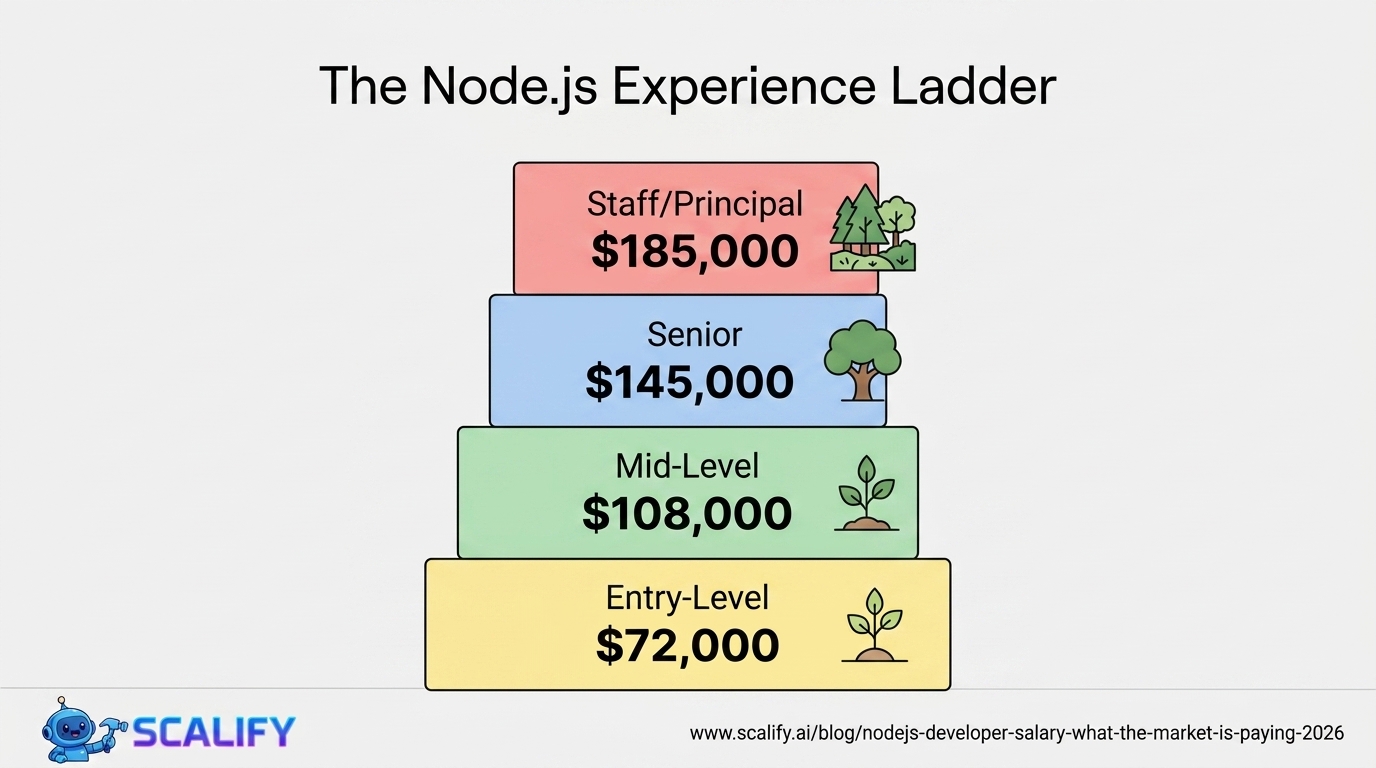
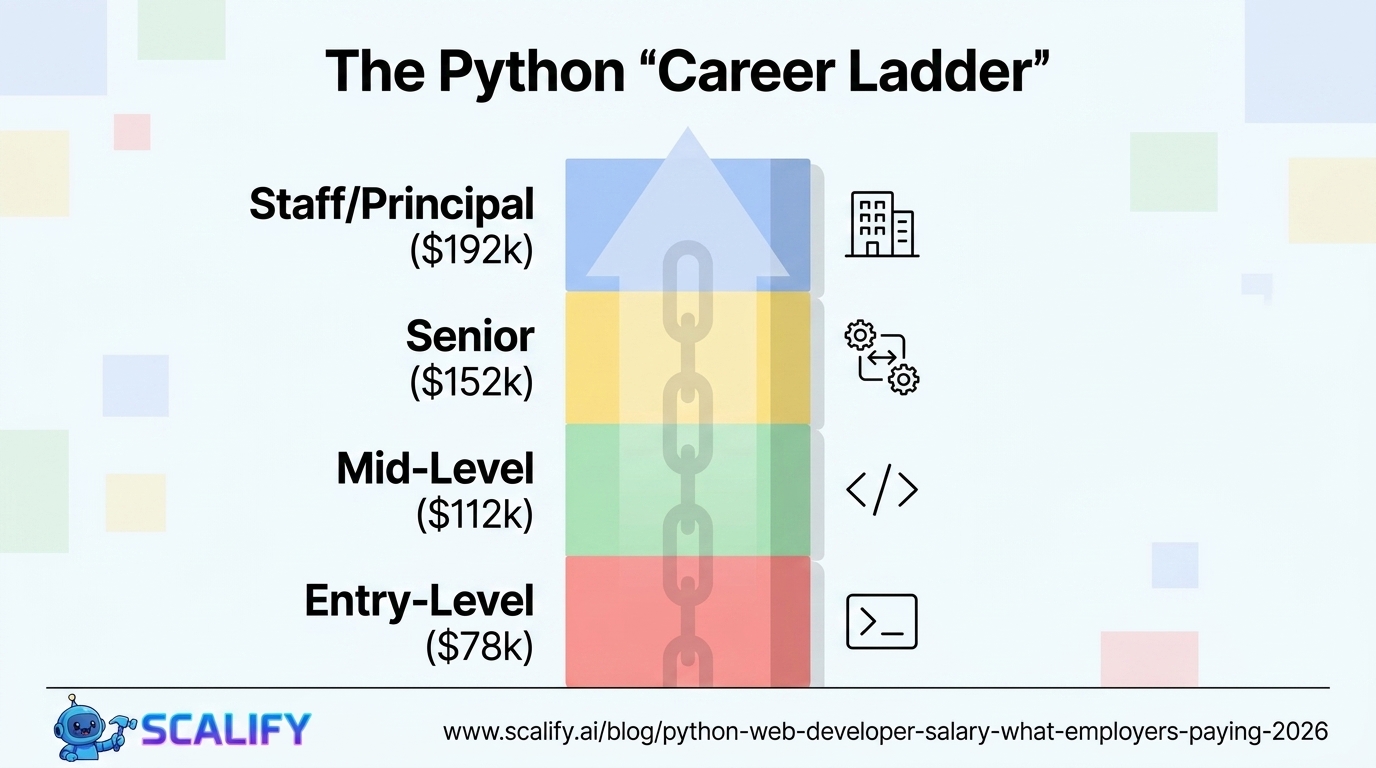
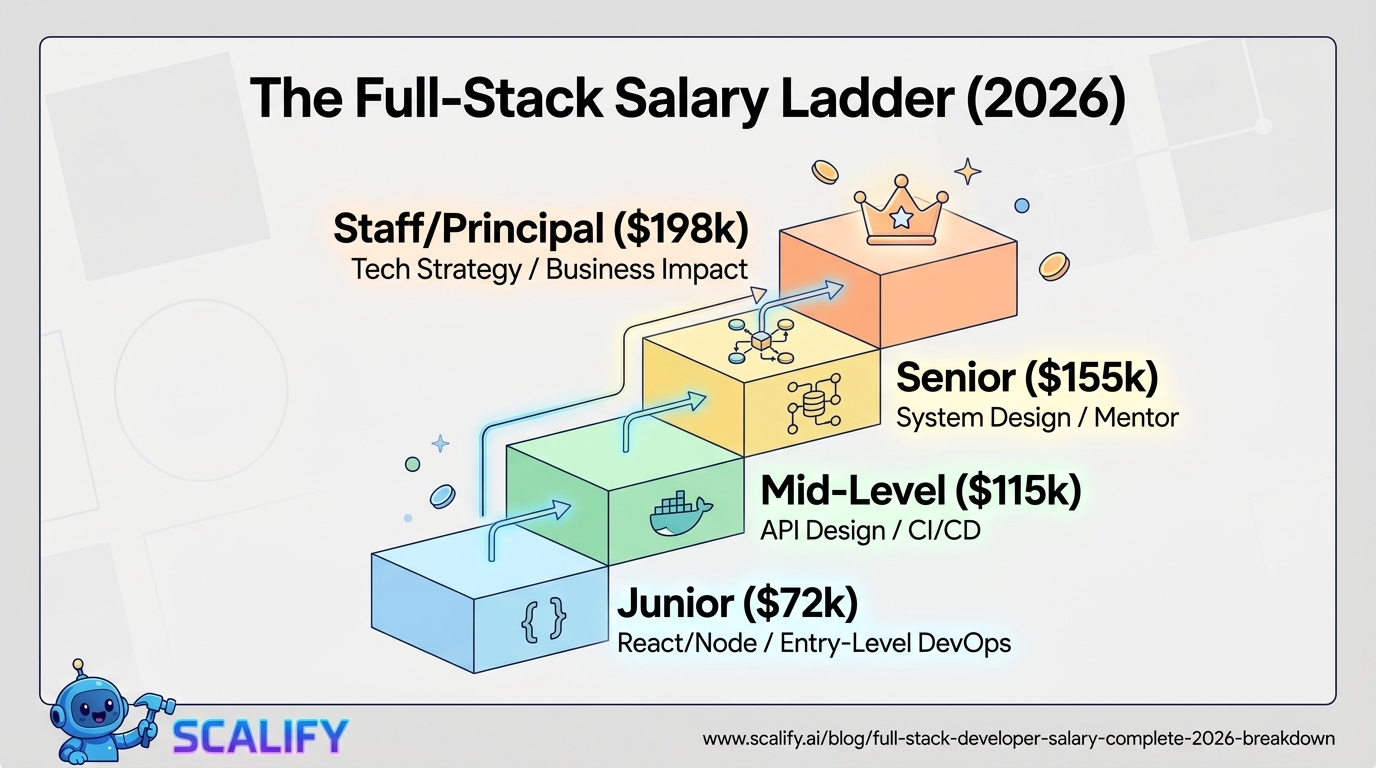
LevelYears ExperienceTypical ResponsibilitiesSalary RangeMedianJunior / Entry-Level0–2 yearsFeature implementation under guidance, bug fixes, unit testing, CRUD APIs$68,000 – $95,000$78,000Mid-Level2–5 yearsOwns features independently, designs database schemas, reviews code, mentors juniors$92,000 – $135,000$110,000Senior5–9 yearsSystem design, architectural decisions, performance optimization, cross-team influence$130,000 – $175,000$152,000Staff / Principal8–14 yearsOrganization-wide technical direction, complex system design, executive communication$165,000 – $230,000$192,000Distinguished / Fellow12+ yearsIndustry-defining technical contributions, external influence, top 0.1% of engineers$220,000 – $400,000+Rare tier
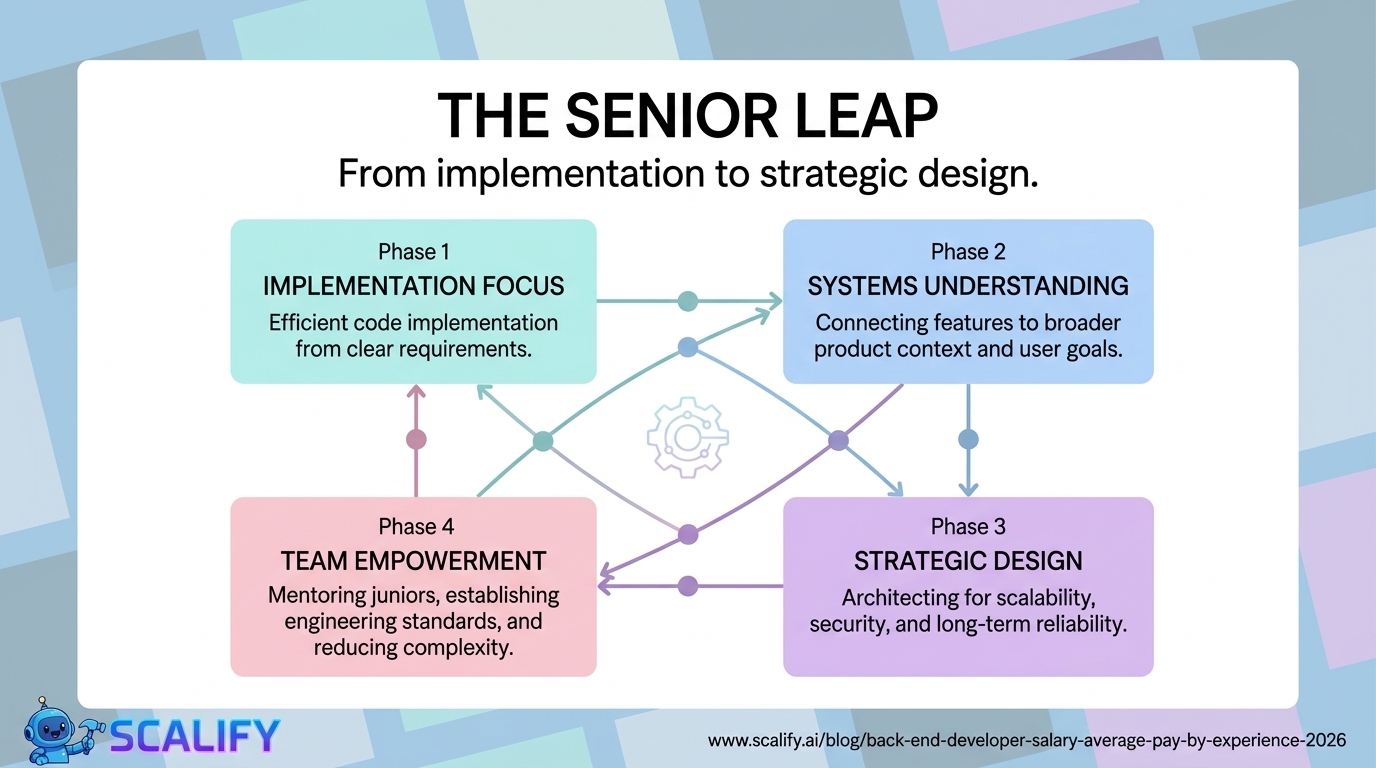
The mid-to-senior transition is the most significant compensation jump in back-end development — and the most demanding in terms of what skills must be demonstrated. A mid-level back-end developer who can implement well-defined features becomes a senior engineer when they can independently design systems: choosing the right database architecture, designing APIs that will serve future requirements, identifying performance bottlenecks before they become production issues, and making defensible tradeoffs between competing technical approaches. This shift from implementer to designer is what employers are paying for at the senior level, and it's not achieved purely through time — it requires deliberately seeking out system design challenges and learning from production experience.
Back-End Developer Salary by Programming Language
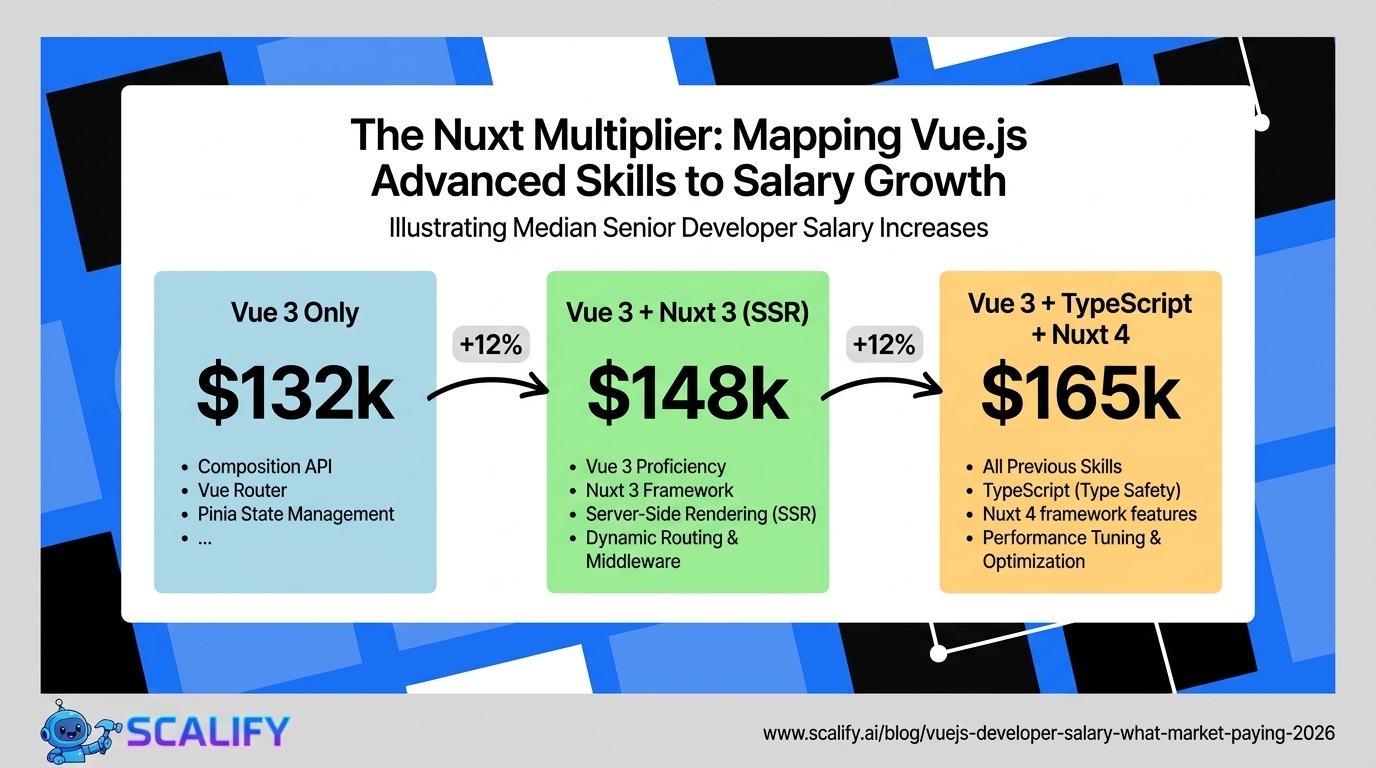
LanguageMid-Level MedianSenior MedianMarket DemandSalary TrendPrimary Use CasesGo (Golang)$125,000$170,000High — growingStrongly RisingMicroservices, cloud infrastructure, high-performance APIsRust$128,000$172,000Moderate — niche premiumRisingSystems programming, WebAssembly, performance-critical applicationsPython$118,000$158,000Very HighRising (AI/ML lift)Web APIs (Django/FastAPI), data engineering, AI/ML integrationJava$115,000$155,000High — enterprise stableStableEnterprise applications, Android, Spring Boot APIsKotlin$118,000$158,000Moderate-HighRisingAndroid, Spring Boot (replacing Java in many orgs)Node.js (JavaScript)$108,000$148,000Very HighStableREST and GraphQL APIs, real-time applicationsTypeScript (Node)$112,000$152,000Very High — growingRisingType-safe Node.js APIs, full-stack developmentRuby (Rails)$105,000$142,000Moderate — declining slightlyStable-DecliningRapid web application development, startupsPHP$92,000$128,000High (legacy) — declining for new projectsDecliningWordPress, Laravel, legacy web applicationsC# (.NET)$110,000$150,000High — enterprise / MicrosoftStableEnterprise applications, Azure integrations, game servers
Why Go Commands the Highest Back-End Premium
Go (Golang) consistently commands the highest salary premium among back-end programming languages — and the reasons are structural, not arbitrary. Go was designed by Google specifically for building highly concurrent, network-intensive server software at massive scale. Its simplicity, performance (near-C speed with garbage collection), and excellent concurrency primitives (goroutines and channels) make it the dominant language for cloud infrastructure, microservices architecture, and high-throughput APIs at scale-focused companies.
The combination of Go's performance characteristics, its dominance in the cloud-native ecosystem (Kubernetes itself is written in Go), and the relatively smaller pool of experienced Go engineers compared to Python or JavaScript creates classic supply-demand salary dynamics. Go engineers are in high demand at infrastructure-heavy companies — cloud providers, fintech firms, high-traffic media companies, and developer tooling organizations — and the supply of senior Go engineers is constrained.
Python's Rise: The AI/ML Lift Effect
Python's salary trajectory has accelerated significantly since 2022, driven by the explosion of AI and machine learning workloads that Python dominates. Back-end developers who can write Python APIs (FastAPI, Django REST Framework) and integrate with AI/ML services — OpenAI's API, Anthropic's Claude API, HuggingFace models, LangChain, vector databases — are accessing a premium market that didn't exist at this scale three years ago.
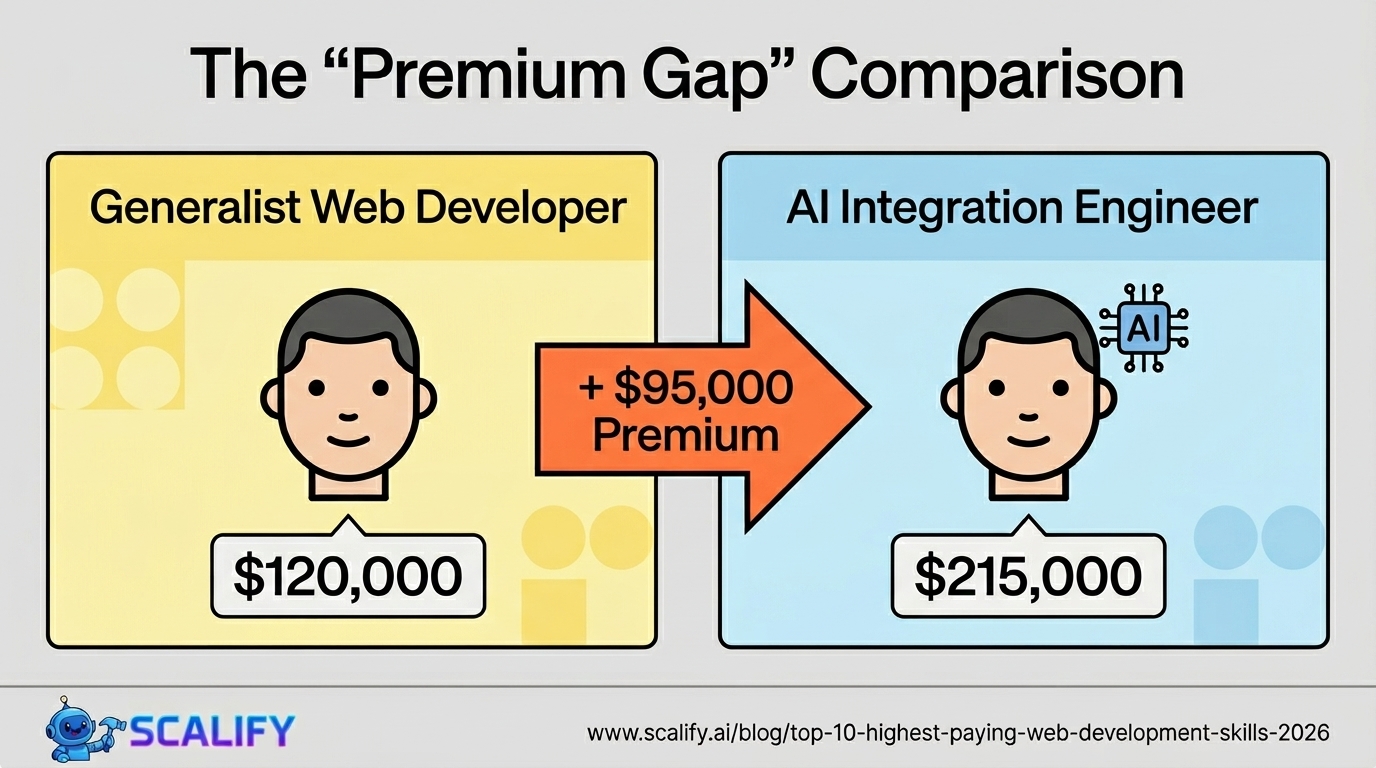
A back-end Python developer who can build the API layer for an AI-powered application — handling prompt engineering, streaming responses, embedding generation, vector similarity search, and the caching and rate limiting that AI integrations require — is solving problems that most companies desperately need solved and that few engineers can do well. This specialization is commanding $20,000–$40,000 premiums over equivalent Python API development without the AI component.
Back-End Developer Salary by Specialization
SpecializationMid-Level MedianSenior MedianDemandGrowth TrajectoryAPI Development (REST / GraphQL)$108,000$148,000Very HighStableDistributed Systems / Microservices$125,000$168,000HighGrowingDatabase Engineering (SQL + NoSQL)$118,000$158,000HighStable-GrowingAI / ML Integration Back-End$128,000$172,000Very High — explosive growthStrongly GrowingReal-Time Systems (WebSockets, etc.)$118,000$160,000Moderate-HighGrowingFintech / Payments Back-End$125,000$165,000HighStable-GrowingSecurity / Auth Engineering$120,000$162,000HighGrowingDevOps-Adjacent / Platform Engineering$128,000$168,000HighGrowingE-Commerce Back-End (Shopify, custom)$102,000$142,000HighStable
Back-End Developer Salary by Location
City / RegionJunior MedianMid-Level MedianSenior MedianCost of Living IndexSan Francisco / Bay Area$95,000$138,000$192,000100 (baseline)Seattle$90,000$130,000$178,00082New York City$88,000$125,000$170,00088Boston$84,000$120,000$162,00078Austin$76,000$108,000$148,00062Denver$74,000$106,000$145,00060Chicago$72,000$104,000$142,00065Miami$68,000$96,000$135,00061Atlanta / Dallas / Phoenix$70,000$100,000$138,00055–60Remote (US company, national rate)$78,000$112,000$155,000Variable
Back-End Developer Salaries at Major Companies
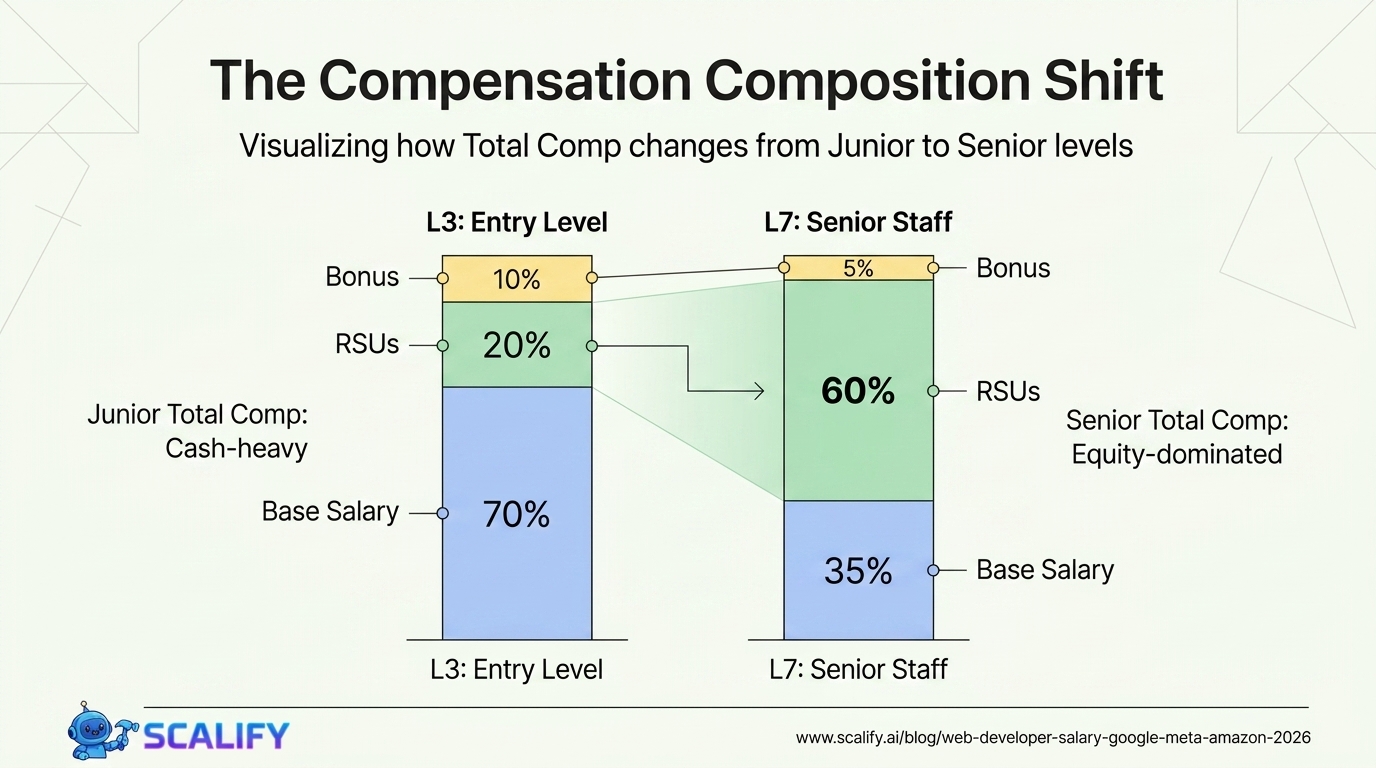
CompanyMid-Level BaseSenior BaseBonus TargetAnnual Equity ValueEstimated Total Comp (Senior)Google$165,000 – $195,000$185,000 – $225,00015–20%$80,000 – $200,000+$320,000 – $470,000Meta$158,000 – $188,000$180,000 – $220,00010–15%$90,000 – $210,000+$320,000 – $475,000Amazon$148,000 – $178,000$170,000 – $210,000Variable$80,000 – $180,000+$295,000 – $430,000Apple$152,000 – $180,000$175,000 – $215,00010–15%$60,000 – $150,000+$275,000 – $400,000Netflix$200,000 – $250,000$250,000 – $350,000IncludedSeparate grants$285,000 – $420,000Stripe$155,000 – $185,000$180,000 – $220,00010–15%$80,000 – $160,000+$290,000 – $415,000Airbnb$148,000 – $178,000$172,000 – $210,00012–15%$70,000 – $150,000+$275,000 – $390,000Mid-size SaaS / Startup$110,000 – $145,000$142,000 – $175,0005–10%$20,000 – $80,000+$175,000 – $280,000
The Skills That Drive the Highest Back-End Salaries
SkillSalary PremiumDemand LevelTime to LearnDistributed systems design+$20,000 – $35,000High2–4 years (experience-driven)AI/ML API integration (LLMs, embeddings)+$18,000 – $35,000Explosive growth3–9 monthsGo programming language+$15,000 – $28,000High — growing3–6 monthsKubernetes + container orchestration+$12,000 – $22,000High3–6 monthsGraphQL API design+$8,000 – $15,000High1–3 monthsDatabase performance tuning (PostgreSQL, etc.)+$10,000 – $18,000High6–18 monthsEvent-driven architecture (Kafka, etc.)+$12,000 – $22,000Growing3–6 monthsCloud architecture (AWS / GCP / Azure)+$12,000 – $22,000Very High4–8 monthsSecurity engineering (OAuth, zero-trust)+$10,000 – $20,000Growing6–12 monthsRust programming language+$15,000 – $30,000Niche but premium6–12 months
Back-End vs. Front-End vs. Full-Stack: The Salary Comparison
RoleJunior MedianMid-Level MedianSenior MedianRelative ComplexityBack-End Developer$78,000$110,000$155,000High (systems, data, scale)Full-Stack Developer$75,000$108,000$150,000Medium-High (breadth over depth)Front-End Developer$68,000$98,000$138,000Medium (UI, performance, accessibility)DevOps / Platform Engineer$85,000$124,000$168,000Very High (infrastructure, reliability)Site Reliability Engineer (SRE)$90,000$128,000$172,000Very High
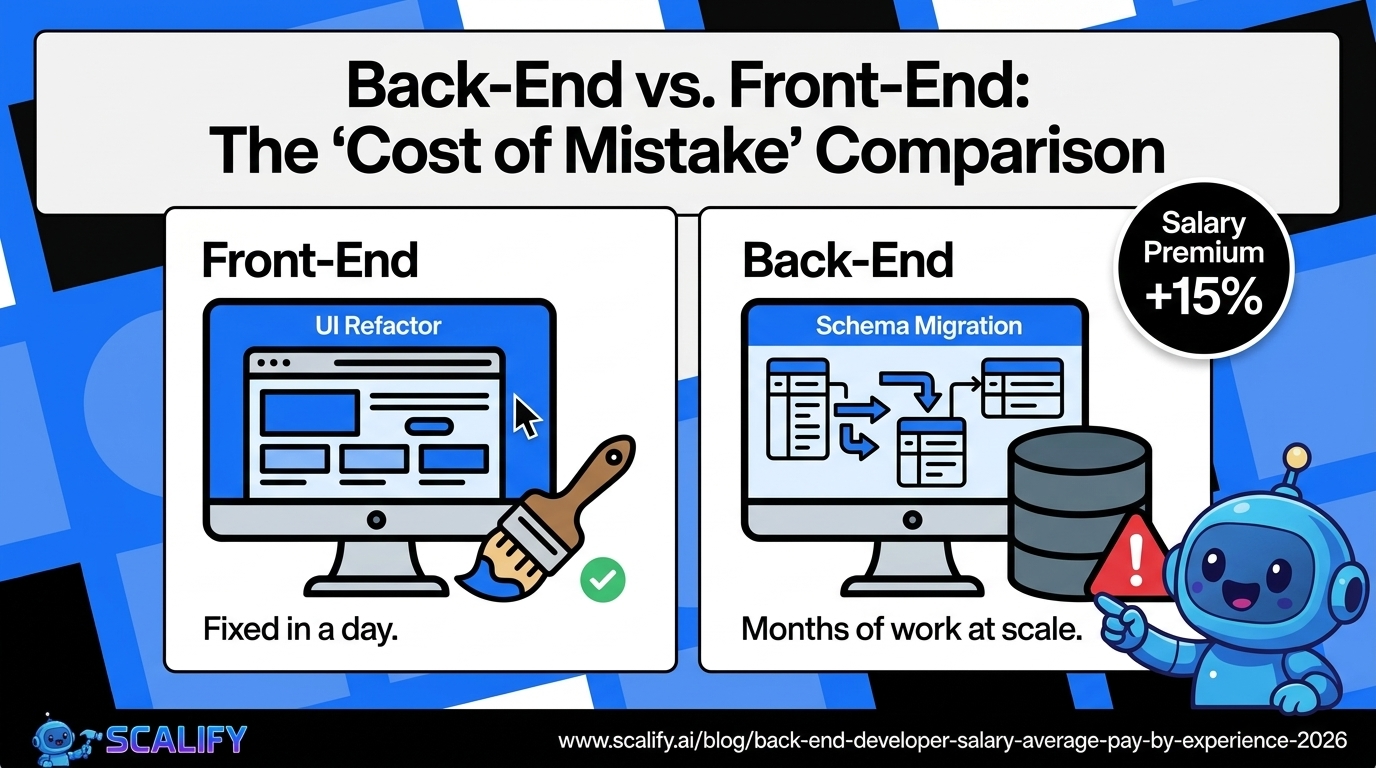
Back-end developers consistently earn 10–15% more than front-end developers at equivalent experience levels. The premium reflects the nature of back-end complexity: system design decisions have long-lasting consequences for application performance, scalability, and maintainability that front-end decisions typically don't. A bad CSS implementation can be refactored in a day; a poorly designed database schema may require months of migration work at scale. The cost of back-end engineering mistakes is higher, which drives up the compensation for engineers who make fewer of them.
How to Increase Your Back-End Developer Salary
Develop genuine system design capability. The senior engineer premium is primarily awarded for system design ability — the capacity to architect solutions that are correct, scalable, maintainable, and secure. This skill develops through deliberate practice: studying distributed systems, analyzing how your current systems work under load, reading system design case studies from companies that have scaled (the Airbnb, Uber, and Stripe engineering blogs are excellent resources), and seeking out opportunities to design systems rather than just implement them.
Specialize in high-value domains. AI/ML integration, fintech, and distributed systems are the highest-premium specializations in back-end development right now. A Python developer who adds proficiency in the LLM API ecosystem — prompt engineering, streaming, embeddings, vector search, LangChain — is positioning for one of the fastest-growing compensation tiers in software engineering. The investment is accessible: most of the core skills can be learned in 3–6 months of focused effort.
.jpeg)
Contribute to or build systems at scale. Nothing builds back-end credibility faster than demonstrably having built systems that handle real load. If your current role doesn't offer scale challenges, seek projects — open source, side projects, or internal initiatives — that let you work with distributed data, high-concurrency scenarios, or performance-sensitive systems. The ability to describe specific scaling challenges you've solved is worth more in compensation negotiations than any certification.
Negotiate based on impact, not industry salary averages. Back-end engineers who can quantify the business value of their work — "the API architecture I designed reduced server costs by $200,000 annually" or "my database optimization reduced query times by 94%, enabling the product to scale from 50,000 to 2 million users" — negotiate from a position of demonstrated ROI rather than market comparison. This approach consistently produces better negotiation outcomes than salary surveys alone.
The Back-End Developer Salary Outlook: 2026–2030
Back-end development compensation is structurally well-positioned through 2030 for several reasons. AI is automating some routine back-end tasks — boilerplate CRUD generation, simple API scaffolding — but is simultaneously creating massive new demand for back-end engineers who can integrate AI capabilities into production applications. The AI integration work itself is complex, requiring deep understanding of API design, rate limiting, caching strategies for LLM responses, prompt management, and the reliability engineering that production AI applications require.
Distributed systems expertise will become more valuable, not less, as applications increasingly span multiple cloud regions, handle higher traffic volumes, and require more sophisticated data architectures. The engineers who understand how to build systems that are correct under failure conditions — handling network partitions, data consistency tradeoffs, and the operational complexity of distributed state — will remain highly compensated regardless of AI tooling advances.
The Bottom Line
Back-end developers earn $68,000 to $230,000+ in 2026 depending on experience, specialization, language expertise, and employer type. The median mid-level salary of $110,000 represents a meaningful premium over front-end development — a premium that reflects the higher complexity and consequence of back-end engineering decisions. The fastest paths to the top of the back-end salary range are: developing genuine system design capability, specializing in high-value domains (AI integration, distributed systems, fintech), mastering high-premium languages (Go, Rust, Python), and building production experience with systems that handle real scale. The back-end engineering market remains structurally strong — the demand for engineers who can build reliable, scalable, secure server-side systems continues to grow faster than the supply of engineers who can do it well.
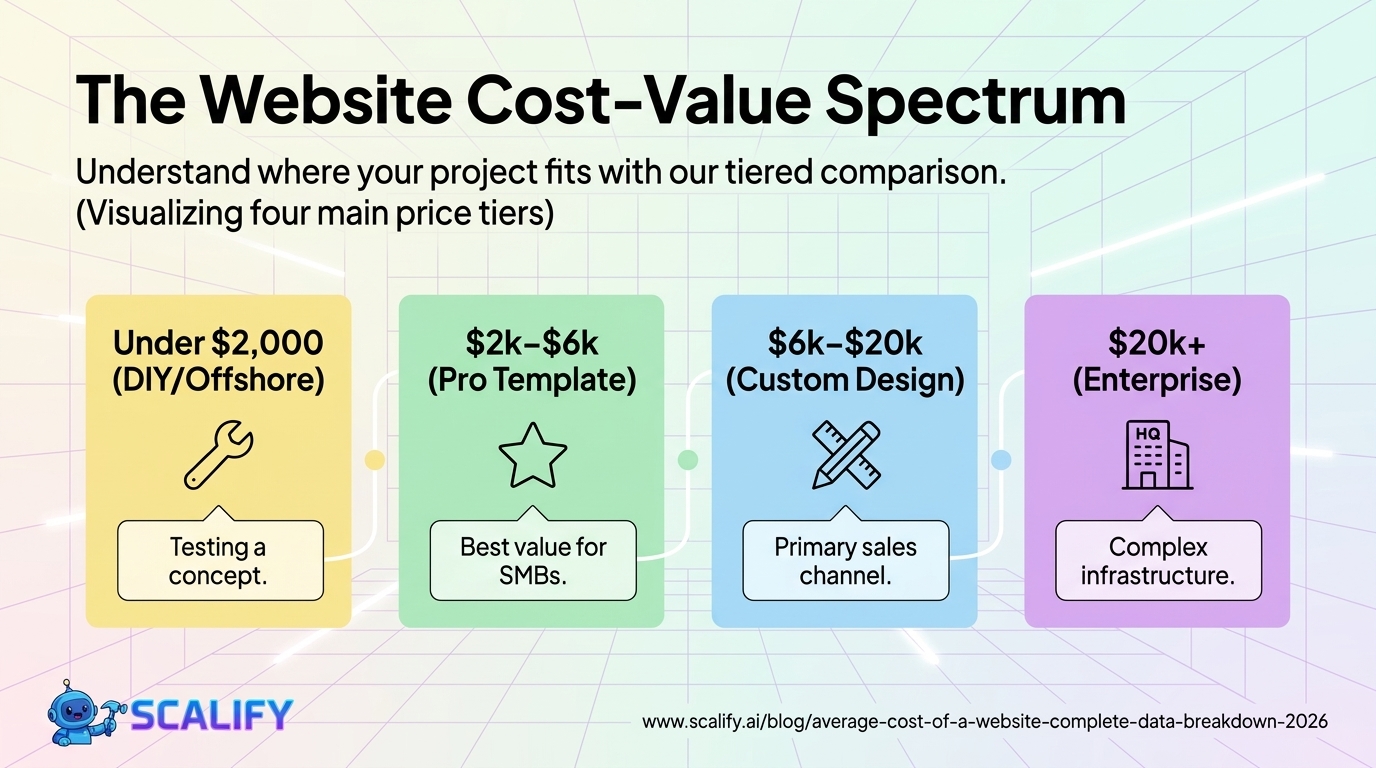
At Scalify, we build professional websites for technology companies, SaaS businesses, and developer tools in 10 business days — representing your engineering team's expertise with the digital presence it deserves.
Top 5 Sources
Freelance Back-End Developer Rates
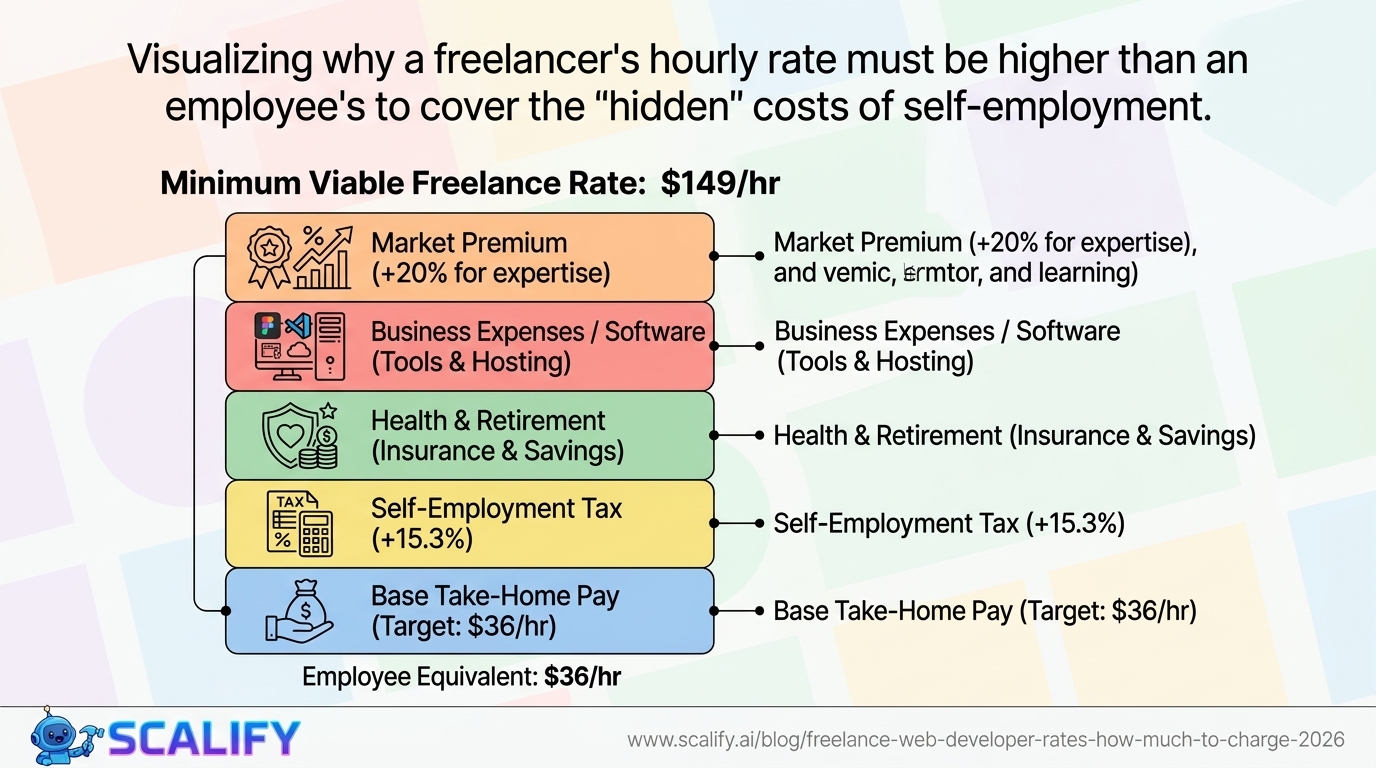
Freelance back-end development is a well-compensated path for experienced engineers — particularly those with specialized expertise that clients can't easily source from general talent pools. The hourly rates for freelance back-end developers reflect the same specialization premiums that appear in full-time salaries, amplified by the additional value of flexibility and on-demand availability that freelance engagements provide.
Freelance SpecializationHourly Rate RangeTypical Project DurationRevenue Potential (Full Utilization)General back-end (Node.js, Python)$80 – $130/hr1–6 months$166,000 – $270,000/yrAPI design and development$95 – $150/hr1–4 months$198,000 – $312,000/yrDatabase architecture and optimization$100 – $165/hr1–3 months per engagement$208,000 – $343,000/yrDistributed systems / microservices$125 – $200/hr3–9 months$260,000 – $416,000/yrAI/ML integration back-end$130 – $220/hr2–6 months$270,000 – $458,000/yrSecurity and auth engineering$120 – $195/hr1–4 months$250,000 – $406,000/yrFintech / payments back-end$130 – $210/hr3–12 months$270,000 – $437,000/yrLegacy system modernization$110 – $175/hr3–12 months$229,000 – $364,000/yr
Freelance back-end developers with specialized expertise — particularly in AI integration, fintech, and distributed systems — are accessing one of the most attractive independent consulting markets in software engineering. The key to sustainable freelance back-end income is recurring clients: companies that need ongoing development support, architecture review, and system evolution work rather than one-off project builds. Back-end developers who establish 2–4 retainer clients in their specialization area can generate $200,000–$350,000+ annually with significantly more schedule control than full-time employment provides.
Back-End Developer Salary by Industry
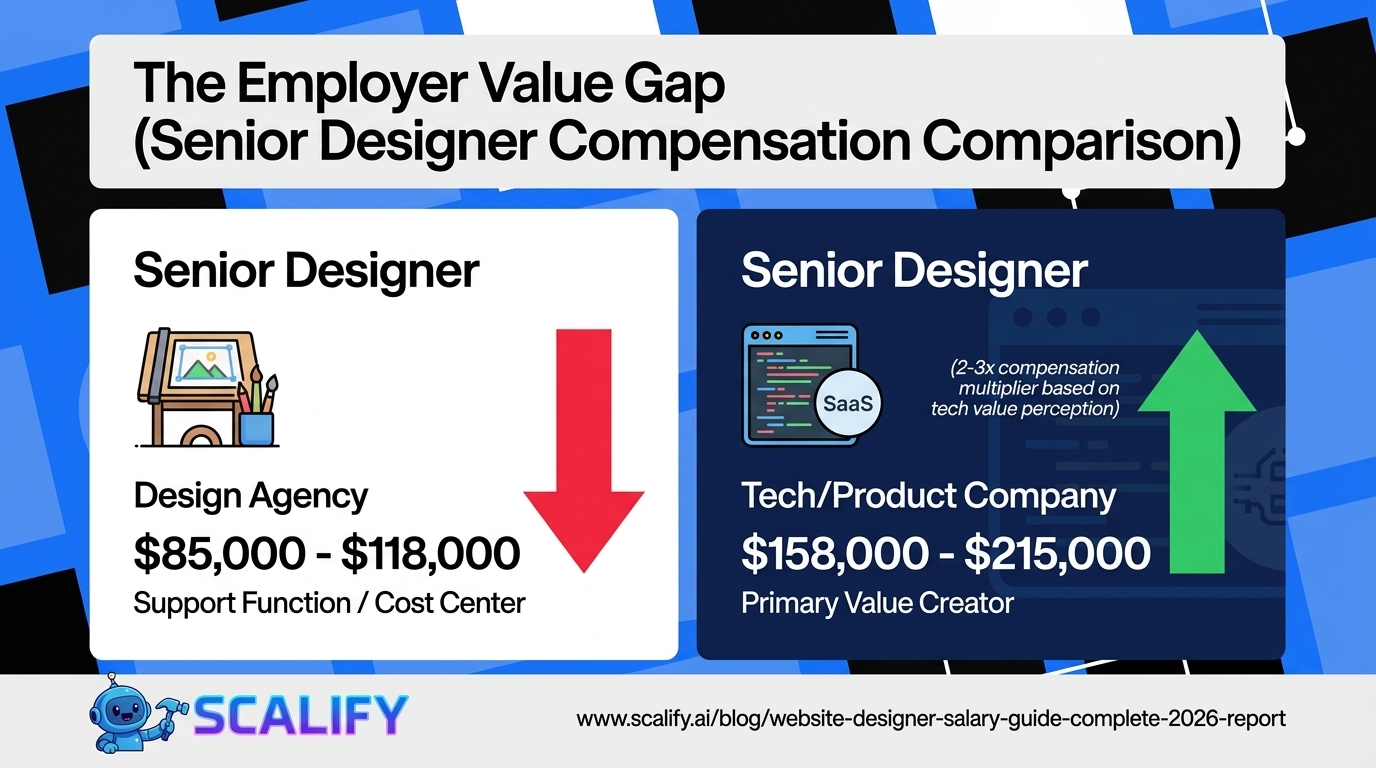
IndustryMid-Level MedianSenior MedianPremium vs. BaselineWhy the Premium ExistsFintech / Financial Services$125,000$168,000+15–20%Regulatory compliance, transaction integrity, security requirementsHealthcare Tech (HIPAA)$118,000$160,000+8–12%Regulatory complexity, data sensitivity, compliance engineeringCybersecurity$122,000$165,000+12–16%Domain expertise required, high-stakes systemsEnterprise SaaS$118,000$158,000+8–14%Scale requirements, multi-tenancy complexityE-Commerce / DTC$108,000$148,000BaselineStandard web back-end complexityMedia / Content$105,000$142,000-4–8%Lower perceived technical complexity, more competitionAgency / Consulting$95,000$132,000-15–20%Broader clients offset lower per-role specialization valueGovernment / Public Sector$88,000$122,000-20–25%Compensation ceilings, slower progression, high job security
Common Back-End Interview Topics That Affect Salary Negotiations
Understanding what skills interviewers test at different levels helps back-end developers prepare for compensation-maximizing job changes. Senior back-end roles at well-paying companies typically require demonstrated competency in:
System Design. The ability to design a scalable, reliable system given requirements — "Design a URL shortener that handles 10 billion URLs," "Design Twitter's notification system," "Design a distributed rate limiter." Senior engineers are evaluated on their ability to make and defend architectural tradeoffs: choosing between SQL and NoSQL, designing for consistency vs. availability, planning for horizontal scaling, considering caching strategies. The quality of these design discussions is the primary factor determining offer levels at senior roles.
Database Design and Query Optimization. Mid-level and senior back-end developers should be able to design normalized database schemas, write complex SQL queries with JOINs, subqueries, and window functions, explain query execution plans, and identify and fix performance problems (missing indexes, N+1 queries, lock contention). Database interviews reveal the difference between developers who have used databases and developers who understand how databases work.
API Design Principles. REST API design conventions (resource naming, HTTP method selection, status code semantics, pagination, versioning), GraphQL schema design, authentication and authorization patterns (JWT, OAuth 2.0, API keys, session management), and rate limiting strategies are tested at mid-level and above. Engineers who can design APIs that are intuitive, consistent, and secure command premium compensation.
Concurrency and Threading. Understanding how to write concurrent code correctly — race conditions, deadlocks, thread safety, async/await patterns, event loop behavior — is tested at senior levels. Node.js concurrency, Python's GIL and async patterns, Go's goroutines, and Java's concurrent collections are language-specific manifestations of universal concurrency principles. Engineers who can reason about concurrent system behavior are rare and well-compensated.
Building a High-Value Back-End Portfolio
For back-end developers looking to maximize their compensation trajectory, the most effective portfolio projects demonstrate system design thinking rather than just code volume. Projects that impress senior engineering interviewers at high-paying companies share several characteristics: they handle non-trivial scale concerns, they demonstrate thoughtful API design, they include proper authentication and authorization, they have observable production behavior (monitoring, logging, alerting), and they're deployed and running rather than sitting in a GitHub repository.
Specific project ideas that demonstrate premium back-end skills: a distributed key-value store built from scratch (demonstrates distributed systems understanding), a real-time collaborative application with operational transforms (demonstrates complex synchronization), a high-throughput job processing system (demonstrates queue design and worker architecture), a multi-tenant SaaS API with proper data isolation (demonstrates enterprise architecture thinking), or an LLM-powered application with production-quality API handling (demonstrates current AI integration skills).
The goal is not to build impressive demos — it's to build systems you can talk about deeply: the decisions you made, the tradeoffs you considered, the failure modes you anticipated, the monitoring you added, and how you would scale it if usage increased 100x. That depth of conversation is what separates engineers who get competitive offers from those who receive average-market compensation.
Entry-Level Back-End Developer: Getting Your First Role and Salary
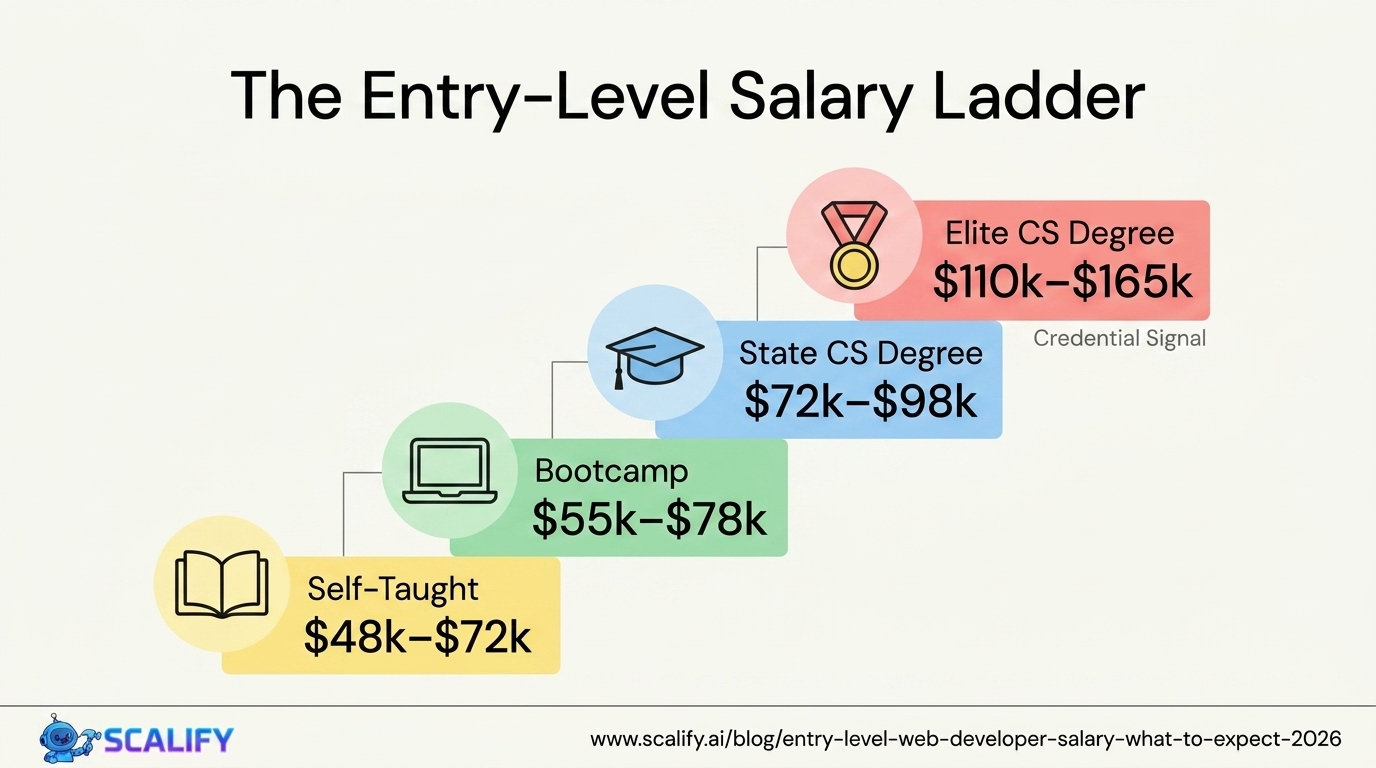
Breaking into back-end development for the first time — without years of professional experience — requires a strategic approach to demonstrating competence. Entry-level back-end roles ($68,000–$95,000) are hiring for potential as much as demonstrated achievement, but candidates who can show meaningful project experience, a solid understanding of fundamental concepts, and genuine curiosity about systems will consistently outcompete candidates who have only completed coursework.
The most effective path to a first back-end role in 2026 combines foundational technical education (computer science degree, bootcamp, or rigorous self-study), a portfolio of deployed projects that demonstrate end-to-end back-end capability (not just front-end apps), and visible evidence of how you think — through GitHub commits, technical writing, or open source contributions. Recruiters and hiring managers for entry-level roles receive hundreds of applications from people who have completed the same courses and built the same tutorial projects. The candidates who get interviews are those who have built something real, deployed it, and can talk about the engineering decisions they made.
The starting salary negotiation at the entry level deserves attention because it sets the baseline for future raises. Entry-level back-end developers who have accepted offers $10,000 below market often find that annual raises keep them below market for years. Researching the actual market rate for your location, skillset, and target company size before negotiating — using Levels.fyi, Glassdoor, and Stack Overflow Survey data — and negotiating assertively for the high end of the entry-level range is one of the highest-ROI career moves available to new engineers.
Back-End Developer Career Progression: The Typical Arc
Career StageYearsSalary RangeKey MilestonesNext StepJunior Developer0–2$68,000 – $95,000Ship first features, understand codebase, pass code review, fix bugs independentlyTake ownership of a complete feature or serviceMid-Level Developer2–5$92,000 – $135,000Own features end-to-end, design database schemas, mentor juniors, improve team processesLead a system design, set technical direction for a componentSenior Developer5–9$130,000 – $175,000Design systems, make architectural decisions, represent technical perspective to product/businessChoose IC track (staff/principal) or management trackStaff / Principal Engineer8–14$165,000 – $230,000Organization-wide technical direction, solve company-level problems, define engineering standardsDistinguished Engineer / Fellow or Engineering DirectorEngineering Manager7–12$160,000 – $240,000Team performance, hiring, career development, cross-functional executionSenior Engineering Manager, Director of Engineering
The choice between the individual contributor (IC) track — continuing to grow technical depth toward staff and principal engineer roles — and the management track is one of the most consequential career decisions a senior back-end engineer faces. Both tracks pay very well at their peaks: a principal engineer at a major tech company and an engineering director at the same company often earn comparable total compensation. The choice should be based on where you get genuine satisfaction — in deep technical problem-solving or in developing people and organizational effectiveness — not on salary alone, because the compensation difference at senior levels is smaller than many engineers assume.
Remote vs. In-Office Back-End Developer Compensation
Back-end development has one of the highest remote work adoption rates of any engineering discipline — the nature of the work (working with code, APIs, databases, and cloud services) has no inherent geographic requirement. The shift to widespread remote work since 2020 has created a more complex compensation landscape that varies significantly by employer type.
Employment SituationMid-Level SalarySenior SalaryKey ConsiderationIn-office at SF/NYC/Seattle company$128,000 – $158,000$165,000 – $210,000Highest nominal pay, highest COLRemote at FAANG (SF-anchored salary)$148,000 – $185,000$175,000 – $225,000Best overall deal for engineers in lower COL citiesRemote at mid-size tech company (geo-adjusted)$95,000 – $130,000$128,000 – $165,000Variable — depends on company policyRemote at startup (national flat rate)$98,000 – $128,000$132,000 – $168,000Often flat rate regardless of locationIn-office at mid-market city (Austin, Denver)$98,000 – $128,000$135,000 – $168,000Excellent purchasing power, growing tech scenesIn-office at Miami$88,000 – $118,000$122,000 – $158,000Growing market, lower COL than coastal cities
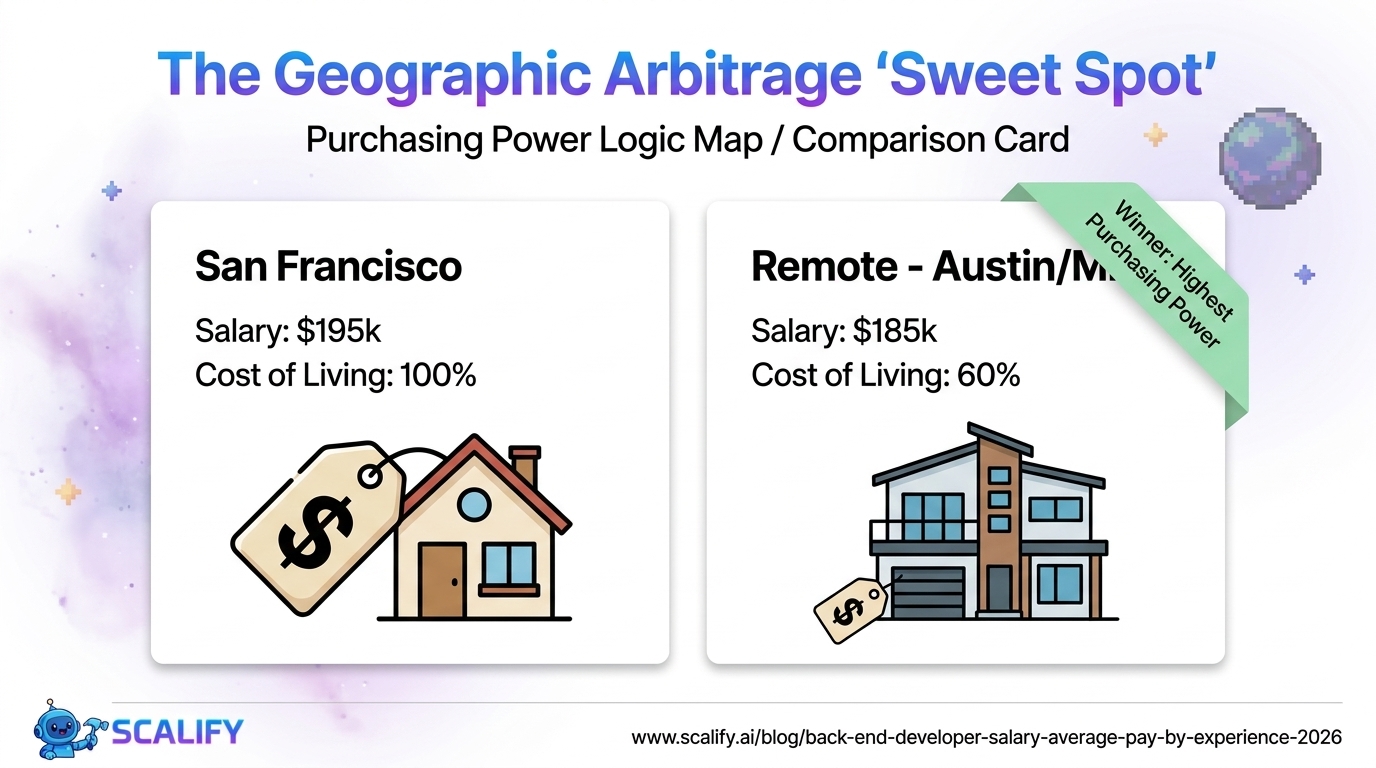
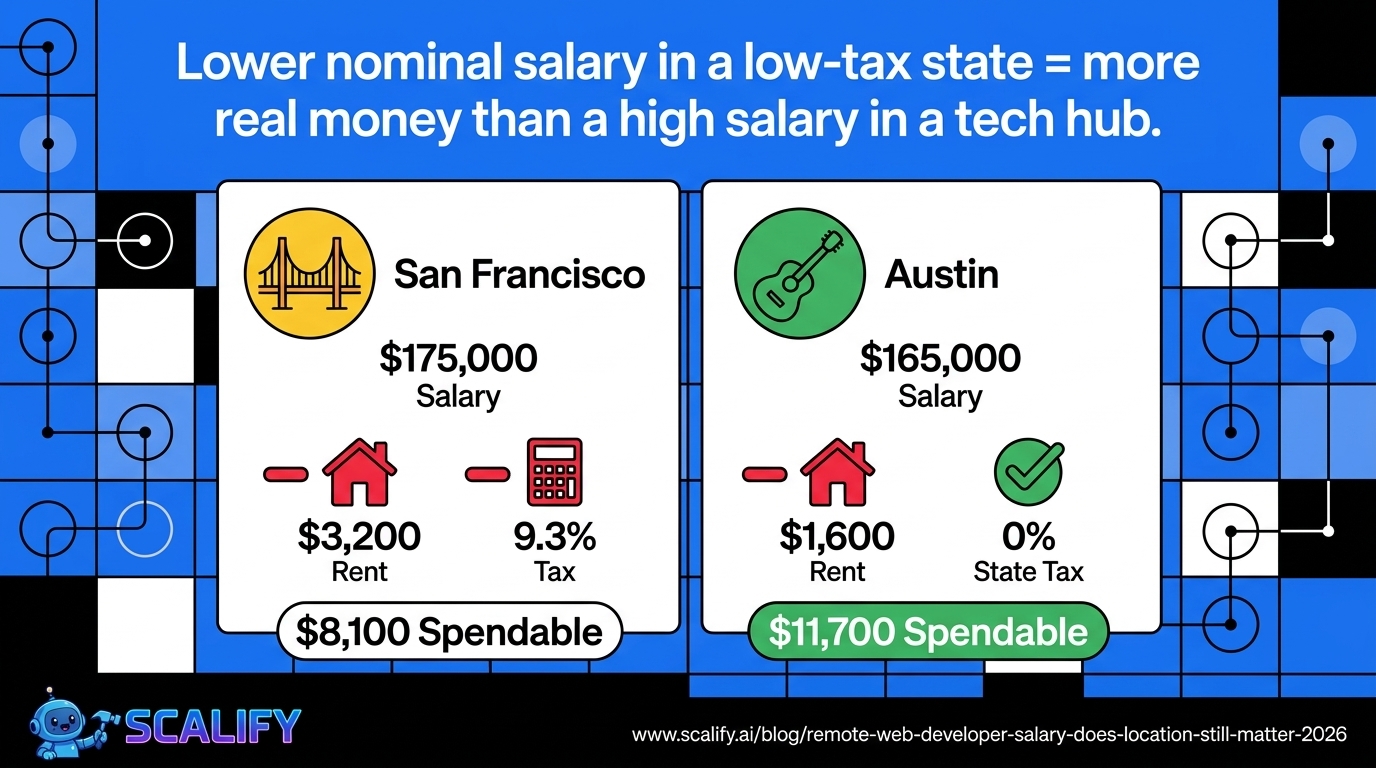
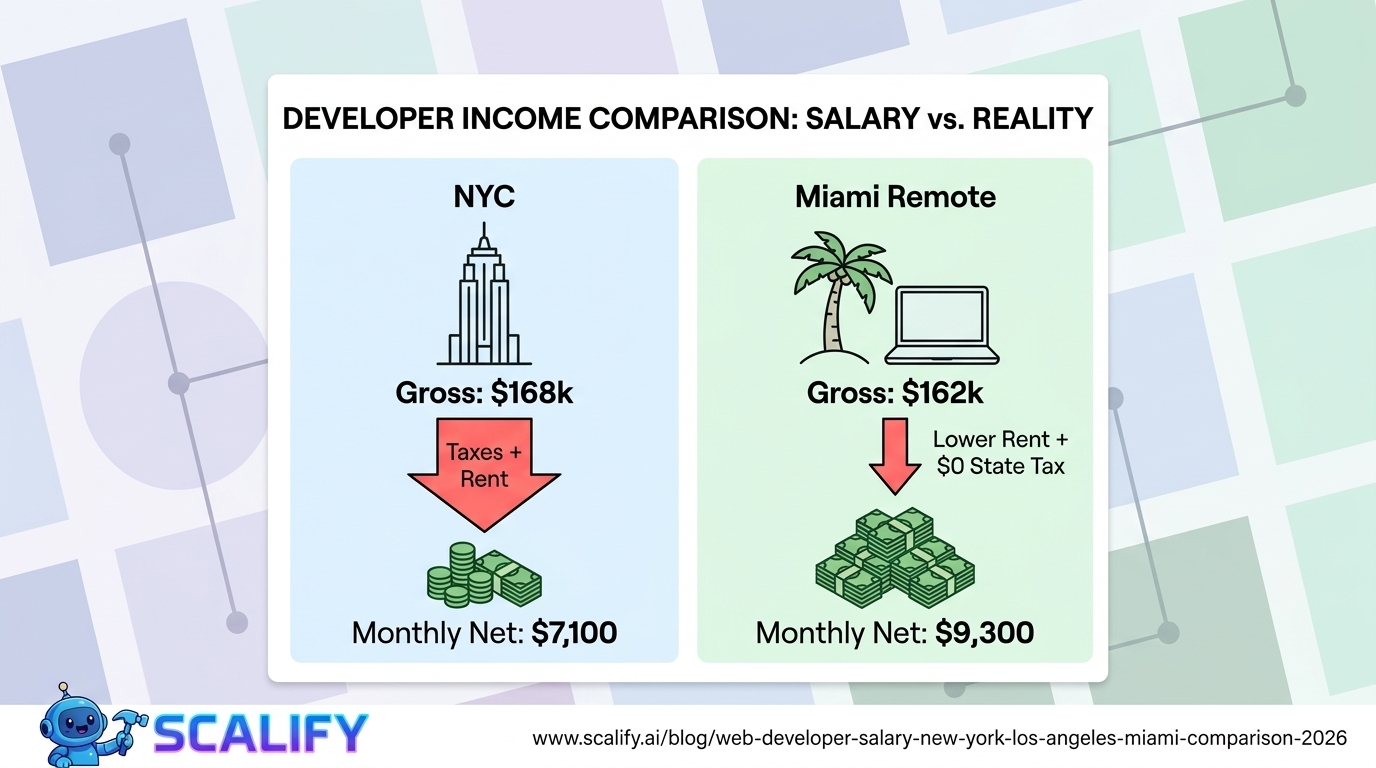
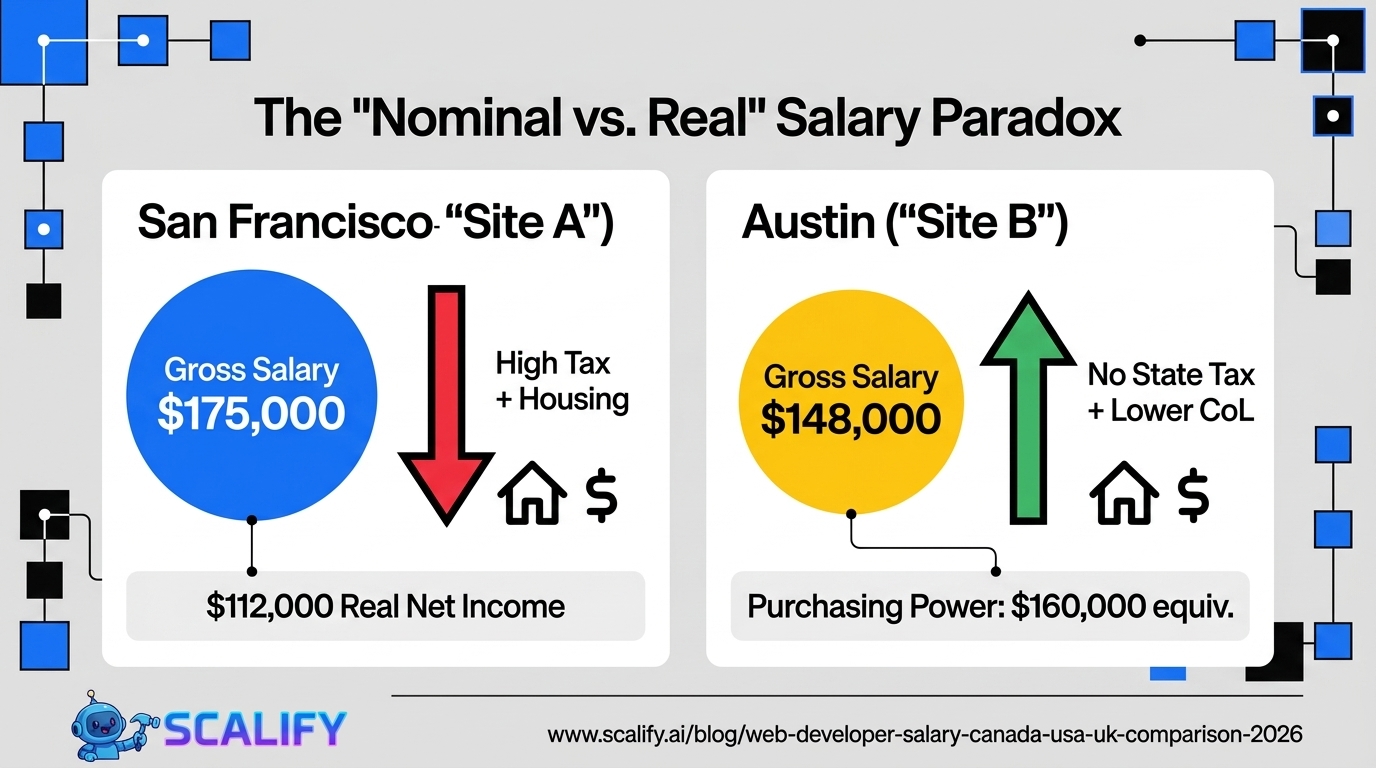
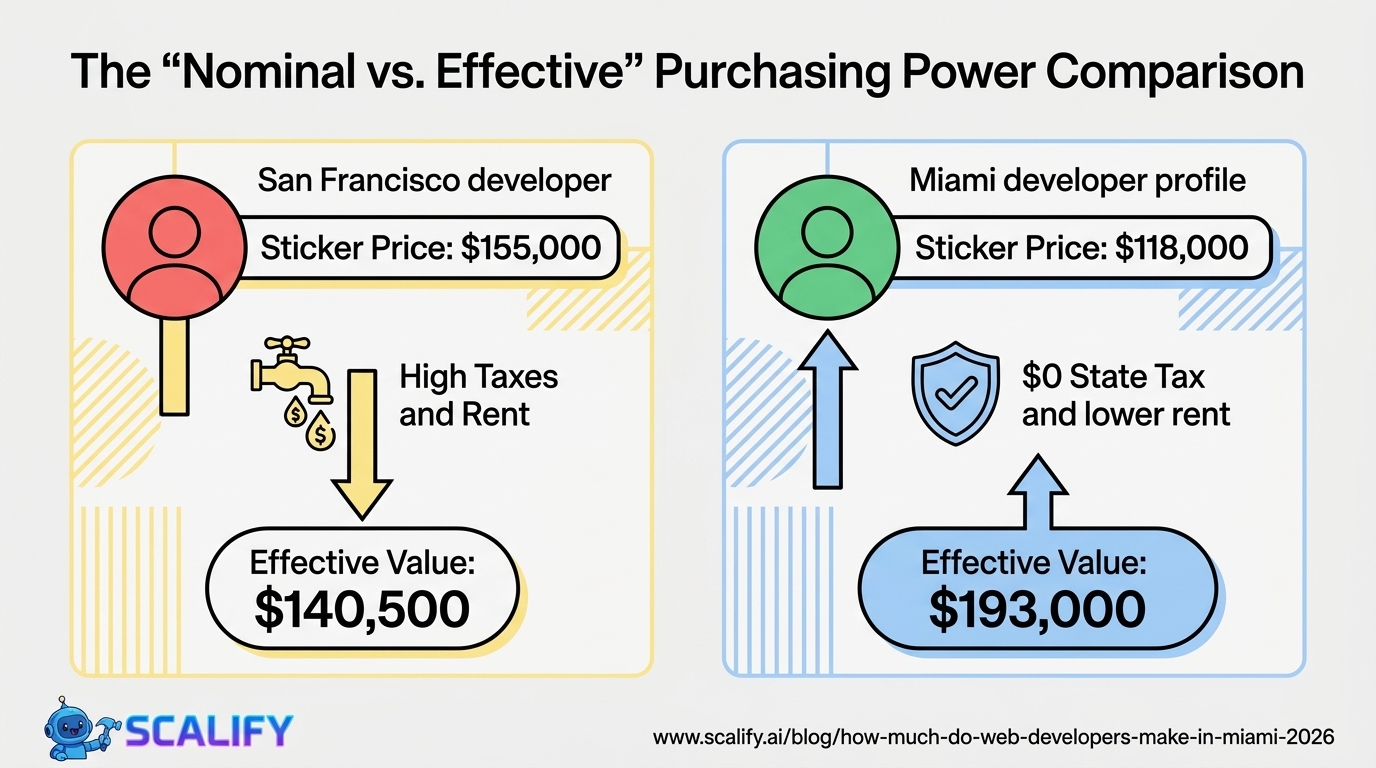
The most financially advantageous position for a senior back-end developer in 2026 is often remote employment at a FAANG or well-funded tech company that pays San Francisco-anchored salaries regardless of where the engineer lives. A senior back-end developer earning $185,000 from a Google remote role while living in Austin or Miami has dramatically higher purchasing power than the same engineer earning $195,000 in San Francisco — where housing, taxes, and cost of living consume a substantially larger share of take-home pay. If remote roles at top-tier companies are accessible to you, the geographic arbitrage is real and significant.
Certifications and Education: What Actually Moves the Needle
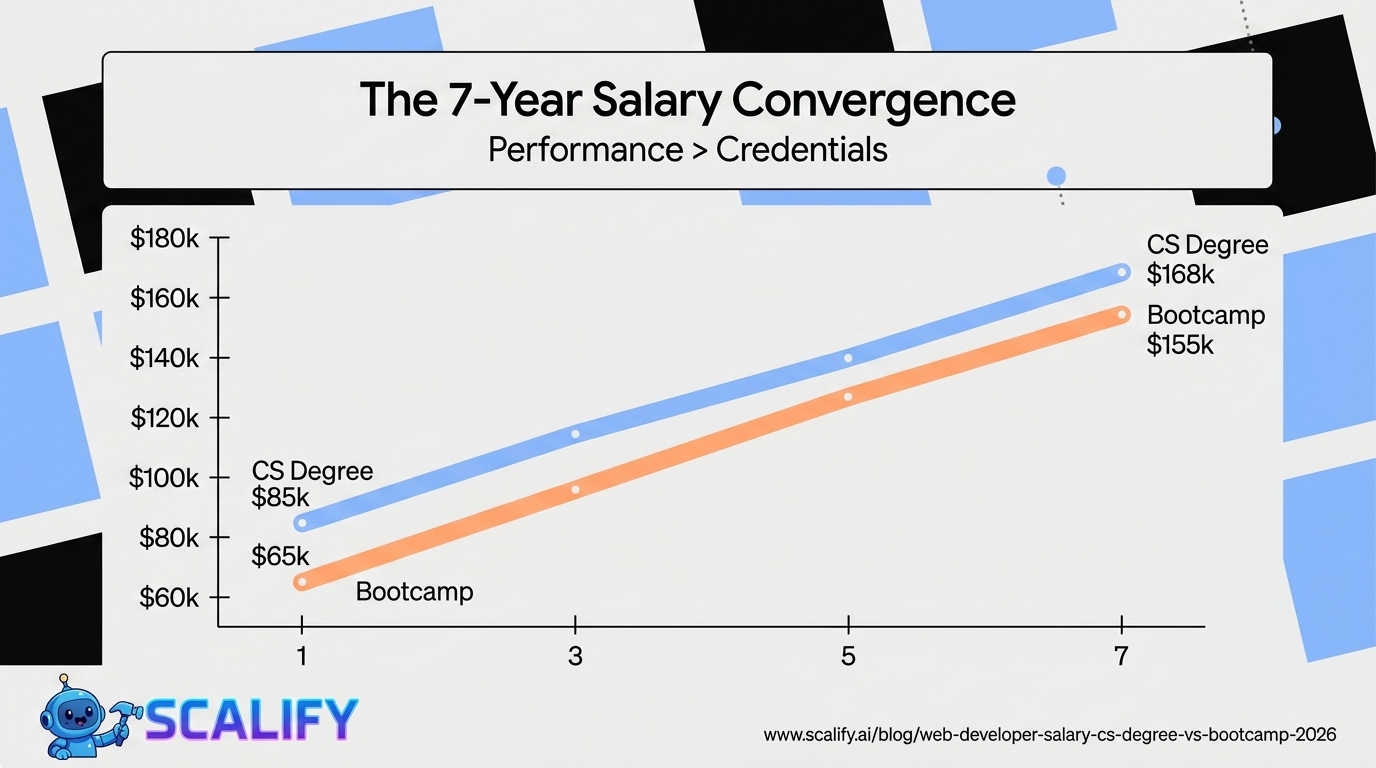
The relationship between formal credentials and back-end developer compensation is nuanced and has changed significantly over the past decade. A computer science degree from a strong university remains valuable — particularly for entry into FAANG and other top-tier companies that still use degree as a screening criterion in initial resume review. But the value of a CS degree relative to demonstrated practical experience has declined substantially as bootcamps, online education, and open-source contributions have proven to produce highly competent engineers.
Cloud certifications (AWS Solutions Architect, GCP Professional Cloud Developer, Azure Developer Associate) produce more reliable salary bumps for back-end developers than most academic credentials. The mechanism is straightforward: these certifications are directly applicable to daily work, recognized across the industry, and signal that an engineer has invested in learning the infrastructure that almost every modern back-end system runs on. AWS Solutions Architect Associate — at $300 for the exam and 4–8 weeks of study — consistently produces $12,000–$20,000 in additional salary for back-end developers who earn it, making it one of the highest-ROI career investments available.
Specialty certifications in databases (MongoDB, PostgreSQL, Redis), security (CISSP adjacent courses, cloud security), and Kubernetes (CKA, CKAD) produce more targeted premiums in the specific roles that require those skills. The general principle: certifications that directly map to skills employers are paying premium rates for produce salary benefits; certifications in areas where the market is saturated or the skill is commoditized produce little measurable compensation benefit.
The AI Impact on Back-End Developer Demand and Salaries
Artificial intelligence is affecting back-end development in two directions simultaneously: automating some routine tasks (boilerplate generation, simple CRUD scaffolding, basic test writing) while dramatically expanding the scope of what back-end developers are expected to build. The net effect on back-end developer demand and compensation is positive — AI is creating more back-end work than it's eliminating, at a higher complexity level than what it automates.
The most significant AI-driven demand increase in back-end development comes from the explosion of AI-powered applications being built by every company, across every industry. Every one of these applications needs a back-end API that integrates with LLM providers, manages conversation state, handles streaming responses, implements retrieval-augmented generation (RAG) with vector databases, manages API costs and rate limits, and provides the reliability guarantees that production applications require. None of this work is automated by AI — it requires experienced back-end engineers who understand both the application layer and the AI layer.
Back-end developers who invest in understanding the AI engineering stack — how to work with the major LLM APIs (OpenAI, Anthropic, Google), how to implement vector search with Pinecone or Weaviate, how to build reliable streaming APIs, how to manage token economics at scale, and how to design AI-powered features that degrade gracefully when the AI layer fails — are entering the highest-growth compensation segment of the entire software engineering market. The engineers who positioned themselves at this intersection of back-end expertise and AI engineering in 2023–2024 are already seeing compensation premiums of $25,000–$50,000+ over equivalent peers without the AI integration experience.
The advice for back-end developers concerned about AI automation is straightforward: move up the value chain. Build the systems that use AI, not the systems that AI can replace. A back-end developer who understands distributed systems, system design, domain-specific business logic, and how to integrate AI capabilities into production systems is doing work that AI tools cannot do — and the market will continue to pay premium compensation for that work throughout the rest of the decade.
The structural demand for skilled back-end engineers — those who can design reliable systems, integrate complex data architectures, ensure security, and build at scale — remains one of the most durable compensation stories in the technology industry. Invest in the skills that serve this demand, and the compensation follows.


.jpeg)
.jpeg)

78 SW 7th St, Miami, FL 33130