

How to Use Testimonials on Your Website to Increase Trust (2026)
By Josh Ternyak

April 17, 2026
Testimonials with specific results and named reviewers increase conversion 34%. This comprehensive guide covers the anatomy of persuasive testimonials, format comparison (written, video, case studies, third-party), optimal placement near conversion points, how to collect better testimonials with structured questions, video testimonial strategy, FTC compliance, B2B vs e-commerce approaches, third-party review widget integration, and building a systematic collection process.
How to Use Testimonials on Your Website to Increase Trust
Testimonials are the most persuasive trust signal available to most websites — and most websites use them poorly. The difference between a testimonial that actually converts skeptical visitors and a testimonial that gets scrolled past without registering is not the enthusiasm of the praise; it's the specificity, authenticity, and relevance to the specific concern the prospective customer is wrestling with at the moment they're reading it.
Key Testimonial Statistics
What Makes a Testimonial Actually Persuasive
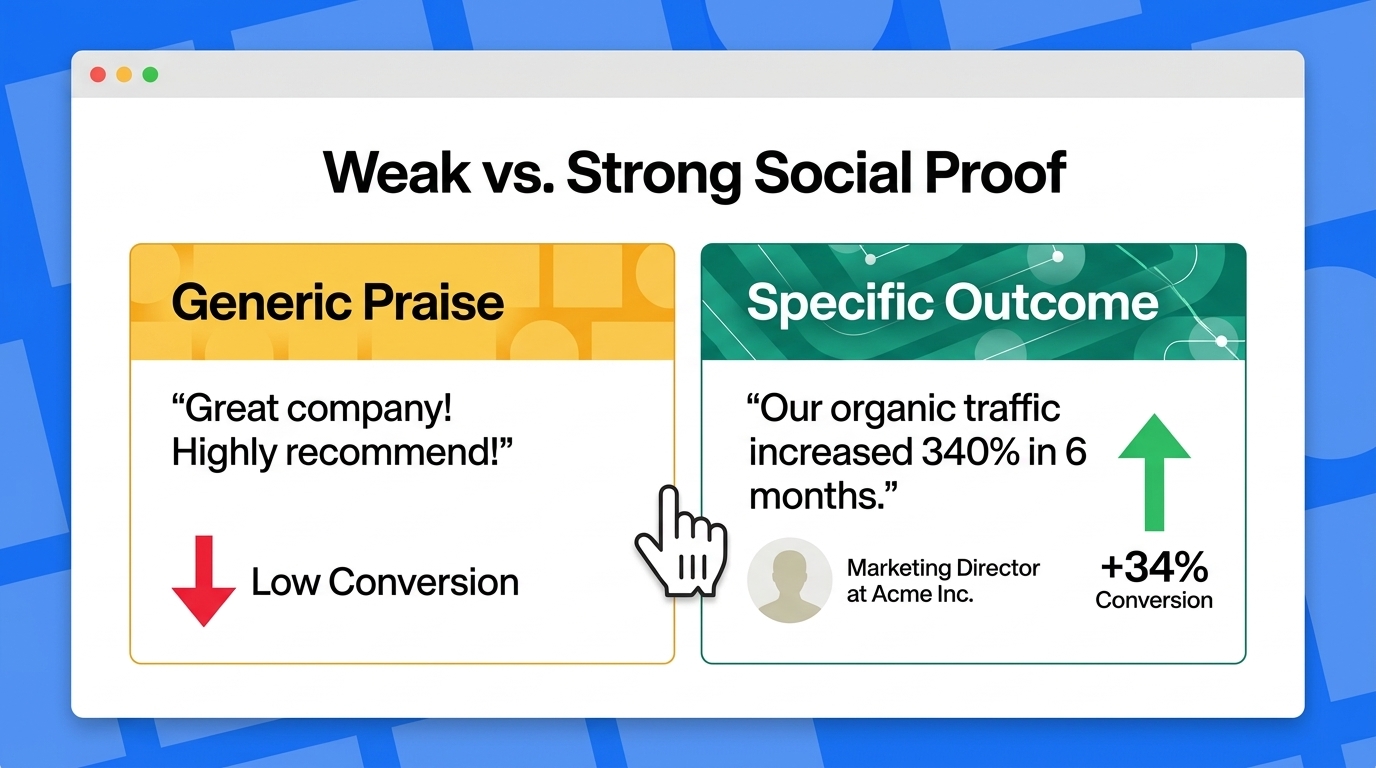
The most common testimonial mistake is collecting vague, generic praise and displaying it prominently: "Great company! Highly recommend!" "Exceeded our expectations!" "Wonderful experience!" These testimonials provide no information that helps a prospective customer make a decision. They don't describe what was done, who did it, what problem was solved, or what result was achieved. They could have been written by anyone about anything — which is exactly the problem.
Persuasive testimonials answer the specific questions a prospective customer has before they can commit. In B2B contexts: "What did they do?" "Did it actually work?" "How long did it take?" "How was it to work with them?" In B2C contexts: "Was the quality worth the price?" "Did it do what they said it would?" "Was the company trustworthy?" A testimonial that answers these questions specifically converts because it reduces the uncertainty that was preventing commitment.
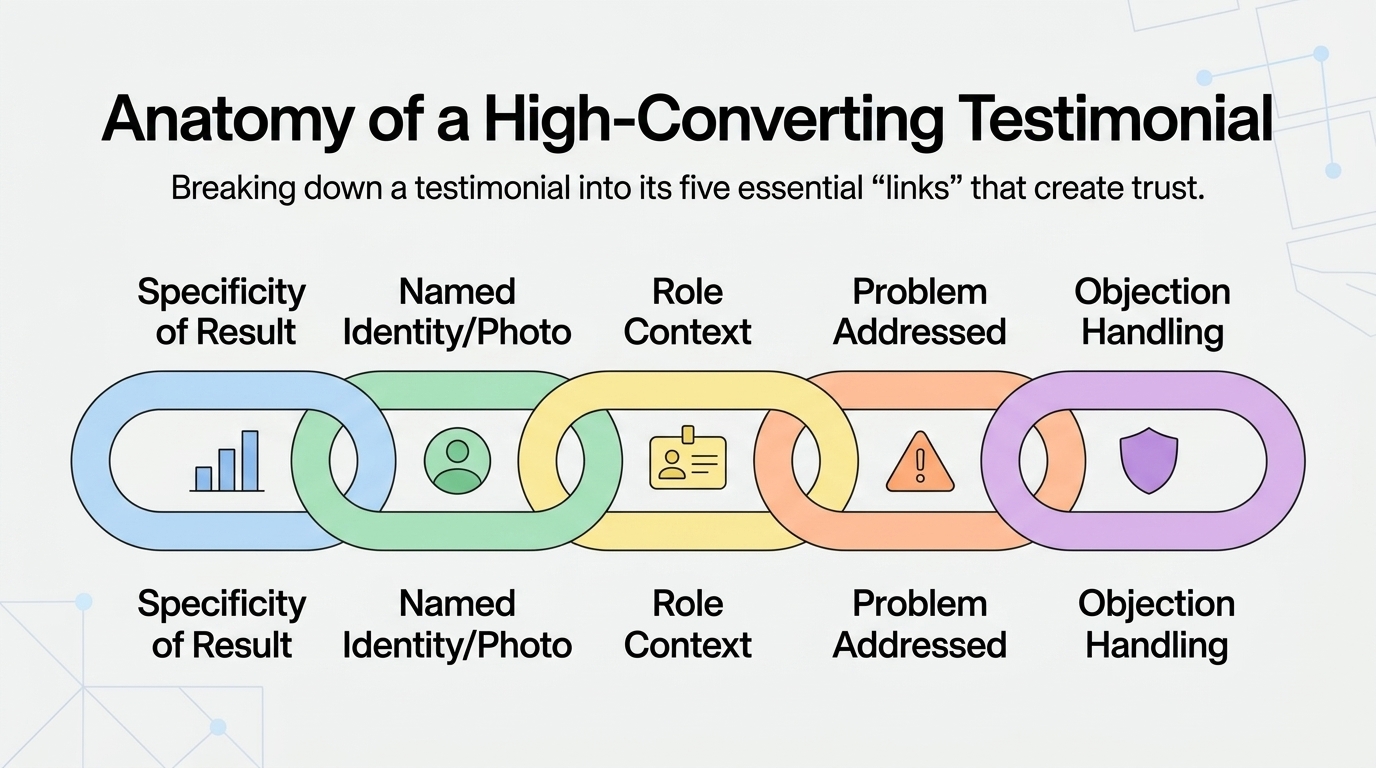
The Anatomy of a High-Converting Testimonial
ElementWhy It MattersWeak ExampleStrong ExampleSpecificity of resultConcrete outcomes are credible; vague praise is not"Our website is much better""Our organic traffic increased 340% in 6 months"Named reviewer with photoReal people with photos are 2.5x more credible than anonymous"— A satisfied customer""— Sarah Chen, Marketing Director at Acme Inc" with headshotCompany/role contextReader self-identifies if context matches their situationNo context provided"As a law firm with 15 partners, we needed..."Problem addressedShows the testimonial is relevant to specific pain pointsGeneral praise only"Before working with [company], our site was invisible in search..."Objection handlingAddresses concerns the reader may shareNo mention of concerns"I was worried about the timeline, but they delivered in 8 days"RecencyOld testimonials suggest current customers aren't satisfiedNo date, or 2019 dateWithin the past 12 months
Types of Testimonials by Format
FormatEffectivenessEffort to CollectBest PlacementWritten quote with photo and credentialsHigh — 34% conversion liftLow — email requestHomepage, service pages, near CTAsVideo testimonial (60–120 seconds)Very High — 80% more engagementHigh — filming coordinationHomepage hero, dedicated testimonials sectionCase study (problem/solution/result)Very High for complex productsVery High — writing and client involvementDedicated case studies page, pricing pageThird-party review (Google, G2, Trustpilot)Very High — third-party is more credibleLow — encourage organic reviewsHomepage widget, industry-specific pagesSocial media screenshots (Twitter/LinkedIn)Medium-High — authentic spontaneityVery Low — capture screenshotsSocial proof sections, homepageLogo-only "worked with" (no quote)Low — provides social proof but no detailVery LowCredibility bar on homepage
Where to Place Testimonials on Your Website
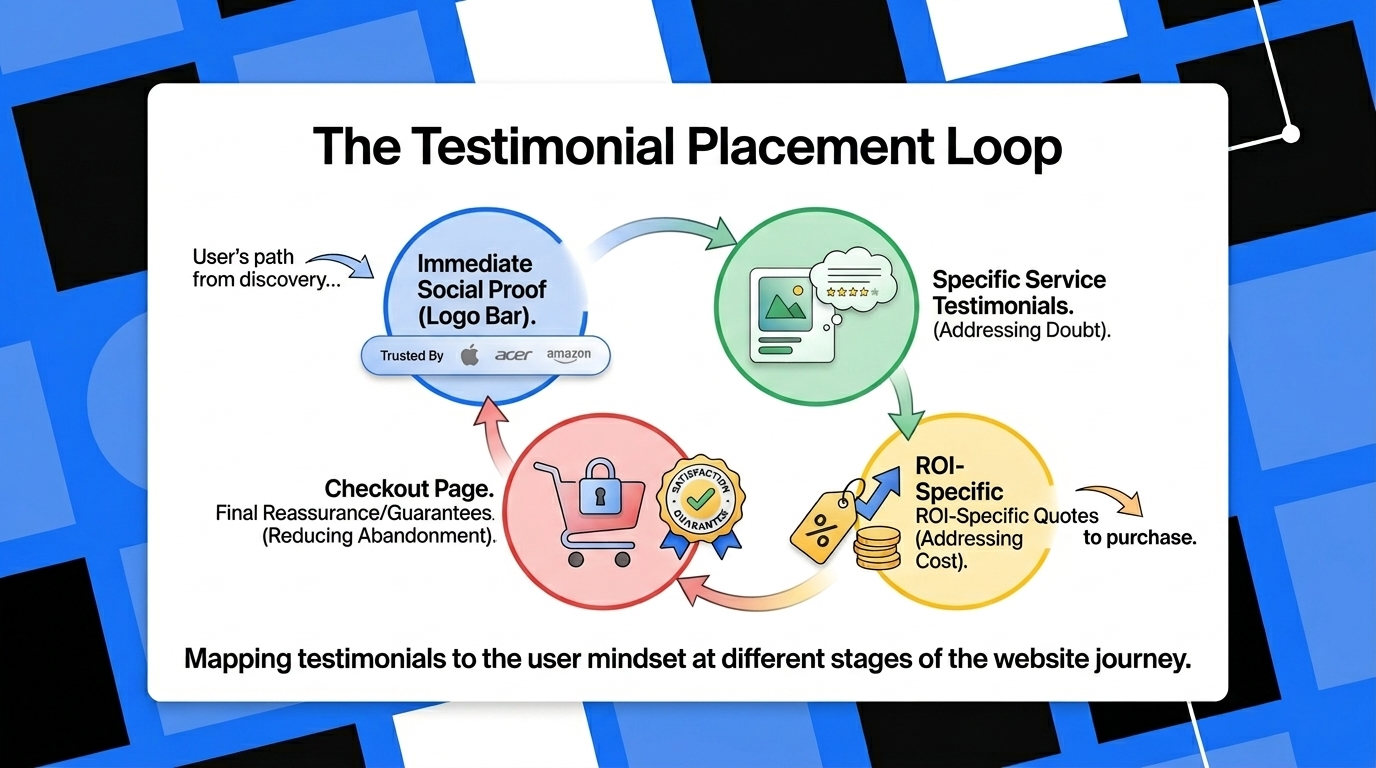
Testimonial placement matters as much as testimonial quality. The most common mistake is creating a separate "Testimonials" page where testimonials are isolated from the conversion moments they're meant to support. Visitors who are skeptical don't navigate to a testimonials page — they're reading the page they landed on and either convert or leave. Testimonials must be present at the moments of doubt and decision.
Page/PlacementBest Testimonial TypeConversion ImpactHomepage (above the fold)Short, credible quote from recognizable company + photoHigh — establishes immediate credibilityHomepage (below value proposition)Industry logo bar or review widget ("4.9★ from 247 reviews")High — social proof amplifies value propService/product pagesTestimonial relevant to that specific service/productVery High — addresses purchase-specific doubtsPricing pageROI-specific testimonial ("Saved us $30k/year")Very High — addresses "is it worth the money" at peakNear contact/signup formShort quote addressing fear of committingHigh — final reassurance before actionCheckout pageTrust signals + brief testimonialsHigh — reduces last-minute abandonmentDedicated case studies pageLong-form case studies with specific metricsVery High for serious evaluators
How to Collect Better Testimonials
The quality of testimonials collected reflects the quality of the request. A generic "Would you leave us a review?" produces generic reviews. A specific, structured request produces specific, useful testimonials. The most effective testimonial collection approach: reach out within 30 days of a positive project completion when satisfaction is highest, ask specific questions rather than requesting a general review, make the process as easy as possible (email with questions pre-filled, or a brief survey), and explain where the testimonial will be used.
Specific questions that produce useful testimonials:
These questions produce answers that address the specific objections and concerns of future prospective customers — because they reflect the actual concerns and resolutions of past customers. Always get written permission before using a testimonial publicly, and provide the reviewed text to the reviewer for their approval before publication.
Video Testimonials: The Highest-Trust Format
Video testimonials generate 80% more engagement than written testimonials because they're impossible to fabricate in the way written testimonials can be (and which everyone knows). Seeing a real person speak spontaneously about their experience triggers trust signals that text cannot — facial expressions, voice tone, genuine enthusiasm or considered reflection — that make the testimonial feel unambiguously real.
Collecting video testimonials doesn't require professional video production. A customer recording a 60–90 second Loom video or iPhone recording of themselves answering 2–3 questions is more persuasive than a polished testimonial video that feels scripted. The authenticity of genuine speaking — imperfect but real — is the source of video testimonials' persuasive power. Ask for video specifically when you have a particularly strong customer relationship and a recent, significant outcome to share.
Testimonials and Legal Considerations
The FTC's Endorsement Guides require that material connections between the reviewer and the company be disclosed, that testimonials represent typical results (or atypical results be clearly labeled as such), and that paid or incentivized testimonials be clearly identified as such. The practical implications: never pay customers for positive reviews without disclosure; don't use testimonials that show exceptional results without noting they're not typical; and if you offer any incentive (discount, gift, free service) for a review, disclose this clearly adjacent to the testimonial. These requirements apply to all testimonials used in marketing materials — not just advertising — and the FTC has increased enforcement activity in this area since 2022.
The Bottom Line
Testimonials increase conversion rates 34% on average — one of the highest single-element conversion improvements available. The difference between testimonials that convert and those that don't is specificity: specific results, named reviewers with photos, context about the problem solved, and placement at the moments of maximum doubt. Collect testimonials through structured questions that produce specific answers, place them at conversion points not on a dedicated testimonials page, prioritize video for your highest-impact positions, and keep testimonials current. Social proof is the most powerful conversion tool you control — invest in collecting and using it deliberately.
At Scalify, every website we build includes testimonial placement architecture — the right social proof at the right moments in the visitor's decision journey.
.jpeg)
Top 5 Sources
Testimonials for Different Business Types
B2B Professional Services
B2B testimonials need to speak to business decision-makers who are accountable for the outcomes of their vendor choices. The most effective B2B testimonials include: the reviewer's specific role and seniority (a VP of Marketing testifying to marketing ROI is more relevant to a CMO prospect than an intern's testimonial), specific business outcomes in business terms (revenue generated, cost saved, time reduced, percentage improvements), timeline context (how long results took to materialize), and a note about what made the experience professionally credible beyond the business outcome (communication quality, responsiveness, technical depth).
Case studies — the long-form equivalent of testimonials — are the most persuasive testimonial format for complex B2B purchases. A 600–900 word case study that walks through the client's initial problem, the approach taken to solve it, the specific implementation, and measurable results is the most compelling sales document a professional services firm can produce. Case studies published on the website and linked from service pages function as both social proof and SEO content — attracting organic traffic from prospects searching for solutions to the same problems your past clients had.
E-Commerce Testimonials
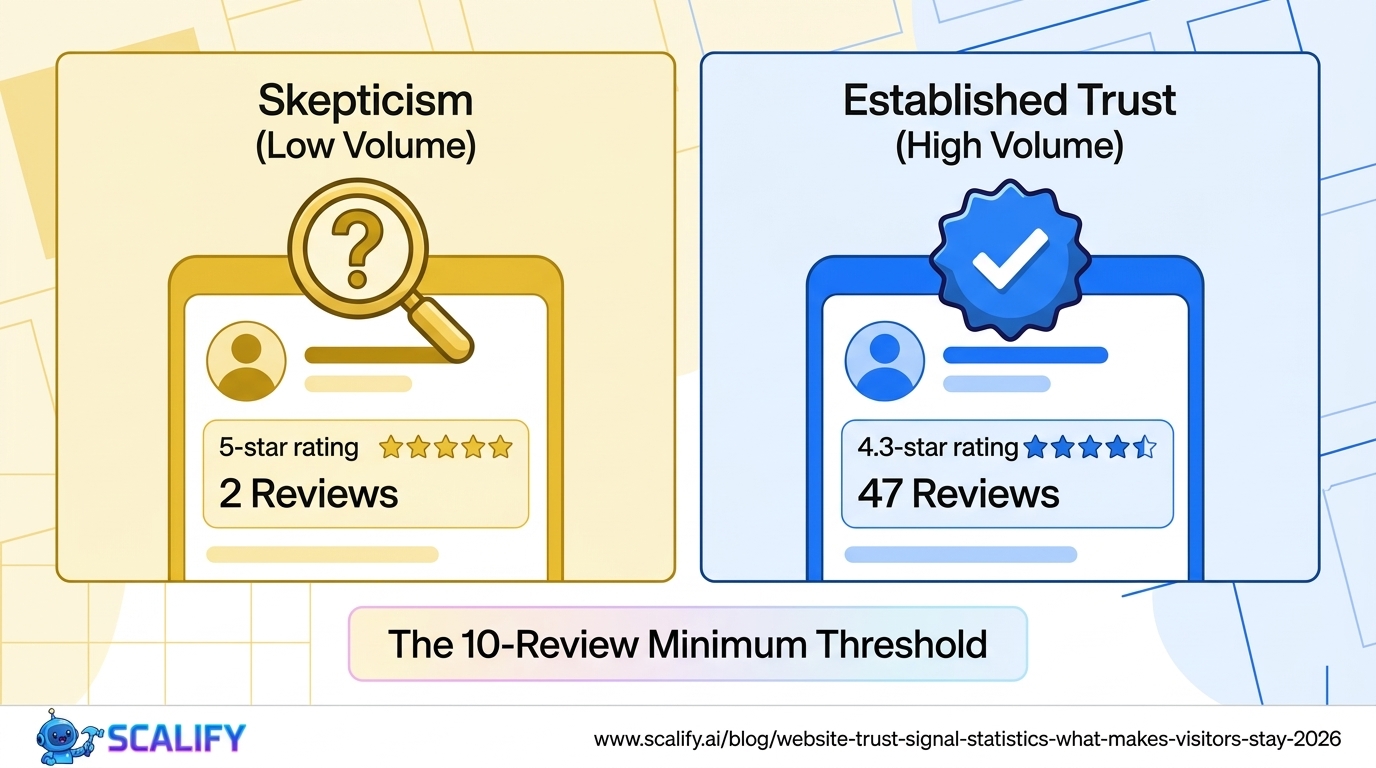
E-commerce testimonials live primarily in the product review ecosystem — star ratings and written reviews that appear on product pages and aggregated in brand trust scores. The most important e-commerce testimonial actions: actively request reviews from satisfied customers via post-purchase email sequence (capturing 3–5x more reviews than organic review rates), display review count prominently rather than just star rating (volume signals widespread use), feature photo reviews where customers show the product in real use (highest conversion impact for physical goods), and respond publicly to negative reviews to demonstrate responsive customer service to prospective customers reading those reviews.
For e-commerce brands, review platforms matter as much as on-site testimonials. Google Reviews, Trustpilot, and Yelp ratings appear in search results and Google Shopping listings — visibility that on-site testimonials don't provide. A brand with 4.8 stars from 847 reviews on Trustpilot has credibility signals appearing wherever prospects encounter the brand online, not just when they visit the website. This external review ecosystem requires deliberate cultivation through systematic post-purchase review requests.
Displaying Third-Party Reviews and Ratings
Third-party reviews from Google, G2, Trustpilot, Capterra, or Yelp carry significantly more credibility than curated on-site testimonials — because prospective customers know that self-curated testimonials only show the best reviews, while third-party platforms show the full distribution. Displaying third-party review widgets on your website ("4.9 stars from 384 Google Reviews") combines the visual impact of on-site social proof with the credibility of an independent verification platform.
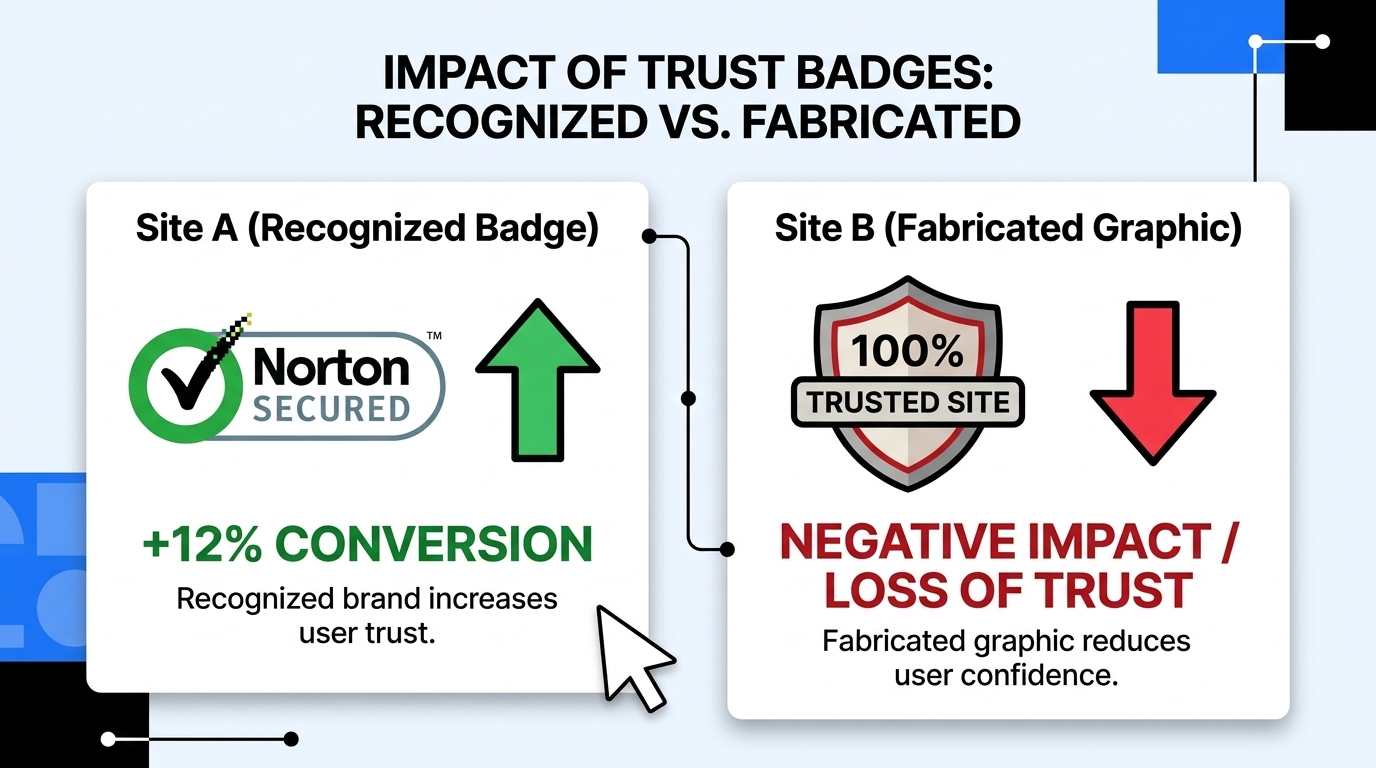
Review widget implementation: most major review platforms (Google, Trustpilot, G2) provide embeddable widgets that display live review data on your website. These widgets update automatically as new reviews arrive, require no manual curation, and display the aggregate score alongside the platform's recognizable trust branding. The combination of recognizable platform logos with high star ratings and substantial review counts is one of the most effective trust signals available — more credible than any self-authored social proof because the source is transparently external.
Building a Systematic Testimonial Collection Process
The businesses with the best testimonial portfolios are not those with the most satisfied customers — they're the ones with the most systematic processes for capturing and displaying satisfaction. A testimonial collection system that works: after every project completion or significant positive interaction, trigger a review request email within 24–48 hours while satisfaction is at its highest; offer two paths — a quick Google/Trustpilot review for minimal-effort responders, and a structured testimonial interview for customers willing to provide more detailed feedback; follow up once with a different approach if no response in 5 days (many initial non-responses convert on the second ask); and maintain a testimonial database that tracks which customer segments, use cases, and result types are represented in the current testimonial portfolio — enabling targeted collection requests to fill gaps.
A testimonial portfolio that only represents one type of customer, one industry, or one result type fails to address the diversity of prospective customers' self-identification. A software company whose testimonials are all from large enterprises misses the segment of small business prospects who don't identify with enterprise case studies. Proactively seeking testimonials from all customer segments ensures the portfolio speaks to the full range of people who might visit the website.


.jpeg)
.jpeg)

78 SW 7th St, Miami, FL 33130